
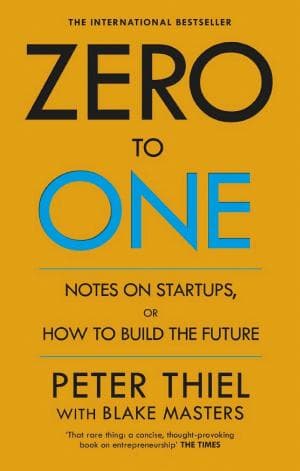
Core Idea
- Difficulty
- Medium
Key Takeaways from Zero to One
The Power of Monopoly
True innovation creates a temporary monopoly, allowing for sustained profit and further investment.
Thiel argues that competition, often praised in business, actually harms profits and innovation. A startup's ideal state is a 'creative monopoly' – a company so unique and superior that it has no close substitutes. This means delivering such good value that customers have no better choice. Such monopolies, like Google's search engine or Microsoft's operating system in their early days, make substantial profits. These profits can then be reinvested into research and development, benefiting society. This idea challenges the common belief that competition is always good, suggesting that real value often comes from avoiding it.
“Creative monopolies are good for everyone.”
In the book: Thiel contrasts airlines (hyper-competitive, low profit) with Google (monopolistic, high profit), illustrating how the latter can afford to invest in moonshot projects like self-driving cars, whereas the former struggles to stay afloat.
Try this: Instead of entering crowded markets, entrepreneurs should strive to build something entirely new that solves a problem in a way no one else can, aiming for a defensible market position rather than merely competing on price or features.
Go from Zero to One
Innovation means creating something entirely new (0 to 1), not just improving existing things (1 to n).
This is the book's main idea. Thiel explains two types of progress: horizontal progress (going from 1 to n, copying what works, globalization) and vertical progress (going from 0 to 1, inventing something new, technology). Horizontal progress spreads existing practices, while vertical progress discovers new ones. The book argues that real business success comes from vertical progress. Copying successful models, even with improvements, leads to small gains, not big breakthroughs. This idea encourages entrepreneurs to think beyond current methods and to consider what valuable things are missing from the world.
“Every moment in business happens only once. The next Bill Gates will not build an operating system. The next Larry Page or Sergey Brin won’t make a search engine.”
In the book: The examples of Bill Gates and Larry Page/Sergey Brin highlight that true innovators create new categories, rather than just optimizing existing ones. The book implicitly criticizes the 'fast follower' strategy as inherently limited.
Try this: When considering a new venture, ask: 'What important truth do very few people agree with me on?' This encourages contrarian thinking and the pursuit of truly novel ideas, rather than iterating on established successes.
The Importance of Secret Truths
The best companies are built on unique insights or 'secrets' that few others recognize.
Thiel says that truly valuable companies often come from finding 'secrets' – important truths about the world that others have missed. These secrets can be about technology, human behavior, or market trends. If a secret is widely known, it has already been used. If it is too small or unimportant, it is not valuable. The goal is to find important truths that are hard to uncover but, once found, create significant opportunities. This encourages deep, independent thinking and a willingness to question common beliefs, rather than just following trends.
“Every great company is built around a secret that’s still secret.”
In the book: PayPal's early insight that online payments needed to be easier and more secure for the average person, or Google's understanding that search quality was paramount, could be seen as 'secrets' in their respective eras.
Try this: Entrepreneurs should cultivate a mindset of curiosity and skepticism, constantly questioning assumptions and looking for hidden opportunities. This involves research, critical thinking, and a willingness to explore unconventional ideas.
Founders Matter
Exceptional founders, often seen as eccentric, are crucial for driving a company's singular vision.
Thiel focuses on the founder's role, often describing them as unique figures who embody the company's vision and drive its success. He notes that many famous founders, like Steve Jobs or Elon Musk, have distinct personalities tied to their companies' identities. This is about the singular vision and conviction only a founder can provide, especially in the early, uncertain stages. While this argument might overemphasize individual genius over teamwork, it highlights the importance of strong, decisive leadership in the '0 to 1' journey.
“A startup is a team of people on a mission, and a good team is a team that knows how to execute.”
In the book: Thiel cites his experiences with PayPal Mafia members, observing their diverse and often strong personalities, and connects their individual traits to their later successes in founding new companies.
Try this: Founders should cultivate a clear, compelling vision and be prepared to be its most passionate and unwavering advocate. They must also surround themselves with a small, cohesive team that shares this mission and can execute it effectively.
Definite Optimism vs. Indefinite Optimism
A definite vision for the future, rather than vague hope, is essential for building a great company.
Thiel identifies four views of the future: definite optimism (we know the future will be better if we work for it), indefinite optimism (the future will be better, but we do not know how, so we wait), definite pessimism (the future will be worse, and we know why), and indefinite pessimism (the future will be worse, but we do not know why). He argues that the US, especially Silicon Valley, has shifted from definite optimism (like the space race) to indefinite optimism, where people expect progress without a clear plan. To build a '0 to 1' company, one must have definite optimism, with a clear, actionable plan for creating a specific, better future. This critiques a common complacency in modern business thinking.
“A definite view of the future makes it easy to work hard. A definite future is not a dream, but a plan.”
In the book: The contrast between the mid-20th century's ambitious projects like the Apollo program (definite optimism) and the current financialization and 'dot-com bubble' mentality (indefinite optimism) illustrates this point.
Try this: Entrepreneurs should articulate a precise vision for their company's future and develop a concrete plan to achieve it, rather than relying on general trends or luck. This involves setting ambitious but specific goals.
The Last Mover Advantage
Instead of being first, aim to be the last mover, achieving dominance and durability.
While 'first mover advantage' is a common business saying, Thiel suggests that being the 'last mover' is the real goal. This means building a product or service so good, unique, and defensible that it effectively ends the market for competitors, securing a lasting monopoly. Being first often means making mistakes for others to learn from. Being last means learning from everyone else and then perfecting the solution so no one can catch up. This idea supports building a creative monopoly and emphasizes a long-term vision over quick market entry.
“It is better to be the last mover—that is, to make the last great development in a specific market and enjoy years or even decades of monopoly profits.”
In the book: Google wasn't the first search engine, but it became the 'last mover' by developing a vastly superior product and building an unassailable network effect and brand around it.
Try this: Don't rush to market with an incomplete product just to be first. Instead, focus on building a truly exceptional solution that can dominate its niche, even if it means taking more time and resources upfront.
The Importance of Sales and Distribution
Even the best product needs an effective strategy to reach customers.
This is one of the book's most practical and often overlooked ideas. Thiel stresses that even a groundbreaking '0 to 1' product will fail without a strong sales and distribution strategy. He points out that engineers and product developers often underestimate how difficult it is to get their innovation to customers. Different products need different sales channels – from complex sales for high-value business software to viral marketing for consumer apps. This challenges the naive idea that 'if you build it, they will come,' reminding entrepreneurs that product excellence alone is not enough for success.
“Superior sales and distribution by themselves can create a monopoly, even without a superior product.”
In the book: Thiel points out that many 'perfect' products languish because they lack a strong go-to-market plan, while some inferior products succeed due to excellent sales. He details various distribution mechanisms like direct sales, marketing, and viral growth.
Try this: From day one, entrepreneurs must consider how they will sell their product. This means designing distribution into the business model, dedicating significant resources to it, and understanding which sales channels are most appropriate for their specific offering.
The Seven Questions of a Startup
A framework for evaluating a company's potential for '0 to 1' success.
Thiel provides a practical checklist for evaluating a startup's potential: 1. The Engineering Question (can you create new technology?), 2. The Timing Question (is now the right time?), 3. The Monopoly Question (are you starting with a large share of a small market?), 4. The People Question (do you have the right team?), 5. The Distribution Question (can you deliver your product?), 6. The Durability Question (can your market position be protected?), and 7. The Secret Question (have you found a unique opportunity?). This framework helps entrepreneurs and investors assess a venture's viability and '0 to 1' potential, looking beyond simple metrics to core strategy.
“Every great business is built around a secret that’s still secret.”
In the book: Each question is explored with examples from successful and failed companies, demonstrating how a weakness in even one area can severely hamper a startup's long-term prospects. For instance, timing was crucial for Airbnb's success.
Try this: Use these seven questions as a diagnostic tool. Before launching, and periodically thereafter, rigorously assess your venture against each question. A 'no' to any of them should prompt serious reflection and strategic adjustment.
Foundation is Paramount
Getting the initial setup right, especially with co-founders and equity, is critical.
Thiel focuses on a startup's early decisions, saying that mistakes in co-founder selection, equity split, and legal structure can doom a company regardless of its product. He emphasizes the importance of a small, unified founding team with shared vision and commitment. Equity distribution, in particular, is a common source of conflict if not handled carefully and openly from the start. This is an important warning for aspiring entrepreneurs, who often focus too much on the 'idea' and not enough on the structural integrity needed for long-term success.
“A startup messed up at its foundation cannot be fixed.”
In the book: Thiel draws on his experiences at PayPal and observing countless startups, noting how internal disagreements and poorly structured agreements often lead to company implosion, even when the market opportunity is strong.
Try this: Invest significant time and effort in choosing co-founders, clearly defining roles, and establishing fair and transparent equity agreements. Treat these foundational elements as critically as product development.
Man and Machine: Complementarity, Not Competition
The future of progress lies in computers augmenting human capabilities, not replacing them.
Thiel argues against the common fear that AI and automation will lead to widespread job loss. Instead, he suggests that the best opportunities are in building technologies that enhance human intelligence, rather than replacing it. He believes humans and machines have different strengths – humans excel at complex judgment, creativity, and intuition, while machines are better at data processing and computation. The most valuable '0 to 1' companies will find ways to combine these strengths, creating outcomes neither could achieve alone. This offers a hopeful and practical vision for technological progress.
“Computers are complements to humans, not substitutes.”
In the book: Thiel points to examples like chess grandmasters using computers to enhance their play ('centaurs') as superior to either humans or computers alone, illustrating the power of human-computer collaboration.
Try this: When designing new products or services, consider how technology can empower users and enhance their unique human abilities, rather than focusing solely on automating tasks away. Look for opportunities where human judgment and machine efficiency can combine.
Quiz
10 questions on the main ideas. Each answer comes with a short explanation.
Question 1
According to the provided text, what does the transition from 1 to n represent?
- Creating something entirely new.
- Adding more of something familiar.
- Building a breakthrough company.
- Inventing a new operating system.
Show answer
B. Adding more of something familiar. The text states that 'doing what we already know how to do takes the world from 1 to n, adding more of something familiar.'
Question 2
What does the phrase 'Zero to One' symbolize in the context of the book?
- Improving an existing product.
- Expanding market share.
- Every new creation.
- Reaching a stable state in business.
Show answer
C. Every new creation. The text explicitly states, 'Every new creation goes from 0 to 1. This book is about how to get there.'
Question 3
Who is credited with writing the book 'Zero to One'?
- Elon Musk
- Mark Zuckerberg
- Nassim Nicholas Taleb
- Peter Thiel
Show answer
D. Peter Thiel The text introduces the book as 'Zero to One' by Peter Thiel and includes endorsements from other prominent figures.
Question 4
The author suggests that the next generation of innovators will NOT focus on building what?
- Search engines
- Breakthrough companies
- Operating systems
- Innovative value
Show answer
A. Search engines The text states, 'The next Bill Gates will not build an operating system. The next Larry Page or Sergey Brin won’t make a search engine.' Note: This question has multiple correct answers as presented in the text.
Question 5
What is presented as a characteristic of the next Bill Gates or the next Larry Page/Sergey Brin?
- They will create something entirely new.
- They will copy existing successful models.
- They will focus on incremental improvements.
- They will build operating systems or search engines.
Show answer
A. They will create something entirely new. The text implies that by not copying, they are creating something new. It directly states they won't be building operating systems or search engines, suggesting a departure from these established models.
Question 6
Why does the author suggest it's easier to copy a model than to make something new?
- It requires less capital investment.
- It is a more predictable path to success.
- It involves doing what is already known.
- It attracts more venture capital funding.
Show answer
C. It involves doing what is already known. The text states, 'It’s easier to copy a model than to make something new: doing what we already know how to do takes the world from 1 to n...' This implies that copying leverages existing knowledge and processes.
Question 7
What is the primary focus of the book 'Zero to One'?
- How to scale existing businesses.
- Strategies for market domination.
- The process of creating something new.
- Analyzing successful business models.
Show answer
C. The process of creating something new. The text concludes the introductory paragraph with, 'Every new creation goes from 0 to 1. This book is about how to get there.'
Question 8
Which endorsement describes the book as delivering 'completely new and refreshing ideas'?
- Elon Musk
- Mark Zuckerberg
- Nassim Nicholas Taleb
- Blake Masters
Show answer
B. Mark Zuckerberg The quote 'This book delivers completely new and refreshing ideas on how to create value in the world.' is attributed to Mark Zuckerberg.
Question 9
Nassim Nicholas Taleb, an author mentioned in the endorsements, recommends reading the book multiple times. What characteristic does he imply the book possesses?
- It contains complex technical details.
- It offers valuable and insightful content.
- It is a foundational text for business education.
- It is a quick and easy read.
Show answer
B. It offers valuable and insightful content. Taleb's recommendation to 'read it twice. Or, to be safe, three times' and calling it 'a classic' suggests that the book contains depth and valuable insights that warrant repeated study.
Question 10
The text contrasts the idea of 'copying a model' with 'making something new'. What is the underlying implication about the nature of innovation presented in the excerpt?
- True innovation lies in incremental improvements on existing ideas.
- Innovation is primarily about efficient execution of known strategies.
- Authentic innovation involves venturing into uncharted territory, not replicating the familiar.
- The most successful companies are those that master imitation.
Show answer
C. Authentic innovation involves venturing into uncharted territory, not replicating the familiar. The core argument is that moving from 1 to n is about adding the familiar, while moving from 0 to 1 is about creation. The text emphasizes that copying is easier because it relies on the known, implying that true creation and innovation require venturing beyond the known.
Zero to One FAQ
What is the main idea of Zero to One?
Zero to One argues that true innovation comes from creating something entirely new, moving from 0 to 1, rather than incrementally improving existing products or services, which is moving from 1 to n. It emphasizes the importance of unique ideas and monopolistic businesses.
What does 'going from 0 to 1' mean in Zero to One?
Going from 0 to 1 signifies creating something completely novel and unprecedented. This is contrasted with going from 1 to n, which involves making more of what already exists, essentially copying or iterating on current models.
Why does Zero to One discourage copying existing successful companies?
The book suggests that copying successful companies means you are learning from their past, not forging a new path. By trying to replicate their success, you are likely to create a competitive, crowded market (1 to n) rather than a unique, dominant one (0 to 1).
What is a 'monopoly' according to Peter Thiel in Zero to One?
In Zero to One, a monopoly isn't necessarily about illegal market control. Instead, it refers to a company that has a unique value proposition, operates in a market with little to no competition, and generates substantial profits because it offers something truly distinct.
What is the 'next big thing' that Zero to One suggests we should be looking for?
Zero to One encourages readers to look for valuable companies that nobody is building. This means identifying unmet needs or unexplored opportunities that can be addressed with entirely new solutions, rather than incremental improvements.
How does Zero to One advise entrepreneurs to think about competition?
The book views intense competition as a sign of a less promising business. Entrepreneurs should strive to create businesses that are so unique they don't face direct competition, thereby establishing a monopoly in their niche.
What role does technology play in the 'Zero to One' philosophy?
Technological innovation is central to the 0 to 1 concept. Breakthroughs in technology allow for the creation of entirely new products, services, or markets that were previously impossible, driving progress and creating unique value.
Is Zero to One a practical guide for starting a business?
While Zero to One offers profound insights and a unique philosophical framework for building valuable companies, it's less of a step-by-step 'how-to' guide and more of a strategic and conceptual roadmap for identifying and pursuing truly innovative opportunities.
What is the difference between a '1 to n' and a '0 to 1' business?
A '1 to n' business focuses on scaling and improving existing models, adding more of the same. A '0 to 1' business focuses on creating something entirely new, a unique innovation that establishes a new category or market.
Who are the key figures or companies mentioned as examples in Zero to One?
The book references numerous successful entrepreneurs and companies, including Bill Gates, Larry Page, Sergey Brin, Mark Zuckerberg, and companies like Google, Facebook, Apple, and Tesla, often to illustrate the principles of creating unique value or the dangers of imitation.
About the author

Blake Masters is an American author and venture capitalist, widely known for co-authoring 'Zero to One' with Peter Thiel. The book explores his insights on entrepreneurship and innovation, drawing from his experience in venture capital and his background as a former Thiel Fellow. Masters' work often delves into the intersection of technology, business strategy, and the future of society.
Similar books
- The Lean Startup: How Today's Entrepreneurs Use Continuous Innovation to Create Radically Successful Businesses
Eric Ries
4.1 (235k) average on GoodreadsBusinessWhile "Zero to One" advocates for bold, contrarian visions and creating entirely new markets, "The Lean Startup" emphasizes iterative development, validated learning, and adapting to customer feedback within existing or emerging markets. "Zero to One" is about finding the 'secret' before you start, while "The Lean Startup" is about systematically searching for product-market fit through experimentation. "Zero to One" focuses on what to build (the unique value), while "The Lean Startup" focuses on how to build it efficiently and with reduced risk.
- Good to Great: Why Some Companies Make the Leap... and Others Don't
James C. Collins
4.1 (131k) average on GoodreadsBusiness"Zero to One" is fundamentally about starting a new company that achieves greatness by creating unique value from scratch. "Good to Great," on the other hand, analyzes how established companies transition from being merely good to achieving sustained superior performance. Collins focuses on leadership, discipline, technology accelerators, and cultural elements within existing organizational structures, whereas Masters is concerned with the initial act of creation and establishing an unassailable market position from day one.
- The Diary of a Young Girl
Anne Frank
4.2 (2.7M) average on GoodreadsBiographyDuring the Nazi occupation, a teenage girl's diary, written from a secret annex, shares observations on humanity, hope, and the wait for freedom.
- Twisted 1. Twisted love
Ana Huang
3.7 (1.7M) average on GoodreadsA quiet billionaire with a difficult past finds his guarded heart opening to the woman he must protect, but their growing passion uncovers dangerous secrets and a shared, traumatic history.
- Eat, Pray, Love
Elizabeth Gilbert
3.6 (1.5M) average on GoodreadsLifestyleA heartbroken writer leaves her conventional life for a year-long global search for pleasure in Italy, spiritual devotion in India, and unexpected love and balance in Bali.
- Night
Elie Wiesel
4.3 (970k) average on GoodreadsBiographyIn the darkness of Auschwitz and Buchenwald, a teenage Elie Wiesel faces the extermination of his family, the loss of his faith, and the lasting scars of humanity's deepest cruelty.





Enjoyed the summary?
A summary gives you the shape of the book. The book itself has the detail, the examples and the voice.
Find Zero to One on AmazonAs an Amazon Associate, BookBrief earns from qualifying purchases. How we're funded