
Core Idea
- Difficulty
- Medium
- Read it if
- You are fascinated by the intersection of biology, philosophy, and narrative theory, and enjoy books that challenge anthropocentric views of nature and human exceptionalism.
- Skip it if
- You prefer straightforward scientific explanations without extensive philosophical or metaphorical exploration, or are looking for a practical guide rather than a theoretical treatise.
Key Takeaways from Zootopia
The Alphabet of Life: Beyond A, T, G, C
Imagining biological diversity using all 26 letters, not just the genetic four.
Mono playfully questions our view of biological limits by suggesting a world where the 'alphabet of life' goes beyond the four nucleobases of DNA. This imaginative idea allows for 'doggypotamuses' and 'rat-toothed catypusses,' showing the vast, unexplored possibilities for life forms if the basic building blocks were more numerous. It is a thought experiment that asks if our current understanding of biological diversity is limited by the 'language' we use to define it, suggesting nature's creativity could be much broader.
“The book of life is written with an alphabet of only four letters – A, T, G and C. Yet these four letters, repeated in endless variations, are enough to spell out the recipes for life forms as diverse as bacteria, fungae, plants, insects, fish, birds, mammals, and even a singularly pompous, pretentious, and self-important species of old world monkey called Homo sapiens.”
In the book: The author directly introduces the concept of using all twenty-six letters of the alphabet to invent new creatures, contrasting it with the four-letter genetic code of actual biology.
Try this: When approaching creative or problem-solving tasks, challenge the assumed limitations of your 'toolkit.' Consider what new possibilities emerge if you expand your fundamental 'alphabet' or resources beyond the conventional.
Related ideas: genetic-code, biological-diversity, speculative-biology, creative-constraints
Mother Nature as a Blind Typist
Evolution as a random, yet ultimately successful, process of trial and error.
This takeaway redefines the complex process of evolution, removing human-like ideas of 'design' or 'intent.' By comparing Mother Nature to a 'monkey with a typewriter' randomly creating sequences, Mono highlights the random nature of mutation and natural selection. It suggests that life's incredible diversity and complexity are not the result of a grand plan, but the outcome of countless random attempts, with only the viable life-forms surviving. This view encourages a deeper appreciation for life's statistical improbability and resilience.
“But isn’t Mother Nature herself really no more than a monkey with a typewriter; blindly tapping out A, T, G and C over and over, until she hits upon the code of a valid life-form?”
In the book: The direct analogy of Mother Nature as a monkey tapping out A, T, G, and C until a valid life-form code is found.
Try this: Embrace iterative processes and 'blind' experimentation in your own creative or scientific endeavors. Understand that many 'failures' are necessary steps toward an eventual 'valid' outcome, rather than signs of inherent flaw.
Related ideas: evolutionary-theory, natural-selection, random-mutation, stochastic-processes
Humanity's Pompous Self-Image
A critical look at Homo sapiens' inflated sense of importance within the natural world.
Mono directly criticizes humanity's often-unearned sense of superiority. By calling Homo sapiens 'a singularly pompous, pretentious, and self-important species of old world monkey,' he mocks our human-centered view. This blunt assessment reminds us that, despite our technological progress, we are part of the animal kingdom, subject to the same biological laws and evolutionary pressures as other creatures. It is a call to lose our arrogance and recognize our place within the larger scope of life.
“…even a singularly pompous, pretentious, and self-important species of old world monkey called Homo sapiens.”
In the book: The explicit description of Homo sapiens as 'pompous, pretentious, and self-important' within the context of diverse life forms.
Try this: Practice humility and self-awareness. Regularly question your own biases and assumptions about humanity's role and importance, fostering a more interconnected and less hierarchical view of the world.
Related ideas: anthropocentrism, human-hubris, speciesism, ecological-perspective
The Power of Narrative in Understanding Nature
Fictional tales offer unique insights into complex biological and philosophical concepts.
Mono's 'Zootopia' shows how storytelling, even fantastical or satirical narratives, can explore deep scientific and philosophical questions. By presenting ideas like evolution ('Mother Nature as a blind typist') or humanity's place in the world through engaging stories like 'Mother Nature walks out on humanity' or 'Britain goes to the dogs,' the book makes abstract ideas accessible and memorable. It highlights that fiction is not just entertainment but a powerful tool for intellectual exploration, allowing readers to engage with complex themes in a relatable and often humorous way.
“These are some of the wonderful tales told by the world-famous “monkey with a typewriter”, the macaque Jaxy Mono, in Zootopia...”
In the book: The book's format as a collection of 'tales' (Mother Nature, The Arctic Penguin, The Crow, The Eletiger) that convey underlying scientific and philosophical messages.
Try this: When trying to explain complex ideas, consider using analogies, metaphors, or narrative structures to make them more engaging and comprehensible for your audience.
Related ideas: science-communication, narrative-fiction, philosophical-fiction, allegory
Challenging Conventional Authorship
The 'monkey with a typewriter' trope questions the nature of creativity and intent.
The idea of Jaxy Mono, a macaque, as the author is more than playful; it directly challenges our assumptions about authorship, creativity, and conscious intent. The 'cynics' objection shows the human tendency to attribute meaningful creations to a 'God-like author' with clear purpose. By framing the book as written by a 'monkey with a typewriter,' Mono cleverly blurs the line between random generation and intentional creation, making us reconsider what 'authorship' truly means and whether profound ideas can come from unexpected, even accidental, sources. This extends the 'blind typist' metaphor to artistic and literary work.
“Of course, the cynics amongst you will object that it is almost infinitely unlikely that a macaque tapping away at the screen of an iPad could hit upon a sequence of letters that resulted in even a fictitious life-form. That would require a God-like author with conscious intent.”
In the book: The explicit discussion of the unlikelihood of a macaque author and the implied need for 'conscious intent' or a 'God-like author.'
Try this: Be open to the idea that valuable insights or creative breakthroughs can come from unconventional sources or processes that don't fit traditional notions of deliberate creation.
Related ideas: authorship-theory, creativity, artificial-intelligence-creativity, philosophical-determinism
The Universality of Storytelling
Engaging narratives transcend age barriers, appealing to both children and adults.
Mono states that 'Zootopia' is 'suitable for children and adults from 11 to 111,' showing the timeless appeal of well-crafted stories. This is not just about accessibility; it speaks to the layered nature of good literature, where simpler interpretations resonate with younger audiences, while deeper, philosophical or satirical nuances are appreciated by adults. The book's ability to bridge this generational gap highlights narrative's power to communicate fundamental truths and provoke thought across different levels of understanding, proving that profound ideas do not need to be exclusively academic.
“Beautifully illustrated with drawings by renowned artist Dmitry Pousirev, Zootopia is suitable for children and adults from 11 to 111.”
In the book: The direct statement about the book's suitability for a wide age range, 'from 11 to 111.'
Try this: When communicating ideas, strive for clarity and depth. Design your message so that it can be understood on multiple levels, allowing different audiences to derive value from it.
Related ideas: intergenerational-communication, literary-appeal, storytelling-impact, universal-themes
The Absurdity of Human-Animal Dichotomies
Stories like 'Britain goes to the dogs' playfully dismantle the perceived gap between species.
The whimsical idea of 'Britain goes to the dogs' (and cats) is more than humor; it is a clever way to break down the often-strict human-animal divide. By imagining a world where animals take on important roles, Mono subtly critiques human-centered views that place humans above other species. These stories encourage readers to consider animal perspectives, question human dominance, and recognize the shared biological and behavioral traits that often connect us, rather than divide us, from the animal kingdom. It is an invitation to empathy and a re-evaluation of our co-existence.
“Britain goes to the dogs. And to the cats. But, mostly, to the dogs...”
In the book: The specific mention of the story 'Britain goes to the dogs. And to the cats. But, mostly, to the dogs...' as an example of the book's content.
Try this: Challenge your assumptions about human exceptionalism. Seek out perspectives from different species (through observation or literature) to broaden your understanding of intelligence, community, and existence.
Related ideas: animal-rights, anthropomorphism, interspecies-relations, posthumanism
The Art of Scientific Illustration
Visuals enhance understanding and engagement with complex or imaginative concepts.
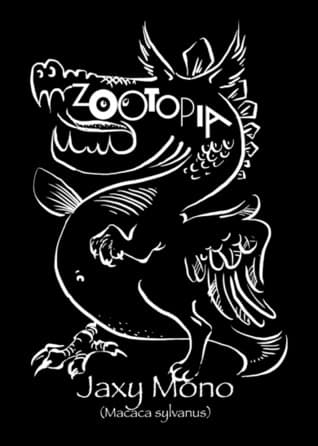
The mention of Dmitry Pousirev's illustrations is not just an aesthetic detail; it shows the important role of visual art in conveying complex or purely imaginative scientific and philosophical ideas. Especially in a book that invents 'weird and wonderful creatures' or depicts abstract concepts like 'Mother Nature walking out,' illustrations provide concrete anchors for the reader's imagination, making the fantastical feel more real and the abstract more understandable. It highlights that effective communication, especially in speculative or conceptual areas, often benefits greatly from a blend of text and imagery.
“Beautifully illustrated with drawings by renowned artist Dmitry Pousirev...”
In the book: The direct acknowledgment of Dmitry Pousirev's 'beautiful' illustrations as an integral part of the book.
Try this: When presenting information, consider how visual aids can clarify, enhance, and make your message more memorable and engaging, especially for abstract or novel concepts.
Related ideas: scientific-illustration, visual-communication, art-and-science, conceptual-art
The Enduring Resonance of 'Once-Read-Never-Forgotten' Tales
Stories with deep meaning and imaginative power leave a lasting impression.
Mono's description of the stories as 'classic once-read-never-forgotten' speaks to the lasting impact that well-crafted narratives, especially those with both whimsy and philosophical depth, can have on an audience. It suggests that these are not just fleeting diversions but tales that stay with the reader, prompting reflection long after the book is closed. This lasting resonance is a sign of truly impactful storytelling, suggesting that the book's mix of entertainment and intellectual provocation creates a memorable and thought-provoking experience.
“It contains such classic once-read-never-forgotten stories as Mother Nature, The Arctic Penguin, The Crow, and The Eletiger.”
In the book: The specific phrase 'classic once-read-never-forgotten stories' used to describe the collection's individual tales.
Try this: In your own creative or communicative efforts, aim for depth and originality. Strive to create content that isn't just consumed but remembered and reflected upon, offering lasting value.
Related ideas: literary-impact, memorable-stories, narrative-psychology, lasting-impression
The Playful Nature of Scientific Inquiry
Serious questions about life and evolution can be explored through humor and imagination.
Mono shows that intellectual curiosity and scientific inquiry do not have to be dry or overly academic. By posing playful 'what if' scenarios, like inventing creatures with an expanded genetic alphabet, the book encourages wonder and imaginative engagement with deep biological questions. This lighthearted approach makes complex topics like the limits of genetic diversity or the nature of life itself approachable and exciting, proving that humor and imagination are powerful tools for stimulating thought and encouraging a deeper appreciation for the mysteries of the natural world.
“So, just imagine what weird and wonderful creatures could be invented using all twenty-six letters of the alphabet; from doggypotamuses and rat-toothed catypusses, to winged cargo mammoths and elephanzees. The possibilities are mind-boggling!”
In the book: The enthusiastic and imaginative language used to describe the 'weird and wonderful creatures' and the 'mind-boggling' possibilities.
Try this: Approach learning and problem-solving with a sense of playfulness and curiosity. Don't be afraid to ask 'what if' questions and explore unconventional ideas, even if they seem absurd at first.
Related ideas: scientific-imagination, playful-learning, speculative-fiction, curiosity
Zootopia Quotes
“In Zootopia, anyone can be anything.”
“Fear always works.”
“It's called a hustle, sweetheart.”
“Life's a little bit messy. We all make mistakes. No matter what type of animal you are, change starts with you.”
“Never let them see that they get to you.”
“I thought this city would be a perfect place where everyone got along and anyone could be anything. Turns out, life's a little bit more complicated than a slogan on a bumper sticker.”
“You think the world is gonna change? It's not. It's just gonna get worse.”
“Are you going to be a hero, or are you just going to go home?”
“I am not a dumb bunny!”
“It's great to have dreams, but you gotta have a good head on your shoulders, too.”
“No matter what, I will never let anyone tell me what I can or cannot be.”
“It's okay to be scared. But it's not okay to give up.”
“When the world says, 'Give up,' hope whispers, 'Try one more time.'”
Quiz
10 questions on the main ideas. Each answer comes with a short explanation.
Question 1
Which animal is NOT mentioned as having a story within 'Zootopia'?
- A crow
- A penguin
- A research scientist
- White lab rats
Show answer
C. A research scientist The research scientist is the subject of an experiment by two white lab rats, not an animal that tells a story or is featured as the main character in a named tale.
Question 2
Who is the author of 'Zootopia'?
- Dmitry Pousirev
- Jaxy Mono
- Mother Nature
- Homo sapiens
Show answer
B. Jaxy Mono The book explicitly states, 'These are some of the wonderful tales told by the world-famous “monkey with a typewriter”, the macaque Jaxy Mono, in Zootopia'.
Question 3
What is the title of Jaxy Mono's previous 'smash hit of 'monkey lit''?
- Zootopia
- The Arctic Penguin
- The Book Of Dubious Beasts
- Mother Nature
Show answer
C. The Book Of Dubious Beasts The description states 'Zootopia - his follow-up to his smash hit of “monkey lit”, The Book Of Dubious Beasts'.
Question 4
According to the 'ABOUT ZOOTOPIA' section, what is the 'alphabet' Mother Nature uses to write the book of life?
- The twenty-six letters of the English alphabet
- The four letters A, T, G, and C
- A series of pictograms and symbols
- Sounds and vibrations
Show answer
B. The four letters A, T, G, and C The text explicitly states: 'The book of life is written with an alphabet of only four letters – A, T, G and C.'
Question 5
Which of the following creatures is presented as a hypothetical example of what could be invented using all twenty-six letters of the alphabet?
- A stoned crow
- An Arctic Penguin
- An elephanzee
- A macaque
Show answer
C. An elephanzee The 'ABOUT ZOOTOPIA' section lists 'elephanzees' as an example of 'weird and wonderful creatures' invented with all twenty-six letters.
Question 6
What is the primary metaphor used to compare Mother Nature's creative process to Jaxy Mono's authorship?
- A painter with a brush
- A chef with ingredients
- A monkey with a typewriter
- A sculptor with clay
Show answer
C. A monkey with a typewriter The text asks, 'But isn’t Mother Nature herself really no more than a monkey with a typewriter; blindly tapping out A, T, G and C over and over...?' directly linking her to the author's persona.
Question 7
What is the age range for which 'Zootopia' is considered suitable?
- Children under 11 only
- Adults over 18 only
- From 11 to 111
- Any age without restriction
Show answer
C. From 11 to 111 The description explicitly states, 'Zootopia is suitable for children and adults from 11 to 111.'
Question 8
What is the core argument presented in the 'ABOUT ZOOTOPIA' section regarding the creation of fictitious life-forms by a macaque?
- It is impossible for a macaque to create a fictitious life-form without conscious intent.
- The macaque's random tapping is analogous to Mother Nature's blind process of evolution, making fictitious life-forms plausible.
- The macaque must possess a God-like author with conscious intent to create valid life-forms.
- Only human authors can create compelling fictitious life-forms.
Show answer
B. The macaque's random tapping is analogous to Mother Nature's blind process of evolution, making fictitious life-forms plausible. The argument counters cynicism by stating, 'But isn’t Mother Nature herself really no more than a monkey with a typewriter; blindly tapping out A, T, G and C over and over, until she hits upon the code of a valid life-form? And, surely, what’s good enough for Mother Nature should be good enough for us, her children…'
Question 9
What is implied about the species 'Homo sapiens' in the 'ABOUT ZOOTOPIA' section?
- They are the most evolved and superior species.
- They are a 'singularly pompous, pretentious, and self-important species of old world monkey'.
- They are the only species capable of conscious intent in creation.
- They are the primary audience for 'Zootopia'.
Show answer
B. They are a 'singularly pompous, pretentious, and self-important species of old world monkey'. The text describes Homo sapiens as 'a singularly pompous, pretentious, and self-important species of old world monkey', indicating a critical perspective.
Question 10
The introduction mentions that 'Britain goes to the dogs. And to the cats. But, mostly, to the dogs.' What does this detail primarily suggest about the stories within 'Zootopia'?
- The stories are set exclusively in Britain.
- The book features anthropomorphic animals taking over human societal roles.
- The book is a political commentary on British society.
- The author Jaxy Mono is British.
Show answer
B. The book features anthropomorphic animals taking over human societal roles. This phrase strongly implies a scenario where animals, specifically dogs and cats, gain dominance or significant roles in society, aligning with the concept of 'Zootopia' as a collection of animal-centric tales, often anthropomorphic.
Zootopia FAQ
What kind of stories can I expect in Jaxy Mono's Zootopia?
Zootopia features a collection of unique and imaginative tales, including scenarios like Mother Nature abandoning humanity, a crow's spiritual awakening, and lab rats experimenting on a scientist. The stories often involve animals in unexpected and thought-provoking roles.
Who is Jaxy Mono, the author of Zootopia?
Jaxy Mono is playfully described as a 'world-famous monkey with a typewriter,' a macaque who has penned this follow-up to his previous hit, 'The Book Of Dubious Beasts.' This persona highlights the book's creative and unconventional approach to storytelling.
Is Zootopia suitable for children, or is it more for adults?
Zootopia is designed to appeal to a wide audience, suitable for both children and adults 'from 11 to 111.' Its imaginative stories and themes can be enjoyed by various age groups, offering different layers of interpretation.
What is the core concept behind the 'monkey with a typewriter' metaphor in Zootopia?
The 'monkey with a typewriter' metaphor explores the idea of random generation and natural selection, comparing it to Mother Nature's process of creating life using just four genetic letters. The book playfully extends this concept to imagine new creatures using all twenty-six letters of the alphabet.
Does 'Zootopia' connect to the movie of the same name?
No, 'Zootopia' by Jaxy Mono is an entirely separate and original work of fiction, not related to the Disney animated film. The title refers to a world of animals and imaginative creatures created through unique storytelling.
What kind of illustrations are included in Zootopia?
Zootopia is beautifully illustrated with original drawings by renowned artist Dmitry Pousirev. These illustrations complement the imaginative tales, bringing the unique characters and scenarios to life visually for readers.
How does Zootopia differ from Jaxy Mono's previous book, 'The Book Of Dubious Beasts'?
Zootopia serves as a follow-up to 'The Book Of Dubious Beasts,' continuing Jaxy Mono's signature style of imaginative, animal-centric storytelling. While 'Dubious Beasts' introduced readers to unique creatures, 'Zootopia' expands on this by presenting more elaborate narratives and thought-provoking scenarios.
What kind of themes does Zootopia explore through its animal stories?
Zootopia explores themes of nature, creation, human-animal interactions, and the absurdities of existence. Through its unique fables, it prompts readers to consider different perspectives on life, evolution, and consciousness.
About the author

Jaxy Mono is an author known for their non-fiction works, including "Zootopia." Their writing often explores themes related to society and culture, aiming to provide insights into various aspects of life. Mono's contributions to literature focus on engaging readers with informative content.
Similar books
- Sapiens: A Brief History of Humankind
Yuval Noah Harari
4.4 (502k) average on GoodreadsPsychologyExplores the power of shared fictions and narratives in shaping human history and understanding our place in the world.
- The Selfish Gene
Richard Dawkins
4.1 (140k) average on GoodreadsPsychologyDiscusses fundamental biological mechanisms and challenges conventional views of life, albeit from a more gene-centric perspective.
- The Diary of a Young Girl
Anne Frank
4.2 (2.7M) average on GoodreadsBiographyDuring the Nazi occupation, a teenage girl's diary, written from a secret annex, shares observations on humanity, hope, and the wait for freedom.
- Twisted 1. Twisted love
Ana Huang
3.7 (1.7M) average on GoodreadsA quiet billionaire with a difficult past finds his guarded heart opening to the woman he must protect, but their growing passion uncovers dangerous secrets and a shared, traumatic history.
- Eat, Pray, Love
Elizabeth Gilbert
3.6 (1.5M) average on GoodreadsLifestyleA heartbroken writer leaves her conventional life for a year-long global search for pleasure in Italy, spiritual devotion in India, and unexpected love and balance in Bali.
- Night
Elie Wiesel
4.3 (970k) average on GoodreadsBiographyIn the darkness of Auschwitz and Buchenwald, a teenage Elie Wiesel faces the extermination of his family, the loss of his faith, and the lasting scars of humanity's deepest cruelty.





Enjoyed the summary?
A summary gives you the shape of the book. The book itself has the detail, the examples and the voice.
Find Zootopia on AmazonAs an Amazon Associate, BookBrief earns from qualifying purchases. How we're funded