

Synopsis
Covers the whole plot, including the ending.
- Difficulty
- Easy
- Pacing
- Fast
- Mood
- Whimsical, Adventurous, Humorous, Imaginative
- Read it if
- You love whimsical, rhyming stories with a touch of the absurd and a strong, adventurous female protagonist.
- Skip it if
- You dislike rhyming books or prefer realistic fiction without fantastical elements.
Zorgamazoo Plot Summary
Covers the whole plot, including the ending.
The Miserable Life of Katrina Katrell
Katrina Katrell is a young orphan living a dull life in a run-down orphanage run by Mrs. Krabtree. Mrs. Krabtree dislikes imagination and joy, enforcing strict chores and bland meals. Katrina dreams of adventure and explores the world through her books. Her only comfort is her imagination and the stories she creates, much to Mrs. Krabtree's disapproval. One night, while retrieving a dropped book, Katrina sees a strange, furry creature trying to steal a spoon, which sparks her curiosity and leads her to an unexpected path.
The Spoon Thief and the Unlikely Escape
Intrigued by the creature, Katrina follows it and discovers it is a peculiar, furry being named Mortimer Yorgle. Mortimer, who speaks in rhymes, explains he is from Zorgamazoo and is collecting spoons for a mysterious reason. He accidentally opens a portal, and Katrina, eager for adventure, takes the chance. She clings to Mortimer as they are pulled through a swirling vortex, leaving the orphanage behind. They land in Zorgamazoo, a vibrant, bizarre world with rhyming inhabitants and strange customs, a stark contrast to Katrina's old life.
A World Without Rhyme
In Zorgamazoo, Mortimer tells Katrina why he collects spoons: to save his world. He explains that Zorgamazoo is losing its rhymes, causing its society to fall apart. The inhabitants, who naturally speak in rhyme, struggle to communicate, and their world is becoming chaotic. This 'rhyme blight' is linked to the 'Grand Poobah,' who is holding a lottery to find a solution. Mortimer believes the spoons are important to understanding and reversing this problem, and he asks for Katrina's help.
The Grand Poobah's Lottery
Katrina and Mortimer investigate the Grand Poobah's lottery. The Poobah, a seemingly kind leader, announced that the lottery winner will get a 'cure' for the rhyme blight, but the details are secret. Many Zorgamazoo inhabitants, desperate for a solution, have entered, hoping to restore their world. However, Mortimer doubts the Poobah's true intentions, suspecting a more sinister plot. He believes the disappearance of rhymes is not natural but deliberate, and the lottery is a distraction.
The Kidnapped Rhymers
As they investigate, Katrina and Mortimer find a disturbing truth: the lottery winners are not being cured. Instead, the Poobah's henchmen, the 'Rhyme-Snatchers,' kidnap them and take them to a hidden facility called the 'Rhyme-o-torium.' These abducted people are Zorgamazoo's best rhymers, suggesting a deliberate targeting of those who embody the world's essence. This confirms Mortimer's suspicions about the Poobah's true motives and makes their mission more urgent, as they realize the Poobah is removing the very people who could help restore the rhymes.
The Secret Map and the Whispering Woods
To find the Rhyme-o-torium and rescue the rhymers, Katrina and Mortimer seek a reclusive cartographer who has a secret map. The map is hard to read and leads them through the dangerous Whispering Woods, a place with strange creatures and illusions. Katrina's quick thinking and problem-solving, with Mortimer's knowledge of Zorgamazoo, help them overcome obstacles. Their bond grows on this journey, and Katrina's adventurous spirit proves her value. They eventually find the hidden entrance to the Rhyme-o-torium, a heavily guarded fortress.
Infiltration of the Rhyme-o-torium
Using a clever disguise and distractions, Katrina and Mortimer get into the heavily guarded Rhyme-o-torium. Inside, they see the truth: the Grand Poobah is not curing the rhyme blight but causing it. He is draining the kidnapped rhymers of their rhyming ability, and with it, their joy and individuality. The spoons Mortimer collected are components in the Poobah's machine, designed to extract and store all of Zorgamazoo's rhymes for his own use. The Poobah plans to become the sole source of rhyme, controlling the entire world.
The Grand Poobah's Motivation
When they confront the Grand Poobah, Katrina and Mortimer learn his full motivation. The Poobah, once a brilliant but overlooked inventor, felt restricted by Zorgamazoo's rhyming chaos. He believed constant rhyming led to disorder. He wanted a world of strict logic and predictability, where he was in control. His plan is to remove Zorgamazoo's spontaneous rhymes, making him the only one who can provide them, creating a perfectly ordered, though dull, society. He sees himself as a savior, bringing sanity to a world he thinks is mad.
The Zorgamazoo Games and the Great Escape
To stop the Poobah, Katrina and Mortimer must compete in the 'Zorgamazoo Games,' a bizarre, multi-stage competition created by the Poobah. This complex game combines cricket, swimming, and chess, designed to be impossible to win without the Poobah's specific logic. However, Katrina's creativity and ability to think differently, combined with Mortimer's rhyming insights, allow them to challenge the Poobah's rules. They use their skills to outmaneuver the Poobah, aiming to win the game, the freedom of the rhymers, and the return of Zorgamazoo's rhyming culture.
Restoring the Rhymes
Through wit, bravery, and luck, Katrina and Mortimer disrupt the Poobah's rhyme-draining machine. They reverse its flow, causing rhymes to burst forth, flooding the Rhyme-o-torium and then all of Zorgamazoo. The kidnapped rhymers are freed, their rhyming abilities restored, and the world begins to heal. The Poobah, stripped of his power, is left with a taste of his own bland medicine. Zorgamazoo returns to its vibrant, rhyming self, celebrating its unique culture and the defeat of the Grand Poobah's oppressive rule. Katrina is a hero.
A Choice and a Farewell
With Zorgamazoo saved, Katrina faces a choice: return to her dreary orphanage or stay in the fantastical world that has accepted her. While she has found belonging and purpose in Zorgamazoo, she also wants a world that understands her and where she can continue to grow. After heartfelt goodbyes to Mortimer and her Zorgamazoo friends, Katrina decides to return home, but with new confidence and perspective. She carries the lessons learned and friendships made, knowing she has made an impact on an entire world.
A New Beginning for Katrina
Katrina returns to her world, no longer the timid orphan she once was, but a confident, imaginative young woman. She is back at the orphanage, but her experiences in Zorgamazoo have changed her. She no longer fears Mrs. Krabtree and begins to challenge the oppressive rules, bringing creativity and joy to her environment. While she doesn't speak in rhymes like the Zorgamazoo inhabitants, her language is richer, her imagination brighter, and her spirit strong. She carries the magic of Zorgamazoo within her, showing that even in ordinary places, adventure and wonder can be found.
Zorgamazoo Characters
Katrina Katrell
Protagonist
An imaginative and adventurous orphan girl who saves Zorgamazoo.
Katrina is a young orphan with a vivid imagination and a deep love for stories and adventure. She is initially meek and suppressed by the harsh environment of Mrs. Krabtree's orphanage, but possesses an inner strength and a keen intellect. Her resourcefulness, quick thinking, and ability to think outside the box are crucial to solving the mysteries of Zorgamazoo. She values creativity, freedom, and the joy of expression, making her the perfect champion against the Grand Poobah's oppressive regime.
Relationships: Mortimer Yorgle (Unlikely companions and close friends, working together to save Zorgamazoo.); Mrs. Krabtree (Antagonistic guardian, representing the oppressive forces Katrina escapes from.); Grand Poobah (Main antagonist, against whom Katrina directly opposes in ideology and action.)
Mortimer Yorgle
Supporting
A furry, rhyming creature from Zorgamazoo who enlists Katrina's help.
Mortimer is a small, furry, and perpetually rhyming creature from Zorgamazoo. He is earnest, somewhat nervous, and deeply concerned about the 'rhyme blight' affecting his world. Despite his timid nature, he possesses a strong sense of duty and a surprising amount of knowledge about Zorgamazoo's customs and dangers. He acts as Katrina's guide and loyal companion, providing comic relief and essential information. His rhyming speech is both a charm and a source of frustration for him as the rhymes disappear.
Relationships: Katrina Katrell (Close friends and co-conspirators in saving Zorgamazoo.); Grand Poobah (Opponent, as Mortimer recognizes the Poobah's villainy early on.)
Mrs. Krabtree
Antagonist (initial)
The cruel, imagination-hating matron of Katrina's orphanage.
Mrs. Krabtree is the strict and joyless matron of the orphanage where Katrina lives. She despises imagination, creativity, and anything that deviates from her rigid rules and routines. She represents the oppressive, mundane world Katrina escapes from, valuing order and conformity above all else. Her character serves as a stark contrast to the vibrant, imaginative world of Zorgamazoo and highlights Katrina's longing for freedom and self-expression. She is not evil in a fantastical sense, but rather a symbol of stifling normalcy.
Relationships: Katrina Katrell (Abusive guardian to Katrina, creating the catalyst for her escape.)
The Grand Poobah
Antagonist
The seemingly benevolent but secretly tyrannical ruler of Zorgamazoo.
The Grand Poobah is the main antagonist of the story, initially appearing as the leader trying to solve Zorgamazoo's rhyme crisis. In reality, he is the architect of the 'rhyme blight,' driven by a desire for absolute control and a deep-seated contempt for Zorgamazoo's natural, rhyming chaos. He is intelligent, manipulative, and believes his rigid, logical approach will bring order and superiority to his world. His plan involves stealing all the rhymes to make himself the sole dispenser of poetic expression.
Relationships: Katrina Katrell (Primary adversary, as Katrina's creativity directly opposes his desire for rigid control.); Mortimer Yorgle (Opponent, as Mortimer is one of the first to suspect his true intentions.)
The Rhyme-Snatchers
Supporting (Antagonistic)
The Grand Poobah's henchmen who kidnap the best rhymers.
The Rhyme-Snatchers are the Grand Poobah's loyal, albeit somewhat dim-witted, enforcers. They are responsible for carrying out the kidnappings of Zorgamazoo's most prolific rhymers and transporting them to the Rhyme-o-torium. They represent the physical manifestation of the Poobah's oppressive regime, serving as obstacles for Katrina and Mortimer. While they are antagonists, they are more instruments of the Poobah's will rather than truly evil characters themselves, often providing moments of comedic clumsiness.
Relationships: Grand Poobah (Subordinates, carrying out his orders.); Katrina Katrell (Antagonists, attempting to capture her and Mortimer.)
The Cartographer
Supporting
A reclusive map-maker who provides Katrina and Mortimer with a crucial map.
The Cartographer is a quirky, reclusive Zorgamazoo inhabitant who possesses a secret map leading to the Rhyme-o-torium. He is initially hesitant to help but is eventually persuaded by Katrina's determination and Mortimer's plight. His character highlights the hidden pockets of resistance and knowledge within Zorgamazoo, and his cryptic nature adds to the fantastical element of the world. He represents the kind of individual creativity that the Poobah seeks to suppress.
Relationships: Katrina Katrell (Aids Katrina by providing essential information.); Mortimer Yorgle (Aids Mortimer in his quest to save Zorgamazoo.)
The Rhyming Citizens of Zorgamazoo
Mentioned/Background
The ordinary inhabitants of Zorgamazoo, whose lives are disrupted by the rhyme blight.
These are the general population of Zorgamazoo, characterized by their natural, spontaneous rhyming speech. They are initially confused and distressed by the disappearance of their rhymes, and many are lured by the Grand Poobah's lottery. They represent the vibrant culture and the collective spirit that Katrina and Mortimer are fighting to save. Their suffering underscores the severity of the Poobah's actions and the importance of restoring their unique way of life.
Relationships: Katrina Katrell (Beneficiaries of her heroic actions.); Grand Poobah (Victims of his oppressive scheme.)
Zorgamazoo Themes
The Power of Imagination and Creativity
This theme contrasts Katrina's inner world with her drab orphanage and the Poobah's wish for a rhyme-free Zorgamazoo. Katrina's imaginative problem-solving, her ability to see beyond the obvious, and her love for stories are her greatest strengths. The Poobah's attempt to strip Zorgamazoo of its rhymes is an attack on creativity, showing how essential it is for joy, identity, and a rich life. The return of rhymes symbolizes imagination winning over rigid control.
“For without rhyme and rhythm, what is life but a dreary, dull affair?”
Individuality vs. Conformity
The conflict between individuality and conformity is clear through Katrina's journey. Her unique perspective and imaginative spirit are suppressed at the orphanage but celebrated in Zorgamazoo. The Grand Poobah represents extreme conformity, seeking to remove all spontaneous rhymes and individual expression to create an ordered, monotonous world under his control. The story champions the beauty of individual quirks and diverse ways of thinking, showing how enforced conformity leads to a loss of joy and identity.
“A world without whimsy, a life without wit, is a world where no one can truly fit.”
The Importance of Language and Expression
Language, specifically rhyming language, is the core of Zorgamazoo's culture and identity. The 'rhyme blight' is not just a problem but an threat, as it takes away the inhabitants' ability to communicate and express themselves. The story shows how language shapes our understanding of the world and ourselves. The Poobah's control over rhymes is a metaphor for censorship and the suppression of free speech, making the return of rhymes a victory for uninhibited expression.
“To lose one's rhyme is to lose one's way, to forget the words you meant to say.”
Finding Your Voice and Purpose
Katrina's journey explores finding one's voice and purpose. She starts as a quiet, overlooked orphan, her thoughts unheard. In Zorgamazoo, she discovers her courage, intelligence, and leadership. By saving a world, she realizes her worth and the power of her perspective. Her return to the orphanage, no longer timid but confident, means she has truly found her voice, asserting her identity and values.
“For even the smallest of voices can make the biggest of noises.”
Adventure and Escapism
The book is an adventure, and escapism is present from Katrina's initial desire to leave the orphanage. Zorgamazoo offers a fantastical escape from her mundane and oppressive reality. However, the story goes beyond mere escapism, showing that true adventure involves facing challenges and making a real difference. Katrina doesn't just escape; she actively engages with the new world, changing it and herself. This theme suggests that while escapism can be a start, true fulfillment comes from active participation.
“The world outside, so vast and wide, held wonders she could not abide to hide.”
Plot Devices & Literary Techniques
Rhyming Narrative
The entire book is written in anapestic tetrameter, a consistent rhyming verse.
The most distinctive plot device is the book's consistent rhyming narrative. Every line of the story, including dialogue and descriptions, adheres to a strict anapestic tetrameter. This device not only creates a unique and whimsical tone but also directly ties into the central conflict of Zorgamazoo – the disappearance of rhymes. The narrative style immerses the reader in the world's inherent rhythm and makes the loss of rhymes for the characters feel more profound and unsettling. It's a meta-device, where the form mirrors the content.
The Portal/Interdimensional Travel
A magical gateway that transports Katrina between her world and Zorgamazoo.
The portal serves as the primary mechanism for Katrina's journey into the fantastical. It's an accidental gateway, activated by Mortimer, symbolizing a sudden, unexpected break from the mundane. This device is crucial for initiating the plot, allowing for the juxtaposition of Katrina's ordinary world with the extraordinary world of Zorgamazoo. It represents the opportunity for escape and adventure, acting as a direct catalyst for Katrina's transformation and the unfolding of the central conflict.
The Rhyme-o-torium
A hidden facility where the Grand Poobah extracts and stores all of Zorgamazoo's rhymes.
The Rhyme-o-torium functions as the main antagonist's lair and the physical manifestation of his oppressive plan. It is the central destination for Katrina and Mortimer's quest, representing the heart of the problem they must solve. As a 'machine' that steals joy and creativity, it solidifies the abstract concept of 'rhyme blight' into a tangible, defeatable threat. Its existence and function drive much of the plot's investigative and action sequences, leading to the climax.
The Zorgamazoo Games
A bizarre, multi-faceted competition designed by the Grand Poobah to maintain control.
The Zorgamazoo Games act as a climactic challenge that Katrina and Mortimer must overcome. This plot device is a direct test of Katrina's ingenuity and unconventional thinking against the Poobah's rigid logic. By combining elements of various sports in an illogical manner, it highlights the Poobah's twisted sense of order and his contempt for natural playfulness. Winning the games becomes the symbolic act of defeating the Poobah's oppressive system and restoring the world's inherent joyous chaos.
Zorgamazoo Quotes
“The wind was a mischievous prankster, tugging at her hat and trying to steal her breath.”
“Words, she realized, were not just sounds; they were tiny, invisible doors that could lead you anywhere.”
“It’s not about being brave all the time, it’s about being brave when it matters.”
“The world was full of things that made no sense, and perhaps that was its greatest charm.”
“A rhyme, you see, is a kind of magic, a way to make the ordinary extraordinary.”
“Even the smallest creatures can have the biggest hearts.”
“Sometimes, the best way to find your way is to get a little lost first.”
“Laughter, like a good poem, could brighten even the darkest corner.”
“The most important stories are often the ones we tell ourselves.”
“Fear can be a tricky thing. It can make you run, or it can make you fight.”
“Every whisper of a rhyme was a step closer to understanding.”
“There's a rhythm to everything, if you just listen close enough.”
“To truly see, you must look with more than just your eyes.”
“A promise, once made, is a thread that connects you to another.”
Quiz
10 questions on the plot and the characters. Each answer comes with a short explanation.
Question 1
What is Katrina Katrell's main complaint about her life at the beginning of the story?
- Her parents make her do too many chores.
- Her schoolwork is too difficult.
- Her life is terribly boring and monotonous.
- She doesn't have any friends.
Show answer
C. Her life is terribly boring and monotonous. Katrina Katrell feels her life is devoid of excitement and adventure, constantly wishing for something more interesting to happen.
Question 2
What is the name of the creature that first appears in Katrina's closet?
- A Grickle-Groo
- A Jibber-Jabber
- A Gricklegrum
- A Snickle-Snout
Show answer
C. A Gricklegrum The mysterious creature that emerges from Katrina's closet, leading her to Zorgamazoo, is a Gricklegrum.
Question 3
What is the primary purpose of the 'Lottery of Lunacy' in Zorgamazoo?
- To select citizens for public office.
- To choose individuals for 'boredom therapy' (lobotomies).
- To award prizes for good citizenship.
- To decide who gets to play the sport of 'Zorgball'.
Show answer
B. To choose individuals for 'boredom therapy' (lobotomies). The Lottery of Lunacy is a grim event where 'winners' are subjected to lobotomies, or 'boredom therapy', to quell any signs of imagination or individuality.
Question 4
What peculiar characteristic defines the inhabitants of Zorgamazoo?
- They communicate only through telepathy.
- They are all brilliant inventors.
- They speak entirely in rhyme.
- They have multiple limbs.
Show answer
C. They speak entirely in rhyme. A central stylistic element of the book, and a key detail about Zorgamazoo, is that all its inhabitants speak in rhyme.
Question 5
Which character is responsible for the 'boredom therapy' and the overall suppression of creativity in Zorgamazoo?
- The Grand Poohbah
- The Master of Mirth
- The Dreadful Doctor Dross
- The Head Gricklegrum
Show answer
C. The Dreadful Doctor Dross Doctor Dross is the primary antagonist, orchestrating the 'boredom therapy' (lobotomies) and suppressing imagination throughout Zorgamazoo.
Question 6
What is the ultimate goal of Katrina and the Gricklegrum's quest?
- To find a legendary treasure.
- To escape Zorgamazoo and return home.
- To restore imagination and save Zorgamazoo from boredom.
- To win the Zorgball championship.
Show answer
C. To restore imagination and save Zorgamazoo from boredom. Their journey is driven by the need to reverse the effects of Doctor Dross's work and bring back creativity and joy to the Zorgamazoo citizens.
Question 7
The sport played in Zorgamazoo, described as a mix of cricket, swimming, and chess, is called what?
- Zorgball
- Grickle-Cricket
- Mind-Meld Match
- Splash-and-Dash
Show answer
A. Zorgball The unique and complex sport central to Zorgamazoo's culture is known as Zorgball.
Question 8
What is the 'secret map' that Katrina and the Gricklegrum discover truly a map of?
- The hidden location of Doctor Dross's lair.
- The human brain, detailing pathways of imagination.
- The constellations of Zorgamazoo's sky.
- Ancient Zorgamazoo trade routes.
Show answer
B. The human brain, detailing pathways of imagination. The 'secret map' is not a geographical map, but a diagram of the human brain, crucial for understanding how to restore imagination.
Question 9
How do Katrina and the Gricklegrum ultimately combat the effects of the 'boredom therapy'?
- By administering a special antidote potion.
- By engaging the affected individuals in rhyming games and creative expression.
- By performing a complex Zorgamazoo ritual dance.
- By destroying Doctor Dross's brain-washing machine.
Show answer
B. By engaging the affected individuals in rhyming games and creative expression. The solution lies in re-igniting their imaginations through the very rhyming and creative play that was suppressed, rather than a magical cure or destruction of a machine.
Question 10
What is the overarching theme or message conveyed by 'Zorgamazoo'?
- The importance of following rules and order.
- The power of imagination and the dangers of conformity/boredom.
- The necessity of scientific advancement.
- The thrill of competitive sports.
Show answer
B. The power of imagination and the dangers of conformity/boredom. The entire narrative revolves around Katrina's journey to save Zorgamazoo from the dullness imposed by Doctor Dross, highlighting the vital role of creativity and individuality.
Zorgamazoo FAQ
What is the central conflict that drives the plot of Zorgamazoo?
The central conflict revolves around Katrina Katrell's quest to save the universe from the insidious 'Boredom' unleashed by the nefarious Mr. Vilmer and his company, Monotonia, who are using the 'Lottery' to kidnap imaginative creatures from various worlds, including Zorgamazoo, and subject them to lobotomies to create a uniformly dull and compliant populace.
Who is Katrina Katrell and what makes her an unlikely hero?
Katrina Katrell is a young girl from Earth who initially feels out of place and misunderstood due to her vivid imagination and love for stories. She becomes an unlikely hero because she is not a native of Zorgamazoo and possesses no special powers other than her intelligence, resourcefulness, and unwavering belief in the power of imagination, which proves crucial in combating Monotonia's efforts.
Describe the world of Zorgamazoo and its inhabitants.
Zorgamazoo is a vibrant, chaotic, and imaginative alien world filled with unique creatures and fantastical landscapes, governed by an eccentric king. Its inhabitants, like the fuzzy, six-legged creature named Mornix, thrive on creativity, individuality, and a general lack of rigid order, making it a prime target for Monotonia's 'anti-imagination' campaign.
What is the significance of the 'Lottery' in the story?
The 'Lottery' is a deceptive mechanism employed by Mr. Vilmer and Monotonia to abduct imaginative creatures from various worlds, including Zorgamazoo. It appears to be a game of chance offering a prize, but in reality, it's a trap designed to capture individuals who exhibit creativity and independent thought, allowing Monotonia to perform lobotomies on them and spread universal boredom.
How does the sport of 'Squicket-Chess' reflect the themes of the book?
Squicket-Chess, a hybrid of cricket, swimming, and chess, perfectly embodies the book's theme of embracing creativity and breaking conventional boundaries. Its absurd, multi-faceted nature highlights the beauty of imagination and the joy found in unexpected combinations, directly contrasting Monotonia's goal of uniformity and predictability.
Are there any subtle clues about the true nature of Mr. Vilmer or Monotonia early in the narrative?
Early clues regarding Mr. Vilmer's true intentions include the overly sterile and uniform appearance of Monotonia's operations and the suspiciously high number of 'winners' in the Lottery, all of whom seem to disappear. The seemingly benign goal of 'efficiency' used to justify their actions also subtly hints at a more sinister agenda to suppress individuality.
What is the true origin of 'Boredom' and how does it relate to Mr. Vilmer?
The true origin of 'Boredom' is revealed to be Mr. Vilmer himself, or rather, his own profound personal experience with boredom and a desire to impose his own lack of imagination onto the entire universe. He believes that by eliminating creativity, he can achieve a perfect, predictable, and ultimately 'safe' existence, free from the 'chaos' of imagination.
Is there a deeper meaning behind the rhyming structure of the entire book?
The consistent rhyming structure throughout the entire book serves as a meta-narrative element, subtly reinforcing the theme of creativity and the joy of language. It demonstrates a playful defiance against the dullness that Monotonia seeks to impose, showcasing the inherent imaginative potential within structured forms and mirroring the lively, unpredictable nature of Zorgamazoo.
How does Katrina's initial feeling of being an 'outsider' on Earth prepare her for her role in Zorgamazoo?
Katrina's experience of feeling like an outsider on Earth, where her imagination is often misunderstood or dismissed, directly prepares her for Zorgamazoo by fostering resilience and a strong sense of self. This isolation makes her more empathetic to the plight of the kidnapped creatures and strengthens her resolve to fight for individuality and creativity, values she cherishes but felt suppressed on her home world.
Analyze the psychological impact of the lobotomies performed by Monotonia.
The lobotomies performed by Monotonia represent a terrifying psychological assault, systematically stripping away an individual's unique personality, creativity, and memories, leaving them empty and compliant. This process is designed to induce profound conformity and emotional nullification, effectively erasing their essence and turning them into tools for Monotonia's bland, orderly universe.
What psychological vulnerabilities does Mr. Vilmer exploit in his victims?
Mr. Vilmer exploits the desire for order and predictability, as well as a potential underlying fear of the unknown or the overwhelming nature of boundless imagination, in his victims. He preys on the idea that uniformity can bring peace, subtly convincing some that their individuality is a burden, making them susceptible to the 'comfort' of enforced boredom and conformity.
How does the bond between Katrina and Mornix evolve, and what psychological needs does it fulfill for both?
The bond between Katrina and Mornix evolves from initial distrust to deep friendship and mutual reliance. For Katrina, Mornix provides companionship, validation for her imaginative spirit, and a connection to Zorgamazoo. For Mornix, Katrina offers a renewed sense of hope and purpose in fighting Monotonia, fulfilling his need for a partner in resisting the encroaching boredom and saving his world.
Could 'Boredom' be interpreted as a metaphor for societal pressures to conform?
'Boredom' can definitely be interpreted as a powerful metaphor for societal pressures to conform, particularly in educational systems or workplaces that prioritize rote learning and uniformity over creativity and individual expression. Monotonia's goal of a 'perfectly orderly' universe, achieved by suppressing imagination, mirrors real-world anxieties about losing one's unique identity to fit in.
What is the ultimate message or moral of Zorgamazoo regarding imagination?
The ultimate message of Zorgamazoo is a resounding affirmation of the vital importance of imagination, creativity, and individuality. It champions the idea that these qualities are not just sources of joy and wonder, but essential forces for resilience, problem-solving, and ultimately, for saving the universe from the stifling grip of conformity and despair.
Is there a subtle critique of consumerism or corporate control embedded within Monotonia's actions?
Yes, Monotonia's corporate structure and its systematic, profit-driven approach to spreading 'Boredom' can be interpreted as a subtle critique of consumerism and unchecked corporate control. Their 'Lottery' and the subsequent 'processing' of individuals reflect how modern corporations can manipulate desires and standardize experiences, potentially at the cost of genuine human expression and diversity.
How does the resolution of the story reinforce the themes of the book?
The resolution, where imagination and creativity ultimately triumph over Monotonia's attempts at uniformity, strongly reinforces the book's themes. The restoration of the kidnapped creatures' imaginations and the joyous, vibrant return to Zorgamazoo demonstrate that true fulfillment comes from embracing individuality, art, and the boundless possibilities of the mind, rather than sterile order.
What role does King Zorgamazoo play in the narrative, beyond being a figurehead?
King Zorgamazoo, while initially seeming like an eccentric figurehead, represents the heart and soul of Zorgamazoo's unique culture and its inherent love for the absurd and imaginative. His unwavering, if sometimes impractical, belief in the power of his world's creativity serves as a vital anchor for Katrina and Mornix, reminding them what they are fighting to protect.
How does the concept of a 'secret map' contribute to the adventure and discovery aspects of the story?
The 'secret map' acts as a classic adventure trope, symbolizing the journey of discovery, both external through Zorgamazoo's fantastical landscape and internal for Katrina as she uncovers her own courage and resourcefulness. It provides a tangible goal and a sense of progression, driving the characters through various challenges and revealing new facets of their world.
What makes the antagonists, Mr. Vilmer and Monotonia, particularly effective villains for a children's book?
Mr. Vilmer and Monotonia are effective villains because they embody an abstract but universally relatable threat: boredom and the suppression of joy and individuality. Their methods, like the deceptive 'Lottery' and the horrifying lobotomies, are chillingly simple yet profoundly impactful, making the stakes clear and the fight for imagination deeply resonant for young readers.
Similar books
- The Phantom Tollbooth
Norton Juster
4.2 (242k) average on GoodreadsFantasyFeatures a child protagonist on a quest in a land where words and concepts come to life, with a strong sense of wordplay and whimsy.
- Coraline
Neil Gaiman
4.0 (23k) average on GoodreadsFantasyZorgamazoo is more overtly whimsical and relies heavily on its rhyming structure, whereas Coraline uses prose to delve into darker, more psychologically complex themes of childhood fears, identity, and the allure of false perfection. While both create fantastical worlds, Gaiman's world feels more menacing and emotionally resonant, allowing for deeper character introspection than Weston's primarily plot-driven, rhyming narrative.
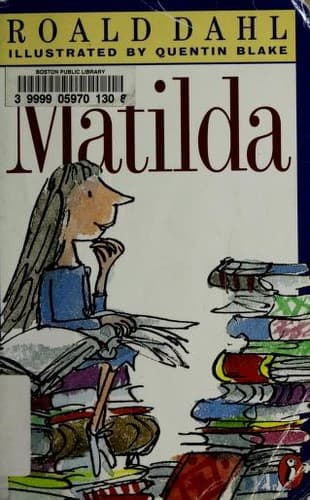
- Matilda
Roald Dahl
4.3 (648k) average on GoodreadsFantasyBoth books feature a young, intelligent protagonist escaping a miserable existence, but Matilda offers sharper social commentary and more complex, often grotesque, characterizations with a clear moral compass. Zorgamazoo focuses more on the fantastical adventure driven by its unique poetic form, while Dahl's prose allows for more varied narrative tones, from humor to genuine pathos, and deeper exploration of human cruelty and kindness without the constraint of constant rhyme.
- Harry Potter and the Sorcerer's Stone
J.K. Rowling
4.5 (7M) average on GoodreadsFantasyRescued from a miserable life under the stairs, an orphaned boy discovers he's a wizard destined for a magical school, where he uncovers a dangerous secret tied to the dark wizard who murdered his parents.
- The Hunger Games
Suzanne Collins
4.3 (6.4M) average on GoodreadsFantasyIn a future where children fight to the death on live television, Katniss Everdeen volunteers for the arena, turning a death sentence into a fight for survival and a spark of rebellion.
- 1984
George Orwell
4.2 (3.1M) average on GoodreadsPoliticsIn a future where surveillance and thought control are absolute, a man's search for truth clashes with the Party, showing that hope can be a form of rebellion.





Enjoyed the summary?
A summary gives you the shape of the book. The book itself has the detail, the examples and the voice.
Find Zorgamazoo on AmazonAs an Amazon Associate, BookBrief earns from qualifying purchases. How we're funded