
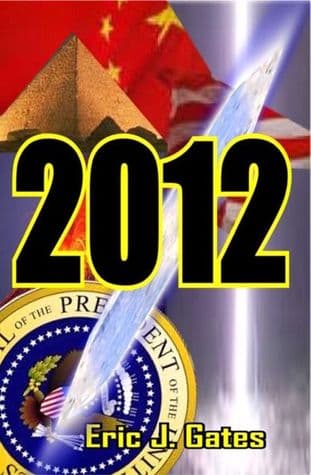
Core Idea
- Difficulty
- Medium
- Read it if
- You are fascinated by ancient prophecies colliding with modern-day geopolitical thrillers and enjoy narratives where diverse characters must unite to avert global catastrophe.
- Skip it if
- You prefer hard science fiction or strictly historical accounts, or if you are not interested in speculative fiction blending prophecy, technology, and global peril.
Key Takeaways from 2012
Ancient Prophecies, Modern Peril
The past holds the key to averting future catastrophe, if only we can decipher it in time.
The novel skillfully blends ancient prophecies, often seen as myths, into critical clues for understanding and possibly preventing a global disaster. It suggests that civilizations like the Egyptians had advanced astronomical and perhaps technological knowledge, allowing them to foresee recurring destructive events. The main conflict is the race to interpret these ancient, deliberately unclear warnings before a predetermined disaster happens. This idea challenges modern scientific arrogance, which often ignores historical or indigenous wisdom, implying some truths are too vast for any single era to fully grasp.
“The ancients weren't just stargazers; they were record-keepers, warning us across millennia.”
In the book: The discovery of ancient Egyptian artifacts and hieroglyphs that contain cryptic warnings and astronomical alignments pointing to a specific date in 2012, which the protagonists must decode.
Try this: When facing complex problems, consider looking beyond conventional modern data and research historical or even mythological accounts for patterns or insights that might have been overlooked.
Related ideas: ancient-prophecy, cyclical-destruction, historical-wisdom
Unlikely Alliances Against Global Threats
Global threats demand collaboration across unexpected divides, uniting disparate skills for survival.
The story's core depends on the highly different partnership between a cynical, alcoholic ex-Special Forces soldier and the bright, young daughter of an MIT Robotics Engineer. This pairing is more than a plot device; it is a statement that a global threat needs a mix of seemingly incompatible skills. The soldier brings tough experience, tactical skill, and a willingness to act. The young girl offers intelligence, technological insight, and a fresh perspective. Their teamwork shows that no single person or field can solve a truly major crisis. It requires a mix of practical knowledge, academic brilliance, and sheer determination.
“Sometimes, the most unexpected pairings are the ones destined to save the world.”
In the book: The soldier's combat experience is crucial in navigating dangerous situations, while the daughter's understanding of advanced robotics and data analysis is key to deciphering clues and bypassing security systems.
Try this: When building a team for a high-stakes project, prioritize diversity in skill sets and perspectives over conventional compatibility. Embrace the friction that can arise from different approaches, as it often leads to more robust solutions.
Related ideas: unlikely-heroes, cross-generational-collaboration, diverse-skill-sets
Technological Hubris vs. Natural Cycles
Human attempts to control nature often lead to unforeseen consequences, exacerbating pre-existing threats.
The book subtly criticizes humanity's overreliance on technology as a cure-all. While advanced robotics and computing are important tools for the main characters, the underlying threat often comes from natural, cyclical events that technology tries (and fails) to predict accurately or lessen effectively. The story suggests that technological progress, especially in areas like climate manipulation or resource extraction, can accidentally speed up or worsen natural disasters, making humanity partly responsible for its own potential downfall. It is a strong reminder that some forces are beyond human control, and our actions can sometimes cause more harm than good.
“We build our towers of technology, thinking we're masters, only to find ourselves dwarfed by the planet's true power.”
In the book: The increasing international tension and devastating disasters are often linked to human activity and technological miscalculations, setting the stage for the larger, natural cataclysm.
Try this: Before deploying large-scale technological solutions, especially those impacting natural systems, conduct thorough long-term impact assessments, considering potential unintended consequences and the resilience of natural cycles.
Related ideas: technological-overreach, environmental-consequences, natural-disasters
The Weight of Personal Redemption
Even a life seemingly squandered can find purpose in the face of ultimate stakes.
The main character, a middle-aged, drunken ex-Special Forces soldier, shows the theme of personal redemption. Having seemingly lost everything and with nothing left to lose, he is pushed into a mission of global importance. His past failures and self-destructive habits are not erased but become the very test that built his resilience and unique skills. This journey suggests that purpose can be found even in the darkest parts of a life, and that true heroism often comes from people who have faced their own struggles. His change from an indifferent drunk to a world-saver highlights the human ability to change under extreme pressure.
“When the world is ending, even the most broken among us might find a reason to fight, a chance to be more than their past.”
In the book: The soldier's initial reluctance and self-pity gradually give way to a renewed sense of duty and protection for his young companion, driven by the urgency of their mission.
Try this: Recognize that past mistakes or perceived failures do not define future potential. In moments of crisis, leverage your unique experiences, even the difficult ones, as strengths for overcoming challenges.
Related ideas: redemption-arc, second-chances, finding-purpose
Geopolitical Instability as a Catalyst
Existing international tensions can amplify global threats, hindering a unified response.
The novel places its crisis against a background of rising international tension, suggesting that humanity's internal conflicts and political rivalries are not just side plots but part of the coming doom. This tension prevents effective global cooperation, diverting resources and attention from the real, major threat. The inability of nations to put aside their differences and unite against a common enemy serves as a clear warning about the dangers of division when facing universal peril. It implies that while natural disasters might be unavoidable, humanity's reaction (or lack of one) is often hurt by its own political actions.
“While the planet groans, nations squabble, blind to the greater danger knocking at their doors.”
In the book: The plot involves navigating through various countries like the U.S., China, and Europe, where political and military rivalries create additional obstacles for the protagonists.
Try this: In any high-stakes situation requiring collaborative action, actively work to bridge existing divides and encourage a shared sense of urgency, emphasizing the common goal over individual or nationalistic interests.
Related ideas: geopolitical-conflict, international-cooperation, global-threat-response
The Power of Unexpected Ingenuity
Solutions often arise from unconventional thinking and the fusion of diverse perspectives.
The daughter of the MIT Robotics Engineer is not just smart; she represents unexpected cleverness. Her youth and unusual background allow her to approach problems without the fixed ideas that might limit more experienced, but less adaptable, experts. Her ability to work with advanced technology, along with her fresh view, often provides the breakthroughs needed when traditional methods fail. This shows that new solutions often come from people who think outside established ways, emphasizing the value of creating environments where new ideas and approaches are encouraged, especially during a crisis.
“When the obvious paths are blocked, the truly clever find a way through the impossible.”
In the book: She uses her knowledge of robotics and hacking to bypass security systems, decipher complex algorithms, and manipulate technology in ways others wouldn't consider, often in high-pressure situations.
Try this: Encourage 'out-of-the-box' thinking in problem-solving. When stuck, seek input from individuals with different backgrounds or less direct experience, as their fresh perspective can unlock innovative solutions.
Related ideas: innovation, unconventional-solutions, cognitive-diversity
The Illusion of Control
Despite advanced warnings and technology, humanity often struggles with the illusion of control over its destiny.
Even with ancient prophecies and advanced technology, the characters (and by extension, humanity) constantly fight against a feeling of predetermined fate. The "End of the World" scenario itself suggests a powerful, perhaps unstoppable force. The struggle is not just to prevent the disaster, but to prove that humanity has control over its own destiny. The book explores the tension between fate and free will, suggesting that while some events might be cyclical or inevitable, the human spirit's ability to fight, adapt, and seek solutions ultimately defines our existence. The main characters' mission is as much about asserting human will as it is about physical prevention.
“We chase control, but destiny often has its own plans, etched long before our first breath.”
In the book: The relentless progression of disasters and the seemingly unalterable '2012' deadline create a constant uphill battle, challenging the characters' belief in their ability to change fate.
Try this: While striving for control and planning, maintain an awareness of external factors beyond your influence. Focus your energy on what you *can* impact, while preparing for contingencies for what you cannot.
Related ideas: determinism, free-will, human-agency
The Race Against Time: Urgency as a Motivator
An impending deadline can strip away distractions and ignite ultimate focus and sacrifice.
The book's entire premise, focused on the year "2012" and the race to stop the "End of the World," creates a strong sense of urgency that drives every plot point and character decision. This extreme pressure acts as a powerful motivator, forcing characters to overcome personal flaws, form alliances, and make difficult choices. It shows how a critical deadline can clarify priorities, removing small worries and focusing all efforts on survival. The constant ticking clock highlights that some problems demand immediate, firm action, and delaying can have permanent results.
“With the clock ticking down to zero, every second becomes a battlefield, every decision a matter of life and death.”
In the book: The narrative's fast pace, rapid geographical shifts, and escalating disasters constantly remind the reader and characters of the dwindling time before the predicted cataclysm.
Try this: When facing critical deadlines, identify and eliminate distractions. Prioritize tasks ruthlessly, and communicate the urgency to your team to foster a collective, focused effort.
Related ideas: time-pressure, crisis-management, decisive-action
2012 Quotes
“The past is a memory, the future is an imagination, and the present is the only reality.”
“Sometimes, the greatest truths are found in the most unlikely of places.”
“Fear is a powerful motivator, but it can also be a blinding one.”
“The world doesn't end with a bang or a whimper, but with a series of choices.”
“Even in the darkest of times, hope can be a beacon.”
“Knowledge is power, but wisdom is knowing how to use it.”
“The human spirit, when pushed to its limits, can achieve the extraordinary.”
“What we believe to be true often shapes our reality more than the truth itself.”
“History is not just a record of the past, but a warning for the future.”
“The greatest challenges often bring out the best, and the worst, in humanity.”
“Sometimes, the only way forward is to let go of the past.”
“The threads of fate are intricate, and often, we are but weavers in their grand design.”
“True strength lies not in never falling, but in rising every time we fall.”
“The silence before the storm is often more terrifying than the storm itself.”
Quiz
10 questions on the main ideas. Each answer comes with a short explanation.
Question 1
Which ancient civilization's artifacts and knowledge are central to understanding the impending global catastrophe in '2012'?
- Mayan
- Roman
- Egyptian
- Incan
Show answer
C. Egyptian The book '2012' explicitly states that the thriller races from ancient Egypt to the present, indicating the significance of Egyptian history and artifacts to the plot.
Question 2
What is the primary motivation of the ex-Special Forces soldier at the beginning of the story?
- To seek revenge for a past injustice
- To find a new purpose after a life of disillusionment
- To protect his family from an unknown threat
- To retrieve a stolen artifact
Show answer
B. To find a new purpose after a life of disillusionment The description mentions him as 'a middle-aged, drunken, ex-Special Forces soldier, with nothing to lose,' implying a lack of personal stakes and a potential for redemption or finding purpose.
Question 3
What is the professional background of the young girl's father?
- Archaeologist
- Government Official
- M.I.T. Robotics Engineer
- Military General
Show answer
C. M.I.T. Robotics Engineer The book description explicitly states that the ex-Special Forces soldier 'teams up with the young daughter of an M.I.T. Robotics Engineer.'
Question 4
Which of the following describes the global situation serving as a backdrop to the main plot?
- Periods of widespread peace and prosperity
- Ever-increasing International tension and devastating disasters
- A world united against a common alien threat
- An economic boom leading to technological stagnation
Show answer
B. Ever-increasing International tension and devastating disasters The book's summary states, 'Against a background of ever-increasing International tension and devastating disasters,' setting the tone for the thriller.
Question 5
What is the ultimate objective of the unlikely duo formed by the ex-soldier and the engineer's daughter?
- To uncover a global conspiracy for personal gain
- To stop the End of the World
- To retrieve a lost ancient treasure
- To expose a corrupt government organization
Show answer
B. To stop the End of the World Their mission is clearly stated as: 'Stop the End of the World!'
Question 6
The narrative of '2012' spans which geographical regions in the present day?
- North America and South America
- U.S., China, and Europe
- Africa and Australia
- Russia and Japan
Show answer
B. U.S., China, and Europe The book's description specifies it 'races from ancient Egypt to the present in the U.S., China and Europe.'
Question 7
Given the description, what literary genre does '2012' primarily fit into?
- Historical Fiction
- Romantic Comedy
- Science Fiction Thriller
- Literary Drama
Show answer
C. Science Fiction Thriller The elements of 'fast-paced thriller,' 'ancient Egypt to the present,' 'M.I.T. Robotics Engineer,' and 'Stop the End of the World!' all point strongly to a science fiction thriller.
Question 8
How does the ex-Special Forces soldier's 'drunken' state and 'nothing to lose' attitude likely impact his character arc?
- It will make him a liability throughout the entire mission.
- It sets him up for a redemption arc where he overcomes his personal demons.
- It indicates he is secretly a villain working against the mission.
- It suggests he is immune to physical harm.
Show answer
B. It sets him up for a redemption arc where he overcomes his personal demons. In many thrillers, a protagonist with personal flaws and 'nothing to lose' is often set up for a journey of personal growth and redemption as they take on a monumental task.
Question 9
What role might the M.I.T. Robotics Engineer's daughter play in the mission, given her background?
- She will primarily serve as a hostage to motivate the soldier.
- Her knowledge or access to technology (through her father) will be crucial to solving the crisis.
- She will be a distraction, hindering the soldier's progress.
- She possesses ancient knowledge passed down through generations.
Show answer
B. Her knowledge or access to technology (through her father) will be crucial to solving the crisis. Given her father's profession as an 'M.I.T. Robotics Engineer,' it's highly probable that his daughter's involvement would leverage his technological expertise or resources, making her a vital asset in a mission to 'Stop the End of the World!'
Question 10
The title '2012' likely refers to what common cultural phenomenon associated with global catastrophe?
- A specific year of a historical war
- The end-date of the Mesoamerican Long Count calendar, widely associated with doomsday predictions.
- The year a major technological breakthrough occurred.
- The founding year of a secret organization.
Show answer
B. The end-date of the Mesoamerican Long Count calendar, widely associated with doomsday predictions. The year 2012 gained significant cultural notoriety due to widespread interpretations of the Mayan calendar's end-date as a prediction of a global cataclysm or significant transformative event, fitting the book's 'Stop the End of the World!' premise.
2012 FAQ
What is the core premise of '2012' by Eric J. Gates?
'2012' is a fast-paced thriller where a disgraced ex-Special Forces soldier and a young tech-savvy girl must uncover an ancient secret to prevent global catastrophe amidst rising international tensions and natural disasters.
Does '2012' involve actual Mayan prophecies or is it a fictional interpretation?
While the title alludes to the famous year, the book uses it as a backdrop for a fictional, high-stakes narrative that intertwines ancient Egyptian mysteries with modern-day geopolitical threats, rather than directly interpreting Mayan prophecies.
Who are the main protagonists in '2012' and what are their roles?
The main protagonists are a middle-aged, drunken ex-Special Forces soldier, who brings combat experience, and the young daughter of an M.I.T. Robotics Engineer, who provides crucial intellectual and technological skills.
How does '2012' differ from other disaster thrillers or end-of-the-world scenarios?
'2012' distinguishes itself by blending ancient historical mysteries, particularly from Egypt, with contemporary technological threats and geopolitical intrigue, rather than focusing solely on natural disasters or alien invasions.
Does the book '2012' offer a satisfying conclusion to the global threat?
The book builds to a climactic conclusion where the protagonists confront the forces behind the looming apocalypse, aiming to provide a thrilling and decisive resolution to their mission to save the world.
What kind of locations does the story of '2012' cover?
The story of '2012' is a globe-trotting adventure, racing across diverse locations from the ancient sites of Egypt to modern settings in the U.S., China, and various parts of Europe.
Is '2012' a standalone novel or part of a series?
This particular '2012' by Eric J. Gates is presented as a standalone thriller, delivering a complete narrative arc within its pages, though readers may wish for more adventures from its unique duo.
What role does technology play in the plot of '2012'?
Technology plays a crucial role, especially through the M.I.T. Robotics Engineer's daughter, whose advanced knowledge and skills are instrumental in deciphering clues and combating the modern threats facing the world.
Does '2012' have elements of espionage or political intrigue?
Yes, '2012' features significant elements of espionage and political intrigue, set against a background of ever-increasing international tension, which adds layers of complexity to the protagonists' mission.
Similar books
- The Da Vinci Code
Dan Brown
3.9 (1.9M) average on GoodreadsThrillerFeatures ancient secrets, cryptic clues, and a race against time to prevent a global crisis.
- State of Fear
Michael Crichton
3.7 (81k) average on GoodreadsPoliticsExplores technological hubris and environmental themes with a thriller pace and global stakes.
- Clear and Present Danger
Tom Clancy
4.1 (131k) average on GoodreadsThrillerClancy's novels excel at intricate geopolitical thrillers, demonstrating a deep understanding of international relations and military strategy. Gates' '2012' incorporates 'Geopolitical Instability' but often uses it as a simpler plot device rather than a deeply explored societal condition, making its political machinations feel less sophisticated in comparison.
- The Diary of a Young Girl
Anne Frank
4.2 (2.7M) average on GoodreadsBiographyDuring the Nazi occupation, a teenage girl's diary, written from a secret annex, shares observations on humanity, hope, and the wait for freedom.
- Twisted 1. Twisted love
Ana Huang
3.7 (1.7M) average on GoodreadsA quiet billionaire with a difficult past finds his guarded heart opening to the woman he must protect, but their growing passion uncovers dangerous secrets and a shared, traumatic history.
- Eat, Pray, Love
Elizabeth Gilbert
3.6 (1.5M) average on GoodreadsLifestyleA heartbroken writer leaves her conventional life for a year-long global search for pleasure in Italy, spiritual devotion in India, and unexpected love and balance in Bali.




Enjoyed the summary?
A summary gives you the shape of the book. The book itself has the detail, the examples and the voice.
Find 2012 on AmazonAs an Amazon Associate, BookBrief earns from qualifying purchases. How we're funded