

Synopsis
Covers the whole plot, including the ending.
- Difficulty
- Medium
- Pacing
- Moderate
- Mood
- Darkly Comic, Satirical, Absurdist, Suspenseful
- Read it if
- You enjoy dark political satire, historical fiction with a strong comedic bent, and stories of intricate conspiracies.
- Skip it if
- You prefer straightforward thrillers, or are uncomfortable with irreverent takes on historical tragedies and political figures.
A Case of Exploding Mangoes Plot Summary
Covers the whole plot, including the ending.
The Pilot's Obsession
Flight Lieutenant Ali Shigri, a Pakistan Air Force pilot, cannot accept the official verdict of suicide for his father's death. His father, Colonel Shigri, a decorated officer, died under mysterious circumstances, and Ali rejects the government's explanation. Overwhelmed by grief and suspicion, Ali begins investigating, believing his father was murdered and that General Zia ul-Haq, Pakistan's dictator, was involved. This personal tragedy drives Ali to seek revenge, changing him from a dedicated officer to a determined, though amateur, plotter. He starts watching Zia's movements and habits, developing an elaborate, if somewhat naive, plan to kill the General.
A Roommate's Peculiar Habits
Ali's roommate, Flight Lieutenant Obaid 'O.B.' ul-Haq, is a flashy and somewhat unaware character, more interested in cologne and women than military secrets. Despite his superficiality, O.B. is loyal to Ali. Without O.B.'s knowledge, Ali begins to subtly change their shared living space and O.B.'s routines to help his assassination plan. O.B.'s consistent, if odd, habits and his general unawareness provide cover for Ali's secret activities, making him an accidental accomplice. Ali often uses O.B.'s presence as a distraction or a way to get information and resources without immediately alarming superiors or other officers at Sargodha Air Base.
The American Connection
Ali intentionally becomes friends with Lieutenant St. Peter, a seemingly relaxed American officer at Sargodha Air Base. St. Peter, known for smoking hashish and his casual manner, is a signals intelligence expert who has access to sensitive information about General Zia's movements and security. Ali sees St. Peter as a key part of his plan, believing the American holds the details of the General's schedule and weaknesses. Their interactions, often involving shared hashish and casual talks, let Ali get important information without showing his true intentions, while St. Peter remains largely unaware of Ali's deadly goal.
The General's Many Enemies
General Zia ul-Haq, Pakistan's military dictator, is shown as a very paranoid and superstitious leader. He believes that various groups, both inside and outside the country, are planning his downfall. His paranoia shows in his obsession with security, his trust in astrologers and fortune-tellers, and his constant suspicion of those around him. The story reveals that Zia has indeed made many enemies through his harsh rule, including unhappy politicians, rival military groups, and even foreign powers. This widespread dislike creates a complex network of possible plotters, making it hard to tell who is actually trying to kill him and who is just a sign of his own fear.
A Crow's Unusual Role
A particularly smart crow, obsessed with mangoes, often seen around Sargodha Air Base, develops an unusual connection with Ali. This crow, named 'Jumbo' by Ali, becomes an accidental, yet surprisingly useful, part of Ali's complicated plan. Ali watches the crow's behavior and starts to include it in his scheme, using its natural instincts and love for mangoes as a possible distraction or even a way to deliver something. The crow adds a layer of dark humor and absurdity to the plot, showing the unexpected and almost silly elements that contribute to the events leading to Zia's death.
The Disappearance of a General
General Akram, a powerful and ambitious figure in the Pakistani military, disappears without a trace. His disappearance causes fear and speculation throughout the armed forces and the political world. Akram was known for thinking independently and potentially challenging Zia's power, making his vanishing highly suspicious. Ali, already deep in his own plot, sees Akram's disappearance as more proof of Zia's ruthless control and his willingness to remove any perceived threat. This event increases the tension and paranoia within the military, creating an even more unstable environment for Ali's plans.
The Mango Shipment
General Zia is scheduled to fly on a C-130 Hercules aircraft, and a special shipment of Sindhri mangoes is loaded onto the plane. These mangoes, known for their sweetness, are a favorite of the General and are meant as a gift for a foreign leader. Ali, through his information gathering, learns about this shipment and recognizes its possible importance. He believes the mangoes could be a key part of his assassination plan, either to hide explosives or to distract security. The mangoes become a central point of the conspiracy, bringing together different parts of the plot in a darkly ironic way.
A Web of Conspiracies
As Ali carefully plans his revenge, the story reveals he is not the only one planning General Zia's death. Many other individuals and secret groups, driven by their own reasons—political complaints, personal vendettas, or foreign interests—are also independently working toward the same goal. These parallel plots involve unhappy military officers, religious extremists, and even international spy agencies. Ali's detailed scheme, while personally important, is just one part of a larger, more chaotic set of assassination attempts, showing the widespread desire for Zia's removal and the many enemies he has made.
The Fateful Flight
On August 17, 1988, General Zia ul-Haq boards the C-130 Hercules aircraft for what will be his last flight. On the plane are Zia, his top military leaders, the special mango shipment, and, unknown to him, multiple assassination plots. Ali Shigri, having started his own plan, watches from the ground, feeling a mix of anticipation and fear. The air is thick with tension as the plane, a symbol of Zia's absolute power, prepares for its journey. The coming together of various plotters and their methods creates an almost farcical situation, where the dictator is surrounded by an invisible, yet strong, network of doom.
The Explosion
Soon after takeoff, the C-130 carrying General Zia ul-Haq, the American ambassador, and many high-ranking Pakistani military officials, explodes in mid-air. The disaster leaves no survivors, causing shockwaves across Pakistan and the world. The immediate aftermath is one of chaos and confusion, with various ideas about the cause of the crash. Ali Shigri, seeing the explosion, must deal with the reality of his actions and the unclear success of his revenge. The explosion marks the story's peak, ending Zia's harsh rule and deeply affecting the characters and Pakistan's future.
The Aftermath and Loose Ends
After the C-130 crash, a chaotic and politically charged investigation begins. Many theories are offered, from mechanical failure to sabotage by foreign powers or internal enemies. The evidence is conflicting, and various groups try to manipulate the findings for their own purposes. Ali Shigri, despite his involvement, finds himself a minor figure in the official inquiry, which struggles to find a single, clear cause. The novel leaves the exact cause of the explosion unclear, suggesting that the truth might be too complex or inconvenient for one simple explanation, thus keeping the mystery at the heart of the event.
Ali's Unresolved Fate
Following the explosion, Ali Shigri is left feeling very uncertain. His mission for revenge is technically done, but the way Zia died is complicated by the many other plotters. Ali grapples with the moral questions of his actions and the unclear nature of justice. His future in the Air Force, and in Pakistan, is uncertain. The story ends without a clear resolution for Ali, leaving his fate open. He is a man permanently changed by his quest, forever marked by the events surrounding the exploding mangoes and the dictator's fall.
A Case of Exploding Mangoes Characters
Flight Lieutenant Ali Shigri
Protagonist
A Pakistan Air Force pilot seeking revenge for his father's death.
Ali Shigri is a dedicated, if somewhat naive, Pakistan Air Force pilot. His life is consumed by the suspicious death of his father, Colonel Shigri, which he refuses to believe was a suicide. This personal tragedy transforms him into a meticulous, yet amateur, conspirator, driven by a burning desire for vengeance against General Zia ul-Haq. He is observant, resourceful, and possesses a dark sense of humor, often internalizing his thoughts and plans. While seemingly ordinary, his single-minded obsession makes him capable of extraordinary, and dangerous, actions.
Relationships: Colonel Shigri (Deceased father, whose death drives Ali's quest for vengeance.); Obaid 'O.B.' ul-Haq (Roommate and unwitting accomplice.); Lieutenant St. Peter (American officer Ali manipulates for information.)
General Zia ul-Haq
Antagonist
The paranoid, autocratic dictator of Pakistan.
General Zia ul-Haq is the military dictator of Pakistan, portrayed as a deeply paranoid, superstitious, and ruthless leader. He is obsessed with maintaining power, relying on astrologers, security detail, and the elimination of perceived threats. His character is a blend of oppressive authority and almost comical neuroses, making him a complex and formidable antagonist. He is responsible for countless injustices, making him a target for numerous individuals and groups, not just Ali. His rule is marked by a blend of religious conservatism and brutal political maneuvering.
Relationships: Ali Shigri (Target of Ali's revenge plot.); General Akram (Potential rival and victim of Zia's power consolidation.)
Flight Lieutenant Obaid 'O.B.' ul-Haq
Supporting
Ali's flamboyant, cologne-obsessed roommate and unwitting accomplice.
O.B. is Ali's roommate and fellow pilot, a character defined by his superficiality, love for women, and an almost comical obsession with cologne. He is largely oblivious to Ali's sinister plans, providing an element of comic relief and an unsuspecting cover for Ali's activities. Despite his vanity, O.B. is loyal to Ali and represents the more mundane, less politically charged aspects of life in the Air Force. His predictable routines and lack of deep introspection make him an ideal, if unintentional, participant in Ali's conspiracy.
Relationships: Ali Shigri (Roommate and close friend, unwittingly involved in Ali's plot.)
Lieutenant St. Peter
Supporting
An American signals intelligence officer at Sargodha Air Base.
Lieutenant St. Peter is an American officer stationed at Sargodha Air Base, characterized by his relaxed demeanor, love for hashish, and casual attitude towards his highly sensitive work. He is a signals intelligence expert, providing Ali with crucial, albeit inadvertently shared, information about General Zia's movements and security. St. Peter is a conduit for external influence and information, representing the broader geopolitical context of Pakistan. He remains largely unaware of Ali's true intentions, seeing their interactions as friendly and casual.
Relationships: Ali Shigri (Acquaintance from whom Ali extracts information.)
Colonel Shigri
Mentioned
Ali's deceased father, whose death triggers the entire plot.
Colonel Shigri is Ali's father, a respected and decorated officer in the Pakistan Army. His mysterious death, officially ruled a suicide, is the catalyst for Ali's entire quest for vengeance. Though deceased before the start of the novel, his memory and the circumstances of his death cast a long shadow over Ali's life. He represents the integrity and honor that Ali believes were betrayed by General Zia's regime, making his 'suicide' an unbearable affront to his family's reputation.
Relationships: Ali Shigri (Son, driven to avenge his father's death.)
General Akram
Supporting
A powerful general who mysteriously disappears.
General Akram is a high-ranking and ambitious general within the Pakistani military, known for his independent thinking and his potential to challenge General Zia's authority. His sudden and unexplained disappearance creates significant tension and suspicion within the ranks, hinting at Zia's ruthless methods of consolidating power. Akram represents the internal threats and rivalries that constantly plague Zia's regime, making him a symbol of the political instability and danger inherent in the dictatorship.
Relationships: General Zia ul-Haq (Political rival, likely eliminated by Zia's regime.)
Jumbo (the Crow)
Supporting
A highly intelligent, mango-obsessed crow that plays an unexpected role.
Jumbo is a remarkably intelligent crow that frequents the Sargodha Air Base. Its unusual intelligence and insatiable craving for mangoes lead Ali to incorporate it into his assassination plans. The crow serves as a symbol of the absurd and unpredictable elements that can influence even the most serious of conspiracies. Its presence adds a layer of dark humor and magical realism to the narrative, highlighting how seemingly insignificant details can become crucial in a chaotic environment.
Relationships: Ali Shigri (Observer and manipulator of Jumbo's behavior for his plot.)
The Astrologer/Soothsayer
Mentioned
General Zia's trusted, yet often misleading, spiritual advisor.
General Zia frequently consults an unnamed astrologer or soothsayer, relying on their predictions for guidance and reassurance. This character, though never directly appearing, represents Zia's deep-seated paranoia and his reliance on superstition over rational judgment. The astrologer's ambiguous or often self-serving prophecies contribute to Zia's increasingly erratic behavior and his sense of impending doom, highlighting the blend of religious fervor and political opportunism that defines his rule.
Relationships: General Zia ul-Haq (Trusted, yet often manipulative, spiritual advisor.)
A Case of Exploding Mangoes Themes
The Absurdity of Power and Dictatorship
The novel shows General Zia's dictatorship as a mix of harsh control and ridiculous paranoia. His trust in astrologers, his obsession with security, and the many people plotting against him highlight how unstable and absurd absolute power can be. The story uses dark humor to show how a government built on fear ultimately becomes a tragicomic show, where even a crow obsessed with mangoes can play a part in a national plot. This theme appears in Zia's increasingly strange behavior and the many failed attempts on his life, such as the 'exploding mangoes' incident, which is both terrible and darkly funny.
“In a dictatorship, everyone is a conspiracy theorist, because everyone is right some of the time.”
Revenge and Justice
Ali Shigri's entire drive comes from his wish to avenge his father's death, which he believes was a murder arranged by Zia's government. However, the novel makes the idea of justice complex by showing that Ali is just one of many who want Zia dead. The plane's explosion is the result of multiple, overlapping plots, making Ali's personal revenge unclear. The story questions whether true justice can ever be achieved when so many are involved and when the truth is hidden by political maneuvering and self-interest. Ali's struggle with the 'success' of his plot shows this ambiguity.
“Revenge is a dish best served... by a committee, apparently.”
The Nature of Truth and Conspiracy
The novel explores how hard it is to find truth, especially in a politically charged setting. The official explanation for Colonel Shigri's death is suicide, which Ali strongly disbelieves. Similarly, the cause of Zia's plane crash remains unclear, with various theories—mechanical failure, foreign powers, internal sabotage—all competing for belief. The story suggests that in a state full of corruption and paranoia, a single, clear truth is often impossible to find. Instead, a complex network of plots, rumors, and political agendas determines what is believed, leaving the actual events open to interpretation. This is clear in the unresolved mystery of the exploding mangoes.
“In Pakistan, the truth is like a mango: you peel it, and there's a stone inside that's hard to get rid of.”
The Individual Against the System
Ali Shigri, a seemingly normal pilot, goes against the powerful military dictatorship of General Zia. His personal quest for revenge shows an individual trying to find justice within an oppressive and corrupt system. While Ali thinks he alone is responsible for his actions, the story reveals that the 'system' itself has internal disagreements and outside pressures, making it vulnerable from many sides. This theme looks at the limits of what one person can do against huge political forces, suggesting that sometimes, the system's own flaws lead to its downfall, rather than a single heroic act.
“You can kill a man, but you can't kill an idea, especially if that idea is 'kill the dictator'.”
Fate vs. Free Will
General Zia's reliance on astrologers and his belief in fate conflict with the many deliberate attempts on his life, including Ali's. The novel plays with the idea of whether Zia's death was bound to happen, a result of his actions, or caused by specific choices made by individuals like Ali. The many overlapping plots suggest a chaotic interaction of free will, where many different people contribute to an outcome that seems fated. This uncertainty makes the reader wonder if Zia was simply 'due' to die, or if the combined will of his enemies ultimately sealed his fate.
“Some men are born to rule, others are born to die by exploding mangoes.”
Plot Devices & Literary Techniques
Unreliable Narration
The story is told from a subjective, often darkly humorous, and sometimes ambiguous perspective.
The narrative perspective, primarily Ali Shigri's, is subjective and infused with his personal biases and dark humor. While Ali is the central figure, the omniscient narrator occasionally interjects with historical context or broader observations, blurring the lines of what is definitively true. The ambiguity surrounding the precise cause of Zia's death also contributes to this, as the 'truth' is never fully revealed, leaving room for doubt and interpretation. This device enhances the mystery and comedic elements, forcing the reader to question the reality presented.
Dramatic Irony
The reader is aware of multiple conspiracies while characters remain oblivious to the full scope.
Dramatic irony is prevalent throughout the novel, particularly concerning General Zia and Obaid. The reader is privy to Ali's assassination plot, and later, the existence of multiple other plots, while Zia remains largely unaware of the extent of the danger he is in (though he is paranoid). Obaid is completely oblivious to Ali's true intentions. This creates tension and dark humor, as the audience anticipates the inevitable clash of these forces, making the characters' actions and dialogue ironic in light of the larger, hidden truths.
Foreshadowing
Subtle hints and prophecies allude to Zia's eventual demise.
The novel employs foreshadowing through various means, including Zia's astrologer's ominous predictions, the repeated discussions of past political assassinations, and Ali's meticulous planning. These elements build suspense and a sense of impending doom for Zia. For instance, the very title 'A Case of Exploding Mangoes' directly foreshadows the explosive nature of Zia's death and the ironic role of the fruit, even before the specific details are revealed, creating a sense of inevitability around the dictator's fate.
Black Humor / Satire
The use of dark comedy and satire to critique political power and human folly.
Mohammed Hanif employs black humor and satire to critique the absurdity of dictatorship, military life, and the human condition. The eccentric characters, the farcical elements of the conspiracy (like the crow), and the casual brutality are often presented with a dry, ironic wit. This device allows the author to address serious political themes and historical events without resorting to overly solemn tones, making the critique more poignant and memorable. It highlights the ridiculousness inherent in absolute power and the desperate measures taken by those living under it.
A Case of Exploding Mangoes Quotes
“There are two kinds of people in the world, those who have power and those who want to have power.”
“The only thing worse than being a spy is being a spy who can't spy.”
“History is written by the victors, and in this country, the victors keep changing their minds.”
“Sometimes a mango is just a mango, and sometimes it's a metaphor for exploding dictators.”
“In a country where everyone is a suspect, no one is a suspect.”
“You can't kill a dictator with a smile, but you can definitely make him suspicious.”
“We are all just trying to get by, even the generals.”
“The problem with living in a country like ours is that you never know if you're living in a tragedy or a comedy.”
“Fear is a very effective tool, especially when it's self-inflicted.”
“Every secret comes with a shelf life. After that, it's just gossip.”
“When you have nothing left to lose, you have everything to gain.”
“God works in mysterious ways, but the ISI works in even more mysterious ways.”
“The only thing predictable about this country is its unpredictability.”
“Even the most powerful men are afraid of something, usually something very small.”
Quiz
10 questions on the plot and the characters. Each answer comes with a short explanation.
Question 1
What is the primary motivation for Ali Shigri's mission against General Zia ul-Haq?
- To gain political power within the Pakistan Air Force.
- To avenge his father's suspicious death, which the government declared a suicide.
- To expose corruption within the Pakistani military.
- To prevent General Zia from forming an alliance with the United States.
Show answer
B. To avenge his father's suspicious death, which the government declared a suicide. Ali Shigri's main goal is to avenge his father's death, which he believes was not a suicide as officially stated, and he targets General Zia ul-Haq as the perpetrator.
Question 2
Which of the following characters is NOT mentioned as part of Ali Shigri's rag-tag group of conspirators?
- His cologne-bathed roommate.
- A hash-smoking American lieutenant.
- A mango-besotted crow.
- A retired ISI operative.
Show answer
D. A retired ISI operative. The provided summary lists Ali's roommate, an American lieutenant, and a crow as part of his conspirators, but not a retired ISI operative.
Question 3
What is Ali Shigri's rank and role within the Pakistan Air Force?
- General and Chief of Staff.
- Pilot and Silent Drill Commander of the Fury Squadron.
- Intelligence Officer and Head of Covert Operations.
- Mechanic and Aircraft Maintenance Supervisor.
Show answer
B. Pilot and Silent Drill Commander of the Fury Squadron. The summary explicitly states Ali Shigri is a 'Pakistan Air Force pilot and Silent Drill Commander of the Fury Squadron.'
Question 4
The novel's tone is described as 'darkly comic.' What thematic element does this tone primarily serve to highlight regarding the conspiracy?
- The tragic inevitability of political violence.
- The profound absurdity and chaos surrounding attempts at political change.
- The moral ambiguity of revenge.
- The inherent goodness of the common man despite oppression.
Show answer
B. The profound absurdity and chaos surrounding attempts at political change. The 'darkly comic' tone, combined with the description of a 'rag-tag group of conspirators' and 'the line of would-be Zia assassins is longer than he could have possibly known,' suggests an emphasis on the absurd and chaotic nature of the conspiracy and political intrigue.
Question 5
What is the 'only one problem' Ali Shigri faces in his elaborate assassination plan?
- He cannot acquire the necessary explosives.
- His conspirators are unreliable and frequently betray him.
- The line of would-be Zia assassins is longer than he could have possibly known.
- General Zia has unexpectedly left the country.
Show answer
C. The line of would-be Zia assassins is longer than he could have possibly known. The summary explicitly states: 'There's only one problem: the line of would-be Zia assassins is longer than he could have possibly known.'
Question 6
The novel is described as combining 'intrigue and subterfuge with bad luck and good.' How does this blend contribute to the overall narrative style?
- It creates a straightforward, action-packed thriller.
- It emphasizes the meticulous planning and flawless execution of the protagonists.
- It suggests a blend of serious political commentary with elements of farce and unpredictable outcomes.
- It primarily focuses on the psychological torment of the characters.
Show answer
C. It suggests a blend of serious political commentary with elements of farce and unpredictable outcomes. The combination of intrigue/subterfuge with 'bad luck and good' and the 'darkly comic' tone points to a narrative that balances serious political themes with elements of absurdity and unpredictability, characteristic of farce.
Question 7
Which specific animal is mentioned as a conspirator in Ali Shigri's plan?
- A loyal German Shepherd.
- A trained falcon.
- A mango-besotted crow.
- A wise old owl.
Show answer
C. A mango-besotted crow. The summary directly mentions 'a mango-besotted crow' as one of the conspirators, highlighting a unique and perhaps absurd detail.
Question 8
Considering the themes of 'love, betrayal, tyranny, family, and a conspiracy trying its damnedest to happen,' what is a likely central conflict beyond Ali's direct mission?
- The struggle for economic reform in Pakistan.
- The internal conflict within Ali between his duty and his personal vendetta, complicated by the chaotic nature of the conspiracy.
- The international diplomatic efforts to stabilize the region.
- The philosophical debate on the merits of democracy versus dictatorship.
Show answer
B. The internal conflict within Ali between his duty and his personal vendetta, complicated by the chaotic nature of the conspiracy. The themes of 'love, betrayal, tyranny, family' and 'a conspiracy trying its damnedest to happen' suggest a deeper, more personal conflict for Ali, particularly given his motivation for revenge, set against the backdrop of a chaotic and perhaps incompetent conspiracy. This points to an internal struggle amidst external events.
Question 9
The description states the novel is 'darkly comic.' How does this literary approach likely impact the portrayal of General Zia ul-Haq, the dictator of Pakistan?
- He is depicted as an unequivocally evil and terrifying figure, devoid of any humanizing traits.
- His tyranny might be presented with elements of absurdity or incompetence, rather than purely as a source of terror.
- He is shown as a tragic figure, misunderstood by his people.
- He is largely absent from the narrative, serving only as a distant target.
Show answer
B. His tyranny might be presented with elements of absurdity or incompetence, rather than purely as a source of terror. A 'darkly comic' approach often injects humor and absurdity even into serious or sinister subjects. Therefore, a dictator like General Zia might be portrayed with elements of the ridiculous or incompetent, making his tyranny less purely terrifying and more ironically observed.
Question 10
Given the genre classification as 'Literary Fiction, Politics, Historical Fiction, Mystery,' what specific aspect of the plot is most likely to contribute to the 'Mystery' element?
- The identity of General Zia's successor.
- The true circumstances surrounding Ali Shigri's father's 'suicide'.
- The location of a hidden treasure.
- The origin of the mangoes mentioned in the title.
Show answer
B. The true circumstances surrounding Ali Shigri's father's 'suicide'. The core motivation for Ali is to avenge his father's 'suspicious death, which the government calls a suicide.' Unraveling the truth behind this event is a clear 'mystery' element that drives the protagonist's actions and the plot.
A Case of Exploding Mangoes FAQ
What is the central mystery driving the plot of 'A Case of Exploding Mangoes'?
The central mystery revolves around the suspicious death of Ali Shigri's father, a senior officer in the Pakistan Army, which the official report labels a suicide. Ali is convinced it was murder and dedicates himself to uncovering the truth and avenging his father, leading him to believe General Zia ul-Haq is responsible.
Who is Ali Shigri and what is his primary motivation throughout the novel?
Ali Shigri is a Pakistan Air Force pilot and the Silent Drill Commander of the Fury Squadron. His primary motivation is to avenge his father's death, which he believes was orchestrated by General Zia ul-Haq. This quest for vengeance propels him into a convoluted conspiracy to assassinate the dictator.
Who are some of the key conspirators Ali Shigri enlists or encounters in his plot to assassinate General Zia?
Ali enlists his cologne-bathed roommate and fellow pilot, Obaid, in his initial plans. He also encounters other diverse figures like an American lieutenant named Flt. Lt. David 'Babyface' embarrassing, who is involved in his own drug-related schemes, and even a mango-obsessed crow named Munnoo, who becomes an unwitting participant in the chaos.
What role does General Zia ul-Haq play in the narrative, beyond being Ali's target?
General Zia ul-Haq is depicted as the tyrannical dictator of Pakistan, a figure of both fear and comic absurdity. The novel portrays his paranoia, his religious pronouncements, and the various plots against his life, making him a central, albeit often unseen, force whose actions and mere existence drive much of the dark humor and political satire.
What is the significance of the 'exploding mangoes' in the title and the plot?
The 'exploding mangoes' refer to the actual incident where the plane carrying General Zia ul-Haq crashed, which some theories attributed to a crate of mangoes on board. In the novel, the mangoes become a symbolic and literal device, representing a potential method of assassination and contributing to the macabre humor and the numerous, often absurd, assassination plots.
How does the novel subtly hint at the broader political climate and international involvement in Pakistan?
The novel subtly hints at international involvement through characters like Flt. Lt. David 'Babyface' embarrassing, an American lieutenant, whose presence and drug dealings suggest CIA connections and a wider geopolitical game. It also references historical events and figures, reflecting the complex political landscape of 1980s Pakistan and its relationship with global powers.
What is the significance of the 'Silent Drill Commander' title held by Ali Shigri?
The 'Silent Drill Commander' title highlights Ali's precision, discipline, and attention to detail, which he attempts to apply to his assassination plot. It also ironically contrasts with the chaotic and often absurd reality of his mission, emphasizing the gap between his military training and the messy nature of political intrigue and human fallibility.
Are there any recurring symbols or motifs beyond the mangoes that contribute to the novel's themes?
Beyond the mangoes, birds, particularly the crow Munnoo and the references to falcons and eagles in the Air Force, often symbolize different aspects of freedom, surveillance, or even fate. The pervasive smell of cologne, particularly from Obaid, also acts as a recurring sensory detail, often linked to vanity, superficiality, or a desperate attempt to mask unpleasant realities.
How does the author use humor to address the serious political themes of tyranny and corruption?
Mohammed Hanif employs dark humor, satire, and absurdity to address the serious themes of tyranny, corruption, and political instability. By portraying General Zia and his regime with a blend of menace and buffoonery, and by depicting the various assassination plots as comically inept, the novel critiques the absurdity and human cost of authoritarian rule without resorting to didacticism.
How does Ali Shigri's grief over his father's death manifest itself psychologically?
Ali's grief manifests as an obsessive drive for vengeance, consuming his thoughts and actions. He internalizes his pain, often appearing stoic, but his entire existence becomes defined by this mission. Psychologically, it blinds him to other possibilities and makes him susceptible to manipulation, channeling his deep sorrow into a singular, destructive purpose.
What psychological impact does living under a dictatorial regime have on characters like Ali and Obaid?
Living under a dictatorial regime fosters a climate of paranoia, fear, and a sense of powerlessness, even among those in positions of authority like pilots. It leads to characters developing coping mechanisms, whether it's Obaid's superficiality and reliance on cologne, or Ali's channeling of his frustration into a dangerous, secretive plot, highlighting the psychological toll of suppressed dissent.
How does the novel explore the concept of agency versus fate in the context of Ali's mission?
The novel constantly plays with the idea of agency versus fate. While Ali meticulously plans his revenge, numerous external factors, coincidences, and other conspirators often derail or inadvertently advance his goals. This suggests that while individuals may strive to control their destiny, larger forces, whether political or purely accidental, often dictate the outcome, making his 'agency' feel almost futile.
What is the psychological significance of the 'line of would-be Zia assassins' being longer than Ali imagined?
The revelation that many others are also plotting against Zia has a profound psychological impact on Ali, shifting his personal vendetta into a larger, almost collective, movement. It reflects the pervasive discontent under Zia's rule and also diminishes Ali's sense of unique purpose, making him just one small part of a much bigger, chaotic picture, which can be both humbling and disorienting.
Is Ali Shigri a reliable narrator? How does the narrative perspective influence our understanding of events?
Ali Shigri is not entirely a reliable narrator, as his perspective is colored by his grief, obsession, and often naive understanding of the complex political landscape. The narrative often shifts, sometimes providing an omniscient view or even the perspective of animals, which subtly undermines Ali's singular focus and reveals details he is unaware of, adding layers of irony and ambiguity to the events.
How does the novel challenge traditional notions of heroism and justice?
The novel challenges traditional notions of heroism by presenting Ali as a flawed, often misguided protagonist whose 'heroic' quest for justice is entangled with personal vengeance and frequently descends into absurdity. It suggests that in a corrupt and chaotic world, justice is rarely straightforward, and heroism might be an unattainable ideal, often overshadowed by dark humor and tragic irony.
What is the novel's ultimate commentary on the nature of truth in a political system rife with conspiracy and propaganda?
The novel suggests that in a political system rife with conspiracy and propaganda, objective truth becomes elusive, almost irrelevant. Different factions have their own 'truths,' and the official narrative is often a fabrication. The multitude of conflicting assassination plots and theories surrounding Zia's death highlights how truth is malleable and often manipulated to serve various agendas, making it impossible for any single, definitive account to emerge.
Does the novel offer any hope for political change or simply critique the cyclical nature of power and corruption?
While the novel critiques the cyclical nature of power and corruption with biting satire, it offers little overt hope for genuine political change through conventional means. The ending, mirroring a real-life historical event, suggests that even when a tyrannical leader is removed, the underlying systemic issues and the absurdities of power might persist, leaving a lingering sense of tragicomic fatalism rather than optimism.
How does the novel's blend of dark comedy and historical tragedy enhance its impact?
The blend of dark comedy and historical tragedy enhances the novel's impact by making the serious themes more palatable and profound. The humor highlights the absurdity of the political situation and the human condition under tyranny, preventing the narrative from becoming overly didactic or depressing. This juxtaposition allows for a deeper, more nuanced critique of power, corruption, and the often-farcical nature of real-world events.
About the author
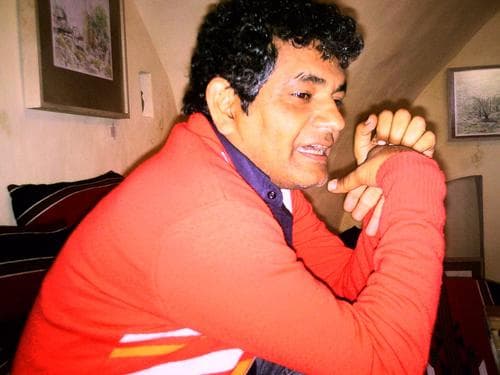
Mohammed Hanif is a Pakistani author known for his fiction that often explores themes of politics and identity. His notable works include "A Case of Exploding Mangoes," a satirical take on the circumstances surrounding the death of former Pakistani leader General Muhammad Zia-ul-Haq, and "Our Lady of Alice Bhatti," which delves into the life of a Christian nurse in Karachi.
Similar books
- Catch-22
Joseph Heller
4.0 (723k) average on GoodreadsHistorical FictionShares a similar tone of absurdist dark humor applied to military and political bureaucracy.
- The Yacoubian Building
Alaa Al Aswany
3.7 (18k) average on GoodreadsLiterary FictionExplores the social and political complexities of a Middle Eastern country through a cast of interconnected characters.
- The Old Man and the Sea
Ernest Hemingway
3.8 (831k) average on GoodreadsLiterary FictionA Cuban fisherman's long struggle with a giant marlin becomes a story of endurance and dignity, now retold for young adults with illustrations, phonetic guides, and writing prompts in Traditional Chinese.
- One Hundred Years of Solitude
Gabriel García Márquez
4.1 (753k) average on GoodreadsLiterary FictionThrough the multi-generational story of the Buendía family, a mythical town deals with the repeating patterns of time, love, and solitude, as the extraordinary mixes with the ordinary.
- The Goldfinch
Donna Tartt
3.9 (720k) average on GoodreadsLiterary FictionHaunted by a tragic explosion and clutching a stolen Dutch masterpiece, a young orphan navigates the opulent drawing rooms of New York and the gritty underbelly of the art world, desperately seeking connection and redemption amidst a life spiraling into crime and obsession.
- Little Fires Everywhere
Celeste Ng
4.1 (713k) average on GoodreadsLiterary FictionIn Shaker Heights, an artist and her daughter move in, and their free-spirited lives clash with a rule-bound matriarch, revealing hidden conflicts beneath a perfect surface.






Enjoyed the summary?
A summary gives you the shape of the book. The book itself has the detail, the examples and the voice.
Find A Case of Exploding Mangoes on AmazonAs an Amazon Associate, BookBrief earns from qualifying purchases. How we're funded