
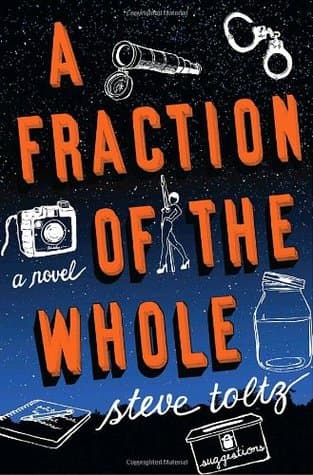
Synopsis
Covers the whole plot, including the ending.
- Difficulty
- Hard
- Pacing
- Variable
- Mood
- Philosophical, Irreverent, Darkly Humorous, Existential, Adventurous
- Read it if
- You enjoy verbose, philosophical, darkly comedic literary fiction with a strong, eccentric narrative voice and a sprawling, adventurous plot.
- Skip it if
- You prefer fast-paced, plot-driven narratives, simple prose, or lighter, more optimistic themes.
A Fraction of the Whole Plot Summary
Covers the whole plot, including the ending.
A Life of Confinement and Philosophical Indoctrination
The story starts with Jasper Dean, now an adult, thinking about his recently deceased father, Martin Dean. Jasper describes his childhood in a remote Australian house, where Martin, an extreme recluse and philosopher, raised him in isolation. Martin gives Jasper a strict, unusual education, filled with his own cynical ideas about humanity, society, and the universe. He constantly warns Jasper about the outside world, making him deeply paranoid. Martin's life is largely defined by his obsession with his famous brother, Terry Dean, a legendary criminal whose actions Martin both condemns and envies. This early period sets up Jasper's complex relationship with his father and the philosophical way he sees the world.
The Ghost of Uncle Terry
A large part of Jasper's childhood is spent under the shadow of his uncle, Terry Dean. Martin tells Terry's life story, from his early criminal tendencies to his prison escapes and his eventual change into a celebrated folk hero. Terry's adventures, full of daring heists and philosophical thoughts, fascinate young Jasper, despite Martin's attempts to portray his brother as a moral failure. Martin's story shows his deep jealousy and admiration for Terry's ability to live authentically and make a mark on the world, something Martin desperately wants but fears. Terry's legend is a constant point of comparison and conflict between father and son.
A Mother's Absence and a Father's Secret
Jasper's mother is a vague figure, mostly absent from his early life. Martin gives unclear and often conflicting reasons for her disappearance, fueling Jasper's curiosity. As Jasper gets older, he starts to put together bits of information, suggesting his mother was European and her departure was mysterious. This search for his mother's identity becomes a quiet side story, hinting at a more complex and perhaps tragic past for Martin than he admits. The truth about his mother's story begins to unravel some of Martin's carefully constructed narratives about his own life and motives.
The Grand Scheme: Martin's Quest for Legacy
Driven by a strong desire to leave a lasting mark on the world, Martin Dean creates many strange plans throughout Jasper's life. These include trying to write the ultimate philosophical book, building a unique maze for tourists, and even attempting to start a new, ideal society. Each effort fails, often comically, further increasing Martin's cynicism and paranoia. Jasper is a reluctant participant in many of these plans, watching his father's relentless pursuit of importance and the deep disappointment that follows each collapse. These failures show Martin's internal struggle between his intellectual goals and his practical inability.
Escaping the Nest: Jasper's First Taste of Freedom
As a young man, Jasper eventually breaks free from his father's isolated world. He travels, trying to understand the world Martin so strongly condemned. During this time, Jasper experiences his first significant love affair, a relationship that offers him a glimpse of normalcy and connection. However, his father's philosophical training has left him with a unique, often cynical, view that makes true integration difficult. This period is marked by both the excitement of new freedom and the lasting influence of Martin's worldview, showing the deep impact of his unusual upbringing on his ability to form relationships and navigate society.
The Reunion and Renewed Conflict
Despite trying to be independent, Jasper finds himself drawn back to his father. Their reunion is marked by a familiar pattern of intellectual debate, mutual frustration, and an undeniable bond. Martin, always the philosopher, continues to challenge Jasper's views of the world, while Jasper struggles to reconcile his own experiences with his father's fixed beliefs. This period deepens their complex relationship, revealing layers of codependency and a shared, though often difficult, intellectual journey. Their interactions highlight the lasting legacy of Martin's influence and Jasper's ongoing struggle for self-definition.
Terry's Final Act and Its Aftermath
The story of Terry Dean reaches its dramatic end, affecting both Martin and Jasper deeply. Terry's final, bold actions and eventual death confirm his status as a folk hero, a sharp contrast to Martin's perceived failures. This event forces Martin to confront his lifelong obsession with his brother, leading to a period of self-reflection and renewed efforts to achieve his own kind of recognition. For Jasper, Terry's story powerfully shows living life on one's own terms, further shaping his understanding of freedom, ambition, and legacy. Terry's life and death become a key turning point in the father-son dynamic.
Martin's Declining Health and Final Philosophical Musings
As Martin ages, his health begins to decline, bringing him closer to death. This period sees an increase in his philosophical talks, as he tries to sum up his life's wisdom and deal with his approaching end. Jasper becomes his main caregiver and listener, absorbing his father's final, often contradictory, insights into life, death, and meaning. Martin's vulnerability makes him more human in Jasper's eyes, forcing Jasper to face his own feelings about his father and the unavoidable loss. Their conversations during this time are touching, revealing the depth of their intellectual and emotional connection, despite their lifelong conflicts.
The Death of Martin Dean
Martin Dean eventually dies, leaving Jasper to navigate the world alone. His father's death is not a simple end but a trigger for Jasper's full reflection on their shared life. Free from Martin's immediate influence, Jasper can objectively analyze his father's philosophies, his quirks, and the deep impact he had. This period is marked by a mix of grief, liberation, and a deep understanding of the complex man who raised him. Martin's death provides the narrative frame for the entire book, allowing Jasper to recount their story with the clarity and perspective only hindsight can offer.
Jasper's Own Legacy: The Act of Storytelling
After his father's death, Jasper Dean finds his own purpose: to document the lives of Martin and Terry Dean. By writing their story, Jasper not only processes his past but also tries to achieve the very legacy his father so desperately sought. He becomes the keeper of their stories, ensuring their unique philosophies and adventures are not forgotten. This act of storytelling is Jasper's way of making sense of his complex heritage and contributing his own 'fraction of the whole' to the world. It shows his acceptance of his lineage and his unique place within it, turning his past into a meaningful future.
A Fraction of the Whole Characters
Jasper Dean
Protagonist
The cynical, reflective son chronicling his extraordinary upbringing.
Jasper is the narrator and protagonist, raised in isolation by his paranoid, philosophical father, Martin. He is highly intelligent, observant, and deeply influenced by his father's cynical worldview, yet he also yearns for normalcy and connection. His internal struggle revolves around reconciling his father's eccentric teachings with his own experiences of the world. He often feels alienated and burdened by his unique upbringing, but also recognizes its profound impact on his identity. Jasper is a keen analyst of human nature, a trait inherited from his father.
Relationships: Martin Dean (complex father-son relationship, intellectual sparring partners, codependent); Terry Dean (legendary uncle, source of fascination and a foil to Martin's life); His Mother (absent figure, source of mystery and longing)
Martin Dean
Protagonist/Antagonist (to Jasper's freedom)
The paranoid, philosophical father obsessed with legacy and his outlaw brother.
Martin is Jasper's father, a brilliant but deeply flawed intellectual who lives in self-imposed exile. He is consumed by paranoia, cynicism, and a desperate desire to leave a lasting mark on the world, constantly comparing himself to his infamous criminal brother, Terry. Martin's philosophical monologues and unconventional parenting methods shape Jasper's entire worldview. He is both a loving, albeit overbearing, father and a profound intellectual influence, despite his many failures and eccentricities. His character embodies the struggle between intellectual aspiration and practical ineptitude.
Relationships: Jasper Dean (complex father-son relationship, intellectual sparring partners, codependent); Terry Dean (brother, object of intense envy, admiration, and resentment); His Wife (Jasper's Mother) (mysterious past relationship, source of his deep-seated pain and secrets)
Terry Dean
Supporting/Legendary Figure
The infamous outlaw uncle, a folk hero and a foil to Martin's intellectual life.
Terry is Martin's brother and Jasper's uncle, a legendary criminal and philosopher who escapes from prison multiple times and becomes a folk hero. He represents a life of action, freedom, and authenticity, contrasting sharply with Martin's life of intellectual confinement. Terry's exploits are recounted by Martin, often with a mix of disdain and grudging admiration. He embodies the idea of making a mark on the world through direct action rather than abstract thought, providing a constant source of comparison and inspiration for both Martin and Jasper. Terry's life is a testament to living outside societal norms.
Relationships: Martin Dean (brother, object of Martin's obsession, envy, and inspiration); Jasper Dean (legendary uncle, source of fascination and alternative worldview)
Jasper's Mother (unnamed or rarely named)
Mentioned/Supporting
The mysteriously absent European mother, a source of enigma and hidden pain.
Jasper's mother is a largely absent figure whose story is gradually revealed through fragments and Martin's reluctant admissions. She is European, and her disappearance is shrouded in mystery, hinting at a tragic past for Martin. Her absence significantly impacts Jasper's longing for a 'normal' family and adds another layer of complexity to Martin's character, suggesting he harbors deep emotional wounds related to her. Her story is crucial in understanding the full scope of Martin's isolation and his reasons for raising Jasper as he did.
Relationships: Martin Dean (former wife, source of deep emotional pain and secrets); Jasper Dean (mother, source of mystery and longing)
A Fraction of the Whole Themes
The Nature of Legacy and Immortality
Both Martin and Terry Dean are obsessed with leaving a lasting mark on the world, though in very different ways. Martin seeks intellectual immortality through his philosophical writings and grand plans, always frustrated by his lack of recognition. Terry, however, achieves a kind of folk hero immortality through his bold criminal acts and charismatic personality. Jasper, by telling their stories, ultimately finds his own way to contribute to their legacies, suggesting that true immortality can be found in the stories we tell and the lives we affect. The book explores how futile and profound this human desire can be.
“I'm writing our story to make sense of it, to put some fraction of the whole into words, before it all slips away.”
The Burden of Philosophy and Intellectualism
The novel deeply explores the mixed blessing of intense intellectualism and philosophical inquiry. Martin Dean's life is defined by his constant need to analyze, theorize, and find meaning in everything, but this also leads to his deep paranoia, isolation, and inability to act effectively in the world. His philosophies, while insightful, often hinder him. Jasper, raised under this intellectual flood, struggles with the burden of overthinking and the isolation it causes. The book questions whether an overly analytical mind can truly experience life or if it only observes it from a detached, often cynical, distance.
“My father believed that the more you knew, the less you could do. Knowledge was a kind of paralysis.”
Father-Son Relationships and Intergenerational Influence
At its heart, the novel explores the complex, often difficult, but ultimately strong bond between a father and son. Martin's eccentric parenting and philosophical teaching deeply shape Jasper's identity, worldview, and struggles. Jasper simultaneously loves, resents, and is deeply affected by his father. Their relationship is marked by constant intellectual debate, codependency, and a shared, though often conflicting, search for meaning. The story shows how parental legacies, both good and bad, are passed down and how individuals deal with inherited traits and beliefs.
“You can spend your whole life trying to escape your father, but in the end, you realize you're just running in circles inside his head.”
The Nature of Freedom and Confinement
The theme of freedom versus confinement is central to the story. Martin lives in self-imposed confinement, both physically in his remote house and mentally within his own paranoid philosophies. He tries to confine Jasper, intellectually and physically, to protect him from the 'dangers' of the world. In contrast, Terry Dean embodies absolute freedom, constantly escaping prisons and societal expectations. The characters' struggles highlight different interpretations of freedom: is it physical liberty, intellectual independence, or the ability to live authentically? The novel suggests that true freedom might mean accepting one's unique place in the 'whole' rather than trying to escape it.
“The greatest prison is a mind without a map.”
Plot Devices & Literary Techniques
Framing Device: Posthumous Narration
Jasper recounts his life with his father after Martin's death.
The entire novel is narrated by Jasper Dean, reflecting on his life with his father, Martin, after Martin's death. This allows Jasper to offer a retrospective, analytical, and often darkly humorous perspective on the events, free from his father's immediate influence. The posthumous narration provides a sense of closure and allows for a comprehensive, philosophical assessment of Martin's life and impact, giving Jasper the necessary distance to dissect their complex relationship and the lessons learned.
Unreliable Narrator
Jasper's perspective is filtered through his unique upbringing and inherent biases.
While Jasper aims for honesty, his narration is inherently colored by his unusual childhood and his father's profound influence. His interpretations of events, particularly those involving Martin and Terry, are shaped by his own emotional landscape and philosophical conditioning. This unreliability adds depth, forcing the reader to question perspectives and consider the subjective nature of truth, especially when recounting family history. It also highlights how deeply ingrained Martin's teachings are within Jasper's own thought processes.
Didactic Monologues and Philosophical Expositions
Martin's lengthy philosophical speeches and theories are integrated into the narrative.
Martin Dean's character is defined by his extensive, often cynical, philosophical monologues and theories about life, humanity, and society. These are not merely dialogue but often lengthy expositions integrated into Jasper's narrative. This device serves to convey the core philosophical themes of the book, illustrate Martin's intellectual prowess and paranoia, and demonstrate the profound impact of his teachings on Jasper. They are both a source of humor and deep insight, forming the intellectual backbone of the story.
The Absent Mother Mystery
The unknown fate of Jasper's mother creates narrative suspense and reveals Martin's hidden depths.
The mystery surrounding Jasper's European mother and her disappearance serves as a subtle but persistent plot device. It creates curiosity and propels Jasper's own internal quest for identity and understanding. The gradual revelation of her story unveils a more vulnerable and complex side to Martin, exposing the emotional wounds beneath his intellectual armor. This device adds a layer of personal tragedy and motivation, enriching the character backstories and explaining some of Martin's protective and isolating behaviors.
A Fraction of the Whole Quotes
“The problem with a life lived in fear is that you don't really live it at all.”
“My father always said that the only way to avoid disappointment was to expect nothing.”
“We are all just a fraction of the whole, desperately trying to make sense of the other fractions.”
“To be truly free, you must first be free of yourself.”
“The greatest prison is not one of stone and iron, but of the mind.”
“Every man is a mystery, even to himself.”
“Happiness is not a destination, but a method of travel.”
“The world is full of people who are trying to find themselves, when they should be trying to create themselves.”
“Life is a tragedy for those who feel, and a comedy for those who think.”
“Memory is a beautiful thing, but it's also a terrible liar.”
“To truly live, you must risk everything.”
“The only thing worse than being alone is being with someone who makes you feel alone.”
“Humor is the only way to deal with the absurdity of existence.”
“We spend our lives trying to outrun our pasts, only to find them waiting for us at the finish line.”
Quiz
10 questions on the plot and the characters. Each answer comes with a short explanation.
Question 1
What is the primary relationship dynamic explored in 'A Fraction of the Whole'?
- A man and his long-lost brother.
- A father and son against each other and the world.
- A detective and his nemesis.
- A woman searching for her heritage.
Show answer
B. A father and son against each other and the world. The book explicitly states it is 'about a father and son against each other and against the world,' with Jasper reflecting on his relationship with his father, Martin.
Question 2
Who is the narrator of 'A Fraction of the Whole'?
- Martin Dean, the paranoid father.
- Terry Dean, the infamous outlaw uncle.
- Jasper Dean, the son reflecting on his father's life.
- An omniscient third-person narrator.
Show answer
C. Jasper Dean, the son reflecting on his father's life. The description states, 'Jasper can fully reflect on the crackpot who raised him... As he recollects the events... Jasper recounts a boyhood...'
Question 3
Which of these describes Martin Dean's general disposition and approach to life?
- Optimistic and carefree.
- Certifiably paranoid and prone to overanalysis.
- Quiet and reclusive.
- A pragmatic businessman.
Show answer
B. Certifiably paranoid and prone to overanalysis. Martin is described as 'certifiably paranoid' and a man who 'overanalyzed anything and everything.'
Question 4
What event prompts Jasper to fully reflect on his father's life and their adventures?
- His own first love.
- His father's death.
- A trip to bohemian Paris.
- The discovery of his outlaw uncle.
Show answer
B. His father's death. The text states, 'But now that Martin is dead, Jasper can fully reflect on the crackpot who raised him... As he recollects the events that led to his father’s demise...'
Question 5
Which specific family member is mentioned as an 'infamous outlaw uncle'?
- Jasper's grandfather.
- Martin's brother, Terry.
- Jasper's mother's brother.
- A distant cousin.
Show answer
B. Martin's brother, Terry. Jasper's recollections include 'shocking discoveries—about his infamous outlaw uncle, Terry.' This clearly identifies Terry as the uncle.
Question 6
The story of Jasper and Martin's adventures spans across which general geographic scope?
- Primarily within a single Australian city.
- Across three continents, including Australia, Europe, and Asia.
- Exclusively in bohemian Paris.
- Between the Australian bush and the Thai jungle only.
Show answer
B. Across three continents, including Australia, Europe, and Asia. The description highlights the story as 'spanning three continents' and lists specific locations like 'the Australian bush to the cafés of bohemian Paris, from the Thai jungle.'
Question 7
What is Martin's constant struggle mentioned in the synopsis?
- To find his mysteriously absent European mother.
- To escape his outlaw brother, Terry.
- To make a lasting mark on the world he so disdains.
- To understand Jasper's rebellious nature.
Show answer
C. To make a lasting mark on the world he so disdains. The text states Jasper recounts 'Martin’s constant losing battle to make a lasting mark on the world he so disdains.'
Question 8
What does the phrase 'spiritual symmetry' suggest about Jasper and Martin despite their shortcomings?
- They were identical in their beliefs and actions.
- They shared a fundamental, perhaps unconventional, connection or understanding.
- They were both religious fanatics.
- Their physical appearances were strikingly similar.
Show answer
B. They shared a fundamental, perhaps unconventional, connection or understanding. The synopsis concludes with 'the moving, memorable story of a father and son whose spiritual symmetry transcends all their many shortcomings.' This implies a deep, shared essence or connection beyond surface flaws, rather than literal identity or religious alignment.
Question 9
The book is described as an 'uproarious indictment of the modern world and its mores.' What does 'indictment' imply about the novel's tone regarding society?
- It praises and celebrates contemporary societal values.
- It is neutral and observational towards modern society.
- It criticizes and condemns aspects of modern society.
- It offers solutions for improving the modern world.
Show answer
C. It criticizes and condemns aspects of modern society. An 'indictment' is a formal accusation or charge. In a literary context, an 'indictment of the modern world' implies a strong criticism or condemnation of its values and practices.
Question 10
Beyond the specific geographical locations mentioned, what kind of diverse settings do Jasper and Martin encounter during their 'wild rollercoaster ride'?
- Only academic institutions and quiet libraries.
- Strictly natural landscapes like mountains and oceans.
- Strip clubs, asylums, labyrinths, and criminal lairs.
- Mainly suburban homes and offices.
Show answer
C. Strip clubs, asylums, labyrinths, and criminal lairs. The description lists a variety of unconventional and often illicit or unusual settings: 'strip clubs, asylums, labyrinths, and criminal lairs,' indicating a very diverse and often 'wild' range of experiences.
A Fraction of the Whole FAQ
What is the central conflict driving the narrative between Jasper and Martin Dean?
The central conflict stems from Martin's overbearing, paranoid, and intellectually demanding parenting style, which traps Jasper in a perpetual state of attempting to understand, rebel against, or escape his father's eccentric worldview. Jasper grapples with his father's desire to impart his 'wisdom' while simultaneously resenting the intellectual captivity and the often-absurd schemes Martin devises, which shape Jasper's unusual upbringing.
How does the novel explore the theme of legacy and making a 'lasting mark'?
Martin Dean is obsessed with leaving a significant legacy, whether through his philosophical treatises, his 'inventions,' or his attempts to 'educate' Jasper, yet he consistently fails to achieve widespread recognition. Jasper, in turn, grapples with the legacy of his father's eccentricity and the infamous reputation of his uncle Terry, struggling to define his own identity outside of their shadows and the often-destructive paths they forge.
Who is Terry Dean and what role does he play in the story?
Terry Dean is Martin's infamous outlaw brother, whose life of crime and rebellion serves as a stark contrast and constant point of comparison to Martin's intellectual, albeit equally unconventional, pursuits. Terry's adventures and notoriety significantly impact Jasper's understanding of his family history and the differing ways one can achieve 'infamy' or a 'lasting mark' in the world.
What is the significance of the various international settings in the book?
The diverse international settings, from the Australian bush to Parisian cafés and the Thai jungle, are crucial to illustrating the Dean family's nomadic and often chaotic existence, reflecting their attempts to escape, reinvent themselves, or pursue their grand, often misguided, schemes. Each location serves as a backdrop for significant life events, character development, and the unfolding of their eccentric adventures.
How does the novel use humor to address profound philosophical questions?
The novel employs an irreverent, often dark, and satirical humor to tackle deep philosophical questions about existence, morality, the nature of genius, and the meaning of life. Martin's verbose and often absurd philosophical pronouncements, combined with the outlandish situations Jasper finds himself in, create a comedic tension that allows the reader to engage with complex ideas without becoming bogged down by their gravity.
What is the significance of Martin's 'philosophical treatises' that he dictates to Jasper?
Martin's treatises, filled with his self-garnered wisdom and cynical observations about humanity, are central to his character and his attempts to shape Jasper's mind. While often dense and seemingly nonsensical, they represent Martin's desperate effort to intellectualize his anxieties and leave an intellectual legacy, even if only to his son, and they form a significant part of Jasper's 'intellectual captivity.'
What is the true nature of Jasper's mother's 'mysterious absence' and how does it affect him?
Jasper's European mother's absence is shrouded in mystery for much of his life, deeply impacting his sense of identity and belonging. Her story, when eventually revealed, provides crucial insights into Martin's past and the origins of his paranoia, and it forces Jasper to re-evaluate his understanding of both his parents and his own unusual upbringing.
Are there any recurring symbols or motifs that highlight the father-son relationship?
The motif of 'labyrinths' and 'asylums' can be seen as symbolic of the intellectual and emotional traps Martin creates for himself and, by extension, for Jasper. The constant cycle of Martin devising schemes and Jasper either participating or trying to escape them, along with the recurring theme of 'imprisonment' (both literal and metaphorical), underscores the complex, often suffocating, nature of their bond.
How does Martin's paranoia influence his actions and Jasper's worldview?
Martin's pervasive paranoia about society, institutions, and human nature drives many of his eccentric actions, from his reclusive lifestyle to his elaborate schemes and his attempts to 'educate' Jasper in a way that would protect him from a perceived corrupt world. This constant state of suspicion instills in Jasper a unique, often cynical, worldview, making him question societal norms and authority figures.
Analyze Jasper's internal struggle between love, hate, pity, and murder for his father.
Jasper's internal conflict reflects a deep psychological bind: he resents his father's control and madness, yet he also recognizes a certain genius and love in Martin's eccentric attempts to parent him. This struggle is indicative of the profound impact Martin has had on his identity, making it impossible for Jasper to simply dismiss him, even as he contemplates extreme reactions to his father's overbearing presence.
How does the novel portray the psychological burden of genius or perceived genius?
The novel suggests that both Martin and Terry, in their different ways, grapple with the burden of their own perceived or actual genius, leading to isolation, eccentricity, and often self-destructive behavior. Martin's intellectual brilliance is coupled with an inability to connect with the world, while Terry's cunning is channeled into criminal enterprises, illustrating that extraordinary minds can lead to profound psychological challenges and alienation.
What is the nature of the 'spiritual symmetry' between Martin and Jasper?
The 'spiritual symmetry' suggests that despite their frequent conflicts and differing paths, Jasper ultimately inherits or develops many of his father's core traits: a sharp intellect, a cynical view of humanity, a penchant for grand schemes, and a complex relationship with the world. This symmetry implies that Jasper, even in his rebellion, is deeply shaped by Martin's influence, leading to an almost fated mirroring of their eccentricities and struggles.
Is Martin Dean a sympathetic character, despite his flaws and controlling nature?
This is debatable. While Martin is undeniably flawed, paranoid, and often controlling, his relentless pursuit of knowledge, his genuine (if misguided) attempts to prepare Jasper for the world, and his underlying vulnerability can evoke a complex sympathy. The narrative often allows glimpses into his motivations and anxieties, making him a character that readers might pity or understand, even if they don't always like him.
How does the ending of the novel resolve, or intentionally leave unresolved, the themes of legacy and personal fulfillment?
The ending of the novel, particularly after Martin's death, allows Jasper to reflect on his father's life and his own. While Martin's desire for a lasting mark was largely unfulfilled in conventional terms, his legacy undeniably lives on through Jasper's narrative and worldview. The novel suggests that true fulfillment might not come from external recognition, but from the unique, if tumultuous, journey and the profound, albeit complicated, bonds formed along the way.
Does the book ultimately offer a hopeful or cynical view of humanity and society?
The book presents a largely cynical view of modern society and human nature through Martin's relentless critiques and the often-absurd or corrupt situations the characters encounter. However, the underlying love and enduring connection between Jasper and Martin, despite their challenges, offers a glimmer of hope for the resilience of human relationships, suggesting that meaning can be found even amidst the chaos and despair.
How does the title, 'A Fraction of the Whole,' relate to the novel's themes?
The title suggests that no single character, philosophy, or perspective can encompass the entirety of truth or experience. Martin's life, Terry's escapades, and Jasper's reflections are all just 'fractions' of a larger, often incomprehensible, whole. It also alludes to the idea that individuals, despite their grand ambitions, are often just small parts of a vast and indifferent universe, and that understanding comes from piecing together these fragments.
To what extent is Jasper's narration reliable, given his complex relationship with his father?
Jasper's narration, while providing specific details, is inherently filtered through his unique perspective, shaped by his 'intellectual captivity' and his deep, often contradictory, feelings towards Martin. The reader must consider that his recollections are colored by his personal biases, resentments, and eventual understanding, making the reliability of his account a nuanced element of the storytelling.
What is the novel's stance on the value of unconventional education versus formal schooling?
The novel strongly critiques formal education, presenting it as stifling and conventional, while extolling the virtues (and dangers) of Martin's highly unconventional, self-devised curriculum for Jasper. It suggests that true wisdom and understanding come not from standardized learning but from direct experience, philosophical inquiry, and navigating the unpredictable realities of life, even if those realities are often bizarre and dangerous.
About the author

Steve Toltz is an Australian author known for his fiction. His notable work, "A Fraction of the Whole," explores themes of family and existentialism through a darkly humorous lens. Toltz's writing often reflects his unique perspective on life and society.
Similar books
- A Confederacy of Dunces
John Kennedy Toole
3.9 (231k) average on GoodreadsLiterary FictionFeatures an eccentric, philosophical protagonist and dark, satirical humor.
- The World According to Garp
John Irving
4.1 (205k) average on GoodreadsLiterary FictionExplores a father-son relationship, features a unique worldview, and spans a long period with a mix of humor and tragedy.
- Infinite Jest
David Foster Wallace
4.3 (74k) average on GoodreadsLiterary FictionKnown for its philosophical depth, extensive digressions, and challenging, verbose prose.
- The Corrections
Jonathan Franzen
3.8 (156k) average on GoodreadsLiterary FictionBoth books are expansive literary fictions that explore complex family dynamics, parental influence, and the pursuit of individual identity within the shadow of a dominant patriarch. Franzen's novel, however, focuses on a more conventional, albeit dysfunctional, American family, exploring themes of capitalism, therapy, and the disillusionment of the American dream. Toltz's work is far more overtly philosophical and less grounded in contemporary social commentary, prioritizing abstract thought and existential musings over Franzen's detailed sociological observations.
- The Old Man and the Sea
Ernest Hemingway
3.8 (831k) average on GoodreadsLiterary FictionA Cuban fisherman's long struggle with a giant marlin becomes a story of endurance and dignity, now retold for young adults with illustrations, phonetic guides, and writing prompts in Traditional Chinese.
- One Hundred Years of Solitude
Gabriel García Márquez
4.1 (753k) average on GoodreadsLiterary FictionThrough the multi-generational story of the Buendía family, a mythical town deals with the repeating patterns of time, love, and solitude, as the extraordinary mixes with the ordinary.



Enjoyed the summary?
A summary gives you the shape of the book. The book itself has the detail, the examples and the voice.
Find A Fraction of the Whole on AmazonAs an Amazon Associate, BookBrief earns from qualifying purchases. How we're funded