
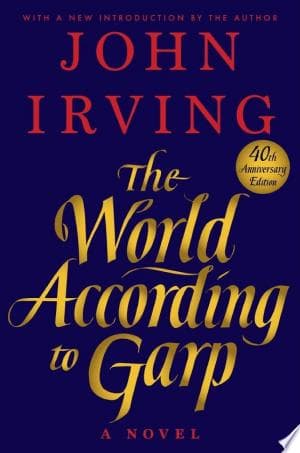
Synopsis
Covers the whole plot, including the ending.
- Difficulty
- Medium
- Pacing
- Variable
- Mood
- Tragicomic, Satirical, Melancholy, Provocative
- Read it if
- You enjoy sprawling, character-driven sagas with a dark comedic edge, exploring themes of feminism, sexuality, violence, and the role of the artist, and don't mind a meandering plot with frequent tragic events.
- Skip it if
- You prefer straightforward narratives, are sensitive to graphic depictions of violence and sexual assault, or dislike stories that frequently shift in tone from humor to profound tragedy.
The World According to Garp Plot Summary
Covers the whole plot, including the ending.
The Unusual Conception of T. S. Garp
The story starts with Jenny Fields, a nurse at a New England boys' school. She wants a child but has no interest in sex. During World War II, she has sex with a dying, brain-damaged sergeant, Technical Sergeant Garp, in a hospital ward. He cannot consent or refuse. This unusual act leads to the birth of her son, T. S. Garp. Jenny, a very independent woman, raises Garp alone at the Steering School where she works. Her memoir, 'A Sexual Suspect,' tells about her life and ideas as a single mother. It unexpectedly becomes an important book for a growing feminist movement, giving her an unplanned but influential public role.
Garp's Childhood and Literary Ambitions
Garp spends his childhood at Steering School, a place filled with boys and sometimes odd staff. He becomes close with his mother, Jenny, and enjoys wrestling. More importantly, Garp finds his love for writing. He is especially drawn to the school's wrestling coach, Ernie Holm, and his family, particularly his daughter, Helen Holm. Garp's early stories often show the strange and sometimes violent things he sees, hinting at the tragicomic nature of his future work. His goal to become a writer is set during these early years.
Marriage, Move to Vienna, and Early Success
After Garp finishes school, he marries Helen Holm, his former English teacher's daughter and the love of his life. They move to Vienna, Austria, so Garp can focus on writing while Helen studies. In Vienna, Garp writes his first novel, 'The Pension Grillparzer,' a dark and unusual story based on his experiences. Helen supports him, but their early marriage is marked by Garp's intense focus on his writing and the emotional toll it sometimes takes. When it is published, 'The Pension Grillparzer' gets some good reviews, making Garp a promising new writer.
Return to America and Family Life
Garp and Helen return to America and live near the Steering School. They have two sons, Duncan and Walt. Garp continues to write a lot, and his later novels are more successful, though some critics find his themes of violence, infidelity, and death disturbing. Jenny Fields's feminist movement, helped by her memoir, grows. She becomes a public figure, and many 'Ellen Jamesians'—women who have had their tongues cut out by men—come to their home for shelter. The family's life is a mix of home life, Garp's demanding writing, and the constant flow of Jenny's followers. This creates a messy but loving home.
The Tragic Accident
One afternoon, Garp, Helen, and their two sons, Duncan and Walt, are in a terrible car accident. The accident happens when Garp is driving and is distracted by Helen's affair with Michael Milton, one of his graduate students. Helen and Milton are having sex in the car. The car goes off the road and hits a tree. Tragically, their younger son, Walt, dies right away. Duncan loses an eye, and Helen is badly hurt. Garp is also injured but recovers physically. The accident shatters the family, leaving them with grief, guilt, and the permanent loss of Walt. This changes their relationships and Garp's view of life and writing forever.
Grief, Infidelity, and Retribution
After Walt's death, the Garp home is full of deep sorrow. Garp struggles greatly with the loss and the accident's circumstances. Helen, full of guilt over her affair, also suffers deeply. To cope, Garp seeks revenge on Michael Milton. He finds Milton and brutally attacks him, acting on a violent urge from his sadness and anger. This act of violence gives Garp a temporary feeling of revenge, but it does little to ease the pain and trauma that still affects the family.
Jenny Fields's Assassination
Jenny Fields, who has become an internationally known feminist and leader of the Ellen Jamesians, is assassinated. She is shot during a public event by a disturbed man who strongly opposes her feminist views. This shocking event devastates Garp, who loved his mother, and further adds to the family's grief and feeling of vulnerability. Jenny's death becomes an important moment in the story, showing the dangers and extreme reactions her radical ideas sometimes caused. It leaves a deep emptiness in the lives of her followers and, especially, her son.
Garp's Later Life and Writing
After his mother's death and the lasting trauma of Walt's accident, Garp continues to write. He produces increasingly complex and often darker novels. His work receives significant praise and popular success, but he remains a controversial figure, both for his books' explicit content and his connection to his famous mother. Garp struggles with the demands of fame, his readers, and the constant threat of violence that seems to fill his world, reflecting the themes in his own fiction. He thinks more and more about how fragile life is and how death is certain, often showing these worries through his characters and stories.
Duncan's Journey and the Ellen Jamesians
Duncan, Garp's surviving son, grows up with the physical and emotional scars of the car accident. He deals with his identity, his father's fame, and the lasting influence of his grandmother, Jenny Fields. As he gets older, Duncan becomes involved with the Ellen Jamesians, women who have had their tongues removed, either literally or symbolically. They find comfort and strength in Jenny's teachings. He develops a close relationship with some of these women, especially Roberta Muldoon, who becomes like a mother to him. Duncan's experiences offer a different view of the feminist movement and the impact of violence against women.
Garp's Assassination and Lingering Legacy
In a cruel twist, Garp himself is assassinated while coaching wrestling at the Steering School. A disturbed Ellen Jamesian shoots him. She mistakenly thinks he is an anti-feminist because of a misunderstanding and her own mental instability. Garp dies young, leaving behind Helen, Duncan, and his many literary works. His death highlights the widespread violence and absurdity that marked his life. Despite his early end, Garp's stories, his unique view of the world, and his impact on those around him continue to be felt, ensuring his legacy as a writer and a complex person.
The World According to Garp Characters
T. S. Garp
Protagonist
A writer and son of a famous feminist, grappling with life's absurdities and tragedies.
Garp is the central character, a novelist whose life is a constant interplay of creativity, domesticity, and the unpredictable, often violent, nature of the world. Born to Jenny Fields, he grows up striving to make sense of his unconventional origins and the world around him through his writing. He is a devoted husband and father, a passionate wrestling enthusiast, and a man deeply affected by loss and the pervasive threat of violence. Garp's novels often mirror his own experiences, reflecting his anxieties about infidelity, death, and the human condition. He is both a sensitive artist and a man prone to impulsive, sometimes violent, actions.
Relationships: Jenny Fields (Mother, inspiration, and source of public scrutiny); Helen Holm (Wife, intellectual companion, and source of both joy and pain); Duncan Garp (Son, survivor of tragedy, and inheritor of his family's legacy); Walt Garp (Younger son, tragically lost in an accident); Roberta Muldoon (Friend, confidante, and surrogate mother figure to Duncan)
Jenny Fields
Supporting
Garp's independent, unconventional mother and an accidental feminist icon.
Jenny Fields is Garp's mother, a fiercely independent and pragmatic nurse who chooses to have a child without a conventional relationship. Her memoir, 'A Sexual Suspect,' detailing her philosophy on life, sex, and independence, inadvertently catapults her into leadership of a radical feminist movement. Jenny is stoic, principled, and utterly unwavering in her beliefs, even in the face of public scrutiny and danger. She is a loving mother to Garp but also a distant, almost mythic figure whose public life often overshadows her personal one. Her assassination marks a pivotal moment in the novel.
Relationships: T. S. Garp (Son, object of her unique maternal love); Roberta Muldoon (Close friend and devoted follower); Ellen Jamesians (Followers and beneficiaries of her feminist movement)
Helen Holm Garp
Supporting
Garp's wife, a literature professor, and intellectual partner.
Helen is Garp's wife, a sophisticated and intelligent woman who initially serves as his English teacher at Steering School. She encourages his writing ambitions and shares a deep intellectual and emotional bond with him. Helen is a literature professor, capable of sharp wit and keen analysis. Their marriage is marked by passion, infidelity (on both sides, but more significantly on hers), and enduring love. She is profoundly affected by the family's tragedies, particularly the death of their son Walt and the loss of her own eye, which leaves her with immense guilt and sorrow. Helen represents the domestic anchor in Garp's chaotic life.
Relationships: T. S. Garp (Husband, intellectual and emotional partner); Duncan Garp (Son, shared survivor of tragedy); Walt Garp (Son, tragically lost); Ernie Holm (Father, wrestling coach at Steering School)
Roberta Muldoon
Supporting
A transgender former NFL player and devoted Ellen Jamesian.
Roberta Muldoon is a former professional football player who undergoes gender confirmation surgery and becomes a woman. She is one of Jenny Fields's most devoted followers and a prominent member of the Ellen Jamesian community, eventually living with the Garps. Roberta is a towering, gentle, and deeply compassionate figure, often serving as a protector and confidante to Helen and Duncan. Her presence challenges conventional notions of gender and identity, and she embodies a profound loyalty and strength. Roberta provides a steadying influence in the Garp household amidst its many upheavals and tragedies.
Relationships: Jenny Fields (Mentor and leader, deeply admired); T. S. Garp (Friend and confidante); Duncan Garp (Surrogate mother figure and protector)
Duncan Garp
Supporting
Garp's eldest son, scarred by tragedy and navigating his family's legacy.
Duncan is Garp and Helen's elder son, who survives the devastating car accident but loses an eye. His physical and emotional scars are a constant reminder of the family's trauma. As he grows up, Duncan struggles to define his own identity, separate from his famous parents and the shadow of his brother's death. He develops a close bond with Roberta Muldoon and becomes interested in the Ellen Jamesian movement, representing a younger generation grappling with the complex legacies of feminism and violence. Duncan's perspective often offers a more detached, observational view of the family's eccentricities and tragedies.
Relationships: T. S. Garp (Father, complex and influential figure); Helen Garp (Mother, shared survivor of tragedy); Walt Garp (Younger brother, tragically lost); Roberta Muldoon (Close friend and surrogate mother figure)
Walt Garp
Supporting
Garp's younger son, whose tragic death profoundly impacts the family.
Walt is Garp and Helen's younger son, a vibrant and beloved child whose life is tragically cut short in the infamous car accident. Though his presence in the novel is relatively brief, his death serves as the central, most devastating turning point for the Garp family. His loss plunges Garp and Helen into profound grief and guilt, irrevocably altering their lives and marriage. Walt's death becomes a recurring motif in Garp's later writing, symbolizing the random and often senseless violence that can shatter innocent lives.
Relationships: T. S. Garp (Father, deeply loved by); Helen Garp (Mother, deeply loved by); Duncan Garp (Elder brother)
Ernie Holm
Supporting
Wrestling coach at Steering School and Helen's father.
Ernie Holm is the wrestling coach at the Steering School and Helen's father. He is a gruff but fundamentally kind man who serves as a father figure to Garp during his childhood. Ernie instills in Garp a love for wrestling, a sport that becomes a lifelong passion and a recurring metaphor in Garp's work and life. He represents a sense of traditional masculinity and discipline, contrasting with Jenny Fields's more unconventional approach to life. His pragmatic worldview and dedication to his sport provide a grounding influence in Garp's early years.
Relationships: T. S. Garp (Mentor and father figure); Helen Holm Garp (Father)
Michael Milton
Mentioned
Helen's graduate student lover, whose affair leads to tragic consequences.
Michael Milton is a graduate student of Helen Garp and her lover. Their affair, conducted in the family car, directly leads to the tragic accident that kills Walt and severely injures Duncan and Helen. Milton is depicted as a somewhat opportunistic and irresponsible character, whose actions have devastating, unforeseen consequences for the Garp family. Garp's violent retribution against Milton highlights the depth of his grief and rage following Walt's death. Milton serves as a catalyst for the novel's central tragedy and the subsequent unraveling of the family's peace.
Relationships: Helen Holm Garp (Lover); T. S. Garp (Victim of Garp's violent revenge)
Ellen Jamesians
Supporting
A community of women inspired by Jenny Fields, some of whom have had their tongues cut out.
The Ellen Jamesians are a collective of women, some of whom have literally had their tongues cut out by men (like Ellen James herself, a rape victim), while others metaphorically identify with the struggle for voice and agency. They are ardent followers of Jenny Fields's feminist ideology and often seek refuge at the Garp household. Their presence underscores the novel's themes of sexual violence, misogyny, and the search for empowerment. While some Ellen Jamesians are depicted sympathetically, others represent the more extreme and sometimes misguided aspects of social movements, ultimately playing a role in Garp's own demise.
Relationships: Jenny Fields (Leader and inspiration); T. S. Garp (Associated with, but often misunderstood by); Duncan Garp (Close acquaintances and friends)
The World According to Garp Themes
The Absurdity and Pervasiveness of Violence
Violence, both random and planned, is a constant, almost unavoidable force in 'The World According to Garp.' From Garp's unusual birth during wartime to the car accident that kills Walt and hurts Duncan, and the murders of both Jenny and Garp, the novel repeatedly shows how life can be broken by unexpected brutality. Irving shows violence not as a single event but as a core, often absurd, part of being human. This idea is clear in Garp's own focus on violence in his writing and his attempts to understand a world where safety is an illusion, as shown by the repeated phrase, 'in this life, we are all terminal cases.'
“In this life, we are all terminal cases.”
Feminism and Gender Roles
The novel deeply looks at how feminism and traditional gender roles change through Jenny Fields and the Ellen Jamesians. Jenny's independent choice to have a child and her memoir make her a feminist symbol, challenging old rules. The Ellen Jamesians, women who have experienced sexual violence and have symbolically or literally lost their voices, show the extreme results of misogyny and the shared search for power. Garp, as a man, often finds himself caught between these changing gender roles, trying to understand and support the women in his life while also being seen as a threat or an ally. This theme explores the difficult parts of male-female relationships, sexual politics, and how society reacts to new ideas about gender.
“A man's world is a woman's world; they can't be separated.”
The Interplay of Life and Art
Garp's life and his art are closely connected throughout the novel. His experiences—his unusual birth, his family life, the tragedies he lives through, and what he sees in the world—directly shape his fiction. In turn, his writing often helps him process and understand the chaos and sadness of his life. Irving often blurs the lines between Garp's 'real' life and the fictional worlds he creates, suggesting that art reflects reality and helps organize it. The novel itself includes parts of Garp's stories, showing how his personal worries and events, especially the constant threat of violence and death, appear in his writing.
“He was a writer who wrote about what he knew, and what he knew was sometimes horrible.”
Family, Love, and Infidelity
At its heart, 'The World According to Garp' tells about the complicated nature of family relationships and how love lasts through infidelity and tragedy. The Garp family, despite its quirks and deep losses, stays a unit held together by strong affection. Garp's marriage to Helen is tested by affairs on both sides, yet their love continues. The bond between Garp and his sons, and his steady love for his mother, form the emotional core of the story. The novel shows how love, even when it is not perfect or is challenged by betrayal and grief, can be a strong force, offering comfort and meaning in a often chaotic world.
“We are a family, after all, and even if we don't always like one another, we love one another.”
The Search for Identity and Self-Definition
Many characters in the novel deal with questions about who they are. Jenny Fields strongly defines herself outside of what society expects of women. Garp works to create his own identity as a writer, separate from his famous mother's influence, and to balance his roles as artist, husband, and father. Roberta Muldoon's journey as a transgender woman is a powerful example of defining oneself against societal norms. Duncan, scarred by the accident and living in the shadow of his family's fame and tragedy, also searches for his place in the world. This theme shows the constant human effort to understand oneself and create a unique life.
“You are your own story; it's a good story.”
Plot Devices & Literary Techniques
Metafiction/Embedded Narratives
Incorporating Garp's own fictional works within the novel's main narrative.
Irving frequently embeds Garp's short stories and novel excerpts directly into the main plot. This metafictional device serves several purposes: it allows the reader to experience Garp's artistic process firsthand, it blurs the line between Garp's 'real' life and his creative output, and it often foreshadows or comments on events in the main narrative. For instance, 'The Pension Grillparzer' and Garp's later, darker stories reflect his anxieties and the tragedies he experiences, making his art a direct mirror of his life and vice-versa. This technique deepens the reader's understanding of Garp's character and the novel's central theme of the interplay between life and art.
Foreshadowing and Prophecy
Hints and predictions of future tragedies and events.
The novel is replete with subtle and overt foreshadowing, often creating a sense of impending doom and tragedy. Garp himself frequently expresses anxieties about accidents and death, which often manifest in his stories before they occur in his life. The repeated phrase 'in this life, we are all terminal cases' serves as a constant, morbid reminder of mortality. The descriptions of specific events, like the children's car seat and the potential for an accident, build tension and prepare the reader for the inevitable tragedies that befall the Garp family. This device heightens the novel's tragicomic tone, making the reader aware of the fragility of life even in moments of joy.
The Steering School as a Microcosm
The boys' school as a setting that reflects broader societal themes.
The Steering School, where Garp is born, grows up, and eventually returns to, functions as a microcosm of the larger world. Its all-male environment, strict rules, and the wrestling culture within it provide a backdrop for exploring themes of masculinity, violence, and social order. The school's transition from a traditional boys' institution to one that eventually houses the Ellen Jamesians reflects the changing societal landscape and the clash of traditional versus feminist ideologies. It serves as a consistent, yet evolving, backdrop for the Garp family's life, symbolizing both stability and the inevitable forces of change and disruption.
The Ellen Jamesians
A symbolic community representing the impact of sexual violence and the search for voice.
The Ellen Jamesians are more than just a group of characters; they are a powerful symbolic device. Their literal or metaphorical loss of tongues represents the silencing of women who have experienced sexual violence and patriarchal oppression. Their collective presence at the Garp household highlights the widespread nature of such trauma and the desperate need for a supportive community. They serve as a constant reminder of the darker, violent undercurrents of society that Jenny Fields's feminism seeks to address. Their actions, though sometimes extreme, underscore the urgency and desperation of their cause, and their eventual role in Garp's death brings the theme of violence full circle.
The World According to Garp Quotes
“In the world according to Garp, we are all of us in the soup.”
“You can't be a serious writer if you don't write. You can't be a serious anything if you don't do it.”
“Life is a hospital, but the patients are all insane.”
“We are all terminal cases.”
“Beware of people who want to share their dreams with you.”
“He was, in short, a man who saw the world as a place where things were always happening, and usually for the worse.”
“The world is full of people who are trying to get you to do something you don't want to do.”
“Most people are born, they live, they die, and they're forgotten. And they don't even care.”
“It was not a good time for women. It was not a good time for men. It was a good time for children, if they were lucky.”
“Life is a series of collisions with the future.”
“You get to a certain age, and you realize you're not going to be what you thought you were going to be.”
“Writing is a lonely profession. It's just you and the page.”
“The world is full of accidental deaths. The world is full of intentional deaths. The world is just full of deaths.”
“Slightly mad and totally sane, that's what a good writer is.”
Quiz
10 questions on the plot and the characters. Each answer comes with a short explanation.
Question 1
What is Jenny Fields' profession when she gives birth to Garp?
- A teacher
- A writer
- A nurse
- A doctor
Show answer
C. A nurse Jenny Fields is a nurse who decides to have a child without a traditional relationship, leading to Garp's unconventional birth.
Question 2
What event marks the beginning of sexual violence in the novel, according to the description?
- Garp's first published story
- Jenny Fields' arrest in a movie theater
- The publication of Jenny's autobiography
- Garp's childhood accident
Show answer
B. Jenny Fields' arrest in a movie theater The opening sentence of the novel, 'Garp’s mother, Jenny Fields, was arrested in Boston in 1942 for wounding a man in a movie theater,' directly signals the start of sexual violence.
Question 3
What is the final line of 'The World According to Garp'?
- "Life is a short, sad song."
- "We are all terminal cases."
- "The world keeps turning, regardless."
- "And so, Garp lived happily ever after."
Show answer
B. "We are all terminal cases." The description explicitly states that the novel's 'mordantly funny last line' is 'we are all terminal cases,' encapsulating its tragicomic tone.
Question 4
How does Jenny Fields' public persona evolve throughout the novel?
- She remains a private individual, avoiding the spotlight.
- She becomes a beloved but polarizing feminist leader.
- She becomes a reclusive artist, shunning public life.
- She transitions into a successful political career.
Show answer
B. She becomes a beloved but polarizing feminist leader. The text states that Jenny 'becomes a single mom and a feminist leader, beloved but polarizing,' highlighting her significant public role.
Question 5
What literary tradition is John Irving said to keep alive, according to The New York Times quote?
- The modernist tradition of stream-of-consciousness.
- The postmodern tradition of metafiction.
- The Dickensian tradition of colorful set pieces and moral lessons.
- The minimalist tradition of sparse prose.
Show answer
C. The Dickensian tradition of colorful set pieces and moral lessons. The New York Times quote describes Irving as a 'Populist, determined to keep alive the Dickensian tradition that revels in colorful set pieces...and teaches moral lessons.'
Question 6
What is a central theme explored through the 'lunacy and sorrow' in the novel?
- The pursuit of capitalist success.
- The celebration of traditional family values.
- Sexual hatred and intolerance of sexual minorities and differences.
- The importance of scientific discovery.
Show answer
C. Sexual hatred and intolerance of sexual minorities and differences. The description explicitly states, 'The subject of sexual hatred—of intolerance of sexual minorities and differences—runs the gamut of “lunacy and sorrow.”'
Question 7
How does the novel's tone evolve from its beginning to its end?
- It shifts from serious to purely comedic.
- It maintains a consistently lighthearted and optimistic tone.
- It goes from a tragicomic tone to a mordantly funny conclusion.
- It progresses from a mystery to a clear resolution.
Show answer
C. It goes from a tragicomic tone to a mordantly funny conclusion. The text highlights the novel's consistent blend, stating, 'From the tragicomic tone of its first sentence to its mordantly funny last line—'we are all terminal cases'—The World According to Garp maintains a breakneck pace.'
Question 8
What makes Garp 'less beloved' than his mother but 'no less polarizing'?
- Garp's quiet and reclusive nature prevents him from gaining popularity.
- Garp's artistic choices and personal life often provoke strong reactions, similar to his mother's feminist stance.
- Garp's political views are more extreme than his mother's, alienating many.
- Garp actively seeks to be disliked, unlike his mother.
Show answer
B. Garp's artistic choices and personal life often provoke strong reactions, similar to his mother's feminist stance. While the description doesn't detail Garp's specific actions, it implies that like Jenny, his life and work generate strong, divided opinions, making him polarizing, even if not universally loved.
Question 9
How does 'The World According to Garp' serve as a 'precursor' for John Irving's later novels?
- It establishes his use of historical fiction.
- It introduces his signature use of magical realism.
- It sets the stage for his subsequent 'protest novels' by addressing social and sexual intolerance.
- It perfects his technique of writing solely from a child's perspective.
Show answer
C. It sets the stage for his subsequent 'protest novels' by addressing social and sexual intolerance. The description states that Garp 'is the precursor of John Irving’s later protest novels,' implying it established his thematic focus on social protest, particularly concerning intolerance.
Question 10
Despite its comedic elements, what underlying sense pervades 'The World According to Garp'?
- A strong sense of impending joy and triumph.
- A pervasive feeling of existential meaninglessness.
- A comedy with forebodings of doom.
- An optimistic view of humanity's future.
Show answer
C. A comedy with forebodings of doom. The text describes Garp as 'a comedy with forebodings of doom,' indicating a persistent undercurrent of tragedy or misfortune despite its humorous aspects.
The World According to Garp FAQ
What is 'The World According to Garp' about?
'The World According to Garp' chronicles the unconventional life of T. S. Garp, the son of Jenny Fields, a fiercely independent feminist leader who conceived him without a partner. The novel follows Garp's journey as a writer, husband, and father, exploring themes of feminism, sexual violence, loss, and the anxieties of modern life through his often tragicomic experiences and the lives of the eccentric characters around him.
Why should I read 'The World According to Garp'?
You should read 'The World According to Garp' for its unique blend of humor and tragedy, its exploration of profound themes like feminism and sexual hatred, and its unforgettable characters. John Irving's distinctive narrative voice creates a world that is both outrageous and deeply poignant, offering a rich literary experience that challenges perceptions and provokes thought.
What is the background/setting of 'The World According to Garp'?
The novel is set primarily in New England, spanning several decades from the 1940s into the latter half of the 20th century. It moves between various locations, including the prep school where Jenny Fields works, Garp's homes, and other significant places that shape his life and career, reflecting the evolving social and political landscape of America.
What are the most memorable quotes?
Two memorable quotes include the opening, "Garp’s mother, Jenny Fields, was arrested in Boston in 1942 for wounding a man in a movie theater," which immediately signals the novel's provocative tone. The mordantly funny last line, "we are all terminal cases," encapsulates the book's pervasive sense of foreboding doom mixed with a dark acceptance of life's fragility.
What writing style does the author use?
John Irving employs a distinctive literary style characterized by its Dickensian scope, combining detailed characterizations with a breakneck narrative pace. He uses a tragicomic tone, blending mordant humor with profound sadness, and often foreshadows events, creating a sense of impending doom that underpins even the most outlandish scenarios.
What minor details add significant meaning?
The repeated motif of 'under toad' (undercurrent) is a minor detail that Garp's son, Walt, misunderstands, but it comes to symbolize the pervasive, unseen dangers and anxieties that lurk beneath the surface of seemingly normal life, reflecting the novel's constant tension between safety and sudden catastrophe.
What are some subtle foreshadowing moments?
Irving frequently uses explicit and subtle foreshadowing. For example, Garp's preoccupation with accidents and his constant warnings to his children about danger, while seemingly neurotic, subtly hint at the tragic accidents that eventually befall his family, creating a pervasive sense of dread throughout the narrative.
What unexpected character connections exist?
A significant unexpected connection is the community of 'Ellen Jamesians,' women who have mutilated their tongues in solidarity with Ellen James, a young girl who was raped and had her tongue cut out. This group forms an unexpected, devoted following for Jenny Fields's feminist ideals and Garp's writing, illustrating the profound impact of their public lives.
What are unspoken character motivations?
Jenny Fields's unspoken motivation for her radical feminism and desire for a child without a man stems from a deep-seated rejection of societal norms and a yearning for an independent existence, driven by her observations of gender inequality and vulnerability, rather than explicit personal trauma.
What psychological complexities do characters exhibit?
Garp exhibits profound psychological complexities, particularly his intense anxiety about the safety of his family, which borders on paranoia. This stems from a deep fear of the random violence and tragedy he perceives in the world, influencing his protectiveness and sometimes suffocating relationships with his wife and children.
What are the major emotional turning points?
A major emotional turning point is the tragic car accident involving Garp, Helen, and their children, Walt and Duncan, which results in Walt's death and Helen's severe injury. This event shatters Garp's illusion of control, plunging the family into profound grief and irrevocably altering their lives and relationships.
How do relationship dynamics evolve?
The relationship dynamics between Garp and his wife, Helen, evolve from passionate young love to a complex, strained marriage marked by infidelity, shared grief, and a deep, enduring bond despite their individual flaws. Their relationship constantly navigates the challenges of balancing artistic pursuits, family life, and personal desires, often under the public eye.
Which parts remain ambiguous or open-ended?
The ultimate impact of Garp's and Jenny's legacies remains somewhat open-ended. While Jenny's feminist movement gains widespread traction, and Garp's writing achieves recognition, the novel concludes with the acknowledgment of life's inherent fragility and terminal nature, leaving the long-term societal changes they inspired to the reader's contemplation.
What are controversial scenes or decisions?
The extensive portrayal of sexual violence and the often graphic nature of the accidents and deaths are highly controversial. Jenny Fields's decision to have a child without a partner and her subsequent rise as a polarizing feminist figure, along with Garp's infidelities, also spark debate regarding morality and societal expectations.
'The World According to Garp' ending explained: how it ends & what it means
The novel concludes with Garp's assassination by a radical Ellen Jamesian, a tragic and ironic end to his life, which was often consumed by fears of random violence. The final line, "we are all terminal cases," serves as a poignant and darkly humorous summation, implying that despite our struggles, aspirations, and precautions, life is inherently fragile and finite for everyone.
About the author

John Winslow Irving is an American-Canadian novelist, short story writer, and screenwriter.
Similar books
- A Prayer For Owen Meany
John Irving
4.2 (286k) average on GoodreadsLiterary FictionShares Irving's distinctive narrative voice, blend of humor and tragedy, and focus on eccentric characters and destiny.
- The Cider House Rules
John Irving
4.1 (161k) average on GoodreadsLiterary FictionExplores similar themes of family, destiny, and societal norms through a cast of memorable, often unconventional characters.
- Catch-22
Joseph Heller
4.0 (723k) average on GoodreadsHistorical FictionFeatures a similar blend of dark humor, satire, and a critical look at societal absurdities and the human condition.
- The Corrections
Jonathan Franzen
3.8 (156k) average on GoodreadsLiterary FictionBoth novels are sprawling explorations of American families and societal anxieties. However, Garp has a more overt sense of the absurd and a less cynical, more tender approach to its characters' failings and the human condition, whereas The Corrections often leans into a more biting satire and realism.
- Lonesome Dove
Larry McMurtry
4.5 (149k) average on GoodreadsHistorical FictionBoth are expansive, character-driven narratives that capture a specific American experience. However, Garp is deeply rooted in contemporary intellectual and feminist discourse, exploring the anxieties of modern life and literature, while Lonesome Dove is a historical epic, focusing on the mythos of the American West and themes of adventure and companionship.
- The Old Man and the Sea
Ernest Hemingway
3.8 (831k) average on GoodreadsLiterary FictionA Cuban fisherman's long struggle with a giant marlin becomes a story of endurance and dignity, now retold for young adults with illustrations, phonetic guides, and writing prompts in Traditional Chinese.




Enjoyed the summary?
A summary gives you the shape of the book. The book itself has the detail, the examples and the voice.
Find The World According to Garp on AmazonAs an Amazon Associate, BookBrief earns from qualifying purchases. How we're funded