

Core Idea
- Difficulty
- Medium
- Read it if
- You enjoy character-driven literary fiction with a strong sense of place, exploring themes of destiny, brotherhood, and the American dream, reminiscent of a modern picaresque adventure.
- Skip it if
- You prefer fast-paced thrillers or non-fiction, or if you dislike narratives with multiple perspectives and a journey that frequently deviates from its initial objective.
Key Takeaways from The Lincoln Highway
The Allure of the Open Road
The journey is rarely linear, and the destination often shifts.
Towles examines the American dream of heading West, then shows that life's true adventures often come from unexpected detours. Emmett's clear plan to reach California with Billy changes quickly when Duchess and Woolly arrive, forcing a new direction towards New York. This conflict shows a truth: while we plan a course, the road and the people we meet often decide the actual journey. The novel suggests that growth and discovery happen when we embrace these unexpected turns, rather than sticking to an initial map. It shows that a journey is more about the changes experienced along the way than the destination.
“Our personal journeys are never as linear or predictable as an interstate highway.”
In the book: Emmett's meticulously planned trip to California with Billy is derailed almost immediately by the escapees, Duchess and Woolly, from the juvenile work farm, who compel him to head East towards New York.
Try this: When faced with unexpected obstacles or opportunities that divert from your original plan, consider them as potential avenues for richer experiences rather than failures. Be adaptable and open to new directions, as they may lead to unforeseen personal growth.
Related ideas: hero's-journey, serendipity, adaptability
The Weight of the Past
No matter how far you travel, your history often hitches a ride.
The characters in 'The Lincoln Highway' deal with their pasts. Emmett's manslaughter conviction, Duchess's traumatic childhood, Woolly's family expectations, and Billy's search for his mother are all hidden burdens that affect every decision. Towles shows that escaping history is harder than simply changing location. The story explores how past experiences, traumas, and relationships shape identity and often dictate future actions. This creates tension between wanting a fresh start and the pull of what came before. It is a reminder that freedom often comes from confronting, not fleeing, one's personal history.
“Just when you think you're free, the past has a funny way of catching up.”
In the book: Duchess's entire motivation for heading to New York is rooted in settling old scores and retrieving an inheritance linked to his abusive past. Emmett's past conviction impacts his decision-making and his desire to protect Billy.
Try this: Acknowledge and process past experiences rather than trying to outrun them. Understanding how your history influences your present can empower you to make more conscious choices for your future.
Related ideas: trauma, redemption, identity
Brotherhood and Unlikely Bonds
Family isn't always blood, but shared journeys forge unbreakable ties.
At its core, the novel explores brotherhood, both by blood and by choice. The strong bond between Emmett and Billy is the emotional center. The story also includes the complex, often difficult, relationships that develop between all four young men. Duchess, despite being manipulative, shows a twisted loyalty. Woolly, with his gentle spirit, adds another layer to this makeshift family. Towles illustrates how shared experiences, especially dangerous adventures, can create bonds that go beyond initial differences. The story emphasizes that true companionship often comes from unexpected alliances, showing that support can be found in unlikely places and people.
“The bonds forged in adversity can be stronger than any bloodline.”
In the book: The deep, protective bond between Emmett and Billy, contrasted with the complicated, co-dependent relationship that develops between Emmett, Duchess, and Woolly, despite their conflicting agendas.
Try this: Actively cultivate relationships with those who support and challenge you, regardless of whether they are family by blood. Recognize that true connection can arise from shared experiences and mutual vulnerability.
Related ideas: camaraderie, found-family, loyalty
The Power of Storytelling
Narratives shape our reality, offering both escape and understanding.
Billy's knowledge of heroes and myths, and his constant references to classic tales like 'The Iliad' and 'The Odyssey,' is a central theme. Towles shows how stories provide ways to understand the world, helping characters interpret their experiences, find meaning in chaos, and imagine different futures. For Billy, these stories are a way to cope, process trauma, and hope for his mother's return. For the reader, it comments on the novel itself, reminding us of the human need for narrative to make sense of our journeys, to find our place in a larger story, and to believe in a happy ending, even when circumstances suggest otherwise.
“Stories, it seemed, were the compass by which many people navigated the world.”
In the book: Billy's extensive recall of 'Lives of the Great Adventurers, Pioneers, and Men of Fortune' and his constant attempts to fit his own journey and his brother into these heroic archetypes.
Try this: Engage with stories, both fictional and personal, to gain perspective and empathy. Consider how the narratives you tell yourself, and those you consume, influence your outlook and actions.
Related ideas: mythology, narrative-therapy, meaning-making
Class and Opportunity in 1950s America
The American Dream was not equally accessible to all.
Towles gives a detailed look at the socio-economic realities of post-war America. He reveals that the ideal image of prosperity was often false, especially for those on the margins. Emmett and Billy's farm foreclosure, Duchess's experiences with poverty and crime, and the contrast between their lives and the privileged lives of characters like Woolly's family, paint a clear picture of systemic inequalities. The Lincoln Highway, a symbol of progress, becomes a metaphor for the different paths available to different social classes. The novel subtly questions the idea of a universally accessible 'American Dream,' showing how wealth, family background, and social standing affected one's ability to build a new future, regardless of ambition.
“For some, the highway promised a new beginning; for others, it was just another road leading to the same old struggles.”
In the book: The Watson family losing their farm to foreclosure, Emmett's past in a juvenile work farm, and Duchess's vengeful pursuit of an inheritance from a wealthy family, all highlight the constraints of poverty and social class.
Try this: Recognize the systemic barriers that can limit opportunities for different individuals. Advocate for policies and practices that promote equitable access to resources and pathways for social mobility.
Related ideas: social-mobility, economic-inequality, american-dream
The Nature of Good and Evil
Villains and heroes are rarely clear-cut; complexity defines humanity.
One of Towles's strengths is that he does not present characters as purely good or evil. Duchess, who first seems like an antagonist, shows moments of loyalty and has a tragic backstory that creates empathy. Conversely, characters who seem purely good sometimes have flaws or selfish motives. This moral uncertainty is a core part of the novel, reflecting the reality of human nature. Towles challenges readers to look beyond first impressions, showing that individuals are complex mixtures of experiences, intentions, and reactions. The story encourages a more nuanced understanding of morality, where circumstances and perspective often blur the lines between right and wrong.
“Even the worst among us can have a glimmer of something good, and the best, a shadow of something dark.”
In the book: Duchess's manipulative and violent tendencies are contrasted with his moments of protecting Woolly and his deep-seated desire for justice (as he perceives it) for his family's past wrongs.
Try this: Practice empathy and seek to understand the underlying motivations behind people's actions, even when those actions are difficult to condone. Avoid snap judgments and embrace the complexity of human character.
Related ideas: moral-relativism, human-condition, empathy
The Illusion of Control
Despite our best intentions, life often charts its own unpredictable course.
Emmett starts the story with a clear plan: retrieve Billy, sell the farm, and go to California. Yet, almost immediately, external forces and the unexpected actions of others thwart every step. The entire ten-day saga shows that trying to rigidly control one's destiny is futile. Towles uses dramatic irony, showing how characters' attempts to steer their lives often lead them further off course, forcing them to react to unfolding events rather than shaping them. This theme echoes the idea that our journeys are not always linear or predictable, and that sometimes the most important lessons come when we must let go of control and adapt.
“Man plans, and God laughs.”
In the book: Emmett's initial plan to sell the farm and head west is completely overturned by Duchess and Woolly, who force the group to travel east, leading to a cascade of unforeseen events.
Try this: Embrace flexibility and resilience when plans go awry. Focus on adapting to new realities and finding opportunities within unexpected situations, rather than lamenting what could have been.
Related ideas: fate, contingency, resilience
The Search for Home
Home is less a place and more a feeling of belonging and safety.
Each character, in their own way, is searching for a 'home.' For Emmett and Billy, it is a new start in California, a place to escape their past and rebuild. For Duchess, it is a desperate attempt to reclaim what he believes is his, a sense of belonging and justice. Woolly seeks a place where his unique sensitivities are accepted. Towles suggests that home is not just a place, but a feeling of security, acceptance, and belonging that can be found with others. The journey itself becomes a search for this elusive sense of belonging, often found in unexpected companions rather than a predetermined destination.
“Home is not a house, but a place where you are understood, and where you belong.”
In the book: Billy's constant referencing of the 'castle' in his storybooks and his search for his mother, paired with Emmett's desire to provide a stable, safe future for his brother, highlight their yearning for a true home.
Try this: Actively cultivate relationships and environments where you feel understood, safe, and accepted. Recognize that your sense of 'home' can evolve and be found in various forms and places throughout your life.
Related ideas: belonging, refuge, community
The Weight of Expectations
Living up to others' ideals can be a heavier burden than one's own.
Woolly's character shows the burden of expectations. Born into wealth, he is pressured to conform to an image of success that clashes with his gentle, artistic, and often naive nature. His family's attempts to 'fix' him, leading to his institutionalization, show how destructive it is to impose outside ideals on a person. Towles uses Woolly to explore the tragic results of not being seen for who you are. The novel highlights how societal and family pressures can stifle individuality and lead to unhappiness, even for those who seem to have every advantage. It makes a statement about the importance of self-acceptance and authentic living.
“Sometimes the hardest prisons are the ones built by other people's hopes for you.”
In the book: Woolly's backstory of being sent to the work farm due to his family's inability to cope with his eccentricities and his artistic temperament, rather than any malicious intent.
Try this: Identify and challenge external expectations that do not align with your authentic self. Prioritize self-acceptance and define success on your own terms, rather than solely by the standards of others.
Related ideas: authenticity, conformity, self-acceptance
The Lincoln Highway Quotes
“The world is full of obvious things which nobody by any chance ever observes.”
“A journey is a person in itself; no two are alike.”
“We are all travelers in the wilderness of this world.”
“The best way to find yourself is to lose yourself in the service of others.”
“Adventure is worthwhile in itself.”
“Not all those who wander are lost.”
“The road is life.”
“To travel is to take a journey into yourself.”
“Every exit is an entry somewhere else.”
“The gladdest moment in human life is a departure into unknown lands.”
“Traveling – it leaves you speechless, then turns you into a storyteller.”
“Life is either a daring adventure or nothing at all.”
“The real voyage of discovery consists not in seeking new landscapes, but in having new eyes.”
“One’s destination is never a place, but a new way of seeing things.”
Quiz
10 questions on the main ideas. Each answer comes with a short explanation.
Question 1
What is Emmett Watson's original plan after being released from the juvenile work farm?
- To stay in Nebraska and rebuild the family farm
- To pick up his brother Billy and drive to California
- To travel to New York City to find his mother
- To return to the work farm to help his friends escape
Show answer
B. To pick up his brother Billy and drive to California Emmett's initial intention, as described in the book summary, is to reunite with his eight-year-old brother Billy and head to California to start a new life after their father's death and the farm foreclosure.
Question 2
How long does the main narrative of 'The Lincoln Highway' span?
- One month
- Ten days
- One year
- Fifteen months
Show answer
B. Ten days The book summary specifies that the story spans just ten days, creating an intense, compressed timeframe for the characters' journey and development.
Question 3
What literary technique does Amor Towles employ to tell the story in 'The Lincoln Highway'?
- First-person narration from Emmett only
- Multiple points of view
- Epistolary format through letters
- Third-person omniscient narrator only
Show answer
B. Multiple points of view The summary states the novel is 'told from multiple points of view,' allowing readers to experience the journey through different characters' perspectives and enriching the narrative complexity.
Question 4
According to Bill Gates' commentary referenced in the summary, what does Towles suggest about personal journeys?
- They should always follow a strict, planned route like a highway
- They are never as linear or predictable as we might hope
- They are best undertaken alone without companions
- They inevitably lead back to one's starting point
Show answer
B. They are never as linear or predictable as we might hope Bill Gates notes that Towles uses the brothers' story to show 'that our personal journeys are never as linear or predictable as we might hope,' a central theme comparing life paths to the non-linear nature of the Lincoln Highway journey.
Question 5
What unexpected discovery does Emmett make after the warden drives away from Nebraska?
- That his brother Billy has already left for California
- That two friends from the work farm have hidden in the trunk
- That his father left him a hidden inheritance
- That the farm has been saved from foreclosure
Show answer
B. That two friends from the work farm have hidden in the trunk The summary reveals that Emmett discovers two friends from the juvenile work farm have hidden themselves in the trunk of the warden's car, drastically altering his plans and setting the main plot in motion.
Question 6
Which of the following classic works is mentioned as an inspiration for 'The Lincoln Highway' according to Bill Gates' commentary?
- The Great Gatsby
- Moby-Dick
- The Odyssey
- Pride and Prejudice
Show answer
C. The Odyssey Bill Gates states that Towles takes inspiration from famous hero's journeys including The Iliad, The Odyssey, Hamlet, Huckleberry Finn, and Of Mice and Men, positioning 'The Lincoln Highway' within this literary tradition of epic travels.
Question 7
What major life event has recently occurred for Emmett before the story begins?
- He graduated from high school
- His mother returned home
- His father recently died
- He got married
Show answer
C. His father recently died The summary notes that Emmett's father has recently died, which combined with the farm foreclosure and his mother's earlier departure, leaves him and his brother Billy essentially orphaned and drives their need for a fresh start.
Question 8
What contrasting direction do Emmett's friends want to take compared to his original California plan?
- To the City of New York
- To Chicago, Illinois
- To St. Louis, Missouri
- To Seattle, Washington
Show answer
A. To the City of New York The summary specifies that Emmett's friends from the work farm have 'hatched an altogether different plan' that will take them 'to the City of New York'—the opposite direction from California and central to the plot's conflict.
Question 9
How does Bill Gates characterize Towles' writing range based on comparing 'The Lincoln Highway' to 'A Gentleman in Moscow'?
- As repetitive with similar settings and themes
- As limited to historical fiction about Russia
- As demonstrating that Towles is not a one-trick pony
- As declining in quality with this new novel
Show answer
C. As demonstrating that Towles is not a one-trick pony Gates praises Towles' versatility, noting that 'The Lincoln Highway' is 'so different from A Gentleman in Moscow in terms of setting, plot, and themes' and that 'Towles is not a one-trick pony. Like all the best storytellers, he has range.'
Question 10
What practical challenge do Emmett and Billy face regarding their family home in Nebraska?
- It has been destroyed by a storm
- It has been foreclosed upon by the bank
- It has been inherited by a distant relative
- It has been turned into a museum
Show answer
B. It has been foreclosed upon by the bank The summary states that 'the family farm [is] foreclosed upon by the bank,' which along with their father's death, eliminates any possibility of staying in Nebraska and forces the brothers to seek a new beginning elsewhere.
The Lincoln Highway FAQ
What is The Lincoln Highway about?
The Lincoln Highway is a 1950s-set novel following eighteen-year-old Emmett Watson who, after serving time for involuntary manslaughter, plans to start anew in California with his younger brother. Their journey takes an unexpected turn when two friends from the work farm intervene, redirecting them toward New York City instead.
How is The Lincoln Highway different from A Gentleman in Moscow?
While both are literary works by Amor Towles, The Lincoln Highway differs in setting (1950s America vs. post-revolutionary Russia), plot (a road trip vs. a confined hotel life), and themes (youthful journeys and unpredictability vs. resilience in isolation). Towles showcases his range by exploring distinct narratives and styles.
Does The Lincoln Highway work as a standalone novel?
Yes, The Lincoln Highway is a standalone novel and does not require reading Towles' previous works. It has its own complete story, characters, and themes, making it accessible to new readers while still satisfying fans of his writing style.
What is the significance of the title The Lincoln Highway?
The title references the historic Lincoln Highway, one of America's first transcontinental roads, symbolizing journeys, exploration, and the unpredictable paths of life. In the novel, it metaphorically represents the characters' non-linear personal journeys and the twists in their planned routes.
How does The Lincoln Highway compare to other road trip novels?
Unlike typical road trip stories focused on adventure or escape, The Lincoln Highway blends literary depth with classic hero's journey elements, drawing inspiration from works like The Odyssey and Huckleberry Finn. It emphasizes themes of fate, brotherhood, and the unpredictability of life's paths.
What are the main themes in The Lincoln Highway?
Key themes include the non-linear nature of personal journeys, the impact of past mistakes, brotherhood and loyalty, and the interplay between fate and free will. Towles explores how unexpected events can redirect one's life, much like a highway with unforeseen turns.
Is The Lincoln Highway based on a true story?
No, The Lincoln Highway is a work of fiction, though it is set in a realistic 1950s America and draws on historical elements like the Lincoln Highway. The characters and plot are creations of Amor Towles, inspired by literary traditions rather than real events.
What makes The Lincoln Highway a bestseller and award pick?
The novel's success stems from Towles' sophisticated storytelling, compelling characters, and exploration of universal themes. Its recognition by Jenna Bush Hager's book club, The New York Times, and figures like Bill Gates highlights its literary merit, accessibility, and emotional resonance.
How does the multiple points of view work in The Lincoln Highway?
The story is told from multiple perspectives over ten days, enriching the narrative by revealing different characters' motivations and experiences. This technique adds depth, builds suspense, and underscores the theme that journeys are shaped by diverse influences and viewpoints.
Is The Lincoln Highway suitable for book clubs?
Yes, it's an excellent choice for book clubs due to its engaging plot, discussable themes (e.g., morality, journey metaphors), and literary references. Its selection as a Read with Jenna pick and praise from critics indicates it sparks meaningful conversations.
About the author

Amor Towles is the author of the critically acclaimed novels "Rules of Civility," "A Gentleman in Moscow," and "The Lincoln Highway." His work is celebrated for its elegant prose, engaging characters, and captivating narratives, often set in distinct historical periods. Towles's writing has earned him a place as a beloved storyteller in contemporary American literature.
Similar books
- Rules of Civility
Amor Towles
4.0 (147k) average on GoodreadsLiterary FictionShares Towles' distinctive elegant prose and focus on character development within a specific historical period.
- A Gentleman in Moscow
Amor Towles
4.3 (293k) average on GoodreadsLiterary FictionExhibits Towles' ability to craft compelling narratives around a confined setting and unexpected relationships.
- The Adventures of Huckleberry Finn
Mark Twain
3.8 (1.2M) average on GoodreadsHistorical FictionFeatures a journey of self-discovery, unlikely companions, and social commentary, echoing the picaresque elements.
- On The Road
Jack Kerouac
3.6 (349k) average on GoodreadsLifestyleExplores the allure of the open road, freedom, and the search for meaning across America, albeit with a different generational lens.
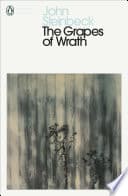
- The Grapes of Wrath
John Steinbeck
4.0 (750k) average on GoodreadsHistorical FictionBoth novels depict journeys across America driven by hardship and the search for a better life, exploring themes of class and opportunity. However, Steinbeck's 'The Grapes of Wrath' is a powerful, unvarnished social commentary on the plight of migrant workers during the Great Depression, with a strong focus on collective suffering and systemic injustice. 'The Lincoln Highway', while touching on similar themes, presents a more individualistic journey, with a lighter tone and a greater emphasis on personal agency and adventure, rather than explicit socio-economic critique. Steinbeck's work is grittier and more overtly political, whereas Towles's is more character-driven and focused on personal redemption.
- The Diary of a Young Girl
Anne Frank
4.2 (2.7M) average on GoodreadsBiographyDuring the Nazi occupation, a teenage girl's diary, written from a secret annex, shares observations on humanity, hope, and the wait for freedom.



Enjoyed the summary?
A summary gives you the shape of the book. The book itself has the detail, the examples and the voice.
Find The Lincoln Highway on AmazonAs an Amazon Associate, BookBrief earns from qualifying purchases. How we're funded