
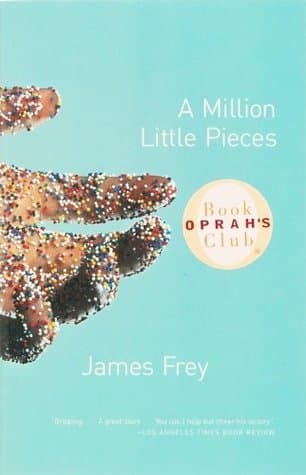
Core Idea
- Difficulty
- Medium
- Read it if
- You are interested in a raw, unflinching, and controversial first-person account of severe addiction and an unorthodox journey toward sobriety, exploring themes of pain, self-mythologizing, and the limitations of conventional treatment. You appreciate narratives that challenge traditional notions of truth and recovery.
- Skip it if
- You prefer scientifically rigorous or clinically validated approaches to addiction recovery, are sensitive to graphic descriptions of drug abuse and violence, or are put off by books known for significant factual inaccuracies in their autobiographical claims. You seek a straightforward, uplifting recovery story.
Key Takeaways from A Million Little Pieces
The Brutal Reality of Addiction
Addiction is a relentless, all-consuming force that strips individuals of their identity and dignity.
Frey's story puts the reader into the raw, unglamorous reality of severe addiction. This world lacks the romanticized ideas often linked to substance abuse, instead showing a raw depiction of physical decline, mental pain, and the endless cycle of craving and use. The book highlights how addiction isolates people, cutting ties with family, friends, and even their own sense of self, leaving them in constant desperation and self-loathing. It emphasizes the deep physical and psychological toll, seen in withdrawal, hallucinations, and a complete loss of control. The constant fight between wanting sobriety and the overwhelming pull of the substance becomes the central conflict of existence.
“I was an alcoholic and a drug addict, and I was going to die.”
In the book: Frey's description of his arrival at the treatment center, severely disfigured from a fall, with rotting teeth, and suffering intense withdrawal symptoms, immediately establishes the dire physical state of an addict.
Try this: Recognize the signs of extreme addiction in others and understand that it's a disease requiring intensive, often painful, intervention, not just willpower. Avoid romanticizing any aspect of substance abuse.
Related ideas: addiction-brutality, substance-abuse, withdrawal-symptoms
The Unconventional Path to Recovery
Recovery doesn't always follow prescribed methodologies; sometimes, a personal, internal fight is paramount.
Frey famously rejects the traditional 12-step program, finding its spiritual and group-focused ideas incompatible with his personal beliefs. His journey shows an individual, almost confrontational, approach to recovery, based on sheer willpower and a strong commitment to self-preservation. This challenges common addiction treatment, suggesting that for some, the path to sobriety is less about external frameworks and more about an internal, often solitary, battle of wills. While controversial, it shows the diversity of human psychology and that a 'one-size-fits-all' approach might not work for everyone. His defiance shows the power of self-belief, even against established norms.
“I don't believe in God. I don't believe in a Higher Power. I believe in myself.”
In the book: Frey's constant arguments with the counselors and his refusal to participate meaningfully in AA/NA meetings, instead focusing on his personal 'program' of self-discipline and physical exertion, demonstrate his unique approach.
Try this: If traditional methods aren't working, explore alternative, evidence-based recovery strategies or adapt existing ones to better suit individual needs and beliefs, always under professional guidance. Self-advocacy in treatment is crucial.
Related ideas: recovery-individuality, 12-step-alternative, willpower-in-recovery
The Role of Pain in Transformation
Intense physical and emotional pain can serve as a catalyst for profound personal change.
Frey's story is full of pain—the agony of withdrawal, emotional scars from his past, and physical discomfort he deliberately causes himself through intense exercise. He shows pain not just as something to endure, but as a cleansing, transforming force. By confronting and accepting his suffering, rather than escaping it through substances, he begins to rebuild himself. This idea suggests that sometimes, the deepest changes happen when people are forced to face their deepest discomforts head-on, using the intensity of that experience to grow. It is a brutal baptism by fire, where enduring the 'burn' leads to a new, stronger self.
“I chose to feel it. I chose to live with it. I chose to let it burn.”
In the book: Frey's detailed descriptions of his withdrawal symptoms, his decision to push through them without medication, and his punishing exercise regimen (running until he vomits, intense weightlifting) illustrate his embrace of pain.
Try this: When facing difficult challenges, instead of immediately seeking escape, try to sit with the discomfort. Use it as a signal for necessary change and a motivator for building resilience, rather than a deterrent.
Related ideas: pain-as-catalyst, emotional-endurance, transformative-suffering
The Power of Human Connection (and its Limitations)
While individual struggle is central, genuine connection, however flawed, plays a crucial role in recovery.
Despite Frey's intensely individual approach, the book subtly highlights the important role of human connection, especially through his relationship with Lilly, a fellow addict. Their bond, formed in shared suffering and understanding, provides comfort, motivation, and a reason to strive for sobriety. However, the tragic end of their relationship also shows how fragile these connections are within addiction and the huge challenges of keeping them. It shows that while personal strength is vital, supportive relationships can provide anchors, but they are not immune to the destructive forces of the disease or outside pressures.
“She was a part of me. She was a part of my new life. She was the reason I was fighting.”
In the book: The detailed portrayal of Frey's relationship with Lilly, including their shared vulnerabilities, their illicit meetings, and the emotional impact of her relapse and death, exemplifies the power and peril of such connections.
Try this: Seek out genuine, empathetic connections with others who understand your struggles, but also recognize that these relationships, while powerful, require careful navigation and cannot be the sole foundation of recovery.
Related ideas: addiction-relationships, empathy-in-recovery, fragile-connections
The Dehumanizing Nature of Addiction Treatment (Sometimes)
Treatment facilities, while necessary, can sometimes feel more like prisons than places of healing.
Frey's depiction of the treatment center is often critical, showing it as a rigid, authoritarian place where individuality is suppressed, and conformity to a specific doctrine is enforced. He describes counselors as often condescending, and fellow patients as either deeply troubled or manipulative. This view, while perhaps biased, sheds light on how institutional settings, even those meant to help, can feel dehumanizing or disempowering to those they serve. It raises questions about the balance between structure and individual autonomy in recovery, suggesting that a rigid approach can alienate patients who do not fit the mold, potentially hindering their progress.
“They want to break you. They want to make you like them. They want to make you believe.”
In the book: Frey's constant clashes with the counselors, his disdain for group therapy sessions, and his feeling of being constantly judged and misunderstood by the staff illustrate the dehumanizing aspects he perceived.
Try this: If you or a loved one are seeking treatment, research facilities thoroughly, ask about their philosophy, and ensure there's a good fit between the individual's needs and the program's approach. Advocate for personalized care.
Related ideas: treatment-critique, institutional-trauma, autonomy-in-recovery
Memory and Truth in Trauma Narratives
Trauma can distort memory, making the 'truth' of an experience subjective and complex.
The controversy around 'A Million Little Pieces'—the revelation that parts were made up or exaggerated—raises deep questions about truth in personal stories, especially those about trauma and addiction. Initially presented as memoir, the later admission changed it into a work that blurs fact and fiction. This highlights how memory, especially under extreme stress or addiction, can be unreliable, not necessarily due to bad intent, but due to psychological processes. It makes readers consider whether a story's 'emotional truth' can still resonate, even if its 'factual truth' is compromised. This controversy underscores the responsibility of authors and publishers in labeling such works.
“I have embellished central details.”
In the book: The BookBrowse note and subsequent admissions by Frey and his publisher regarding the fabrication of key details (e.g., criminal charges, jail time, fugitive status) directly address this point.
Try this: Approach all personal narratives, especially those of extreme experience, with a critical eye, understanding that human memory is fallible. For authors, prioritize transparency about the genre and any creative liberties taken.
Related ideas: memory-unreliability, truth-vs-fiction, trauma-narrative, memoir-ethics
The Allure and Danger of Self-Mythologizing
Crafting a compelling personal narrative can be empowering, but also risks self-deception and delusion.
Frey presents himself as a larger-than-life figure—a hardened criminal, a defiant rebel, a man who faced death and addiction with unmatched grit. This self-mythologizing, while creating a captivating story, also suggests a psychological defense mechanism. For an addict, creating such an identity can be a way to cope with shame and powerlessness, or to justify past behaviors. However, the later revelations about the book's accuracy show the danger of this: when the myth is built on falsehoods, it risks collapsing, taking credibility and trust with it. It is a cautionary tale about the line between inspiring self-belief and self-deceptive grandiosity.
“I was a bad ass. I was a survivor. I was a fighter.”
In the book: Frey's dramatic descriptions of his past criminal exploits, his exaggerated defiance of authority, and his consistent portrayal of himself as uniquely strong and independent, even within the treatment center.
Try this: While positive self-talk and belief are crucial, regularly engage in self-reflection and seek external feedback to ensure your self-perception remains grounded in reality, especially when facing significant challenges.
Related ideas: self-mythology, narrative-identity, delusion-in-addiction
The Enduring Quest for Meaning
Beneath the chaos of addiction and recovery lies a fundamental human search for purpose and belonging.
Despite his cynicism and rejection of traditional spirituality, Frey's journey is a search for meaning. His struggle is not just to stop using drugs, but to find a reason to live, a purpose beyond the cycle of addiction. He seeks to define what 'good' means to him, to rebuild a moral compass, and to find a place in the world where he feels authentic and alive. This underlying quest for meaning is a universal human experience, amplified by the existential crisis that addiction often causes. It highlights that true recovery goes beyond just not using; it involves rebuilding a life worth living, filled with personal values and direction.
“I did not believe in God, but I believed in something. I believed in life. I believed in hope.”
In the book: Frey's internal monologues about his hatred for his past self, his desire to be 'clean' and 'good,' and his eventual commitment to a life free from substances, driven by his own internal code.
Try this: Beyond addressing immediate problems, actively cultivate a personal philosophy and identify core values that provide meaning and direction in life. This 'why' can be a powerful anchor during difficult times.
Related ideas: existential-crisis, meaning-making, life-purpose, post-addiction-identity
The Reader's Complicity in Narrative
The reception of a story reveals as much about the audience's desires as it does about the author's intent.
The huge initial success of 'A Million Little Pieces' and the later public anger after the revelations of fabrication show a complex relationship between author, narrative, and reader. Readers often look for compelling, authentic stories, especially in memoir, to understand extreme human experiences. Frey's book tapped into a desire for an honest account of addiction. The intense emotional investment from readers led to a deep sense of betrayal when the factual inaccuracies came out. This highlights how readers contribute to a narrative's 'truth' by their willingness to believe, and how that trust, once broken, can have significant effects for both author and publisher. It is a powerful lesson in the ethics of storytelling and the implicit contract with the audience.
“The truth is, I don't care what you believe. I just want you to read my book.”
In the book: The widespread initial acclaim for the book as a 'memoir' and the subsequent public outcry, media scrutiny, and Oprah Winfrey's public confrontation with Frey, following the Smoking Gun's exposé.
Try this: As a reader, be aware of your own biases and desires for certain narratives. As a creator, understand the ethical responsibility that comes with presenting a story as 'true,' especially when dealing with sensitive subjects.
Related ideas: reader-response, narrative-ethics, author-reader-contract, public-perception
A Million Little Pieces Quotes
“I am an alcoholic and a drug addict and a criminal. I am a monster. But I am not a liar.”
“The past is a ghost, the future a dream, and all we ever have is now.”
“I don't believe in God. I believe in people. I believe in myself. I believe in the power of the human spirit.”
“Pain is inevitable. Suffering is optional.”
“I am here because I broke myself. I am here because I need to fix myself. I am here because I want to live.”
“The hardest thing about getting sober is dealing with all the things you were trying to escape from.”
“Love is not a feeling, it is a choice. It is a commitment. It is an action.”
“Every day is a battle. Every day is a choice. Every day is a victory.”
“There are no shortcuts to recovery. Only hard work, honesty, and a willingness to change.”
“I learned that I was not alone. That my pain was not unique. That there were others who understood.”
“Forgiveness is not about forgetting. It is about letting go of the anger and resentment that binds you to the past.”
“The greatest freedom is to be yourself, without apology, without fear.”
“Sometimes you have to break down completely to build yourself back up stronger.”
“Hope is a dangerous thing. It can drive a man insane. But it can also keep him alive.”
Quiz
10 questions on the main ideas. Each answer comes with a short explanation.
Question 1
Which specific substance did James Frey primarily struggle with according to 'A Million Little Pieces'?
- Heroin
- Crack cocaine
- PCP
- Methamphetamine
Show answer
B. Crack cocaine The book details Frey's severe addiction to crack cocaine and alcohol, leading to the dramatic events of his rehabilitation.
Question 2
At the beginning of 'A Million Little Pieces', where does James Frey find himself after a severe accident?
- A hospital emergency room
- A jail cell
- His parents' home
- A detoxification clinic
Show answer
A. A hospital emergency room The book opens with Frey waking up on an airplane with no memory, eventually discovering he's in a hospital with severe injuries, leading to his entry into rehab.
Question 3
What is the primary method of therapy that Frey is forced to endure at the rehabilitation center?
- One-on-one psychotherapy sessions
- Group therapy and confrontation
- Art and music therapy
- Medication-assisted treatment
Show answer
B. Group therapy and confrontation A significant portion of the book describes the intense, often confrontational, group therapy sessions that are central to the rehab's approach.
Question 4
What significant personal relationship does Frey develop during his time in the rehabilitation center that defies the rules?
- With his assigned therapist
- With a fellow patient named Leonard
- With a female patient named Lilly
- With a staff member named Taylor
Show answer
C. With a female patient named Lilly Frey forms an intense romantic relationship with Lilly, a fellow patient, which is strictly forbidden by the facility's rules and adds a layer of tension to his recovery.
Question 5
Which of the following common addiction recovery programs does Frey explicitly reject and criticize throughout the book?
- Cognitive Behavioral Therapy (CBT)
- The Twelve Steps of Alcoholics Anonymous/Narcotics Anonymous
- Family therapy
- Holistic approaches
Show answer
B. The Twelve Steps of Alcoholics Anonymous/Narcotics Anonymous Frey is very vocal about his disdain for the Twelve Steps program, finding its spiritual and surrender-based approach incompatible with his own beliefs and desire for self-reliance.
Question 6
What is the 'BookBrowse Note' primarily concerned with regarding 'A Million Little Pieces'?
- The quality of Frey's writing style
- The psychological impact of the book on readers
- The factual accuracy of events described in the memoir
- Its controversial depiction of drug use
Show answer
C. The factual accuracy of events described in the memoir The BookBrowse Note explicitly states that 'The Smoking Gun claimed that James Frey fabricated key parts of his books,' citing 'police records, court documents and interviews with law enforcement agents.'
Question 7
According to the BookBrowse Note, what was Frey's initial admission regarding the factual claims in 'A Million Little Pieces'?
- He denied any fabrications completely.
- He admitted he had 'embellished central details'.
- He claimed his memory was impaired due to drug use.
- He stated the publisher encouraged fictionalization.
Show answer
B. He admitted he had 'embellished central details'. The BookBrowse Note states, 'In an interview with the Smoking Gun, Frey admitted that he had 'embellished central details' in A Million Little Pieces and backtracked on claims he made in the book.'
Question 8
How does Frey's narrative challenge conventional ideas of recovery and personal responsibility in the context of his addiction?
- By advocating for strict adherence to traditional 12-step programs.
- By portraying himself as an inherently flawed individual who finds redemption through faith.
- By emphasizing a self-driven, often defiant, approach to recovery that rejects external frameworks and embraces his own will.
- By attributing his addiction solely to external societal pressures.
Show answer
C. By emphasizing a self-driven, often defiant, approach to recovery that rejects external frameworks and embraces his own will. Frey's narrative strongly emphasizes his personal will and internal strength as the primary drivers of his recovery, often clashing with the prescribed methods and philosophies of the rehabilitation center.
Question 9
Considering the controversy, what is the most significant ethical dilemma raised for readers who initially engaged with 'A Million Little Pieces' as a memoir?
- Whether the graphic descriptions of drug use were too explicit.
- The question of how much 'embellishment' is acceptable in a work presented as non-fiction.
- The portrayal of specific individuals in the rehabilitation center without their consent.
- The author's decision to write about addiction for profit.
Show answer
B. The question of how much 'embellishment' is acceptable in a work presented as non-fiction. The core of the controversy lies in the genre: a book marketed and consumed as a true story (memoir) was later revealed to contain significant fabrications, challenging the reader's trust and the definition of non-fiction.
Question 10
What action did Frey's publisher decide to take for future editions of 'A Million Little Pieces' after the revelations of fabrication?
- Withdraw the book from publication entirely.
- Reclassify the book as fiction.
- Add a publisher's note and author's note.
- Offer refunds to readers who purchased the original edition.
Show answer
C. Add a publisher's note and author's note. The BookBrowse Note states: 'Frey's publisher stated that while it initially stood by him, after further questioning of the author, the house has 'sadly come to the realization that a number of facts have been altered and incidents embellished.' It will be adding a a publisher's note and author's note to all future editions of A Million Little Pieces.'
A Million Little Pieces FAQ
What is 'A Million Little Pieces' about?
'A Million Little Pieces' is a memoir by James Frey detailing his struggles with drug and alcohol addiction and his experience in rehabilitation. It offers a raw and intense look into the recovery process from the perspective of an addict.
Is 'A Million Little Pieces' a true story?
Initially marketed as a memoir, it was later revealed that author James Frey fabricated or embellished significant portions of the book. While based on his experiences, many key details, particularly regarding criminal charges and jail time, were found to be untrue.
Does the book accurately depict addiction and rehabilitation?
While the emotional core and internal struggles of addiction may resonate with many, the factual inaccuracies regarding external events, such as specific criminal acts and interactions with law enforcement, mean its depiction of the rehabilitation process is not entirely reliable as a factual account.
What is the 'BookBrowse note' mentioned about the book?
The BookBrowse note refers to the controversy surrounding the book's veracity. It highlights the revelations from The Smoking Gun that James Frey fabricated or embellished key parts of his memoir, leading to admissions from the author and his publisher.
How did the publisher respond to the accusations of fabrication?
After initial support, the publisher eventually acknowledged that 'a number of facts have been altered and incidents embellished' by Frey. They subsequently added a publisher's note and an author's note to all future editions of 'A Million Little Pieces' to address the inaccuracies.
What impact did the controversy have on James Frey's literary career?
The controversy surrounding 'A Million Little Pieces' significantly damaged James Frey's reputation as a memoirist and led to widespread public debate about the nature of truth in non-fiction. Despite this, he has continued to publish fiction and non-fiction works.
How is this book different from other addiction memoirs?
Unlike many addiction memoirs that strive for factual accuracy, 'A Million Little Pieces' stands out due to its deliberate embellishments, which ultimately led to its reclassification from memoir to a work of controversial fiction. Its raw, unapologetic style was initially praised before the factual issues emerged.
Should I still read 'A Million Little Pieces' despite the controversy?
Reading 'A Million Little Pieces' is a personal choice. If you are interested in a powerful, albeit fictionalized, narrative of addiction and recovery, it can still be a compelling read. However, it's crucial to approach it with the understanding that it is not a strictly factual account.
What is 'embellishment' in the context of this book?
In this context, 'embellishment' refers to Frey's act of adding fictional details, exaggerating events, or outright fabricating incidents within his supposed memoir. This included altering police records, jail terms, and the severity of his criminal charges to create a more dramatic narrative.
About the author

James Frey is an American author known for his semi-autobiographical works that often explore themes of addiction and recovery. His notable books include "A Million Little Pieces," which gained significant attention for its controversial narrative, as well as "My Friend Leonard" and "Bright Shiny Morning," both of which delve into personal and societal struggles. Frey's writing is characterized by its raw and unflinching style.
Similar books
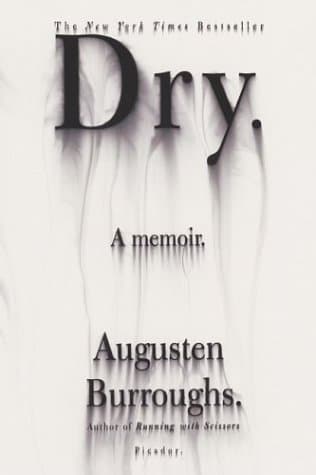
- Dry
Augusten Burroughs
4.0 (22k) average on GoodreadsScience FictionExplores addiction and recovery with a similar dark humor and unconventional perspective on mental health and self-destruction.
- Go Ask Alice
Anonymous
3.7 (293k) average on GoodreadsReferenceA controversial diary-style account of drug addiction, also known for its blurred lines between fiction and truth, though targeting a younger audience.
- The Perks of Being a Wallflower
Stephen Chbosky
4.2 (1.3M) average on GoodreadsPsychologyThrough letters, a shy high school freshman learns to navigate first love, trauma, and self-discovery, stepping off the sidelines and into life.
- Eleanor Oliphant Is Completely Fine
Gail Honeyman
4.3 (708k) average on GoodreadsLiterary FictionA lonely woman's structured life changes when an IT guy and an elderly man help her learn to open her heart.
- One Flew Over the Cuckoo's Nest
Ken Kesey
4.2 (631k) average on GoodreadsPsychologyIn a mind-bending asylum, the boisterous Randle McMurphy wages a defiant war against the tyrannical Nurse Ratched, inspiring his fellow inmates, including the seemingly catatonic Chief Bromden, to reclaim their lost humanity.
- The Bell Jar
Sylvia Plath
4.0 (591k) average on GoodreadsPsychologyIn the suffocating grip of 1950s expectations, a brilliant young woman's descent into mental illness is painted with such vivid, internal clarity that her 'insanity' feels terrifyingly rational and inevitable.




Enjoyed the summary?
A summary gives you the shape of the book. The book itself has the detail, the examples and the voice.
Find A Million Little Pieces on AmazonAs an Amazon Associate, BookBrief earns from qualifying purchases. How we're funded