
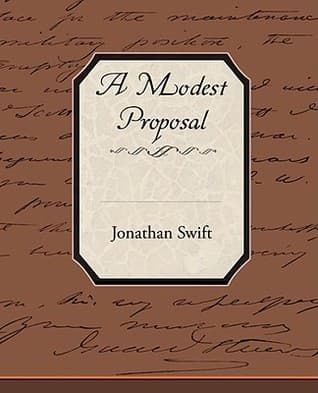
Core Idea
- Difficulty
- Medium
- Read it if
- You are interested in classic satire, political commentary on poverty and oppression, or the use of irony to expose societal hypocrisy.
- Skip it if
- You are easily offended by dark humor or find the topic of child suffering too disturbing, even in a satirical context.
Key Takeaways from A Modest Proposal
The Ironic Mask of Enlightenment
Swift's genius lies in his ability to adopt and perfect the very tone he despises.
Swift uses a detached, rational, and 'enlightened' voice to present his horrific proposal. This rhetorical choice comments on the dangers of unchecked reason and economic calculation when separated from basic human empathy. By detailing the 'benefits' and 'methods' of eating children, he mirrors the cold, statistical language used by real politicians and economists of his time who discussed the poor as numbers or burdens. The shock forces the reader to confront the dehumanizing implications of such 'rational' approaches to societal problems, showing how easily logical frameworks can lead to monstrous conclusions if not based on moral considerations.
“I have been assured by a very knowing American of my acquaintance in London, that a young healthy child well nursed is at a year old a most delicious, nourishing, and wholesome food, whether stewed, roasted, baked, or boiled; and I make no doubt that it will equally serve in a fricassee or a ragout.”
In the book: The entire essay is constructed as a detailed economic proposal, complete with calculations of cost, benefit, and demographic impact, mirroring the scientific and economic treatises of the 18th century.
Try this: When evaluating policy proposals or economic arguments, critically examine the underlying assumptions and the language used. Does it reduce human beings to statistics? Does it prioritize 'efficiency' over dignity? Always look for the moral framework, or lack thereof, within a seemingly logical argument.
Related ideas: satire, irony, enlightenment-critique, dehumanization
The Indifference of the Elite
The 'modest proposal' is a mirror reflecting the unacknowledged cruelty of the ruling class.
Swift's proposal is a harsh criticism of the Anglo-Irish gentry and British government. Their policies and neglect had already reduced the Irish poor to a state of living death. The 'modest' solution of eating children is presented as a logical extension of the existing societal conditions and attitudes toward the impoverished. The 'author' of the proposal genuinely believes he offers a humanitarian solution because, from his detached view, the current suffering is so extreme that death by consumption might be a better fate. This reveals the deep moral blindness of an elite so removed from suffering that they cannot see the horror of their own inaction.
“I desire those politicians who dislike my overture, and may perhaps be so bold as to attempt an answer, that they will first ask the parents of these mortals, whether they would not at this day think it a great happiness to have been sold for food at a year old, in the manner I prescribe, and thereby have avoided such a perpetual succession of misfortunes never to end but in death.”
In the book: Swift lists various 'expedients' that have been ignored – taxing absentees, promoting domestic industry, rejecting foreign luxuries, etc. – highlighting that real, humane solutions were available but disregarded.
Try this: Actively challenge and expose the systemic indifference of power structures. Recognize when 'solutions' offered by the powerful merely rationalize existing injustices or create new ones, rather than addressing root causes with empathy and genuine concern for human welfare.
Related ideas: social-critique, class-divide, political-neglect, moral-blindness
The Dehumanizing Power of Poverty
Poverty's ultimate horror is not just physical deprivation, but the stripping away of human dignity.
Swift's proposal, while shocking, highlights the actual dehumanizing effects of extreme poverty in 18th-century Ireland. The poor were already treated as less than human; their lives were expendable, their children seen as burdens. The 'author' proposes turning them into a commodity, a logical extension of how society already viewed and exploited them. This shows how systemic neglect reduces individuals to economic units or problems to be managed, rather than human beings with inherent worth. The 'modest proposal' forces readers to confront how close society already was to such an atrocity through its indifference.
“It is true, a child just dropped from its dam, may be supported by her milk for a solar year, with little other nourishment; at most not above the value of two shillings; which the mother may certainly get, or the value in scraps, by her lawful occupation of begging; and it is exactly at one year old that I propose to provide for them in such a manner, as instead of being a charge upon their parents, or the parish, or wanting food and raiment for the rest of their lives, they shall, on the contrary, contribute to the feeding, and partly to the clothing, of many thousands.”
In the book: The numerous descriptions of the impoverished state of Irish families: 'great numbers of poor children in the arms, or on the backs, or at the heels of their mothers, and frequently of their fathers, begging an alms.'
Try this: Advocate for policies that address the root causes of poverty and affirm the inherent dignity of every individual. Challenge systems that commodify human life or reduce people to economic inputs. Recognize that true solutions must restore dignity, not just manage destitution.
Related ideas: poverty, dignity, exploitation, social-justice
The Failure of Rationalism Without Empathy
When logic is divorced from humanity, it can lead to monstrously 'reasonable' conclusions.
Swift's 'author' uses cold, calculating reason, meticulously detailing the plan's economic benefits: fewer beggars, new revenue, improved marriage rates, and an enhanced national diet. This character embodies the danger of a purely rational approach to human problems, one that values 'objectivity' and 'efficiency' while completely lacking human compassion. The essay argues that a society prioritizing economic metrics and statistical solutions above all else, without empathy, risks adopting morally repugnant 'solutions,' no matter how 'logical' they seem. It warns against the allure of heartless pragmatism.
“I calculate, therefore, that the charge of nursing a child from its birth until it is a year old, will be a little more than two shillings per annum, rags included; and for this, the mother will be able to earn eight shillings sterling, and have the child to sell for ten shillings, or a good fatling for the market.”
In the book: The detailed statistical analysis of the number of children, their potential weight, the cost of rearing them, and the market price, all presented with scientific precision.
Try this: Always question the ethical implications of seemingly 'rational' or 'efficient' solutions, especially in policy-making. Prioritize human well-being and dignity over mere economic efficiency. Ensure that any logical framework is balanced by a strong moral compass and empathetic understanding.
Related ideas: rationalism, empathy, ethics, pragmatism
The Power of Shock and Absurdity
Sometimes, only the most outrageous proposal can awaken a society to its own complacency.
Swift knew that polite requests and traditional arguments had failed to move the powerful. His 'modest proposal' is an act of rhetorical force, a deliberate shock designed to make readers face the horrific implications of their passive acceptance of suffering. The absurdity of eating children serves as a grotesque metaphor for existing exploitation and neglect. By pushing the 'logic' of the situation to its most extreme and revolting conclusion, Swift shatters complacency and prompts an emotional, visceral reaction that mere facts and figures could not achieve. Sometimes, only a radical jolt can break through societal apathy.
“I grant this food will be somewhat dear, and therefore very proper for landlords, who, as they have already devoured most of the parents, seem to have the best title to the children.”
In the book: The sheer audacity of the central idea – consuming infants – is the primary 'evidence' of this strategy, intended to provoke outrage and force reconsideration.
Try this: In advocacy or social commentary, consider when a conventional approach is insufficient. Sometimes, a bold, provocative, or even absurd statement (when clearly understood as such) can be more effective at drawing attention to an overlooked injustice and sparking necessary dialogue.
Related ideas: shock-value, absurdism, rhetoric, social-awakening
The Unheard Voices of the Oppressed
The 'proposal' silences the victims, echoing how society already ignored their pleas.
The 'author' of the proposal speaks for the poor, but never allows them a voice. Their suffering is quantified, their bodies commodified, and their existence reduced to an economic problem. This mirrors the real-world silencing of the oppressed, whose perspectives are often ignored or filtered through the powerful. Swift shows how proposing such a solution, even satirically, reinforces the power dynamic where the poor are objects of policy, not subjects with agency and rights. The absence of their voices is as striking as the grotesque proposal itself.
“I have already computed the charge of nursing a beggar's child (in which list I reckon all cottagers, labourers, and four-fifths of the farmers) and found it to be about two shillings per annum, rags included; and for this, the mother will be able to earn eight shillings sterling, and have the child to sell for ten shillings, or a good fatling for the market.”
In the book: The entire essay is a monologue from the perspective of an 'expert' offering a solution *to* the problem of the poor, rather than seeking input *from* the poor.
Try this: Always amplify the voices of marginalized communities. Be wary of solutions proposed by those in power that do not genuinely include the perspectives and lived experiences of those they aim to 'help.' Ensure that affected individuals are active participants in shaping policies that impact their lives.
Related ideas: marginalization, voice, oppression, agency
The Hypocrisy of Benevolence
Swift exposes how self-interest often masquerades as humanitarian concern.
The 'author' of the proposal repeatedly claims his motives are philanthropic and patriotic, aiming to 'relieve the poor' and 'advance the public good.' Yet, every proposed 'benefit' ultimately serves the interests of the wealthy and powerful: reducing the burden of the poor, providing a new delicacy, stimulating the economy. Swift exposes the hypocrisy of those who frame self-serving policies as benevolent. This critique remains relevant today, as powerful entities often disguise their pursuit of profit or control as 'helping' or 'improving society,' when in reality, the benefits largely favor themselves.
“I have no other motive than the publick good of my country, by advancing our trade, providing for infants, relieving the poor, and giving some pleasure to the rich.”
In the book: The detailed list of 'advantages' includes 'lessening the number of Papists,' providing a new 'dainty,' and 'preventing abortions,' all of which serve political or economic interests rather than genuine relief for the suffering.
Try this: Critically analyze claims of 'public good' or 'philanthropy' from powerful individuals or corporations. Look beyond the stated intentions to identify the true beneficiaries and potential hidden agendas. Demand transparency and accountability for actions framed as benevolent.
Related ideas: hypocrisy, benevolence, self-interest, political-rhetoric
The Lingering Relevance of Systemic Cruelty
Though extreme, the 'proposal' highlights enduring patterns of societal neglect and exploitation.
While Swift's proposal is satire, its critique of systemic cruelty, economic exploitation, and political indifference remains relevant. Societies still face poverty, resource allocation, and the dehumanization of marginalized groups. The 'modest proposal' warns that when human lives are reduced to statistics, when profit is prioritized over dignity, and when the powerful ignore the suffering of the weak, the path toward morally reprehensible 'solutions' becomes dangerously plausible. It prompts us to constantly examine our own societies for subtle forms of 'cannibalism' – the consumption of human potential, dignity, and life itself through neglectful policies and unjust systems.
“I can think of no one objection, that will possibly be raised against this proposal, unless it should be urged that the number of people will be thereby much lessened in the kingdom.”
In the book: The timelessness of the themes: poverty, governmental indifference, class exploitation, and the rhetoric of economic efficiency overriding humanistic concerns.
Try this: Continuously reflect on contemporary issues: global poverty, refugee crises, healthcare disparities, and environmental injustices. Ask if current 'solutions' or debates inadvertently echo the cold, calculating logic Swift satirized, and actively work to advocate for human-centered approaches.
Related ideas: systemic-injustice, contemporary-relevance, exploitation, social-responsibility
A Modest Proposal Quotes
“I have been assured by a very knowing American of my acquaintance in London, that a young healthy child well nursed, is, at a year old, a most delicious, nourishing, and wholesome food, whether stewed, roasted, baked, or boiled; and I make no doubt that it will equally serve in a fricassee, or a ragout.”
“I do therefore humbly offer it to public consideration, that of the hundred and twenty thousand children already computed, twenty thousand may be reserved for breed, whereof only one fourth part to be males; which is more than we allow to sheep, black cattle, or swine.”
“I grant this food will be somewhat dear, and therefore very proper for landlords, who, as they have already devoured most of the parents, seem to have the best title to the children.”
“Some persons of a desponding spirit are in great concern about that vast number of poor people, who are aged, diseased, or maimed; and I have been desired to employ my thoughts what course may be taken to ease the nation of so grievous an encumbrance.”
“I can think of no one objection, that will possibly be raised against this proposal, unless it should be urged that the number of people will be thereby much lessened in the kingdom.”
“I desire the reader will observe, that I calculate my remedy for this one individual kingdom of Ireland, and for no other that ever was, is, or I think ever can be upon earth.”
“I profess, in the sincerity of my heart, that I have not the least personal interest in endeavouring to promote this necessary work, having no other motive than the public good of my country, by advancing our trade, providing for infants, relieving the poor, and giving some pleasure to the rich.”
“I have already computed the charge of nursing a beggar's child (in which list I reckon all cottagers, labourers, and four-fifths of the farmers) to be about two shillings per annum, rags included.”
“For we can neither take them from our parents without their consent, nor starve them in the streets, for want of food, nor sell them to the highest bidder.”
“These mothers, instead of being able to work, are forced to employ all their time in strolling to beg sustenance for their helpless infants, who, as they grow up, either turn thieves for want of work, or leave their dear native country, to fight for the Pretender in Spain, or sell themselves to the Barbadoes.”
“I desire those politicians who dislike my overture, and may perhaps be so bold as to attempt an answer, that they will first ask the parents of these mortals, whether they would not at this day think it a great happiness to have been sold for food at a year old.”
“It is an infallible cure for idleness, and that of a very great expense.”
“I have too long digressed, and therefore shall return to my subject.”
“The number of souls in this kingdom being usually reckoned one million and a half, of these I calculate there may be about two hundred thousand couple whose wives are breeders.”
Quiz
10 questions on the main ideas. Each answer comes with a short explanation.
Question 1
What is the primary 'modest proposal' offered by the narrator to solve the problem of poverty and overpopulation in Ireland?
- Exporting Irish children to the American colonies as indentured servants.
- Selling Irish children to the wealthy as a new source of food.
- Establishing workhouses for children to learn trades.
- Encouraging widespread emigration of the poor to England.
Show answer
B. Selling Irish children to the wealthy as a new source of food. The narrator's 'modest proposal' is to sell and consume the children of the poor Irish, specifically those under one year old, as a delicacy for the wealthy.
Question 2
Swift's essay is an example of what literary device, where the author says one thing but means the opposite?
- Allegory
- Euphemism
- Irony
- Metaphor
Show answer
C. Irony Swift employs sustained irony throughout 'A Modest Proposal,' pretending to seriously suggest a horrific solution to highlight the equally horrific, albeit less direct, neglect of the Irish poor.
Question 3
Which of the following groups does the narrator explicitly state would be exempt from his proposal?
- Children of wealthy Protestants
- Children above the age of six
- Children of tenant farmers
- Children born out of wedlock
Show answer
A. Children of wealthy Protestants The narrator specifically mentions that the proposal would not affect the children of Protestants, as they are not experiencing the same level of destitution as the Catholic poor.
Question 4
What is one of the 'expedients' (real solutions) that Swift, speaking through the narrator, sarcastically dismisses before presenting his 'modest proposal'?
- Introducing a new system of public education.
- Taxing absentee landlords and importing foreign goods.
- Buying only goods and manufactures of our own country.
- Establishing a national bank to provide loans to the poor.
Show answer
C. Buying only goods and manufactures of our own country. Swift lists several sensible, pragmatic solutions like 'buying only goods and manufactures of our own country,' which he implies have been ignored, making the truly 'modest' proposal seem like the only remaining option.
Question 5
The narrator argues that his proposal would significantly reduce the number of what, besides the poor themselves?
- Religious dissenters
- Popish recusants
- English soldiers
- Protestant landlords
Show answer
B. Popish recusants The narrator explicitly states that the consumption of children would 'lessen the number of Papists among us,' referring to the Irish Catholics who were largely disenfranchised and impoverished under British rule.
Question 6
What is the narrator's stated motivation for proposing such a radical solution?
- To increase Ireland's military strength.
- To improve the health and well-being of the Irish populace.
- To find a fair, cheap, and easy method of making these children sound and useful members of the commonwealth.
- To punish the Irish for their laziness and lack of industry.
Show answer
C. To find a fair, cheap, and easy method of making these children sound and useful members of the commonwealth. The narrator maintains a facade of benevolence, claiming his goal is to make the children 'sound and useful members of the commonwealth,' which is a horrifying justification for cannibalism.
Question 7
Which specific economic benefit does the narrator *not* claim would result from his proposal?
- A new source of delicacy for landlords and the wealthy.
- Increased agricultural productivity due to fewer mouths to feed.
- A reduction in the number of abortions and infanticides.
- An income for poor parents from selling their children.
Show answer
B. Increased agricultural productivity due to fewer mouths to feed. While the proposal implies reduced pressure on resources, the narrator does not specifically articulate 'increased agricultural productivity' as a direct economic benefit, focusing more on market creation and poverty reduction.
Question 8
The essay criticizes the policies and attitudes of which dominant political entity towards Ireland?
- France
- Spain
- Great Britain (England)
- The Vatican
Show answer
C. Great Britain (England) Swift's primary target for criticism is the exploitative and neglectful policies of the British government and absentee landlords towards the Irish population.
Question 9
How does Swift's use of precise, statistical language and economic reasoning contribute to the essay's satirical effect?
- It makes the proposal seem genuinely viable and humane.
- It highlights the narrator's lack of true understanding of economics.
- It mirrors the cold, dehumanizing logic used by policymakers to discuss human lives.
- It demonstrates a sincere belief in the power of rational thought to solve social ills.
Show answer
C. It mirrors the cold, dehumanizing logic used by policymakers to discuss human lives. By presenting the horrific proposal with detached, pseudo-scientific, and economic rationales, Swift satirizes the way actual policymakers often reduced human suffering to mere statistics and economic calculations, devoid of empathy.
Question 10
What is the ultimate purpose of Swift's 'Modest Proposal' in the context of 18th-century Anglo-Irish relations?
- To genuinely advocate for extreme measures to control population growth in Ireland.
- To shock his audience into acknowledging the dire poverty and the moral bankruptcy of current policies.
- To entertain the educated elite with a clever, if disturbing, thought experiment.
- To provide a blueprint for a new economic system for colonial powers.
Show answer
B. To shock his audience into acknowledging the dire poverty and the moral bankruptcy of current policies. Swift's intention was to use hyperbole and shock to force his English and Irish Protestant readers to confront the horrific conditions in Ireland and the inadequacy—or cruelty—of existing approaches.
A Modest Proposal FAQ
What is the main proposal in Jonathan Swift's 'A Modest Proposal'?
Jonathan Swift's 'A Modest Proposal' satirically suggests that the impoverished Irish might ease their economic troubles by selling their children as food to the wealthy. This shocking proposition is meant to highlight the desperate conditions in Ireland and the callous indifference of the English ruling class.
Is 'A Modest Proposal' meant to be taken literally?
Absolutely not. Swift's essay is a brilliant piece of satire, intended to shock its readers into recognizing the severe poverty and exploitation in Ireland and the British government's failure to address it. The proposal itself is a grotesque exaggeration designed to expose the dehumanizing attitudes prevalent at the time.
What political issues does 'A Modest Proposal' address?
'A Modest Proposal' primarily addresses the dire economic and social conditions in 18th-century Ireland, particularly the widespread poverty, famine, and exploitation of the Irish by the English. It critiques British imperial policies, absentee landlordism, and the ineffective governance that led to such suffering.
Does Swift offer any genuine solutions in 'A Modest Proposal'?
While the titular proposal is satirical, Swift subtly lists genuine solutions within the essay, which he presents as less appealing alternatives to his 'modest proposal.' These include taxing absentee landlords, promoting domestic industry, buying Irish goods, and discouraging foreign luxuries, all of which he implies have been ignored.
What is the philosophical underpinning of 'A Modest Proposal'?
Philosophically, the work critiques utilitarianism taken to its extreme, demonstrating how a purely rational, economic approach to human problems can lead to morally abhorrent conclusions if divorced from empathy and humanity. It questions the Enlightenment's emphasis on reason when applied without compassion.
How does Swift use satire in 'A Modest Proposal'?
Swift employs verbal irony, hyperbole, and a detached, rational persona to present his outrageous proposal as a logical, economic solution. By maintaining a serious tone while discussing a horrific idea, he forces the reader to confront the absurdity and cruelty of the real-world conditions he is critiquing.
How is 'A Modest Proposal' different from other political pamphlets of its time?
'A Modest Proposal' stands out due to its extreme use of shock value and dark humor, which was far more provocative than typical political pamphlets. While many pamphlets argued directly for policy changes, Swift's indirect, satirical approach made his critique unforgettable and uniquely impactful.
Does 'A Modest Proposal' still resonate with contemporary issues?
Yes, 'A Modest Proposal' remains relevant today as a powerful commentary on economic inequality, political indifference, and the dehumanization of marginalized populations. Its themes of exploitation and the moral failures of those in power continue to echo in modern discussions about social justice and poverty.
What is the historical context behind 'A Modest Proposal'?
The essay was written in 1729, during a period of severe famine and economic hardship in Ireland, exacerbated by British policies that restricted Irish trade and agricultural practices. Swift, an Anglo-Irish clergyman, was deeply frustrated by the suffering he witnessed and the lack of effective relief.
About the author

Jonathan Swift was an Anglo-Irish satirist, author, essayist, political pamphleteer, poet, and Anglican cleric who became Dean of St Patrick's Cathedral, Dublin, hence his common sobriquet, "Dean Swift".
Similar books
- Animal Farm
George Orwell
4.0 (2.7M) average on GoodreadsPoliticsBoth use allegorical fables to critique political systems, power abuses, and the oppression of the vulnerable.
- Gulliver's Travels
Jonathan Swift
3.6 (232k) average on GoodreadsFantasyAnother work by Swift, it similarly employs fantastical journeys and satire to critique human nature and political systems.
- 1984
George Orwell
4.2 (3.1M) average on GoodreadsPoliticsIn a future where surveillance and thought control are absolute, a man's search for truth clashes with the Party, showing that hope can be a form of rebellion.
- Freakonomics: A Rogue Economist Explores the Hidden Side of Everything
Steven D. Levitt
4.0 (709k) average on GoodreadsBusinessThis book uses economic principles to reveal the surprising incentives behind everything from drug dealing and real estate to cheating teachers and the decline of crime.
- I Am Malala: The Story of the Girl Who Stood Up for Education and Was Shot by the Taliban
Malala Yousafzai
4.1 (419k) average on GoodreadsPoliticsA teenage girl from a Taliban-controlled valley refuses to give up her books, becoming a global voice for education even after an assassination attempt.
- Atlas Shrugged
Ayn Rand
3.7 (354k) average on GoodreadsPoliticsIn a dystopian America where innovators vanish, a brilliant heiress races to uncover the truth behind the disappearing industrialists and the enigmatic John Galt, who vows to stop the world's progress.





Enjoyed the summary?
A summary gives you the shape of the book. The book itself has the detail, the examples and the voice.
Find A Modest Proposal on AmazonAs an Amazon Associate, BookBrief earns from qualifying purchases. How we're funded