
Synopsis
Covers the whole plot, including the ending.
- Difficulty
- Easy
- Pacing
- Moderate
- Mood
- Suspenseful, Adventurous, Historical
- Read it if
- You enjoy historical mysteries with a brave young protagonist, secret identities, and a touch of Elizabethan intrigue.
- Skip it if
- You prefer fast-paced thrillers or stories without a strong historical setting.
A Murder for Her Majesty Plot Summary
Covers the whole plot, including the ending.
A Fatal Discovery
The story begins with eleven-year-old Alice Tuckfield coming home to find her father, Master Tuckfield, a scrivener, arguing with two men. Hidden, Alice watches in horror as the men stab her father. Before he dies, Master Tuckfield whispers about 'treason' and 'the Queen's agents,' telling her to run. Terrified and realizing the killers are after her, Alice barely escapes her York home, holding a small, carved wooden box her father always kept hidden. She knows she must disappear to survive, fearing Queen Elizabeth's spies.
A Boy in Disguise
Desperate for safety, Alice remembers her father mentioning the choirboys at York Minster. She cuts her hair, puts on a boy's tunic and breeches she finds, and practices lowering her voice. Calling herself 'Pip,' a runaway orphan wanting to join the choir, she approaches the choirmaster, Master Henry. Master Henry, kind but strict, is at first doubtful but, seeing her need and hearing her good singing voice, lets her join the choir on a trial basis. Alice quickly learns the choir's routines and challenges of living as a boy among other boys, always fearing discovery.
Life as Pip
Alice, as Pip, adjusts to the hard life of a choirboy. She shares a dormitory with other boys, including the friendly Hugh, who becomes her closest friend, and the older, rough Thomas, who often bullies younger boys. Alice struggles with the physical demands, the constant need to hide her gender, and the fear of being found out, especially during bathing or changing clothes. She sings well but finds other boyish activities, like rough-housing, difficult. Hugh, however, sees something different in Pip and offers quiet support, sensing Pip's vulnerability.
The Mysterious Box
In private moments, Alice examines the small wooden box her father gave her. It looks like an ordinary, carved box, but Alice remembers her father's secrecy about it. After careful searching, she finds a hidden spring that opens a secret compartment. Inside, she finds tightly bound parchments with her father's writing. The contents are coded and complex, hinting at political plots and dangerous information. This confirms her father's last words about treason and the Queen's agents. Alice realizes the box holds the key to her father's murder and her own danger.
Whispers of Suspicion
While doing her duties around the Minster and during choir practice, Alice often overhears adult conversations. She starts connecting rumors and whispers about her father. People talk about Master Tuckfield's sudden disappearance, his supposed involvement in Catholic plots against Queen Elizabeth, and the idea that he was a traitor. These rumors upset Alice, as she knows her father was loyal. She realizes the men who killed him likely acted under the guise of loyalty to the Queen, but their real reasons are unclear, making the parchments even more mysterious.
Hugh's Discovery
One evening, while other choirboys sleep, Alice secretly looks at the parchments from the wooden box. Hugh, awake, sees her. Startled, Alice tries to hide the box, but her wig slips, showing her long hair. Hugh is shocked but quickly understands. Instead of telling on her, he is kind and promises to keep her secret. This shared moment strengthens their friendship. Hugh becomes an important ally, offering emotional support and practical help in the choirboy world and with the coded messages.
Deciphering the Code
With Hugh's help and his knack for puzzles, Alice starts to decipher the coded parchments. They find that the documents are not about treason against the Queen, but instead detail a plot *against* Queen Elizabeth I. A group of powerful Catholic nobles aims to remove her and put Mary, Queen of Scots, on the English throne. Her father, Master Tuckfield, had secretly recorded this conspiracy, planning to expose it. The coded messages name specific people and outline their plans, revealing the real danger her father faced and why he was murdered.
The Threat Looms
As Alice and Hugh continue to decipher the plot, they learn that the conspirators are looking for the missing documents. They hear news that Master Tuckfield's house has been searched, and rumors spread about agents of the Queen—or perhaps the conspirators themselves—looking for a 'scrivener's daughter' and a 'wooden box.' The danger inside the Minster grows as Alice sees one of her father's murderers near the cathedral, confirming the killers are still looking for her and the evidence. They know they must act fast before they are found.
A Desperate Plan
Realizing they cannot trust local officials who might be part of the plot, Alice and Hugh decide they must get the decoded information directly to Queen Elizabeth I. They plan to travel to London disguised as ordinary travelers, using roads and inns, to deliver the evidence. Their youth and lack of money make this a dangerous task, but Alice knows it is the only way to clear her father's name and stop a national disaster. Hugh, despite the danger, agrees to help her, understanding how serious their mission is.
The Journey to London
Alice (still as Pip) and Hugh begin their journey to London. They face many problems: little food and money, dangerous roads, and the constant fear of being recognized or stopped by the conspirators. They narrowly avoid suspicious people at inns and use their wits to blend in with other travelers. During their journey, their bond grows stronger, and they rely on each other to overcome problems. Alice, though small, shows courage and resourcefulness, while Hugh proves to be a loyal and clever friend, helping them navigate the dangerous journey south.
Reaching the Palace
Upon reaching London, Alice and Hugh find that seeing Queen Elizabeth I is much harder than they thought. As two young, seemingly unimportant boys, guards and courtiers turn them away. They try different ways, trying to get help from sympathetic officials and even sneaking onto the palace grounds. Their attempts fail repeatedly, and they become more desperate as their money runs out and the risk of discovery grows. They realize they need a less common approach to get past court officials and reach the Queen directly.
The Grand Performance
Remembering her talent, Alice forms a bold plan. She learns that the Queen often attends performances or walks in the palace gardens. With Hugh's help, she places herself during a public event where the Queen is present. Using her excellent singing voice, Alice begins to sing a known ballad, subtly changing some lyrics to hint at a hidden danger and an urgent message for the Queen. Her powerful, clear voice carries through the crowd, catching the attention of Queen Elizabeth I, who is interested by the unusual performance and the boy's intensity.
An Audience with the Queen
Interested by Pip's performance, Queen Elizabeth I grants him a private meeting. Alice, still disguised, presents the decoded parchments, explaining the plot against her and her father's role in finding it. As she explains, she reveals her true identity as Alice Tuckfield, Master Tuckfield's daughter. The Queen, at first doubtful, is convinced by the detailed evidence and Alice's sincere story. She is impressed by Alice's courage and intelligence, recognizing the serious danger Alice faced to bring her this vital information. The Queen immediately orders an investigation based on the evidence.
Justice and New Beginnings
Thanks to Alice's bravery and the evidence she gave, Queen Elizabeth's agents quickly arrest the conspirators, confirming the plot. Justice is served for Master Tuckfield's murderers, and his name is cleared of any treason charges. Queen Elizabeth, grateful for Alice's help, offers her a place at court, ensuring her safety and education. Alice, no longer needing to hide as Pip, embraces her true identity. While she grieves her father's death, she finds comfort in knowing she honored his memory and stopped a great tragedy, looking forward to a future of learning and service.
A Murder for Her Majesty Characters
Alice Tuckfield / 'Pip'
Protagonist
An eleven-year-old girl who disguises herself as a boy to survive and expose a plot.
Alice is intelligent, brave, and deeply loyal to her father. After witnessing his murder, she demonstrates remarkable resourcefulness and resilience, adopting the persona of 'Pip' to hide in plain sight. She is observant, quick-witted, and possesses a beautiful singing voice. Despite her fear and grief, her determination to clear her father's name and prevent a national tragedy drives her actions. She grapples with the challenges of living as a boy, both physically and emotionally, but never loses sight of her mission.
Relationships: Master Tuckfield (Loving daughter-father bond; motivated by his murder and desire to clear his name.); Hugh (Close friend and trusted confidant; relies on his support and intelligence.); Queen Elizabeth I (Initially a distant figure of authority, becomes her protector and benefactor.)
Hugh
Supporting
A kind and intelligent choirboy who becomes Alice's closest ally.
Hugh is an observant, loyal, and empathetic choirboy, slightly older than Alice. He is intelligent and has a knack for puzzles and codes, which proves invaluable in deciphering the parchments. He is initially curious about Pip's unusual demeanor but quickly becomes a trusted friend upon discovering Alice's secret. Hugh is brave and steadfast, willing to risk his own safety to help Alice complete her mission. He provides emotional support, practical advice, and intellectual assistance, acting as Alice's anchor throughout their perilous journey.
Relationships: Alice Tuckfield / 'Pip' (Closest friend and confidant; a relationship built on trust and shared danger.); Master Henry (Choirmaster; a figure of authority and occasional mentor.)
Master Tuckfield
Mentioned
Alice's father, a scrivener murdered for uncovering a treasonous plot.
Master Tuckfield is a meticulous and loyal scrivener, deeply devoted to Queen Elizabeth I. He secretly uncovers a plot against the Queen and meticulously documents it in coded parchments. His murder at the beginning of the story sets the entire plot in motion, and his memory and integrity serve as Alice's primary motivation. He is portrayed as a loving and protective father, entrusting Alice with the crucial evidence just before his death. His character is largely revealed through Alice's memories and the contents of his hidden documents.
Relationships: Alice Tuckfield / 'Pip' (Father; his death is the catalyst for Alice's journey.); Queen Elizabeth I (Loyal subject; working to protect her from conspirators.)
Queen Elizabeth I
Supporting
The reigning monarch whose life is threatened by a conspiracy.
Queen Elizabeth I is depicted as a powerful, intelligent, and discerning ruler. She is a figure of authority and the ultimate recipient of Alice's urgent message. While initially distant and inaccessible, her character is revealed as fair-minded and astute when she finally hears Alice's story. She is capable of recognizing truth and courage, and once convinced, acts decisively to protect her realm. Her presence provides the central political stakes of the narrative and the ultimate goal for Alice's perilous mission.
Relationships: Alice Tuckfield / 'Pip' (The Queen is the target of the plot Alice uncovers; becomes Alice's protector and benefactor.); Master Tuckfield (Loyal subject, whose integrity is ultimately recognized by the Queen.)
Master Henry
Supporting
The choirmaster at York Minster, who takes 'Pip' in.
Master Henry is the strict but fair choirmaster at York Minster. He is dedicated to his craft and the boys under his care, though he maintains a professional distance. He is initially wary of 'Pip' but, swayed by Pip's apparent need and good singing voice, offers him a place in the choir. He represents the first safe haven Alice finds and provides the structure of her disguised life. He is not directly involved in the conspiracy but serves as an important background figure in Alice's journey.
Relationships: Alice Tuckfield / 'Pip' (Choirmaster and student; unknowingly provides shelter for Alice.)
Thomas
Supporting
An older, bullying choirboy.
Thomas is an older choirboy who serves as a minor antagonist within the Minster. He is depicted as brutish, physically imposing, and enjoys tormenting the younger boys, particularly 'Pip.' His bullying adds to Alice's daily struggles and the constant fear of her disguise being discovered. While not connected to the main conspiracy, he represents a more immediate, everyday threat to Alice's safety and well-being within the choirboy environment.
Relationships: Alice Tuckfield / 'Pip' (Antagonistic; a source of bullying and fear.)
The Conspirators (Unnamed Men)
Antagonist
The shadowy figures behind the plot against Queen Elizabeth and Master Tuckfield's murderers.
These unnamed men represent the primary antagonistic force in the story. They are ruthless agents of a Catholic conspiracy aiming to depose Queen Elizabeth I. They murder Master Tuckfield to silence him and recover the incriminating evidence he collected. They relentlessly pursue Alice, believing she possesses the wooden box and its contents. Their shadowy presence and relentless pursuit create a constant sense of danger and urgency for Alice and Hugh, embodying the political intrigue and life-threatening stakes of the narrative.
Relationships: Master Tuckfield (Murderers; attempting to silence him and destroy evidence.); Alice Tuckfield / 'Pip' (Pursuers; seeking to eliminate her and retrieve the evidence.)
A Murder for Her Majesty Themes
Identity and Disguise
A main theme is Alice's use of a male identity, 'Pip,' to survive. Her disguise is not just physical but also mental, as she must always act like a boy to avoid being found out. This theme explores the difficulties and limits of gender roles in Elizabethan England, showing Alice's skill in adapting to a world not meant for her. It shows up in her struggles with physical activities, her inner conflict about her true self, and the fear of exposure, especially in scenes like bathing or when her wig slips in front of Hugh.
“She practiced lowering her voice, deepening it, trying to make it sound like a boy's. Every movement, every glance, had to be carefully considered.”
Courage and Resilience
Alice's journey shows great courage and strength. Even after seeing her father murdered and being an eleven-year-old girl alone in a dangerous world, she chooses to seek justice instead of just hiding. Her strength is clear in her ability to adapt to the hard life of a choirboy, deal with bullying, and go on a dangerous trip to London. This theme is shown in her strong will to decipher the coded messages and her bold decision to face Queen Elizabeth, showing a strength far beyond her age.
“Fear was a constant companion, but it was not strong enough to make her abandon her purpose.”
Justice and Loyalty
Seeking justice for her father and loyalty to the Queen are Alice's main reasons. Her father's last words about treason and his secret work to expose a plot against Queen Elizabeth drive Alice to risk everything. She wants to clear her father's name from false accusations of treason and make sure the real conspirators face justice. This theme highlights the importance of truth and honesty, as Alice's actions ultimately protect the realm and honor her father's sacrifice, proving his ultimate loyalty.
“She would not let his sacrifice be in vain. She would finish what he started.”
The Power of Information
The wooden box and its coded parchments represent the power of hidden information. Master Tuckfield's careful record of the conspiracy, and Alice's later deciphering of these documents, drive the plot. The conspirators are willing to kill to keep this information secret, while Alice risks her life to deliver it. This theme shows how knowledge, especially when it reveals corruption or danger, can be a strong tool, able to overturn powerful plots and change a nation's fate, as seen when the Queen acts on Alice's revelations.
“This box, this small, innocent-looking box, held the fate of England within its hidden compartments.”
Plot Devices & Literary Techniques
The Hidden Parchments
Coded documents revealing a treasonous plot.
The parchments, hidden within Master Tuckfield's wooden box, serve as the central MacGuffin and the key to the entire mystery. They contain the coded details of the Catholic conspiracy against Queen Elizabeth I. Their discovery, deciphering, and eventual delivery to the Queen drive Alice's actions and the narrative's tension. They represent the objective evidence needed to expose the truth and clear Master Tuckfield's name, providing the tangible proof that validates Alice's incredible story.
The Disguise
Alice's transformation into 'Pip,' a choirboy.
Alice's disguise as 'Pip' is a crucial plot device that enables her survival and access to information. It allows her to hide in plain sight within York Minster, providing a temporary sanctuary. This device creates constant dramatic tension, as Alice must navigate the challenges of maintaining her male persona, fearing exposure at every turn. It also highlights themes of identity and gender roles, as her ability to pass as a boy is essential to her mission, yet constantly threatens her sense of self.
The Cryptic Dying Words
Master Tuckfield's final, ambiguous message to Alice.
Master Tuckfield's dying whispers about 'treason' and 'the Queen's agents' are a vital plot device. These words immediately establish the stakes of the story, hint at a larger conspiracy, and instill in Alice the urgent need to understand and act upon them. They serve as the initial catalyst for Alice's flight and her determination to uncover the truth, providing both a clue and a profound emotional motivation that propels the entire narrative forward.
A Murder for Her Majesty Quotes
“There were things you could do, even if you were only a girl.”
“The Queen's business was everyone's business, whether they liked it or not.”
“A secret shared was a secret no longer, but a burden divided.”
“The walls of the Abbey held more stories than the stones themselves.”
“Courage wasn't the absence of fear, but the triumph over it.”
“Even the smallest mouse could gnaw through the strongest rope, given time and determination.”
“Truth, like a river, always found its way to the sea, no matter how many dams were built.”
“The weight of a secret could be heavier than any physical burden.”
“To be unseen was sometimes the greatest advantage.”
“A quick mind was often more useful than a quick sword.”
“The past was never truly past; it merely waited for its moment to resurface.”
“Trust was a fragile thing, easily broken and hard to mend.”
“Sometimes, the most dangerous enemies wore the kindest smiles.”
“Every lock had a key, and every mystery had a solution, if one only looked hard enough.”
Quiz
10 questions on the plot and the characters. Each answer comes with a short explanation.
Question 1
What is Alice Tuckfield's initial disguise when she hides in the Yorkshire cathedral?
- A scullery maid
- A choirboy
- A traveling merchant's apprentice
- A young monk
Show answer
B. A choirboy Alice disguises herself as a choirboy to blend in and hide within the cathedral, fearing her father's murderers.
Question 2
Why does Alice fear that the killers are agents of Queen Elizabeth I?
- Her father was a known traitor to the Crown.
- She overheard the killers mention the Queen's name.
- Her father had a secret document addressed to the Queen.
- The killers wore symbols associated with the royal court.
Show answer
B. She overheard the killers mention the Queen's name. Alice's fear stems from overhearing the murderers mention Queen Elizabeth I, leading her to believe they are royal agents.
Question 3
What significant event does Alice witness that prompts her to go into hiding?
- A royal decree being issued against her family.
- Her family home being set on fire.
- Her father's murder.
- The theft of valuable family heirlooms.
Show answer
C. Her father's murder. The horrifying event of witnessing her father's murder is the catalyst for Alice's decision to flee and hide.
Question 4
What is the name of the cathedral where Alice takes refuge?
- Canterbury Cathedral
- Westminster Abbey
- Yorkshire Cathedral
- Durham Cathedral
Show answer
C. Yorkshire Cathedral The book explicitly states that Alice hides in the Yorkshire cathedral after witnessing her father's murder.
Question 5
What is the primary theme explored through Alice's disguise and her efforts to remain undetected?
- The importance of historical accuracy in disguise.
- The challenges of gender identity and societal roles in Elizabethan England.
- The thrill of living a double life.
- The ease with which children can deceive adults.
Show answer
B. The challenges of gender identity and societal roles in Elizabethan England. Alice's disguise as a choirboy highlights the societal constraints and gender roles of Elizabethan England, as she must navigate a male-dominated environment while concealing her true identity.
Question 6
Beyond simply hiding, what is Alice's ultimate goal while in the cathedral?
- To learn to sing in the choir.
- To find a new family among the clergy.
- To uncover the truth behind her father's murder and seek justice.
- To escape England entirely.
Show answer
C. To uncover the truth behind her father's murder and seek justice. While hiding is immediate, Alice's overarching motivation is to understand why her father was murdered and to find a way to bring his killers to justice.
Question 7
Which historical period does 'A Murder for Her Majesty' primarily take place in?
- The Georgian era
- The Victorian era
- The Elizabethan era
- The Tudor era (excluding Elizabeth I's reign)
Show answer
C. The Elizabethan era The mention of Queen Elizabeth I directly places the story within the Elizabethan era, a specific part of the broader Tudor period.
Question 8
What internal conflict does Alice likely face due to her disguise and situation?
- A struggle between her desire to be a famous singer and her need for secrecy.
- The conflict between wanting to expose her father's killers immediately and the necessity of remaining hidden for her own safety.
- A battle between her loyalty to her family and her growing affection for the cathedral staff.
- The dilemma of choosing between a life of faith and a life of adventure.
Show answer
B. The conflict between wanting to expose her father's killers immediately and the necessity of remaining hidden for her own safety. Alice is in a perilous situation where revealing her identity or her knowledge of the murder could put her in grave danger, creating a conflict between her need for justice and her need for self-preservation.
Question 9
How does Alice's experience as a 'choirboy' likely challenge her preconceived notions or understanding of the world?
- It shows her that all boys are inherently mischievous.
- It exposes her to the strict hierarchy and discipline of religious institutions, as well as the unique challenges faced by boys in that environment.
- It teaches her that music is the only true escape from hardship.
- It confirms her belief that girls are always treated unfairly.
Show answer
B. It exposes her to the strict hierarchy and discipline of religious institutions, as well as the unique challenges faced by boys in that environment. Living as a choirboy forces Alice to experience life from a male perspective within a structured, religious setting, revealing new aspects of societal expectations and challenges that she wouldn't have encountered as a girl.
Question 10
Given the genre of 'mystery' and 'historical fiction', what can the reader expect regarding the resolution of Alice's predicament?
- Alice will abandon her quest for justice and find a new life as a choir singer.
- The mystery of her father's murder will be solved, likely through Alice's own cleverness and observations within the historical context.
- The Queen will personally intervene to resolve the situation without Alice's involvement.
- Alice will be discovered early on and the book will focus on her subsequent escape from royal agents.
Show answer
B. The mystery of her father's murder will be solved, likely through Alice's own cleverness and observations within the historical context. As a mystery, the central conflict of her father's murder will be resolved, and as historical fiction, this resolution will be intertwined with the details and constraints of the Elizabethan era, likely with Alice playing a key role in uncovering the truth.
A Murder for Her Majesty FAQ
What is the central premise of 'A Murder for Her Majesty'?
The story follows eleven-year-old Alice Tuckfield, who, after witnessing her father's murder and believing the killers are agents of Queen Elizabeth I, disguises herself as a choirboy named 'Robin' to hide within the York Minster cathedral and escape danger.
Who is Alice Tuckfield and what prompts her disguise?
Alice Tuckfield is the protagonist, an eleven-year-old girl whose world is shattered when she sees her father brutally murdered. Fearing for her own life, especially after overhearing the killers mention the Queen, she cuts her hair and dons boy's clothing to blend in with the choirboys at York Minster.
Where does most of the story take place and what is its significance?
The majority of the narrative unfolds within the grand and intricate confines of York Minster, a massive cathedral. Its labyrinthine passages, hidden rooms, and daily routines provide both a sanctuary and a constant source of tension for Alice as she tries to maintain her disguise and uncover the truth.
Who are some of the key characters Alice encounters while in disguise?
Alice, as 'Robin,' interacts closely with the other choirboys, particularly Tom and Cuthbert, who become her friends and confidantes. She also comes under the watchful eye of Master Hemmings, the choirmaster, and gradually earns the trust of Brother Matthew, a kind monk who helps her with her studies.
What is the primary mystery Alice is trying to solve?
Alice is determined to uncover the true identities of her father's killers and understand why he was murdered. She initially suspects they are agents of Queen Elizabeth I, but as she gathers clues and pieces together fragments of information, the conspiracy reveals itself to be more complex and personal.
What historical period is the book set in, and how does it influence the plot?
The book is set during the Elizabethan era in England, a time of political and religious intrigue, particularly concerning Catholic dissent. This historical backdrop is crucial, as her father's secret activities and the fear of royal agents are deeply intertwined with the religious tensions of the period.
Are there any subtle clues about Alice's father's true activities early in the book?
Yes, there are subtle hints. Alice recalls her father having secret meetings and sometimes appearing troubled or secretive, though she doesn't understand the full implications at the time. His hushed conversations and the mysterious documents he possessed allude to his involvement in clandestine affairs.
How does Alice's initial assumption about the Queen's involvement evolve throughout the story?
Alice initially believes the Queen's agents murdered her father, fueled by fear and incomplete information. As she investigates, she discovers that the conspiracy is more localized and involves individuals motivated by greed and personal ambition rather than direct royal decree, shifting her focus from the Crown to specific individuals.
What is the significance of the 'hidden message' or artifact Alice eventually uncovers?
Alice eventually uncovers a hidden message or document that reveals her father's involvement in a plot to protect Catholic recusants and possibly even a larger scheme against the Crown, which explains why he was targeted. This discovery is pivotal in identifying the true culprits and their motives.
How does Alice's disguise as 'Robin' impact her sense of identity?
Alice's disguise profoundly challenges her sense of self. She constantly has to suppress her feminine instincts and adapt to masculine behaviors, causing internal conflict. While it's a means of survival, it also forces her to re-evaluate who she is beyond her gender and societal expectations.
What psychological toll does witnessing her father's murder take on Alice?
Witnessing her father's murder leaves Alice deeply traumatized, manifesting as recurring nightmares, intense fear, and a constant state of vigilance. This trauma fuels her determination for justice but also isolates her emotionally, making it difficult to trust others fully.
How does Alice cope with the constant fear of discovery?
Alice copes with the fear of discovery through meticulous attention to detail, observing others, and learning to mimic the mannerisms of the choirboys. She develops a keen sense of self-preservation, relying on her quick wit and adaptability to navigate perilous situations and maintain her secret.
In what ways does Alice demonstrate resilience and resourcefulness?
Alice demonstrates remarkable resilience by enduring harsh conditions, emotional trauma, and the constant threat of exposure. Her resourcefulness is evident in her ability to adapt to a new identity, learn new skills, and cleverly gather clues, all while maintaining her composure under immense pressure.
Is Alice's decision to hide in the choir realistic for the time period?
While highly improbable, Alice's hiding in the choir leans into the conventions of historical fiction for young adults, using dramatic license to create a compelling plot. The sheer size and complexity of a cathedral like York Minster, coupled with the limited scrutiny of children, makes it a plausible, if daring, narrative device.
What is the author's message about justice in the story?
The author suggests that justice, especially for the vulnerable, can be elusive and requires immense courage and perseverance. Alice's journey highlights that while official channels might fail, individual determination and moral conviction can uncover truth and bring perpetrators to light, even if not always through formal legal means.
How does the book explore themes of gender roles in Elizabethan society?
The book subtly explores gender roles by contrasting Alice's expected feminine behavior with her adopted masculine persona. Her experiences as 'Robin' expose the different freedoms and constraints placed on boys and girls, highlighting the societal limitations she would have faced as a girl versus the relative autonomy she gains as a 'boy'.
What role does the setting of York Minster play as almost a character itself?
York Minster acts as a character, providing both sanctuary and threat. Its vastness offers hiding places, but its echoing halls and constant activity also pose risks of discovery. The cathedral's historical and religious significance imbues the story with an atmosphere of solemnity, mystery, and ancient secrets.
Does the ending offer complete closure, or is there room for further interpretation?
The ending provides a strong sense of closure regarding the murder mystery, identifying the culprits and revealing the full truth behind her father's death. However, there is some room for interpretation concerning Alice's long-term future and how she will reintegrate into society after such a transformative and traumatic experience.
Similar books
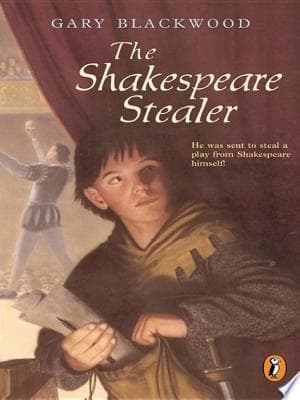
- The Shakespeare Stealer
Gary Blackwood
3.7 (7k) average on GoodreadsFeatures a young protagonist in Elizabethan England who must navigate secrets and danger.
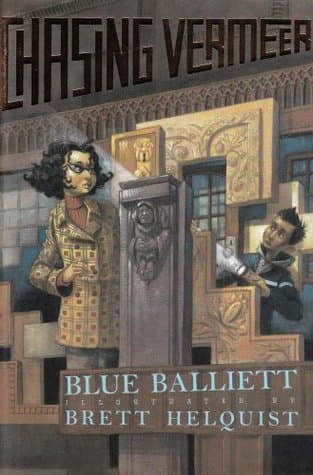
- Chasing Vermeer
Blue Balliett
3.7 (28k) average on GoodreadsChildren'sInvolves children solving an art mystery with codes and hidden clues.
- Harry Potter and the Sorcerer's Stone
J.K. Rowling
4.5 (7M) average on GoodreadsFantasyRescued from a miserable life under the stairs, an orphaned boy discovers he's a wizard destined for a magical school, where he uncovers a dangerous secret tied to the dark wizard who murdered his parents.
- The Hobbit, or There and Back Again
J.R.R. Tolkien
4.3 (2.9M) average on GoodreadsFantasyA comfort-loving hobbit named Bilbo Baggins is whisked away by a mischievous wizard and a band of dwarves on an unexpected journey to reclaim stolen treasure from a fearsome dragon, discovering courage and a magical ring along the way.
- Harry Potter and the Goblet of Fire
J.K. Rowling
4.6 (2.6M) average on GoodreadsFantasyA bewildered Harry Potter, underage and thrust into a deadly Triwizard Tournament, must brave dragons, mermaids, and a resurgent dark magic to survive a year that will forever alter the wizarding world.
- Harry Potter and the Order of the Phoenix
J.K. Rowling
4.5 (2.5M) average on GoodreadsFantasyIn a year of oppressive secrets and the threat of Voldemort, Harry Potter and Dumbledore's Army secretly train for war, shown through Jim Kay and Neil Packer's dark illustrations.




Enjoyed the summary?
A summary gives you the shape of the book. The book itself has the detail, the examples and the voice.
Find A Murder for Her Majesty on AmazonAs an Amazon Associate, BookBrief earns from qualifying purchases. How we're funded