
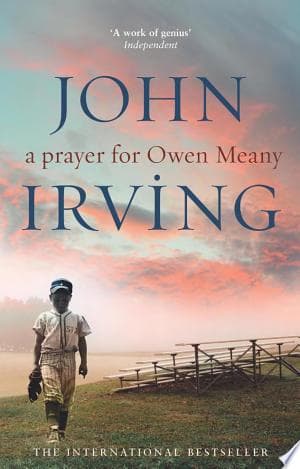
Synopsis
Covers the whole plot, including the ending.
- Difficulty
- Medium
- Pacing
- Variable
- Mood
- Thought-provoking, Poignant, Witty, Melancholy, Profound
- Read it if
- You enjoy richly developed characters, philosophical explorations of faith and destiny, and a blend of humor and tragedy with a unique narrative voice. Perfect for those who appreciate a sprawling, character-driven story with a strong emotional core.
- Skip it if
- You prefer fast-paced plots, strictly linear narratives, or find extensive digressions and a distinctive, sometimes challenging, narrative voice distracting.
A Prayer For Owen Meany Plot Summary
Covers the whole plot, including the ending.
The Fatal Foul Ball
In the summer of 1953, eleven-year-old John Wheelwright and his best friend, Owen Meany, play in a Little League baseball game in Gravesend, New Hampshire. Owen, with his unusual, high-pitched voice and small size, hits a foul ball that strikes and kills John's mother, Tabitha Wheelwright, in the stands. This accident affects both boys deeply. The community sees it as a misfortune, but Owen immediately believes it was an act of God, a divine event, and that he is God's instrument. This incident defines their childhood and sets up Owen's strong belief in his destiny.
Owen's Peculiar Childhood and Faith
After Tabitha's death, Owen Meany becomes an even bigger part of John's life. Owen, born small with a high-pitched, nasal voice (shown in all capital letters in the book), is very smart and religious. He attends Gravesend Academy with John and is often an outcast because of his looks and voice, yet he has a clear charisma and moral authority. Owen believes he is an instrument of God, a belief that grows stronger. He often speaks in prophecies and has a strong faith in divine predetermination, often talking about his 'purpose' and God's plan for him.
The Search for John's Father
After his mother's death, John Wheelwright wants to find his biological father. Tabitha had always avoided the topic, and John's grandmother, Harriet Wheelwright, is also quiet about it. Owen, though young, becomes a confidant and helps John in his search. John suspects various men in Gravesend, including Reverend Merrill, but finds no answers. The mystery of his father is a background thread, showing John's search for identity and belonging, especially after his mother's death. Owen, in his prophetic way, often hints at knowing more than he says.
The Armless Man and the Virgin Mary
Owen's intense religious experiences and visions happen more often. He claims to have seen the Virgin Mary and interprets events as signs from God. One memorable incident involves Owen's vision of a Virgin Mary statue whose arms break off, which he sees as an important omen. He also carefully plans and gets an armless statue for the church. These experiences, with his belief in the foul ball incident as a divine act, strengthen Owen's conviction that he is meant for a specific, holy purpose, even if he does not fully understand it. John often finds Owen's interpretations confusing and interesting.
Vietnam War and Draft Avoidance
As John and Owen become adults, the Vietnam War is a big concern. Many young men in Gravesend are drafted, and both friends might serve. John, feeling lost, thinks about going to Vietnam, but Owen tries to stop him. Owen, despite his small size, wants to enlist, believing it is part of his divine plan. He changes his draft status to ensure he will go to Vietnam, despite John's and others' attempts to prevent him. This time shows their different views on fate and responsibility, with Owen's actions driven by his sense of destiny.
Owen's Role as a 'Wound Dresser'
Owen's desire to serve in Vietnam is not conventional patriotism, but from his belief that he has a specific, divine role. He sees a vision of himself as a 'wound dresser,' a role he takes literally. He trains and gets himself into a unit that transports bodies of fallen soldiers. This choice is, for Owen, a fulfillment of a prophecy he has seen, further solidifying his belief in his purpose and that he is a tool in God's larger design.
The Vision of the Dummy
Throughout their lives, Owen has told John about a recurring dream or vision: a dummy of himself falling, with arms outstretched, as if catching something. He believes this vision is a premonition of his death and that he will die saving Vietnamese children. This vision, with his 'wound dresser' role, strengthens his understanding of his sacrifice. Owen tells this vision with such conviction that John, despite his doubt, starts to believe in Owen's prophetic abilities. This foreshadowing builds tension for Owen's fate in Vietnam.
The Revelation of John's Father
In a key moment, John finds out his biological father is Reverend Merrill, the minister of the local Congregational church. Owen tells him, having known the truth all along and kept it secret, believing it was not the right time for John to know. The truth explains Reverend Merrill's distant behavior towards John. This revelation is tied to Owen's destiny, as Owen arranged for John to be present at the exact moment of his own death, ensuring John would see the fulfillment of Owen's prophecy.
Owen's Heroic Sacrifice
In a dramatic and planned sequence of events, Owen Meany, serving in Vietnam, sees Vietnamese children playing with a grenade. Remembering his vision of himself falling and catching something, Owen acts quickly. He throws himself on the grenade, sacrificing his life to save the children. His arms are outstretched, like the dummy in his vision, as he catches the grenade, fulfilling his prophecy. John Wheelwright, whom Owen arranged to be present at that moment, sees Owen's heroic death, making Owen a Christ-like figure and a true instrument of God.
John's Life as an Expatriate
After Owen's death, John Wheelwright, affected by the loss and disillusioned with American politics and the Vietnam legacy, moves to Toronto, Canada. He teaches English, always thinking about Owen's life, prophecies, and sacrifice. John's story is told from this future viewpoint, letting him combine memories, interpretations, and Owen's impact on his understanding of faith, destiny, and life's meaning. John remains a believer, though sometimes questioning, in Owen's divine purpose, always looking for signs of God in the ordinary and extraordinary.
A Prayer For Owen Meany Characters
Owen Meany
Protagonist/Christ-like figure
John's best friend, a diminutive boy with a high-pitched voice who believes he is God's instrument.
Owen Meany is the central, enigmatic figure of the novel. Born with an unusually small stature and a distinctive, high-pitched, all-caps voice, he is fiercely intelligent, devoutly religious, and possesses an unwavering conviction that he is God's instrument on Earth. From the accidental killing of John's mother, Tabitha, to his prophetic visions and ultimate sacrifice in Vietnam, Owen's life is marked by a profound sense of divine purpose. He is morally absolute, often challenging hypocrisy and injustice, and exerts a powerful, almost supernatural, influence over those around him. Despite his physical peculiarities, he commands respect and inspires awe.
Relationships: John Wheelwright (Best friend and confidant); Tabitha Wheelwright (Accidentally killed by Owen, a pivotal event); Harriet Wheelwright (John's grandmother, who often tolerates Owen's eccentricities); Reverend Merrill (Owen recognizes him as John's father and keeps the secret)
John Wheelwright
Narrator/Protagonist
Owen's best friend and the chronicler of his life, grappling with faith and identity.
John Wheelwright is the narrator and protagonist of the story, recounting Owen's life from his perspective as an adult expatriate in Canada. He is a more conventional character than Owen, initially skeptical but gradually convinced of Owen's divine purpose. John's life is deeply intertwined with Owen's, shaped by his mother's death and his lifelong search for his biological father. He struggles with his faith, his identity, and his relationship with America, ultimately finding solace in documenting Owen's extraordinary life. His narrative voice is reflective, often humorous, and deeply nostalgic.
Relationships: Owen Meany (Best friend, confidant, and spiritual guide); Tabitha Wheelwright (Beloved mother whose death profoundly impacts him); Harriet Wheelwright (Maternal grandmother, a source of stability); Reverend Merrill (Biological father, a source of lifelong mystery and eventual revelation); Dan Needham (Tabitha's boyfriend, a kind, supportive figure who becomes a stepfather-like presence)
Tabitha Wheelwright
Supporting
John's beautiful, free-spirited mother, whose death is the catalyst for the novel's events.
Tabitha Wheelwright is John's beloved mother, described as beautiful, vivacious, and somewhat unconventional. Her accidental death by Owen's foul ball is the pivotal event that sets the entire narrative in motion. She is a talented singer and a free spirit who never reveals the identity of John's father, adding a layer of mystery to her past. Though she dies early in the book, her memory and the mystery surrounding her life continue to influence John and Owen, particularly John's quest for his paternity. She represents a lost innocence and a vibrant, if secretive, past.
Relationships: John Wheelwright (Her son, whom she deeply loves); Owen Meany (Killed by Owen, an act that binds him to John); Dan Needham (Her boyfriend, a loving and supportive figure); Reverend Merrill (Her secret lover and John's biological father)
Harriet Wheelwright
Supporting
John's formidable, aristocratic grandmother, a pillar of the Gravesend community.
Harriet Wheelwright is John's maternal grandmother, a stern, aristocratic, and deeply traditional woman who serves as a grounding force in John's life after Tabitha's death. She is a pillar of the Gravesend community, often critical but ultimately loving. Harriet is fiercely protective of her family's reputation and resists discussing Tabitha's past or John's paternity. Despite her traditionalism, she shows a grudging respect for Owen Meany's intelligence and moral conviction. She represents the old guard of Gravesend, with its social conventions and hidden truths.
Relationships: John Wheelwright (Her grandson, whom she raises); Tabitha Wheelwright (Her daughter, whose unconventional life she both loves and disapproves of); Owen Meany (Tolerates Owen, sometimes impressed by him despite his peculiarities)
Reverend Lewis Merrill
Supporting/Antagonist (in John's mind)
The conflicted and emotionally distant minister of the Congregational Church, John's biological father.
Reverend Lewis Merrill is the minister of the Gravesend Congregational Church and, ultimately, John's biological father. He is a complex character, often appearing distant, conflicted, and somewhat ineffective in his pastoral duties. His secret relationship with Tabitha and his inability to acknowledge John publicly weigh heavily on him, manifesting in emotional paralysis and a lack of conviction in his sermons. He struggles with his faith and his conscience, representing the hypocrisy and hidden burdens within the seemingly moral community of Gravesend. His eventual confession brings a measure of closure for John.
Relationships: John Wheelwright (Biological father, a source of mystery and emotional distance); Tabitha Wheelwright (Secret lover and mother of his child); Owen Meany (Owen knows his secret and uses it as part of his divine plan)
Dan Needham
Supporting
Tabitha's kind and supportive boyfriend, who becomes a father figure to John.
Dan Needham is Tabitha's boyfriend and a genuinely kind, supportive presence in John's life after his mother's death. He is a drama teacher at Gravesend Academy and offers John a stable, loving male role model. Dan's unwavering affection for Tabitha and his acceptance of John, despite not being his biological father, contrast sharply with Reverend Merrill's distant demeanor. He provides a sense of normalcy and warmth in John's often chaotic and mysterious upbringing. Dan embodies unconditional love and acceptance, filling a crucial void for John.
Relationships: John Wheelwright (Stepfather-like figure, loving and supportive); Tabitha Wheelwright (Her devoted boyfriend); Owen Meany (Accepts Owen, though sometimes bewildered by him)
Scolley Meany
Supporting
Owen's older cousin, a troubled and often violent figure.
Scolley Meany is Owen's older cousin, a character who embodies some of the darker, more troubled aspects of Gravesend. He is often involved in petty crimes and acts of violence, serving as a foil to Owen's moral purity. Scolley's presence highlights the social stratification and the less savory elements of the town. His interactions with Owen often underscore Owen's unique ability to command respect or influence even those who are outwardly rebellious or dangerous. He represents the kind of societal ill that Owen, in his own way, seeks to address or transcend.
Relationships: Owen Meany (Cousin, often at odds but sometimes influenced by Owen)
Randy White
Supporting
John's and Owen's baseball coach.
Randy White is the Little League baseball coach, a seemingly ordinary figure whose role becomes tragically significant when Owen's foul ball kills Tabitha. He is a representative of the everyday life in Gravesend, unknowingly caught up in the extraordinary events surrounding Owen Meany. His reactions to the accident and to Owen's subsequent behavior reflect the community's general bewilderment and struggle to comprehend the inexplicable. He is a minor character but provides an important contextual presence for the pivotal opening scene.
Relationships: John Wheelwright (His player); Owen Meany (His player, who hits the fateful ball)
A Prayer For Owen Meany Themes
Faith and Divine Predetermination
The main theme is Owen Meany's strong belief that he is God's instrument and that his life, including his death, is predetermined. This shows in his interpretations of events (like Tabitha's death), his visions (the dummy, the armless statue), and his actions (his choice to be a 'wound dresser' in Vietnam). John, the narrator, deals with this theme, moving from doubt to a deep, though sometimes questioning, belief in Owen's divine purpose. The book explores how faith gives meaning in tragedy and how a person lives out a perceived destiny.
“I am God’s instrument,” Owen Meany said. “I am His tool.”
Identity and Belonging
John Wheelwright's search for his biological father explores identity. His mother's secrecy and the community's silence make him feel lost and searching for his place. Owen, despite his physical differences, has a strong, divinely-given identity, which contrasts with John's uncertainty. The theme also covers John's sense of belonging, both in his family and in America, leading to his move abroad. The novel suggests that identity is not just about parents but also about the relationships built and the stories we tell about our lives.
“A person's life is a story, and a story is a search for identity.”
Sacrifice and Redemption
Owen Meany's life builds towards his sacrifice, which he believes will redeem him and fulfill his divine purpose. His death, saving Vietnamese children from a grenade, is a selfless act. This theme is hinted at throughout the novel through his visions and his willingness to embrace his 'wound dresser' role. The book suggests that redemption comes through selfless acts, and that sacrifice, for others, makes a life meaningful, leaving a lasting impact on those who see it.
“HE WAS A SACRIFICE. HE KNEW HE WAS.”
The Nature of Miracles and Prophecy
The novel blurs the lines between coincidence, prophecy, and true miracles. Owen's visions, his ability to foresee events, and the exact fulfillment of his predictions (the foul ball, the armless statue, his death) challenge rational explanation. John, as narrator, questions and analyzes these events, concluding they are miraculous. The theme explores how people interpret extraordinary occurrences, whether through faith, superstition, or a desire for meaning, and how these interpretations shape their worldview and understanding of the divine.
“IF YOU BELIEVE IN GOD, YOU MUST BELIEVE IN MIRACLES.”
Social Critique and Hypocrisy
Through John's observations and Owen's direct statements, the novel criticizes parts of American society, especially the hypocrisy in religious institutions and political structures. The Vietnam War is a main target, with John's move abroad showing a rejection of American foreign policy. The superficiality of some religious leaders (like Reverend Merrill), the judgmental nature of some community members, and the hidden secrets of Gravesend society are all shown. Owen, with his strong moral sense, often tells the truth, showing the gap between stated values and actual behavior.
“A truly religious person would not be so afraid to be wrong.”
Plot Devices & Literary Techniques
The Narrator (John Wheelwright)
The adult John recounts Owen's story from a future perspective, allowing for reflection and foreshadowing.
John Wheelwright serves as the first-person narrator, recounting Owen's life from his vantage point as an expatriate in Canada decades after the events. This allows for extensive foreshadowing, as John frequently alludes to future events, particularly Owen's death, before detailing them. His narrative is infused with adult reflection, theological musings, and a deep emotional connection to Owen, shaping the reader's understanding of Owen's extraordinary nature. John's voice is both nostalgic and critical, providing context and interpretation to the miraculous events he describes.
Owen Meany's Voice (ALL CAPS)
A distinctive typographical choice to represent Owen's unique, high-pitched voice.
The novel famously renders all of Owen Meany's spoken dialogue in all capital letters. This typographical device immediately sets Owen apart from other characters, emphasizing his unique physical characteristic (his high-pitched, nasal voice) and his extraordinary nature. It makes his words jump off the page, giving them a sense of urgency, authority, and prophetic weight. This visual distinction reinforces his role as an 'other' and underscores the profound impact his utterances have on John and the narrative, making his pronouncements unforgettable.
Foreshadowing and Prophecy
Repeated hints and visions predict future events, especially Owen's death and purpose.
Foreshadowing is a pervasive device in the novel, often delivered through Owen's prophetic visions and John's adult narration. Owen's recurring dream of himself as a dummy falling, his interpretation of the armless statue, and his conviction that he is God's instrument all build towards his ultimate sacrifice. John, as the narrator, frequently alludes to Owen's destiny, creating a sense of inevitability and suspense. This device reinforces the theme of divine predetermination, making Owen's life feel like a meticulously crafted plan unfolding before the reader's eyes.
Symbolism of the Foul Ball
The baseball that kills Tabitha symbolizes fate, divine intervention, and the catalyst for Owen's destiny.
The foul ball hit by Owen that kills Tabitha Wheelwright is a potent symbol. It represents the arbitrary nature of fate, a seemingly random event that irrevocably alters lives. However, for Owen, it immediately symbolizes divine intervention, marking him as God's instrument and setting him on his destined path. The ball, a small, seemingly insignificant object, thus becomes the ultimate catalyst for the entire narrative, linking the mundane world of Little League to the profound themes of faith, destiny, and sacrifice that permeate the book.
The Armless Statue of the Virgin Mary
A symbolic object representing lost innocence, divine intervention, and Owen's unique faith.
The armless statue of the Virgin Mary, which Owen acquires for the church, is a significant symbol. It represents a loss of traditional religious iconography and perhaps a more vulnerable, human aspect of faith. Owen's fascination with its armless state, and his belief that it is a sign from God, further underscores his unique and deeply personal understanding of the divine. It also parallels his vision of himself as a 'dummy' with outstretched arms, linking the inanimate object to his living prophecy and ultimate sacrifice, where he 'catches' the grenade.
A Prayer For Owen Meany Quotes
“I am doomed to remember a boy with a wrecked voice—not because of his voice, or because he was the smallest person I ever knew, or even because he was the instrument of my mother's death, but because he is the reason I believe in God; I am a Christian because of Owen Meany.”
“Your memory is a monster; you forget—it doesn't. It simply files things away. It keeps things for you, or hides things from you—and summons them to your recall with a will of its own. You think you have a memory; but it has you!”
“I am not a 'Christmas' person; I am a 'Christ' person.”
“If you care about something, you have to protect it—if you’re lucky enough to find a way of life you love, you have to find the courage to live it.”
“I am God's instrument.”
“The only way you can get people to know anything is to beat them over the head with it.”
“It is a terrible thing to be so small and to have such a big voice.”
“Faith takes practice.”
“You have to be careful what you pretend to be because you are what you pretend to be.”
“The shot heard round the world.”
“I don't believe in accidents; there are no accidents.”
“It's not what you do, it's what you are.”
“The only thing we have to fear is the obvious.”
“I'm not afraid of dying; I'm afraid of not having lived.”
Quiz
10 questions on the plot and the characters. Each answer comes with a short explanation.
Question 1
What event during a Little League baseball game sets the main plot of the novel in motion?
- John Wheelwright hits a home run that wins the game
- Owen Meany hits a foul ball that kills John's mother
- Owen Meany breaks his arm while sliding into base
- John's mother catches a fly ball to end the inning
Show answer
B. Owen Meany hits a foul ball that kills John's mother The novel's central tragedy occurs when Owen Meany's foul ball strikes and kills Tabitha Wheelwright, John's mother, during a Little League game in Gravesend, New Hampshire in 1953. This event profoundly shapes both boys' lives and Owen's belief in his divine purpose.
Question 2
What does Owen Meany believe about himself following the death of John's mother?
- He is cursed and will bring misfortune to others
- He should become a professional baseball player
- He is God's instrument with a higher purpose on Earth
- He needs to leave Gravesend to start a new life
Show answer
C. He is God's instrument with a higher purpose on Earth Owen interprets his mother's death not as a random accident but as part of a divine plan. He believes he is 'God's instrument' with a specific, predestined purpose, a conviction that guides his actions throughout the novel.
Question 3
What is the name of the small New Hampshire town where most of the story takes place?
- Gravesend
- Portsmouth
- Concord
- Hanover
Show answer
A. Gravesend Gravesend, New Hampshire serves as the primary setting for the novel, where John and Owen grow up and where the pivotal baseball accident occurs. The town's name ironically foreshadows death and endings throughout the story.
Question 4
Why does Owen Meany have such a distinctive, high-pitched voice?
- He was born with a vocal cord defect
- He intentionally speaks that way to be memorable
- It's never explained in the novel
- The novel presents it as part of his unique, almost supernatural nature
Show answer
D. The novel presents it as part of his unique, almost supernatural nature Owen's voice is described as strange, nasal, and perpetually in capital letters when written. While not medically explained, it contributes to his otherworldly presence and reinforces his role as someone set apart from ordinary people.
Question 5
What historical event serves as a major backdrop to John and Owen's coming of age?
- World War II
- The Korean War
- The Vietnam War
- The Civil Rights Movement
Show answer
C. The Vietnam War The Vietnam War era provides crucial historical context as the boys mature into adulthood. The draft, anti-war protests, and national divisions affect their lives and decisions, particularly Owen's military service.
Question 6
What significant object does Owen believe contains his destiny?
- A family Bible with his birth date circled
- The baseball that killed John's mother
- His father's granite quarry ledger
- A scrapbook containing his 'life story' that ends with his death date
Show answer
D. A scrapbook containing his 'life story' that ends with his death date Owen maintains a scrapbook that he believes outlines his entire life story, including the exact date of his death. This artifact becomes central to his understanding of his predestined role and sacrifice.
Question 7
How does John Wheelwright's adult life reflect the novel's themes of faith and doubt?
- He becomes an atheist professor who rejects all supernatural beliefs
- He converts to Catholicism and becomes a priest
- He remains an Anglican but teaches at a Catholic school while questioning his faith
- He founds his own religious movement based on Owen's teachings
Show answer
C. He remains an Anglican but teaches at a Catholic school while questioning his faith As an adult, John teaches at a Toronto prep school while struggling with his Anglican faith. His religious ambivalence contrasts with Owen's absolute certainty, exploring themes of belief, doubt, and how trauma shapes spirituality.
Question 8
What is the symbolic significance of Owen's small stature throughout the novel?
- It represents his economic disadvantage compared to other characters
- It symbolizes how society underestimates people with disabilities
- It contrasts with his enormous spiritual presence and destined importance
- It serves mainly as comic relief in serious situations
Show answer
C. It contrasts with his enormous spiritual presence and destined importance Owen's tiny physical size (he's described as 'the size of a small child' even as a teenager) creates a powerful contrast with his immense moral courage, prophetic visions, and belief in his grand divine purpose.
Question 9
What is the ultimate fulfillment of Owen Meany's belief in his divine purpose?
- He becomes a famous preacher with a national following
- He saves a group of Vietnamese children during the war
- He sacrifices himself to save a room full of children from a grenade
- He proves his innocence in a court case about the baseball accident
Show answer
C. He sacrifices himself to save a room full of children from a grenade Owen's life culminates in his heroic death at an airport in Arizona, where he throws himself on a grenade to save Vietnamese refugee children. This act fulfills his long-held belief in his predestined sacrifice.
Question 10
How does John Irving use the novel's structure to explore memory and storytelling?
- Through alternating first-person perspectives between John and Owen
- By presenting the story as John's memoir written decades after the events
- Using newspaper clippings and official documents instead of narrative
- Through a strictly chronological timeline from childhood to adulthood
Show answer
B. By presenting the story as John's memoir written decades after the events The novel is framed as John Wheelwright's memoir written in 1987, looking back on events from 1953 onward. This structure emphasizes how memory shapes understanding, how trauma affects recollection, and how we construct meaning from past events.
A Prayer For Owen Meany FAQ
What is 'A Prayer for Owen Meany' about?
The novel follows the lifelong friendship between John Wheelwright and Owen Meany in Gravesend, New Hampshire, beginning in 1953 when Owen accidentally kills John's mother with a foul ball during a Little League game. Owen believes he is God's instrument destined for a higher purpose, and the story traces their coming-of-age against the backdrop of the Vietnam War, exploring themes of faith, destiny, and sacrifice through a series of remarkable events that seem to validate Owen's convictions.
Why should I read 'A Prayer for Owen Meany'?
This novel masterfully blends humor and poignancy while exploring profound questions about faith, fate, and friendship. John Irving's storytelling is both entertaining and thought-provoking, with memorable characters like the diminutive, voice-impaired Owen Meany whose unwavering belief in his divine mission drives the narrative. It's a classic that offers laughter, tears, and deep philosophical reflection in equal measure.
What is the background/setting of 'A Prayer for Owen Meany'?
The story is primarily set in Gravesend, New Hampshire, from 1953 through the 1960s, with significant portions taking place during the Vietnam War era. The small-town New England setting provides a contrast to the larger historical events unfolding, particularly the Vietnam War which directly impacts several characters. John Wheelwright narrates from his adult life in Toronto, reflecting on these formative years.
What are the most memorable quotes from the book?
Key quotes include Owen's repeated declaration 'I AM GOD'S INSTRUMENT,' which becomes his personal mantra, and 'If you care about something you have to protect it. If you're lucky enough to find a way of life you love, you have to find the courage to live it.' Another significant line is Owen's prediction about his own death: 'I'M GOING TO BE A HERO. I TRUST THAT GOD WILL HELP ME, BECAUSE I'M DOING WHAT HE WANTS.'
What writing style does John Irving use in this novel?
Irving employs a retrospective first-person narrative through John Wheelwright's perspective, blending dark humor with serious philosophical inquiry. The prose is richly detailed with recurring motifs (like armless figures and specific dates), capitalized text for Owen's distinctive voice, and a circular structure that connects seemingly random events into a coherent divine plan. The tone shifts seamlessly between comic and tragic elements.
What minor details add significant meaning to the story?
The repeated appearance of armless figures—like the statue of Mary Magdalene and the armadillo—foreshadows Owen's final sacrifice where he loses his arms. The specific date of Owen's death (July 8, 1968) is mentioned repeatedly throughout the novel, creating dramatic irony. Even Owen's small physical stature and peculiar voice (always written in capitals) become symbols of his outsized spiritual presence.
What are some subtle foreshadowing moments in the novel?
Owen's dream about his own death—where he sees his name on a gravestone with the date July 8, 1968—foreshadows his actual demise. The foul ball that kills Tabitha Wheelwright is described as having 'SOUNDED LIKE' Owen's voice, hinting at his instrumental role. Owen's fascination with practicing 'the shot' (a basketball move) early in the story becomes crucial to his final heroic act in Vietnam.
What unexpected character connections exist in the story?
John eventually discovers that the man he believed was his father (the Rev. Dudley Wiggin) isn't his biological parent—his actual father is Lewis Merrill, the local minister who had an affair with John's mother. This revelation connects John more deeply to the religious themes of the novel. Additionally, Owen's father works at the granite quarry that produces the gravestone Owen sees in his dream.
What are Owen Meany's unspoken motivations?
Beneath Owen's stated belief in being 'God's instrument,' he carries profound guilt over accidentally killing John's mother, which drives his need to prove his life has purpose. His determination to control his own destiny stems from feelings of powerlessness about his small stature and unusual voice. Owen also seeks validation that his life matters beyond being 'the boy who killed his best friend's mother.'
What psychological complexities do the main characters exhibit?
Owen exhibits messianic complex symptoms, believing in his divine mission while simultaneously fearing and meticulously planning his prophesied death. John struggles with survivor's guilt and religious doubt, living in Owen's shadow while trying to make sense of the tragedy that connected them. Their friendship becomes codependent—John relies on Owen's certainty while Owen needs John as witness to his destiny.
What are the major emotional turning points in the novel?
The baseball accident that kills Tabitha Wheelwright creates the foundational trauma. Owen's revelation of his death dream marks when he fully accepts his destiny. The moment Owen saves Vietnamese children by throwing a grenade out of a bathroom (losing his arms in the process) represents both his heroic fulfillment and tragic sacrifice. John's final realization in the Toronto church, where he understands Owen's true purpose, provides emotional closure.
How does the relationship between John and Owen evolve?
Their relationship transforms from childhood friendship to something resembling apostle and messiah, with John becoming the chronicler of Owen's life and mission. After Tabitha's death, their bond deepens through shared guilt and grief. As adults, John often resents Owen's certainty while simultaneously depending on it, creating a complex dynamic of admiration, jealousy, and devotion that lasts beyond Owen's death.
Which parts of the novel remain ambiguous or open-ended?
The novel leaves ambiguous whether Owen truly was divinely chosen or simply constructed meaning from random events. John's ultimate stance on faith—whether he becomes a believer or remains skeptical—isn't fully resolved. The significance of certain symbolic elements (like the repeated armless motifs) invites multiple interpretations. Even Owen's miraculous actions could be read as either supernatural intervention or extraordinary coincidence.
What are controversial scenes or decisions in the book?
Owen's decision to mutilate the dressmaker's dummy representing John's mother (to practice saving children) is disturbing in its violence. The baseball accident itself—and whether it was truly 'God's will' or just a tragic mistake—sparks debate. Some readers question whether Owen manipulates events to fit his prophecy or genuinely experiences divine guidance. The Vietnam War setting and Owen's participation as a soldier also generate political controversy.
How does 'A Prayer for Owen Meany' end and what does it mean?
The novel ends with John Wheelwright in a Toronto church, finally understanding that Owen's life and death had purpose—Owen sacrificed himself to save Vietnamese children during the war, fulfilling what he believed was his divine mission. The ending suggests that whether Owen was actually chosen by God matters less than the fact that his unwavering faith enabled extraordinary heroism. John's prayer for Owen becomes an acknowledgment that his friend's life had meaning that transcended ordinary understanding.
What is the significance of Owen's voice always being in capital letters?
The capitalized text represents Owen's distinctive, shrill voice that never changed after childhood—a physical manifestation of his uniqueness. Symbolically, it sets him apart as someone 'shouting' his truth to the world, emphasizing his prophetic role. The visual distinction on the page makes Owen's dialogue immediately recognizable, reinforcing how his words carry special weight throughout the narrative.
How does the Vietnam War function in the novel?
The Vietnam War serves as the historical backdrop that validates Owen's prophecy—it provides the specific circumstance (the bathroom grenade incident) where he fulfills his destiny to save children. The war also represents the larger political and moral conflicts of the era, contrasting with the personal spiritual journey of the characters. Owen's opposition to the war yet participation in it creates moral complexity, while John's move to Canada reflects the draft resistance movement.
What role does religion play in the characters' development?
Religion is central—Owen's literal interpretation of his divine mission contrasts with John's skeptical, Anglican upbringing and eventual agnosticism. The novel explores different forms of faith: Owen's certainty, John's doubt, Rev. Merrill's secret guilt, and the various religious communities in Gravesend. Religious imagery and themes (sacrifice, resurrection, prophecy) structure the entire narrative, with characters constantly grappling with questions of belief and purpose.
How does John Irving use humor in this essentially tragic story?
Irving employs dark comedy through Owen's blunt, capitalized pronouncements and the absurd situations characters encounter, like the Christmas pageant disasters. The humor often arises from the contrast between Owen's grandiose spiritual claims and his mundane physical reality (his small size, his job at a quarry). This comic relief makes the tragic elements more poignant and reflects Irving's signature blend of the ridiculous and the profound.
What is the significance of the novel's title?
The title refers to John Wheelwright's ongoing prayer for understanding and meaning regarding his friend's life and death. It encapsulates the central theme of seeking divine purpose in seemingly random tragedy. The word 'prayer' suggests both religious supplication and the human need to find pattern and significance in life's events. Ultimately, the novel itself becomes John's extended 'prayer' for Owen—an attempt to memorialize and make sense of his extraordinary friend.
About the author
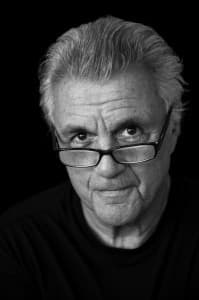
John Winslow Irving is an American-Canadian novelist, short story writer, and screenwriter.
Similar books
- The World According to Garp
John Irving
4.1 (205k) average on GoodreadsLiterary FictionShares Irving's distinctive narrative style, blend of humor and tragedy, and focus on eccentric characters.
- Catch-22
Joseph Heller
4.0 (723k) average on GoodreadsHistorical FictionExplores the absurdities of war and human nature with dark humor and a satirical tone.
- East of Eden
John Steinbeck
4.4 (429k) average on GoodreadsLiterary FictionA sprawling family saga exploring themes of good vs. evil, destiny, and the human condition across generations.
- One Hundred Years of Solitude
Gabriel García Márquez
4.1 (753k) average on GoodreadsLiterary FictionBoth employ magical realism, but Irving's use is more singularly focused on a character's spiritual destiny and its theological implications. Márquez's magic often functions as an extension of the natural world, exploring cyclical history, while Owen's miraculous qualities serve a specific divine purpose.
- The Old Man and the Sea
Ernest Hemingway
3.8 (831k) average on GoodreadsLiterary FictionA Cuban fisherman's long struggle with a giant marlin becomes a story of endurance and dignity, now retold for young adults with illustrations, phonetic guides, and writing prompts in Traditional Chinese.
- The Goldfinch
Donna Tartt
3.9 (720k) average on GoodreadsLiterary FictionHaunted by a tragic explosion and clutching a stolen Dutch masterpiece, a young orphan navigates the opulent drawing rooms of New York and the gritty underbelly of the art world, desperately seeking connection and redemption amidst a life spiraling into crime and obsession.




Enjoyed the summary?
A summary gives you the shape of the book. The book itself has the detail, the examples and the voice.
Find A Prayer For Owen Meany on AmazonAs an Amazon Associate, BookBrief earns from qualifying purchases. How we're funded