
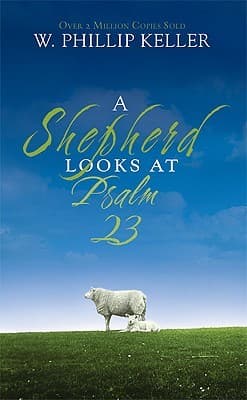
Core Idea
- Difficulty
- Easy
- Read it if
- You are seeking a deeper, more practical understanding of Psalm 23, appreciate an allegorical approach to scripture, or enjoy spiritual insights drawn from real-world analogies.
- Skip it if
- You prefer academic biblical analysis over devotional interpretation, are uncomfortable with strong anthropomorphic comparisons between humans and sheep, or find detailed analogies distracting.
Key Takeaways from A Shepherd Looks at Psalm 23
Sheep Are Utterly Helpless
Recognizing our inherent vulnerability unlocks dependence on the Shepherd.
Keller, using decades as a sheep owner, shows how helpless sheep are. Unlike many animals, they cannot find their own food, fight off predators, or even stand up if they fall onto their backs. This inability to care for themselves shows humanity's spiritual state. We often pride ourselves on self-reliance, but Keller says true spiritual well-being comes from admitting our deep need for God's guidance and protection. To ignore this truth is to always 'be in want,' no matter how much we own, because the soul's deepest needs—peace, purpose, security—cannot come from ourselves.
“Sheep do not 'just take care of themselves' as some might suppose. They require more continuous, careful handling and a more detailed, intimate attention than any other class of livestock.”
In the book: Keller details various scenarios where sheep are entirely dependent: they cannot find good pasture without a shepherd, are prone to 'cast down' (lying on their backs, unable to get up, leading to death), and are defenseless against predators like wolves or even parasitic flies without intervention.
Try this: Cultivate a daily practice of humility, consciously surrendering areas of control or anxiety to a higher power. Instead of striving harder when facing challenges, pause to acknowledge your limitations and invite divine assistance. This isn't passivity, but a recognition that true strength often comes from leaning on an external source.
Related ideas: vulnerability, dependence, spiritual-humility
The Shepherd's Presence is Peace
True contentment isn't about absence of trouble, but the presence of the Protector.
Keller says the 'still waters' and 'green pastures' of Psalm 23 are not just pretty places but conditions the careful shepherd creates and keeps. Sheep are easily scared by fast water or dry land, and the shepherd's careful leading keeps them safe and fed. This shows a truth about human peace: it does not come from having no problems, but from feeling connected to a guiding, protecting presence. The shepherd's shadow, his voice, his nearness, calms the sheep. Similarly, our worries often go away not because things change, but because we become aware of a divine presence active in our lives, leading us through, not around, difficulties.
“It is the presence of the shepherd that is the secret of the sheep's contentment.”
In the book: Keller describes how sheep will not drink from turbulent water and are constantly wary. The shepherd must lead them to quiet pools or slow-moving streams. He also details how the shepherd must actively search for and prepare the best pastures, often moving the flock frequently.
Try this: Practice mindfulness of the divine presence throughout your day. When anxiety arises, consciously acknowledge the feeling, then shift your focus to the idea of a 'shepherd' actively overseeing your situation. This can involve prayer, meditation, or simply a mental affirmation of guidance. Seek out 'still waters' in your daily routine – moments of quiet reflection and rest.
Related ideas: peace, divine-presence, contentment
Restoring the Soul: More Than Forgiveness
Spiritual restoration involves correcting internal and external imbalances, not just pardoning sin.
Keller explains 'He restores my soul' as more than just forgiveness. For sheep, 'restoration' means the shepherd physically helping a fallen sheep, treating wounds, freeing them from tangles, or guiding them back from dangerous wandering. This complete view of restoration means our spiritual health is closely tied to our mental, emotional, and even physical states. When we are 'cast down' by sadness, 'wounded' by life's hurts, or 'wandering' in confusion, the Shepherd's restoration is not just spiritual cleaning; it is active help to bring us back to being whole and working properly. It is a continuous process of re-alignment, making sure we are not just forgiven, but truly doing well.
“The phrase 'He restores my soul' means much more than just restoring us to fellowship after we have strayed. It has to do with the whole physical, mental, and spiritual well-being of the sheep.”
In the book: Keller details the life-threatening situation of a 'cast down' sheep, which can die if not quickly righted by the shepherd. He also describes the shepherd's role in treating injuries, protecting from parasites (like nasal flies), and guiding lost sheep back to the flock.
Try this: Don't compartmentalize your 'spiritual life.' Recognize that your mental health, physical well-being, and emotional state are all part of your 'soul' that needs restoration. Actively seek spiritual input when you feel overwhelmed, despondent, or lost. Be open to the idea that 'restoration' might involve practical steps like seeking counsel, resting, or setting boundaries, not just prayer.
Related ideas: restoration, wholeness, spiritual-wellbeing, holistic-health
Guidance on Right Paths
The Shepherd's leading is for our benefit, even when the path seems difficult or unclear.
Keller clarifies that 'paths of righteousness' are not abstract moral rules but practical, helpful routes for the sheep. The shepherd leads them along paths that keep them safe from predators, give them good food, and help them avoid poisonous plants or dangerous ground. This changes how we understand God's guidance: it is not about random rules, but about being led in ways that truly help us and make us thrive. Often, the 'right path' might not be the easiest or most obvious, but the shepherd's wisdom sees beyond what immediately appears to what is ultimately good. Trusting this guidance means believing that even detours or hard parts are part of a larger, good plan.
“The 'paths of righteousness' are simply the right paths, the best paths for the sheep to take.”
In the book: Keller describes the shepherd's intimate knowledge of the land, knowing where the best grass is, where dangerous ravines lie, and where predators might lurk. He recounts how sheep, left to themselves, will often graze on barren ground or wander into danger.
Try this: When faced with decisions, consider not just the immediate gratification or ease, but what path aligns with long-term well-being and growth. Seek guidance from trusted sources (mentors, scripture, prayer) and be open to paths that might initially seem less appealing but are ultimately 'right' for your spiritual and personal health. Trust that 'detours' might be protection.
Related ideas: guidance, divine-will, discernment, righteousness
Facing the Valley of Shadows
Fear is overcome not by escaping darkness, but by the Shepherd's unwavering presence within it.
Keller reinterprets the 'valley of the shadow of death' not only as literal death but as any time of deep fear, uncertainty, or suffering. These are often steep, dark ravines or narrow passes where sheep are easily hurt or attacked. The main idea is that the shepherd does not stop the sheep from entering these valleys; instead, he goes with them through. This means faith does not promise a life without hardship, but a constant, comforting presence during it. The 'rod and staff' are tools for protection and guidance, not just symbols of power, actively used to keep danger away and direct the sheep. Our fears lessen not because shadows are gone, but because we feel sure of our Shepherd's watchfulness.
“The valley of the shadow of death is not necessarily a place of physical death, but often a time of intense trial, deep despair, or overwhelming difficulty.”
In the book: Keller describes literal 'valleys of the shadow of death' as deep ravines or gorges in the Judean hills, often dark and perilous, where predators hide. He explains how the shepherd uses the rod to defend against wild animals and the staff to guide, rescue, and count the sheep.
Try this: When facing a 'valley' of fear or difficulty, consciously remind yourself that you are not alone. Focus on the 'rod and staff' – the divine protection and guidance available to you. Instead of trying to escape the valley, lean into the presence of your Shepherd, trusting that this season, though dark, is temporary and part of a larger journey.
Related ideas: fear, suffering, divine-protection, perseverance
The Table Prepared: Abundance in Adversity
Blessings can be found and celebrated even in the presence of those who oppose us.
Keller interprets 'You prepare a table before me in the presence of my enemies' as the shepherd carefully preparing high mountain plateaus ('mesas' or 'tables') for grazing. These areas have rich food but are often open and dangerous, so the shepherd must scout, clear away poisonous weeds, and guard against predators. This image teaches that plenty and blessings do not depend on having no problems. Instead, true provision often happens within difficult situations, with the Shepherd watching. It shows God's control and care: even when surrounded by 'enemies' (hardship, opposition, inner struggles), the Shepherd makes sure our needs are met, and we can have peace and food.
“The table prepared for me in the presence of my enemies refers to the shepherd's careful preparation of high mountain pastures, often dangerous and exposed, where the sheep can feed in peace.”
In the book: Keller recounts how shepherds would lead their flocks to high, flat 'tables' of land, meticulously clearing them of poisonous plants and ensuring water sources. He emphasizes the shepherd's constant vigilance against predators (enemies) in these exposed areas.
Try this: Identify areas in your life where you feel 'surrounded by enemies' (e.g., difficult relationships, financial stress, health issues). Instead of despairing, actively look for how 'tables' of provision or peace are being prepared for you within those circumstances. Practice gratitude for these blessings, recognizing they are a testament to ongoing divine care, even amidst the struggle.
Related ideas: provision, blessing, adversity, divine-care
Anointing: Protection from Within and Without
Divine anointing is a multifaceted protection against internal and external threats.
Keller shows the practical, life-saving reason the shepherd puts oil on the sheep's head. This was not just a ritual; it was a real defense against harmful and often deadly nasal flies and other parasites that could make sheep sick or kill them. The oil also calmed irritation, healed small wounds, and kept pests away. This shows that God's 'anointing' is a deep act of care and protection, dealing with both seen and unseen threats. It means a complete defense: not only from outside dangers but also from inner irritations, worries, and spiritual 'parasites' that try to take away our peace and well-being. It is a continuous, intentional act of the Shepherd to keep the sheep healthy and sane.
“The anointing of the head with oil was not just a symbol; it was a practical measure to protect the sheep from parasites and flies, and to heal wounds.”
In the book: Keller vividly describes the torment of sheep afflicted by nasal flies, which lay eggs in their nostrils, causing intense irritation, head-banging, and eventual debilitation. The thick oil acts as a barrier and a soothing agent.
Try this: Recognize that 'anointing' in your life can manifest as moments of peace, clarity, or protection from overwhelming thoughts or external pressures. Actively seek spiritual 'anointing' through prayer, meditation, or quiet reflection, asking for protection from negative influences, both internal and external. Be mindful of how divine intervention protects your mental and emotional well-being.
Related ideas: anointing, protection, spiritual-warfare, healing
Overflowing Cup: Abundance Beyond Expectation
The Shepherd's provision is not just sufficient, but generous and overflowing.
Keller interprets 'my cup overflows' as a promise of abundant provision, much more than just surviving. For sheep, this means more than enough water and food, making sure they are not just fed, but thriving. This challenges a mindset of scarcity and shows the Shepherd's generous nature. It means a life lived in surplus—not necessarily material wealth, but much peace, joy, purpose, and spiritual food that extends into every part of life. The overflowing cup means the Shepherd's care is not limited; it is endless, making sure that 'I shall not be in want' is a full and complete promise, meeting every true need and desire of the soul.
“My cup overflows speaks of an abundance of life, not just bare sufficiency. It is a provision that is more than adequate, leaving no room for want.”
In the book: Keller contrasts a meager provision with the shepherd's goal of ensuring the sheep are robust and healthy, not just surviving. He implies that a good shepherd would always ensure ample water and pasture, so the sheep are never thirsty or hungry.
Try this: Shift your perspective from scarcity to abundance. Instead of focusing on what you lack, acknowledge and be grateful for the 'overflow' in your life – whether it's relationships, opportunities, health, or inner peace. Cultivate a generous spirit, as abundance is often meant to be shared. Trust that your 'cup' is continually being refilled and overflowing.
Related ideas: abundance, generosity, provision, gratitude
Goodness and Mercy: The Constant Companions
Divine kindness and steadfast love relentlessly pursue us throughout life.
Keller stresses that 'goodness and mercy shall follow me all the days of my life' is not a passive statement, but an active, almost aggressive pursuit by the Shepherd. Just as a shepherd constantly watches over and helps his flock, God's goodness (kind care, provision) and mercy (compassion, forgiveness, help to prevent harm) are always working in our lives. They do not depend on what we do but are part of the Shepherd's character. This understanding brings deep security: no matter where we go or what mistakes we make, the Shepherd's steady love and kindness are always with us, ensuring our ultimate well-being and bringing us back to His care. This constant pursuit ends in dwelling in the 'house of the Lord,' which means eternal belonging and security.
“Goodness and mercy are not just abstract concepts; they are the active, aggressive pursuit of God's benevolent care for us.”
In the book: Keller describes how a shepherd will relentlessly search for a lost sheep, bring it back, and tend to its needs, demonstrating persistent goodness and mercy even when the sheep has strayed. He also highlights the consistent, daily care a shepherd provides.
Try this: Recognize the 'goodness and mercy' actively at work in your life, even in difficult times. Look for instances of unexpected kindness, fortunate escapes, or moments of grace. Cultivate a sense of being pursued by divine love. This perspective can transform challenges into opportunities to witness divine intervention and deepen your trust in the Shepherd's unwavering commitment to you.
Related ideas: goodness, mercy, divine-love, perseverance, eternal-security
A Shepherd Looks at Psalm 23 Quotes
“The Lord is my shepherd; I shall not want.”
“He makes me lie down in green pastures.”
“He leads me beside still waters.”
“He restores my soul.”
“He leads me in paths of righteousness for his name's sake.”
“Even though I walk through the valley of the shadow of death, I will fear no evil, for you are with me.”
“Your rod and your staff, they comfort me.”
“You prepare a table before me in the presence of my enemies.”
“You anoint my head with oil; my cup overflows.”
“Surely goodness and mercy shall follow me all the days of my life.”
“And I will dwell in the house of the Lord forever.”
“A sheep's welfare depends almost entirely on the shepherd.”
“The shepherd's presence alone is enough to reassure the sheep.”
“Green pastures are not automatic; they require the shepherd's labor.”
Quiz
10 questions on the main ideas. Each answer comes with a short explanation.
Question 1
According to Keller, what is the primary reason a shepherd leads sheep to 'green pastures' in Psalm 23:2?
- To provide scenic views for the sheep
- To ensure the sheep have nutritious, fresh grass for health and growth
- To keep the sheep away from predators
- To train the sheep for shearing season
Show answer
B. To ensure the sheep have nutritious, fresh grass for health and growth Keller explains from his shepherding experience that 'green pastures' represent carefully managed grazing areas where the shepherd ensures the sheep get fresh, nutritious grass essential for their well-being, paralleling how God provides for our spiritual nourishment.
Question 2
What does Keller identify as the significance of the shepherd making sheep 'lie down' in Psalm 23:2?
- It indicates the sheep are tired from walking long distances
- It shows the sheep are content and free from fear, hunger, and strife
- It is a disciplinary action for misbehaving sheep
- It prepares the sheep for nighttime rest only
Show answer
B. It shows the sheep are content and free from fear, hunger, and strife Keller emphasizes that sheep only lie down when they feel completely secure—free from fear, hunger, pests, and conflict. This reflects the peace and contentment God offers when we trust Him as our Shepherd.
Question 3
In Keller's interpretation, what does the 'rod and staff' in Psalm 23:4 primarily symbolize?
- Tools for herding sheep quickly
- Instruments of punishment for wayward sheep
- Symbols of the shepherd's authority, protection, and guidance
- Decorative items carried by shepherds
Show answer
C. Symbols of the shepherd's authority, protection, and guidance Keller describes the rod as a weapon for defense against predators and discipline, and the staff for guiding and rescuing sheep. Together, they represent God's protective authority and gentle guidance in our lives.
Question 4
According to Keller, why do sheep need 'still waters' as mentioned in Psalm 23:2?
- Because fast-moving water can frighten or drown sheep due to their heavy wool
- Because still water is easier for the shepherd to drink from
- Because still water is more aesthetically pleasing
- Because still water is less likely to be contaminated
Show answer
A. Because fast-moving water can frighten or drown sheep due to their heavy wool Keller notes from his experience that sheep are afraid of rushing water because their wool can become waterlogged and pull them under. The shepherd finds calm, safe drinking spots, symbolizing how God provides refreshment without overwhelming us.
Question 5
What practical shepherding insight does Keller use to explain 'He restores my soul' in Psalm 23:3?
- The shepherd sings to calm the sheep
- The shepherd physically carries tired sheep
- The shepherd turns a cast sheep upright to prevent suffocation
- The shepherd provides medical treatment for sick sheep
Show answer
C. The shepherd turns a cast sheep upright to prevent suffocation Keller describes how sheep can become 'cast'—stuck on their backs—and helpless, leading to death if not rescued. The shepherd restores them, illustrating God's intervention to revive us when we are spiritually or emotionally 'cast down.'
Question 6
How does Keller interpret the phrase 'my cup overflows' in Psalm 23:5?
- As a reference to excessive material wealth
- As a symbol of God's abundant generosity and blessings beyond basic needs
- As a metaphor for emotional happiness only
- As a warning against greed and overindulgence
Show answer
B. As a symbol of God's abundant generosity and blessings beyond basic needs Keller explains that in Middle Eastern hospitality, a host fills a guest's cup to the brim as a sign of honor and abundance. An overflowing cup signifies God's lavish care, providing more than just necessities—joy, peace, and spiritual riches.
Question 7
What does Keller say about the 'paths of righteousness' in Psalm 23:3?
- They are easy, straight paths chosen by the sheep themselves
- They are safe, well-worn trails prepared by the shepherd to avoid danger
- They refer to moral laws that sheep instinctively follow
- They are new, unexplored routes for adventure
Show answer
B. They are safe, well-worn trails prepared by the shepherd to avoid danger Keller notes that shepherds lead sheep along 'right' paths—safe, proven routes that avoid hazards like cliffs or predators. This parallels how God guides us on morally upright and secure paths in life, not necessarily the easiest ones.
Question 8
According to Keller, what is a key reason sheep need a shepherd, as illustrated in Psalm 23?
- Sheep are highly intelligent and independent animals
- Sheep are prone to wandering, fear, and helplessness without guidance
- Sheep are naturally aggressive and need control
- Sheep can find food and water on their own easily
Show answer
B. Sheep are prone to wandering, fear, and helplessness without guidance Keller emphasizes that sheep are defenseless, easily frightened, and tend to stray into danger. This mirrors human vulnerability and our need for God's guidance and protection, a central theme in his interpretation of the psalm.
Question 9
In Keller's framework, how does the 'table prepared before me in the presence of my enemies' (Psalm 23:5) relate to shepherding?
- It refers to the shepherd eating a meal while watching for predators
- It symbolizes the shepherd creating safe grazing areas on high ground, away from threats
- It describes a ritual feast after defeating enemies
- It represents the shepherd training sheep to eat at a specific time
Show answer
B. It symbolizes the shepherd creating safe grazing areas on high ground, away from threats Keller explains that shepherds often prepare 'tablelands'—cleared, elevated pastures where sheep can graze safely while the shepherd watches for enemies below. This illustrates God's provision and protection even in threatening circumstances.
Question 10
What does Keller suggest is the ultimate goal of the shepherd's care, as reflected in 'I will dwell in the house of the Lord forever' (Psalm 23:6)?
- Temporary safety during the shearing season
- A lifelong, intimate relationship with the Shepherd, culminating in eternal security
- Physical prosperity in this life only
- Independence from the shepherd after training
Show answer
B. A lifelong, intimate relationship with the Shepherd, culminating in eternal security Keller frames the psalm as a journey from want to eternal belonging. The 'house of the Lord' represents not just a physical place but a permanent, loving relationship with God, where we find ultimate rest and security, much like sheep safely home with their shepherd.
A Shepherd Looks at Psalm 23 FAQ
What is 'A Shepherd Looks at Psalm 23' about?
It's a spiritual classic where author W. Phillip Keller, drawing from his experience as a shepherd, provides unique insights into Psalm 23 by explaining the behavior and needs of sheep and how they parallel the relationship between God and believers.
Does 'A Shepherd Looks at Psalm 23' work for deepening faith?
Yes, it's widely praised for enriching readers' understanding of God's care and provision by using real-life shepherding analogies to make Psalm 23's themes of guidance, protection, and rest more tangible and relatable.
How different is it from other Psalm 23 commentaries?
Unlike traditional theological commentaries, Keller's book stands out by blending personal shepherding stories with biblical interpretation, offering a practical, firsthand perspective that makes the psalm's imagery come alive in everyday terms.
What is the 'green pastures' concept in the book?
Keller explains that green pastures represent God's provision of spiritual nourishment and rest, drawing from his experience of carefully guiding sheep to safe, fertile grazing areas to illustrate how God leads believers to places of growth and sustenance.
Does the book apply to modern life?
Absolutely, it connects ancient shepherding practices to contemporary spiritual struggles, showing how themes like trust, guidance, and comfort in Psalm 23 remain relevant for navigating challenges like anxiety, uncertainty, and the need for peace.
What is the 'Good Shepherd' analogy?
Keller uses his role as a shepherd who protects, provides for, and knows his sheep intimately to illustrate Jesus as the Good Shepherd, emphasizing God's personal care, sacrifice, and deep relationship with believers.
How different is it from devotional books like 'My Utmost for His Highest'?
While both are spiritual classics, Keller's book focuses specifically on unpacking Psalm 23 through a shepherding lens, offering a more narrative and analogy-driven approach compared to the broader daily reflections in 'My Utmost for His Highest'.
What is the 'still waters' concept?
Keller describes still waters as places of calm and refreshment, explaining from a shepherd's view that turbulent water can harm sheep, so God leads believers to peaceful, life-giving sources of spiritual renewal and tranquility.
Does the book help with understanding God's protection?
Yes, it vividly portrays God's protection through stories of shepherds defending sheep from dangers, helping readers grasp how God watches over, guides, and safeguards them in times of fear or threat.
What is the main takeaway from 'A Shepherd Looks at Psalm 23'?
The book emphasizes that God, as a loving shepherd, actively cares for every aspect of believers' lives, encouraging deeper trust and reliance on His guidance, provision, and constant presence as depicted in Psalm 23.
Similar books
- Knowing God
J.I. Packer
4.3 (45k) average on GoodreadsSpiritualityExplores the nature and character of God, leading to a deeper appreciation of His care and provision, similar to how Keller highlights God's shepherd-like attributes.
- The Practice of the Presence of God
Brother Lawrence
4.3 (38k) average on GoodreadsSpiritualityBrother Lawrence's classic focuses intensely on the continuous awareness of God's presence in everyday life, a theme also present in Keller's 'The Shepherd's Presence is Peace.' However, Lawrence's approach is more introspective and experiential, centered on cultivating an inner spiritual discipline regardless of external circumstances. Keller, in contrast, uses the external reality of sheep farming to illustrate God's character and care. While both aim to deepen spiritual life, Keller does so through a specific interpretive lens on a single Psalm, whereas Lawrence offers a broader, more generalized framework for spiritual practice.
- Eat, Pray, Love
Elizabeth Gilbert
3.6 (1.5M) average on GoodreadsLifestyleA heartbroken writer leaves her conventional life for a year-long global search for pleasure in Italy, spiritual devotion in India, and unexpected love and balance in Bali.
- Educated
Tara Westover
4.5 (796k) average on GoodreadsBiographyRaised in the Idaho mountains by fundamentalist survivalists, a young woman forges her own path to education, battling fierce family loyalty and personal demons to discover a world beyond her isolated upbringing.
- The Poisonwood Bible
Barbara Kingsolver
4.1 (659k) average on GoodreadsLiterary FictionA zealous missionary's rigid faith clashes with the Belgian Congo's wilderness and people, unraveling his family through the eyes of his five unforgettable women.
- Siddhartha
Hermann Hesse
4.0 (583k) average on GoodreadsHistorical FictionSiddhartha leaves a life of privilege and piety, embracing asceticism, wealth, and love to find enlightenment not in dogma, but in the whispers of a river and the unity of all existence.





Enjoyed the summary?
A summary gives you the shape of the book. The book itself has the detail, the examples and the voice.
Find A Shepherd Looks at Psalm 23 on AmazonAs an Amazon Associate, BookBrief earns from qualifying purchases. How we're funded