

Synopsis
Covers the whole plot, including the ending.
- Difficulty
- Medium
- Pacing
- Slow
- Mood
- Introspective, Sensual, Melancholy, Dreamlike
- Read it if
- You enjoy introspective, poetic explorations of female desire, psychological complexity, and the nature of love and infidelity.
- Skip it if
- You prefer plot-driven narratives, clear resolutions, or find explicit discussions of sexuality and infidelity uncomfortable.
A Spy in the House of Love Plot Summary
Covers the whole plot, including the ending.
The Opening Confession
The novel opens with Sabina on a ferry, feeling fragmented and guilty. She approaches a stranger, a man she sees as a 'spy' because he is observant, and begins to confess her infidelities. She reveals her double life, her deep love for her husband, Alan, and her simultaneous, strong need for other lovers. This confession is an attempt to explain the complex desires and deceptions that define her. She describes her longing for intense experiences and her inability to reconcile her conventional life with her passionate inner world, setting the stage for the exploration of her divided mind.
Alan's Absence and Sabina's Freedom
Sabina thinks about her husband, Alan, a pilot whose frequent travels give her the chance to pursue her secret life. She loves Alan deeply, seeing him as a stable, comforting presence, a 'haven' from her own turbulent nature. However, his absences also create a void she fills with other men. She knows the pain and deception involved but feels unable to stop, driven by a strong desire for new experiences and emotional intensity. She sees Alan's trust as both a gift and a burden, allowing her freedom while also increasing her guilt.
The Lover: John
Sabina recalls her affair with John, a musician whose passion and artistic nature appeal to her own creative desires. Their relationship is marked by intense emotional and physical connection, offering a temporary escape from her internal conflict. John represents a world of heightened sensation and artistic freedom, a contrast to the domestic calm she shares with Alan. Yet, even with John, Sabina feels an underlying restlessness, a sense that no single person or experience can fully satisfy her soul's many demands. She constantly seeks a deeper, more complete fusion that she cannot find.
The Lover: Jay
Sabina also has an affair with Jay, a younger, more innocent man who embodies a different aspect of her desire. Jay offers purity and simple affection, a contrast to her more complex and demanding relationships. She finds a childlike wonder and uncomplicated devotion in Jay, which temporarily calms her fragmented spirit. Still, even this relationship cannot fully ground her. Sabina observes herself, almost clinically, as she moves between her lovers, constantly analyzing the different parts of herself that each man brings to life, and the emptiness that remains despite her search for connection.
The Lover: Mambo
Sabina seeks out Mambo, a sensual dancer, drawn by his raw, uninhibited energy. This encounter represents her desire for a more primal, instinctual passion, an escape from the intellectual and emotional complexities of her other relationships. She wants to lose herself in pure physical sensation, to shed the burdens of her guilt and self-analysis. Mambo embodies a freedom and spontaneity she desperately craves but struggles to bring into her own life. This affair, like the others, ultimately fails to provide the lasting completeness she seeks, leaving her still searching.
The House of Love
Sabina views her relationships as different rooms in a metaphorical 'house of love.' Each lover occupies a distinct space, fulfilling a particular need or aspect of her personality. She is a spy within this house, observing her own actions and emotions, trying to understand her desires. This metaphor highlights her self-awareness and her analytical approach to her own fragmented life. She is both the inhabitant and the observer, always dissecting her experiences to find a unifying principle or a sense of completion that remains out of reach.
The Confession to Alan
Overwhelmed by guilt and the strain of maintaining her deception, Sabina considers confessing everything to Alan. She imagines the devastation it would cause but also the potential for liberation from her secret life. This internal debate shows the depth of her conflict: her desire for honesty fighting with her fear of destroying the love and stability she shares with Alan. The thought of confession is both terrifying and appealing, representing a possible end to her constant striving and a return to a simpler, though potentially painful, reality. She struggles with the consequences of such a revelation.
The Psychiatrist's Office
Sabina visits a psychiatrist, seeking to understand her strong desires and fragmentation. She describes her feelings of being unfulfilled, her relentless pursuit of experience, and her inability to find peace. The psychiatrist offers a detached, analytical view, trying to diagnose her condition and provide a framework for understanding her behavior. However, Sabina finds the clinical approach lacking. It fails to capture the poetic, sensual, and deeply personal nature of her struggle. She feels that her soul's complexities cannot be reduced to simple psychological categories, showing the limits of conventional therapy for her unique situation.
The Return to Alan
After her many escapades and internal turmoil, Sabina returns to Alan, finding a temporary sense of peace and security in his unwavering love. His presence represents stability, tenderness, and a refuge from the chaos of her other relationships. She recognizes the deep comfort he offers, a contrast to the exciting but unsettling intensity of her affairs. This return is not a resolution, but a cyclical movement, suggesting that her need for Alan is as fundamental as her need for adventure. She finds solace, but the underlying restlessness still lingers, ready to resurface.
The Endless Search
The novel ends without a clear resolution. Sabina recognizes that her search for wholeness, for a complete blending of her artistic, sexual, and emotional selves, is an ongoing journey. She understands that she is a being of many parts, unable to be satisfied by a single person or a single life path. The 'spy' within her, the observer of her own life, remains active, always analyzing, experiencing, and seeking. She accepts her fragmentation, not as a flaw to be fixed, but as an inherent part of her identity, destined to continue exploring love and desire.
Principal Figures
Sabina
Protagonist
A woman torn between her desire for conventional love and her insatiable need for sensual and emotional exploration.
Sabina is a deeply introspective and highly sensual woman who embodies a profound psychological fragmentation. She is simultaneously devoted to her husband, Alan, and driven by an insatiable need for other lovers and experiences. Her life is a constant oscillation between domestic stability and adventurous exploration, driven by a quest for emotional intensity and self-discovery. She is a keen observer of her own inner world, constantly analyzing her desires, guilt, and the various facets of her personality that each lover brings forth. Her internal dialogue is rich with poetic imagery and philosophical musings on love, freedom, and identity.
Relationships: Alan (Husband; source of stability, comfort, and security, but also a symbol of the conventional life she feels compelled to escape.); John (Lover; represents artistic passion, intellectual connection, and intense emotional intimacy.); Jay (Lover; embodies innocence, purity, and uncomplicated affection, offering a different kind of solace.); Mambo (Lover; represents raw, primitive sensuality and an escape into pure physical experience.)
Alan
Supporting
Sabina's loving and stable pilot husband.
Alan is Sabina's devoted husband, a pilot whose frequent absences ironically enable her secret life. He represents stability, comfort, and a conventional, unwavering love that Sabina deeply values. He is portrayed as a gentle, trusting, and somewhat innocent figure, unaware of Sabina's extensive infidelities. For Sabina, Alan is a 'haven,' a grounding force that offers respite from her tumultuous inner world. His love is a constant against which her restless desires are measured, and her guilt over betraying him is a recurring theme. He embodies the societal expectations of fidelity and domesticity that Sabina struggles to reconcile with her own nature.
Relationships: Sabina (Wife; he loves her deeply and unconditionally, representing her anchor to conventional life.)
John
Supporting
One of Sabina's lovers, a passionate musician.
John is a musician and one of Sabina's primary lovers, representing the artistic and intensely emotional facet of her desires. He is characterized by his passion, sensitivity, and intellectual depth, appealing to Sabina's creative and spiritual yearnings. Their relationship is marked by intense emotional and physical connection, providing Sabina with a sense of heightened experience and intellectual stimulation. John embodies a freedom and intensity that contrasts with Alan's stability, drawing Sabina into a world of artistic expression and uninhibited passion. He is a catalyst for Sabina's exploration of her more complex emotional landscapes.
Relationships: Sabina (Lover; he provides intense passion and intellectual connection.)
Jay
Supporting
A younger, more innocent lover of Sabina's.
Jay is another of Sabina's lovers, a younger man who represents a simpler, more innocent form of affection. He offers Sabina a respite from the complexities and demands of her other relationships, providing a sense of purity and uncomplicated devotion. Sabina is drawn to his youthfulness and the unburdened nature of his love, finding a temporary solace in his less demanding presence. Jay allows her to explore a more tender, less conflicted aspect of her sexuality and emotional needs. He embodies a kind of pristine love that contrasts sharply with the more experienced and demanding passions of her other affairs.
Relationships: Sabina (Lover; he offers innocence and uncomplicated affection.)
Mambo
Supporting
A dancer who represents raw, primitive sensuality for Sabina.
Mambo is a vibrant, sensual dancer with whom Sabina has an affair. He represents the primal, instinctual, and uninhibited aspects of her desires. Sabina is drawn to his raw energy and the promise of pure physical sensation, seeking an escape from the intellectual and emotional complexities of her other relationships. Mambo embodies a freedom and spontaneity that she yearns for, allowing her to explore a more untamed side of herself. Her encounter with him is an attempt to lose herself in the immediacy of the body, to transcend her incessant self-analysis and guilt through sheer physical abandon.
Relationships: Sabina (Lover; he offers raw, primitive sensuality and an escape into pure physicality.)
The Spy/Stranger on the Ferry
Mentioned
The anonymous man to whom Sabina confesses her life at the outset.
This anonymous figure is the first recipient of Sabina's confessions. She perceives him as a 'spy' due to his observant and seemingly understanding nature, seeing him as a mirror or a neutral confessor. He serves as a symbolic listener, allowing Sabina to articulate her fragmented self and her complex web of deceptions. His presence is crucial as it externalizes Sabina's internal monologue, providing the framework for the narrative that unfolds. He represents the detached, analytical gaze she often turns upon herself, and perhaps the judgmental eye of society.
Relationships: Sabina (Confidante/Listener; the initial recipient of her confessions, serving as a catalyst for her introspection.)
Themes & Insights
Fragmentation of Self
The novel's central theme is Sabina's deep psychological and emotional fragmentation. She is torn between her desire for conventional love and security with Alan, and her strong need for sensual and emotional exploration through multiple lovers. Each lover brings out a different 'Sabina,' showing her inability to integrate these separate parts into a whole. This appears in her constant self-analysis and her feeling of being a 'spy' observing her own life, as seen in her opening confession to the stranger on the ferry and her thoughts on her 'house of love.' Her struggle is to reconcile her inner desires with social expectations.
“She was a spy in the house of love. She was a spy on herself.”
The Nature of Love and Desire
The novel explores the multifaceted nature of love and desire, questioning if one person can truly fulfill all aspects of an individual's emotional and sexual needs. Sabina's pursuit of multiple lovers—John for passion, Jay for innocence, Mambo for raw sensuality—shows her belief that different men satisfy different parts of her being. This theme challenges traditional ideas of monogamy and fidelity, suggesting that love is not a single, unchanging entity but a complex, shifting set of needs and attractions. Her constant search reveals a strong desire for diverse experiences.
“One day, she would find a man who would be all these men, and then she would be whole.”
Freedom vs. Security
Sabina's life is a constant tension between the desire for freedom and the longing for security. Her marriage to Alan offers security, stability, and comfort, representing a conventional life. However, his absences provide the freedom she wants to explore her sensual and emotional desires without limits. This contrast highlights the social pressure on women to conform to traditional roles versus their natural drive for self-expression and adventure. Sabina struggles with the guilt and deception inherent in her pursuit of freedom, always weighing its cost against the perceived limits of a singular, stable existence.
“She needed to be free, but she also needed a haven.”
Guilt and Deception
The themes of guilt and deception are central to Sabina's internal conflict. Her secret life of multiple affairs is built on lies to Alan, leading to deep feelings of guilt and emotional exhaustion. Her opening confession to a stranger is an attempt to externalize this burden. She is very aware of the pain her actions would cause if discovered, yet feels unable to stop. The novel explores the psychological toll of living a double life and the moral complexities of pursuing personal fulfillment at the expense of others, even when driven by an almost unconscious compulsion.
“The guilt was a constant companion, a shadow that followed her even into the arms of her lovers.”
Plot Devices & Literary Techniques
First-Person Confession/Stream of Consciousness
The narrative is primarily a continuous flow of Sabina's thoughts, feelings, and memories.
The novel is largely presented as Sabina's internal monologue, a stream of consciousness that blurs the lines between present action, memory, and fantasy. This allows for deep immersion into her fragmented psyche, revealing her raw emotions, philosophical musings, and self-analytical tendencies without the filter of external dialogue or objective narration. The opening scene, where she confesses to a stranger on a ferry, sets this confessional tone, making the reader privy to her most intimate thoughts and struggles. This device emphasizes the subjective nature of her experience and the internal landscape of her desires and guilt.
Symbolism of the 'House of Love'
Metaphor for Sabina's various relationships and her fragmented self.
The 'house of love' is a central metaphor Sabina uses to describe her life and relationships. Each lover represents a different 'room' or aspect of her being, a distinct space where a particular facet of her personality is expressed or fulfilled. This device powerfully illustrates her fragmentation and her analytical approach to her own existence. She is a 'spy' within this house, observing herself and her multiple identities, trying to understand the architecture of her desires. The metaphor underscores her inability to find a single, unifying space for her complex self, and her continuous search for wholeness across different experiences.
The 'Spy' Motif
Sabina's perception of herself and others as observers.
The motif of the 'spy' is introduced early in the novel with Sabina's perception of the stranger on the ferry. More significantly, she sees herself as a 'spy' in the house of love, observing her own actions, emotions, and the different personas she adopts with each lover. This device highlights her self-awareness, her detachment, and her analytical nature, even amidst intense emotional experiences. It suggests a constant self-surveillance and a feeling of being an outsider, even within her own life, emphasizing her psychological fragmentation and her relentless quest for self-understanding through observation.
Circular Narrative Structure
The story lacks a linear progression or definitive resolution, often returning to similar themes.
The novel employs a circular or cyclical narrative structure rather than a linear plot with a clear beginning, middle, and end. Sabina's journey does not lead to a definitive resolution or a cure for her fragmentation; instead, she returns to Alan, only to hint at the persistence of her restless desires. This structure reinforces the idea that her search for wholeness is an ongoing, perhaps endless, process. It emphasizes the cyclical nature of her desires, her guilt, and her return to stability, suggesting that her condition is not a temporary phase but an inherent aspect of her being, destined to repeat.
A Spy in the House of Love Quotes
“I am an excitable person who only understands life poignantly, only now and then do I feel the possibility of communicating my sensations.”
“The dream was always running ahead of her. To catch it, she had to run faster.”
“What I wanted was to live out all the unlived lives in me.”
“Each friend represents a world in us, a world not born until they arrive, and it is only by this meeting that a new world is born.”
“She was a woman who, in the midst of a love affair, could suddenly feel an urgent need to escape.”
“The only abnormality is the incapacity to love.”
“I am lonely, he thought, in a way that I cannot explain. I have too much life in me.”
“Love never dies a natural death. It dies because we don't know how to replenish its source.”
“She was a spy in the house of love. A spy disguised as a woman.”
“She was not looking for love, but for a new identity.”
“Women, like men, should try to live their lives and not to make them a mirror of the past.”
“The greatest trap in our life is not success, popularity or power, but self-rejection.”
“She was afraid of being trapped, of being possessed, of being known.”
“To be loved for what one is, is the greatest of all affections.”
Quiz
10 questions on the plot and the characters. Each answer comes with a short explanation.
Question 1
What is the primary internal conflict Sabina grapples with throughout the novel?
- Her desire for wealth versus her artistic integrity.
- Her drive for sexual and artistic expression versus social restrictions and self-created inhibitions.
- Her loyalty to her family versus her desire for independence.
- Her love for her husband versus her platonic friendships.
Show answer
B. Her drive for sexual and artistic expression versus social restrictions and self-created inhibitions. Sabina's central struggle is between her urge for freedom in love and art, and the societal and personal constraints that hold her back, leading to her emotional fragmentation.
Question 2
Which of the following best describes Sabina's approach to her relationships?
- She seeks one stable, monogamous relationship.
- She avoids intimacy due to fear of commitment.
- She pursues multiple lovers in a quest for different aspects of herself and experience.
- She manipulates men for financial gain.
Show answer
C. She pursues multiple lovers in a quest for different aspects of herself and experience. Sabina engages in multiple affairs, each with a different man, as she attempts to explore various facets of her identity and satisfy her 'sensual restlessness'.
Question 3
What is the metaphorical significance of the 'spy' in the title 'A Spy in the House of Love'?
- Sabina is literally working for a secret intelligence agency.
- Sabina is a detective investigating her husband's infidelities.
- Sabina is a 'spy' observing and analyzing her own emotions and experiences within her relationships, often feeling like an outsider to her true self.
- The title refers to a character who reveals secrets about Sabina's past.
Show answer
C. Sabina is a 'spy' observing and analyzing her own emotions and experiences within her relationships, often feeling like an outsider to her true self. The 'spy' refers to Sabina's own detached observation of her emotional life and relationships, often feeling like an alien or an investigator within her own experiences of love and desire.
Question 4
Which recurring symbol or image is often associated with Sabina's emotional state or desire for escape?
- A locked diary.
- A caged bird.
- A broken mirror.
- A wilting flower.
Show answer
B. A caged bird. The image of a caged bird frequently appears, symbolizing Sabina's feeling of being trapped by her circumstances and her longing for freedom and uninhibited expression.
Question 5
What is the name of Sabina's husband, who remains largely unaware of her extensive infidelities?
- Philip
- Alan
- Paul
- Robert
Show answer
B. Alan Sabina's husband is named Alan, and his trusting nature allows Sabina to maintain her complex double life without his suspicion.
Question 6
How does Sabina typically perceive her various lovers?
- As interchangeable figures who serve only her physical needs.
- As distinct individuals, each fulfilling a different psychological or emotional need she feels is missing.
- As rivals competing for her ultimate affection.
- As father figures providing stability and guidance.
Show answer
B. As distinct individuals, each fulfilling a different psychological or emotional need she feels is missing. Each of Sabina's lovers, from the dancer to the intellectual, represents a different facet of experience or a different aspect of herself that she seeks to explore, indicating her emotional fragmentation.
Question 7
What is the primary 'consequence' Sabina fears from indulging her 'sensual restlessness'?
- Financial ruin.
- Public scandal and social ostracization.
- Emotional devastation and the loss of her core identity.
- Physical harm from jealous partners.
Show answer
C. Emotional devastation and the loss of her core identity. Sabina's deepest fear is the internal devastation, the emotional fragmentation, and the potential loss of her true self that her relentless pursuit of adventure might bring, rather than external consequences.
Question 8
The novel is structured in a non-linear, fragmented way, reflecting what aspect of Sabina's experience?
- Her inability to remember past events clearly.
- Her emotional fragmentation and the disjointed nature of her multiple identities.
- Her constant travel between different cities.
- Her dream sequences, which are often illogical.
Show answer
B. Her emotional fragmentation and the disjointed nature of her multiple identities. The fragmented narrative style mirrors Sabina's own internal state – her divided self, her multiple lives, and her struggle to integrate her disparate experiences and identities.
Question 9
Which of these literary techniques does Anaïs Nin heavily employ to convey Sabina's inner world?
- Omniscient third-person narration with objective descriptions.
- Extensive dialogue and conversational exchanges.
- Stream of consciousness and lyrical, introspective prose.
- Frequent shifts in point of view between multiple characters.
Show answer
C. Stream of consciousness and lyrical, introspective prose. Nin is renowned for her use of stream of consciousness, allowing direct access to Sabina's thoughts, feelings, and subconscious desires through highly poetic and introspective language.
Question 10
At the end of the novel, what is the implied resolution or state of Sabina's internal conflict?
- She chooses one lover and commits to a monogamous relationship.
- She completely abandons her husband and embraces a life of total freedom.
- Her conflict remains largely unresolved, hinting at the ongoing nature of her search and fragmentation.
- She dedicates herself entirely to artistic pursuits, forsaking all romantic entanglements.
Show answer
C. Her conflict remains largely unresolved, hinting at the ongoing nature of her search and fragmentation. The novel concludes without a definitive resolution, suggesting that Sabina's quest for self-discovery through multiple identities and experiences is an ongoing, perhaps unending, journey, leaving her fragmentation largely intact.
A Spy in the House of Love FAQ
What is the central conflict Sabina faces throughout 'A Spy in the House of Love'?
Sabina is torn between her insatiable desire for varied sexual and emotional experiences, reflecting her need for artistic and personal freedom, and the societal expectations and internal guilt that accompany her actions. She constantly grapples with the possibility of devastating consequences for her sensual restlessness, creating an internal 'house of love' where she is both resident and spy.
Who is the 'spy' referenced in the title, and what is their role?
Sabina herself is the 'spy,' observing her own actions and emotions from a detached, analytical perspective, almost as if she were an outsider. This self-surveillance is a coping mechanism, allowing her to compartmentalize her experiences and rationalize her multiple relationships, even as it highlights her emotional fragmentation.
How does Sabina's husband, Alan, perceive her, and how does this contrast with her true self?
Alan sees Sabina as his ideal, pure, and devoted wife, a perception that stands in stark contrast to her clandestine life of numerous lovers and passionate encounters. His idealized view traps Sabina in a role she cannot fully embody, fueling her need for external validation and different reflections of herself.
What role do the various male lovers play in Sabina's journey?
Each lover, such as John, Mambo, and Jay, represents a different facet of Sabina's desires and identity, allowing her to explore various aspects of herself that remain unfulfilled with Alan. They are not merely objects of desire but mirrors reflecting parts of her psyche, contributing to her fragmented sense of self.
What is the significance of the recurring motif of masks and disguises?
Masks and disguises symbolize Sabina's multiple personas and the way she conceals her true, complex self from both her lovers and herself. She constantly shifts identities to fit the expectations of each relationship, indicating her profound internal division and the performative nature of her emotional life.
How does the setting, particularly the various apartments and cities, reflect Sabina's internal state?
The changing settings, from her conventional home with Alan to the more bohemian spaces she shares with her lovers, symbolize Sabina's emotional and sexual wanderings. Each location is a temporary 'house of love' where she seeks a different kind of fulfillment, mirroring her restless and fragmented psyche.
Is there a symbolic significance to the character of the psychoanalyst?
The psychoanalyst serves as a symbolic confessor and a representation of Sabina's own attempt to understand and integrate her fragmented self. While he offers no definitive cure, his presence underscores her internal struggle and the era's fascination with psychological self-discovery, reflecting Nin's own engagement with therapy.
How does Sabina's 'restlessness' relate to her artistic drive?
Sabina's sensual restlessness is intrinsically linked to her creative impulse; she seeks intense experiences as a form of inspiration and a way to feel fully alive, much like an artist gathering material. This quest for varied experiences fuels her internal world, which is the source of her unique perspective and expression.
What psychological defense mechanisms does Sabina employ to cope with her lifestyle?
Sabina primarily uses compartmentalization, separating her life with Alan from her affairs, and rationalization, convincing herself that her actions are necessary for her spiritual and artistic growth. This allows her to avoid confronting the full emotional weight of her choices and maintain a semblance of control.
How does Sabina's fear of 'devastating consequences' manifest psychologically?
Her fear manifests as pervasive guilt, anxiety, and a sense of impending doom, often leading to dream-like states and internal monologues where she questions her sanity and morality. This internal conflict is a constant psychological burden, despite her outward pursuit of pleasure.
Does Sabina achieve a sense of integration or resolution by the end of the novel?
The novel suggests a partial, rather than complete, integration. Sabina gains a deeper understanding of her fragmented nature and the impossibility of finding a single, all-encompassing love, but she doesn't necessarily achieve a definitive resolution. Her journey is continuous, emphasizing the ongoing struggle for self-discovery.
Is Sabina a feminist icon or a cautionary tale?
Sabina can be interpreted as both. She embodies a radical pursuit of female desire and autonomy, challenging conventional societal norms, which aligns with feminist ideals. However, her emotional fragmentation and constant internal turmoil also serve as a cautionary tale about the potential psychological costs of such a life, prompting debate among readers.
How does Nin's own life and philosophy influence Sabina's character?
Sabina mirrors Nin's personal struggles with polyamory, emotional fragmentation, and the pursuit of artistic and sexual freedom, drawing heavily on Nin's diaries. The novel is a fictionalized exploration of Nin's belief that a woman must explore all facets of her being, even if it leads to internal conflict and societal disapproval.
What is the ultimate message about love and desire that the book conveys?
The book suggests that love and desire are multifaceted and often contradictory, making it impossible for one person or relationship to fulfill all aspects of an individual's needs. It champions the exploration of diverse desires while acknowledging the inherent pain and fragmentation that can accompany such a path, questioning the very definition of fidelity.
Why is the ending ambiguous, and what does it imply about Sabina's future?
The ambiguous ending implies that Sabina's journey of self-discovery and emotional exploration is ongoing, rather than concluding with a definitive solution. It suggests that her internal conflicts and sensual restlessness are inherent to her nature, leaving her future open to continued searching and introspection, without a neat resolution.
How does the narrative style, particularly the stream-of-consciousness, contribute to understanding Sabina?
The stream-of-consciousness narrative plunges the reader directly into Sabina's fragmented thoughts, desires, and anxieties, mirroring her internal chaos and the non-linear nature of her emotional life. This intimate access allows for a deeper, more visceral understanding of her psychological landscape, making the reader a 'spy' within her mind.
What is the significance of the recurring motif of mirrors in the novel?
Mirrors symbolize Sabina's constant need for external validation and her search for different reflections of herself through her various lovers. Each man acts as a mirror, showing her a different facet of her identity, but ultimately contributing to her sense of fragmentation rather than a cohesive self-image.
How does Sabina's relationship with Alan evolve throughout the book, if at all?
Sabina's relationship with Alan remains largely static in its outward appearance, with Alan remaining oblivious to her double life. However, Sabina's internal perception of Alan and their marriage undergoes significant shifts as she grapples with guilt and the growing realization of their emotional distance, even if he never truly changes in her eyes.
About the author
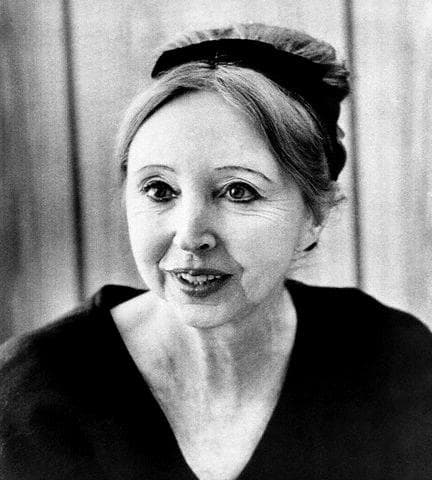
Angela Anaïs Juana Antolina Rosa Edelmira Nin y Culmell was a French-born American diarist, essayist, novelist, and writer of short stories and erotica. Born to Cuban parents in France, Nin was the daughter of the composer Joaquín Nin and the classically trained singer Rosa Culmell. Nin spent her early years in Spain and Cuba, about sixteen years in Paris (1924–1940), and the remaining half of her life in the United States, where she became an established author.
Similar books
- The Lover
Marguerite Duras
3.7 (36k) average on GoodreadsHistorical FictionFeatures a young woman's sensual awakening and illicit affair in a lyrical, introspective style.
- The Bell Jar
Sylvia Plath
4.0 (591k) average on GoodreadsPsychologyFocuses on a woman's internal struggle and search for identity amidst societal pressures.
- The Old Man and the Sea
Ernest Hemingway
3.8 (831k) average on GoodreadsLiterary FictionA Cuban fisherman's long struggle with a giant marlin becomes a story of endurance and dignity, now retold for young adults with illustrations, phonetic guides, and writing prompts in Traditional Chinese.
- One Hundred Years of Solitude
Gabriel García Márquez
4.1 (753k) average on GoodreadsLiterary FictionThrough the multi-generational story of the Buendía family, a mythical town deals with the repeating patterns of time, love, and solitude, as the extraordinary mixes with the ordinary.
- The Goldfinch
Donna Tartt
3.9 (720k) average on GoodreadsLiterary FictionHaunted by a tragic explosion and clutching a stolen Dutch masterpiece, a young orphan navigates the opulent drawing rooms of New York and the gritty underbelly of the art world, desperately seeking connection and redemption amidst a life spiraling into crime and obsession.
- Little Fires Everywhere
Celeste Ng
4.1 (713k) average on GoodreadsLiterary FictionIn Shaker Heights, an artist and her daughter move in, and their free-spirited lives clash with a rule-bound matriarch, revealing hidden conflicts beneath a perfect surface.






Enjoyed the summary?
A summary gives you the shape of the book. The book itself has the detail, the examples and the voice.
Find A Spy in the House of Love on AmazonAs an Amazon Associate, BookBrief earns from qualifying purchases. How we're funded