
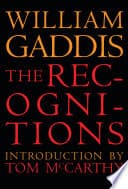
Synopsis
Covers the whole plot, including the ending.
- Difficulty
- Hard
- Pacing
- Slow
- Mood
- Philosophical, Satirical, Despairing, Intellectually Stimulating, Dense
- Read it if
- You enjoy challenging, encyclopedic literary fiction that explores profound themes of art, authenticity, and forgery with a vast cast and intricate prose.
- Skip it if
- You prefer fast-paced plots, straightforward narratives, or books with easily digestible themes and traditional character arcs.
The Recognitions Plot Summary
Covers the whole plot, including the ending.
The Minister's Son and the Call of Art
Wyatt Gwyon grows up in a New England rectory, stifled by his father, Reverend Gwyon's, strict Calvinist faith. His mother, Camilla, dies early, leaving a deep emptiness. Wyatt finds comfort and a developing artistic sense through his Aunt May, who introduces him to painting and the Old Masters. Despite his father's disapproval, Wyatt becomes very skilled at drawing and painting. He sees it as a way to understand the world, a contrast to his father's abstract theology. This time sets up his later struggles with originality and forgery.
Parisian Apprenticeship and the Crisis of Originality
Wyatt goes to Paris to study art, getting involved in the lively but often shallow art scene. He struggles to find his own style among modern art trends, which he sees as a departure from the spiritual and technical skill of the Old Masters he admires. His precise nature and desire for perfection make him an outsider among his peers. He meets and falls in love with Esme, a young woman whose delicate beauty captivates him, but their relationship is strained by his artistic worries and her fragile mental state. Wyatt grapples with the idea that true originality might be impossible, and that his greatest skill is perfect imitation. This skill starts to feel less like creation and more like giving up his own artistic spirit.
The Temptation of Forgery
After a deep crisis of faith and a period of artistic stagnation, Wyatt returns to his father's rectory. Convinced that true creation is beyond him, or that his own artistic vision is flawed, he turns to forgery. He sees it as a way to atone and to achieve the perfection he admires in the Old Masters. He carefully recreates a painting by Hieronymus Bosch, driven by a desperate need to copy beauty rather than create it. This act is a major turning point, as he consciously moves away from original creation to become a perfect copyist. His forgeries are so flawless they are indistinguishable from the originals, showing his skill but also his artistic despair.
Recktall Brown and the Art Market's Underbelly
Wyatt's forgeries come to the attention of Recktall Brown, a wealthy, unethical art dealer and collector. Brown is a shrewd businessman with a cynical view of art, valuing profit over authenticity. He recognizes the extraordinary quality of Wyatt's imitations and sees a chance for huge financial gain. Brown starts buying Wyatt's forged Old Masters and selling them as genuine, deceiving rich collectors and art institutions. Wyatt, in his artistic and spiritual despair, becomes an unknowing tool in Brown's scheme, providing the 'originals' for Brown's fraudulent empire. This partnership shows the corruption of the art world and how easily authenticity can be undermined for profit.
New York's Bohemian Underbelly
Wyatt moves to New York, where he becomes involved in the city's bohemian and intellectual circles. He meets many different characters, including artists, writers, musicians, and socialites, many of whom are themselves engaged in various forms of pretense and self-deception. These encounters further solidify Wyatt's feeling of disappointment with the modern world's lack of genuine art and spiritual depth. He observes the superficiality of their goals and the widespread nature of fraud, not just in art but in personal identity and relationships. This period shows Wyatt's growing isolation and his struggle to balance his artistic integrity with the compromises he has made.
Otto and the Pursuit of Authorship
Among the New York residents, Wyatt meets Otto, a perpetually struggling writer who admires Wyatt's artistic talent and longs for recognition. Otto, a master of self-deception and intellectual posing, eventually tries to steal Wyatt's identity and publish his own mediocre work under Wyatt's name. This act of literary forgery mirrors Wyatt's art forgeries, though with less skill and a clearer motive for personal fame. Otto's pathetic attempts at plagiarism and identity theft serve as a humorous yet sad contrast to Wyatt's deeper artistic and spiritual struggles, further highlighting the theme of inauthenticity throughout the novel.
The Monastery and the Search for Absolution
Overwhelmed by his involvement in the art fraud and his deep spiritual despair, Wyatt eventually seeks refuge in a remote Spanish monastery. He hopes to find forgiveness and a way back to genuine creation through a life of simple devotion. In the monastery, he dedicates himself to carefully restoring a damaged fresco. This act is both a penance and a renewed engagement with art, but this time in a selfless, anonymous way. This period represents Wyatt's most earnest attempt to escape the cycle of forgery and reclaim a sense of purpose and authenticity, though through restoration rather than original creation.
Reverend Gwyon's Obsession and Decline
While Wyatt is in Spain, his father, Reverend Gwyon, undergoes his own spiritual change. Having first condemned Wyatt's art as idolatry, the Reverend becomes increasingly absorbed in the ancient Mithraic religion, studying obscure texts and archaeological research. His rigid Calvinist faith slowly disappears, replaced by a fervent, almost fanatical, devotion to this forgotten pagan cult. This intellectual and spiritual journey, driven by a similar search for ultimate truth, parallels Wyatt's artistic quest. It highlights the shared human need for meaning and the different forms it can take, even when those forms contradict previous beliefs. The Reverend's decline is both intellectual and physical, ending in his tragic death.
The Unmasking and the Aftermath
Recktall Brown's elaborate art fraud scheme eventually begins to fall apart. The sheer number of Wyatt's forgeries, along with increasing scrutiny from the art world, makes it impossible to keep up the deception. The reveal leads to widespread scandal, exposing the greed and superficiality of the art market. Various characters involved, directly or indirectly, face the consequences of their actions. Otto's literary frauds are also exposed, further solidifying the novel's theme of inauthenticity. The aftermath of the revelations forces many characters to confront their own deceptions and the false realities they built, leaving behind shattered reputations and disillusionment.
Wyatt's Final Act of Recognition
Having finished his careful restoration of the fresco in the Spanish monastery, Wyatt feels a deep sense of peace and anonymity. He has moved past the need for personal recognition or originality, finding fulfillment in the selfless act of preserving beauty. In a final, symbolic act, Wyatt falls from the scaffolding while working on the fresco. This ambiguous ending can be seen as either an accident or a deliberate embrace of martyrdom. His disappearance and the later recognition of his restored work (though still anonymous) signify his ultimate freedom from the burdens of identity, authorship, and the corrupting forces of the commercial art world. He achieves a true 'recognition' of his spiritual and artistic purpose.
Principal Figures
Wyatt Gwyon
Protagonist
A gifted artist who becomes a master forger, driven by a search for authenticity and spiritual truth.
Wyatt is the central figure, a deeply sensitive and intellectually intense artist. He possesses an almost superhuman talent for observation and reproduction, but struggles profoundly with the concept of originality and the spiritual void of the modern world. Raised by a stern Calvinist minister, he is burdened by guilt and a yearning for a pure, uncorrupted form of creation. His journey is one of disillusionment, spiritual crisis, and a desperate search for meaning, leading him to abandon original art for flawless forgery and ultimately, to an anonymous form of artistic and spiritual redemption. He is a tragic figure, embodying the novel's critique of a world obsessed with appearances.
Relationships: Reverend Gwyon (Son, estranged by differing worldviews, yet spiritually linked in their search for truth.); Aunt May (Nephew, surrogate mother, and artistic mentor.); Esme (Lover, muse, and a source of both inspiration and anxiety.); Recktall Brown (Unwitting artistic supplier for Brown's fraudulent schemes.); Otto (Object of Otto's envy and attempted identity theft.)
Recktall Brown
Antagonist
A cynical and wealthy art dealer who profits immensely from Wyatt's forgeries.
Recktall Brown is the embodiment of the corrupt, commercialized art world. He is a shrewd, amoral businessman who views art solely as a commodity and a means to accrue wealth and status. He possesses a keen eye for quality but is utterly devoid of genuine aesthetic appreciation or ethical scruples. Brown is a master manipulator, able to exploit Wyatt's genius and the credulity of the art market to build a vast fortune. His character represents the destructive power of greed and the pervasive theme of inauthenticity, as he actively promotes and profits from deception, blurring the lines between genuine and fake for financial gain. He is a force of corruption in the narrative.
Relationships: Wyatt Gwyon (Employer/exploiter of Wyatt's forging talent.); Basil Valentine (Business associate and accomplice in art fraud.)
Reverend Gwyon
Supporting
Wyatt's austere Calvinist father, who later becomes obsessed with ancient Mithraic religion.
Reverend Gwyon is Wyatt's father, a severe and intellectually rigid Calvinist minister. He represents a dogmatic, unyielding form of faith that stifles creativity and joy. Initially, he condemns Wyatt's artistic pursuits as idolatry. However, his own intellectual journey later takes a radical turn as he becomes consumed by the study of the ancient Mithraic religion, exchanging one rigid belief system for another. His transformation, though different in form, mirrors Wyatt's search for ultimate truth and meaning, highlighting the human need for conviction. He is a figure of intellectual pride and spiritual quest, whose eventual demise is both tragic and symbolic.
Relationships: Wyatt Gwyon (Father, whose rigid faith initially alienates his son but shares a deep, though divergent, spiritual quest.); Camilla (Husband, mourns her death.)
Otto
Supporting
A struggling writer and intellectual poseur who attempts to steal Wyatt's identity.
Otto is a quintessential figure of modern inauthenticity and literary pretension. He is a perpetually aspiring writer, a master of intellectual jargon and self-deception, whose ambition far outstrips his talent. Otto embodies the novel's critique of the modern world's obsession with celebrity and the ease with which one can appropriate the work and identity of others. His attempts to pass off his own mediocre writings as Wyatt's, and even to assume Wyatt's identity, are both pathetic and darkly comedic, serving as a foil to Wyatt's more profound struggles with originality. He represents the superficiality and fraudulence present not just in art, but in identity itself.
Relationships: Wyatt Gwyon (Admirer, rival, and attempted identity thief.); Anselm (Friend and fellow bohemian.)
Esme
Supporting
Wyatt's fragile lover and muse, whose mental state deteriorates.
Esme is a young woman of ethereal beauty and delicate mental health who becomes Wyatt's lover and muse in Paris. She represents a fragile, vulnerable beauty that Wyatt attempts to capture in his art. Her deteriorating mental state, marked by periods of withdrawal and delusion, mirrors Wyatt's own internal struggles and the increasing fragmentation he perceives in the world. Esme is a tragic figure, a victim of her own sensitivities and the often-harsh realities of life. Her presence in Wyatt's life underscores his yearning for genuine connection and beauty, even as he struggles to maintain it amidst his artistic anxieties and the pervasive inauthenticity around him.
Relationships: Wyatt Gwyon (Lover and muse.)
Basil Valentine
Supporting
A cynical art critic and associate of Recktall Brown, complicit in the art fraud.
Basil Valentine is a sophisticated but morally compromised art critic and academic. He serves as an intellectual enabler for Recktall Brown's fraudulent schemes, lending an air of legitimacy to the fake Old Masters through his 'expert' opinions. Valentine embodies the intellectual and critical complicity in the art world's deceptions, demonstrating how even those who should be guardians of truth can be corrupted by ambition or financial gain. He represents the intellectual justification of fraud, capable of constructing elaborate arguments to support the authenticity of the forgeries, further blurring the lines between truth and fabrication in the narrative.
Relationships: Recktall Brown (Business associate and intellectual legitimizer of Brown's frauds.)
Anselm
Supporting
A minor poet and bohemian figure in New York, friend to Otto.
Anselm is a minor poet and a fixture in the bohemian circles of New York. He is a somewhat passive observer, often accompanying Otto and serving as a sounding board for his grandiose schemes and intellectual posturing. Anselm represents the lesser, more benign forms of artistic pretense and unfulfilled ambition. While not as overtly fraudulent as Otto, he shares in the general atmosphere of inauthenticity that pervades the New York art and literary scene, embodying the multitude of individuals who seek recognition without necessarily possessing the talent or originality to achieve it genuinely. He is a part of the background noise of artistic striving.
Relationships: Otto (Friend and intellectual companion.)
Camilla
Mentioned
Wyatt's mother, who dies young, leaving a profound impact on his life.
Camilla is Wyatt's mother, whose early death leaves a significant void in his life and profoundly shapes his development. Though she appears only in memory and flashback, her presence is deeply felt. She represents a lost innocence and a source of maternal affection that Wyatt desperately misses. Her passing contributes to Wyatt's sense of loss and his subsequent search for meaning and beauty, often through his art, as a way to fill the emptiness she left behind. Her memory is a quiet, melancholic undercurrent throughout Wyatt's early life, influencing his artistic and emotional landscape.
Relationships: Wyatt Gwyon (Mother, whose early death profoundly impacts him.); Reverend Gwyon (Wife, whose death he mourns.)
Themes & Insights
Authenticity vs. Forgery
This is the main theme, explored through Wyatt's artistic journey and the widespread fraud in the art world and beyond. Wyatt's expert forgeries show how hard it is to tell original from copy, questioning the very idea of authenticity. The novel suggests that in a world focused on appearances and commercial value, true originality is often ignored or actively suppressed. Recktall Brown's success in selling forgeries as originals, and Otto's attempts to steal Wyatt's identity, further emphasize how easily truth can be made up or undermined. The ultimate 'recognition' in the book is often of the fake, rather than the real, challenging the reader to find true value.
“All of them, they're searching for something, something to recognize, a sign, a symbol, something to believe in, and all they find are copies.”
The Nature of Art and Creativity
The novel explores deep questions about what makes true art and the creative process. Wyatt's struggle to create original work, his despair over his perceived lack of 'inspiration,' and his eventual turn to perfect imitation, all examine the burdens and limits of artistic genius. Gaddis criticizes modern art's move away from traditional craftsmanship and spiritual depth, suggesting that much of it has become superficial or self-indulgent. The careful detail of Wyatt's forgeries, while technically brilliant, represents a spiritual surrender. This raises the question of whether imitation, when perfectly done, can itself be a form of creation, or if it is just an empty gesture.
“The greatest forgery is to be oneself, and not to be oneself.”
Spiritual Despair and the Search for Meaning
Wyatt's journey is deeply spiritual, marked by a profound despair from his Calvinist upbringing and his disappointment with the modern world's spiritual emptiness. His artistic crisis is linked to a crisis of faith. Both Wyatt and his father, Reverend Gwyon, go on desperate quests for ultimate truth and meaning, one through art and the other through ancient religions. The novel suggests that in a post-religious, commercial society, people often turn to various forms of 'recognition' — whether in art, identity, or obscure beliefs — to fill a void. Wyatt's eventual retreat to the monastery and his anonymous restoration work represent a search for forgiveness and a return to a selfless, spiritual purpose.
“He sought a meaning, a recognition, which the world around him seemed increasingly unwilling to provide.”
Identity and Self-Deception
Beyond art forgery, the novel explores how people create and deceive themselves about their own identities. Otto's attempts to steal Wyatt's identity and pass off his work as another's are a clear example. Many characters in the New York bohemian scene wear masks of intellectualism or artistic genius, showing widespread self-deception and a desire to be 'recognized' for something they are not. Wyatt himself, by becoming a forger, effectively erases his own artistic identity. The novel suggests that the modern world encourages performance and pretense, making it hard for people to achieve true self-knowledge or to show an authentic self to others.
“One is always an actor, playing a part, even to oneself.”
The Corruption of the Modern World
Gaddis paints a stark picture of a modern world steeped in commercialism, superficiality, and moral decay. The art market, controlled by figures like Recktall Brown, is shown as a system where profit matters more than integrity, and authenticity is easily manipulated. The bohemian circles of New York are full of pretense, cynicism, and unfulfilled ambition. The novel criticizes the loss of genuine craftsmanship, spiritual depth, and intellectual rigor in favor of mass production, quick fame, and financial gain. This widespread corruption is not limited to art but affects all parts of society, leading to a deep sense of disappointment and a world where everything is suspect.
“The world was becoming a vast, glittering forgery, where the original was lost in the endless copies.”
Plot Devices & Literary Techniques
Intertextuality and Allusion
Extensive references to art history, literature, theology, and philosophy.
Gaddis saturates 'The Recognitions' with allusions to a vast array of cultural and intellectual touchstones, from Hieronymus Bosch and the Old Masters to obscure theological texts, classical mythology, and literary figures. This dense intertextuality serves multiple purposes: it enriches the novel's thematic depth, highlighting the long history of human creation and deception; it underscores the characters' intellectual struggles and their engagement with tradition; and it challenges the reader to actively participate in uncovering layers of meaning, mirroring the characters' own search for 'recognition' and authenticity amidst a world of copies. It also subtly reinforces the idea that all creation builds upon what came before.
Stream of Consciousness and Disjointed Dialogue
Conversations often overlap, are fragmented, or lack clear attribution.
The novel frequently employs long, unbroken passages of dialogue where speakers are not explicitly identified, or where multiple conversations overlap and intertwine. This stylistic choice creates a sense of cacophony and confusion, reflecting the fragmented nature of modern communication and the difficulty of finding clear meaning in a chaotic world. It forces the reader to pay close attention and infer context, mimicking the characters' own struggles to understand each other and their environment. This device also emphasizes the pervasive self-absorption of many characters, as their dialogues often run parallel without truly connecting, underscoring the theme of isolation and misunderstanding.
Symbolism of Names
Character names often carry symbolic weight related to their roles or themes.
Many character names in 'The Recognitions' are carefully chosen for their symbolic resonance. For example, 'Wyatt Gwyon' (suggesting 'why on?') hints at his existential questioning, while 'Recktall Brown' evokes a sense of moral rectitude (or lack thereof) and earthy materialism. 'Basil Valentine' is a name associated with alchemy and transformation, fitting for an art critic who helps transmute forgeries into 'gold.' These names are not merely identifiers but serve as subtle clues and thematic reinforcements, adding another layer of meaning to the characters' roles and the novel's overarching concerns about authenticity, deception, and the search for true value.
Bildungsroman (inverted)
A coming-of-age story where the protagonist moves away from genuine creation.
While 'The Recognitions' follows Wyatt's development from youth into adulthood, it subverts the traditional Bildungsroman narrative. Instead of growing towards self-realization and successful integration into society, Wyatt's journey is one of increasing disillusionment, self-erasure, and a retreat from original creation into the world of forgery. His 'education' leads him to recognize the pervasive inauthenticity of the world and his own complicity in it, rather than achieving a clear, positive sense of self. It's a journey of un-becoming, highlighting the novel's pessimistic view of modern society's ability to foster genuine artistic or spiritual growth.
The Recognitions Quotes
“No, it is not a talent, it is a curse. It is a curse to be able to see the things that other people cannot see, and to feel the things that other people cannot feel.”
“Originality, said the professor, is a device for avoiding the problem of being original.”
“What is art? It is the attempt to make something out of nothing, to give form to the formless, to speak the unspeakable.”
“The only real history is the history of art.”
“Everything is a copy of a copy of a copy.”
“The artist is a man who tries to make something that will outlast him, and in doing so, he tries to outlast himself.”
“Faith is a recognition of the things that are not seen.”
“The world is full of people who are trying to be someone else, and the tragedy is that they succeed.”
“A man's life is a long process of being born.”
“There are no original sins, only original virtues.”
“The only thing that is real is what you can see, and what you can touch, and what you can taste, and what you can smell, and what you can hear. Everything else is a lie.”
“Art is a way of recognizing oneself.”
“To be an artist is to be an eternal student, always learning, always questioning, always striving for something beyond reach.”
“The greatest forgeries are those that are not even recognized as such.”
Quiz
10 questions on the plot and the characters. Each answer comes with a short explanation.
Question 1
What is the primary artistic pursuit that Wyatt Gwyon abandons religion for?
- Sculpture
- Music composition
- Painting
- Literature
Show answer
C. Painting Wyatt Gwyon forsakes religion to devote himself to painting, initially creating original works before turning to forgeries.
Question 2
Who is the 'sinister financial wizard' who sells Wyatt's forgeries as authentic old masters?
- Basil Valentine
- Recktall Brown
- Otto Baswin
- Frank Sinisterra
Show answer
B. Recktall Brown Recktall Brown is the character who profits from selling Wyatt's 'flawless copies of his revered old masters' as genuine.
Question 3
What is the central theme explored in 'The Recognitions' regarding beauty, truth, and goodness?
- The inherent purity of artistic expression
- The triumph of authenticity over deception
- That everything recognized as beautiful or true emerges as anything but
- The universal human desire for genuine connection
Show answer
C. That everything recognized as beautiful or true emerges as anything but The book is described as 'a sweeping depiction of a world in which everything that anyone recognizes as beautiful or true or good emerges as anything but'.
Question 4
Wyatt Gwyon's initial motivation for painting flawless copies of old masters is described as what?
- A desire for financial gain
- A challenge to his technical skill
- An act of expiation for despairing of his inspiration
- A way to honor his father's religious beliefs
Show answer
C. An act of expiation for despairing of his inspiration The text states that in 'expiation, he will paint nothing but flawless copies of his revered old masters'.
Question 5
Beyond New England and New York, which European city is explicitly mentioned as a setting for the book's masquerade?
- Paris
- Rome
- London
- Madrid
Show answer
D. Madrid The book 'moving from New England to New York to Madrid' indicates Madrid as one of the key settings.
Question 6
The novel is often characterized by its 'Boschian inspiration.' What does this typically imply about its style or content?
- A focus on serene landscapes and idyllic scenes
- A highly realistic and naturalistic portrayal of society
- A wild, complex, and often grotesque or surreal quality
- A minimalist approach to character development and plot
Show answer
C. A wild, complex, and often grotesque or surreal quality The description mentions 'a book of wild, Boschian inspiration and outrageous comedy,' linking it to the complex, often surreal and grotesque style of Hieronymus Bosch.
Question 7
How was 'The Recognitions' initially received by reviewers upon its publication in 1955?
- It was widely acclaimed as a masterpiece.
- It was dismissed uncomprehendingly.
- It received mixed but generally positive reviews.
- It was ignored due to its controversial themes.
Show answer
B. It was dismissed uncomprehendingly. The text states it was 'Dismissed uncomprehendingly by reviewers on publication in 1955'.
Question 8
What kind of world does 'The Recognitions' primarily depict, according to the description?
- A world where genuine artistry is always recognized and rewarded.
- A world where religious faith provides clear moral guidance.
- A world where authenticity is easily discernible from fraud.
- A world of fraud and forgery where what seems real is not.
Show answer
D. A world of fraud and forgery where what seems real is not. The summary describes it as 'a postmodern masterpiece about fraud and forgery' and 'a world in which everything that anyone recognizes as beautiful or true or good emerges as anything but'.
Question 9
Wyatt Gwyon is the son of a New England minister. What does this background imply about his initial rejection of religion?
- It suggests a simple, straightforward rebellion against parental authority.
- It highlights a deep-seated internal conflict between spiritual and artistic devotion.
- It indicates a complete lack of moral compass from a young age.
- It means his artistic pursuits were always seen as inherently virtuous.
Show answer
B. It highlights a deep-seated internal conflict between spiritual and artistic devotion. His background as the 'son of a New England minister' who 'forsakes religion to devote himself to painting' suggests a profound internal struggle and a thematic clash between sacred and secular forms of creation/devotion.
Question 10
The book is described as 'immensely ambitious and entirely unique.' How does this characteristic relate to its initial reception and later recognition?
- Its ambition immediately guaranteed its critical and commercial success.
- Its unique and ambitious nature likely contributed to its initial incomprehension and subsequent re-evaluation.
- The ambition was seen as a flaw that prevented readers from engaging with it.
- Its uniqueness meant it was quickly embraced by a niche but dedicated audience.
Show answer
B. Its unique and ambitious nature likely contributed to its initial incomprehension and subsequent re-evaluation. The text notes it was 'Dismissed uncomprehendingly by reviewers on publication in 1955 and ignored by the literary world for decades after,' but is 'now established as one of the great American novels, immensely ambitious and entirely unique.' This suggests its challenging nature led to initial misunderstanding but eventually to its recognition as a masterpiece.
The Recognitions FAQ
What is the central premise of 'The Recognitions'?
'The Recognitions' centers on Wyatt Gwyon, a painter who, disillusioned with his own artistic originality, dedicates himself to creating perfect forgeries of Old Master paintings. These forgeries are then illicitly sold as originals by the avaricious art dealer Recktall Brown, exposing a world permeated by fraud and inauthenticity across various domains.
Who is Wyatt Gwyon and what is his artistic struggle?
Wyatt Gwyon is the protagonist, a sensitive artist and son of a New England minister. He grapples with profound existential and artistic crises, ultimately believing that true originality is unattainable or corrupted, leading him to meticulously copy existing masterpieces as a form of expiation and a search for an authentic, albeit derivative, truth.
How does Recktall Brown facilitate the forgery scheme?
Recktall Brown is a unscrupulous art dealer and financial wizard who commissions Wyatt to create the 'perfect' forgeries. He then cunningly sells these copies as genuine Old Masters, profiting immensely from the deception and embodying the pervasive commercialization and corruption within the art world depicted in the novel.
What role does Stanley Gwyon, Wyatt's father, play in the novel?
Stanley Gwyon is Wyatt's father, a minister who himself struggles with faith and the authenticity of his own sermons, often plagiarizing from historical figures. His intellectual and spiritual compromises parallel Wyatt's artistic struggles, highlighting the theme of inauthenticity across different spheres of life and influencing Wyatt's early disillusionment.
Where does the story primarily take place and how do the settings contribute to the themes?
The narrative spans various locations including New England, New York City, and Madrid. New England represents a fading tradition, New York embodies the chaotic, commercial, and often fraudulent modern art scene, and Madrid offers a return to European artistic heritage, with each setting reflecting different facets of authenticity, decay, and the search for meaning.
What is the significance of the novel's title, 'The Recognitions'?
The title alludes to the Clementine Recognitions, an early Christian text about identity and mistaken identity, mirroring the novel's pervasive themes of forgery, mistaken belief, and the difficulty of discerning the authentic from the inauthentic. It also refers to moments of epiphany or realization that characters may or may not achieve amidst the deceit.
How do other characters, like Otto, connect to Wyatt's story?
Otto, an aspiring writer, serves as a foil to Wyatt, also struggling with originality and often plagiarizing or adapting others' works for his own. His narrative intertwines with Wyatt's, illustrating the broader societal prevalence of imitation and the anxiety of influence, not just in visual art but in literature and other creative pursuits.
What subtle connections exist between the novel's structure and its themes?
The novel's sprawling, non-linear structure, with its numerous digressions, allusions, and fragmented narratives, mirrors the chaotic and inauthentic world it depicts. It's a literary 'forgery' of traditional narrative, challenging reader expectations and forcing them to actively 'recognize' patterns and meanings amidst the seemingly disparate parts.
How does Gaddis use historical and artistic allusions to deepen the narrative?
Gaddis extensively weaves in references to art history, mythology, and literature, from Bosch and Goethe to early Christian texts. These allusions are not merely decorative but serve to contextualize the characters' struggles within a grander historical narrative of creativity, belief, and the perennial human engagement with authenticity and imitation.
What is Wyatt's psychological motivation for creating forgeries rather than original works?
Wyatt's motivation stems from a profound disillusionment with the possibility of true originality in a fallen world, coupled with a deep reverence for the past masters. Psychologically, it's an act of both humility and defiance, a retreat into perfect imitation as a form of expiation and a search for an 'authentic' connection to art that he feels is missing in his own time.
How does the novel explore the psychology of belief and self-deception?
The novel meticulously dissects how characters, from art collectors to religious figures, engage in self-deception and willingly believe in fictions, whether it's the authenticity of a forged painting or the sanctity of a plagiarized sermon. It explores the human need for meaning and how that need can lead to embracing comforting illusions over harsh truths.
What is the psychological impact of living in a world of pervasive inauthenticity, as depicted in the book?
Living in such a world leads to profound alienation, cynicism, and an inability to form genuine connections. Characters often feel lost, their identities fragmented, as they constantly navigate a landscape where values are inverted and the distinction between the real and the fake becomes increasingly blurred, leading to existential despair.
How does the novel portray the relationship between creativity and madness?
'The Recognitions' suggests a delicate, often blurred line between intense creative pursuit and psychological breakdown. Wyatt's obsessive dedication to forgery, his periods of isolation, and his struggle with inspiration hint at a mind pushed to its limits, where the quest for artistic truth can lead to a kind of madness or spiritual torment.
Is 'The Recognitions' ultimately a pessimistic or optimistic novel about art and human nature?
While deeply pessimistic in its depiction of widespread fraud and human failings, the novel offers glimmers of hope through the sheer act of creation itself, even in forgery, and the enduring power of genuine artistry. The final, resonant image of Anselm's organ music suggests that authentic beauty and truth can still emerge, albeit often unrecognized or destroyed.
How does Gaddis challenge traditional notions of originality and authorship?
Gaddis rigorously deconstructs the romantic ideal of the lone, original genius, suggesting that all creation is built upon and in dialogue with what came before. Through Wyatt's forgeries and Otto's plagiarisms, he posits that 'originality' might be an illusion, and that the value lies less in novelty and more in the skill and intention behind the work, regardless of its source.
What is the significance of the ending with Anselm's music?
The ending, where Anselm completes his monumental organ composition only for the monastery to collapse, is highly symbolic. It suggests that true, uncompromised artistic creation, even when achieved, might be inherently fragile, ephemeral, or destined to be destroyed or go unrecognized in a world that values material gain over spiritual or artistic purity.
How does the novel critique consumerism and the art market?
Through characters like Recktall Brown and the collectors, Gaddis savagely critiques the commodification of art, where aesthetic value is replaced by monetary worth and authenticity is a marketable commodity. He exposes how the art market fosters deception, prioritizing profit and status over genuine appreciation or understanding of art's deeper meaning.
What is the role of religion and spirituality in the novel?
Religion is a pervasive but often corrupted force in the novel, with Wyatt's father, Stanley, representing a compromised faith. The novel explores the crisis of belief in the modern world, suggesting that traditional spiritual values have been replaced by materialism and cynicism, leaving characters searching for meaning in art or other forms of devotion, often in vain.
About the author

William Thomas Gaddis, Jr. was an American novelist. The first and longest of his five novels, The Recognitions, was named one of TIME magazine's 100 best novels from 1923 to 2005 and two others, J R and A Frolic of His Own, won the annual U.S. National Book Award for Fiction. A collection of his essays was published posthumously as The Rush for Second Place (2002). The Letters of William Gaddis was published by Dalkey Archive Press in February 2013.
Similar books
- Ulysses
James Joyce
3.7 (111k) average on GoodreadsLiterary FictionShares a dense, allusive style, experimental structure, and a monumental scope.
- Infinite Jest
David Foster Wallace
4.3 (74k) average on GoodreadsLiterary FictionKnown for its immense length, intellectual ambition, and satirical critique of modern culture.
- The Old Man and the Sea
Ernest Hemingway
3.8 (831k) average on GoodreadsLiterary FictionA Cuban fisherman's long struggle with a giant marlin becomes a story of endurance and dignity, now retold for young adults with illustrations, phonetic guides, and writing prompts in Traditional Chinese.
- One Hundred Years of Solitude
Gabriel García Márquez
4.1 (753k) average on GoodreadsLiterary FictionThrough the multi-generational story of the Buendía family, a mythical town deals with the repeating patterns of time, love, and solitude, as the extraordinary mixes with the ordinary.
- The Goldfinch
Donna Tartt
3.9 (720k) average on GoodreadsLiterary FictionHaunted by a tragic explosion and clutching a stolen Dutch masterpiece, a young orphan navigates the opulent drawing rooms of New York and the gritty underbelly of the art world, desperately seeking connection and redemption amidst a life spiraling into crime and obsession.
- Little Fires Everywhere
Celeste Ng
4.1 (713k) average on GoodreadsLiterary FictionIn Shaker Heights, an artist and her daughter move in, and their free-spirited lives clash with a rule-bound matriarch, revealing hidden conflicts beneath a perfect surface.




Enjoyed the summary?
A summary gives you the shape of the book. The book itself has the detail, the examples and the voice.
Find The Recognitions on AmazonAs an Amazon Associate, BookBrief earns from qualifying purchases. How we're funded