
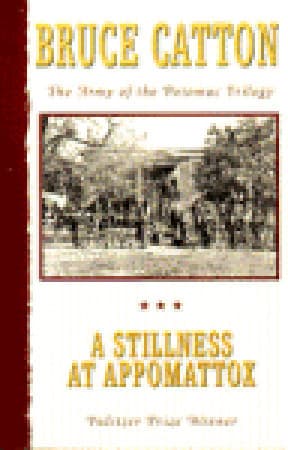
Core Idea
- Difficulty
- Medium
- Read it if
- You want a highly regarded, detailed, and human-centric account of the final year of the American Civil War, focusing on the campaigns of Grant and Lee.
- Skip it if
- You are looking for a broad overview of the entire Civil War or a book that primarily focuses on political or social aspects rather than military campaigns.
Key Takeaways from A Stillness at Appomattox
Grant's Unyielding Grip
The strategic shift from maneuver to attrition that defined the war's end.
Catton shows Ulysses S. Grant's relentless strategy in the Civil War's final year. Unlike his predecessors, Grant understood that the Confederacy, with its dwindling resources, could not withstand a sustained campaign of attrition. His approach was not about brilliant tactics but about constant pressure. He aimed to engage Lee's army continuously, preventing regrouping or resupplying, even at a terrible cost to his own forces. This strategic shift, from seeking decisive battlefield victories to systematically destroying the enemy's capacity and will to fight, marked a brutal but successful turning point. It was a recognition that the war had become a test of endurance, and Grant was determined to outlast the South.
“He would fight it out on this line if it took all summer.”
In the book: Grant's Overland Campaign (Wilderness, Spotsylvania, Cold Harbor) exemplifies this, where despite horrific casualties, he consistently refused to disengage and retreat, always pushing southward and eastward towards Richmond.
Try this: In any long-term endeavor, sustained, consistent effort, even when costly, can be more effective than intermittent bursts of brilliance. Sometimes, success is about outlasting the opposition through sheer persistence.
Related ideas: attrition-warfare, ulysses-s-grant, overland-campaign
The Soldier's Burden
The human cost and psychological toll of continuous, brutal combat.
Catton vividly portrays the suffering and psychological impact on the common soldier during the final year. The battles of the Overland Campaign were brutal, with desperate hand-to-hand fighting, disorienting woods, and trenches that became both refuge and tomb. Constant exposure to death, lack of comforts, and relentless marching pushed men to their physical and mental limits. Still, Catton highlights their camaraderie, resilience, and grim determination. This shows that beyond grand strategies, the war was experienced by individuals enduring hardship, driven by duty, fear, and loyalty to comrades.
“The men themselves were worn to a frazzle, but their spirit, somehow, still burned.”
In the book: Descriptions of the fighting in the Wilderness and Spotsylvania, where visibility was poor, and wounded men burned to death in forest fires, illustrate the horrific conditions. The 'trench warfare' around Petersburg also highlights the prolonged strain.
Try this: Understanding the human element in any major undertaking is crucial. Leaders must recognize the toll on their people and foster resilience and support, even while pushing towards objectives.
Related ideas: civil-war-soldiers, psychological-impact-of-war, trench-warfare
Lee's Defensive Masterclass
The tactical genius of Robert E. Lee in a losing cause.
Despite facing overwhelming numbers, Robert E. Lee showed remarkable tactical skill in defending Richmond and Petersburg. Catton emphasizes how Lee, with his dwindling forces, repeatedly anticipated Union movements, fortified positions, and inflicted heavy casualties on Grant's army. His ability to maneuver his smaller force to counter Grant's blows, even as his army was slowly bled dry, shows his military skill. This highlights that even in a doomed position, exceptional leadership can prolong resistance and impose a high price on the victor, showing the tragic brilliance of a general fighting for a lost cause.
“Lee was a man who could inspire armies to do the impossible, even when the odds were overwhelmingly against them.”
In the book: Lee's defensive lines at Spotsylvania and Cold Harbor, where Union assaults were repulsed with staggering losses, are prime examples of his tactical prowess in constructing strong fortifications and exploiting terrain.
Try this: Even when facing insurmountable odds, strategic thinking and effective utilization of limited resources can maximize resistance and impact. Understanding the opponent's strengths and weaknesses is key to effective defense.
Related ideas: robert-e-lee, military-tactics, siege-of-petersburg
The Confederacy's Fading Hope
The gradual erosion of Southern morale and resources.
Catton chronicles the accelerating decline of the Confederacy's ability to wage war. Beyond battlefield losses, the book details the logistical collapse, rampant inflation, desertions, and growing despair among civilians. The blockade tightened, supplies dwindled, and the sacrifice became unbearable. This was not just a military defeat but a societal breakdown. Sherman's capture of Atlanta and his march to the sea shattered any lingering hopes of foreign intervention or a negotiated peace. The final year reveals a South that was not just losing battles but was slowly being starved and worn down, highlighting the interconnectedness of military, economic, and social factors in total war.
“The Confederacy was a house built on sand, and the tide was finally coming in.”
In the book: Descriptions of widespread desertion in the Confederate ranks, the desperate calls for more manpower, and the economic hardship detailed in letters and reports from the Confederate home front.
Try this: Sustainable success requires a robust foundation. Over-reliance on a single strength or ignoring systemic weaknesses can lead to eventual collapse, regardless of initial victories.
Related ideas: confederate-collapse, economic-impact-of-war, sherman's-march
Sheridan's Valley Vengeance
The devastating effectiveness of total war in the Shenandoah Valley.
Philip Sheridan's campaign in the Shenandoah Valley is an example of total war tactics. Catton explains how Sheridan, under Grant's directive, systematically destroyed the Valley's agricultural and industrial capacity, a crucial supply line for Lee's army. This was about more than defeating Confederate forces; it was about making the region useless to the enemy. The burning of barns, mills, and crops, while brutal, had a profound strategic impact, denying Lee vital resources and further demoralizing the Southern populace. It was a harsh but effective strategy that showed the Union's willingness to go beyond traditional warfare to achieve victory, changing the nature of conflict.
“The Valley was stripped clean, so thoroughly that a crow flying across it would have to carry its own rations.”
In the book: Sheridan's victories at Winchester and Cedar Creek, followed by the systematic destruction of farms and infrastructure across the Valley in the fall of 1864, illustrate this policy.
Try this: In competitive environments, sometimes disrupting an opponent's core support systems or supply lines is as critical as direct confrontation. However, the ethical implications of such 'total' strategies must always be weighed.
Related ideas: philip-sheridan, shenandoah-valley-campaign, total-war
Politics in the Trenches
The critical role of the 1864 election in the war's continuation.
Catton highlights the political stakes of the 1864 presidential election, which happened during the grinding campaigns. Lincoln faced strong opposition from George McClellan, who ran on a peace platform. A Democratic victory, especially before major Union successes, could have led to a negotiated settlement that recognized the Confederacy or a weakened Union. The morale of Union soldiers and the Northern public was heavily influenced by the war's progress, making every battlefield outcome a political event. Sherman's capture of Atlanta and Sheridan's victories provided the boost Lincoln needed, showing that the war was winnable and his 'unconditional surrender' policy was viable. This emphasizes that in total war, the political will of the home front is as vital as military performance.
“The fate of the Union, and the war itself, hung precariously on the ballot box.”
In the book: The widespread despondency in the North during the summer of 1864, the strength of McClellan's 'peace ticket', and the dramatic shift in public opinion following the fall of Atlanta and victories in the Shenandoah.
Try this: Major undertakings require consistent public and political support. Leaders must not only achieve results but also effectively communicate progress and maintain confidence, especially during difficult periods.
Related ideas: 1864-election, abraham-lincoln, george-mcclellan, public-opinion-war
The Weight of Command
The immense pressure and moral dilemmas faced by top generals.
Catton offers glimpses into the minds of Grant and Lee, revealing the burden of command. Both generals, despite their contrasting styles, carried immense responsibility for thousands of lives and the fate of their nations. Grant, often depicted as stoic, endured criticism and the pressure of high casualties, yet maintained his determination. Lee, aware of his army's dwindling strength, faced the agonizing choice between prolonged, futile resistance and surrender. The book shows that beneath strategic decisions lay moral and psychological tolls, highlighting the loneliness of leadership at the highest levels and the personal cost of waging war.
“To command was to live with the ghosts of thousands, to make decisions that would send men to their graves.”
In the book: Grant's often solitary demeanor and his repeated refusal to be swayed by casualty reports, and Lee's increasing weariness and his eventual decision to surrender at Appomattox, despite the desire of some to continue guerrilla warfare.
Try this: Leadership at the highest levels demands not only strategic acumen but also immense emotional resilience and the capacity to make agonizing decisions for the greater good, often in isolation.
Related ideas: military-leadership, grant-lee-rivalry, decision-making-under-pressure
Appomattox: A Gracious End
The surprising magnanimity of Grant in victory.
The surrender at Appomattox, as described by Catton, was not a moment of Union triumph but one of solemn respect and unexpected generosity. Grant's terms — allowing Confederate soldiers to keep their horses and sidearms, and providing rations — were lenient. This decision was crucial in fostering reconciliation and preventing a prolonged guerrilla war. Catton emphasizes that Grant, despite his reputation, understood the importance of healing the nation. His actions at Appomattox showed statesmanship, recognizing that the war's end was about more than military victory; it was about laying the groundwork for a unified future. This highlights the power of magnanimity in achieving lasting peace.
“The terms were as generous as they could possibly be, a testament to Grant's foresight and his desire for peace.”
In the book: The specific terms of surrender offered by Grant to Lee at Appomattox Court House, and the subsequent quiet and respectful demeanor of Union troops towards their defeated foes.
Try this: True victory often lies not just in defeating an opponent but in establishing conditions for future cooperation and stability. Generosity and foresight in the moment of triumph can prevent prolonged resentment and conflict.
Related ideas: appomattox-court-house, surrender-terms, reconciliation, grant's-statesmanship
The Enduring Myth of the Lost Cause
How the war's final year cemented romanticized narratives.
While Catton focuses on military and human realities, his portrayal of Lee's defense against overwhelming odds, and the devotion of the Confederate soldier, helps us understand the 'Lost Cause' narrative. Even as the Confederacy crumbled, the tenacity and suffering of its soldiers, led by a revered general, created a powerful, tragic narrative of valor against impossible odds. Catton presents the facts of their defeat, but the drama and pathos of the final year, the desperate courage of the defenders, laid ground for future generations to romanticize the Confederate struggle, focusing on honor and sacrifice rather than the war's causes. This points to how objective historical accounts, through their inherent drama, can feed into later cultural interpretations.
“In defeat, the South found a new kind of victory, one forged in myth and memory.”
In the book: The descriptions of Lee's tactical brilliance and the unwavering loyalty of his troops, even when facing starvation and death, as seen in accounts of the Petersburg trenches and the final retreat.
Try this: It's crucial to critically examine how historical narratives are constructed and perpetuated, recognizing that even compelling accounts of heroism can be selectively interpreted to support particular ideologies or myths.
Related ideas: lost-cause-myth, historical-narratives, confederate-memory, lee's-legacy
The Unseen Logistics of Victory
The critical, often overlooked, role of supply and infrastructure.
Catton, through his detailed descriptions, shows the Union's logistical superiority. While the focus is often on battles and generals, the continuous supply of food, ammunition, and reinforcements to Grant's massive army, even deep in enemy territory, was a monumental achievement. Conversely, the Confederacy's inability to feed, clothe, and arm its soldiers consistently was a fatal flaw. The Union's well-maintained railroads, efficient quartermaster corps, and industrial capacity were decisive, enabling Grant to pursue his strategy of attrition. This shows that even the most brilliant strategy or courageous soldiers cannot succeed without robust logistical support, making the 'unseen' aspects of warfare as critical as the visible clashes.
“Armies march on their stomachs, and the Union's stomach was well-fed, while the Confederacy's was empty.”
In the book: The constant flow of supplies to Grant's army during the Overland Campaign, contrasting sharply with Confederate soldiers' accounts of starvation and lack of equipment, particularly during the retreat to Appomattox.
Try this: In any complex operation, the underlying infrastructure and logistical systems are paramount. Neglecting these 'invisible' components can undermine even the best-laid plans and most dedicated efforts.
Related ideas: military-logistics, union-industrial-power, quartermaster-corps, supply-lines
A Stillness at Appomattox Quotes
“It was not a question of marching, or of maneuvering, or even of fighting, but simply of enduring.”
“The war had begun to take on a character of its own, apart from the men who fought it.”
“They had learned, by now, that courage was not always a matter of reckless daring, but often of quiet, stubborn persistence.”
“Victory was a matter of mathematics as much as of valor.”
“The armies were no longer merely armies; they were communities, moving and fighting, but communities nonetheless.”
“What they were doing was not glorious, but it was necessary, and they were doing it.”
“The landscape itself seemed to be bleeding, soaked with the lifeblood of a generation.”
“There was a stillness at Appomattox, but it was the stillness of exhaustion, not of peace.”
“Grant was a man who understood the arithmetic of war, and he was using it now, relentlessly.”
“The war had devoured its own youth, and now it was devouring its own veterans.”
“They had fought for something that went beyond flags and slogans, something indefinable but deeply felt.”
“This was not the war of bright uniforms and dashing charges; this was the war of mud and blood and endless marching.”
“The Confederacy was a tree whose roots were cut, but whose leaves still held a desperate, defiant green.”
“They were no longer fighting for abstract principles, but for each other, for the men beside them in the ranks.”
Quiz
10 questions on the main ideas. Each answer comes with a short explanation.
Question 1
Which Union general commanded the Army of the Potomac at the beginning of the period covered in 'A Stillness at Appomattox'?
- George McClellan
- Ulysses S. Grant
- Joseph Hooker
- George Meade
Show answer
B. Ulysses S. Grant While Meade was technically in command of the Army of the Potomac, Grant had been appointed General-in-Chief of all Union armies and chose to travel with the Army of the Potomac, effectively directing its operations. Catton emphasizes Grant's direct involvement from the outset.
Question 2
What significant strategic shift did Ulysses S. Grant introduce to the Union war effort in the Virginia theater, as depicted by Catton?
- Focusing on capturing Richmond directly with minimal casualties.
- Avoiding direct confrontation and relying on siege warfare.
- Relentlessly pursuing and engaging Lee's army to destroy its fighting capacity.
- Dividing his forces to attack multiple Confederate strongholds simultaneously.
Show answer
C. Relentlessly pursuing and engaging Lee's army to destroy its fighting capacity. Catton highlights Grant's strategy of continuous pressure and attrition against Lee's army, a departure from previous Union commanders who often retreated after initial engagements.
Question 3
Which of these battles is NOT prominently featured in the narrative of 'A Stillness at Appomattox'?
- The Wilderness
- Spotsylvania Court House
- Gettysburg
- Cold Harbor
Show answer
C. Gettysburg The book covers the final year of the war, beginning in May 1864. Gettysburg occurred in July 1863, and thus predates the events described by Catton.
Question 4
Catton frequently uses vivid descriptions of the soldiers' experiences. What was a common and debilitating environmental factor faced by soldiers in the Wilderness campaign?
- Widespread flooding from heavy rains.
- Intense heat and dust leading to dehydration.
- Dense undergrowth and uncontrolled forest fires.
- Deep snow and freezing temperatures.
Show answer
C. Dense undergrowth and uncontrolled forest fires. Catton vividly portrays the chaos and horror of fighting in the dense, tangled Wilderness, where visibility was poor and wounded soldiers were often consumed by forest fires ignited by artillery and musketry.
Question 5
What was the primary objective of Sheridan's Shenandoah Valley Campaign, as depicted by Catton?
- To capture Confederate political leaders hiding in the Valley.
- To secure the Valley as a supply route for Grant's army.
- To destroy the Valley's agricultural capacity and deny it as a Confederate supply base.
- To draw Confederate troops away from Sherman's march to the sea.
Show answer
C. To destroy the Valley's agricultural capacity and deny it as a Confederate supply base. Catton describes how Sheridan's campaign was a deliberate effort to lay waste to the Shenandoah Valley, a crucial breadbasket for the Confederacy, thereby crippling their ability to sustain Lee's army.
Question 6
Catton emphasizes the psychological toll of the prolonged siege of Petersburg. What was a significant consequence for the soldiers on both sides during this period?
- A dramatic increase in desertions due to lack of supplies.
- A decline in morale and a pervasive sense of weariness and hopelessness.
- Increased fraternization between Union and Confederate pickets.
- A sudden improvement in living conditions due to established camps.
Show answer
B. A decline in morale and a pervasive sense of weariness and hopelessness. The long, static siege warfare around Petersburg, characterized by constant trench duty, shelling, and minimal progress, led to profound exhaustion and a severe drop in morale for both armies, a key theme Catton explores.
Question 7
What was the significance of the Battle of the Crater, as described by Catton, beyond its immediate tactical outcome?
- It demonstrated the effectiveness of combined arms tactics.
- It highlighted the disastrous consequences of poor planning and leadership in battle.
- It marked a turning point in the siege of Petersburg in favor of the Union.
- It was the first instance of widespread use of trench warfare.
Show answer
B. It highlighted the disastrous consequences of poor planning and leadership in battle. Catton vividly recounts the Battle of the Crater as a horrific Union failure, attributing it to a lack of proper follow-up, racist command decisions, and utter chaos, serving as a powerful illustration of the cost of incompetence.
Question 8
According to Catton, what was Robert E. Lee's primary strategic goal during the final campaigns leading up to Appomattox?
- To defend Richmond at all costs, regardless of casualties.
- To break through Grant's lines and unite with Johnston's army in North Carolina.
- To launch a counteroffensive into Maryland to relieve pressure on Virginia.
- To negotiate a peace treaty that preserved the Confederacy.
Show answer
B. To break through Grant's lines and unite with Johnston's army in North Carolina. Catton clearly shows Lee's desperate attempts to escape Grant's encirclement at Petersburg and link up with General Joseph E. Johnston's forces to continue the fight, a strategy ultimately thwarted by Union pursuit.
Question 9
Catton portrays the surrender at Appomattox Court House with a particular tone. Which of the following best describes it?
- A triumphant celebration of Union victory and Confederate defeat.
- A moment of somber dignity, mutual respect, and profound weariness.
- A tense and hostile confrontation between opposing generals.
- A chaotic and disorganized end to the fighting.
Show answer
B. A moment of somber dignity, mutual respect, and profound weariness. Catton emphasizes the quiet dignity and mutual respect shown between Grant and Lee, and the overwhelming sense of exhaustion and relief among the soldiers, rather than triumphalism or bitterness.
Question 10
Beyond the military narrative, what broader theme does Catton frequently explore regarding the nature of the Civil War, particularly in its final year?
- The technological advancements that revolutionized warfare.
- The political maneuvering and diplomatic efforts to end the conflict.
- The immense human cost and the transformation of soldiers into hardened veterans.
- The economic impact of the war on both the Union and Confederate home fronts.
Show answer
C. The immense human cost and the transformation of soldiers into hardened veterans. Catton consistently focuses on the individual soldier's experience, the grinding attrition, and the profound psychological and physical toll of the war, illustrating how men were forged and broken by the relentless fighting.
A Stillness at Appomattox FAQ
What is 'A Stillness at Appomattox' about?
'A Stillness at Appomattox' is the concluding volume of Bruce Catton's acclaimed 'Army of the Potomac' trilogy. It vividly chronicles the final, decisive year of the American Civil War, focusing on the campaigns and experiences of the Union's Army of the Potomac from the Wilderness to Appomattox.
Does 'A Stillness at Appomattox' cover the entire Civil War?
No, 'A Stillness at Appomattox' specifically covers the final year of the Civil War, from May 1864 to April 1865. While it provides context, it is the culmination of a trilogy, with earlier volumes addressing the war's preceding years.
What makes Bruce Catton's writing on the Civil War unique?
Bruce Catton is celebrated for his ability to combine meticulous historical research with narrative flair, bringing the human experience of war to life. He often focuses on the perspectives of ordinary soldiers and offers evocative descriptions that immerse readers in the period.
Is 'A Stillness at Appomattox' suitable for someone new to Civil War history?
While it's the final book in a trilogy, Catton's engaging style makes it accessible. However, readers new to the Civil War might benefit from a general overview of the conflict's earlier stages to fully appreciate the context of the campaigns described.
How does 'A Stillness at Appomattox' differ from other Civil War histories focusing on the final year?
Catton's work stands out for its literary quality and its focus on the 'worm's-eye view' of the conflict, balancing strategic analysis with the personal experiences of soldiers. Unlike some purely academic histories, it prioritizes narrative flow and emotional resonance.
What is the significance of the title 'A Stillness at Appomattox'?
The title refers to the profound quiet that fell over the battlefields and the nation after Robert E. Lee's surrender at Appomattox Court House. It symbolizes the end of four years of devastating conflict and the beginning of a new, uncertain peace.
Does 'A Stillness at Appomattox' work as a standalone book?
While it can be read independently, its full impact is best appreciated after reading the preceding volumes of 'The Army of the Potomac' trilogy ('Mr. Lincoln's Army' and 'Glory Road'). However, Catton's masterful storytelling ensures it provides a compelling narrative on its own.
What awards did 'A Stillness at Appomattox' receive?
Upon its publication in 1953, 'A Stillness at Appomattox' was awarded both the Pulitzer Prize for History and the National Book Award for Nonfiction, solidifying its status as a seminal work in American historical literature.
About the author
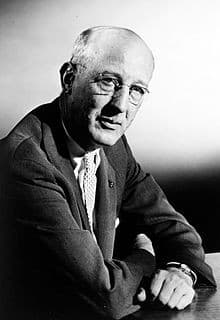
Bruce Catton was a prominent American historian and journalist, best known for his vivid narrative histories of the American Civil War. His Pulitzer Prize-winning book, 'A Stillness at Appomattox,' is considered a masterpiece of military history. Catton's extensive work brought the Civil War era to life for generations of readers.
Similar books
- Battle Cry of Freedom
James M. McPherson
4.4 (26k) average on GoodreadsPoliticsA highly acclaimed single-volume history of the entire Civil War, providing wider context for the events at Appomattox.
- The Diary of a Young Girl
Anne Frank
4.2 (2.7M) average on GoodreadsBiographyDuring the Nazi occupation, a teenage girl's diary, written from a secret annex, shares observations on humanity, hope, and the wait for freedom.
- Night
Elie Wiesel
4.3 (970k) average on GoodreadsBiographyIn the darkness of Auschwitz and Buchenwald, a teenage Elie Wiesel faces the extermination of his family, the loss of his faith, and the lasting scars of humanity's deepest cruelty.
- Steve Jobs
Walter Isaacson
4.1 (957k) average on GoodreadsBusinessSteve Jobs was a visionary who fused creativity and technology to revolutionize six industries and shape our digital world.
- Unbroken: A World War II Story of Survival, Resilience and Redemption
Laura Hillenbrand
4.4 (767k) average on GoodreadsBiographyLouis Zamperini's incredible World War II odyssey transforms him from a rebellious youth and Olympic runner into a survivor of a plane crash, shark-infested waters, and brutal Japanese POW camps, only to find redemption through forgiveness.
- The Immortal Life of Henrietta Lacks
Rebecca Skloot
4.1 (587k) average on GoodreadsBiographyA poor Southern tobacco farmer's unwitting contribution of 'immortal' cells starts a journey through scientific breakthroughs, medical ethics, and her family's decades-long fight for recognition and understanding.






Enjoyed the summary?
A summary gives you the shape of the book. The book itself has the detail, the examples and the voice.
Find A Stillness at Appomattox on AmazonAs an Amazon Associate, BookBrief earns from qualifying purchases. How we're funded