

Core Idea
- Difficulty
- Hard
- Read it if
- You want the most comprehensive, balanced, and deeply researched single-volume history of the American Civil War, covering political, military, social, and economic aspects with unparalleled clarity and narrative power.
- Skip it if
- You are looking for a quick overview or a book focused solely on military strategy; its length and detail require significant commitment.
Key Takeaways from Battle Cry of Freedom
Conflicting Freedoms
The Civil War was a clash of two diametrically opposed interpretations of 'freedom.'
McPherson argues that the Civil War was about two opposing ideas of freedom rooted in the American revolutionary tradition. The South supported 'negative liberty'—freedom from outside control, the right to self-govern, and the freedom to maintain its social and economic order, which included slavery. For southerners, secession was a revolutionary act like 1776. The North, in contrast, defended 'positive liberty' embodied in the Union itself—a government that could secure liberty for all citizens and ensure the nation's continued existence as a republic. The Union was seen as the protector of a higher form of freedom, one that would eventually have to end slavery to be fully realized. This basic disagreement made compromise impossible and turned the conflict into a 'second American Revolution.'
“The South seceded in the name of that freedom of self-determination and self-government for which their fathers had fought in 1776, while the North stood fast in defense of the Union founded by those fathers as the bulwark of American liberty.”
In the book: McPherson analyzes the rhetoric of secessionist leaders and Northern politicians, showing how both sides invoked the legacy of the Founding Fathers to justify their positions, demonstrating how the very concept of liberty became a battleground.
Try this: When evaluating modern political conflicts, look beyond surface-level issues to identify the underlying, often unstated, competing definitions of fundamental values like 'freedom,' 'justice,' or 'equality.' Understanding these deeper ideological divides is crucial for meaningful analysis.
Related ideas: negative-liberty, positive-liberty, secession, unionism
Slavery's Centrality
The expansion of slavery, not states' rights in general, was the undeniable catalyst for war.
McPherson shows that the Civil War was not primarily about states' rights unrelated to slavery. He states that while states' rights provided a framework for Southern complaints, the specific right they defended most fiercely was the right to expand and maintain slavery. The conflict over whether slavery would be allowed in new territories—seen in the Kansas-Nebraska Act and the Dred Scott decision—was not a side issue but central to the sectional crisis. The South viewed any federal limit on slavery's expansion as a threat to its economy, social structure, and political power. The North, increasingly driven by abolitionist feelings and a desire to prevent the 'slave power' from controlling national politics, resisted this expansion. This disagreement over slavery's future, rather than a general debate about federal versus state power, directly led to secession.
“The slavery expansion issue in the 1850s was the crucial catalyst that pushed the nation toward disunion.”
In the book: The detailed examination of the Dred Scott decision, the Lincoln-Douglas debates, and the Kansas-Nebraska Act, all of which centered on the legal and practical expansion of slavery, serves as irrefutable evidence for slavery's primary role.
Try this: When analyzing historical events, always question initial narratives and seek to identify the specific economic, social, or moral issues that underpin broader political arguments. Often, a specific grievance, like slavery, is masked by more general principles like 'states' rights.'
Related ideas: slavery-expansion, dred-scott, kansas-nebraska-act, states-rights
Lincoln's Strategic Evolution
Lincoln's war aims transformed from Union preservation to emancipation as a moral and strategic imperative.
McPherson highlights Lincoln's practical yet important change regarding slavery. Initially, Lincoln's main goal was to preserve the Union, even if that meant allowing slavery where it already existed. However, as the war continued, he saw that emancipation was not only morally right but also a strategic necessity. Freeing enslaved people weakened the Confederacy's labor force, strengthened the Union's military with Black soldiers, and gained international support for the Union cause. The Emancipation Proclamation, a wartime measure, changed the war's purpose, turning it from a fight for national unity into a fight for human freedom. This strategic shift showed Lincoln's political skill and moral courage, eventually leading to a 'new birth of freedom' that redefined the American experiment.
“Eventually, the North had to grapple with the underlying cause of the war—slavery—and adopt a policy of emancipation as a second war aim. This 'new birth of freedom,' as Lincoln called it, constitutes the proudest legacy of America's bloodiest conflict.”
In the book: The analysis of the Emancipation Proclamation's timing and impact, as well as Lincoln's shifting rhetoric in speeches leading up to and during the war, illustrates this strategic and moral transformation.
Try this: Leaders facing complex, protracted conflicts must be willing to reassess their initial objectives and adapt their strategies based on evolving circumstances and deeper understanding of underlying issues. Rigidity can be a fatal flaw.
Related ideas: emancipation-proclamation, lincoln, union-preservation, moral-imperative
Total War's Precursor
The Civil War foreshadowed modern 'total war' through its unprecedented scale and impact on civilian life.
McPherson illustrates how the Civil War, though fought in the 19th century, had many features of what would later be called 'total war.' Unlike earlier conflicts, it mobilized large armies, used industrial capacity for mass production of weapons, and deeply affected civilian populations, especially in the South. Sherman's March to the Sea, for example, was a deliberate strategy to break the Confederacy's will to fight by destroying its economic infrastructure and morale. Both sides drew heavily on their societies' resources—manpower, money, industry, and food—to support the war effort. This large-scale mobilization and the blurring of lines between civilian and military targets marked a significant change in the nature of warfare, setting a precedent for future global conflicts.
“The conflict became a 'second American Revolution' that transformed a nation and expanded our heritage of liberty.”
In the book: McPherson's detailed accounts of the scale of military mobilization, industrial output for war, and campaigns like Sherman's March to the Sea provide concrete examples of the 'total war' elements.
Try this: When studying conflicts, consider not just the battlefield tactics but also the broader societal impact, resource mobilization, and psychological warfare employed. Modern conflicts rarely isolate combatants from civilians.
Related ideas: total-war, shermans-march, industrial-warfare, civilian-impact
Northern Advantage, Southern Resilience
Union victory stemmed from overwhelming material superiority combined with Southern strategic missteps and internal dissent.
McPherson attributes the Union's eventual victory to several factors. The North had a clear advantage in population, industrial capacity, and financial resources, allowing it to sustain a long and costly war. However, the South showed great resilience, fighting on its own land with motivated troops and often better leadership in the early stages. The tide turned as the Union developed effective leaders (Grant, Sherman), adopted a more aggressive and coordinated strategy, and successfully blockaded the Confederacy. Southern strategic errors, such as focusing too much on defense or costly offensives like Gettysburg, combined with growing internal dissent, economic collapse, and the Union's 'total war' approach, gradually reduced Confederate strength and will to fight. The Union did not just win; it systematically dismantled the Confederacy.
“The reasons for the Union's victory involved a combination of Northern advantages in resources and leadership, coupled with Confederate challenges in logistics, strategy, and maintaining internal cohesion.”
In the book: McPherson compares the industrial output and population statistics of North and South, analyzes key battles (Gettysburg, Vicksburg), and discusses Southern economic hardship and internal political divisions, such as food riots and draft resistance.
Try this: In any competition or conflict, analyze both your own strengths and weaknesses, as well as those of your opponent. Sustainable victory often requires leveraging systemic advantages while exploiting an opponent's vulnerabilities and internal strife.
Related ideas: union-victory, confederate-defeat, material-advantage, strategic-missteps
The Power of Ideology
Both sides were fueled by powerful, deeply held beliefs that sustained immense sacrifice.
McPherson emphasizes that the Civil War was not just a clash of armies but a deep ideological struggle. Northern soldiers were driven by a strong commitment to the Union, a belief in republicanism, and a growing sense of fighting for human liberty. They saw themselves as preserving the Founders' legacy against a rebellious slave power. Southern soldiers, equally fervent, fought for what they saw as self-determination, states' rights, and the defense of their homes and way of life, including slavery. These strong beliefs, supported by propaganda, sermons, and community pressure, provided the spiritual fuel for the great sacrifices made by millions. Understanding these motivations is key to grasping why the war was so brutal and long; neither side was willing to easily give up when their core identities and values were at stake.
“The 'battle cry of freedom' resonated differently but powerfully in both North and South, motivating men to fight and endure unimaginable hardship.”
In the book: The book examines soldiers' letters, diaries, and public speeches from both sides, revealing the powerful ideological justifications for their participation and endurance in the war.
Try this: When attempting to understand mass movements or protracted conflicts, delve into the core ideologies and narratives that motivate participants. Rational self-interest alone often cannot explain the willingness to endure extreme hardship and sacrifice.
Related ideas: ideology, motivation, republicanism, self-determination
Dissent and Division
Neither the North nor the South was monolithic; significant internal dissent plagued both war efforts.
McPherson challenges the simple view of a unified North and South, showing the widespread internal divisions that existed on both sides. In the North, 'Copperheads' (Peace Democrats) opposed the war, Lincoln's policies, and emancipation, sometimes violently. Draft riots in New York City are a clear example. In the South, Unionists existed, especially in mountainous regions, and widespread discontent over conscription, seizure of property, and the 'rich man's war, poor man's fight' feeling led to desertion and resistance. The Confederacy also faced challenges in governing a diverse population and keeping unity among states that protected their sovereignty. These internal divisions, while not completely stopping the war effort for either side, complicated leadership, resource allocation, and morale, showing that even major conflicts rarely achieve perfect national agreement.
“Internal dissent and anti-war opposition in the North and the South were significant factors throughout the conflict.”
In the book: McPherson cites the New York City draft riots, the activities of the Copperheads, and Confederate desertion rates, as well as the struggles of the Confederate government to centralize power against states' rights advocates.
Try this: Avoid generalizing about entire nations or populations, even during times of war. Look for evidence of internal disagreement, opposition, and diverse perspectives, as these often reveal critical weaknesses or alternative pathways in a conflict.
Related ideas: copperheads, draft-riots, confederate-dissent, internal-division
The Human Cost
The Civil War's staggering casualties fundamentally reshaped American society and memory.
McPherson stresses the high human cost of the Civil War, which remains the deadliest conflict in American history, with an estimated 620,000 to 750,000 deaths. This huge loss of life, mainly affecting young men, had lasting demographic, social, and psychological effects. It created a generation of widows and orphans, reshaped family structures, and left a lasting mark on the national mind. The sheer scale of death forced both sides to confront mortality in new ways, leading to the creation of national cemeteries and a more formal approach to mourning. The memory of these sacrifices became central to national identity, influencing political talk, historical stories, and the very structure of American society for generations. The war's transformation of the nation was etched in blood.
“America's bloodiest conflict... a war that transformed a nation.”
In the book: The sheer statistics of casualties, the establishment of national cemeteries, and discussions of the societal impact on families and communities after the war underscore the human cost.
Try this: When studying historical conflicts, always consider the human toll beyond strategic outcomes. Understanding the impact on individuals, families, and communities provides a fuller, more empathetic picture of historical change.
Related ideas: casualties, human-cost, national-memory, societal-impact
A 'Second American Revolution'
The Civil War fundamentally redefined the nature of the American Union and its commitment to liberty.
McPherson concludes that the Civil War was a 'second American Revolution,' fundamentally changing the character of the nation. Before the war, the United States was often called 'these United States' (plural), meaning a confederation of sovereign states. After the war, it became 'the United States' (singular), solidifying the idea of an indivisible nation with a strong federal government. More importantly, the war, through emancipation and the Reconstruction Amendments, expanded the definition of liberty to include formerly enslaved people, though a long and difficult struggle lay ahead. It resolved the basic contradiction of a nation founded on liberty that practiced slavery. This transformation was not just political or military; it was a deep redefinition of American identity, citizenship, and the meaning of its founding principles.
“This authoritative volume makes sense of that vast and confusing 'second American Revolution' we call the Civil War, a war that transformed a nation and expanded our heritage of liberty.”
In the book: The shift in national rhetoric from 'these United States' to 'the United States,' the passage of the 13th, 14th, and 15th Amendments, and Lincoln's 'new birth of freedom' speech all point to this revolutionary transformation.
Try this: Recognize that foundational national documents and concepts are often subject to reinterpretation and redefinition through major societal upheavals. Revolutions are not always singular events but can be processes that unfold over decades, dramatically altering a nation's core identity.
Related ideas: second-american-revolution, national-identity, reconstruction, federalism
Battle Cry of Freedom Quotes
“The Civil War was a test of whether a nation 'conceived in Liberty, and dedicated to the proposition that all men are created equal' could long endure.”
“Slavery was the principal cause of the Civil War.”
“The North fought to preserve the Union; the South fought to preserve slavery.”
“Neither side was prepared for the war that actually took place.”
“The Emancipation Proclamation transformed the war from one to preserve the Union into one to abolish slavery.”
“Lincoln's greatness lay in his ability to grow in office, to adapt his policies to changing circumstances, and to articulate the war's purpose in ever more profound terms.”
“The home front was as much a battleground as the battlefield itself.”
“The blockade was a slow, grinding weapon, but ultimately an effective one.”
“Gettysburg was a decisive Union victory, but it did not end the war.”
“Grant understood that victory required not just winning battles, but destroying the enemy's capacity and will to fight.”
“Sherman's march through Georgia and the Carolinas was designed to break the Confederacy's will to resist.”
“The war settled two fundamental issues that had been left unresolved by the Revolution and the Constitution: whether the United States was to be a dissolvable confederation of sovereign states or an indivisible nation with a sovereign national government, and whether this nation was to be a slaveholding republic or a free republic.”
“Victory for the Union meant a second American Revolution, a new birth of freedom.”
“The sheer scale of death and destruction was unprecedented in American history.”
Quiz
10 questions on the main ideas. Each answer comes with a short explanation.
Question 1
According to McPherson, what was a primary sentiment informing both Northern and Southern views of the conflict, as referenced by the book's title?
- The pursuit of economic prosperity
- The defense of religious freedom
- The concept of freedom, interpreted differently by each side
- The desire for territorial expansion
Show answer
C. The concept of freedom, interpreted differently by each side McPherson states that the book's title, 'Battle Cry of Freedom,' refers to the sentiments that informed both Northern and Southern views of the conflict: freedom of self-determination for the South and defense of the Union as a bulwark of liberty for the North.
Question 2
Which of the following events is NOT specifically mentioned in the book's description as a momentous episode preceding the Civil War?
- The Dred Scott decision
- The Compromise of 1850
- The Lincoln-Douglas debates
- John Brown's raid on Harper's Ferry
Show answer
B. The Compromise of 1850 The description explicitly lists the Dred Scott decision, the Lincoln-Douglas debates, and John Brown's raid on Harper's Ferry as momentous episodes preceding the war. The Compromise of 1850, while significant, is not specifically named.
Question 3
McPherson's narrative fully integrates which aspects of the two decades covered, from the Mexican War to Appomattox?
- Only military strategies and major battles
- Primarily economic trends and technological advancements
- Political, social, and military events
- Cultural developments and artistic movements
Show answer
C. Political, social, and military events The description states that McPherson's fast-paced narrative 'fully integrates the political, social, and military events' of the period.
Question 4
According to McPherson, what eventually became the 'underlying cause of the war' that the North had to grapple with, leading to a 'second war aim'?
- Industrial competition between North and South
- Disputes over tariffs and trade policies
- Slavery, leading to a policy of emancipation
- Conflicts over Native American territories
Show answer
C. Slavery, leading to a policy of emancipation The text explicitly states: 'Eventually, the North had to grapple with the underlying cause of the war—slavery—and adopt a policy of emancipation as a second war aim.'
Question 5
McPherson offers new views on several matters. Which of the following is specifically highlighted as an area of his fresh interpretation?
- The architectural styles of the antebellum South
- The impact of European diplomacy on the war's outcome
- The origins of the Republican Party
- The development of naval technology during the war
Show answer
C. The origins of the Republican Party The description mentions 'McPherson's new views on such matters as...the origins of the Republican Party,' among others.
Question 6
The book covers the period from the outbreak of which war to the ending of another at Appomattox?
- The War of 1812
- The American Revolutionary War
- The Mexican War
- The French and Indian War
Show answer
C. The Mexican War The narrative covers 'the two decades from the outbreak of one war in Mexico to the ending of another at Appomattox,' clearly indicating the Mexican War.
Question 7
What phrase did Lincoln use to describe the emancipation policy, which McPherson identifies as the 'proudest legacy of America's bloodiest conflict'?
- A great reckoning
- A new birth of freedom
- The ultimate sacrifice
- A nation undivided
Show answer
B. A new birth of freedom McPherson states, 'This 'new birth of freedom,' as Lincoln called it, constitutes the proudest legacy of America's bloodiest conflict.'
Question 8
McPherson's work is described as 'puncturing old myths and challenging new ones' regarding the Civil War. Which of the following is an example of an 'old myth' he might challenge, given the book's focus?
- That the Civil War was primarily about states' rights, rather than slavery
- That Ulysses S. Grant was an ineffective general
- That the Union victory was inevitable from the start
- That Abraham Lincoln was a reluctant leader
Show answer
A. That the Civil War was primarily about states' rights, rather than slavery Given McPherson's noted new views on 'the slavery expansion issue in the 1850s' and 'the causes of secession,' he would likely challenge the 'states' rights' argument as the primary cause, emphasizing slavery instead.
Question 9
McPherson refers to the Civil War as a 'second American Revolution.' What aspect of this 'revolution' does he emphasize as having expanded America's heritage of liberty?
- The establishment of universal male suffrage
- The abolition of slavery and the 'new birth of freedom'
- The westward expansion of the United States
- The strengthening of states' sovereignty over the federal government
Show answer
B. The abolition of slavery and the 'new birth of freedom' The text concludes by stating the war 'transformed a nation and expanded our heritage of liberty,' linking this directly to the 'new birth of freedom' brought by emancipation, which Lincoln called the proudest legacy.
Question 10
One of McPherson's specific 'new views' mentioned is concerning 'internal dissent and anti-war opposition.' Why is this particular focus significant for understanding the Civil War?
- It demonstrates that the war was universally supported by all citizens in both North and South.
- It highlights the challenges faced by leadership in maintaining unity and morale on both sides.
- It suggests that foreign intervention played a larger role due to internal instability.
- It explains why the war was ultimately prolonged beyond initial expectations.
Show answer
B. It highlights the challenges faced by leadership in maintaining unity and morale on both sides. Focusing on 'internal dissent and anti-war opposition in the North and the South' is significant because it reveals the complexities of wartime governance and the difficulties leaders faced in mobilizing and sustaining public support, directly challenging any notion of monolithic national unity.
Battle Cry of Freedom FAQ
What is 'Battle Cry of Freedom' about?
'Battle Cry of Freedom' is a comprehensive one-volume history of the American Civil War, spanning from the Mexican-American War to Appomattox. It integrates political, social, and military events, offering fresh interpretations and challenging existing myths about the conflict.
Does 'Battle Cry of Freedom' offer new perspectives on the Civil War?
Yes, the book provides new views on critical aspects such as the slavery expansion issue in the 1850s, the origins of the Republican Party, the causes of secession, and internal dissent in both the North and South. It also re-examines the reasons behind the Union's eventual victory.
What is James M. McPherson's main argument regarding the causes of secession?
McPherson delves into the complex causes of secession, emphasizing how the South viewed its actions as a defense of self-determination and self-government, echoing the sentiments of 1776. The book highlights the pivotal role of slavery and its expansion as the underlying catalyst for the conflict.
How different is this book from other one-volume Civil War histories?
McPherson's work distinguishes itself through its masterful integration of political, social, and military narratives, alongside its fresh interpretations that challenge both old and new myths. It offers a particularly nuanced understanding of the motivations and events leading to and throughout the war, making it a definitive standard.
Does 'Battle Cry of Freedom' cover the strategic aspects of the Civil War battles?
Absolutely. The book provides a masterful chronicle of the war itself, detailing the major battles, the strategic maneuvering employed by both Union and Confederate forces, and the key personalities involved in military leadership.
What is the significance of the book's title, 'Battle Cry of Freedom'?
The title refers to the shared yet divergent sentiments of freedom that motivated both sides of the conflict. The South fought for the freedom of self-determination, while the North initially defended the Union as the bulwark of American liberty, eventually embracing emancipation as a 'new birth of freedom.'
Does the book discuss the role of slavery as a war aim for the Union?
Yes, the book meticulously traces how the North, initially fighting to preserve the Union, had to eventually confront the underlying issue of slavery. It details the evolution of emancipation as a crucial second war aim, leading to Lincoln's 'new birth of freedom.'
Who is the ideal reader for 'Battle Cry of Freedom'?
This authoritative volume is ideal for anyone seeking a deep, comprehensive, and well-researched understanding of the American Civil War. It appeals to both history enthusiasts and students looking for a single definitive account that makes sense of this transformative period.
About the author
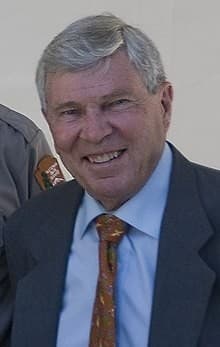
James M. McPherson is an American historian specializing in the American Civil War. He is best known for his book "Battle Cry of Freedom," which provides a comprehensive overview of the conflict. McPherson's work has earned him significant recognition in the field of history, including the Pulitzer Prize for History.
Similar books
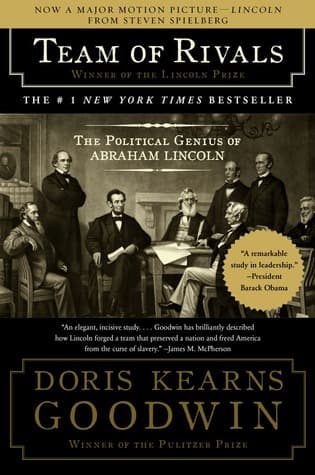
- Team of Rivals: The Political Genius of Abraham Lincoln
Doris Kearns Goodwin
4.3 (152k) average on GoodreadsPoliticsFocuses on Lincoln's political genius and the complex personalities surrounding him during the war.
- 1984
George Orwell
4.2 (3.1M) average on GoodreadsPoliticsIn a future where surveillance and thought control are absolute, a man's search for truth clashes with the Party, showing that hope can be a form of rebellion.
- Animal Farm
George Orwell
4.0 (2.7M) average on GoodreadsPoliticsA farm animals' rebellion against humans turns into a pig-led dictatorship, showing how power corrupts and revolutionary ideals are betrayed.
- Freakonomics: A Rogue Economist Explores the Hidden Side of Everything
Steven D. Levitt
4.0 (709k) average on GoodreadsBusinessThis book uses economic principles to reveal the surprising incentives behind everything from drug dealing and real estate to cheating teachers and the decline of crime.
- I Am Malala: The Story of the Girl Who Stood Up for Education and Was Shot by the Taliban
Malala Yousafzai
4.1 (419k) average on GoodreadsPoliticsA teenage girl from a Taliban-controlled valley refuses to give up her books, becoming a global voice for education even after an assassination attempt.
- Atlas Shrugged
Ayn Rand
3.7 (354k) average on GoodreadsPoliticsIn a dystopian America where innovators vanish, a brilliant heiress races to uncover the truth behind the disappearing industrialists and the enigmatic John Galt, who vows to stop the world's progress.





Enjoyed the summary?
A summary gives you the shape of the book. The book itself has the detail, the examples and the voice.
Find Battle Cry of Freedom on AmazonAs an Amazon Associate, BookBrief earns from qualifying purchases. How we're funded