
Core Idea
- Difficulty
- Hard
- Read it if
- You are a philosophy student or academic interested in the foundations of empiricism, skepticism, and the history of Western thought, and are prepared for a dense, challenging, and foundational text.
- Skip it if
- You prefer light reading, are looking for practical self-help, or expect a straightforward, easy-to-digest narrative without deep philosophical engagement.
Key Takeaways from A Treatise of Human Nature
The Limits of Reason: Impressions & Ideas
All our complex ideas are ultimately derived from simpler, more vivid impressions.
Hume argues that human understanding relies on two main types of perceptions: impressions and ideas. Impressions are our direct, strong sensations and experiences—what we see, feel, hear, want, or dislike. Ideas are the weaker mental copies of these impressions, used in thought and reasoning. For Hume, every idea, no matter how complex, must come from an original impression. This is a key test for empiricism: if an idea cannot be linked to an impression, its validity or meaning is questionable. This framework shows how important sensory experience and immediate feeling are in shaping our mental world, questioning purely abstract or innate concepts.
“All the perceptions of the human mind resolve themselves into two distinct kinds, which I shall call Impressions and Ideas.”
In the book: Hume's famous 'copy principle' where he challenges anyone to produce an idea not derived from a preceding impression, often using the example of a blind person having no idea of colors.
Try this: When evaluating a complex concept or belief, trace it back to its constituent impressions. If it lacks empirical grounding, question its substance. This encourages a skeptical, evidence-based approach to knowledge.
Related ideas: impressions, ideas, empiricism
The Illusion of Cause and Effect
Our belief in causality stems from habit, not logical necessity or observation of a hidden power.
Hume's most notable and debated argument concerns cause and effect. He says we never actually see 'causation' itself, only that events consistently happen together. We see A always followed by B. From repeated observations, our minds develop a 'habit' or 'custom' of expecting B to follow A. This expectation creates our belief in a 'necessary connection,' not an inherent quality of objects or a logical conclusion. There is no logical way to prove that the future will resemble the past. This significantly weakens scientific induction and shows that our most basic beliefs about the world are psychological, not logical.
“The necessary connexion depends on the inference of the understanding, and not on any absolute, original impression.”
In the book: The classic example of billiard balls: we see one ball strike another, and the second ball moves. We never perceive the 'power' or 'force' that causes the second ball to move, only their sequence in time and space.
Try this: Approach claims of causation with skepticism. Recognize that 'correlation does not equal causation' isn't just a cliché, but a fundamental limit of human understanding rooted in our psychological habits. Focus on observed patterns rather than assumed underlying forces.
Related ideas: causality, constant-conjunction, induction, skepticism
Personal Identity: A Bundle of Perceptions
The self is not a continuous, unchanging entity, but a fluid collection of perceptions.
Hume challenges the traditional idea of a stable, lasting 'self' or 'soul.' He argues that when we look inward, we never find a single, unchanging 'I,' but rather a continuous flow of perceptions—thoughts, feelings, sensations, memories. The idea of a constant self is a fiction, a convenient way to group these fleeting perceptions. Our sense of identity comes from the smooth transitions and similarities between these successive perceptions, not from an underlying, fixed ego. This means our identity is dynamic, always changing, and more like a story we create than a fixed essence.
“I may venture to affirm of the rest of mankind, that they are nothing but a bundle or collection of different perceptions, which succeed each other with an inconceivable rapidity, and are in a perpetual flux and movement.”
In the book: Hume's introspective argument: he claims that whenever he looks inward, he only finds specific perceptions (heat, cold, light, love, hate) but never a distinct 'self' apart from these perceptions.
Try this: Embrace the fluid nature of your identity. Rather than searching for a fixed 'true self,' understand that you are a continuous process of evolving experiences and perspectives. This can foster adaptability and reduce the pressure to conform to a rigid self-concept.
Related ideas: personal-identity, self, perceptions, bundle-theory
Reason is Passion's Slave
Reason alone cannot motivate action; it serves our passions and desires.
This is one of Hume's most thought-provoking claims, directly questioning the long-held philosophical view that reason should control our actions. Hume argues that reason is only a tool: it can help us find the best ways to reach our goals, and it can uncover factual truths. However, reason cannot tell us what goals we should pursue. Our desires, emotions, and feelings are what truly motivate action. We act because we want something, and reason helps us get it. This idea has significant implications for ethics, suggesting that moral judgments come from feelings rather than pure rationality.
“Reason is, and ought only to be the slave of the passions, and can never pretend to any other office than to serve and obey them.”
In the book: Hume's example of preferring the destruction of the whole world to the scratching of his finger. While extreme, it illustrates that no amount of rational argument can change a fundamental preference, only guide the means to satisfy or avoid it.
Try this: Recognize the powerful influence of your emotions and desires in decision-making. Instead of trying to suppress passions with 'pure reason,' understand how they drive you and use reason strategically to achieve your emotionally-driven goals effectively. Cultivate passions that align with your values.
Related ideas: passions, reason, motivation, ethics
Sympathy: The Foundation of Morality
Our moral sentiments arise from our capacity to share and understand the feelings of others.
If reason serves emotion, how do we reach shared moral judgments? Hume introduces 'sympathy' (which we might call empathy today) as the process. Sympathy is our natural tendency to feel what others feel, to experience their emotions, even if faintly. When we see actions that cause pleasure or pain in others, we feel a reflection of those feelings within ourselves. Actions that produce agreeable feelings (either directly or through their benefit to society) become 'virtuous,' and those that produce disagreeable feelings become 'vicious.' Morality, then, is not a set of absolute, rational commands, but a product of our shared human feelings and our ability to relate to others' experiences.
“The minds of men are mirrors to one another, not only because they reflect each other's emotions, but also because those rays of passions, sentiments and opinions may be often reverberated and may decay away by insensible degrees.”
In the book: Hume describes how we naturally feel uneasiness when seeing someone in pain, even if it doesn't directly affect us. This shared feeling, or the anticipation of it, guides our approval or disapproval of actions.
Try this: Cultivate empathy and perspective-taking. Understand that moral disagreements often stem from differing emotional responses and experiences, not just logical errors. Engage with others' perspectives to foster mutual understanding and ethical behavior.
Related ideas: sympathy, empathy, morality, sentimentalism
Freedom as Spontaneity, Not Indeterminism
Human liberty is compatible with necessity, defined as the constant conjunction of motives and actions.
Hume addresses the old problem of free will and determinism, supporting a compatibilist view. He redefines 'necessity' not as some mysterious, unstoppable force, but simply as the observed consistent link between motives and actions. Just as we see regularities in the physical world, we see that certain motives consistently lead to certain actions in humans. 'Liberty,' for Hume, is not the absence of such causal links, but the absence of outside force. A person is free if they can act according to their will, even if that will is itself determined by earlier causes. This perspective removes the perceived conflict between determinism and moral responsibility.
“By liberty, then, we can only mean a power of acting or not acting, according to the determinations of the will; that is, if we choose to remain at rest, we may; if we choose to move, we also may.”
In the book: Hume points out that laws and punishments are based on the assumption that human actions are predictable and caused by motives. If actions were truly random, there would be no basis for moral praise or blame.
Try this: Recognize that your choices are influenced by your character, past experiences, and present motives. Instead of agonizing over 'absolute free will,' focus on understanding and shaping the influences that guide your will, thus increasing your effective agency.
Related ideas: free-will, determinism, compatibilism, necessity
The Role of Custom and Habit
Much of our understanding and belief about the world is formed through repeated experience and ingrained custom.
Beyond specific arguments, a recurring theme in Hume's work is the great power of custom and habit. Our belief in cause and effect, our expectations about the future, and even our understanding of the world's stability do not come from strict logical reasoning but from repeated exposure. When we see something happen repeatedly, our minds form an unconscious connection, a habit of expectation. This is not rational in a strict sense, but it is very practical and necessary for living. Without custom, every moment would be completely new, and we would be unable to learn or predict.
“Custom, then, is the great guide of human life. It is that principle alone which renders our experience useful to us, and makes us expect, for the future, a similar train of events with those which have appeared in the past.”
In the book: The entire argument regarding causality rests on constant conjunction producing a 'habit' of expectation in the mind. The sun rising every day creates an expectation, not a logical proof, that it will rise tomorrow.
Try this: Be aware of how deeply ingrained habits and customs shape your perceptions and beliefs. Question assumptions that feel 'natural' but might simply be the result of repeated exposure. Leverage positive habits to build productive routines and expectations.
Related ideas: custom, habit, belief, induction
The Fictional Nature of Substance
We have no impression of 'substance' itself, only of its various qualities.
Similar to his attack on personal identity, Hume also critiques the metaphysical idea of 'substance.' Philosophers traditionally believed in an underlying base that holds together an object's various qualities (e.g., a table has color, shape, hardness, but these qualities belong to the 'substance' of the table). Hume argues that we never have an impression of this 'substance' itself, only of the qualities. The idea of substance is made up by the imagination, a way to unify a collection of perceptions. This further shows Hume's commitment to empiricism and his skepticism towards concepts that lack direct sensory grounding, challenging core beliefs of rationalist metaphysics.
“We have therefore no idea of substance, distinct from that of a collection of particular qualities, nor have we any other meaning when we talk of 'substance,' than a collection of ideas, united by the imagination, and referring to some unknown 'something,' which is supposed to be the cause of these ideas.”
In the book: When we perceive an apple, we see its redness, feel its smoothness, taste its sweetness, but we never perceive an 'apple-substance' distinct from these qualities. The 'apple' is the sum of these perceptions.
Try this: Focus on observable qualities and relationships rather than abstract, unobservable essences. When describing objects or phenomena, prioritize empirical descriptions over speculative metaphysical claims. This fosters clearer, more grounded communication.
Related ideas: substance, qualities, metaphysics, empiricism
The Is-Ought Problem: No Moral Derivation from Facts
Moral 'oughts' cannot be logically derived from factual 'ises' about the world.
Hume identifies the 'is-ought problem,' pointing out a logical gap between descriptive statements ('is') and prescriptive statements ('ought'). You can observe all the facts about the world you want—how people behave, the results of actions, the biological nature of humanity—but you can never logically conclude a moral rule from these facts alone. To say 'this is how things are' does not automatically lead to 'this ought to be how things are.' This suggests that moral judgments come from our feelings and values, not from purely rational or factual conclusions, reinforcing his view that reason serves emotions.
“In every system of morality, which I have hitherto met with, I have always remark'd, that the author proceeds for some time in the ordinary way of reasoning, and establishes the being of a God, or makes observations concerning human affairs; when of a sudden I am surpriz'd to find, that instead of the usual copulations of propositions, is, and is not, I meet with no proposition that is not connected with an ought, or an ought not.”
In the book: Hume notes that authors often slide from descriptions of human nature or the existence of God to moral commands without explaining how the 'ought' is derived from the 'is.' This transition, he argues, is often unnoticed but logically invalid.
Try this: Be critically aware when someone attempts to derive moral conclusions solely from factual premises. Understand that ethical arguments require an explicit bridge, often involving shared values or sentiments, between facts and moral imperatives. Clearly separate descriptive observations from prescriptive judgments.
Related ideas: is-ought-problem, moral-philosophy, ethics, moral-relativism
The Gentle Skepticism of Common Life
While philosophical arguments lead to profound skepticism, our natural instincts compel us back to practical belief.
Hume's philosophical investigations often lead to skeptical conclusions—that we cannot rationally prove cause and effect, external existence, or personal identity. However, he recognizes that such extreme skepticism is impractical. Our natural instincts, habits, and the demands of daily life force us to believe and act as if these things are true. We cannot function without assuming cause and effect or a stable external world. Hume's skepticism is not an invitation to inaction, but a deep insight into the limits of human reason and the fundamental role of non-rational abilities (like custom and feeling) in our practical lives. He supports a 'mitigated skepticism'—being open to doubt but guided by practical necessity.
“The great subverter of Pyrrhonism or the excessive principles of scepticism, is action, and employment, and the occupations of common life.”
In the book: Despite his arguments against the rational basis of induction, Hume admits he cannot help but expect the sun to rise tomorrow, just like everyone else. Philosophy might expose the limits of reason, but nature drives us to believe.
Try this: Embrace intellectual curiosity and critical thinking, but balance it with pragmatic action. Don't let philosophical doubts paralyze you in daily life. Understand that some beliefs are necessary for functioning, even if they lack absolute rational proof. Cultivate a mindset that is open to questioning while remaining grounded in practical realities.
Related ideas: skepticism, common-life, mitigated-skepticism, pyrronism
A Treatise of Human Nature Quotes
“Reason is, and ought only to be the slave of the passions, and can never pretend to any other office than to serve and obey them.”
“All ideas are copied from impressions, or, in other words, that it is impossible for us to think of any thing, which we have not antecedently felt, either by our outward or inward senses.”
“The mind can never find the effect in the cause, by the most accurate scrutiny and examination. For the effect is totally different from the cause, and consequently can never be discovered in it.”
“Custom, then, is the great guide of human life. It is alone by that principle that this experience becomes useful to us, and makes us expect, for the future, a similar train of events with those which have appeared in the past.”
“When we run over libraries, persuaded of these principles, what havoc must we make? If we take in our hand any volume; of divinity or school metaphysics, for instance; let us ask, Does it contain any abstract reasoning concerning quantity or number? No. Does it contain any experimental reasoning concerning matter of fact and existence? No. Commit it then to the flames: For it can contain nothing but sophistry and illusion.”
“No man is allowed to be a judge in his own cause; and what more closely concerns us, every man is a judge in his own cause.”
“The rules of morality are not conclusions of our reason.”
“The identity, which we ascribe to the mind of man, is only a fictitious one.”
“It is not contrary to reason to prefer the destruction of the whole world to the scratching of my finger.”
“Beauty is no quality in things themselves: It exists merely in the mind which contemplates them.”
“Nothing is more surprising to those who consider human affairs with a philosophical eye, than the easiness with which the many are governed by the few.”
“Our impressions are our only data, and it is from them that we must draw all our conclusions.”
“Moral distinctions are not derived from reason.”
“The mind is a kind of theatre, where several perceptions successively make their appearance; pass, re-pass, glide away, and mingle in an infinite variety of postures and situations.”
Quiz
10 questions on the main ideas. Each answer comes with a short explanation.
Question 1
According to Hume in 'A Treatise of Human Nature', what is the ultimate basis for our knowledge and understanding?
- Innate ideas implanted by a divine being
- Abstract rational principles derived through pure logic
- Experience and observation of human nature
- Tradition and the authority of past philosophers
Show answer
C. Experience and observation of human nature Hume's primary aim in the Treatise is to base philosophy on a new, observationally grounded study of human nature, making experience and observation the foundation.
Question 2
What concept does Hume famously argue we form compelling but unconfirmable beliefs in, particularly outlined in his Abstract?
- Mathematical certainty
- Divine revelation
- Cause and effect
- Moral absolutes
Show answer
C. Cause and effect The Abstract of the Treatise specifically outlines Hume's 'chief argument' regarding our conception of, and belief in, cause and effect, noting it's a compelling but unconfirmable belief.
Question 3
Hume's Treatise attempts to explain how we form concepts such as cause and effect, external existence, and personal identity. What is a key characteristic of the beliefs we form in the entities represented by these concepts?
- They are demonstrable by pure reason.
- They are confirmed by direct sensory data in all cases.
- They are compelling but unconfirmable.
- They are arbitrary and easily discarded.
Show answer
C. They are compelling but unconfirmable. The text states that Hume explains how we form compelling but unconfirmable beliefs in the entities represented by these concepts.
Question 4
Which of the following best describes Hume's approach to understanding human nature, as presented in the Treatise?
- A deductive system based on a priori principles.
- An empirical investigation modeled after the natural sciences.
- A theological exposition of divine will.
- A historical chronicle of philosophical thought.
Show answer
B. An empirical investigation modeled after the natural sciences. The Treatise is described as a 'comprehensive attempt to base philosophy on a new, observationally grounded study of human nature,' indicating an empirical and scientific approach.
Question 5
Beyond explaining concepts like cause and effect, what other major area does Hume's Treatise offer a 'novel account' of?
- The structure of the physical universe
- The nature of the passions
- The history of political systems
- Advanced mathematical theories
Show answer
B. The nature of the passions The text explicitly states: 'It then offers a novel account of the passions, explains freedom and necessity as they apply to human choices and actions.'
Question 6
How does Hume address the concepts of freedom and necessity in the Treatise?
- He argues that freedom is an illusion and all actions are predetermined.
- He explains them as they apply to human choices and actions.
- He dismisses them as irrelevant philosophical problems.
- He asserts that only divine beings possess true freedom.
Show answer
B. He explains them as they apply to human choices and actions. The description notes that the Treatise 'explains freedom and necessity as they apply to human choices and actions,' indicating a nuanced discussion rather than outright dismissal or extreme assertion.
Question 7
The Treatise concludes with detailed explanations of what two main aspects of human morality?
- The origins of law and governance
- How we distinguish between virtue and vice, and the different kinds of virtue
- The psychological causes of mental illness
- The economic principles of wealth distribution
Show answer
B. How we distinguish between virtue and vice, and the different kinds of virtue The final section of the Treatise 'concludes with detailed explanations of how we distinguish between virtue and vice and of the different kinds of virtue.'
Question 8
Given Hume's observational approach to human nature, what implication might this have for the study of ethics, as presented in the Treatise?
- Ethical principles are derived solely from divine commandments, independent of human experience.
- Moral distinctions are ultimately rooted in sentiments and observations of human behavior and its effects.
- Ethics is a branch of mathematics, discoverable through logical deduction alone.
- Moral judgments are entirely arbitrary and cannot be systematically explained.
Show answer
B. Moral distinctions are ultimately rooted in sentiments and observations of human behavior and its effects. Since Hume bases philosophy on an 'observationally grounded study of human nature' and explains 'how we distinguish between virtue and vice,' it implies that moral distinctions are tied to human sentiments and observations of behavior, rather than pure reason or divine command.
Question 9
Hume's 'chief argument' regarding cause and effect, as highlighted in the Abstract, posits that our belief in it is 'compelling but unconfirmable'. What is the practical consequence of this argument for scientific inquiry, according to Hume?
- It undermines all scientific experimentation, rendering it futile.
- It means scientific laws are ultimately based on habit and expectation, not logical necessity.
- It necessitates a return to purely rationalist methods, abandoning empirical observation.
- It proves that true causal connections can only be known through divine revelation.
Show answer
B. It means scientific laws are ultimately based on habit and expectation, not logical necessity. Hume's argument means that while we observe constant conjunctions, we don't observe a necessary connection. Our belief in cause and effect arises from habit and the expectation that the future will resemble the past, not from a logical deduction of necessity. This profoundly impacts how scientific 'laws' are understood.
Question 10
The Treatise aims to understand 18th-century philosophy. If a contemporary philosopher were to adopt Hume's method for studying a modern philosophical problem (e.g., the nature of consciousness), what would be their primary methodological focus?
- Consulting ancient philosophical texts and their interpretations.
- Engaging in introspection and deriving conclusions from personal subjective experience alone.
- Analyzing the observable phenomena of consciousness and human behavior, akin to a scientific study.
- Developing complex logical proofs without reference to empirical data.
Show answer
C. Analyzing the observable phenomena of consciousness and human behavior, akin to a scientific study. Hume's method is explicitly 'observationally grounded study of human nature.' For a modern problem like consciousness, this would translate to an empirical approach, observing and analyzing its manifestations in human experience and behavior, much like a scientific endeavor.
A Treatise of Human Nature FAQ
What is the main purpose of David Hume's A Treatise of Human Nature?
Hume's Treatise is a foundational work in Western philosophy that seeks to establish a new philosophical system based on an observational study of human nature. It aims to explain how humans form fundamental concepts like cause and effect, external existence, and personal identity, and how these lead to compelling beliefs.
What is Hume's 'chief argument' regarding cause and effect?
Hume's chief argument concerning cause and effect, as highlighted in the Abstract, posits that our understanding and belief in these concepts are not derived from reason or observation of necessary connections in nature. Instead, they arise from custom and habit, based on the constant conjunction of events we experience.
Does Hume believe in the existence of an external world?
Hume explores how we form the concept and belief in external existence, acknowledging that it's a compelling belief arising from our senses and imagination. However, he argues that this belief cannot be rationally confirmed or proven, remaining a product of human nature rather than demonstrable fact.
How does Hume's approach to human nature differ from earlier philosophers?
Hume distinguishes himself by grounding philosophy in an empirical, 'observationally grounded' study of human nature, akin to a scientific method, rather than relying solely on abstract reason or metaphysical speculation. He focuses on how the mind actually operates through experience and custom.
What is Hume's view on personal identity?
Hume famously argues against the notion of a continuous, unchanging 'self' or personal identity. He suggests that what we perceive as personal identity is merely a bundle or collection of constantly changing perceptions, linked together by relations of resemblance and causation in our minds.
How does Hume explain the role of passions in human action?
Hume offers a novel account of the passions, asserting that 'reason is, and ought only to be the slave of the passions, and can never pretend to any other office than to serve and obey them.' He explains how emotions and desires are the primary motivators of human actions, with reason serving to guide us in achieving those desires.
What is the significance of Hume's distinction between virtue and vice?
Hume explains that our distinction between virtue and vice is not based on objective moral facts or divine command, but rather on sentiments of approval or disapproval we experience when observing certain characters or actions. Virtues are those qualities that elicit a pleasing sentiment in us, while vices elicit displeasure.
How does Hume reconcile freedom and necessity in human choices?
Hume argues that freedom and necessity are not contradictory but compatible. He defines necessity as the constant conjunction of events and the inference of one from the other, which he applies to human actions as well. Freedom, for Hume, is the liberty of spontaneity, meaning acting according to one's will without external compulsion, which is consistent with the regularities of human behavior.
Is A Treatise of Human Nature a difficult book to read for beginners?
Yes, the Treatise is considered a challenging text due to its dense philosophical arguments and 18th-century language. However, the included introduction, extensive annotations, glossary, and suggestions for further reading in this edition are designed to aid understanding for contemporary readers.
About the author
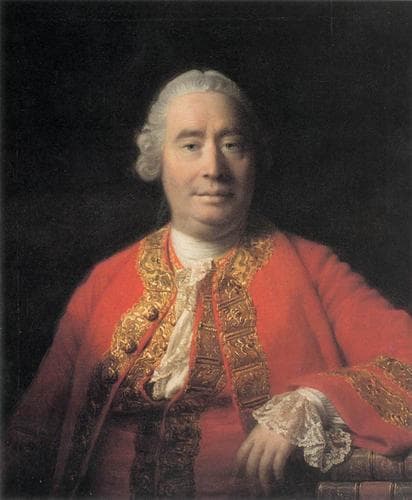
David Hume was a Scottish Enlightenment philosopher, historian, economist, and essayist, best known for his highly influential A Treatise of Human Nature and An Enquiry Concerning Human Understanding. His work profoundly impacted the development of skepticism and empiricism. Hume's critical examination of religious belief is also evident in his posthumously published Dialogues Concerning Natural Religion.
Similar books
- Critique of Pure Reason
Immanuel Kant
4.0 (28k) average on GoodreadsReferenceA direct response to Hume's skepticism, attempting to reconcile empiricism with rationalism.
- Dialogues Concerning Natural Religion
David Hume
4.0 (5k) average on GoodreadsHistoryAnother work by Hume exploring skeptical arguments, though focused on theology rather than general epistemology.
- 1984
George Orwell
4.2 (3.1M) average on GoodreadsPoliticsIn a future where surveillance and thought control are absolute, a man's search for truth clashes with the Party, showing that hope can be a form of rebellion.
- Animal Farm
George Orwell
4.0 (2.7M) average on GoodreadsPoliticsA farm animals' rebellion against humans turns into a pig-led dictatorship, showing how power corrupts and revolutionary ideals are betrayed.
- Freakonomics: A Rogue Economist Explores the Hidden Side of Everything
Steven D. Levitt
4.0 (709k) average on GoodreadsBusinessThis book uses economic principles to reveal the surprising incentives behind everything from drug dealing and real estate to cheating teachers and the decline of crime.
- I Am Malala: The Story of the Girl Who Stood Up for Education and Was Shot by the Taliban
Malala Yousafzai
4.1 (419k) average on GoodreadsPoliticsA teenage girl from a Taliban-controlled valley refuses to give up her books, becoming a global voice for education even after an assassination attempt.




Enjoyed the summary?
A summary gives you the shape of the book. The book itself has the detail, the examples and the voice.
Find A Treatise of Human Nature on AmazonAs an Amazon Associate, BookBrief earns from qualifying purchases. How we're funded