

Core Idea
- Difficulty
- Medium
- Read it if
- You're interested in a personal journey of self-discovery, want to explore America's heartland through the eyes of a curious traveler, or are seeking a story of renewed faith in human connection and the power of simple living.
- Skip it if
- You prefer fast-paced narratives with complex plots, or are not interested in detailed descriptions of encounters with everyday people and reflections on American society in the 1970s.
Key Takeaways from A Walk Across America
The Road as a Crucible
Physical endurance and unexpected encounters forge identity.
Jenkins' journey is not just a physical trip; it is a journey of self-discovery. Disappointed with 1970s society, he looked for answers on the road. This shows that sometimes the best way to understand oneself and one's place in the world is to leave familiar comforts and face the real world. Walking day after day removed his old ideas and made him engage with America's diverse places and people. This changed his initial cynicism into a more detailed understanding of himself and the nation. This steady forward movement, with moments of vulnerability and connection, is a strong example of personal growth.
“I started out searching for myself and my country, and found both.”
In the book: Jenkins' initial disillusionment with society and his subsequent reawakening of faith in himself and his country directly results from the experiences accumulated during his walk.
Try this: Embark on a 'mini-journey' – even a long walk or solo trip – to gain perspective on personal challenges or societal views. Disconnect from digital distractions and engage with your surroundings and the people you meet.
Related ideas: self-discovery, personal-growth, journey-metaphor
Beyond the Headlines: The True America
Direct experience reveals a complex, often surprising national character.
Jenkins' walk breaks down the single view of America often shown by media or politics. By talking with many different people — from mountain hermits to Southern mill workers, from wealthy city dwellers to rural families — he finds many experiences and viewpoints. This direct engagement shows the basic goodness, strength, and often surprising generosity of ordinary Americans, no matter their background. His journey shows that real understanding of a nation comes not from abstract ideas but from the lived lives and different stories of its people. This challenges old ideas and helps create a more understanding perspective.
“America is a nation of contradictions, but beneath the surface, a unifying spirit of resilience and kindness often prevails.”
In the book: His experiences staying with a Black family in North Carolina, which caused a stir, and his interactions with diverse individuals across various states, highlight the unexpected kindness and varied realities he encountered.
Try this: Seek out diverse perspectives and experiences in your local community. Engage in conversations with people from different backgrounds than your own to challenge assumptions and build a more complete understanding of society.
Related ideas: national-identity, cultural-diversity, empathy-building
The Wisdom of Simplicity
Unburdening oneself can lead to profound insights.
One of the most important lessons Jenkins learns comes from a mountain hermit. This highlights the wisdom found in a simple existence. The act of walking itself is about simplicity — carrying only what is needed, relying on basic needs, and being in the present moment. This forced minimalism helps Jenkins shed the excess of modern life, both physical and mental. It makes room for deeper thought and connection with his inner self and nature. It suggests that true understanding and happiness often come when we intentionally simplify things and live in a more basic way.
“The timeless secrets of life, learned from a mountain-dwelling hermit, resonated deeply with the simplicity of the road.”
In the book: The specific mention of learning 'timeless secrets of life' from a mountain-dwelling hermit highlights the value of simple, unadorned wisdom.
Try this: Practice 'digital detoxes' or periods of intentional minimalism in your life. Declutter your physical space, reduce unnecessary commitments, and spend time in nature to reconnect with core values.
Related ideas: minimalism, mindfulness, simple-living
Challenging Prejudices Through Proximity
Direct interaction dismantles societal biases and stereotypes.
Jenkins directly faces the racial tensions and biases common in 1970s America, especially through his stay with a Black family in North Carolina. This experience, which 'caused a stir,' is important. It shows how being close to people and having personal connections can help overcome societal biases. By sharing meals, stories, and daily life, he moves beyond general ideas of race and confronts the human reality. This helps him develop empathy and challenges his own possible biases. The book suggests that real understanding and reconciliation can only start when people are willing to leave their comfort zones and engage directly with those they might otherwise stereotype.
“Staying with a black family in North Carolina caused a stir, but it was in those moments of vulnerability that genuine understanding began.”
In the book: The specific mention of 'the stir he caused by staying with a black family in North Carolina' serves as concrete proof of challenging social norms and confronting prejudice directly.
Try this: Actively seek out opportunities to interact with people from different cultural, racial, or socioeconomic backgrounds than your own. Attend community events, volunteer, or engage in respectful dialogue to broaden your understanding.
Related ideas: racial-prejudice, social-justice, intercultural-communication
The Dignity of Labor
Hard work reveals character and connects one to the fabric of society.
Jenkins' experiences working in Southern mills offer a clear understanding of the value and difficulty of manual labor. These 'hours of intense labor' are not just a way to earn money; they are a deep look into the lives of working-class Americans, connecting him to a basic part of the country's economic and social structure. Through shared sweat and effort, he gains respect for the strength, persistence, and often overlooked contributions of those who do physically demanding jobs. This direct experience challenges any romantic ideas of the journey, grounding it in the reality of earning one's way and appreciating honest work.
“His hours of intense labor in Southern mills taught him profound lessons about the resilience and spirit of working-class America.”
In the book: His 'hours of intense labor in Southern mills' directly demonstrates his immersion in the working-class experience and the lessons learned from it.
Try this: Take on a task that requires physical effort or learn a new practical skill. Engage with people in blue-collar professions, listening to their experiences and perspectives to appreciate their contributions.
Related ideas: working-class, labor-ethics, social-connection
Beyond the Destination: The Value of the Process
The true rewards of a journey lie in the experiences along the way.
While Jenkins starts with a clear goal — to walk across America and find himself — the book shows that the real change happens not at the destination, but over the 'many, many miles' traveled. Each step, each meeting, each challenge faced contributes to a learning experience that changes his perspective. This shows that real growth is a continuous process, not a single event. The journey itself, with all its unexpected turns, is the teacher, offering lessons that 'resonate to this day' long after the physical trip is done.
“Many, many miles later, he learned lessons about his country and himself that resonate to this day.”
In the book: The phrase 'Many, many miles later, he learned lessons about his country and himself that resonate to this day' directly supports the idea that the ongoing process yielded the lasting insights.
Try this: Focus on the learning and growth opportunities in your current projects or life stages, rather than solely on the end goal. Embrace unexpected detours as chances for new insights.
Related ideas: process-over-product, experiential-learning, continuous-growth
Reawakening Faith in Humanity
Despite societal flaws, individual kindness can restore hope.
Jenkins begins his walk feeling disappointed, a common feeling in the post-Vietnam, Watergate era. However, the constant kindness, generosity, and strength he finds in ordinary Americans slowly 'reawakens his faith.' This is not a naive optimism but a belief formed through diverse, often difficult, realities. It shows that while systemic problems may remain, the basic goodness of individuals can offer a strong counter-narrative, restoring hope in humanity's ability to connect and show compassion. The book suggests that by looking past big narratives and engaging with individuals, one can find strong reasons for optimism.
“His journey was a classic account of the reawakening of his faith in himself and his country.”
In the book: The book's description as 'a classic account of the reawakening of his faith in himself and his country' is the central thesis, supported by myriad individual acts of kindness and connection throughout his journey.
Try this: Actively seek out and acknowledge acts of kindness in your daily life. Volunteer or contribute to community efforts that foster connection and support, rebuilding your own sense of faith in collective good.
Related ideas: optimism, human-connection, resilience-of-spirit
The Enduring Call of the Open Road
The allure of exploration and personal freedom remains timeless.
Even decades later, Jenkins' story continues to 'inspire a new generation to get out, hit the road and explore.' This lasting appeal speaks to a basic human desire for freedom, adventure, and self-discovery. The 'open road' is a strong image for possibilities, a place where societal rules loosen, and personal choice becomes more important. The book connects with a universal desire to break free from routine, face the unknown, and make one's own path. It shows that the transforming power of a journey is a lasting human truth, no matter the specific time or challenges faced.
“His experiences will inspire a new generation to get out, hit the road and explore.”
In the book: The concluding statement of the summary, noting that his experiences 'will inspire a new generation to get out, hit the road and explore,' directly points to the timeless nature of the book's message.
Try this: Plan a personal adventure, big or small – a road trip, a long hike, or even exploring a new neighborhood. Embrace spontaneity and allow for unexpected discoveries.
Related ideas: adventure, wanderlust, freedom
A Walk Across America Quotes
“America is a nation of lonely people, and I was one of them. We were all searching for something, and I was hoping to find it on foot.”
“The road was my university, and the people I met were my professors.”
“There's a certain freedom in having nothing and nowhere to go but forward.”
“I learned that the most important thing a person can do is to be present, to really see and hear the world around them.”
“You can't really know a place until you've walked it.”
“Every step was a prayer, a meditation, a conversation with the land.”
“The kindness of strangers is the glue that holds this country together.”
“I was walking to find America, but I ended up finding myself.”
“The hardest part wasn't the physical challenge, but the mental battle against loneliness and doubt.”
“America is a land of contradictions, beauty and ugliness, hope and despair, all intertwined.”
“There's a rhythm to walking, a natural cadence that connects you to the earth.”
“I learned that life isn't about grand destinations, but about the journey itself, one step at a time.”
“The wind whispers stories if you're willing to listen.”
“Sometimes you have to get lost to find your way.”
Quiz
10 questions on the main ideas. Each answer comes with a short explanation.
Question 1
What was Peter Jenkins' primary motivation for embarking on his walk across America?
- To set a new world record for long-distance walking.
- To escape legal troubles and start a new life.
- To search for himself and rediscover his faith in his country amidst disillusionment.
- To promote a political cause or social movement.
Show answer
C. To search for himself and rediscover his faith in his country amidst disillusionment. The book explicitly states that Jenkins 'started out searching for myself and my country' due to disillusionment with society in the 1970s, indicating a journey of self-discovery and national re-evaluation.
Question 2
Which of the following experiences is specifically mentioned as a significant event during Jenkins' journey?
- He discovered a hidden treasure map in a remote cabin.
- He caused a stir by staying with a black family in North Carolina.
- He ran into a famous Hollywood celebrity who joined him for a segment of the walk.
- He participated in a televised marathon race.
Show answer
B. He caused a stir by staying with a black family in North Carolina. The book description highlights 'the stir he caused by staying with a black family in North Carolina' as a memorable and telling experience, reflecting the social climate of the time.
Question 3
What kind of wisdom did Jenkins learn from a 'mountain-dwelling hermit'?
- Advanced survival techniques for extreme wilderness conditions.
- Timeless secrets of life.
- Ancient meditation practices.
- The best routes for avoiding major cities.
Show answer
B. Timeless secrets of life. The synopsis mentions that Jenkins learned 'the timeless secrets of life, learned from a mountain-dwelling hermit,' indicating profound philosophical or existential insights.
Question 4
How did Jenkins directly interact with the working class during his journey?
- By observing them from a distance in various towns.
- By spending hours of intense labor in Southern mills.
- By conducting interviews with factory owners.
- By volunteering as a union organizer.
Show answer
B. By spending hours of intense labor in Southern mills. The book description notes 'his hours of intense labor in Southern mills,' indicating a direct, immersive experience in the lives of working-class Americans.
Question 5
The book is described as a 'classic account of the reawakening of his faith in himself and his country.' What does this imply about Jenkins' state of mind at the beginning of his journey?
- He was overly confident and optimistic.
- He was deeply skeptical and cynical.
- He was indifferent to both himself and his country.
- He was seeking fame and recognition.
Show answer
B. He was deeply skeptical and cynical. The term 'reawakening' implies that his faith was dormant or lost, aligning with the description of him being 'disillusioned' with society in the 1970s at the outset.
Question 6
What is a key theme of the book, as suggested by the description?
- The importance of physical endurance in extreme sports.
- The detailed history of American infrastructure and road building.
- Personal transformation and discovering national identity through immersive travel.
- A critique of the American political system in the 1970s.
Show answer
C. Personal transformation and discovering national identity through immersive travel. The description emphasizes Jenkins' journey of 'searching for myself and my country' and finding 'both,' highlighting personal growth and a renewed understanding of America through his experiences.
Question 7
The book is described as a 'timeless classic' whose experiences 'remain as sharp and telling today as they were twenty-five years ago.' What does this suggest about the book's enduring appeal?
- It accurately predicts future societal trends.
- It focuses on universal human experiences and societal issues that transcend specific eras.
- Its historical accuracy makes it a valuable academic resource.
- It is primarily valued for its nostalgic portrayal of the 1970s.
Show answer
B. It focuses on universal human experiences and societal issues that transcend specific eras. The phrase 'timeless' and 'as sharp and telling today' implies that the lessons learned and the issues explored are not confined to a specific historical period but resonate across generations, suggesting universal relevance.
Question 8
Given Jenkins' initial disillusionment, what practical application might a reader take from his journey today?
- To always plan trips meticulously with detailed itineraries.
- To seek out personal, immersive experiences to gain perspective and self-understanding.
- To avoid engaging with unfamiliar cultures and regions.
- To rely solely on media for understanding different parts of the country.
Show answer
B. To seek out personal, immersive experiences to gain perspective and self-understanding. The book inspires 'a new generation to get out, hit the road and explore,' directly advocating for personal, immersive travel as a means of discovery and gaining perspective, which is a practical application derived from Jenkins' experience.
Question 9
How does the memoir format contribute to the book's message about 'finding both' himself and his country?
- It allows for a fictionalized narrative that can exaggerate themes for dramatic effect.
- It provides a personal, subjective account that makes the journey of self-discovery and national understanding relatable and authentic.
- It focuses primarily on historical facts and figures, offering an objective analysis.
- It limits the scope to only geographical descriptions, avoiding personal reflection.
Show answer
B. It provides a personal, subjective account that makes the journey of self-discovery and national understanding relatable and authentic. As a memoir, the book offers Jenkins' personal experiences, thoughts, and feelings, which are crucial for conveying his journey of self-discovery and his evolving understanding of his country in an authentic and relatable way.
Question 10
What specific aspect of the 1970s society likely contributed to Jenkins' initial 'disillusionment' that prompted his walk?
- The booming economic prosperity and technological advancements.
- Social unrest, political turmoil, and cultural shifts (e.g., Vietnam War, Watergate, counterculture movement).
- A period of extreme national unity and consensus.
- An unprecedented decline in outdoor recreational activities.
Show answer
B. Social unrest, political turmoil, and cultural shifts (e.g., Vietnam War, Watergate, counterculture movement). The 1970s in the U.S. were marked by significant social and political upheaval, including the aftermath of the Vietnam War, Watergate scandal, civil rights movements, and counterculture, all of which could lead to widespread disillusionment with society.
A Walk Across America FAQ
What is 'A Walk Across America' about?
'A Walk Across America' is a memoir by Peter Jenkins, chronicling his journey on foot across the United States in the 1970s. Disillusioned with society, Jenkins embarked on this walk to find himself and rediscover his country, sharing the diverse experiences and profound lessons he learned along the way.
Does Peter Jenkins find what he's looking for on his walk?
Yes, Peter Jenkins explicitly states that he 'started out searching for myself and my country, and found both.' His journey led to a reawakening of his faith in himself and a deeper understanding and appreciation for the United States and its people.
What kind of experiences does Peter Jenkins have during his walk?
Jenkins encounters a wide range of experiences, including learning life lessons from a mountain hermit, causing a stir by staying with a Black family in North Carolina, and performing intense labor in Southern mills. These interactions expose him to various facets of American life and culture.
What inspired Peter Jenkins to walk across America?
Jenkins was driven by a deep disillusionment with society in the 1970s. He sought to escape this feeling and embark on a personal quest for self-discovery and a renewed connection with his country.
How is 'A Walk Across America' different from other travel memoirs?
'A Walk Across America' distinguishes itself by its focus on a disillusioned young man's personal transformation and rediscovery of faith in his country during a specific era (the 1970s). While many travel memoirs document journeys, Jenkins's book emphasizes the internal and external search for identity and belonging within the American landscape.
What lessons did Peter Jenkins learn from his journey?
Jenkins learned profound lessons about his country and himself, including timeless secrets of life from a hermit, and gained a deeper understanding of racial dynamics and the value of hard work. His experiences cultivated a renewed sense of self and an appreciation for the diverse spirit of America.
Is 'A Walk Across America' still relevant today?
Yes, the book's themes of self-discovery, understanding diverse cultures, and finding faith in one's country remain highly relevant. Jenkins's experiences and the lessons he learned continue to inspire new generations to explore and understand the world around them.
Does 'A Walk Across America' offer practical advice for long-distance walking?
While the book vividly describes the physical and emotional challenges of a cross-country walk, its primary focus is on Peter Jenkins's personal journey, encounters, and the philosophical insights gained. It serves more as an inspirational memoir than a practical guide for long-distance hiking.
Similar books
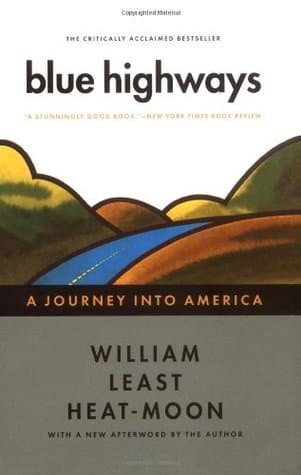
- Blue Highways
William Least Heat-Moon
4.0 (21k) average on GoodreadsLifestyleExplores small-town America and its forgotten corners through a personal road trip, focusing on unique characters and observations.
- Wild: From Lost to Found on the Pacific Crest Trail
Cheryl Strayed
4.0 (615k) average on GoodreadsLifestyleA memoir of a challenging long-distance walk as a means of personal healing and self-discovery, highlighting the transformative power of the road.
- Eat, Pray, Love
Elizabeth Gilbert
3.6 (1.5M) average on GoodreadsLifestyleA heartbroken writer leaves her conventional life for a year-long global search for pleasure in Italy, spiritual devotion in India, and unexpected love and balance in Bali.
- Into Thin Air: A Personal Account of the Mount Everest Disaster
Jon Krakauer
4.2 (395k) average on GoodreadsLifestyleOn May 10, 1996, ambition and a sudden, violent storm turned Mount Everest into a deadly trap, leaving Jon Krakauer to tell the harrowing story of a disaster that took lives and shattered climbers' dreams.
- On The Road
Jack Kerouac
3.6 (349k) average on GoodreadsLifestyleDean Moriarty and Sal Paradise go on a wild, cross-country trip with jazz, drugs, and a desperate search for meaning on America's post-war roads.
- A Walk in the Woods: Rediscovering America on the Appalachian Trail
Bill Bryson
4.1 (346k) average on GoodreadsLifestyleBill Bryson humorously describes his ill-prepared yet insightful attempt to hike the Appalachian Trail, meeting unique characters and the raw beauty of the wilderness.





Enjoyed the summary?
A summary gives you the shape of the book. The book itself has the detail, the examples and the voice.
Find A Walk Across America on AmazonAs an Amazon Associate, BookBrief earns from qualifying purchases. How we're funded