

Core Idea
- Difficulty
- Medium
- Read it if
- You enjoy family sagas focused on the slow, painful reveal of deeply buried secrets, psychological drama, and the long-term consequences of past betrayals.
- Skip it if
- You prefer fast-paced thrillers or light-hearted reads, or if you are sensitive to themes of trauma, blackmail, and the breakdown of seemingly perfect lives.
Key Takeaways from After the Fire
The Illusion of Perfection
Beneath a flawless facade, unseen cracks can lead to catastrophic collapse.
Belva Plain dissects the 'perfect marriage' trope, showing how external appearances can starkly contrast with internal realities. The novel suggests that an idealized image, built on societal expectations, often hides simmering resentments, unaddressed issues, and basic incompatibilities. Hyacinth and Gerald's marriage, seemingly enviable, becomes an example of how a lack of genuine communication and a fear of confronting imperfections can lead to a fragile foundation. The story illustrates that 'perfection' is often a performance, and the longer it's maintained, the more damaging its unraveling.
“Gerald and Hyacinth had the kind of marriage others envied. She was a beautiful artist. He was a brilliant plastic surgeon. Theirs was a comfortable, happy home with two wonderful children. Then whispers of betrayal tainted Hy's perfect marriage.”
In the book: The initial description of Hyacinth and Gerald's outwardly successful and admired life, contrasted with the 'whispers of betrayal' that begin to unravel it.
Try this: Examine your own relationships and societal perceptions. Are you prioritizing the appearance of happiness over genuine connection and honesty? Foster open communication and address issues directly, rather than allowing them to fester beneath a veneer of normalcy.
Related ideas: societal-expectations, marital-discord, illusion-of-perfection
Betrayal's Ripple Effect
One act of infidelity can trigger a chain reaction of deceit, desperation, and destruction.
The narrative shows how betrayal, especially infidelity, is not an isolated incident but a catalyst for many negative consequences. Hyacinth's discovery of Gerald's infidelity does not just end their 'perfect' life; it pushes her to a desperate act, which in turn gives Gerald leverage for blackmail. Plain illustrates that trust, once broken, is difficult to mend, and the emotional fallout can lead individuals to make choices outside their usual character. The book highlights the destructive power of betrayal, not just on the betrayed, but on the entire family.
“Then whispers of betrayal tainted Hy's perfect marriage. And in one terrible night she commits an act she will regret for the rest of her life.”
In the book: Hyacinth's reaction to the 'whispers of betrayal' leading to 'one terrible night' and the subsequent 'act she will regret,' which Gerald then exploits.
Try this: Recognize the profound impact of betrayal. If you are experiencing or contemplating infidelity, understand the wide-reaching and potentially catastrophic consequences for all involved, particularly children. Prioritize honesty and address marital issues before they escalate.
Related ideas: infidelity, consequences-of-betrayal, marital-breakdown
Blackmail as a Weapon
Exploiting a spouse's vulnerability turns a shared history into a tool of control.
Belva Plain exposes the insidious nature of blackmail within a dissolving marriage, especially when children are involved. Gerald's use of Hyacinth's desperate act as leverage for uncontested custody is a chilling example of manipulation. It is about control and punishing the other party. This tactic turns the legal process into a personal battleground, where past mistakes are weaponized, and the well-being of the children becomes a pawn. The book shows how deeply personal knowledge can be twisted into a destructive force, trapping the victim in fear and silence.
“An act that gives Gerald the ultimate weapon: blackmail. The price of his silence is uncontested custody of their two children.”
In the book: Gerald's explicit demand for 'uncontested custody of their two children' as the 'price of his silence' regarding Hyacinth's regrettable act.
Try this: Be aware of manipulative tactics in high-stakes divorces. If you find yourself in a similar situation, seek legal and psychological support immediately. Document everything and do not succumb to threats, especially when children's welfare is at stake. Prioritize your own safety and the safety of your children.
Related ideas: marital-manipulation, custody-battles, emotional-abuse
The Weight of Unspoken Truths
Silence, born of guilt or fear, can be as destructive as the secrets it conceals.
Hyacinth's inability to explain her actions, even to her own mother, highlights the burden of unspoken truths. Her silence, enforced by Gerald's blackmail and her own guilt, isolates her and prevents her from seeking the support she needs. Plain argues that while secrets might protect one from immediate consequences, they corrode from within, leading to a 'life of lies.' The journey to freedom, the book suggests, begins with confronting and articulating the hidden realities, no matter how painful, to reclaim one's agency and identity.
“When her own beautiful, angry mother wants to know why she won't fight for custody, Hy can give no answers. But deep in her heart, Hy knows there is one question she must answer if she wants to free herself from a life of lies: What really happened that terrible night?”
In the book: Hyacinth's mother's frustration at her daughter's silence regarding the custody battle, and Hyacinth's internal struggle to uncover 'what really happened that terrible night.'
Try this: Recognize the psychological toll of keeping painful secrets. Seek trusted confidantes or professional help to process difficult experiences. Understand that breaking the silence, though daunting, is often the first step towards healing and reclaiming your life.
Related ideas: psychological-burden, secrets-and-lies, healing-process
Maternal Instinct vs. Self-Preservation
The agonizing conflict when a mother's love clashes with her need to protect a devastating secret.
One of the most heart-wrenching aspects of 'After the Fire' is the conflict Hyacinth faces between her maternal love and the desperate need to keep the secret of 'that terrible night.' Her decision to relinquish custody, seemingly against a mother's nature, is driven by the extreme pressure of Gerald's blackmail. Plain explores the agonizing internal debate, where the desire to protect her children from the truth clashes with the pain of separation. This tension explores the sacrifices parents make, and how external forces can distort even the most basic instincts.
“The price of his silence is uncontested custody of their two children. When her own beautiful, angry mother wants to know why she won't fight for custody, Hy can give no answers.”
In the book: Hyacinth's mother's anger and confusion over her daughter's refusal to fight for custody, which Hyacinth cannot explain due to the blackmail.
Try this: Consider the profound pressures that can influence parental decisions in difficult circumstances. If you are a parent facing such a dilemma, prioritize your children's long-term well-being and seek legal and emotional support to navigate complex custody situations, understanding that silence can be a form of protection but also a source of immense pain.
Related ideas: maternal-sacrifice, parental-dilemmas, custody-rights
The Quest for Truth and Redemption
Unearthing the past is essential for reclaiming one's future and finding peace.
Plain emphasizes that true freedom and redemption are linked to confronting and understanding the past. Hyacinth's journey is not just about escaping Gerald's control; it is about her own internal quest to understand 'what really happened that terrible night.' This introspection is necessary for her to move beyond guilt and regret. The novel suggests that until one fully acknowledges and processes traumatic events, they remain trapped by them. The act of seeking and accepting truth, however painful, is presented as the only path to reclaiming personal agency, self-respect, and a meaningful future.
“Only then can she reclaim her children, her pride, her life—at last.”
In the book: The narrative's central tension revolving around Hyacinth's need to answer 'what really happened that terrible night' to 'reclaim her children, her pride, her life.'
Try this: If you are haunted by past events, understand that confronting them, perhaps with professional help, is vital for healing. Journaling, therapy, and honest conversations can help you process trauma and move towards a future free from the past's shadow. The truth, however difficult, is ultimately liberating.
Related ideas: self-discovery, trauma-recovery, personal-growth
The Long Shadow of Trauma
A single traumatic event can cast a lasting shadow over an entire life.
The novel shows how a single, traumatic event can alter the course of a person's life. Hyacinth's 'terrible night' becomes an anchor, holding her captive in a cycle of regret, silence, and emotional paralysis. Plain demonstrates that trauma is not just an event but a persistent state, influencing decisions, relationships, and self-perception long after the incident itself. The book shows the importance of addressing and processing trauma, as its unacknowledged presence can dictate one's future, preventing true healing and progress.
“And in one terrible night she commits an act she will regret for the rest of her life.”
In the book: Hyacinth's ongoing regret 'for the rest of her life' regarding the act committed on 'one terrible night,' and its subsequent impact on her ability to fight for her children.
Try this: Recognize that trauma's effects are far-reaching. If you or someone you know has experienced a traumatic event, prioritize seeking support. Therapy, support groups, and compassionate understanding are crucial for processing trauma and preventing it from defining one's entire life. Healing is a process, not a single event.
Related ideas: post-traumatic-stress, emotional-paralysis, coping-mechanisms
The Agency of the Victim
Even in deep despair, the choice to fight for one's life and dignity remains.
Despite being a victim of betrayal and blackmail, Hyacinth is not portrayed as passively helpless. The novel emphasizes her agency, particularly in her internal struggle and eventual determination to uncover the truth. Her journey from silence and regret to active pursuit of answers shows that even in the most oppressive circumstances, the human spirit retains the capacity for resilience and defiance. Plain suggests that reclaiming one's life is not given; it is fought for, often against immense internal and external odds, through a conscious decision to break free.
“Only then can she reclaim her children, her pride, her life—at last.”
In the book: Hyacinth's internal realization that she 'must answer' the question of 'what really happened' to 'free herself from a life of lies' and 'reclaim her children, her pride, her life.'
Try this: If you feel trapped or victimized, remember that you have agency. Even small steps towards understanding your situation, seeking help, or setting boundaries can be powerful acts of resistance. Focus on what you can control and take actionable steps towards reclaiming your personal power.
Related ideas: resilience, personal-agency, overcoming-adversity
After the Fire Quotes
“There are no easy answers, only hard choices.”
“Hate is a fire that consumes the one who holds it.”
“Memory is a heavy cloak, sometimes comforting, often suffocating.”
“Truth is not always what you want it to be, but it is always what you need.”
“Love, in its purest form, asks for nothing in return.”
“The past is never truly dead; it just waits for the right moment to reappear.”
“Sometimes, the greatest strength is found in letting go.”
“Family can be both the greatest comfort and the deepest wound.”
“Prejudice is a disease of the mind, passed down through generations.”
“Hope is a fragile thing, easily shattered, but essential for survival.”
“The hardest battles are often fought within ourselves.”
“Silence can be more deafening than any scream.”
“Justice is not always swift, but it eventually finds its way.”
“To truly live, one must first confront the shadows of the past.”
“The human heart, though fragile, possesses an incredible capacity for endurance.”
Quiz
10 questions on the main ideas. Each answer comes with a short explanation.
Question 1
What was Gerald's profession, contributing to the 'picture-perfect' image of his marriage with Hyacinth?
- A successful lawyer
- A brilliant plastic surgeon
- A renowned architect
- A wealthy businessman
Show answer
B. A brilliant plastic surgeon The book describes Gerald as a 'brilliant plastic surgeon,' which was part of the couple's outwardly enviable life.
Question 2
What was Hyacinth's profession mentioned in the description?
- A talented musician
- A successful author
- A beautiful artist
- A dedicated teacher
Show answer
C. A beautiful artist The synopsis states that Hyacinth 'was a beautiful artist,' complementing Gerald's professional success.
Question 3
What is the 'ultimate weapon' Gerald uses against Hyacinth after her regrettable act?
- Divorce proceedings
- Public exposure of her infidelity
- Blackmail for uncontested custody of their children
- Financial ruin
Show answer
C. Blackmail for uncontested custody of their children After Hyacinth commits a regrettable act, Gerald uses 'blackmail' to gain 'uncontested custody of their two children' as his ultimate weapon.
Question 4
What is the central mystery Hyacinth must resolve to 'free herself from a life of lies' and reclaim her life?
- Who started the whispers of betrayal
- What really happened that terrible night
- How to win back Gerald's love
- Where to find the evidence against Gerald
Show answer
B. What really happened that terrible night The core of Hyacinth's journey is to answer the question: 'What really happened that terrible night?' to free herself.
Question 5
What initial event led to the dissolution of Hyacinth and Gerald's 'perfect marriage'?
- A major financial crisis
- Whispers of betrayal
- A disagreement over their children's education
- Gerald's sudden career change
Show answer
B. Whispers of betrayal The narrative explicitly states, 'Then whispers of betrayal tainted Hy's perfect marriage,' indicating this as the catalyst for its unraveling.
Question 6
What is the primary theme explored by Belva Plain in 'After the Fire'?
- The challenges of artistic endeavors
- The complexities of medical ethics
- The dissolution of a marriage and its aftermath, touching on provocative issues
- The pursuit of wealth and social status
Show answer
C. The dissolution of a marriage and its aftermath, touching on provocative issues The description highlights the author's intent to 'penetrate a shattered marriage to explore one of the most provocative issues of our time,' making the dissolution of marriage a central theme.
Question 7
Why is Hyacinth unable to fight for custody of her children, even when her mother questions her?
- She doesn't have the financial resources.
- Gerald is blackmailing her with the secret of what happened that terrible night.
- She believes Gerald is the better parent.
- She is too depressed to take action.
Show answer
B. Gerald is blackmailing her with the secret of what happened that terrible night. The text clearly states, 'The price of his silence is uncontested custody of their two children,' implying her inability to fight is due to Gerald's blackmail regarding her regrettable act.
Question 8
What is the significance of Hyacinth's mother's anger in the narrative?
- It suggests a long-standing difficult relationship between Hyacinth and her mother.
- It highlights the external pressure and judgment Hyacinth faces for not fighting for her children.
- It foreshadows a deeper family secret involving the mother.
- It indicates the mother's own past struggles with marriage.
Show answer
B. It highlights the external pressure and judgment Hyacinth faces for not fighting for her children. Hyacinth's 'beautiful, angry mother wants to know why she won't fight for custody,' emphasizing the societal and familial pressure on Hyacinth to explain her seemingly passive acceptance.
Question 9
The phrase 'an act she will regret for the rest of her life' implies what about Hyacinth's action on that terrible night?
- It was a minor transgression blown out of proportion by Gerald.
- It was a significant, perhaps morally ambiguous or illegal, act with lasting consequences.
- It was an act of self-defense that Gerald twisted to his advantage.
- It was a misunderstanding that could easily be clarified.
Show answer
B. It was a significant, perhaps morally ambiguous or illegal, act with lasting consequences. The strong phrasing 'regret for the rest of her life' coupled with Gerald's ability to use it as 'blackmail' suggests a grave and impactful action, not a minor one, that has deeply altered her life.
Question 10
What is the ultimate goal Hyacinth seeks to achieve by answering the central question of 'what really happened that terrible night'?
- To get revenge on Gerald.
- To expose Gerald's infidelity to the public.
- To reclaim her children, her pride, and her life.
- To simply understand her past without seeking change.
Show answer
C. To reclaim her children, her pride, and her life. The text states that only by answering this question can she 'reclaim her children, her pride, her life—at last,' indicating a comprehensive restoration of her personal agency and well-being.
After the Fire FAQ
What is 'After the Fire' about?
'After the Fire' by Belva Plain explores the dissolution of a seemingly perfect marriage between artist Hyacinth and surgeon Gerald. It delves into the aftermath of a shocking act committed by Hyacinth, which her husband uses to blackmail her into giving up custody of their children.
Who are the main characters in 'After the Fire'?
The central characters are Hyacinth, a beautiful artist who commits a life-altering act, and Gerald, her brilliant plastic surgeon husband who leverages this act for his own gain. Their two children also play a significant role in the custody battle.
Does Hyacinth ever fight for her children?
Initially, Hyacinth is unable to fight for custody due to Gerald's blackmail and the secret of what happened that terrible night. However, the core of the story revolves around her journey to uncover the truth and reclaim her children and her life.
What is the 'terrible night' that changes everything in the book?
The 'terrible night' refers to an unspecified act committed by Hyacinth, hinted to be related to betrayal and regret. This event becomes the ultimate weapon Gerald uses against her, forcing her to concede custody of their children.
How does 'After the Fire' explore the theme of blackmail?
The novel uses blackmail as a central plot device, showing how Gerald exploits Hyacinth's secret act to gain uncontested custody of their children. It explores the psychological toll and the desperate measures Hyacinth must take to break free from his control.
Is 'After the Fire' a legal drama?
While there is a custody battle at its heart, 'After the Fire' is more of a family drama and psychological exploration than a strict legal drama. It focuses heavily on the emotional aftermath, personal secrets, and Hyacinth's quest for truth and redemption.
What kind of issues does 'After the Fire' address?
The book tackles provocative issues such as marital betrayal, the consequences of a single devastating act, emotional blackmail, the fight for motherhood, and the journey of self-discovery and reclaiming one's life after profound trauma.
Does 'After the Fire' have a happy ending?
The narrative builds towards Hyacinth answering the crucial question of what truly happened that night, implying a path towards reclaiming her children and her life. While the path is harrowing, the resolution points towards freedom and justice.
How is 'After the Fire' different from other family dramas?
'After the Fire' distinguishes itself by centering on a single, shocking act that creates an immediate and devastating consequence—blackmail for child custody. It delves deeply into the protagonist's internal struggle and the mystery surrounding that pivotal night, rather than just the dissolution of the marriage.
About the author
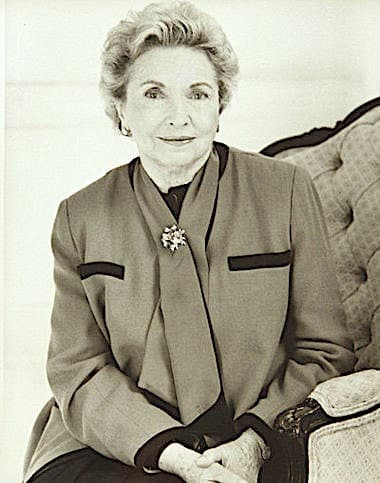
Belva Plain was a prolific American author known for her sweeping historical sagas. Her debut novel, 'Evergreen,' became a bestseller, followed by numerous other successful books like 'After the Fire.' Her work often explored themes of family, ambition, and societal change across generations.
Similar books
- Big Little Lies
Liane Moriarty
4.3 (748k) average on GoodreadsThrillerDelves into the hidden lives and secrets beneath the surface of seemingly perfect suburban families.
- The Diary of a Young Girl
Anne Frank
4.2 (2.7M) average on GoodreadsBiographyDuring the Nazi occupation, a teenage girl's diary, written from a secret annex, shares observations on humanity, hope, and the wait for freedom.
- Twisted 1. Twisted love
Ana Huang
3.7 (1.7M) average on GoodreadsA quiet billionaire with a difficult past finds his guarded heart opening to the woman he must protect, but their growing passion uncovers dangerous secrets and a shared, traumatic history.
- Eat, Pray, Love
Elizabeth Gilbert
3.6 (1.5M) average on GoodreadsLifestyleA heartbroken writer leaves her conventional life for a year-long global search for pleasure in Italy, spiritual devotion in India, and unexpected love and balance in Bali.
- Night
Elie Wiesel
4.3 (970k) average on GoodreadsBiographyIn the darkness of Auschwitz and Buchenwald, a teenage Elie Wiesel faces the extermination of his family, the loss of his faith, and the lasting scars of humanity's deepest cruelty.
- Steve Jobs
Walter Isaacson
4.1 (957k) average on GoodreadsBusinessSteve Jobs was a visionary who fused creativity and technology to revolutionize six industries and shape our digital world.






Enjoyed the summary?
A summary gives you the shape of the book. The book itself has the detail, the examples and the voice.
Find After the Fire on AmazonAs an Amazon Associate, BookBrief earns from qualifying purchases. How we're funded