
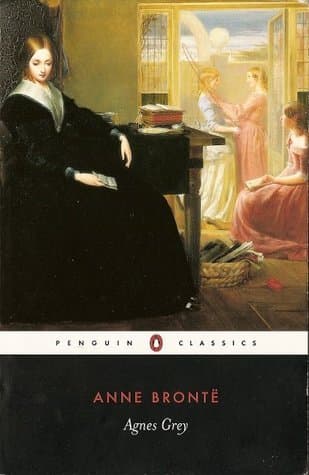
Synopsis
Covers the whole plot, including the ending.
- Difficulty
- Medium
- Pacing
- Slow
- Mood
- Reflective, Resigned, Poignant, Hopeful
- Read it if
- You enjoy classic 19th-century British literature, particularly stories about social class, the struggles of women, and quiet romance.
- Skip it if
- You prefer fast-paced plots, complex narrative structures, or stories with grand, dramatic events.
Agnes Grey Plot Summary
Covers the whole plot, including the ending.
A Sheltered Childhood and Financial Ruin
Agnes Grey, the youngest daughter of a kind but impractical clergyman, remembers her happy childhood at the parsonage, educated by her parents alongside her older sister, Mary. Their simple, loving life changes when their father, trying to secure their future, unwisely invests their small inheritance and loses it all. This financial problem causes the family poverty and despair, with Mr. Grey falling into a deep depression. Wanting to help her family and prove her worth, Agnes decides to seek a position as a governess, despite her mother's initial reluctance and her own inexperience.
The Bloomfield Household: A Rude Awakening
Agnes gets her first job as governess to the children of the wealthy Bloomfield family at Wellwood. Full of hope, she is quickly disappointed. Mrs. Bloomfield is vain and dismissive, and Mr. Bloomfield is stern. Their four children, especially the cruel Tom and manipulative Mary Ann, are spoiled, ill-behaved, and beyond Agnes's control. Her attempts to discipline or educate them are met with defiance from the children and indifference or criticism from their parents, who blame Agnes for their children's problems.
Enduring Humiliation at Wellwood
Life at Wellwood becomes a daily struggle for Agnes. The Bloomfield children torment her, destroy her belongings, and mock her authority. Mrs. Bloomfield often undermines Agnes, siding with her children and making Agnes feel incompetent and isolated. She is denied proper meals, given a cold room, and forbidden from interacting with the family socially. Agnes endures this humiliating treatment for nine months, growing miserable and longing for escape, her spirit nearly broken by the constant abuse and lack of respect. She finds comfort only in letters from home.
Dismissal and a Second Chance
After nearly a year with the Bloomfield household, Agnes is dismissed, supposedly for her inability to control the children. The real reason is the parents' unwillingness to admit their own failures in raising them. Despite the pain of her first experience, Agnes remains determined to help her family. With her mother's encouragement, she applies for a second governess position, this time with the wealthy Murray family at Horton Lodge. She hopes for a better outcome, though her previous experience has made her more cautious.
The Murray Household and Adolescent Charges
At Horton Lodge, Agnes is to educate Matilda and Rosalie Murray, two adolescent girls. Unlike the Bloomfields, the Murrays care more about social status and appearances than genuine education or morality. Matilda is a tomboy, obsessed with horses and hunting, while Rosalie is a beautiful, vain flirt, focused solely on attracting wealthy husbands. Agnes finds that her duties involve supervising their social engagements and trying to teach them, which they largely dislike. She sees the superficiality and moral laxity of their world with growing disapproval.
Rosalie's Flirtations and Mr. Weston's Arrival
Agnes watches Rosalie Murray's pursuit of eligible bachelors, using her beauty and charm to manipulate men without genuine affection. Rosalie's casual attitude towards marriage and her cruel treatment of those she deems beneath her bother Agnes. During this time, a new curate, Mr. Edward Weston, arrives in the parish. Agnes is drawn to his quiet dignity, his genuine piety, and his kindness, especially towards the poor and elderly. Their shared values and mutual respect begin to form a quiet connection, offering Agnes a rare source of comfort and companionship among the Murray's superficiality.
Growing Affection and Rosalie's Engagement
Agnes and Mr. Weston's interactions, though limited, become important to her. She values their conversations and finds him a kindred spirit. However, her position as a governess prevents her from openly expressing her feelings or engaging in a conventional courtship. Meanwhile, Rosalie, after a series of flirtations, becomes engaged to Sir Thomas Ashby, a wealthy but boorish baronet, purely for his status and fortune, despite her lack of affection for him. Agnes feels sorrow for Rosalie's choice, recognizing the emptiness of a marriage based solely on material gain.
Rosalie's Disillusionment and Agnes's Return Home
Rosalie Murray marries Sir Thomas Ashby and soon finds herself unhappy and disillusioned with her grand life. Marriage to a man she doesn't love, combined with the constraints of her new position, proves stifling. She visits Agnes, expressing her regret and warning her against a similar fate. Shortly after, Agnes receives bad news from home: her father's health has worsened. She resigns her post at Horton Lodge and rushes back to the parsonage, worried about her father.
Grief, New Beginnings, and a Chance Encounter
Agnes arrives home just in time to be with her father before he dies. The family grieves, but their shared sorrow strengthens their bond. To support themselves, Agnes and her mother decide to open a small school for girls. Agnes finds purpose in teaching her young pupils with kindness and understanding, a contrast to her previous governess roles. One day, during a walk along the coast, Agnes meets Mr. Weston, who has moved to a new parish nearby. Their reunion is full of quiet joy and renewed hope.
A Developing Courtship and Future Plans
After their chance encounter, Mr. Weston begins to visit Agnes regularly at her mother's school. Their conversations deepen, and a mutual affection becomes clear. He expresses his admiration for her character and her dedication to her family and work. Agnes, having learned from her past experiences and Rosalie's cautionary tale, values genuine love and shared principles above all else. Mr. Weston proposes marriage, and Agnes, in love and confident in his worth, accepts. They plan their future together, looking forward to a life of shared purpose and true companionship.
Marriage and Contentment
Agnes and Mr. Weston marry and settle into a life of quiet contentment and devotion. Agnes describes their marriage as one founded on mutual respect, understanding, and deep affection, a contrast to the superficial unions she witnessed among the wealthy. They have several children, whom they raise with love, discipline, and strong moral values, applying the lessons Agnes learned from her own childhood and her experiences as a governess. Agnes reflects on her journey, recognizing the wisdom gained through hardship and affirming the power of virtue, patience, and true love.
Agnes Grey Characters
Agnes Grey
Protagonist
A gentle, virtuous, and resilient governess who seeks independence and finds true love.
Agnes is a sensitive, intelligent, and deeply moral young woman from a respectable but impoverished family. Initially naive and idealistic, she embarks on a governess career out of a desire for independence and to help her family. Despite suffering significant emotional abuse and isolation, she maintains her integrity, compassion, and strong sense of duty. She is observant and reflective, learning valuable lessons about human nature and society through her trials. Her quiet strength and unwavering principles guide her through adversity.
Relationships: Mary Grey (Devoted older sister); Mr. Grey (Beloved, impractical father); Mrs. Grey (Supportive, wise mother); Mr. Edward Weston (Future husband, a kind and pious curate); Rosalie Murray (Former pupil, a superficial acquaintance and cautionary tale)
Mr. Edward Weston
Love Interest
A kind, principled, and devout curate who offers Agnes respect and genuine affection.
Mr. Weston is introduced as the new curate in the parish where Agnes serves the Murray family. He is portrayed as a man of deep faith, quiet dignity, and genuine kindness, particularly towards the poor and the elderly. He is intelligent and thoughtful, possessing a moral compass that aligns perfectly with Agnes's own. Unlike the superficial men of the Murray's social circle, Mr. Weston values character and intellect over wealth or status, making him a rare and comforting presence in Agnes's isolated life.
Relationships: Agnes Grey (Love interest and later husband)
Rosalie Murray (later Lady Ashby)
Supporting/Antagonist
A beautiful, vain, and manipulative former pupil who serves as a foil to Agnes.
Rosalie is the eldest Murray daughter, a strikingly beautiful and charming young woman whose sole ambition is to marry a wealthy man, regardless of affection. She is superficial, self-centered, and adept at flirtation and social manipulation. While not overtly cruel like the Bloomfield children, her vanity and lack of genuine feeling cause her to treat others, including Agnes, with condescension. Her eventual disillusionment with her marriage to Sir Thomas Ashby serves as a cautionary tale.
Relationships: Agnes Grey (Former governess, a recipient of her confidences and a moral contrast); Matilda Murray (Sister); Sir Thomas Ashby (Husband, a wealthy but boorish man)
Mrs. Grey
Supporting
Agnes's wise, supportive, and practical mother.
Mrs. Grey is a loving and intelligent woman who, despite her initial reluctance about Agnes becoming a governess, provides unwavering emotional support and practical advice to her daughters. She is a source of comfort and wisdom for Agnes throughout her trials, offering a safe haven and encouraging her self-reliance. After her husband's death, she demonstrates her resilience by helping Agnes establish a school.
Relationships: Agnes Grey (Daughter, a deep and loving bond); Mr. Grey (Husband); Mary Grey (Daughter)
Mr. Grey
Supporting
Agnes's benevolent but impractical father whose financial ruin sets the plot in motion.
Mr. Grey is a kind and scholarly clergyman who, while well-intentioned, lacks practical financial acumen. His ill-advised investment plunges his family into poverty and triggers Agnes's decision to become a governess. He is depicted as a loving father, but his subsequent depression highlights the devastating impact of financial loss on a family's well-being. His death further shapes Agnes's journey and strengthens her resolve.
Relationships: Agnes Grey (Daughter, a loving bond); Mrs. Grey (Wife); Mary Grey (Daughter)
Mary Grey
Supporting
Agnes's older sister, a devoted and artistic companion.
Mary is Agnes's older sister and closest confidante during their sheltered childhood. She shares Agnes's gentle nature and artistic inclinations. While her role is less prominent in the narrative once Agnes leaves home, her presence in their early life and her eventual marriage to a respectable clergyman, Mr. Richardson, provides a contrast to Agnes's initial struggles and Rosalie's mercenary marriage.
Relationships: Agnes Grey (Sister, a loving and close bond); Mr. Grey (Father); Mrs. Grey (Mother); Mr. Richardson (Husband)
The Bloomfield Family (Mr. & Mrs. Bloomfield, Tom, Mary Ann, Fanny, Harriet)
Antagonists
Agnes's first employers, representing the cruel and neglectful upper class.
The Bloomfields are a wealthy but morally bankrupt family. Mrs. Bloomfield is vain and dismissive, while Mr. Bloomfield is stern and unapproachable. Their children—Tom, Mary Ann, Fanny, and Harriet—are utterly spoiled, ill-behaved, and cruel. They torment Agnes relentlessly, and their parents actively undermine her authority, blaming her for their children's bad behavior. They embody the worst aspects of the governess system and the corrupting influence of unchecked privilege.
Relationships: Agnes Grey (Employer/Governess, a relationship of abuse and exploitation)
The Murray Family (Mr. & Mrs. Murray, Rosalie, Matilda)
Supporting/Antagonists
Agnes's second employers, representing superficiality and social climbing.
The Murrays are a wealthy, fashionable family primarily concerned with social status and appearances. Mr. and Mrs. Murray are indulgent and neglectful parents, focused on their daughters making advantageous marriages. Rosalie and Matilda, the daughters, are older than the Bloomfield children and present different challenges for Agnes. While less overtly cruel, their vanity, idleness, and focus on flirtation and social climbing create a morally superficial environment that deeply troubles Agnes.
Relationships: Agnes Grey (Employer/Governess, a relationship of observation and moral disapproval)
Agnes Grey Themes
The Plight of the Governess
The novel portrays the isolating, humiliating, and insecure position of a governess in 19th-century England. Agnes's experiences with the Bloomfields and Murrays show the lack of respect, emotional abuse, social ostracism, and financial insecurity in the role. She is neither a servant nor an equal, existing in a lonely space. Her struggle for dignity and survival shows the exploitation faced by educated but impoverished women.
“A governess, if she be truly a lady, is a pitiable being.”
Moral Integrity vs. Social Status
Agnes Grey promotes moral integrity, genuine kindness, and inner worth over superficial social status and material wealth. Agnes consistently holds to her principles despite pressure. The novel contrasts her virtuous character with the moral corruption and vanity of the wealthy families she serves, particularly Rosalie Murray, whose pursuit of a wealthy husband leads to unhappiness. Mr. Weston, with his genuine piety and disregard for worldly gain, represents moral worth.
“I was not made for a governess, but I must be one.”
The Corrupting Influence of Privilege
The novel critiques the effects of unchecked wealth and privilege on character and morality. The Bloomfield children are spoiled and cruel, their parents too indulgent or indifferent to discipline them. The Murray daughters, while more refined, are equally morally flawed, valuing superficial accomplishments and advantageous marriages above genuine affection or education. Their behavior shows how a lack of responsibility and an abundance of entitlement can lead to idleness, cruelty, and moral decay.
“The children of rich people are often a torment to their parents, and a trial to all who have to do with them.”
Patience and Perseverance
Agnes's journey shows the power of patience and perseverance in the face of adversity. Despite enduring humiliation, isolation, and injustice, she never completely loses hope or abandons her moral compass. She quietly endures, learns from her experiences, and continues to strive for a better life. Her eventual happiness with Mr. Weston is presented as a reward for her steadfastness and her refusal to compromise her values, showing that virtue can triumph over hardship.
“I have learned to be patient, for I know that if I wait long enough, I shall have my reward.”
The Search for True Love and Companionship
At its heart, Agnes Grey is a search for genuine connection and a fulfilling partnership. Agnes sees the superficial relationships around her, particularly Rosalie Murray's loveless marriage. Her own quiet affection for Mr. Weston is built on shared values, mutual respect, and companionship, rather than wealth or social status. Their eventual union represents the novel's ideal of true love—a partnership founded on shared principles and deep understanding, offering solace and happiness.
“I had but one friend, and he was not mine. He was the friend of all.”
Plot Devices & Literary Techniques
First-Person Narration
The story is told entirely from Agnes Grey's perspective.
Agnes Grey's first-person narration provides intimate access to her thoughts, feelings, and moral judgments. This perspective allows the reader to deeply empathize with her isolation and suffering as a governess, while also witnessing her quiet resilience and the development of her character. It emphasizes the subjective experience of a young woman in a vulnerable position, allowing Anne Brontë to subtly critique societal norms and the treatment of women through Agnes's internal reflections.
Foil Characters
Characters like Rosalie Murray and the Bloomfield children highlight Agnes's virtues through contrast.
Rosalie Murray acts as a significant foil to Agnes. Rosalie's pursuit of wealth and status, her vanity, and her ultimate unhappiness in a loveless marriage starkly contrast with Agnes's integrity, humility, and eventual joy in a marriage based on true affection. The Bloomfield children and their parents also serve as foils, their cruelty and moral decay emphasizing Agnes's inherent goodness, patience, and unwavering principles, highlighting the corrupting influence of unchecked privilege.
Symbolism of Nature
Natural settings provide solace and reflect Agnes's emotional state.
Nature often serves as a refuge and a mirror for Agnes's inner world. Her happy childhood is associated with the natural beauty of the parsonage garden. During her periods of distress, walks in nature offer her a temporary escape and a sense of peace. The recurring image of birds, particularly caged or vulnerable ones, can symbolize Agnes's own constrained existence and her longing for freedom, while the open sea eventually represents hope and newfound liberty after her father's death and her meeting with Mr. Weston.
Epistolary Elements
Letters serve as a connection to Agnes's family and a source of emotional support.
Although not an epistolary novel, letters play a crucial role in Agnes's emotional well-being. During her isolated time with the Bloomfields and Murrays, letters from her mother and sister are her only true connection to love and support. They provide her with encouragement, news from home, and a reminder of her own identity and worth, helping her to endure the harshness of her situations and preventing her from succumbing entirely to despair.
Agnes Grey Quotes
“All true, whole-hearted love is a blessed thing, pure and purifying.”
“When we are wearied with the world, and would fly to solitude, it is a well-meaning and excusable error to imagine that we shall find in the bosom of nature that peace which we have not found in the bosom of society.”
“To bear, to forbear, to watch, to wait, to shield, to soothe, to pray for, to love, and to hope for him: that is what I mean by loving.”
“I will not say that I was happy, but I was at peace.”
“My greatest treasure was my own conscience, and the approval of God.”
“The human heart is like a millstone: if you put wheat under it, it grinds the wheat into flour; if you put stones, it grinds them into powder.”
“It is better to be a governess than to be a burden.”
“There are some people who seem to have a peculiar facility for getting into scrapes.”
“No one can be a good governess without a good temper, and a great deal of patience.”
“The greatest blessing of my life has been my own integrity, and the consciousness of having acted always from pure motives.”
“I had a soul to save, and to nourish, and a God to glorify.”
“But the truth is, I was not at all romantic.”
“I had learned to be content with a little, and to be thankful for a great deal.”
“A governess is a mere machine, to perform a certain quantity of work.”
Quiz
10 questions on the plot and the characters. Each answer comes with a short explanation.
Question 1
What is the primary reason Agnes Grey decides to seek employment as a governess?
- To escape a forced marriage.
- To gain independence and freedom from her family.
- To help her family financially after her father loses their savings.
- To pursue a passion for teaching children.
Show answer
C. To help her family financially after her father loses their savings. Agnes decides to become a governess after her father loses the family savings, making her feel helpless and frustrated, and wanting to contribute.
Question 2
Under what pseudonym did Anne Brontë first publish 'Agnes Grey'?
- Currer Bell
- Ellis Bell
- Acton Bell
- Marian Evans
Show answer
C. Acton Bell Anne Brontë published 'Agnes Grey' under the pseudonym Acton Bell, while her sisters used Currer Bell and Ellis Bell.
Question 3
What is the initial emotional state of Agnes upon arriving at the Bloomfield mansion?
- Fearful and apprehensive.
- Ecstatic and full of confidence and purpose.
- Indifferent and pragmatic.
- Resentful of her new position.
Show answer
B. Ecstatic and full of confidence and purpose. The text states Agnes was 'Ecstatic at the thought that she has finally gained control and freedom over her own life, Agnes arrives at the Bloomfield mansion armed with confidence and purpose.'
Question 4
How does the treatment Agnes receives at the Bloomfield mansion affect her?
- It strengthens her resolve and makes her more resilient.
- It makes her eager to seek revenge on the family.
- It slowly strips her of dignity and belief in humanity.
- It prompts her to immediately resign and return home.
Show answer
C. It slowly strips her of dignity and belief in humanity. The cruelty of the Bloomfield family 'slowly but surely strips the heroine of all dignity and belief in humanity.'
Question 5
According to the provided text, what did Irish writer George Moore claim about 'Agnes Grey'?
- It was inferior to 'Wuthering Heights'.
- It possessed all the qualities and style of a Jane Austen title.
- It was the first truly feminist novel.
- It accurately depicted the hardships of Irish governesses.
Show answer
B. It possessed all the qualities and style of a Jane Austen title. George Moore claimed 'Agnes Grey' to be 'possessed of all the qualities and style of a Jane Austen title.'
Question 6
What is the primary thematic concern of 'Agnes Grey' as described in the passage?
- The pursuit of wealth and social status.
- Female bravery in the face of isolation and subjugation.
- The challenges of inter-class romance.
- The importance of education for all social classes.
Show answer
B. Female bravery in the face of isolation and subjugation. The passage describes 'Agnes Grey' as 'A tale of female bravery in the face of isolation and subjugation,' highlighting a key theme.
Question 7
Which of Anne Brontë's sisters published 'Jane Eyre' shortly after 'Agnes Grey'?
- Emily Brontë
- Charlotte Brontë
- Maria Brontë
- Elizabeth Brontë
Show answer
B. Charlotte Brontë The text states, 'Charlotte and Emily followed shortly after with Jane Eyre and Wuthering Heights,' indicating Charlotte wrote 'Jane Eyre'.
Question 8
What was the cause of Anne Brontë's death at the age of 29?
- Typhoid fever
- Pneumonia
- Pulmonary tuberculosis
- Childbirth complications
Show answer
C. Pulmonary tuberculosis The text explicitly states that Anne passed away from 'what is now known to be pulmonary tuberculosis at the age of just 29'.
Question 9
How does the narrative style of 'Agnes Grey' contribute to the reader's experience, according to the description?
- Its complex and ornate style challenges the reader.
- Its simple prosaic style propels the narrative forward gently, leaving the listener wanting more.
- Its abrupt and fragmented style reflects Agnes's inner turmoil.
- Its highly didactic style instructs the reader on moral conduct.
Show answer
B. Its simple prosaic style propels the narrative forward gently, leaving the listener wanting more. The text describes the style as 'simple prosaic style propels the narrative forward in a gentle yet rhythmic manner which continuously leaves the listener wanting to know more.'
Question 10
In what way is 'The Tenant of Wildfell Hall' similar to 'Agnes Grey', according to the passage?
- Both feature governesses as central characters.
- Both are considered feminist in nature.
- Both were published under the pseudonym Acton Bell.
- Both explore the lives of the upper-class gentry.
Show answer
B. Both are considered feminist in nature. The passage states, 'As feminist in nature as Agnes Grey, Anne's brave voice resonates and permeates during one of the most prejudiced and patriarchal times of English history,' referring to 'The Tenant of Wildfell Hall'.
Agnes Grey FAQ
What prompts Agnes Grey to seek employment as a governess?
Agnes Grey decides to become a governess after her father, Richard Grey, loses the family's savings on risky investments, plunging him into depression and creating financial hardship for the family. She feels a desire to contribute and gain independence, initially viewing the role as a step towards self-sufficiency.
Describe Agnes's initial experiences working for the Bloomfield family.
Agnes's time with the Bloomfield family is marked by extreme cruelty and disrespect. The children, particularly Tom and Mary Ann, are ill-behaved and undisciplined, while their parents show little support for Agnes, often siding with the children or criticizing her methods, which deeply erodes her confidence.
How does Agnes's second governess position with the Murray family differ from her first?
While the Murray children, Rosalie and Matilda, are older and initially seem more refined, Agnes still faces significant challenges. Rosalie is manipulative and flirtatious, using Agnes to facilitate her romantic pursuits, and the Murrays, like the Bloomfields, treat Agnes as an inferior, often ignoring or ridiculing her.
Who is Mr. Weston and what is his significance to Agnes?
Mr. Weston is a humble curate who shows genuine kindness and respect towards Agnes, contrasting sharply with the other characters she encounters. He appreciates her quiet dignity and shares her moral values, eventually becoming her love interest and future husband.
What is the ultimate fate of Rosalie Murray, and how does it reflect on her character?
Rosalie Murray marries Sir Thomas Ashby for his wealth and status, but her marriage quickly becomes unhappy and loveless. She later confesses her regret to Agnes, highlighting the emptiness of her superficial pursuits and the consequences of prioritizing social standing over genuine affection.
How does Anne Brontë use the character of Mrs. Bloomfield to critique Victorian parenting?
Mrs. Bloomfield exemplifies the detrimental effects of permissive parenting, allowing her children, Tom and Mary Ann, to run wild without discipline. Her inability or unwillingness to control them directly contributes to Agnes's suffering and the children's eventual spoiled and unpleasant adult characters, criticizing a lack of parental responsibility.
What subtle hints foreshadow the unhappiness of Rosalie Murray's marriage?
Even before her marriage, Rosalie's constant pursuit of wealthy suitors and her disregard for genuine affection, coupled with her manipulative nature, suggest that her union with Sir Thomas Ashby would be based on superficiality rather than love. Her disingenuous flirtations and self-serving ambition are clear indicators.
How does Agnes's observation of the birds in their nests reflect her own situation and resilience?
Agnes finds solace and a sense of connection to nature through observing birds, particularly their nesting habits and their struggle for survival. This mirrors her own isolated existence and her quiet determination to endure hardship and eventually build a secure 'nest' for herself, despite the harshness of her circumstances.
In what ways does Agnes's quiet nature serve as both a strength and a weakness during her employment?
Agnes's quietness allows her to observe keenly and maintain her dignity amidst abuse, serving as a source of internal strength. However, it also makes her vulnerable to exploitation as she often struggles to assert herself or openly challenge the mistreatment from the children and their parents, prolonging her suffering.
Analyze the psychological impact of isolation on Agnes throughout her governess experiences.
The constant isolation Agnes experiences, particularly at the Bloomfield residence, leads to deep loneliness and a profound sense of helplessness. This emotional deprivation erodes her self-esteem and belief in humanity, forcing her to rely heavily on internal resources and her faith to cope with the lack of companionship and support.
How does Agnes's internal monologue reveal her growing maturity and moral fortitude?
Agnes's internal monologues consistently demonstrate her strong moral compass, her capacity for self-reflection, and her unwavering faith, even in the face of profound injustice. As the narrative progresses, her thoughts show a shift from initial naivete and despair to a more resilient and principled understanding of human nature and her own worth.
Discuss the significance of Agnes's decision to leave the Murray family, despite the potential financial precarity.
Agnes's decision to leave the Murrays, even without a secure alternative, signifies a crucial moment of self-respect and agency. She can no longer tolerate the moral compromises and the disrespect, prioritizing her integrity and mental well-being over the perceived security of her position, demonstrating her newfound courage.
Is Agnes Grey a purely autobiographical novel, or does it transcend Anne Brontë's personal experiences?
While Agnes Grey draws heavily from Anne Brontë's personal experiences as a governess, particularly the abuses she witnessed and endured, it transcends mere autobiography through its literary craftsmanship, detailed character development, and broader social commentary on the plight of governesses and Victorian class structures.
How does the novel challenge the romanticized notions of governess life often presented in other Victorian literature?
Agnes Grey starkly contrasts with more romanticized portrayals of governess life by unflinchingly depicting the harsh realities of isolation, emotional abuse, and social degradation. It avoids idealizing the role, instead exposing the vulnerability and powerlessness inherent in the position, offering a more realistic and critical perspective.
What is the broader social commentary Anne Brontë makes through the interactions between Agnes and her employers?
Anne Brontë critiques the rigid class system and the moral decay of the Victorian upper classes, highlighting their hypocrisy, cruelty, and lack of empathy towards those in subordinate positions. The novel exposes how wealth and status did not equate to virtue, and often facilitated the abuse of power.
Compare and contrast the 'feminist' aspects of Agnes Grey with those found in her sister Charlotte's 'Jane Eyre'.
Both novels advocate for female independence and dignity, but Agnes Grey's feminism is perhaps more understated, focusing on the quiet resilience and moral fortitude of a woman enduring systemic abuse, rather than Jane Eyre's more overt declarations of equality and passionate self-assertion. Agnes's fight is often internal and expressed through quiet endurance and moral consistency.
Does the relatively happy ending of Agnes Grey undermine its critique of Victorian society, or does it offer a message of hope?
The happy ending, with Agnes finding love and establishing her own school, can be seen as a message of hope, suggesting that perseverance and moral integrity can lead to contentment, even within a harsh society. However, it doesn't entirely undermine the critique, as it highlights that such happiness is hard-won and not guaranteed for all governesses, serving as an exceptional outcome.
About the author
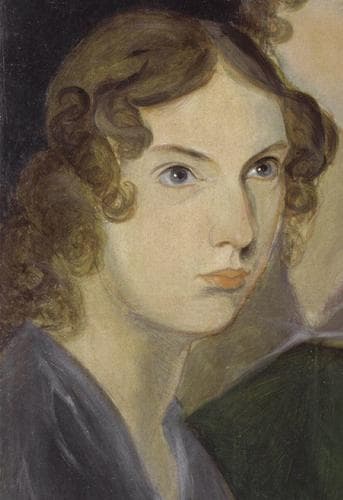
Anne Brontë was an English novelist and poet, and the youngest member of the Brontë literary family.
Similar books
- Jane Eyre
Charlotte Brontë
4.1 (1.6M) average on GoodreadsHistorical FictionFeatures a governess protagonist facing hardship and finding love, with a strong focus on moral integrity.
- Pride and Prejudice
Jane Austen
4.3 (3M) average on GoodreadsHistorical FictionExplores social class, marriage, and personal growth through a female protagonist in 19th-century England.
- The Tenant of Wildfell Hall
Anne Brontë
4.0 (90k) average on GoodreadsHistorical FictionAnother novel by Anne Brontë exploring feminist themes and the struggles of women in Victorian society.
- Vanity Fair
William Makepeace Thackeray
3.8 (118k) average on GoodreadsHistorical FictionThackeray's 'Vanity Fair' (published the same year) also features a governess, Becky Sharp, but offers a cynical, satirical, and panoramic view of Victorian society, with a protagonist who actively manipulates the system for her own gain. In contrast, 'Agnes Grey' is a more focused, earnest, and morally didactic narrative, presenting Agnes as a virtuous figure who endures rather than exploits. 'Vanity Fair' critiques society through sharp wit and moral ambiguity, while 'Agnes Grey' does so through the empathetic portrayal of a good person suffering under an unjust system. Becky's ambition stands in stark opposition to Agnes's quiet perseverance and desire for a simple, honest life.
- To Kill a Mockingbird
Harper Lee
4.3 (4.5M) average on GoodreadsHistorical FictionIn the 1930s Jim Crow South, Harper Lee writes about racial injustice, moral growth, and the quiet courage of a lawyer father, Atticus Finch, as seen through his young daughter's eyes.
- The Great Gatsby
F. Scott Fitzgerald
3.9 (3.8M) average on GoodreadsHistorical FictionIn the opulent Roaring Twenties, a mysterious millionaire's lavish parties hide his desperate, tragic pursuit of a lost love, exposing the emptiness within the American Dream.




Enjoyed the summary?
A summary gives you the shape of the book. The book itself has the detail, the examples and the voice.
Find Agnes Grey on AmazonAs an Amazon Associate, BookBrief earns from qualifying purchases. How we're funded