

Synopsis
Covers the whole plot, including the ending.
- Difficulty
- Medium
- Pacing
- Moderate
- Mood
- Thought-provoking, Reflective, Hopeful, Intense
- Read it if
- You appreciate deep character studies, explorations of faith and intellect, and a nuanced look at emotional healing within a specific cultural context.
- Skip it if
- You prefer fast-paced plots with high external conflict or are not interested in philosophical and psychological introspection.
The Promise Plot Summary
Covers the whole plot, including the ending.
The Seminary and the Letter
Reuven Malter, a rabbinical student at the Samson Raphael Hirsch Seminary, is immersed in intense Talmudic study. He is a gifted scholar, but his approach to texts often differs from his teachers' traditional methods, especially Professor Appleman. Reuven receives a letter from Danny Saunders, who is pursuing a doctorate in psychology at Columbia University and has left his Hasidic upbringing. Danny's letter expresses concern for a troubled young boy, Michael, whom he met through his work, and asks Reuven to help him. This request starts Reuven's involvement with Michael and sets the stage for a new phase in his life, balancing his studies with a growing sense of responsibility.
Meeting Michael
Reuven first meets Michael at a public library, as Danny arranged. Michael is a brilliant but disturbed boy, prone to rages and withdrawal. He is a mathematical prodigy but struggles with social interaction and emotional expression, often communicating through cryptic number sequences. Reuven immediately senses Michael's pain and the complexity of his inner world. He observes Michael's isolation and how his genius seems to trap him. This first meeting shows the challenge Reuven faces in connecting with Michael, who seems to live in his own world, protected by his intellect and trauma.
The Nature of Michael's Trauma
Through talks with Danny and Michael's aunt, Mrs. Gordon, Reuven learns about Michael's tragic early life. Michael's parents were Holocaust survivors who, after suffering horrors, could not give him the emotional stability and love he needed. His father, a brilliant but broken man, tried to teach Michael advanced mathematics as therapy, creating an intense environment. Michael saw his father's mental decline and suicide, which traumatized him and left him with guilt and anger. This helps Reuven understand Michael's withdrawn behavior, mathematical obsessions, and violent outbursts, realizing his genius is linked to his psychological wounds.
Reuven's Early Attempts to Connect
Reuven, using his academic background and gentle nature, tries to connect with Michael through shared interests, especially mathematics and Gemara. However, Michael's responses are often erratic, marked by aggressive displays of brilliance or complete withdrawal. Reuven finds it hard to get through Michael's defenses, as the boy often speaks in riddles or retreats into his numerical world. These early attempts mostly fail to break Michael's emotional barriers, showing the limits of a purely intellectual approach to a child with deep emotional trauma. Reuven begins to understand that a different strategy is needed to help Michael.
The Role of Professor Appleman
Professor Appleman, Reuven's demanding Talmud teacher, learns of Reuven's involvement with Michael. Appleman, known for his sharp intellect and harsh critiques, initially sees Michael's case academically, questioning Reuven's efforts. However, as Reuven shares more about Michael's mathematical mind and suffering, Appleman shows respect for the boy's genius and empathy for his situation. Appleman's involvement, though indirect, pushes Reuven to explain his understanding of Michael more clearly, refining his approach and deepening his commitment to helping the boy, even as he handles his complex relationship with his mentor.
Danny's Guidance and the Limits of Intellect
Danny Saunders, now a trained psychologist, gives Reuven valuable advice on how to approach Michael. Danny emphasizes that Michael's issues are psychological, from trauma and a distorted understanding of love and guilt. He advises Reuven against trying to 'fix' Michael with logic or study alone, stressing the need for patience, acceptance, and a safe, non-judgmental space. Danny's insights, from his training and experience, help Reuven change his view. Reuven begins to understand that emotional healing, not just intellectual stimulation, is most important for Michael's recovery, marking a turning point in his approach.
A Breakthrough in Communication
Through persistent, gentle efforts and Danny's advice, Reuven slowly breaks down Michael's defenses. He spends hours with Michael, not always discussing academics, but simply being present, listening, and observing. A breakthrough occurs when Reuven, instead of trying to talk to Michael directly, starts responding to Michael's numerical 'messages' with simple, empathetic words and actions. He creates a sense of safety and predictability Michael needs. This shift from intellectual to emotional connection allows Michael to tentatively lower his guard, showing glimpses of the vulnerable boy beneath the brilliant, troubled exterior. This moment marks the start of genuine trust between them.
The Influence of Reuven's Father
Reuven's father, David Malter, a respected scholar and compassionate man, plays a role in Reuven's journey. He listens patiently to Reuven's frustrations and successes with Michael, offering not just academic advice but insights into human suffering and compassion. David Malter encourages Reuven to see beyond Michael's genius and outbursts, to recognize the hurt child within. His father's support and emphasis on the ethical and humanistic sides of scholarship strengthen Reuven's commitment to Michael. Mr. Malter's wisdom helps Reuven understand that intellectual brilliance must be balanced with empathy and responsibility towards others, especially those who suffer.
Michael's Gradual Healing
Over time, with Reuven's consistent presence and patient understanding, Michael begins to heal. His violent outbursts become less frequent, and his periods of withdrawal shorten. He starts to have more conventional conversations, expressing his thoughts and feelings, though still haltingly. Reuven introduces him to less abstract learning, like history and literature, helping him connect with human experience beyond the logic of mathematics. Michael even develops a sense of humor and curiosity about the world outside his mind. This slow process shows the power of human connection and love in mending a broken spirit, proving that healing takes time and dedication.
The Question of Michael's Future
As Michael improves, questions about his future arise. While his emotional state is more stable, his social skills still lag, and his intense focus on mathematics, though tempered, remains. Danny and Reuven discuss the challenges of helping Michael integrate into a normal life, beyond their protective bubble. They recognize that while Michael's genius is clear, his emotional and social development needs continued care. The novel explores the balance between fostering his unique gifts and ensuring he can function as a well-adjusted individual, highlighting the ongoing commitment needed for his full recovery and independent life.
Reuven's Own Growth and Self-Discovery
Through his work with Michael, Reuven grows personally. He learns the importance of patience, empathy, and the limits of purely intellectual approaches to human problems. His experiences broaden his understanding of human suffering and the complexities of the mind. Reuven realizes his calling goes beyond traditional rabbinical scholarship; he feels drawn to a more compassionate, humanistic approach to his faith and his role in the world. This journey helps him reconcile his unconventional scholarly inclinations with a newfound purpose, moving him closer to the internal peace and clarity he sought, solidifying his identity as both a scholar and a helper.
Michael's Return to Society
Towards the end, Michael, significantly changed, is able to leave his aunt's home and pursue further education. While he will always carry the scars of his past, he now has the emotional tools to navigate the world with greater confidence and self-awareness. He enrolls in a university, presumably to continue his studies in mathematics, but with a more balanced perspective. His journey from an isolated, rage-filled prodigy to a young man capable of connection and growth shows the dedication of Reuven and Danny. Michael’s future, while still uncertain, holds the possibility of a life with greater integration and emotional well-being, a victory for all involved.
The Promise Characters
Reuven Malter
Protagonist
An unconventional rabbinical student who becomes a compassionate mentor.
Reuven is a brilliant and sensitive young man, deeply devoted to his studies and his faith, but with an intellectual curiosity that often pushes the boundaries of traditional thought. He possesses a gentle nature and a profound capacity for empathy, which makes him uniquely suited to help Michael. Reuven is driven by a desire for understanding, both of religious texts and of the human condition, seeking to reconcile the intellectual with the emotional. He is a keen observer and a thoughtful individual, often reflecting on the deeper meanings of his experiences.
Relationships: Danny Saunders (Lifelong friend and intellectual confidant); David Malter (Loving and wise father, mentor); Michael (Mentee, subject of his compassionate efforts); Professor Appleman (Demanding but respected teacher)
Michael
Central Figure/Mentee
A mathematical prodigy imprisoned by his genius, rage, and trauma.
Michael is a young boy of extraordinary mathematical genius, but he is deeply traumatized by his parents' Holocaust experiences and his father's subsequent mental decline and suicide. He communicates largely through numbers, prone to violent outbursts and periods of profound withdrawal. Michael struggles with emotional expression, guilt, and a distorted perception of love, viewing it as something that inevitably leads to loss and pain. His intellect, while remarkable, serves as both a refuge and a prison, isolating him from genuine human connection.
Relationships: Reuven Malter (Caretaker, mentor, friend); Danny Saunders (Psychologist, advocate, friend); Mrs. Gordon (Caring aunt, guardian)
Danny Saunders
Supporting Character
Reuven's old friend, now a psychology student, offering crucial insights.
Danny is Reuven's childhood friend, a brilliant mind who, in 'The Chosen,' famously broke from his Hasidic dynasty to pursue a career in psychology. In 'The Promise,' he is a doctoral student at Columbia, applying his keen intellect and deep understanding of human suffering to his professional work. Danny is empathetic, insightful, and provides crucial psychological guidance to Reuven regarding Michael's condition. He represents a bridge between traditional religious understanding and modern psychological thought, embodying a humanistic approach to healing.
Relationships: Reuven Malter (Lifelong friend and intellectual confidant); Michael (Patient, subject of his professional concern)
David Malter
Supporting Character
Reuven's wise and compassionate father, a respected scholar.
David Malter is Reuven's father, a gentle, scholarly, and deeply spiritual man. He is a respected teacher and intellectual, known for his broad understanding of Jewish texts and his profound humanism. Mr. Malter serves as a moral compass and a source of unwavering support and wisdom for Reuven. He encourages Reuven's independent thought while grounding him in the ethical responsibilities of his faith. His advice is always infused with compassion and a deep understanding of human nature, providing a crucial counterbalance to the more rigid academic world.
Relationships: Reuven Malter (Loving and wise father, mentor)
Professor Appleman
Supporting Character
Reuven's stern but brilliant Talmud professor.
Professor Appleman is Reuven's demanding and highly respected Talmud teacher at the Samson Raphael Hirsch Seminary. He is known for his rigorous intellectual standards, his sharp critiques, and his sometimes intimidating presence. While initially skeptical of Reuven's unconventional approaches, Appleman is ultimately a fair and insightful scholar who values genuine intellectual inquiry. He represents the academic rigor and traditional intellectual challenges Reuven faces, but also subtly demonstrates an underlying humanity and appreciation for profound thought, even if expressed unconventionally.
Relationships: Reuven Malter (Teacher-student, intellectual sparring partner)
Mrs. Gordon
Supporting Character
Michael's kind and overwhelmed aunt.
Mrs. Gordon is Michael's aunt and guardian, a kind and well-meaning woman who is deeply concerned for Michael's well-being but often overwhelmed by his complex needs and difficult behavior. She provides a stable home environment for Michael and works closely with Danny and Reuven to ensure he receives the help he needs. Her love for Michael is evident, though she often feels helpless in the face of his profound trauma and intellectual brilliance.
Relationships: Michael (Aunt and guardian); Reuven Malter (Collaborator in Michael's care); Danny Saunders (Collaborator in Michael's care)
The Promise Themes
The Nature of Healing and Compassion
The novel explores healing, showing that intellect alone cannot fix deep emotional wounds. Reuven's time with Michael highlights the need for love, patience, and empathy over logic or academic methods. Danny's psychological insights support this, guiding Reuven to understand Michael needs emotional connection and acceptance, not just intellectual stimulation. Scenes where Reuven simply sits with Michael, or responds to his numerical 'messages' with quiet understanding, show that true healing often comes through quiet, persistent human presence and compassion, rather than grand gestures or intellectual solutions.
“A human being is not a logic machine. A human being is a heart and a soul.”
The Conflict Between Intellect and Emotion
A main theme is the tension between intellect and emotion. Michael's genius, though extraordinary, becomes a prison, a defense against his trauma. His inability to process emotions causes rage and withdrawal. Reuven, initially using intellectual approaches, learns that emotional understanding is key. Reuven himself, a brilliant scholar, must learn to combine his intellectual pursuits with a deeper emotional and humanistic understanding. The novel suggests that a fulfilled life requires a balance between mind and heart, with compassion often connecting them.
“Sometimes a mind can be too brilliant, too sharp, and it cuts itself off from the heart.”
The Promise of Redemption and Growth
The title, 'The Promise,' speaks to the potential for redemption for both Michael and Reuven. Michael, through Reuven's care and Danny's guidance, slowly reclaims his life from trauma, suggesting a future of integration and emotional well-being. Reuven, in turn, finds his own promise by discovering a deeper purpose beyond traditional scholarship, realizing his ability to heal and connect. The story offers hope that even deeply wounded spirits can find recovery, and individuals can grow beyond their initial self-perceptions to embrace new roles and understandings.
“There are people who can open the gates of your soul, Reuven. And there are people who can help you close them.”
The Legacy of Trauma and the Holocaust
The lasting effects of the Holocaust on later generations are a significant theme. Michael's parents' experiences as survivors directly lead to his severe trauma and his father's mental collapse and suicide. This theme shows how historical events can cast a long shadow, shaping the lives of those who were not direct victims but inherit the pain and psychological scars. The novel implicitly calls for understanding and healing for these 'second-generation' survivors, showing the profound ways historical trauma affects individuals and families, making Michael's healing a form of intergenerational redemption.
“He was a child of the ashes, Reuven. He carried the fire inside him.”
Plot Devices & Literary Techniques
Parallel Journeys
The intertwined personal and intellectual growth of Reuven and Michael.
The novel uses parallel journeys to highlight the interconnectedness of Reuven's and Michael's development. As Reuven endeavors to heal Michael, he simultaneously undergoes his own profound self-discovery and re-evaluation of his scholarly path. Michael's slow emergence from his shell mirrors Reuven's growing confidence in his compassionate approach to life and learning. This device emphasizes that the act of helping others often leads to one's own growth and that understanding another's pain can illuminate one's own purpose.
Symbolism of Numbers and Language
Numbers as both a prison and a means of communication, contrasting with verbal language.
Numbers serve as a powerful symbol in the novel. For Michael, they are both a refuge and a cage, a language through which he expresses his genius and his trauma, yet also a barrier to conventional human connection. Reuven's challenge is to transcend this numerical world and connect with Michael through empathy and verbal communication, ultimately helping Michael to find a voice beyond pure mathematics. This device illustrates the limitations of pure intellect when divorced from emotional expression and the importance of finding a common, human language for connection.
The Mentor-Mentee Relationship
The transformative dynamic between Reuven and Michael, and Reuven and his father/Danny.
The mentor-mentee relationship is a core plot device, operating on multiple levels. Reuven acts as a mentor to Michael, guiding him towards emotional healing. Simultaneously, Reuven himself is mentored by his wise father, David Malter, and by his insightful friend, Danny Saunders, who provides crucial psychological perspectives. These interconnected mentorships demonstrate how knowledge, wisdom, and compassion are transmitted and how individuals grow through guidance and support, emphasizing the cyclical nature of learning and teaching.
The Promise Quotes
“There are some things you cannot change, and there are some things you must change. And the two are not always the same.”
“A man must be a Jew in his heart, not just in his head.”
“Sometimes a person has to go away to come back home.”
“The world is full of questions, and we must never stop asking them.”
“Silence can be a terrible thing, a weapon to hurt and to punish.”
“To be a Jew is to be a question mark, to be an answer, to be both at the same time.”
“We are all wounded, but some of us heal in different ways.”
“The greatest battles are fought within the soul.”
“Love is not always a gentle thing. Sometimes it is fierce, and sometimes it is silent.”
“There is a time to speak and a time to be silent, and wisdom lies in knowing the difference.”
“A promise can be a burden, but it can also be a path.”
“Sometimes the greatest truths are found in the most unexpected places.”
“The world is not always as simple as we wish it to be.”
“To be truly alive is to feel both joy and sorrow, to embrace the full spectrum of human experience.”
Quiz
10 questions on the plot and the characters. Each answer comes with a short explanation.
Question 1
What is Reuven Malter's primary internal struggle at the beginning of 'The Promise'?
- He struggles with his feelings for a non-Jewish girl.
- He is unsure of himself and his place in life, seeking recognition from his teachers.
- He grapples with whether to follow his father into the rabbinate.
- He questions his faith and the traditions of his community.
Show answer
B. He is unsure of himself and his place in life, seeking recognition from his teachers. The provided text states that 'Young Reuven Malter is unsure of himself and his place in life. An unconventional scholar, he struggles for recognition from his teachers,' directly addressing his initial internal struggle.
Question 2
What significant life decision did Danny Saunders make that is mentioned in the description?
- He decided to become a secular artist instead of a scholar.
- He abandoned his legacy as the chosen heir to his father's rabbinical dynasty.
- He chose to move to Israel to study in a yeshiva there.
- He decided to marry outside his religious community, causing a rift.
Show answer
B. He abandoned his legacy as the chosen heir to his father's rabbinical dynasty. The text explicitly states that Danny Saunders 'had abandoned the legacy as the chosen heir to his father's rabbinical dynasty for the uncertain life of a healer.'
Question 3
What is the primary goal Reuven and Danny are working towards together in 'The Promise'?
- They are trying to uncover a hidden secret about their community's past.
- They are attempting to reconcile their differing religious interpretations.
- They battle to save a sensitive boy imprisoned by his genius and rage.
- They are collaborating on a scholarly project to prove a controversial theory.
Show answer
C. They battle to save a sensitive boy imprisoned by his genius and rage. The description clearly states their joint effort: 'With his old friend Danny Saunders—who himself had abandoned the legacy as the chosen heir to his father's rabbinical dynasty for the uncertain life of a healer—Reuvan battles to save a sensitive boy imprisoned by his genius and rage.'
Question 4
How does Reuven's understanding of himself evolve throughout the narrative, as indicated in the summary?
- He realizes he is destined to become a powerful leader within his community.
- His understanding of himself changes 'painfully, triumphantly' as he approaches peace, influenced by the boy.
- He discovers a hidden talent for music, which redirects his life's path.
- He becomes disillusioned with his scholarly pursuits and seeks a simpler life.
Show answer
B. His understanding of himself changes 'painfully, triumphantly' as he approaches peace, influenced by the boy. The text states, 'Painfully, triumphantly, Reuven's understanding of himself, though the boy change, as he starts to approach the peace he has long sought…' indicating a significant and impactful evolution.
Question 5
What specific characteristic is attributed to the 'sensitive boy' Reuven and Danny try to save?
- He is suffering from a rare physical illness.
- He is imprisoned by his genius and rage.
- He is an orphan struggling to find a home.
- He is mute and communicates only through writing.
Show answer
B. He is imprisoned by his genius and rage. The description clearly states that Reuven and Danny 'battle to save a sensitive boy imprisoned by his genius and rage,' directly identifying the boy's key characteristics.
Question 6
The summary mentions Danny Saunders pursuing 'the uncertain life of a healer.' What does this imply about his new chosen path compared to his abandoned legacy?
- It suggests a more financially secure and respected profession.
- It implies a path with less societal recognition and a departure from traditional expectations.
- It means he became a spiritual leader in a different, less conventional sect.
- It indicates he chose a life of isolation and solitude.
Show answer
B. It implies a path with less societal recognition and a departure from traditional expectations. The phrase 'uncertain life' contrasts sharply with the established 'rabbinical dynasty,' implying a less traditional, potentially less secure, and certainly a less expected path for someone in his position.
Question 7
What is the overarching theme suggested by Reuven's journey to 'approach the peace he has long sought'?
- The importance of conformity to community expectations for personal happiness.
- The struggle for self-discovery and inner tranquility amidst personal and external challenges.
- The inevitable conflict between different religious denominations.
- The futility of intellectual pursuits in achieving true peace.
Show answer
B. The struggle for self-discovery and inner tranquility amidst personal and external challenges. Reuven's initial struggle with 'unsure of himself and his place' combined with his eventual 'approach to the peace he has long sought' directly points to a theme of personal growth and the search for inner harmony.
Question 8
Given the description of Reuven as an 'unconventional scholar,' what might this suggest about his academic approach or interests compared to typical expectations?
- He strictly adheres to traditional methods and texts, avoiding new interpretations.
- He prefers rote memorization over critical analysis.
- He likely explores subjects or methods outside the norm, potentially challenging established views.
- He is lazy and avoids scholarly work whenever possible.
Show answer
C. He likely explores subjects or methods outside the norm, potentially challenging established views. The term 'unconventional' directly implies a departure from what is considered typical or traditional. In a scholarly context, this would mean his methods, interests, or interpretations deviate from the norm.
Question 9
The quote from 'The Philadelphia Inquirer' describes the book as 'A superb mirror of a place, a time, and a group of people.' What does this imply about the novel's setting and character development?
- The setting is largely irrelevant to the characters' experiences.
- The novel provides a rich, authentic portrayal of its specific historical and cultural context, and the people within it.
- The characters are universal archetypes, not tied to any specific time or place.
- The story is primarily a fantasy, with little grounding in reality.
Show answer
B. The novel provides a rich, authentic portrayal of its specific historical and cultural context, and the people within it. To be a 'superb mirror' of a place, time, and group of people means the book accurately and richly reflects those elements, suggesting a strong emphasis on historical and cultural authenticity in its setting and character portrayals.
Question 10
Considering the themes of 'abandoned legacy,' 'uncertain life,' and 'imprisoned by genius and rage,' what central conflict might be explored through the interactions between Reuven, Danny, and the sensitive boy?
- The conflict between political ideologies within a religious community.
- The tension between tradition and individual choice, and the burden of exceptionalism.
- The struggle for economic survival in a rapidly changing world.
- The rivalry between different scholarly institutions.
Show answer
B. The tension between tradition and individual choice, and the burden of exceptionalism. Danny's abandonment of a dynastic legacy for an 'uncertain life' highlights individual choice versus tradition. The 'sensitive boy imprisoned by his genius and rage' points to the burdens and isolation that can come with extraordinary intellect. Reuven's own search for 'peace' connects these struggles, suggesting a central exploration of these tensions.
The Promise FAQ
What is the central conflict Reuven Malter faces at the beginning of 'The Promise'?
Reuven Malter, now a rabbinical student, struggles with his identity and academic path. He feels overshadowed by his father's intellect and seeks to define his own unique contribution to Jewish scholarship, often feeling insecure about his unconventional interpretations.
How does Danny Saunders's life path in 'The Promise' differ from his expected legacy?
Danny Saunders, the brilliant son of a Hasidic rebbe, has famously rejected his destiny to inherit his father's rabbinical dynasty. Instead, he pursues a secular education in psychology, aiming to become a healer and intellectual, a decision that caused a profound rift with his community and father.
Who is Michael, the 'sensitive boy imprisoned by his genius and rage,' and what is his initial situation?
Michael is a young, exceptionally gifted boy whom Reuven encounters while working at a yeshiva. Michael suffers from severe emotional and psychological trauma, manifesting as intense rage and withdrawal, stemming from childhood experiences and a deeply troubled home life, particularly with his mother.
What role does Reuven Malter play in Michael's life?
Reuven becomes Michael's tutor and mentor, tasked with helping the boy navigate his academic and emotional struggles. Through their sessions, Reuven attempts to connect with Michael, understand the source of his pain, and guide him towards healing and integration, often acting as a bridge to the outside world.
How does Danny Saunders become involved in Michael's case, and what is the nature of his contribution?
Danny Saunders, now a trained psychologist, is brought in by Reuven and his father to provide professional therapeutic help for Michael. Danny applies his psychological expertise to diagnose Michael's condition and implements a treatment plan, offering a scientific perspective that complements Reuven's more traditional, empathetic approach.
What subtle parallels exist between Michael's 'imprisonment' and Danny Saunders's earlier silent struggle with his father?
Both Michael and Danny experience forms of emotional isolation and internal conflict stemming from overwhelming external pressures. Michael is 'imprisoned' by his trauma and rage, while Danny was 'imprisoned' by the weighty expectations of his inheritance and the silence imposed by his father, both struggling to find their own voices and paths.
How does the 'unconventional scholarship' attributed to Reuven in 'The Chosen' evolve or manifest in 'The Promise'?
In 'The Promise,' Reuven's unconventional scholarship deepens as he grapples with the interplay between religious texts and modern psychological insights. He increasingly questions traditional interpretations, seeking to find meaning and compassion in a way that resonates with contemporary understanding, particularly through his engagement with Michael's plight.
Are there any symbolic connections between the concept of 'healing' (Danny's profession) and Reuven's journey towards 'peace'?
Yes, Danny's literal healing of Michael mirrors Reuven's own internal search for peace and understanding. Reuven's active participation in Michael's recovery, and witnessing Danny's expertise, helps Reuven integrate different modes of thought and find his own sense of purpose, thus achieving a form of personal healing and peace.
How does Michael's 'genius' contribute to his 'rage' and isolation?
Michael's exceptional intellect, while a gift, also makes him acutely aware of his trauma and the world's injustices, amplifying his emotional pain and frustration. His inability to articulate or process these complex feelings leads to explosive rage and a retreat into himself, as his mind outpaces his emotional coping mechanisms.
Analyze the psychological impact of Michael's home environment, particularly his mother, on his condition.
Michael's home environment, especially the dynamic with his mother, is a significant source of his trauma. His mother's own unresolved issues, overprotectiveness, and perhaps a subtle form of emotional manipulation contribute to Michael's deep-seated anxieties and inability to form healthy attachments, fueling his rage and withdrawal.
How does Reuven's empathetic approach to Michael reflect his own evolving psychological understanding?
Reuven's empathy for Michael demonstrates his growing capacity for understanding human suffering beyond purely intellectual or religious frameworks. By trying to connect with Michael on an emotional level, Reuven learns to value the psychological dimensions of faith and humanity, broadening his own worldview and self-awareness.
In what ways does Danny Saunders's professional detachment as a psychologist contrast with Reuven's personal investment in Michael?
Danny, as a trained psychologist, maintains a professional distance and applies clinical methodologies to Michael's case, focusing on diagnosis and treatment. Reuven, however, is deeply personally invested, forming an emotional bond with Michael that, while potentially less 'objective,' provides the crucial human connection necessary for Michael's trust and initial breakthrough.
Discuss the significance of the title 'The Promise' in relation to the characters' journeys.
The title 'The Promise' holds multiple meanings: the promise of healing for Michael, the promise of self-discovery and peace for Reuven, and perhaps the promise of a future where traditional faith and modern understanding can coexist. It signifies hope for resolution and fulfillment for all central characters.
How does the novel explore the tension between traditional religious thought and modern psychological science?
The novel explicitly explores this tension through the collaboration between Reuven (representing religious thought) and Danny (representing psychological science) in treating Michael. It suggests that while different in methodology, both can contribute to understanding the human condition and facilitating healing, advocating for a synthesis rather than opposition.
What philosophical statement does the book make about the nature of genius and its potential burdens?
The book suggests that genius, while a gift, can also be a profound burden, particularly when coupled with emotional vulnerability and trauma. Michael's story illustrates how an exceptional mind, without emotional support and understanding, can become a source of intense suffering and isolation, rather than liberation.
Is Michael's eventual 'peace' a complete resolution, or does the novel suggest an ongoing process?
The novel implies that Michael's 'peace' is a significant step forward and a moment of triumph, but likely part of an ongoing process rather than a complete, instantaneous cure. His journey towards healing is complex, and while he achieves a crucial breakthrough, the deeper scars of his past suggest continued growth and self-discovery will be necessary.
How does Reuven's experience with Michael alter his understanding of his own 'unconventional scholarship'?
Reuven's work with Michael validates his unconventional approach, showing him that true scholarship isn't just about textual analysis but also about understanding human suffering and finding compassionate solutions. It solidifies his belief that intellectual pursuits must be grounded in empathy and a desire to heal the world, integrating his studies with practical application.
What is the significance of the friendship between Reuven and Danny in this particular narrative?
The friendship between Reuven and Danny is central as it models the potential for dialogue and collaboration between different intellectual and spiritual paths. Their ability to work together on Michael's case demonstrates that divergent worldviews can converge for a common good, highlighting mutual respect and shared humanity.
About the author
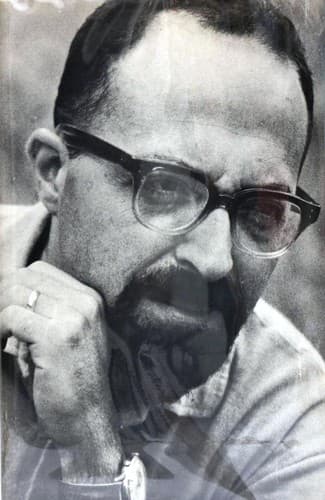
Chaim Potok was an American Jewish novelist and essayist, celebrated for his deeply resonant explorations of faith, tradition, and identity within the Hasidic and Orthodox Jewish communities. His most famous works, including 'The Chosen' and 'The Gift of Asher Lev,' delve into the complex relationships between religious observance and the modern world, often featuring protagonists grappling with artistic ambition and familial expectations. Potok's writing is characterized by its intellectual depth and empathetic portrayal of internal conflict.
Similar books
- The Chosen
Chaim Potok
3.9 (253) average on GoodreadsFantasyExplores similar themes of friendship, faith, and intellectual struggle within the same cultural setting.
- A Tree Grows in Brooklyn
Betty Smith
4.3 (388k) average on GoodreadsHistorical FictionOffers a rich, character-driven historical narrative about growth and resilience in challenging circumstances.
- East of Eden
John Steinbeck
4.4 (429k) average on GoodreadsLiterary FictionA saga that delves into complex family dynamics, moral choices, and the search for identity.
- Portnoy's Complaint
Philip Roth
3.7 (59k) average on GoodreadsLiterary FictionWhile both explore Jewish identity and psychological struggle, Roth's novel is characterized by its satirical, confessional, and overtly sexual tone, focusing on a protagonist's neuroses and rebellion. Potok's The Promise, in contrast, is more earnest, introspective, and focuses on healing from trauma and navigating intellectual and spiritual conflicts within a more traditional framework, lacking Roth's biting humor and explicit content.
- To Kill a Mockingbird
Harper Lee
4.3 (4.5M) average on GoodreadsHistorical FictionIn the 1930s Jim Crow South, Harper Lee writes about racial injustice, moral growth, and the quiet courage of a lawyer father, Atticus Finch, as seen through his young daughter's eyes.
- The Great Gatsby
F. Scott Fitzgerald
3.9 (3.8M) average on GoodreadsHistorical FictionIn the opulent Roaring Twenties, a mysterious millionaire's lavish parties hide his desperate, tragic pursuit of a lost love, exposing the emptiness within the American Dream.






Enjoyed the summary?
A summary gives you the shape of the book. The book itself has the detail, the examples and the voice.
Find The Promise on AmazonAs an Amazon Associate, BookBrief earns from qualifying purchases. How we're funded