
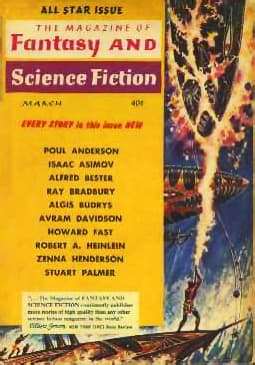
Synopsis
Covers the whole plot, including the ending.
- Difficulty
- Medium
- Pacing
- Fast
- Mood
- Paradoxical, Mind-bending, Existential, Intriguing
- Read it if
- You enjoy mind-bending time travel paradoxes, short stories with a huge impact, and exploring themes of identity and predestination.
- Skip it if
- You dislike ambiguous endings, stories that rely heavily on paradoxes, or prefer straightforward narratives.
All You Zombies Plot Summary
Covers the whole plot, including the ending.
The Unhappy Bar Patron
The story begins in a cosmic bar in New York City, where a bartender, secretly a Temporal Bureau agent, meets a new patron. This patron is a young man, though ambiguously gendered, who calls himself 'The Unmarried Mother.' He is very unhappy, always complaining about his bad luck and claiming to be the unluckiest person alive. The bartender, seeing a chance to recruit him, offers to buy him a drink and listen to his story, promising his own life has been stranger. He encourages 'The Unmarried Mother' to tell how he became so miserable, suggesting he might offer a solution or a new path.
Jane's Early Life and Dreams
The patron, now identified as Jane, starts her story. She was an orphan, left at a Cleveland orphanage in 1945. She describes a lonely childhood, always feeling different and not fitting in. Despite her isolation, Jane was smart and dreamed of a career in space, specifically with the 'Space Corps.' She studied hard for this goal, believing it was her destiny to leave Earth and explore the stars. However, a big problem would soon appear that would end her dreams and send her on a different, unexpected path.
The Mysterious Stranger and Pregnancy
Jane recounts a key moment in her life: meeting a mysterious, charming drifter. She fell deeply in love with him, and their passionate affair led to an unplanned pregnancy. This was particularly upsetting for Jane, as it meant the end of her dreams of joining the Space Corps, which had strict rules against pregnant women. The stranger, after getting her pregnant, disappeared without a trace, leaving Jane alone and heartbroken. This abandonment added to her feeling of misfortune and isolation, marking a significant change in her already difficult life.
The Shocking Delivery and Transformation
Jane continues her difficult story, detailing complications during childbirth. Due to an unforeseen medical emergency, doctors found that Jane had both male and female reproductive organs, a condition called hermaphroditism, though she had lived as a woman. To save her life during the difficult delivery, doctors had to perform an emergency operation, changing her into a man. This shocking and involuntary sex change left Jane confused, adding more trauma to her already tragic situation. She was now a man, but had just given birth as a woman.
The Baby's Abduction
The tragedy for Jane worsens right after her transformation. While she was recovering from the surgery and accepting her new identity, her newborn baby was taken from the hospital nursery. This final blow completely shattered her, leaving her with no child, no lover, and a body she no longer recognized. The loss of her child confirmed her belief that she was the unluckiest person in the world, a feeling she had told the bartender. She was now a man, with a past as a woman who had given birth to a stolen child.
The Bartender's Proposition
As Jane finishes her story, the bartender reveals he is a Temporal Agent from the 'Temporal Bureau,' an organization that uses time travel to prevent paradoxes and guide history. He offers Jane a chance to travel back in time to get revenge on the man who abandoned her and perhaps find her stolen child. This offer, however, comes with a condition: Jane would have to join the Temporal Bureau and dedicate her life to its missions. The bartender emphasizes the unique opportunities and strange experiences that await her as a time traveler, appealing to her deep desire for purpose and justice.
Jane's Transformation into John
Jane accepts the bartender's offer and is taken into the Temporal Bureau's care. Through more surgery and training, she fully becomes a man, becoming 'John.' The bartender, now John's mentor, takes him back in time to 1945, to the orphanage where Jane was left as a baby. Their mission is not immediately clear to John, but he is told to observe. This journey begins John's new life as a Temporal Agent, but it also puts him on a path with his own past, setting the stage for the unfolding paradoxes.
The Seduction and Abandonment
Under the bartender's guidance, John is sent to a specific point in Jane's past. He meets the younger, female version of himself (Jane) and, drawn by an unknown connection, falls deeply in love with her. Unaware of the true identity of the woman he is seducing, John becomes the mysterious stranger who impregnates Jane and then, following the bartender's instructions, abandons her. This act of abandonment, which John believes is a mission, repeats the very event that caused Jane's deep misery, unknowingly completing a crucial loop in his own history.
The Baby's Journey to the Past
Right after Jane gives birth and undergoes her sex change, the bartender steps in. He travels to the hospital nursery, takes the newborn baby, and then transports it back in time to 1945. There, he leaves the infant on the doorstep of the Cleveland orphanage, completing the cycle of Jane's origin. The baby is, in fact, Jane herself, ensuring that Jane's life begins as an orphan, just as she recounted. This act closes the loop on Jane's birth and establishes the main paradox of her existence, arranged by the bartender for reasons yet to be fully revealed.
The Bartender's Revelation and John's Future
The bartender returns to the present with John. He then reveals the final truth: he is John himself, but from an even further point in the future. He explains that John (the former Jane) is his own father, mother, and child. The bartender explains that the entire sequence of events – Jane's birth, her pregnancy, her sex change, her child's abduction, and John's journey through time – was a carefully planned loop to ensure his own existence and his role within the Temporal Bureau. John, now understanding the full, complex paradox of his life, is destined to become the bartender and continue the cycle, ensuring the stability of this unique timeline.
Principal Figures
The Bartender / Agent / Older John
Protagonist/Mentor/Future Self
A time-traveling Temporal Agent who orchestrates the protagonist's entire life.
The Bartender is a seemingly ordinary barman who is, in reality, a seasoned Temporal Agent. He serves as a mentor and guide to the younger Jane/John, subtly manipulating events to ensure the paradoxical loop of their existence. He is calm, knowledgeable, and possesses a deep understanding of the complexities of time travel and its consequences. His primary motivation appears to be the preservation of his own timeline and the continuation of his role within the Temporal Bureau. He represents the ultimate culmination of the protagonist's journey, having lived through all the paradoxes himself.
Relationships: Jane / John (Mentor, future self, father, mother, and child)
The Unmarried Mother / Jane / John
Protagonist
An orphaned individual who experiences a unique and paradoxical life.
Initially presented as 'The Unmarried Mother,' Jane begins as a deeply unhappy and unlucky orphan, born with intersex characteristics but raised as a girl. She dreams of a career in space but is derailed by an unplanned pregnancy. After a forced sex change during childbirth, she becomes a man named John. Driven by a desire for purpose and a need to understand her past, she accepts the Bartender's offer to join the Temporal Bureau. She is intelligent, resilient, and ultimately, the central figure in a bewildering time paradox, becoming her own father, mother, and child.
Relationships: The Bartender (Mentor, future self, and eventually, the same person); Her baby (Her past self, stolen and placed in the past)
Themes & Insights
Identity and Self-Perception
The story explores how identity is formed, not just through personal experience but also through time and paradox. Jane's journey from a female orphan to a male time-traveler, who is also her own mother, father, and child, blurs typical ideas of self. Her initial unhappiness comes from a perceived lack of identity and belonging, while her transformation into John and later realization of the time loop forces a major rethinking of who she is. The story makes the reader consider if identity is fixed or fluid, and how much of it is shaped by outside forces and repeating events. The constant changing of pronouns and roles highlights this fluidity.
“I know who I am, but I don't know what I am.”
The Nature of Time and Paradox
'All You Zombies' is a great example of time paradoxes, showing a closed causal loop where every event causes and is caused by another. The story shows a predestination paradox, where attempts to change the past simply fulfill it. Jane's entire life, from her birth to her transformation and actions, is revealed to be a self-sustaining cycle. The Bartender's role as the person who creates this loop, who is also its product, shows how complex and unavoidable this time structure is. It suggests that some timelines are inherently self-referential and unchangeable, challenging linear views of time and cause and effect.
“There's a trick to it, you see. You have to be your own grandpa.”
Loneliness and the Search for Connection
From Jane's lonely childhood in the orphanage to her abandonment by her lover and the theft of her child, a strong sense of loneliness drives much of her initial sadness. Her desire for connection is clear in her falling in love with the mysterious stranger. The final irony is that her deepest connection is with herself, across time, as she becomes her own family. The Bartender's initial offer to listen and his later revelation are a form of connection, though one based on manipulation and a set destiny. Despite the profound self-sufficiency of the time loop, the underlying human need for belonging and understanding remains a strong motivation.
“I was an orphan. That's the first thing you have to understand. Always alone.”
Destiny vs. Free Will
The story leans strongly towards destiny, or a predetermined causal loop, rather than free will. Jane's choices and actions, from falling in love to joining the Temporal Bureau, are all shown to be part of an unavoidable cycle created by her future self. The Bartender's manipulation ensures that events happen exactly as they must to create his own existence. While characters make decisions, these decisions ultimately serve to fulfill the established timeline, suggesting that their 'free will' is an illusion within the paradox. This theme raises philosophical questions about control and how much one can truly change their fate.
“You'll live a life so strange it will make your head spin. And you'll love every minute of it.”
Plot Devices & Literary Techniques
Closed Causal Loop (Predestination Paradox)
A sequence of events where the future causes the past, which in turn causes the future, forming an inescapable circle.
This is the central plot device of 'All You Zombies.' Every significant event in Jane/John's life, from her birth as an orphan to her becoming her own father and mother, is part of a self-sustaining loop. The Bartender (future John) goes back in time to impregnate Jane (past John), whose baby is then taken back in time to become Jane. This ensures that the events always happen, without an external origin point, creating a stable yet paradoxical timeline where cause and effect are intertwined in a circle.
Unreliable Narrator
A narrator whose credibility is compromised, often due to their limited perspective or personal biases.
Initially, Jane (The Unmarried Mother) serves as an unreliable narrator because she is unaware of the full truth of her own story. She recounts her life with a biased perspective of extreme misfortune, not realizing that many of the 'unlucky' events were orchestrated by her future self. The Bartender also withholds crucial information, guiding the narrative in a way that slowly reveals the paradox. This device keeps the reader in suspense, gradually unfolding the truth alongside the protagonist, making the final revelation more impactful.
Foreshadowing
Hints or clues about future events in a story.
The story employs subtle foreshadowing, particularly through the Bartender's dialogue. His initial offer to listen to Jane's 'strange' life, and his assertion that his own life is 'stranger,' hints at the extraordinary revelations to come. His knowing glances and calculated questions, along with the ambiguous nature of Jane's initial descriptions of herself, all build anticipation and suggest a deeper, more complex reality than what is initially presented. This device prepares the reader, albeit subconsciously, for the mind-bending twists.
Anagnorisis (Recognition/Discovery)
A moment in a plot or story in which a character makes a critical discovery.
The climactic moment of anagnorisis occurs when the Bartender reveals to John that he is his own father, mother, and child, and that John is destined to become the Bartender. This sudden and profound realization completely recontextualizes every event in the story, transforming John's understanding of his identity, past, and future. It's the moment where all the disparate pieces of the puzzle click into place, leading to a profound shift in the protagonist's (and the reader's) comprehension of the narrative.
All You Zombies Quotes
“I know who you are. You're me.”
“It was a vicious circle, sure enough, but it was a happy circle. I was the only one who could have done it.”
“There ain't no time like the present, 'cause the present is all there is.”
“And there I was. All of me.”
“You are your own father, mother, and child.”
“I learned a long time ago that you never can tell what a man will do, until you tell him what he can do.”
“Who is the loneliest man in the world? The one who is everyone.”
“The greatest joy in life is to be able to do what you want to do.”
“I'm a self-made man. And I mean that literally.”
“It hurts, but it's worth it. It's the only way.”
“You can always tell a man by the company he keeps. And I keep my own company.”
“There was only one of him. Him. Me.”
“The past, the present, and the future are not really distinct. They are all one, and you are living in all of them right now.”
Quiz
10 questions on the plot and the characters. Each answer comes with a short explanation.
Question 1
What is the initial profession of the narrator when he first encounters the Unmarried Mother at Pop's Place?
- Bartender
- Time Agent
- Writer
- Musician
Show answer
A. Bartender The narrator is working as a bartender at Pop's Place when he first meets the Unmarried Mother and hears their story.
Question 2
What is the 'Unmarried Mother's' original gender at birth, before any changes occur in the story?
- Female
- Male
- Intersex
- Ambiguous
Show answer
B. Male The Unmarried Mother, originally named Jane, was born male but was raised as a girl due to being left at an orphanage. This is a key detail revealed later in the story.
Question 3
What is the primary motivation for the narrator (the barkeep) to take an interest in the Unmarried Mother's story?
- He is genuinely sympathetic to their plight.
- He recognizes them from a previous encounter.
- He is a time agent looking for a recruit.
- He wants to write a story about their life.
Show answer
C. He is a time agent looking for a recruit. The barkeep is actually a time agent, and he is specifically looking for a recruit with a unique personal history, which the Unmarried Mother possesses.
Question 4
What ultimately happens to the baby that the Unmarried Mother gives birth to?
- It is adopted by a loving family.
- It is stolen by the mysterious stranger.
- It dies shortly after birth.
- The Unmarried Mother raises it.
Show answer
B. It is stolen by the mysterious stranger. The baby is stolen by a mysterious stranger (who is later revealed to be the older version of the narrator) shortly after its birth.
Question 5
Which of the following best describes the central thematic paradox explored in 'All You Zombies'?
- The conflict between free will and determinism.
- A bootstrap paradox where a person is their own ancestor.
- The ethical implications of altering historical events.
- The loneliness and isolation of time travelers.
Show answer
B. A bootstrap paradox where a person is their own ancestor. The story explicitly details a bootstrap paradox where the main character is revealed to be their own mother, father, and child, creating a self-contained causal loop.
Question 6
What specific physical transformation does the Unmarried Mother undergo after giving birth?
- A change in hair and eye color.
- An accidental sex change operation due to medical complications.
- Reconstructive surgery to hide their identity.
- They become sterile and unable to have more children.
Show answer
B. An accidental sex change operation due to medical complications. Due to complications during childbirth, the Unmarried Mother's female organs are removed, and a 'repair' operation inadvertently turns them into a male.
Question 7
What is the 'serpent that devours its own tail' a metaphor for in the context of the story?
- The cyclical nature of time.
- The protagonist being their own progenitor and descendant.
- The futility of trying to change the past.
- The endless cycle of loneliness experienced by the character.
Show answer
B. The protagonist being their own progenitor and descendant. This phrase directly refers to the ultimate revelation that the main character, through time travel, becomes their own mother, father, and child, forming a self-contained lineage, much like the Ouroboros.
Question 8
After the Unmarried Mother's sex change, what new identity do they adopt?
- They continue to use their original female name.
- They become a famous writer under a male pseudonym.
- They join the Temporal Bureau under a new codename.
- They become a recluse and avoid society.
Show answer
B. They become a famous writer under a male pseudonym. After their sex change, the character becomes a male writer, eventually writing their own autobiography, which the barkeep recognizes.
Question 9
When the barkeep takes the Unmarried Mother back in time, to what specific year and event do they travel?
- 1945, to the end of World War II.
- 1963, to the day the Unmarried Mother first met the mysterious stranger.
- 1970, to the birth of the Unmarried Mother.
- 1959, to the publication of a significant story.
Show answer
B. 1963, to the day the Unmarried Mother first met the mysterious stranger. The barkeep takes the Unmarried Mother back to 1963, specifically to the night they first met the mysterious stranger who got them pregnant.
Question 10
What is the ultimate fate of the 'Fizzle Bomber' in the story, or rather, who is revealed to be the Fizzle Bomber?
- The Fizzle Bomber is never identified, remaining a mystery.
- The Fizzle Bomber is another time agent gone rogue.
- The Fizzle Bomber is the main character (the narrator/Unmarried Mother) at a different point in their timeline.
- The Fizzle Bomber is an external antagonist seeking to disrupt time.
Show answer
C. The Fizzle Bomber is the main character (the narrator/Unmarried Mother) at a different point in their timeline. In a final twist, the Fizzle Bomber, who had been causing temporal disruptions, is revealed to be the main character themselves, at a much older and more grizzled stage of their life, having 'retired' from the Temporal Bureau.
All You Zombies FAQ
What is the core premise of 'All You Zombies'?
'All You Zombies' tells the story of an Unmarried Mother who, through a series of time travel paradoxes, turns out to be their own father and mother, ultimately becoming the barkeeper who orchestrates the entire sequence of events. The narrative explores a closed-loop causal chain where every character is, in essence, the same individual at different points in their personal timeline. It delves into the implications of self-creation and predestination.
Who is the Unmarried Mother, and what is their significance?
The Unmarried Mother is a young person who was born female, abandoned at an orphanage, and later underwent a sex change operation after giving birth to a baby taken from them. This individual is the central figure around whom all the paradoxes revolve, as they are revealed to be the father, mother, and eventually the time-traveling agent responsible for their own existence. Their journey illustrates the story's themes of self-sufficiency and predestination.
How does time travel function within the story's narrative?
Time travel in 'All You Zombies' operates on a principle of a fixed, unchangeable timeline, where paradoxes are not avoided but are the very mechanism through which events occur. The protagonist uses a 'jump' device to traverse different eras, specifically orchestrated by the future version of themselves (the barkeeper). This ensures a self-fulfilling prophecy, making the past, present, and future inextricably linked in a single, circular causality.
What is the role of the barkeeper in the story?
The barkeeper is revealed to be the future, time-traveling version of the Unmarried Mother, who has undergone a sex change and taken on the identity of a Temporal Agent. He meticulously orchestrates the encounter between his past self (the Unmarried Mother) and their even earlier self (the young man who becomes the father), ensuring the birth of the baby and the perpetuation of the entire paradox. He is the architect and enabler of his own existence, closing the loop.
What happens to the baby born to the Unmarried Mother?
The baby born to the Unmarried Mother is taken by the barkeeper (who is the baby's future self) and transported back in time to an orphanage in 1945. This act ensures that the baby grows up to become the Unmarried Mother, thus completing the genealogical paradox. The baby is, in fact, the Unmarried Mother herself, restarting the cycle of self-creation.
What is the significance of the phrase 'All You Zombies'?
The phrase 'All You Zombies' comes from the barkeeper's internal monologue, reflecting on the protagonist's unique, self-contained existence outside the normal flow of humanity. It suggests that while others might live linear lives, the protagonist is a self-sufficient, self-originating entity, a 'zombie' in the sense of being an animated being outside typical biological norms, yet still fully alive and capable of agency. It emphasizes their singular, isolated nature.
How does the story connect to Heinlein's earlier work 'By His Bootstraps'?
Both 'All You Zombies' and 'By His Bootstraps' explore closed-loop time travel paradoxes where a character is responsible for their own creation or the creation of objects vital to their existence. In 'By His Bootstraps,' Bob Wilson creates the circumstances and objects that allow him to travel through time and become the very entity who brings himself into the future. 'All You Zombies' takes this theme further by making the protagonist their own biological parent, intensifying the self-originating paradox.
What is the 'serpent eating its own tail' symbolism in the story?
The Ouroboros, or serpent eating its own tail, is a potent symbol for the story's central paradox, representing an endless cycle of self-creation and destruction. The protagonist is literally their own beginning and end, their own father, mother, and child, trapped in a continuous, self-sustaining loop. This imagery perfectly encapsulates the closed-causal chain of the narrative, where every event leads back to itself.
What does the story suggest about free will versus predestination?
'All You Zombies' strongly leans towards predestination, as every action taken by the protagonist, even seemingly spontaneous ones, is ultimately revealed to be part of a pre-established, unalterable timeline. The characters are not making choices but fulfilling roles already set by the future versions of themselves. This raises philosophical questions about agency when one's entire existence is a self-fulfilling prophecy.
How does the protagonist's gender identity evolve throughout the story?
The protagonist begins life as female, then undergoes a forced sex change operation due to medical necessity after childbirth, becoming male. This transformation is crucial to the paradox, as it allows the same individual to fulfill both paternal and maternal roles in their own lineage. Their evolving gender identity underscores the fluidity of self and the radical extent of their self-creation.
What psychological impact might this paradox have on the protagonist?
The protagonist experiences profound isolation and a unique form of self-sufficiency, knowing they are literally 'all alone' as their own family tree. This could lead to a sense of existential uniqueness, perhaps even a god-like complex, but also immense loneliness. They are both the cause and effect of their own suffering and triumphs, bearing the full weight of their self-created destiny.
Is there any external force or entity guiding these events, or is it purely self-contained?
The story strongly implies that the entire causal loop is self-contained, with no external force or entity initiating or guiding the events beyond the protagonist's own future self (the barkeeper/Temporal Agent). The paradox is an elegant, closed system, suggesting a universe where such self-originating phenomena are possible without outside intervention. The protagonist is the alpha and omega of their own existence.
What is the significance of the Time Corps in the narrative?
The Time Corps is the organization that the barkeeper (and future self of the protagonist) works for, which provides the technology and framework for time travel. While not deeply explored, its existence legitimizes the time travel mechanics and gives the protagonist a motive (or at least a role) for their temporal manipulations. It provides a backdrop for the barkeeper's mission to 'recruit' himself.
Could the story be interpreted as a metaphor for the creative process or self-actualization?
Yes, 'All You Zombies' can be seen as a powerful metaphor for the creative process, where an artist or creator brings something entirely new into existence, essentially 'birthing' themselves or their ideas. It also speaks to self-actualization, where an individual fully realizes their potential and becomes the architect of their own destiny, even if that destiny is paradoxical and self-referential. The protagonist embodies ultimate self-reliance.
What philosophical questions does the story raise about identity?
The story challenges conventional notions of identity by demonstrating that an individual can be their own ancestor, progeny, and even multiple genders throughout their life. It suggests that identity is not fixed but fluid and can be defined by a complex web of temporal relationships rather than linear genealogy. The protagonist's identity is a testament to radical self-creation and the malleability of self.
Does the story offer any resolution or is the loop truly endless?
The story concludes with the loop firmly established and perpetuated, implying that it is truly endless for the protagonist. There is no escape or resolution in the traditional sense; instead, the resolution is the continuous, self-sustaining nature of the paradox itself. The final lines suggest the protagonist will continue to live out this unique existence, forever bound to their own past and future selves.
How does Heinlein use narrative structure to enhance the mystery?
Heinlein masterfully uses a first-person narrator whose identity is initially masked and slowly revealed through layers of dialogue and flashback. The story's structure builds suspense by gradually unveiling the connections between the characters, culminating in the shocking revelation that they are all the same person. This non-linear, circular narrative mirrors the paradox at the heart of the plot.
What is the significance of the 'predestination paradox' in the story?
The predestination paradox is central to the story, where an event in the future causes an event in the past, which in turn causes the future event. The protagonist's journey is a perfect example: the barkeeper travels back to ensure the Unmarried Mother meets the man who impregnates her, who is also the barkeeper's past self, thus guaranteeing the birth of the baby, who is also the barkeeper's past self. There is no uncaused first cause, only an eternal loop.
About the author
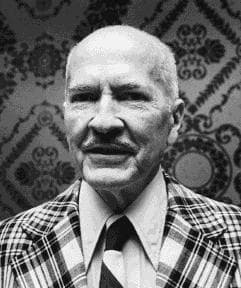
Robert Anson Heinlein was an American science fiction author, aeronautical engineer, and naval officer. Sometimes called the "dean of science fiction writers", he was among the first to emphasize scientific accuracy in his fiction, and was thus a pioneer of the subgenre of hard science fiction. His published works, both fiction and non-fiction, express admiration for competence and emphasize the value of critical thinking. His plots often posed provocative situations which challenged conventional social mores. His work continues to have an influence on the science-fiction genre, and on modern culture more generally.
Similar books
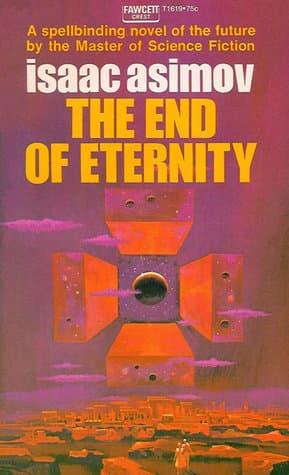
- The End of Eternity
Isaac Asimov
4.2 (44k) average on GoodreadsFantasyFeatures complex time travel mechanics and the manipulation of history.
- Harry Potter and the Sorcerer's Stone
J.K. Rowling
4.5 (7M) average on GoodreadsFantasyRescued from a miserable life under the stairs, an orphaned boy discovers he's a wizard destined for a magical school, where he uncovers a dangerous secret tied to the dark wizard who murdered his parents.
- The Hunger Games
Suzanne Collins
4.3 (6.4M) average on GoodreadsFantasyIn a future where children fight to the death on live television, Katniss Everdeen volunteers for the arena, turning a death sentence into a fight for survival and a spark of rebellion.
- 1984
George Orwell
4.2 (3.1M) average on GoodreadsPoliticsIn a future where surveillance and thought control are absolute, a man's search for truth clashes with the Party, showing that hope can be a form of rebellion.
- Divergent
Veronica Roth
4.2 (2.9M) average on GoodreadsFantasyIn a society divided by virtues, a sixteen-year-old's difference from the norm starts a rebellion that threatens her world.
- The Hobbit, or There and Back Again
J.R.R. Tolkien
4.3 (2.9M) average on GoodreadsFantasyA comfort-loving hobbit named Bilbo Baggins is whisked away by a mischievous wizard and a band of dwarves on an unexpected journey to reclaim stolen treasure from a fearsome dragon, discovering courage and a magical ring along the way.





Enjoyed the summary?
A summary gives you the shape of the book. The book itself has the detail, the examples and the voice.
Find All You Zombies on AmazonAs an Amazon Associate, BookBrief earns from qualifying purchases. How we're funded