

Synopsis
Covers the whole plot, including the ending.
- Difficulty
- Medium
- Pacing
- Slow
- Mood
- Atmospheric, Melancholy, Introspective, Tense
- Read it if
- You appreciate deep character studies, complex family dynamics, and literary explorations of power and control in a historical Irish setting.
- Skip it if
- You prefer fast-paced plots, optimistic narratives, or lighthearted family stories.
Amongst Women Plot Summary
Covers the whole plot, including the ending.
Moran's Domestic Realm
The novel begins by introducing Michael Moran, a former IRA officer and widower, living on a small farm in rural Ireland with his five children: sons Luke and Michael Jr., and daughters Maggie, Mona, and Sheila. Moran, still affected by his past and his first wife's death, tries to bring military discipline into his home. He demands complete obedience, especially from his daughters, and enforces a strict schedule of chores, prayers, and study. The children, particularly the older ones, resent his control but largely obey, fearing his unpredictable anger and emotional manipulation. Their isolated lives are completely shaped by his presence and will, with little outside influence allowed.
Rose's Arrival
Years after his first wife's death, Moran decides to remarry. He brings Rose, a gentle woman from a nearby town, to live on the farm. Rose is at first overwhelmed by Moran's intense personality and the stifling atmosphere of the house. She tries to connect with the children, offering them a kindness and understanding their father rarely provides. Her presence changes the dynamic, as she tries to soften Moran's harshness and bring some warmth and normalcy into their lives, though she often finds herself caught between Moran's demands and the children's quiet resentment.
The Children's Resistance
As the children grow into young adults, their desire for independence clashes more often with Moran's strict rule. Luke, the oldest son, is the first to directly challenge his father, often through defiance and eventually by leaving home to live his own life. Maggie, Mona, and Sheila develop their own quiet ways of rebelling, finding ways to show their individuality despite Moran's constant watch. Their longing for freedom and outside experiences grows, leading to secret meetings and plans to escape the suffocating farm and their father's influence. Rose often sees these struggles, understanding the children's situation but feeling unable to truly help.
Luke's Departure
Luke, unable to stand his father's tyranny any longer, decides to leave the farm. This act of defiance deeply hurts Moran, who sees it as a betrayal and a challenge to his authority. Luke's departure sets a precedent for the other children and clearly shifts the family dynamic. It shows the growing weaknesses in Moran's carefully built world and his inability to hold onto his children as they seek their own paths. Rose, though sad about the family's broken state, secretly admires Luke's courage and hopes it might inspire the others.
The Daughters' Lives Unfold
One by one, the daughters also begin to break free. Maggie, Mona, and Sheila pursue education and jobs, building lives away from the farm. Maggie becomes a teacher, Mona finds work in Dublin, and Sheila eventually marries. Each departure is met with Moran's resistance and emotional manipulation, but he cannot stop them from creating their own futures. Despite their physical distance, Moran's influence remains a powerful, often unsettling, presence in their lives, subtly shaping their choices and relationships. Rose provides a quiet anchor for them, a source of stable affection and a link to their home.
Moran's Declining Power
With his children grown and scattered, Moran's power over them significantly lessens. He becomes more isolated on the farm with only Rose for company. His attempts to maintain control through letters, visits, and emotional pleas become less effective. He struggles to adapt to the changing world and his children's independence, often retreating into memories of the War of Independence and his past glory. Rose becomes his main confidante and caretaker, bearing the brunt of his worries and frustrations as his world shrinks.
The Burden of Memory
Moran's past as an IRA officer during the Irish War of Independence is always present in his life and his family's lives. He often tells stories of his wartime experiences, sometimes exaggerating them, but these memories also show a man scarred by violence and longing for a lost purpose. His need for control and order in his family can be seen as an attempt to recreate the structure and authority he once had. The children, though not alive during the war, inherit the psychological legacy of their father's past, which shapes their upbringing and their understanding of him. The past is not just remembered; it actively dictates the present.
Rose's Enduring Patience
Throughout Moran's life, Rose is a figure of immense patience and quiet strength. Despite his temper, emotional demands, and often cruel treatment, she continues to care for him with unwavering devotion. She understands the complex man beneath the bluster, recognizing his deep insecurities and past trauma. Rose's love is a quiet force, providing crucial stability and a rare source of genuine affection in a home often defined by fear. Her presence softens Moran's harshness and offers the children a glimpse of unconditional love.
Moran's Final Years
As Moran ages, his health declines, and he becomes increasingly frail and dependent. His once powerful physical presence diminishes, and his mind begins to weaken. He relies more and more on Rose for daily care, a role she fulfills with her characteristic quiet dedication. During these final years, the children visit less often, though they maintain a sense of duty. Moran's tyranny softens into a more vulnerable, though still demanding, dependence, highlighting Rose's profound impact on his life and the family's ability to cope with his difficult nature.
A Legacy of Control
Moran eventually dies, leaving Rose and his children to deal with his complex legacy. His death brings a sense of release, but also a deep awareness of how much he shaped their identities and relationships. The children, now adults with their own lives, reflect on the love, fear, and resentment he inspired. They recognize that while they escaped his direct control, his influence continues to resonate in their choices, their fears, and their understanding of family. Rose, freed from her caregiving duties, continues to live a quiet life, embodying the enduring power of gentle strength amidst hardship.
Amongst Women Characters
Michael Moran
Protagonist/Antagonist
A former IRA officer who rules his family with an iron fist.
Michael Moran is the patriarch of the family, a man defined by his past as an IRA officer during the War of Independence. He is a complex figure, charismatic and intelligent, but also deeply authoritarian, tyrannical, and emotionally manipulative. Haunted by his wartime experiences and the loss of his first wife, he strives to maintain absolute control over his children, replicating military discipline in his home. His need for order and obedience stems from a deep-seated insecurity and a desire to impose meaning on his post-war life. He is capable of both tenderness and immense cruelty, making him an unpredictable and terrifying presence for his family.
Relationships: Rose (Second wife, caregiver, object of his complex love and dependence.); Maggie, Mona, Sheila (Daughters, subjects of his control and affection, who eventually escape his influence.); Luke, Michael Jr. (Sons, who also strive for independence from his dominance.)
Rose
Supporting
Moran's second wife, a gentle and patient woman who brings quiet strength to the family.
Rose is Moran's second wife, a woman of immense patience, kindness, and quiet resilience. She enters the Moran household as an outsider, initially overwhelmed by its intense atmosphere, but gradually becomes its emotional anchor. She offers the children a warmth and understanding they rarely receive from their father, and her steadfast love and care for Moran endure despite his difficult nature. Rose represents a moral center, a force of gentle humanity that contrasts sharply with Moran's harshness. She is a silent observer and a constant source of stability, bearing much of the emotional burden of the family.
Relationships: Michael Moran (Husband, whom she loves and cares for despite his flaws.); Maggie, Mona, Sheila, Luke, Michael Jr. (Stepmother, offering them kindness and a stable presence.)
Maggie
Supporting
The eldest daughter, who quietly asserts her independence.
Maggie is the eldest of Moran's three daughters. Intelligent and observant, she is the first of the girls to pursue an education and a career outside the farm, becoming a teacher. She is deeply affected by her father's control but learns to navigate it with quiet determination and subtle acts of rebellion. Maggie's experiences reflect the struggle of women in rural Ireland seeking autonomy in a patriarchal society. She carries a deep understanding of her father's complexities, often reflecting on his nature with a mix of resentment and reluctant affection. She represents the growing desire for self-determination among Moran's children.
Relationships: Michael Moran (Daughter, both fearful of and tied to him.); Rose (Stepmother, a source of comfort and understanding.); Mona, Sheila (Sisters, sharing the experience of growing up under Moran.)
Mona
Supporting
The middle daughter, who escapes to Dublin for work and independence.
Mona is the middle daughter, characterized by her more direct, though still subtle, defiance against her father's authority. She eventually moves to Dublin to find work, symbolizing a more decisive break from the farm's confines than Maggie's path. Mona seeks a life of greater freedom and anonymity, away from the constant scrutiny of Moran. She is perceptive and often expresses her frustration with her father's tyranny more openly than her sisters, though still within the bounds of what is permissible. Her journey highlights the allure of urban life as an escape from rural constraints.
Relationships: Michael Moran (Daughter, who actively seeks to escape his influence.); Rose (Stepmother, a gentle presence in her life.); Maggie, Sheila (Sisters, with whom she shares a bond of shared experience.)
Sheila
Supporting
The youngest daughter, who finds her independence through marriage.
Sheila is the youngest of the Moran daughters. Her path to independence involves marriage, a traditional route for women of her time, yet still a means of escaping her father's direct control. She is perhaps the most outwardly compliant of the daughters in her youth, but her eventual marriage signifies her own assertion of autonomy. Sheila's story reflects how even conventional life choices can be acts of rebellion within a highly controlling family dynamic. She embodies the hope for a more conventional, stable life away from the emotional turbulence of her childhood home.
Relationships: Michael Moran (Daughter, seeking a life outside his direct control.); Rose (Stepmother, a consistent source of kindness.); Maggie, Mona (Sisters, sharing their childhood experiences.)
Luke
Supporting
The eldest son, who openly rebels against Moran and leaves home.
Luke is the eldest son and the first of Moran's children to openly defy him. He is strong-willed and rebellious, unwilling to bend to his father's arbitrary rules and constant demands. His departure from the farm is a pivotal moment, challenging Moran's authority in a way no other child had before. Luke's journey represents the raw desire for freedom and the painful break from familial duty. His absence leaves a void but also creates a path for the other children to follow, demonstrating that escape from Moran's grip is possible.
Relationships: Michael Moran (Son, in direct conflict with his father's authority.); Rose (Stepmother, a sympathetic figure.); Maggie, Mona, Sheila, Michael Jr. (Siblings, sharing a common oppressor.)
Michael Jr.
Supporting
The younger son, who remains more closely tied to the farm and his father.
Michael Jr. is the younger son, who, unlike Luke, remains more closely tied to the farm and his father, embodying a different response to Moran's dominance. He is quieter and perhaps less openly rebellious than his elder brother, suggesting a more resigned acceptance or perhaps a deeper internal struggle. His presence on the farm, even as an adult, signifies the enduring hold Moran has on some of his children. He represents the challenge of forging an independent identity when constantly under the shadow of a powerful parent, often through internal rather than external resistance.
Relationships: Michael Moran (Son, living under his father's shadow.); Rose (Stepmother, a source of gentle warmth.); Luke, Maggie, Mona, Sheila (Siblings, with whom he shares a common upbringing.)
Amongst Women Themes
Tyranny and Control
The novel explores tyranny, specifically within the home. Moran, a former IRA officer, controls his family completely, replicating military discipline. This appears in his children's lives through strict rules, emotional manipulation, and unpredictable anger. For example, he dictates their studies, chores, and social interactions, making their lives revolve around his will. The children's struggles for independence are direct responses to this control, showing the damaging psychological effects of such a system and the universal desire for freedom.
“He wanted them to be a monument to himself, a disciplined army, and they, being alive, were always in danger of becoming themselves.”
The Weight of the Past
The past, especially Moran's experiences in the Irish War of Independence, affects the present. Moran often tells stories of his wartime exploits, sometimes romanticizing them, but these memories also show a man scarred by violence and longing for a lost purpose. His need for control and order in his family can be seen as an attempt to recreate the structure and authority he once had. The children, though not in the war, inherit the psychological legacy of their father's past, which shapes their upbringing and their understanding of him. The past is not just remembered; it actively dictates the present.
“He lived in the past, and it was a more real place to him than the present.”
Resilience and Endurance
Despite Moran's oppressive rule, the novel shows the resilience of his children and, especially, his second wife, Rose. The children, one by one, find ways to assert their individuality and escape his direct control, whether through education, work, or marriage. Rose, in particular, shows this theme; her patience and care for Moran, despite his difficult nature, show her inner strength and capacity for love. Their ability to survive and even thrive under challenging circumstances highlights the human spirit's capacity to adapt and find strength.
“Her strength was not in resisting him, but in simply enduring, like a stone in a stream.”
Family Dynamics and Disintegration
The novel examines the complex and often destructive dynamics within the Moran family. Moran's tyranny creates a home filled with fear, resentment, and a distorted kind of love. As the children grow, their individual desires clash with their father's need for control, leading to a gradual breakdown of the family as they seek independence. The departures of Luke, Maggie, and Mona show this breakdown, leaving Moran more isolated. The story explores how family bonds, even under pressure, can be both a source of deep connection and profound pain, and how seeking individual freedom can lead to family fragmentation.
“He had wanted to keep them all close, but in trying to keep them, he had driven them away.”
Love and Its Manifestations
Love in 'Amongst Women' appears in various, often contradictory, forms. Moran's love for his children is possessive and controlling, mixed with his need for dominance and his own insecurities. He believes his strictness is a form of protection and guidance, yet it stifles their growth. In contrast, Rose's love is selfless, patient, and unconditional, serving as a source of warmth in the home. The children's love for each other is a bond forged in shared experience and resilience. The novel suggests that love, especially within a family, can be a complex mix of affection, fear, duty, and resentment, and its expression can be both nurturing and destructive.
“He loved them, in his own way, a love that was like a cage.”
Plot Devices & Literary Techniques
Flashbacks and Recollections
Moran's frequent recounting of his past as an IRA officer.
Moran's character is heavily shaped by his past as an IRA officer, and the novel frequently employs flashbacks and his personal recollections of the War of Independence. These are not always linear or reliable, often colored by his need to maintain a heroic image. This device serves to explain Moran's authoritarian nature and his need for control, linking his present behavior to his traumatic and formative past. It also provides historical context, anchoring the family's story within a specific period of Irish history and showcasing the lasting psychological impact of conflict on individuals and subsequent generations.
Symbolism of the Farm
The farm as a microcosm of Moran's control and the children's confinement.
The Moran family farm serves as a powerful symbol throughout the novel. Initially, it represents Moran's domain, a contained world where he can exert absolute control, mirroring his desire for order and discipline. Its isolation reflects the family's detachment from wider society. As the children grow, the farm becomes a symbol of their confinement and the oppressive atmosphere they seek to escape. Their eventual departures from the farm symbolize their breaking free from Moran's tyranny and their journey toward individual autonomy, highlighting the contrast between the stifling rural life and the allure of the outside world.
The Narrator's Detached Perspective
A third-person omniscient narrator who observes without overt judgment.
The novel utilizes a detached, third-person omniscient narrator who observes the events and characters with a quiet, almost clinical, precision. This narrative voice rarely offers explicit judgments or emotional commentary, instead presenting events and character motivations in a matter-of-fact manner. This device allows the reader to form their own conclusions about Moran's tyranny and the children's suffering, making the emotional impact more profound through understatement. It also lends a sense of universality to the family's struggles, presenting them as an almost inevitable unfolding of human nature under specific conditions, rather than a unique melodrama.
The Role of Silence
Silence as a means of communication, control, and emotional repression.
Silence is a pervasive and significant plot device in 'Amongst Women'. It functions in multiple ways: as a tool of Moran's control (his children often remain silent out of fear), as a form of communication (unspoken understandings and resentments), and as a representation of emotional repression. The children's quiet rebellion, Rose's patient endurance, and Moran's moments of brooding reflect the power of silence in conveying unspoken truths and suppressed feelings. It underscores the difficulty of direct communication within the family and highlights the psychological weight of their unexpressed emotions, making the few instances of direct confrontation all the more impactful.
Amongst Women Quotes
“All children have to be broken. They're like wild horses. If you don't break them, they'll destroy you.”
“Life wasn't what it was meant to be, but it was all they had.”
“He lived in the past, and everything he touched turned to the past.”
“The women were like a hedge, holding the family together, keeping it from falling apart.”
“Love was not a feeling, but a decision, a daily act of will.”
“He wanted to be understood, but he was incapable of explaining himself.”
“The long, slow pull of memory, like a salmon fighting upstream.”
“There was no escape from the past, only a continuous re-enactment.”
“The silence was not empty, but full of things unsaid, things understood.”
“He carried his history like a hump on his back.”
“The world outside their gate was a mystery, and they preferred it that way.”
“Children were a mirror, reflecting back all that was good and bad in their parents.”
“The years had passed, but the wounds remained, unhealed, beneath the surface.”
“It was a life lived by instinct and routine, by the turning of the seasons.”
Quiz
10 questions on the plot and the characters. Each answer comes with a short explanation.
Question 1
What was Moran's former occupation before becoming a farmer?
- A teacher
- An officer in the Irish War for Independence
- A shopkeeper
- A priest
Show answer
B. An officer in the Irish War for Independence The book description explicitly states that Moran was 'once an officer in the Irish War for Independence' before becoming a widower on a farm.
Question 2
How many children does Moran have?
- Four
- Five
- Six
- Three
Show answer
B. Five The synopsis mentions Moran raising 'his two sons and three daughters,' totaling five children.
Question 3
What is the primary internal conflict Moran faces as his children grow older?
- His struggle to manage the farm's finances.
- His difficulty in finding a balance between love and tyranny.
- His desire to remarry and find a new wife.
- His regret over his past military actions.
Show answer
B. His difficulty in finding a balance between love and tyranny. The summary states, 'Moran struggles to find a balance between love and tyranny' as his children seek independence, highlighting his central internal conflict.
Question 4
What does Moran primarily use to maintain control over his family after leaving the military?
- Financial incentives and rewards.
- Binding his family close to him through strict discipline and his presence.
- Seeking advice from community elders.
- Allowing them complete freedom to make their own choices.
Show answer
B. Binding his family close to him through strict discipline and his presence. The text explains, 'Adrift from the structure and security of the military, he keeps control by binding his family close to him,' implying a possessive and strict approach.
Question 5
How does Moran's past military experience influence his parenting style?
- It makes him lenient and understanding.
- It instills a sense of discipline and a desire for control, similar to military command.
- It leads him to avoid any form of conflict or command.
- It inspires him to travel frequently, leaving his children to their own devices.
Show answer
B. It instills a sense of discipline and a desire for control, similar to military command. The description notes he was 'adrift from the structure and security of the military' but 'keeps control by binding his family close to him,' suggesting he applies a military-like need for order and command to his family life.
Question 6
What significant life event precedes Moran's struggle to control his family on the farm?
- He wins a large sum of money.
- He becomes a widower.
- He moves to a new country.
- He suffers a debilitating injury.
Show answer
B. He becomes a widower. The synopsis states he 'is now a widower, eking out a living on a small farm where he raises his two sons and three daughters,' indicating his wife's death is a key preceding event.
Question 7
The phrase 'bewildering change' refers to what specific challenge Moran faces?
- Changes in farming techniques.
- The evolving social landscape and his children's desire for independence.
- New government regulations.
- Changes in the local weather patterns.
Show answer
B. The evolving social landscape and his children's desire for independence. The text states, 'as his children grow older and seek independence, and as the passing years bring with them bewildering change,' linking 'bewildering change' directly to the children's independence and the broader social shifts that accompany it.
Question 8
How does the author characterize Moran's control over his family?
- As benevolent and supportive.
- As a binding force that borders on tyranny.
- As largely absent and neglectful.
- As primarily intellectual and philosophical.
Show answer
B. As a binding force that borders on tyranny. The description explicitly states Moran 'struggles to find a balance between love and tyranny,' implying his control leans towards the tyrannical.
Question 9
What is the implication of Moran being 'adrift from the structure and security of the military'?
- He finds immediate peace and relaxation in civilian life.
- He struggles to adapt to civilian life and seeks to recreate military-like order in his home.
- He becomes a wanderer, unable to settle down.
- He completely abandons all forms of discipline.
Show answer
B. He struggles to adapt to civilian life and seeks to recreate military-like order in his home. Being 'adrift' suggests a loss of foundation, which he compensates for by 'binding his family close to him' to 'keep control,' indicating an attempt to replace the lost military structure with domestic authority.
Question 10
The 'Sunday Telegraph' quote states the book 'will linger in the mind for decades.' What aspect of the narrative most likely contributes to this lasting impact?
- Its fast-paced action and adventure plot.
- Its exploration of complex human relationships and the universal struggle for control and independence within families.
- Its detailed historical account of the Irish War for Independence.
- Its lighthearted and humorous tone.
Show answer
B. Its exploration of complex human relationships and the universal struggle for control and independence within families. The themes of 'love and tyranny,' 'children grow older and seek independence,' and the 'bewildering change' are universal and deeply human, making the story's exploration of these complex family dynamics memorable and resonant, fitting for literary fiction.
Amongst Women FAQ
What is the central conflict in 'Amongst Women'?
The central conflict revolves around Michael Moran, a former IRA officer, and his struggle to maintain absolute control over his five children as they mature and seek independence. His dictatorial love clashes with their growing desire for lives outside his suffocating influence, leading to a profound generational and psychological battle within the family.
Who is Michael Moran, and what is his background?
Michael Moran is the patriarch of the family, a widower who once served as a revered officer in the Irish War of Independence. His past military glory and the rigid discipline it instilled shape his present personality, making him a formidable, often tyrannical, figure who attempts to replicate the structure of the army within his home.
How do Moran's daughters, particularly Maggie and Sheila, respond to his control?
Maggie and Sheila, like their siblings, initially submit to Moran's will, but as they grow, their responses diverge. Maggie finds a form of accommodation, eventually becoming his primary caretaker, while Sheila, more rebellious, seeks escape through education and a life away from the farm, though never fully severing ties.
What role does Rose play in the Moran household?
Rose is Michael Moran's second wife, a quiet and gentle woman who enters the household and attempts to bring some warmth and stability. While she loves Moran, she is often caught between his demands and the children's simmering resentments, acting as a buffer but ultimately unable to significantly alter the family dynamic.
What is the significance of the 'War of Independence' in Moran's character?
The War of Independence is crucial to Moran's identity; it's the defining period of his life where he held power and respect. He constantly references it, not just as a source of pride but as a justification for his authoritarian rule, believing the discipline and loyalty he commanded then should apply to his family.
Are there any symbolic objects or recurring motifs in the novel?
The Moran farm itself functions as a symbolic prison and a testament to Moran's self-sufficiency and isolation. The recurring motif of silence and unspoken truths within the family highlights the emotional repression and the fear of challenging Moran's authority, creating a tense atmosphere.
How does the setting of rural Ireland contribute to the novel's themes?
The isolated rural setting of the Moran farm reinforces their insular world, making it harder for the children to escape Moran's influence and for outside modern ideas to penetrate. It emphasizes the traditional, patriarchal structures that Moran clings to, contrasting with the changing Ireland outside their gates.
What is the psychological impact of Moran's tyranny on his children?
Moran's tyranny leaves his children emotionally stunted and deeply scarred. They struggle with intimacy, independence, and forming healthy relationships, often carrying the burden of his expectations and their own unexpressed resentments throughout their adult lives, even after leaving home.
How does Moran's own psychology contribute to his need for control?
Moran's need for control stems from a deep-seated insecurity and a fear of irrelevance after his military glory faded. He projects his past authority onto his family, using them to validate his continued importance and to fill the void left by the loss of his public role, seeing them as an extension of himself.
Is there an element of unrequited love or longing in Moran's character?
Yes, beneath his harsh exterior, Moran yearns for an idealized, unquestioning love and loyalty from his children, similar to the comradeship he experienced in the war. His tyrannical acts are often a misguided attempt to secure this love, leading to a tragic cycle where his actions push them further away.
How do the children's memories of their father evolve over time?
The children's memories are complex and contradictory; while they recall his cruelty and the suffering he inflicted, they also remember moments of tenderness and his fierce, albeit possessive, love. As adults, their understanding of him matures, allowing for a more nuanced, though still painful, perspective on his character.
Is Moran a purely villainous character, or is there room for sympathy?
Moran is not purely villainous; the novel invites a degree of complex sympathy. While his actions are often destructive, his deep-seated insecurities, his lost sense of purpose after the war, and his misguided attempts at love reveal a tragic figure rather than a purely malicious one, making him profoundly human.
What is the novel's stance on the changing nature of Irish society?
The novel subtly critiques the lingering patriarchal structures and traditional values in post-independence Ireland, showing how figures like Moran struggle to adapt to modernization and individual freedoms. It highlights the tension between the past's rigid demands and the emerging desire for personal autonomy.
How does the narrative structure, often told through the children's adult perspectives, affect the reader's understanding?
The narrative, filtered through the children's mature reflections, provides a retrospective understanding of their childhood trauma and Moran's character. This adult lens allows for a deeper psychological insight into the long-term effects of his tyranny and the complex legacy he leaves behind, offering both pain and a degree of forgiveness.
Does the title 'Amongst Women' carry multiple meanings?
The title is multifaceted. It literally refers to Moran's life surrounded by his daughters and second wife. Symbolically, it suggests his discomfort and inability to truly connect with women on an emotional level, often viewing them as objects to control rather than equals, and perhaps even his own vulnerability 'amongst' the changing world that women represent.
What is the significance of the ending, particularly Moran's final moments?
Moran's final moments, often cared for by Maggie, are poignant. They show his continued dependence and vulnerability, yet also the enduring, albeit complicated, bond with his children. His death signifies the end of an era and the final release for his children from his direct control, allowing them to finally begin processing their past.
How do the sons, Michael and Luke, cope with their father's dominance?
The sons, Michael and Luke, respond differently to Moran's dominance. Michael attempts to emulate his father's strength but struggles with his own identity, while Luke, more sensitive, eventually finds a way to escape and build a life for himself away from the farm, though neither fully escapes the shadow of their father.
Are there any characters who successfully defy Moran's authority?
While direct defiance is rare and often met with severe consequences, characters like Sheila and Luke achieve a form of defiance by physically leaving the farm and building independent lives. Their departure, though painful, is a quiet but powerful act of rebellion against Moran's desire to keep them bound.
About the author

John McGahern was an Irish writer and novelist. He is regarded as one of the most important writers of the latter half of the twentieth century.
Similar books
- Stoner
John Williams
4.3 (103k) average on GoodreadsLiterary FictionA quiet, profound character study of a man's life, focusing on his internal world and relationships.
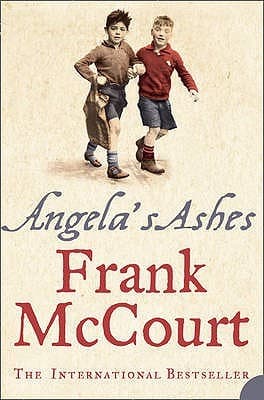
- Angela's Ashes
Frank McCourt
4.1 (540k) average on GoodreadsBiographyFrank McCourt's 'Angela's Ashes' (1996) also offers a vivid portrayal of Irish poverty and family dysfunction, but from a first-person, often humorous and sentimental perspective of childhood hardship. In contrast, 'Amongst Women' adopts a more detached, omniscient narrative voice, focusing on the adult dynamics of power and control within a family unit rather than the resilience of childhood. While both depict challenging Irish fathers, McCourt's father is largely absent and alcoholic, whereas McGahern's Moran is ever-present, his control intellectual and emotional, making 'Amongst Women' a more penetrating study of patriarchal tyranny rather than simply hardship.
- The Old Man and the Sea
Ernest Hemingway
3.8 (831k) average on GoodreadsLiterary FictionA Cuban fisherman's long struggle with a giant marlin becomes a story of endurance and dignity, now retold for young adults with illustrations, phonetic guides, and writing prompts in Traditional Chinese.
- One Hundred Years of Solitude
Gabriel García Márquez
4.1 (753k) average on GoodreadsLiterary FictionThrough the multi-generational story of the Buendía family, a mythical town deals with the repeating patterns of time, love, and solitude, as the extraordinary mixes with the ordinary.
- The Goldfinch
Donna Tartt
3.9 (720k) average on GoodreadsLiterary FictionHaunted by a tragic explosion and clutching a stolen Dutch masterpiece, a young orphan navigates the opulent drawing rooms of New York and the gritty underbelly of the art world, desperately seeking connection and redemption amidst a life spiraling into crime and obsession.
- Little Fires Everywhere
Celeste Ng
4.1 (713k) average on GoodreadsLiterary FictionIn Shaker Heights, an artist and her daughter move in, and their free-spirited lives clash with a rule-bound matriarch, revealing hidden conflicts beneath a perfect surface.





Enjoyed the summary?
A summary gives you the shape of the book. The book itself has the detail, the examples and the voice.
Find Amongst Women on AmazonAs an Amazon Associate, BookBrief earns from qualifying purchases. How we're funded