
Synopsis
Covers the whole plot, including the ending.
- Difficulty
- Easy
- Pacing
- Moderate
- Mood
- Heartwarming, Hopeful, Adventurous, Moving
- Read it if
- You enjoy historical fiction set during WWII, stories about unique human-animal bonds, and tales of resilience and survival.
- Skip it if
- You prefer fast-paced action over character-driven narratives, or find stories about war and displacement too heavy.
An Elephant in the Garden Plot Summary
Covers the whole plot, including the ending.
A Grandmother's Tale Begins
The story begins with an elderly woman named Lizzie in Canada. Her grandson, Karl, asks about her past, especially her accent and stories his mother hinted at about her childhood during World War II. Lizzie, after some hesitation, decides to share her experiences, starting with her life in Dresden, Germany, in 1945. She explains that she was then Elizabeth and lived with her mother, father, and younger brother, Karli. This sets up the flashback story, establishing the personal and historical background.
Marlene's Arrival and the Looming Threat
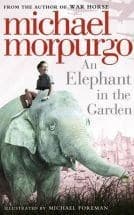
Elizabeth's mother, a zookeeper, cares for a young elephant named Marlene. As the war worsens and Allied bombing raids on Dresden become more frequent, the zoo director decides to kill all dangerous animals, including the elephants, for public safety and to prevent their escape during bombings. Elizabeth's mother cannot let Marlene be killed, so she secretly brings the elephant home to their garden. This act of compassion introduces the main companion who will share the family's fate. The family now faces the immediate danger of war plus the difficulty of housing a large elephant.
The Bombing of Dresden and Desperate Escape
The firebombing of Dresden begins, turning the city into a firestorm. Elizabeth, Karli, their mother, and father, along with Marlene, take shelter in their cellar. When they come out, their home is a ruin, and the city is destroyed. With no home left and the city dangerous, the family decides to flee. Their father, a German soldier on leave, understands the seriousness of their situation and the need to escape the advancing Russian army. The challenge of their journey is clear as they must travel through the ruined city with an elephant.
Journey Through the Snow
The family, led by their mother and father, starts their journey west through the snow-covered German countryside. Marlene, calm and cooperative, becomes part of their group. They face freezing temperatures, hunger, and the constant threat of being found by Allied and Soviet forces. Their father uses his military knowledge to guide them, but conditions are harsh. They meet other refugees, some suspicious, some kind. The difficulty of traveling with an elephant in wartime is clear, yet Marlene's presence also offers comfort and a strange hope.
Encounters and Near Misses
As they travel through the war-torn land, the family meets various groups. They avoid Russian soldiers, hiding Marlene in dense woods. They also encounter German soldiers, some sympathetic, others hardened by war. Marlene's presence is both a risk and a benefit: a potential giveaway, but also a distraction or a source of wonder that sometimes helps them. Elizabeth's mother uses Marlene to get food or safe passage, appealing to people's curiosity or compassion. These encounters show the human side of war, with both cruelty and unexpected kindness.
The American Pilot and the Farm
During their journey, the family finds a crashed American bomber and rescues the injured pilot, Peter. They help him despite the risks. Peter joins their group. They find shelter at a deserted farm, where they can rest and find food. Marlene stays with them, surprising any passing villagers or soldiers. This time gives them a short break from constant danger, allowing the family to regain strength and Elizabeth to bond with Peter. It also shows Marlene's ability to draw attention, both good and bad.
The Russian Advance and Renewed Flight
Their safety at the farm ends with news of advancing Russian troops. The family, with Peter and Marlene, must flee again. The urgency grows as the Russians are known for their harsh treatment of German civilians. They continue their westward journey, dangers increasing with the front lines' closeness. The family's determination to protect each other and Marlene stays strong. This renewed flight shows the relentless nature of their ordeal and the constant threat of capture or violence.
Reaching the River Elbe
The family reaches the Elbe River, a barrier and a crossing point to the American-occupied zone. Getting Marlene across the wide river is a huge challenge. Their father plans how to do it. They meet other refugees trying to cross, showing the number of displaced people. Tension is high as they must cross the river under the eyes of potential enemies, knowing a mistake could cost them everything. This part builds suspense around their biggest logistical hurdle.
A New Home and a Sad Farewell
After crossing the Elbe River, the family is in the American-controlled sector, safe from the Russian advance. They are offered refuge in a small village. However, keeping an elephant is impossible in their new, civilian life. Elizabeth's mother, with sadness, decides to find Marlene a new, safe home. Marlene is taken to a circus, where she will be cared for. This emotional goodbye marks the end of their journey with Marlene, showing the move from wartime survival to a new, uncertain peace.
Life After the War and Future Connections
The family slowly rebuilds their lives after the war. Elizabeth's father returns to his job, and life becomes somewhat normal. Elizabeth stays in touch with Peter, the American pilot they rescued, who returned to America. Their friendship grows, and he invites her to join him in Canada. Elizabeth accepts, leaving Germany to start a new life. This explains how the elderly Lizzie came to be in Canada, connecting her past as Elizabeth with her present. It shows the lasting impact of the war and the unexpected bonds formed during crisis.
The End of the Story, The Beginning of Understanding
Lizzie finishes telling her story to her grandson, Karl. She thinks about the impact of her wartime experiences, especially Marlene, who represented hope, resilience, and kindness in dark times. She explains that Marlene was more than an elephant; she was a reason to keep going, a symbol of life amidst death. Karl, moved by his grandmother's story, now understands her strength and unique history. The story ends with peace and understanding, bridging the generational gap through shared history.
Principal Figures
Elizabeth (Lizzie)
Protagonist
A young German girl who survives the bombing of Dresden and flees with her family and an elephant.
Elizabeth, or Lizzie as she is known in her old age, is the central character and narrator of the story. As a young girl in Dresden, she is initially naive about the full horrors of the war but quickly matures through her experiences. She is observant, compassionate, and resilient, forming a deep bond with Marlene the elephant. Her perspective as a child refugee provides a unique and often poignant view of the war. Her journey tests her courage and her capacity for hope, ultimately shaping her into the strong woman she becomes.
Relationships: Karli (Younger brother, whom she protects and cares for.); Mother (Deeply loving and resourceful, the primary caregiver and decision-maker.); Father (Protective and strategic, guiding the family through danger.); Marlene (Her extraordinary companion and symbol of hope.); Peter (An American pilot she helps rescue, who becomes a lifelong friend and eventually her husband.)
Mother
Supporting
A brave zookeeper who saves an elephant and leads her family to safety.
Elizabeth's mother is the driving force behind the family's survival. As a zookeeper, she possesses an extraordinary love for animals, particularly Marlene. Her decision to rescue Marlene from the zoo is a testament to her compassion and defiance. She is incredibly resourceful, brave, and determined, often making difficult decisions to protect her children and guide them through the war-torn landscape. Her unwavering spirit and practical skills are crucial to the family's ability to endure their perilous journey.
Relationships: Elizabeth (Her daughter, whom she fiercely protects.); Karli (Her son, whom she fiercely protects.); Father (Her husband, with whom she shares the burden of leadership.); Marlene (Her beloved elephant, whom she saves and cares for.)
Father
Supporting
A German soldier on leave who guides his family through the dangers of wartime Germany.
Elizabeth's father is a practical, strategic, and protective figure. As a German soldier, he has a pragmatic understanding of the war's dangers and uses his knowledge to navigate the family's escape. He is a man of few words but strong actions, providing leadership and making crucial decisions during their journey. His presence offers a sense of security and direction, even amidst the chaos. He is dedicated to his family's survival and works alongside his wife to ensure their safety.
Relationships: Elizabeth (His daughter, whom he protects.); Karli (His son, whom he protects.); Mother (His wife, with whom he shares the responsibility of the family's safety.)
Karli
Supporting
Elizabeth's younger brother, who offers a child's perspective and vulnerability to the journey.
Karli is Elizabeth's younger brother, a small child who experiences the war through a more innocent, yet often frightened, lens. His youth makes him particularly vulnerable, and he often relies on Elizabeth and his parents for comfort and protection. His occasional questions and observations highlight the absurdity and horror of their situation from a child's viewpoint. Despite his young age, he shows resilience and an endearing attachment to Marlene, often finding joy and wonder in the elephant's presence.
Relationships: Elizabeth (His older sister and protector.); Mother (His primary caregiver.); Father (His protector.); Marlene (His comforting companion.)
Marlene
Supporting
A young elephant, saved from the zoo, who becomes the unlikely companion and symbol of hope for the family.
Marlene is the titular 'elephant in the garden' and a unique character in her own right. She is a young elephant, initially destined for death at the Dresden Zoo, but saved by Elizabeth's mother. Despite her size, she is remarkably gentle, docile, and cooperative, adapting to the extraordinary circumstances of traveling with a human family through war-torn Germany. Marlene's presence is both a logistical challenge and a profound source of comfort, wonder, and even a strange kind of hope for the family. She becomes a symbol of life and resilience amidst the destruction.
Relationships: Mother (Her primary rescuer and caregiver.); Elizabeth (Her young friend and companion.); Karli (Her young friend and companion.)
Peter
Supporting
An American pilot rescued by the family, who becomes a lifelong friend.
Peter is an American pilot whose plane is shot down, and he is rescued by Elizabeth's family. Despite being an enemy soldier, his humanity transcends the conflict, and he quickly integrates into their group. He is grateful for their help and offers what assistance he can, particularly in navigating the language barrier and providing moral support. He forms a strong bond with Elizabeth, which deepens over time, leading to a lifelong friendship and eventual marriage. His presence highlights the possibility of human connection and compassion even across enemy lines.
Relationships: Elizabeth (His rescuer, close friend, and future wife.); Mother (His rescuer.); Father (His rescuer.)
Karl
Mentioned
Lizzie's grandson, whose curiosity prompts her to tell her story.
Karl is Lizzie's grandson in the present day. His curiosity about his grandmother's past and her German accent serves as the catalyst for the entire narrative. He represents the younger generation seeking to understand the historical events that shaped their elders. Though not a character in the main wartime narrative, his role is crucial in framing the story and emphasizing the importance of remembering and sharing history.
Relationships: Elizabeth (Lizzie) (His grandmother, the storyteller.)
Zoo Director
Mentioned
The official who orders the culling of zoo animals in Dresden.
The Zoo Director is a minor but significant character who makes the grim decision to cull the dangerous animals at the Dresden Zoo, including the elephants, to prevent them from escaping during bombings. While his decision is presented as a tragic necessity of war, it is this order that directly leads to Elizabeth's mother's decision to rescue Marlene, thereby setting the entire plot in motion. He represents the harsh realities and impossible choices forced upon people during wartime.
Relationships: Mother (Her superior at the zoo.)
Themes & Insights
Resilience and Survival
The story is about the resilience of Elizabeth's family facing great hardship. They endure their home's destruction, dangerous journeys through war-torn lands, freezing temperatures, hunger, and the constant threat of enemy soldiers. Their ability to adapt, maintain hope, and keep moving, often with an elephant, shows the human spirit's will to survive. Marlene herself symbolizes this toughness, surviving against the odds.
“We had to survive. We simply had to.”
Compassion and Humanity Amidst War
Despite the brutal setting of World War II, the story highlights acts of compassion. Elizabeth's mother's decision to save Marlene, an act of empathy for an animal, is central. The family's choice to rescue and care for Peter, an 'enemy' pilot, further shows this theme. Even amidst widespread destruction, people choose kindness, offering help and forming bonds that go beyond nationality. These acts of humanity contrast with the surrounding violence.
“She was a living, breathing creature, and she needed us as much as we needed her.”
The Unlikely Companion and Hope
Marlene, the elephant, is a symbol of hope and an unusual companion. Her presence, while causing practical difficulties, also gives comfort, distraction, and a reason for the family to keep going. She is a source of wonder and a reminder of life's beauty amidst devastation. Her existence with them is unusual, a miraculous thread of the extraordinary woven into ordinary suffering, showing that hope can be found in unexpected ways during dark times.
“Marlene was our hope. She was our reason to keep going.”
The Trauma and Memory of War
The story, told by Lizzie to her grandson, explores the lasting effects and the importance of remembering war. Lizzie's hesitation to share her past, and the detail with which she eventually does, shows how deeply these experiences affect people for life. The story emphasizes that while physical wounds may heal, the emotional scars of war remain, and sharing these memories is important for understanding history and preventing future conflicts. It highlights the burden and importance of bearing witness.
“Some things you never forget, no matter how hard you try.”
Family Bonds and Unity
At its heart, the book shows the strength of family bonds. Elizabeth's family—her mother, father, and younger brother Karli—stay together through every difficulty. Their love, support, and shared determination to protect each other help them survive. The journey strengthens their connections, showing that in times of crisis, the family unit is a strong source of strength and comfort. Even with Peter and Marlene joining, this core unit remains most important.
“We were a family, and we would face it all together.”
Plot Devices & Literary Techniques
Frame Narrative
An elderly Lizzie narrates her childhood story to her grandson, Karl.
The story employs a frame narrative, where the present-day interaction between an elderly Lizzie (Elizabeth) and her grandson, Karl, sets up the main story. Lizzie's recollections of her childhood during World War II in Dresden form the core of the book. This device allows for reflection and provides a sense of gravitas and historical perspective, as the story is told from the vantage point of someone who has lived through the events and processed their meaning over time. It also emphasizes the importance of intergenerational storytelling and memory.
Symbolism of Marlene the Elephant
Marlene represents hope, life, and the extraordinary amidst the mundane horror of war.
Marlene is not just a character but a powerful symbol. In a world consumed by death and destruction, she represents life, innocence, and the unexpected. Her very presence in the family's flight is an anomaly, a touch of the fantastical that contrasts sharply with the brutal reality of war. She symbolizes hope, a reason for the family to keep going, and the enduring power of compassion. She also highlights the absurdity of war, where an elephant becomes a refugee alongside humans.
Foreshadowing (Subtle)
Hints of approaching danger and future events are woven throughout the narrative.
While not overt, the narrative uses subtle foreshadowing to build tension and indicate impending events. For instance, early discussions about the intensifying air raids and the zoo director's grim decision hint at the devastation to come. The constant threat of Russian troops, mentioned by Elizabeth's father, builds suspense for their eventual encounters. These hints prepare the reader for the escalating dangers and the family's desperate flight, adding to the dramatic impact of the plot developments without giving away specific outcomes.
First-Person Retrospective Narration
The story is told from the perspective of an older Elizabeth looking back on her childhood.
The entire wartime narrative is recounted by Elizabeth (Lizzie) in the first person, but from the perspective of her elderly self. This allows for a blend of a child's immediate experience and an adult's reflective wisdom. The reader experiences the events through Elizabeth's eyes as a child, but also benefits from the older Lizzie's insights and emotional processing of those memories. This narrative choice adds depth and emotional resonance, making the story both immediate and profoundly reflective.
An Elephant in the Garden Quotes
“An elephant is a very big animal, but it is not a monster.”
“We are all refugees now, all of us, running from the fire.”
“Sometimes the smallest things can make the biggest difference.”
“War makes monsters of us all, but it is how we choose to act that defines us.”
“The elephant did not know about war. She only knew about kindness.”
“Home is not a place, but the people you love and who love you.”
“In the darkness, we found light in each other.”
“The bombs fell like rain, but we did not drown.”
“An elephant remembers, just as we remember.”
“We carried our past with us, but we walked toward our future.”
“The world was burning, but in our hearts, we kept a small flame alive.”
“Sometimes you have to be brave enough to be kind.”
“The elephant was our guardian, and we were hers.”
“In war, the ordinary becomes extraordinary.”
“We learned that even in the worst times, there is goodness to be found.”
Quiz
10 questions on the plot and the characters. Each answer comes with a short explanation.
Question 1
What is the name of the elephant that Elizabeth and Karli's family tries to save?
- Matilda
- Marlene
- Martha
- Mira
Show answer
B. Marlene The elephant is named Marlene, and she is the young elephant that Elizabeth and Karli's mother works with at the Dresden zoo. Her bond with Marlene is what motivates the family's efforts to save her from being shot.
Question 2
Why does the zoo director order that dangerous animals, including elephants, be shot?
- Because the animals are sick and pose a health risk
- To prevent them from escaping and causing harm during the bombing of Dresden
- To use their meat for food during the war shortages
- Because the zoo is closing down due to lack of funds
Show answer
B. To prevent them from escaping and causing harm during the bombing of Dresden The zoo director orders the shooting of dangerous animals to prevent them from escaping and causing chaos or injury if the zoo is bombed during the Allied air raids on Dresden in 1945.
Question 3
Where do Elizabeth and Karli's family initially hide Marlene to save her from being shot?
- In the basement of their house
- In a nearby forest
- In the back garden of their home
- In a barn on the outskirts of town
Show answer
C. In the back garden of their home Unable to accept Marlene's fate, the mother moves her into the back garden of their home, which sets off the central conflict of the story as they try to protect her during the bombings.
Question 4
What major historical event forces the family to flee their home with Marlene?
- The invasion of Poland
- The bombing of Dresden by Allied forces
- The Battle of Stalingrad
- The D-Day landings
Show answer
B. The bombing of Dresden by Allied forces The bombing of Dresden in February 1945 destroys their home, compelling the family to embark on a perilous journey through the snow-covered landscape to escape the devastation.
Question 5
Which troops are the family trying to avoid as they flee through the snow-covered landscape?
- American troops
- British troops
- Russian troops
- French troops
Show answer
C. Russian troops As the family flees Dresden, they must avoid Russian troops who are advancing closer to the city in the final stages of World War II, adding to the danger of their escape.
Question 6
What is a key theme explored in 'An Elephant in the Garden'?
- The importance of technological advancement during war
- The bond between humans and animals in times of crisis
- The economic struggles of post-war reconstruction
- The political ideologies leading to World War II
Show answer
B. The bond between humans and animals in times of crisis The novel highlights themes of compassion and resilience, focusing on how the family's love for Marlene drives them to protect her amidst the horrors of war, emphasizing human-animal connections.
Question 7
How does the presence of Marlene complicate the family's escape from Dresden?
- She requires frequent medical attention that slows them down
- Her large size and needs make travel difficult and draw attention
- She is aggressive towards other refugees they encounter
- She refuses to leave the garden, forcing them to stay behind
Show answer
B. Her large size and needs make travel difficult and draw attention Marlene's size and the challenges of feeding and sheltering an elephant in a war-torn, snowy environment make the journey treacherous and conspicuous, increasing the risks from troops and bombings.
Question 8
What role does Elizabeth and Karli's mother have at the zoo?
- She is the zoo director
- She is a veterinarian specializing in elephants
- She works there, with Marlene as her favourite animal
- She is a security guard tasked with protecting the animals
Show answer
C. She works there, with Marlene as her favourite animal The mother works at the Dresden zoo, where she forms a special bond with Marlene, which motivates her decision to save the elephant despite the dangers posed by the war.
Question 9
In what way does the setting of a snow-covered landscape impact the story?
- It provides a picturesque backdrop that contrasts with the war's violence
- It symbolizes the coldness and isolation of the characters' emotions
- It adds to the physical hardships and dangers of the family's flight
- It allows Marlene to blend in with the environment, aiding their escape
Show answer
C. It adds to the physical hardships and dangers of the family's flight The snow-covered landscape intensifies the peril of the journey, making travel difficult for both the family and Marlene, and heightening the stakes as they evade troops and seek shelter.
Question 10
Which of the following best describes the narrative perspective of 'An Elephant in the Garden'?
- It is told from Marlene's point of view as an animal narrator
- It uses a third-person omniscient narrator focusing on multiple characters
- It is recounted by Elizabeth as a first-person narrator reflecting on past events
- It is presented through a series of letters between family members
Show answer
C. It is recounted by Elizabeth as a first-person narrator reflecting on past events The story is narrated by Elizabeth, who looks back on the events of 1945, providing a personal and reflective account of the family's experiences with Marlene during the war.
An Elephant in the Garden FAQ
What is 'An Elephant in the Garden' about?
The novel follows Elizabeth, Karli, and their mother in Dresden during WWII as they flee the city's bombing with Marlene, a young elephant from the zoo where their mother works. Their journey through snow-covered landscapes while avoiding Russian troops forms the core of this survival story about family, compassion, and resilience during war.
Why should I read 'An Elephant in the Garden'?
This book offers a unique perspective on WWII through the eyes of children and an animal, blending historical events with themes of empathy and survival. Michael Morpurgo's accessible yet emotionally resonant storytelling makes complex wartime experiences understandable for young readers while delivering a powerful message about humanity's capacity for kindness even in darkness.
What is the background/setting of 'An Elephant in the Garden'?
Set primarily in Dresden, Germany in 1945 during the final months of WWII, the story begins at the city zoo before expanding to the bombed-out urban landscape and eventually the perilous countryside as the family flees advancing Russian troops. The historical context of the Dresden bombings provides a tense, authentic backdrop.
What are the most memorable quotes?
Key quotes include the zoo director's chilling declaration that 'the dangerous animals must be shot' before the bombing, and the mother's determined response: 'I cannot give her up.' Another poignant moment comes when Elizabeth reflects on their journey: 'We were not just running from bombs, but running toward something, though we did not know what.'
What writing style does the author use?
Morpurgo employs straightforward, accessible prose suitable for young readers while maintaining emotional depth. The narrative blends historical detail with personal perspective, using Elizabeth's viewpoint to ground the extraordinary events in relatable childhood experiences. The pacing alternates between tense survival moments and reflective passages about family bonds.
What minor details add significant meaning?
Small details like the mother mending Marlene's blanket symbolize care transcending species, while Karli's constant counting of their steps reflects childhood anxiety manifesting as ritual. The recurring mention of Marlene's footprints in the snow—initially conspicuous but eventually covered—parallels the family's hope to disappear from danger.
What are some subtle foreshadowing moments?
Early mentions of the zoo director's insistence that elephants are 'dangerous animals' foreshadow the risks of traveling with Marlene. Elizabeth's observation that 'the sky looked too quiet' before the bombing hints at impending disaster. Karli's nightmares about 'big feet stomping' subtly reference both elephants and marching soldiers.
What unexpected character connections exist?
The Russian soldier who eventually helps them shares a surprising bond with the mother through their mutual understanding of animal care—revealing shared humanity across enemy lines. Additionally, a farmer they encounter recognizes Marlene from pre-war zoo visits, creating a momentary bridge to normalcy amid chaos.
What are unspoken character motivations?
The mother's determination to save Marlene stems not just from affection but from a deeper need to preserve innocence amid war's destruction. Elizabeth's protective behavior toward Karli masks her own fear of losing family stability. Karli's attachment to Marlene represents a child's search for comfort in something larger than himself.
What psychological complexities do characters exhibit?
Elizabeth balances childhood vulnerability with premature responsibility, often suppressing her fears to support Karli. The mother experiences constant tension between practical survival instincts and moral convictions about protecting life. Even Marlene displays animal anxiety that mirrors the human characters' trauma, reacting to bombs with the same terror.
What are the major emotional turning points?
The bombing of Dresden destroys their home but solidifies their commitment to one another. When Russian troops nearly capture them, the family's decision to trust a sympathetic soldier marks a shift from seeing enemies as monolithic threats. The final reunion with their father provides closure while acknowledging permanent loss.
How do relationship dynamics evolve?
Elizabeth and Karli transition from typical sibling squabbles to interdependent survival partners. The mother's authority becomes more collaborative as the children take on adult responsibilities. Their relationship with Marlene evolves from caretaking to genuine companionship, with the elephant becoming an emotional anchor rather than just a burden.
Which parts remain ambiguous or open-ended?
The ultimate fate of their Dresden neighbors and zoo colleagues is left uncertain, emphasizing war's fragmentation of communities. The Russian soldier's background and motivations are only partially revealed, preserving the mystery of individual stories within larger conflicts. The family's long-term adjustment after reunion is not detailed, focusing instead on the journey's immediate impact.
What are controversial scenes or decisions?
The mother's choice to prioritize saving an elephant over more practical preparations for bombing evacuation raises ethical questions about valuing animal versus human life. Their decision to trust the Russian soldier involves risking capture by enemy forces. The zoo director's order to shoot animals rather than evacuate them presents a grim wartime dilemma.
'An Elephant in the Garden' ending explained: how it ends & what it means
The family reunites with their father after surviving the journey, with Marlene ultimately finding sanctuary. The ending emphasizes that survival required both practical resilience and maintained compassion—symbolized by preserving Marlene. It suggests that humanity's best qualities can endure even through war's dehumanizing violence, with the elephant representing hope carried through darkness.
About the author

Michael Morpurgo is a British author known for his children's fiction, often exploring themes of war and nature. His notable works include "War Horse," "Private Peaceful," "The Butterfly Lion," "An Elephant in the Garden," "The Amazing Story of Adolphus Tips," and "Born to Run." Morpurgo's storytelling often combines historical events with imaginative narratives.
Similar books
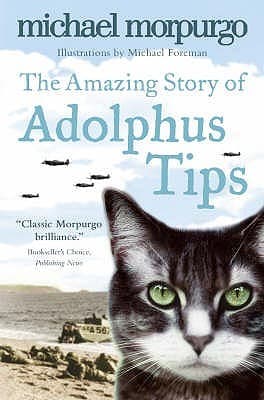
- The Amazing Story of Adolphus Tips
Michael Morpurgo
4.0 (6k) average on GoodreadsChildren'sFeatures a young girl and her beloved pet during WWII, highlighting themes of loss and friendship.
- The Butterfly Lion
Michael Morpurgo
4.1 (9k) average on GoodreadsChildren'sExplores the deep bond between a child and an unusual animal, set against a historical backdrop.
- War Horse
Michael Morpurgo
4.1 (42k) average on GoodreadsChildren'sA poignant story of an animal caught in the throes of war, told from a unique perspective.
- Harry Potter and the Sorcerer's Stone
J.K. Rowling
4.5 (7M) average on GoodreadsFantasyRescued from a miserable life under the stairs, an orphaned boy discovers he's a wizard destined for a magical school, where he uncovers a dangerous secret tied to the dark wizard who murdered his parents.
- The Hobbit, or There and Back Again
J.R.R. Tolkien
4.3 (2.9M) average on GoodreadsFantasyA comfort-loving hobbit named Bilbo Baggins is whisked away by a mischievous wizard and a band of dwarves on an unexpected journey to reclaim stolen treasure from a fearsome dragon, discovering courage and a magical ring along the way.
- Harry Potter and the Goblet of Fire
J.K. Rowling
4.6 (2.6M) average on GoodreadsFantasyA bewildered Harry Potter, underage and thrust into a deadly Triwizard Tournament, must brave dragons, mermaids, and a resurgent dark magic to survive a year that will forever alter the wizarding world.





Enjoyed the summary?
A summary gives you the shape of the book. The book itself has the detail, the examples and the voice.
Find An Elephant in the Garden on AmazonAs an Amazon Associate, BookBrief earns from qualifying purchases. How we're funded