
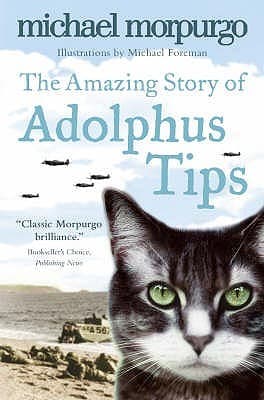
Synopsis
Covers the whole plot, including the ending.
- Difficulty
- Easy
- Pacing
- Moderate
- Mood
- Heartwarming, Hopeful, Courageous, Historical
- Read it if
- You enjoy heartwarming historical fiction for young readers, featuring courageous characters, animal companionship, and the backdrop of World War II.
- Skip it if
- You prefer fast-paced thrillers or stories without a strong emotional core, or if you dislike animal-centric plots.
The Amazing Story of Adolphus Tips Plot Summary
Covers the whole plot, including the ending.
A Diary Discovered: Michael Learns of Slapton
The story begins with Michael, a young boy today, finding his Grandma Lily's old diary. He does not want to read it at first, but his grandfather tells him it shares their family's story and the events that shaped Lily's life during World War II. As Michael reads, he goes back to 1943, to the village of Slapton in Devon, England. Young Lily Tregenza lives on a farm with her mother and grandfather. Her father is fighting in the war. While there are evacuees in the village, the war feels far away until a sudden announcement changes everything.
The Evacuation Order: Slapton Cleared for War Games
Life for Lily and the other Slapton residents changes when an urgent announcement is made. The whole area, including Slapton village and its farms, must be evacuated. Over 3,000 people have six weeks to leave their homes and farms. This is necessary for Allied forces to practice their D-Day landings, preparing for the invasion of France. Lily's family, like all the others, must pack their belongings, sell their livestock, and find new places to live. They leave behind generations of history and their home. The news brings shock, anger, and sadness to the community.
Tips Goes Missing Amidst the Chaos
As the evacuation continues, the village is a scene of mess and sadness. Families pack, furniture moves, and the familiar landscape changes. During this, Lily's cat, Tips (short for Adolphus Tips, named after a fish), disappears. Tips is important to Lily, a friend and comfort in an uncertain world. Her disappearance adds more sadness and worry to Lily's already hard experience of leaving home. Lily searches everywhere for Tips, but the cat is gone as the final evacuation day nears.
A New Home and Lingering Hope
Lily and her family move to a small cottage in nearby Dartmouth. They are safe, but Lily struggles to adjust, always thinking about Tips and their abandoned farm. The move is hard, and the sense of loss for their home and the missing cat is clear. Despite the upset, Lily hopes Tips is alive and will return, or that she can find her if she goes back to Slapton. The once-familiar Slapton landscape is now a forbidden zone, heavily guarded for dangerous military exercises.
Meeting the American Soldiers
One day, near the restricted zone, Lily meets two American soldiers, Barry and Harry. They are part of the forces training in the evacuated area. Lily is careful at first, but soon she shares her story about Tips. The soldiers feel for her and, moved by her care for her cat, promise to look for Tips while training inside the zone. Their friendship gives Lily some hope and a link to the world she lost, even as the danger of military exercises continues.
Crossing the Wire: Lily's Dangerous Quest
Weeks pass without news of Tips, despite the soldiers' promises. Military exercises get more intense, with live ammunition and explosions. Lily's worry grows, and she cannot wait any longer. Going against her family's warnings and military rules, she decides to act. Under cover of darkness, Lily slips past barbed wire and 'Keep Out' signs, entering the dangerous training zone, determined to find Tips, whatever happens. This shows her deep love and courage.
A Perilous Search and a Frightening Discovery
Inside the evacuated zone, Lily walks through the quiet, abandoned village. She finds her old home, but it is empty and sad, a reminder of what they lost. The sounds of distant explosions and gunfire make her aware of the danger. She calls for Tips, searching every familiar spot, but the cat is not there. The experience is scary, a mix of memory and fear, as she walks through the ruins of her former life. She barely avoids being caught by patrolling soldiers, showing the constant threat of discovery and the seriousness of her trespass.
Reunion and a Narrow Escape
Just as Lily is about to give up, Barry and Harry find her. They are relieved but also angry about her recklessness. They scold her but quickly see her deep sadness. As they lead her out of the zone, Tips suddenly appears, seemingly out of nowhere, healthy and alive. The reunion is full of tears and joy. The soldiers help Lily and Tips safely out of the forbidden area, showing the luck and bravery involved in their escape. Lily is happy to have her cat back, a small win amid the larger war.
The Aftermath of Exercise Tiger
After the war, Lily and her family return to their farm, though the village shows signs of military occupation. Years later, Lily learns the truth about a devastating event during D-Day training: Exercise Tiger. German E-boats attacked a convoy of American LSTs (Landing Ship, Tanks), killing over 700 American servicemen. This loss was kept secret for decades to keep wartime morale and D-Day plans hidden. Lily thinks about how close she and her family were to this tragedy, and how her small story of Tips was part of a big historical event.
A Legacy of Remembrance
Michael finishes reading his Grandma Lily's diary, moved by her story. He now understands the sacrifices made during the war, the displacement of the Slapton villagers, and the lasting power of love for a pet. He also learns about the memorial at Slapton Sands for the American soldiers who died during Exercise Tiger. This shows the community's effort to remember the tragedy. Michael realizes his grandmother's story of a lost cat is a personal account woven into a major historical event, showing the importance of remembering those who lived through such times.
Principal Figures
Lily Tregenza
Protagonist
A young girl from Slapton who desperately searches for her lost cat during WWII.
Lily is a spirited and deeply compassionate young girl living on a farm in Slapton, Devon, during World War II. Her life revolves around her family, her home, and especially her beloved cat, Tips. When her village is evacuated for D-Day training, Lily experiences profound loss and displacement. Her unwavering love for Tips drives her to extraordinary acts of courage, even venturing into a dangerous military zone. She represents the innocent civilian perspective of war and the personal impact of historical events. Her diary forms the narrative backbone of the story, allowing her experiences to be shared across generations.
Relationships: Tips (beloved pet cat); Michael (her grandson, who reads her diary); Grandpa (her husband, who encourages Michael to read the diary); Mother (her supportive, though worried, mother); Father (her father, away fighting in the war); Barry (American soldier, friend and helper); Harry (American soldier, friend and helper)
Tips (Adolphus Tips)
Central Figure/Catalyst
Lily's adventurous and beloved cat, whose disappearance drives much of the plot.
Tips, named 'Adolphus Tips' after a type of fish, is Lily's cherished ginger cat. She is more than just a pet; she is a source of comfort, stability, and joy for Lily amidst the uncertainties of wartime. Tips is an independent and adventurous feline, prone to wandering, which leads to her disappearance during the Slapton evacuation. Her absence becomes the primary motivation for Lily's brave and dangerous quest. Tips symbolizes the innocence and normalcy that war disrupts, and her eventual return represents hope and the enduring power of connection, even in the face of immense upheaval.
Relationships: Lily Tregenza (her owner, deeply loved)
Michael
Narrator/Framing Device
Lily's grandson, who discovers and narrates the story from her diary.
Michael is the contemporary narrator of the story, providing a framing device for Lily's wartime experiences. He is initially a typical modern child, somewhat disengaged from history, but becomes deeply engrossed and moved by his grandmother's diary. Through reading Lily's words, he gains a profound understanding of his family's past, the impact of World War II, and the importance of memory and remembrance. He serves as the reader's entry point into the historical narrative, allowing for reflection on how past events continue to shape the present.
Relationships: Lily Tregenza (his grandmother); Grandpa (his grandfather, Lily's husband)
Grandpa
Supporting
Lily's husband, who encourages Michael to read her diary.
Grandpa is Lily's husband in the present day. He plays a crucial role in encouraging Michael to read Lily's diary, understanding the significance of her story and its connection to their family history. He acts as a bridge between the past and present, providing context and gentle guidance to Michael. His presence underscores the enduring nature of Lily's experiences and the importance of passing down stories through generations. He is a quiet but firm advocate for remembrance and understanding.
Relationships: Lily Tregenza (his wife); Michael (his grandson)
Lily's Mother
Supporting
Lily's strong and resilient mother, coping with the war and evacuation.
Lily's mother is a pillar of strength and practicality for the family during the challenging times of war and evacuation. She manages the farm, copes with her husband being away, and tries to maintain a sense of normalcy for Lily. She is deeply concerned for Lily's safety and well-being, especially when Tips goes missing, and is distraught by the forced evacuation from their home. Her character embodies the resilience and quiet suffering of women on the home front during WWII.
Relationships: Lily Tregenza (her daughter); Lily's Father (her husband)
Lily's Father
Mentioned
Lily's father, away fighting in the war.
Lily's father is not physically present in the main narrative, as he is away fighting in the war. His absence is a constant backdrop to Lily's life, representing the sacrifices and separations caused by the conflict. His letters home are a source of comfort and connection, reminding the family of the larger war effort. His role highlights the impact of war on families and the longing for reunion.
Relationships: Lily Tregenza (his daughter); Lily's Mother (his wife)
Barry
Supporting
An American GI who befriends Lily and helps her search for Tips.
Barry is one of the two American soldiers Lily encounters near the restricted zone. He is kind, understanding, and empathetic towards Lily's distress over her lost cat. Despite the serious nature of his military duties, he takes the time to listen to Lily and promises to help her search for Tips. He and Harry represent the human connection and compassion that can transcend national differences and wartime circumstances, offering a glimmer of hope and assistance to Lily.
Relationships: Lily Tregenza (friend); Harry (fellow American soldier)
Harry
Supporting
Another American GI who assists Lily in her search for Tips.
Harry is Barry's fellow American soldier. Like Barry, he is friendly and sympathetic to Lily's plight, offering to help her look for Tips while they are training in the evacuated area. He and Barry provide a vital connection for Lily, offering practical assistance and emotional support. Their willingness to help a young girl find her cat, despite the dangers and strict rules, highlights their humanity and the unexpected friendships that can form during wartime.
Relationships: Lily Tregenza (friend); Barry (fellow American soldier)
Themes & Insights
Loss and Displacement
Loss and displacement are central to the story, mainly through the forced evacuation of Slapton. Lily and her family, along with 3,000 other villagers, lose their homes, jobs, and a deep connection to their land. This physical displacement combines with emotional loss, especially Lily's sadness over Tips' disappearance. The abandoned village, later marked by military training, shows this theme, illustrating how war can break communities and lives, forcing people to leave everything they know.
“It was like a sudden curse had come down on us all. It makes me wonder if we'll ever see the sun again.”
Love and Loyalty
The strong love and loyalty between Lily and her cat, Tips, are at the heart of the story. Lily's deep bond with Tips makes her go to dangerous lengths to find her, showing the connection between humans and animals. This theme also includes family loyalty, as Lily's family supports each other through the war and evacuation. The loyalty of the American soldiers, Barry and Harry, who help Lily despite risks, shows the power of connection and kindness in hard times, how love can lead to acts of courage.
“I just had to find her. I couldn't leave her there, lost and alone in our abandoned home.”
Courage and Resilience
Courage and resilience appear in many parts of the story. Lily shows courage by ignoring military orders and going into the dangerous zone to find Tips. The villagers show resilience by adapting to their forced move and rebuilding their lives, and later, returning to their damaged homes. The American soldiers, in their training and the D-Day invasion, show a different kind of courage. This theme highlights the human ability to endure hardship, face fear, and keep going for what is important, both personally and globally.
“Barbed wire and Keep Out signs meant nothing to her, nor did the danger of guns and bombs.”
Memory and Remembrance
The story is framed by Michael reading his grandmother's diary, directly addressing memory and remembrance. The diary itself links to the past, ensuring Lily's personal story and the larger historical events of Slapton and Exercise Tiger are not forgotten. The story emphasizes remembering both big war stories and individual human experiences within them. The memorial at Slapton Sands for the fallen American soldiers also stresses the need to commemorate historical tragedies and honor those who suffered and sacrificed.
“It's important to remember, Michael. It's how we learn.”
The Hidden Costs of War
Beyond battlefields, the story shows the costs of war on civilians and the environment. The forced evacuation of Slapton and the village's destruction during military training show the damage from conflict. The secrecy around Exercise Tiger, where hundreds of American soldiers died in a 'friendly fire' incident, reveals the harsh realities and cover-ups that can happen during wartime. This theme questions a romantic view of war, showing its impact on ordinary lives, landscapes, and truth, far from the front lines.
“The war had taken our home, and now it had taken our memories too.”
Plot Devices & Literary Techniques
Framing Narrative (Diary Entry)
The story is told through Michael reading his grandmother Lily's diary.
The entire novel is structured as a framing narrative, where Michael, in the present day, discovers and reads his Grandma Lily's diary. This device allows the historical events of World War II and the Slapton evacuation to be recounted from a personal, first-person perspective, making the past immediately accessible and relatable. It also creates a sense of discovery and intimacy, as the reader experiences the story alongside Michael. The framing narrative emphasizes the theme of memory and the intergenerational transmission of history, connecting the past to the present through a tangible artifact.
First-Person Perspective (Lily's Diary)
The main plot is narrated directly by young Lily through her diary entries.
Within the framing narrative, the bulk of the story is told in the first-person voice of young Lily Tregenza, as if directly from her diary entries. This perspective provides an immediate, intimate, and authentic account of her experiences. It allows the reader to empathize directly with Lily's fears, hopes, and anxieties during the evacuation and her desperate search for Tips. The innocence of a child's perspective contrasts sharply with the harsh realities of war, making the events even more poignant and impactful, grounding the grand historical narrative in a deeply personal emotional journey.
Symbolism of Tips the Cat
Tips symbolizes innocence, home, and the enduring spirit of hope.
Tips, Lily's beloved cat, serves as a powerful symbol throughout the story. Initially, she represents the innocence and comfort of Lily's pre-war life and home. Her disappearance during the evacuation symbolizes the loss and disruption caused by the war. Lily's desperate search for Tips becomes a quest to reclaim a piece of her lost world and maintain hope amidst despair. Tips's eventual return signifies the resilience of life, the possibility of reunion, and the enduring power of love, even when everything else seems lost or destroyed. She is a tangible representation of what Lily is fighting to protect.
Historical Allusion (Exercise Tiger)
The plot incorporates the real-life D-Day training disaster, Exercise Tiger.
The story cleverly weaves in the real historical event of Exercise Tiger, a disastrous D-Day landing rehearsal in April 1944, where hundreds of American servicemen died due to German attack and friendly fire, and which was kept secret for decades. This historical allusion adds a layer of depth and gravity to Lily's personal story. It highlights the immense stakes and dangers of the military operations happening on her doorstep and contextualizes the evacuation as part of a much larger, more perilous undertaking. The eventual revelation of this tragedy underscores themes of sacrifice, secrecy, and the hidden costs of war, giving greater significance to the seemingly small events of Lily's life.
The Amazing Story of Adolphus Tips Quotes
“When you're a child, you don't really think about the war, not in the same way adults do. It's more of a backdrop to your life.”
“Adolphus Tips was more than just a cat. He was a piece of home, a bit of ordinary in a world that had gone completely mad.”
“The Americans were everywhere. They were loud and cheerful and they had chocolate, but they weren't us.”
“You don't forget a place like Slapton Sands, not when it's been taken over and turned into a battlefield.”
“Sometimes, when you're little, you just accept things. You don't question why. You just get on with it.”
“It was a secret, a terrible secret, and we were all part of it, even if we didn't know the whole truth.”
“He didn't speak much, but he understood. That's what cats do, isn't it? They just know.”
“The sea always remembers. It holds its secrets tight, but sometimes, just sometimes, it gives them up.”
“War takes everything, doesn't it? Not just people, but places, and feelings, and even cats.”
“You can't choose where you're born, or when. But you can choose what you do with it.”
“He was just a soldier, doing his job, and I was just a girl who loved her cat. But our paths crossed.”
“Hope is a funny thing. You lose it, you find it, you lose it again. But it's always there, somewhere.”
“Stories are important, you see. They keep the past alive, and they teach us things.”
“Even in the darkest times, there can be a little bit of light, a little bit of magic, if you know where to look.”
Quiz
10 questions on the plot and the characters. Each answer comes with a short explanation.
Question 1
What is the primary reason Lily and her family, along with 3000 other villagers, are forced to evacuate their homes in Slapton?
- To make way for a new military base to be built.
- The area was needed for Allied forces to practice D-Day landings.
- A secret weapon was being developed that required the village to be empty.
- The village was deemed unsafe due to frequent enemy bombing raids.
Show answer
B. The area was needed for Allied forces to practice D-Day landings. The book clearly states that the Allied forces needed the Slapton area to practice their landings for D-Day, which necessitated the evacuation of all residents.
Question 2
What is the name of Lily's beloved cat, who becomes central to the story?
- Mittens
- Whiskers
- Adolphus Tips
- Shadow
Show answer
C. Adolphus Tips The title of the book, 'The Amazing Story of Adolphus Tips,' directly names Lily's adventurous cat, often referred to simply as Tips.
Question 3
In what year does the main plot of Lily's story take place?
- 1939
- 1941
- 1943
- 1944
Show answer
C. 1943 The description explicitly states, 'It's 1943, and Lily Tregenze lives on a farm, in the idyllic seaside village of Slapton.'
Question 4
Who is Michael in relation to Lily, and how does he learn her story?
- He is her great-grandson, reading letters she wrote.
- He is her grandson, reading her diary.
- He is her nephew, listening to her tell the story.
- He is a historian, researching old village records.
Show answer
B. He is her grandson, reading her diary. The summary states, 'Now, many years later, as Michael is reading his Grandma Lily's diary, he learns about The Amazing Story of Adolphus Tips.'
Question 5
What is the primary motivation for Lily to make friends with the American soldiers?
- She wants to learn more about American culture.
- She hopes they can provide her family with extra rations.
- She needs their help to find her lost cat, Tips, inside the danger zone.
- She is lonely and looking for new companions during the evacuation.
Show answer
C. She needs their help to find her lost cat, Tips, inside the danger zone. Lily is 'frantic to find her' cat, Tips, and 'makes friends with two young American soldiers, who promise to help her,' indicating her primary motivation.
Question 6
What specific historical event serves as the backdrop for the evacuation of Slapton?
- The Battle of Britain
- The Dunkirk Evacuation
- The D-Day landings preparations
- The Blitz of London
Show answer
C. The D-Day landings preparations The text explicitly states that the Allied forces were 'practise their landings for D-day, preparing to invade France,' which caused the evacuation.
Question 7
What does Lily decide to do when her initial efforts to find Tips are insufficient and she is desperate?
- She writes letters to the military authorities asking for help.
- She attempts to cross the barbed wire into the danger zone herself.
- She gives up hope, believing Tips is lost forever.
- She convinces her family to move back into the village illegally.
Show answer
B. She attempts to cross the barbed wire into the danger zone herself. The summary highlights Lily's determination: 'Lily decides to cross the wire into the danger zone to look for Tips herself…'
Question 8
Beyond the immediate plot of finding Tips, what broader themes does the story explore through the setting of the evacuated village?
- The impact of industrialization on rural communities.
- The disruption of war on civilian lives, the strength of friendship, and the meaning of home.
- The challenges of post-war reconstruction and rebuilding.
- The political strategies and alliances of World War II.
Show answer
B. The disruption of war on civilian lives, the strength of friendship, and the meaning of home. The description mentions 'a heart-warming tale of courage and warmth, set against the backdrop of the second world war, about an abandoned village, a lifelong friendship,' which points to the broader themes of war's impact, friendship, and the concept of home.
Question 9
What does the phrase 'lock, stock and barrel' imply about the nature of the villagers' evacuation?
- They were only allowed to take their most valuable possessions.
- They had to leave quickly, without much preparation.
- They were forced to move everything they owned, completely and entirely.
- They were provided with storage for all their belongings.
Show answer
C. They were forced to move everything they owned, completely and entirely. The idiom 'lock, stock and barrel' means entirely, completely, including every part. This emphasizes the comprehensive and absolute nature of the forced evacuation.
Question 10
How does the author, Michael Morpurgo, typically use animals in his stories, as exemplified by Adolphus Tips?
- As comic relief to lighten serious plots.
- As central figures that drive the plot, symbolize innocence, and connect characters.
- As background elements to create a rural setting.
- As metaphors for human characteristics without direct plot involvement.
Show answer
B. As central figures that drive the plot, symbolize innocence, and connect characters. Adolphus Tips is not just a pet but a catalyst for Lily's actions, a symbol of what she loses and fights for, and the central figure around whom the story revolves, a common characteristic of Morpurgo's animal characters (e.g., Joey in War Horse).
The Amazing Story of Adolphus Tips FAQ
What is 'The Amazing Story of Adolphus Tips' about?
'The Amazing Story of Adolphus Tips' is a historical fiction novel set in 1943 during World War II. It tells the story of young Lily Tregenze, whose idyllic village of Slapton, Devon, is evacuated so Allied forces can practice for D-Day. When Lily's beloved cat, Tips, goes missing in the deserted, dangerous zone, Lily, aided by two American soldiers, embarks on a desperate search.
Why should I read 'The Amazing Story of Adolphus Tips'?
You should read this book for its heartwarming blend of historical accuracy, emotional depth, and a compelling narrative told from a child's perspective. It beautifully illustrates themes of resilience, friendship, and the impact of war on ordinary lives, all centered around the touching quest to find a beloved pet amidst chaos.
What is the background/setting of 'The Amazing Story of Adolphus Tips'?
The story is set in the real-life village of Slapton, Devon, England, in 1943. It focuses on the forced evacuation of 3,000 villagers to allow Allied forces to conduct Exercise Tiger, a crucial D-Day landing rehearsal. This historical backdrop provides a unique and dangerous environment for Lily's personal quest.
What are the most memorable quotes?
One memorable quote is 'It's like a sudden curse has come down on us all. It makes me wonder if we'll ever see the sun again,' which encapsulates the villagers' despair during the evacuation. Another could be 'barbed wire and keep-out signs mean nothing to her,' highlighting Tips's fearless nature and the central conflict.
What writing style does the author use?
Michael Morpurgo employs a warm, accessible, yet poignant writing style, blending historical fact with a deeply personal story. The narrative is framed through Michael, reading his Grandma Lily's diary, which adds a layer of reflection and a multi-generational perspective to the events of 1943.
What minor details add significant meaning?
The 'townie' evacuees at school, initially outsiders, subtly highlight the disruption and change affecting even 'untouched' areas before the major evacuation. The specific mention of Exercise Tiger, a real and tragic D-Day rehearsal, grounds the fictional story in a significant historical event, adding gravity to Lily's seemingly small quest.
What are some subtle foreshadowing moments?
Lily's initial observation that her life is 'scarcely touched by the war,' despite her father being away, subtly foreshadows the drastic change that will soon engulf her entire village. The increasing presence of soldiers and talk of 'something big' before the evacuation also hints at the impending upheaval.
What unexpected character connections exist?
The connection between young Lily and the two American soldiers, who become her unexpected allies in finding Tips, is a central unexpected bond. More broadly, the connection between Michael, reading his grandmother's diary decades later, and the past events, reveals a deep, lasting impact of the cat's story on their family.
What are unspoken character motivations?
Beyond finding Tips, Lily's unspoken motivation is to reclaim a sense of normalcy and control in a world turned upside down by war. Her relentless search for her cat represents her fight against the overwhelming powerlessness she feels as her home and community are taken away.
What psychological complexities do characters exhibit?
Lily exhibits a profound resilience and determination, typical of childhood innocence, but also a deep-seated anxiety and fear of loss as her world collapses. The American soldiers, despite their duty, show empathy and a surprising willingness to bend rules, perhaps driven by their own homesickness or the desire to bring a small piece of joy amidst the horrors of war.
What are the major emotional turning points?
A major emotional turning point is the moment Lily and her family are told to evacuate, shattering her perception of safety. Another is when Tips goes missing, plunging Lily into despair and propelling her dangerous search. The eventual reunion, if it happens, would be a huge emotional release.
How do relationship dynamics evolve?
The relationship between Lily and her family shifts from idyllic stability to one of shared displacement and resilience. Her initial wariness of the 'townie' evacuees likely evolves as they all face a common struggle. Most significantly, her bond with the two American soldiers transforms from strangers to trusted confidantes.
Which parts remain ambiguous or open-ended?
While the book aims for a heartwarming resolution, the exact fate of all the evacuated villagers or the long-term emotional scars from such a displacement might be subtly ambiguous. The full extent of the danger Lily faces crossing into the forbidden zone, and the specific challenges of the soldiers, might also be left somewhat to the reader's imagination.
What are controversial scenes or decisions?
The most 'controversial' decision within the story's context is Lily's choice to cross into the dangerous, out-of-bounds military training zone to find Tips. This act, while driven by love, directly defies authority and puts her life at significant risk, sparking debate about the lengths one should go for a pet.
'The Amazing Story of Adolphus Tips' ending explained: how it ends & what it means
The story concludes with Michael, in the present day, having read his Grandma Lily's diary, revealing the full 'amazing story' of Adolphus Tips. The ending typically sees Lily reunited with Tips, often with the help of the soldiers, symbolizing hope and resilience amidst wartime devastation. It means that even in the darkest times, small acts of kindness, determination, and the love for a pet can bring light and create lasting legends that transcend generations.
About the author

Michael Morpurgo is a British author known for his children's fiction, often exploring themes of war and nature. His notable works include "War Horse," "Private Peaceful," "The Butterfly Lion," "An Elephant in the Garden," "The Amazing Story of Adolphus Tips," and "Born to Run." Morpurgo's storytelling often combines historical events with imaginative narratives.
Similar books
- War Horse
Michael Morpurgo
4.1 (42k) average on GoodreadsChildren'sAnother poignant animal story set during wartime by the same author, focusing on the bond between a human and an animal.
- When Hitler Stole Pink Rabbit
Judith Kerr
4.0 (14k) average on GoodreadsChildren'sBoth novels explore the impact of WWII on children, but Kerr's focuses on the experience of Jewish refugees fleeing Nazi Germany, emphasizing themes of exile, adaptation, and identity. Morpurgo's Adolphus Tips centers on internal displacement and the disruption of home life within England, offering a different facet of wartime experience. Kerr's narrative provides a more direct and sustained engagement with the refugee experience, while Morpurgo uses a specific, localized event to symbolize broader wartime disruption.
- Harry Potter and the Sorcerer's Stone
J.K. Rowling
4.5 (7M) average on GoodreadsFantasyRescued from a miserable life under the stairs, an orphaned boy discovers he's a wizard destined for a magical school, where he uncovers a dangerous secret tied to the dark wizard who murdered his parents.
- The Hobbit, or There and Back Again
J.R.R. Tolkien
4.3 (2.9M) average on GoodreadsFantasyA comfort-loving hobbit named Bilbo Baggins is whisked away by a mischievous wizard and a band of dwarves on an unexpected journey to reclaim stolen treasure from a fearsome dragon, discovering courage and a magical ring along the way.
- Harry Potter and the Goblet of Fire
J.K. Rowling
4.6 (2.6M) average on GoodreadsFantasyA bewildered Harry Potter, underage and thrust into a deadly Triwizard Tournament, must brave dragons, mermaids, and a resurgent dark magic to survive a year that will forever alter the wizarding world.
- Harry Potter and the Order of the Phoenix
J.K. Rowling
4.5 (2.5M) average on GoodreadsFantasyIn a year of oppressive secrets and the threat of Voldemort, Harry Potter and Dumbledore's Army secretly train for war, shown through Jim Kay and Neil Packer's dark illustrations.





Enjoyed the summary?
A summary gives you the shape of the book. The book itself has the detail, the examples and the voice.
Find The Amazing Story of Adolphus Tips on AmazonAs an Amazon Associate, BookBrief earns from qualifying purchases. How we're funded