

Synopsis
Covers the whole plot, including the ending.
- Difficulty
- Medium
- Pacing
- Moderate
- Mood
- Dark, Atmospheric, Thought-provoking, Intense, Melancholy
- Read it if
- You want a challenging, thought-provoking sci-fi novel that masterfully uses speculative fiction to explore themes of race, gender, class, and trauma.
- Skip it if
- You prefer lighthearted reads or find graphic depictions of systemic oppression and violence too disturbing.
An Unkindness of Ghosts Plot Summary
Covers the whole plot, including the ending.
The Lowdecks and the Sovereign's Death
Aster lives in the oppressive lowdecks of the HSS Matilda, a generation ship that mirrors antebellum slavery, where dark-skinned sharecroppers are subjugated. She spends her days working and tending to her plants, often withdrawing into her own mind. The ship is shaken by the sudden death of Sovereign Theodore, the ship's absolute ruler. Dr. Nysa, a sympathetic physician, performs the autopsy and discovers a strange symbol carved into Sovereign Theodore's body. Nysa recognizes the symbol from a diary belonging to Aster's deceased mother and discreetly shares this information with Aster, sparking Aster's intense curiosity and resolve to investigate.
A Mother's Legacy and a Hidden Language
With knowledge of the symbol, Aster examines her mother's old belongings, particularly a diary written in a complex, almost indecipherable code. Her mother, Lune, was a skilled healer and botanist, and the diary is filled with botanical drawings and strange glyphs. Aster, with her eidetic memory and obsessive nature, slowly begins to decode the entries. She realizes her mother was not just documenting plants but also observing and recording the ship's secrets, including astronomical data and the ship's true purpose, all hidden within the seemingly innocent botanical notes. This process is slow and painstaking, but Aster is driven by a deep need to understand her mother and the truth.
Encountering Theo and the Overseer
Aster's quest to understand the symbol and her mother's past leads her to Theo, Sovereign Theodore's son, who is now the new Sovereign. Theo is a troubled and isolated figure, haunted by his father's death and the responsibilities of his position. At the same time, Aster's quiet defiance and her growing involvement in matters beyond her station attract the attention of Overseer Giselle, a cruel and sadistic enforcer of the ship's rules. Giselle, who has a history of brutalizing the lowdeckers, specifically targets Aster, seeing her as an anomaly and a potential threat to the established order. Their interactions become increasingly hostile, with Giselle using her power to torment Aster.
The Greenhouse and the Hidden Compartment
Aster spends much time in her mother's old greenhouse, a place of comfort and a repository of Lune's botanical work. While meticulously examining the structure, Aster uncovers a hidden compartment. Inside, she finds more of her mother's coded writings, along with strange diagrams and a small, intricate device. These new discoveries deepen the mystery, suggesting that Lune was involved in something far more significant than simple plant cultivation. The device appears to be a navigational tool or a key, hinting at a way to interact with the ship's core systems, an idea previously thought impossible for lowdeckers.
The Nature of the Ship and the Stars
Through her relentless efforts, Aster begins to piece together the true meaning of her mother's diary. She learns that the HSS Matilda is not merely a passenger vessel but a sophisticated generation ship, designed for a long voyage to a new planet. The 'Promised Land' is a celestial body, and the ship's journey is guided by complex astronomical calculations. Her mother's code, interwoven with botanical names and star charts, reveals the ship's trajectory, its current position, and critically, that the ship has been off course for a very long time, or perhaps even arrived at its destination without the knowledge of the lowdeckers.
A Shared Past and a Forbidden Love
As Aster delves deeper into the diary, she uncovers a shocking secret: her mother, Lune, had a clandestine and forbidden relationship with Sovereign Theodore. Their affair was passionate but dangerous due to the rigid social hierarchy of the Matilda. The diary entries reveal Lune's internal conflict – her love for Theodore clashing with her awareness of his complicity in the oppressive system. This revelation adds a new layer of complexity to Theodore's death and Lune's suicide, suggesting a much deeper, personal tragedy intertwined with the ship's larger secrets. It also raises questions about Aster's own parentage, though this is not explicitly confirmed.
The Ship's Control Room and the Sovereign's Secrets
Using clues from the diary and the device found in the greenhouse, Aster manages to gain access to the forbidden upper decks and eventually, the ship's control room. There, she finds further evidence of her mother's work and Sovereign Theodore's secrets. She discovers that Theodore was not simply a cruel dictator, but a man burdened by the ship's failing systems and the impossible task of guiding humanity. He was trying to correct the ship's course and perhaps even find a way to dismantle the oppressive social structure, but his efforts were incomplete or thwarted. The symbol carved into his body was a message, a desperate plea or a final clue.
Confrontation and Rebellion
The escalating tension between Aster and Overseer Giselle results in a violent confrontation. Giselle, fueled by her hatred and desire to maintain control, attempts to brutally punish Aster. However, Aster, empowered by her discoveries and her growing understanding of the ship's truths, resists with newfound strength. This public display of defiance, coupled with Aster's revelations about the ship's true nature and the lies perpetuated by the upper decks, sparks a rebellion among the long-suffering lowdeckers. They begin to question the established order and demand their freedom, leading to widespread unrest.
The Truth of the Promised Land
Through further decryption and observation, Aster realizes the horrifying truth: the HSS Matilda has already reached its destination, the 'Promised Land,' years ago. The upper decks, under the leadership of the Sovereigns, have been deliberately concealing this fact from the lowdeckers, maintaining the oppressive system to preserve their power and privilege. The ship has been orbiting the habitable planet, while the lowdeckers continue to live in ignorance and servitude, believing they are still on an endless journey. This revelation is the ultimate betrayal, confirming the depth of the upper decks' cruelty.
A Choice for Freedom
With the truth exposed and the lowdecks in open rebellion, Aster faces a critical choice. She has the knowledge and the means to expose the upper decks completely and potentially take revenge on those who have oppressed her people and caused her mother's suffering. However, she also carries the burden of leadership and the hope of an entire population. She must decide whether to focus on retribution or to channel her efforts into guiding her people to the true Promised Land, a new life on the planet below, and finally break free from the HSS Matilda's generations of enslavement.
The Descent
Driven by her mother's legacy and a fierce desire for justice and freedom, Aster rallies the lowdeckers. She uses her knowledge of the ship's systems and her mother's navigational clues to prepare for a mass exodus. Despite fierce resistance from the remnants of the upper deck authority, Aster, along with a united front of lowdeckers, initiates the descent protocols. The ship, once a prison, becomes a vehicle for liberation as they begin their journey down to the habitable planet that has been orbiting them all along, finally breaking free from the HSS Matilda and its oppressive history.
Principal Figures
Aster
Protagonist
An autistic, withdrawn sharecropper with an eidetic memory, driven by a thirst for truth.
Aster is an 'ogre' and a 'freak' in the eyes of many on the HSS Matilda, largely due to her neurodivergence, which manifests as an intense, obsessive focus and a unique way of processing the world. She is highly intelligent, possesses an eidetic memory, and finds solace in her plants and the intricate patterns of her mother's diary. Despite her withdrawn nature, she possesses an unwavering moral compass and a deep-seated desire for justice, particularly after uncovering the truth about her mother and the ship. Her quiet strength and intellectual prowess make her an unlikely but formidable leader.
Relationships: Lune (Mother, source of mystery and inspiration); Dr. Nysa (Confidante, medical ally); Overseer Giselle (Antagonist, tormentor); Theo (Complicated, potential ally/figure of power)
Lune
Supporting/Mentioned
Aster's deceased mother, a brilliant botanist and healer whose coded diary holds the ship's secrets.
Lune was Aster's mother, a woman of exceptional intellect and resilience. She was a skilled botanist and healer, respected by many in the lowdecks. However, beneath her quiet exterior, Lune harbored profound secrets. She meticulously documented the HSS Matilda's true nature, its journey, and the oppressive system in a complex code within her diary. Her forbidden relationship with Sovereign Theodore suggests a complicated moral landscape, hinting at her attempts to influence change from within, or perhaps a deep, personal tragedy that led to her suicide. Her legacy is the catalyst for Aster's entire journey.
Relationships: Aster (Daughter, recipient of her legacy); Sovereign Theodore (Forbidden lover, co-conspirator/victim)
Overseer Giselle
Antagonist
A cruel and sadistic enforcer of the ship's hierarchy, who delights in tormenting the lowdeckers.
Overseer Giselle is the embodiment of the HSS Matilda's oppressive system. She is a high-ranking official from the upper decks, tasked with maintaining order and punishing dissent among the lowdeckers. Giselle derives immense pleasure from her power, using it to inflict physical and psychological abuse on those beneath her. Her cruelty is not merely a job; it is a personal satisfaction. She sees Aster as an anomaly and a threat, dedicating herself to breaking her spirit. Giselle represents the entrenched evil of the ship's social structure, completely devoid of empathy or remorse.
Relationships: Aster (Primary target of her cruelty); Lowdeckers (Subjects of her brutal enforcement)
Dr. Nysa
Supporting
A compassionate physician who assists Aster and quietly defies the ship's oppressive system.
Dr. Nysa is a rare beacon of kindness and moral courage on the HSS Matilda. As a physician, she is privy to the injustices faced by the lowdeckers and uses her position to subtly undermine the system. She is the one who first alerts Aster to the connection between Sovereign Theodore's death and Lune's diary, discreetly providing crucial information. Nysa is intelligent and empathetic, understanding the nuances of the ship's politics and the suffering of its inhabitants. She risks her own safety to help Aster, believing in the possibility of a better future for their people.
Relationships: Aster (Ally, informant, friend); Sovereign Theodore (Patient, subject of her autopsy)
Sovereign Theodore
Mentioned/Supporting
The deceased absolute ruler of the HSS Matilda, whose death sparks the central mystery.
Sovereign Theodore was the ship's absolute ruler, a figure of immense power and authority. His sudden death is the catalyst for the entire plot. Initially presented as a symbol of the oppressive regime, his character is revealed to be more complex through Lune's diary. He had a forbidden relationship with Lune and was burdened by the ship's failing systems and the weight of his responsibilities. He seemingly attempted to correct the ship's course and perhaps even challenge the social structure, but ultimately failed or was stopped. His internal conflict and secrets are central to the mystery Aster unravels.
Relationships: Lune (Forbidden lover, co-conspirator/victim); Theo (Son, successor); Aster (Unknowing catalyst for her quest)
Theo
Supporting
Sovereign Theodore's son and successor, a troubled and isolated figure.
Theo inherits the mantle of Sovereign after his father's death, a role he is ill-suited for and clearly struggles with. He is depicted as troubled, isolated, and perhaps somewhat naive about the true depths of the ship's corruption. He is haunted by his father's death and the immense responsibilities thrust upon him. While not overtly cruel like Giselle, he is a product of the upper deck's privileged and insulated existence. His interactions with Aster are fraught with tension, as he represents the very system she seeks to dismantle, yet he also shows glimpses of vulnerability and a potential for understanding.
Relationships: Sovereign Theodore (Father, predecessor); Aster (Adversary, source of uncomfortable truths)
Elias
Supporting
A fellow sharecropper and friend to Aster, representing the resilience of the lowdeckers.
Elias is a fellow sharecropper in the lowdecks and a friend to Aster. He represents the quiet strength and enduring spirit of the oppressed population. While not as overtly intellectual or driven by mystery as Aster, Elias embodies the collective suffering and eventual defiance of his people. He provides Aster with a sense of community and connection, grounding her in the shared reality of their existence. His presence highlights the daily struggles and the collective hope for freedom that Aster ultimately fights for.
Relationships: Aster (Friend, fellow lowdecker)
Themes & Insights
Oppression and Resistance
The novel portrays the systemic oppression of the lowdeckers on the HSS Matilda, mirroring the antebellum South. This includes forced labor, segregation, brutal punishment by figures like Overseer Giselle, and the denial of education and basic human rights. However, the narrative also shows the enduring spirit of resistance. Aster's quiet defiance, her mother's coded rebellion, and the eventual uprising of the lowdeckers demonstrate that even in the most brutal conditions, the human desire for freedom and justice cannot be extinguished. The discovery that the 'Promised Land' was deliberately withheld is the ultimate act of oppression that sparks the final resistance.
“'If she were truly a monster, as they accuse, she'd be powerful enough to tear down the walls around her until nothing remained of her world, save for stories told around the cookfire.”
Memory, History, and Truth
The central mystery of the book involves uncovering a hidden history. Aster's eidetic memory and her meticulous deciphering of her mother's diary are key to unearthing the suppressed truths about the HSS Matilda. The ship's official history is a lie, designed to maintain control, while Lune's diary preserves an alternative, more accurate record. The theme explores how history is written by the powerful, and how marginalized voices, through acts of remembrance and investigation, can reclaim their narrative and reveal uncomfortable truths. The 'Promised Land' being a lie highlights the deliberate distortion of history.
“The ship’s history was a lie, a carefully constructed narrative meant to keep the lowdeckers docile and obedient.”
Neurodivergence and Identity
Aster's neurodivergence is central to her character and her unique abilities. Her obsessive nature, heightened sensory perception, and eidetic memory, while making her an 'outsider,' are precisely what allow her to decipher her mother's complex code and uncover the ship's secrets. The novel questions conventional notions of 'normalcy,' suggesting that different ways of thinking can offer insights and strengths. Aster's journey is also one of self-acceptance, learning to embrace her identity and use her unique perspective as a source of power, rather than a weakness, in her fight for liberation.
“Her mind was a labyrinth of connections, a place where patterns emerged from chaos, and every detail held a potential key.”
Family and Legacy
The relationship between Aster and her deceased mother, Lune, is the emotional core of the novel. Lune's diary is not just a collection of secrets but a posthumous communication, a legacy passed from mother to daughter. Aster's quest is driven by a deep need to understand her mother, her choices, and her ultimate fate. The theme explores how family ties, even across generations, can shape destiny and inspire action. Lune's sacrifices and hidden knowledge empower Aster to continue her work, culminating in the liberation of their people, fulfilling a legacy of resistance.
“Lune’s ghost was a constant companion, whispering secrets through the pages of her diary, guiding Aster’s hand.”
The Nature of Humanity and Society
The HSS Matilda is a microcosm of human society, showing its darkest aspects through the brutal caste system and the dehumanization of the lowdeckers. The novel questions what it means to be 'human' when some are treated as property. It explores the corrupting influence of power, as seen in the upper decks, and the resilience of the human spirit in the face of cruelty. Ultimately, it suggests that true humanity is found not in hierarchy or control, but in empathy, connection, and the collective struggle for dignity and freedom, as demonstrated by the lowdeckers' rebellion.
“On the Matilda, humanity was a currency, and the lowdeckers were perpetually bankrupt.”
Plot Devices & Literary Techniques
The Coded Diary
Lune's botanical diary, written in a complex code, serves as the central mystery and information source.
The coded diary is the primary plot device that drives Aster's investigation. It functions as a puzzle that Aster must solve, revealing layer after layer of the ship's secrets, Lune's past, and the truth about the 'Promised Land.' Its cryptic nature, interwoven with botanical drawings and astronomical data, highlights Lune's intelligence and her desperate need to hide information from the authorities. The act of deciphering the diary not only propels the plot forward but also serves as a metaphor for uncovering suppressed history and knowledge.
The HSS Matilda
A generation starship designed as a social experiment mirroring the antebellum American South.
The HSS Matilda is more than just a setting; it is a character in itself and a crucial plot device. Its structure, with its rigid class divisions (upper decks vs. lowdecks), directly mirrors the oppressive social structure of the antebellum South, serving as a powerful allegory for systemic racism and slavery. The ship's true purpose and malfunctioning systems are central to the plot, as Aster discovers it has reached its destination and the upper decks have been perpetuating a lie. The Matilda is both a prison and, ultimately, the vessel for liberation.
The Symbol
A recurring glyph found on Sovereign Theodore's body and in Lune's diary, linking the two mysteries.
The mysterious symbol is the initial catalyst for Aster's quest. Discovered on Sovereign Theodore's body and recognized from her mother's diary, it immediately establishes a critical connection between the two seemingly disparate events: the Sovereign's death and Lune's suicide. The symbol functions as a breadcrumb trail, guiding Aster through her investigation and hinting at a deeper, shared secret. Its eventual deciphering reveals not just a clue, but a message of intent or a plea, underscoring the hidden communication between Lune and Theodore.
Aster's Eidetic Memory
Aster's perfect recall and ability to recognize patterns, crucial for deciphering the diary.
Aster's eidetic memory is a key personal plot device. It allows her to recall every detail she has ever seen or heard, which is indispensable for her arduous task of decoding Lune's complex diary. Without this unique cognitive ability, the intricate patterns, botanical clues, and astronomical references embedded in the code would likely remain indecipherable. This ability also highlights her neurodivergence as a strength, enabling her to perceive connections and information that others overlook, making her the ideal person to uncover the ship's long-buried truths.
An Unkindness of Ghosts Quotes
“Hers was a body designed for labor, for long days and short nights, for the slow, steady work of keeping a ship alive.”
“The ship didn’t care what gender you were, only that you worked.”
“Sometimes, the only way to keep a secret was to live it.”
“Grief was a thing that tasted like salt and smelled like rust.”
“They were all living ghosts, haunting the dreams of a future they might never reach.”
“Memory was a tricky thing, especially when you weren't supposed to have any.”
“The ship was a tomb and a cradle, a prison and a home.”
“Freedom was a word whispered, not shouted, on the Matilda.”
“Love was a dangerous thing, a weapon to be wielded with care.”
“The truth was a seed, and it would sprout whether you wanted it to or not.”
“Sometimes, the most dangerous thing you could do was hope.”
“They built their own gods, their own rituals, their own ways of understanding a world that refused to make sense.”
“The past was not dead; it was not even past. It was here, on the Matilda, breathing down their necks.”
“What was the use of having a voice if you couldn’t scream?”
Quiz
10 questions on the plot and the characters. Each answer comes with a short explanation.
Question 1
What is the name of the space vessel where Aster lives?
- The HSS Deliverance
- The HSS Promised Land
- The HSS Matilda
- The HSS Exodus
Show answer
C. The HSS Matilda The HSS Matilda is the name of the space vessel that ferries the last of humanity, where Aster resides.
Question 2
What is the social structure of the HSS Matilda compared to?
- Feudal Japan
- Victorian England
- The antebellum South
- Communist Russia
Show answer
C. The antebellum South The book explicitly states that the HSS Matilda is organized much like the antebellum South, highlighting its oppressive social hierarchy.
Question 3
What event triggers Aster's investigation into her mother's past?
- A new decree from the ship's sovereign
- A surprising link between the sovereign's death and her mother's suicide
- The discovery of an old letter from her mother
- An argument with a brutal overseer
Show answer
B. A surprising link between the sovereign's death and her mother's suicide Aster begins retracing her mother's footsteps after the autopsy of Matilda's sovereign reveals a surprising link to her mother's suicide.
Question 4
How are dark-skinned sharecroppers like Aster viewed by the ship's leaders?
- As essential crew members
- As less than human
- As future leaders of the Promised Land
- As skilled technicians
Show answer
B. As less than human The ship's leaders impose indignities on dark-skinned sharecroppers like Aster, considering them to be less than human.
Question 5
What is Aster's main desire if she were truly a 'monster' as accused?
- To gain control of the HSS Matilda
- To escape to the Promised Land alone
- To tear down the walls around her until nothing remained of her world
- To exact revenge on those who call her names
Show answer
C. To tear down the walls around her until nothing remained of her world Aster wishes she were powerful enough to tear down the walls around her, signifying her desire for freedom and destruction of the oppressive system.
Question 6
What is the mythical destination of the HSS Matilda?
- New Earth
- The Promised Land
- Elysium
- A New Beginning
Show answer
B. The Promised Land For generations, the Matilda has been ferrying the last of humanity to a mythical Promised Land.
Question 7
What is Aster's general demeanor described as?
- Charismatic and outgoing
- Odd-mannered, obsessive, and withdrawn
- Aggressive and confrontational
- Optimistic and hopeful
Show answer
B. Odd-mannered, obsessive, and withdrawn The description portrays Aster as 'odd-mannered, obsessive, withdrawn,' and someone who has 'little to offer folks in the way of rebuttal.'
Question 8
What potential consequence does Aster's actions risk on the ship?
- Her immediate execution
- Being exiled to a different deck
- Sowing the seeds of civil war
- Being forced into marriage
Show answer
C. Sowing the seeds of civil war Aster's actions, including her grudge with the overseer, are described as 'sowing the seeds of civil war,' indicating a major uprising.
Question 9
What does Aster learn there may be a way to achieve if she's willing to fight for it?
- A higher social status within the Matilda's hierarchy
- A method to accelerate the ship's journey to the Promised Land
- A way off the ship
- A cure for a ship-wide disease
Show answer
C. A way off the ship The summary states that Aster 'learns there may be a way off the ship if she's willing to fight for it,' indicating a path to freedom from the vessel.
Question 10
What is a core theme conveyed by the description of the HSS Matilda's social structure and treatment of sharecroppers?
- The importance of technological advancement
- The enduring nature of systemic oppression and racial inequality
- The benefits of strict social order
- The search for extraterrestrial life
Show answer
B. The enduring nature of systemic oppression and racial inequality The comparison to the antebellum South and the 'deep indignities on dark-skinned sharecroppers' clearly highlight themes of systemic oppression and racial inequality.
An Unkindness of Ghosts FAQ
What is the basic premise of 'An Unkindness of Ghosts'?
'An Unkindness of Ghosts' follows Aster, an eccentric and withdrawn dark-skinned woman living in the low-deck slums of the HSS Matilda, a generation ship resembling the antebellum South. She embarks on a quest to uncover the truth behind her mother's suicide decades prior, after a mysterious link is found between her mother's death and the recent demise of the ship's sovereign.
How is the HSS Matilda structured, and what does it represent?
The HSS Matilda is a massive space vessel designed to transport the last of humanity to a mythical Promised Land. It is rigidly stratified, with the upper decks occupied by light-skinned 'sovereigns' and 'overseers' who exploit the dark-skinned 'sharecroppers' in the lower decks, mirroring the brutal racial hierarchy and economic exploitation of the antebellum American South.
Who is Aster, and what are her defining characteristics?
Aster is the protagonist, a dark-skinned sharecropper on the Matilda. She is described as odd-mannered, obsessive, and withdrawn, often called an 'ogre' or 'freak' by others. She possesses a unique ability to meticulously observe and recall details, which proves crucial in her investigations.
What event triggers Aster's investigation into her mother's past?
The sudden death of the Matilda's sovereign and the subsequent autopsy reveal a surprising link to Aster's mother's suicide a quarter-century earlier. This discovery compels Aster to retrace her mother's footsteps, believing there's more to both deaths than meets the eye.
What is the significance of the 'Promised Land' in the context of the HSS Matilda?
The 'Promised Land' is the mythical destination of the HSS Matilda, a concept that offers hope to its inhabitants but also serves as a tool of control for the sovereign class. The ship's leadership uses the promise of this land to justify the harsh conditions and indignities imposed upon the sharecroppers, maintaining their subservience.
What specific clues does Aster follow from her mother's past?
Aster uncovers coded messages and intricate diagrams left by her mother, Elara, hidden within the ship's architecture and her mother's personal belongings. These clues often involve botanical drawings, astronomical charts, and mechanical schematics, hinting at a larger secret about the Matilda and its true purpose.
How does Aster's relationship with Theo evolve throughout the story?
Aster's relationship with Theo, the ship's physician and a light-skinned sovereign, is complex and fraught with tension due to the ship's societal divides. Initially, their interactions are professional and somewhat strained, but as Aster delves deeper into the mysteries, Theo becomes an reluctant ally, providing crucial medical insights and access to restricted areas.
What is the true nature of the 'ghosts' referenced in the title?
The 'ghosts' in the title refer to multiple elements: the lingering presence of the dead, particularly Aster's mother and the sovereign, whose secrets haunt the living; the spectral, unseen history of the ship; and the 'unkindness' of the oppressive system that effectively makes many of the sharecroppers living ghosts, stripped of their humanity and agency.
What is the significance of the specific flora and fauna Aster observes?
Aster's keen observation of the ship's flora and fauna, especially the mutated or unusual species, is not merely a character quirk. These details often serve as subtle environmental indicators of the ship's deteriorating condition or as symbolic representations of the characters' struggles and the artificiality of their existence.
How does Aster's neurodivergence inform her approach to problem-solving?
Aster's neurodivergence, characterized by her obsessive nature and meticulous attention to detail, allows her to notice patterns and connections that others overlook. Her unique way of processing information, while making her socially ostracized, is her greatest asset in deciphering her mother's complex clues and understanding the ship's deeper secrets.
Discuss the psychological impact of the Matilda's hierarchical structure on its inhabitants.
The Matilda's rigid hierarchy creates deep psychological trauma for its inhabitants. The sharecroppers suffer from systemic dehumanization, constant fear, and a pervasive sense of hopelessness, while the overseers and sovereigns grapple with moral corruption, paranoia to maintain control, and a distorted sense of reality, perpetuating cycles of abuse and resentment.
How does the theme of memory and trauma manifest in Aster's journey?
Memory and trauma are central to Aster's journey. Her mother's suicide is a foundational trauma, and her investigation forces her to confront not only her personal grief but also the collective historical trauma of the sharecroppers. The ship itself holds traumatic memories, and Aster's quest is an attempt to unearth and heal these buried wounds.
What role does community and isolation play in Aster's psychological development?
Aster's initial isolation, stemming from her neurodivergence and the harsh environment, makes her an outsider. However, as she uncovers truths, she begins to forge tentative connections with others, such as Theo and certain sharecroppers, suggesting that collective action and shared understanding are crucial for overcoming systemic oppression and personal despair.
Is the ending of 'An Unkindness of Ghosts' ultimately hopeful or tragic?
The ending of 'An Unkindness of Ghosts' can be interpreted as both hopeful and tragic. While Aster and others fight for a chance off the ship and for true freedom, the cost is immense, involving significant loss and sacrifice. The hope lies in the potential for a new beginning and the dismantling of an oppressive system, but the lingering scars of the past remain.
How does the novel challenge traditional notions of heroism?
The novel challenges traditional heroism by presenting Aster as an unlikely protagonist whose strength lies not in physical prowess or charismatic leadership, but in her intellect, resilience, and quiet determination. Her heroism is rooted in her pursuit of truth and justice, often against overwhelming odds and personal cost, rather than grand, overt acts.
What is the broader social commentary offered by the HSS Matilda's society?
The HSS Matilda serves as a powerful allegory for systemic oppression, colonialism, and the enduring legacy of slavery. It critiques how power structures perpetuate inequality, dehumanization, and historical revisionism, highlighting the insidious ways in which societies can replicate past injustices even in new environments.
Could the 'Promised Land' be interpreted as a metaphor rather than a literal destination?
Yes, the 'Promised Land' can be interpreted metaphorically as a symbol of freedom, justice, and self-determination, rather than just a physical planet. For the sharecroppers, it represents an escape from their current bondage and the hope for a life where they are treated as full human beings, embodying the universal yearning for liberation.
How does the novel explore themes of identity and self-acceptance through Aster?
Aster's journey is deeply intertwined with themes of identity and self-acceptance. Initially burdened by societal labels and her own perceived 'otherness,' her pursuit of truth allows her to embrace her unique qualities. By understanding her mother's past and her own place in the larger narrative, she begins to accept and even value the very traits that once isolated her.
About the author

Rivers Solomon is an author known for their work in speculative fiction. Their notable novel, An Unkindness of Ghosts, explores themes of race, gender, and identity within a unique, multi-layered narrative. Solomon's writing often incorporates elements of Afrofuturism and social commentary.
Similar books
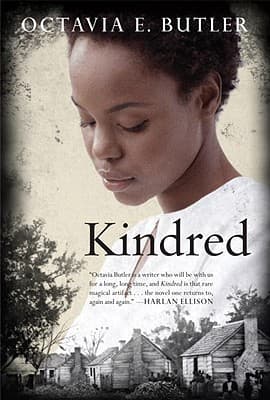
- Kindred
Octavia E. Butler
4.1 (5k) average on GoodreadsFantasyExplores the horrors of slavery through a speculative fiction lens, focusing on time travel instead of space travel.
- The Water Dancer
Ta-Nehisi Coates
4.1 (64k) average on GoodreadsFantasyHistorical fiction with magical realism elements that delves into the trauma and resistance against slavery.
- Binti
Nnedi Okorafor
3.9 (47k) average on GoodreadsFantasyFeatures a protagonist navigating a prejudiced, hierarchical space-faring society, with themes of identity and belonging.
- Harry Potter and the Sorcerer's Stone
J.K. Rowling
4.5 (7M) average on GoodreadsFantasyRescued from a miserable life under the stairs, an orphaned boy discovers he's a wizard destined for a magical school, where he uncovers a dangerous secret tied to the dark wizard who murdered his parents.
- The Hunger Games
Suzanne Collins
4.3 (6.4M) average on GoodreadsFantasyIn a future where children fight to the death on live television, Katniss Everdeen volunteers for the arena, turning a death sentence into a fight for survival and a spark of rebellion.
- 1984
George Orwell
4.2 (3.1M) average on GoodreadsPoliticsIn a future where surveillance and thought control are absolute, a man's search for truth clashes with the Party, showing that hope can be a form of rebellion.





Enjoyed the summary?
A summary gives you the shape of the book. The book itself has the detail, the examples and the voice.
Find An Unkindness of Ghosts on AmazonAs an Amazon Associate, BookBrief earns from qualifying purchases. How we're funded