
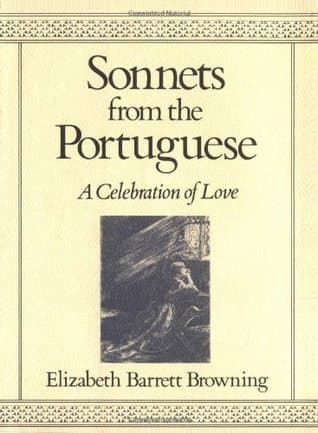
Synopsis
Covers the whole plot, including the ending.
- Difficulty
- Medium
- Pacing
- Moderate
- Mood
- Romantic, Reflective, Poignant, Devotional, Intimate
- Read it if
- You appreciate classic Victorian poetry, profound declarations of love, and exploring the emotional journey of a poet's heart.
- Skip it if
- You prefer modern, straightforward prose or find traditional poetic forms and language challenging to engage with.
Sonnets from the Portuguese Plot Summary
Covers the whole plot, including the ending.
Sonnet I: The Poet's Solitude and the Arrival of Love
Elizabeth Barrett Browning, through the speaker, begins by thinking about her life, which she sees as shadowed by death and sadness. She describes herself as a ghost, haunting her own life, accepting a future without joy or companionship. This initial state of sad isolation is suddenly broken when she feels a touch on her head. At first fearing it is Death, she is surprised to find it is Love that has come to her. This unexpected arrival shatters her ideas about her future, bringing a powerful new force into her previously empty life. The sonnet sets the stage for a dramatic shift from despair to hope, started by this deep emotional awakening.
Sonnet VII: Doubt and Unworthiness
The speaker struggles with strong feelings of unworthiness in the face of her beloved's affection. She questions how her beloved can love her, given her long history of sadness and her perceived lack of beauty and joy. She feels that her past sorrows and the 'shadows' they cast make her unsuitable for someone so bright and full of life. This self-doubt returns often, showing the speaker's internal struggle to accept such a deep and unexpected love. She fears that her own sad nature might spoil the happiness her beloved offers, revealing her deep insecurities about her own worth.
Sonnet XIV: The Nature of True Love
In this sonnet, the speaker gives a clear definition of true love, urging her beloved to love her for herself alone, rather than for any superficial or temporary qualities. She directly states, 'If thou must love me, let it be for nought / Except for love’s sake only.' She warns against loving her for her smile, her voice, or her perceived cleverness, as these things can change or fade. She also rejects love based on pity for her sorrow, knowing that sorrow itself is temporary. The speaker wants a love that is pure, selfless, and directed at her true self, a love that can last beyond physical appearance or fleeting emotions, emphasizing the spiritual and lasting nature she seeks in their bond.
Sonnet XXIII: The Speaker's Weakness and the Beloved's Strength
The speaker admits her physical and emotional weakness, acknowledging that she is 'weak for love.' She describes herself as feeling vulnerable and easily overwhelmed by her strong emotions. However, instead of despairing, she finds great strength and comfort in her beloved. She compares herself to a vine clinging to a strong tree, drawing support and stability from it. Her beloved's presence and affection give her a sense of security and resilience she lacked before. This sonnet shows love's transforming power, allowing the speaker to overcome her limits and find a new source of inner strength through her connection with her partner.
Sonnet XXVIII: The Beloved's Letters
The speaker expresses great joy and comfort from receiving letters from her beloved. She describes these letters as precious objects, 'white-winged birds' that fly to her, bringing his thoughts and feelings. Each letter is a direct connection to him, making his presence felt even when they are physically apart. She values the words, reading them again and again, finding his 'soul' imprinted in the ink. These letters bridge the distance between them, offering reassurance and strengthening their bond. For the speaker, they are not just letters but vital lifelines that sustain her spirit and deepen her understanding of his affection, showing the importance of communication in their growing relationship.
Sonnet XXXII: The Fear of Losing Love
The speaker thinks about the terrifying idea of her beloved's love lessening or disappearing. She imagines a future where his 'love should change' and the deep despair such a loss would bring. She considers how she would cope if his affection were to 'fail' or if he were to 'recede' from her. This thought reveals her deep emotional investment and her vulnerability. The fear is not just of a broken heart, but of returning to the desolate solitude from which his love saved her. This sonnet highlights how precious their bond is and the speaker's understanding of how central his love has become to her very existence, showing the fragility of human happiness.
Sonnet XXXIII: Love's Transcendence of Suffering
The speaker thinks about her past life of suffering and sorrow, and how her beloved's love has changed how she sees it. She declares that all her previous pain, 'all my past life, all my grief,' has been redeemed and given new meaning by his affection. She no longer views her past as a burden but as a necessary step before their love. His love acts as a purifying fire, refining her experiences and turning her former 'dross' into 'gold.' This sonnet marks a key turning point, where the speaker fully accepts love's redemptive power, seeing it as a force that not only brings joy but also redefines and ennobles her entire life story, filling her existence with purpose.
Sonnet XXXV: The Beloved's Face
The speaker expresses her deep delight and contentment in simply looking at her beloved's face. She describes his face as a source of deep peace and happiness, a 'heaven' for her eyes. When she gazes at him, she feels complete and reassured, as if all her doubts and fears disappear. His face becomes a focal point for her love, embodying all the qualities she adores. This sonnet emphasizes the intimate and personal nature of their connection, where even a simple glance can convey many emotions and understanding. It shows how physical presence and visual connection strengthen their spiritual bond, bringing her great joy and comfort.
Sonnet XXXVIII: The Poet's Song for Her Love
The speaker dedicates her poetic gift and her 'song' to her beloved. She states that her verses, which once might have been dedicated to abstract ideas or personal sorrows, are now entirely for him. He has become her muse, her inspiration, and the only subject worthy of her creative expression. She says that her love for him is so deep that it fills her art, making every line and word a sign of their bond. This sonnet highlights how her personal life and artistic identity are connected, showing how deeply her love has influenced and enriched her creative work, transforming her into a poet of love.
Sonnet XLIII: How Do I Love Thee?
This famous sonnet, perhaps the best known of the collection, shows the speaker expressing the vastness and intensity of her love. She begins with the famous question, 'How do I love thee? Let me count the ways.' She then lists various aspects of her love: it reaches to the 'depth and breadth and height' her soul can reach, it is as constant as 'daily' need, as free as 'men strive for Right,' and as pure as 'they turn from Praise.' She loves him with an intensity that includes her entire being, her past sorrows, her childhood faith, and even beyond death, if God allows. It is a love that goes beyond the physical and temporary, aiming for an eternal spiritual bond, affirming its lasting and all-encompassing nature.
Sonnet XLIV: The Immortal Soul and Love
The speaker declares that her love is not merely a fleeting earthly emotion but is deeply rooted in her immortal soul. She states that 'My love is of a birth as rare / As that of Love itself.' Because her soul is eternal, so too will her love be eternal. She believes that their bond goes beyond the physical world and will continue even after death. This sonnet strengthens the spiritual dimension of their relationship, raising it beyond mere human affection to something sacred and everlasting. It offers a powerful statement of faith in love's lasting power, suggesting that true love is an echo of the divine and therefore immortal, providing comfort and hope for a love that defies death.
Sonnet XLIX: The Beloved's Presence as Light
The speaker uses a metaphor to portray her beloved as a source of radiant light that removes all darkness and sorrow from her life. She describes his presence as a 'light' that falls upon her, illuminating everything around her and within her. Before his arrival, she felt as if she lived in constant shadow, but now her world is full of brightness and warmth. This sonnet emphasizes the transforming power of his love, which not only brings joy but also clarity and meaning to her existence. His light is not just external but also internal, allowing her to see herself and the world in a more positive and hopeful way, symbolizing the deep impact he has had on her spirit.
Sonnet LII: The Beloved's Name
The speaker thinks about the deep meaning she gives to her beloved's name. She describes it as a sacred and cherished word, one that she holds 'close to my heart.' More than just a label, his name represents his entire being, his love, and the joy he brings into her life. She finds comfort and strength in simply saying or thinking of his name, as if it embodies his presence. This sonnet highlights the intimate and personal nature of their bond, where even the sound of his name evokes strong emotions and strengthens her deep affection. It underscores the idea that every part of her beloved, even his identity, is filled with meaning and love for her.
Sonnet LVII: The Beloved's Gift of Life
The speaker declares that her beloved has not only brought her joy but has, in essence, given her a new life. She feels that before his love, she was merely existing, but now she truly lives. She credits her spiritual and emotional rebirth to his affection, stating that he has 'redeemed her life.' His love has restored her health, her hope, and her sense of purpose. This sonnet emphasizes the deep, life-giving power of their bond, portraying him not just as a lover but as a savior who has rescued her from a life of desolation. It is a strong statement of the transforming and redemptive qualities of their love, showing its ability to revitalize and renew her entire being.
Sonnet LXIII: Love's Consummation and Eternal Hope
In the final sonnet of the collection, the speaker expresses deep gratitude and hope for an eternal union with her beloved. She looks beyond their earthly life, imagining a future where their love continues in heaven. She declares that their love is so pure and strong that it is 'twice blest' – blessed on Earth and destined for a divine blessing in the afterlife. There is a sense of completion and fulfillment, as she has fully accepted and embraced this love. The sonnet ends with a strong affirmation of their lasting bond, suggesting that their love is not limited by mortal boundaries but is destined for eternity, a testament to its spiritual depth and power.
Sonnets from the Portuguese Characters
The Speaker (Elizabeth Barrett Browning)
Protagonist
A reclusive and initially melancholic poet who finds redemption and joy through unexpected love.
The Speaker is a deeply introspective and sensitive woman, initially presented as resigned to a life of solitude and suffering due to chronic illness and past sorrows. She is a poet, highly articulate, and prone to intense emotional reflection. Her past experiences have led her to believe she is unworthy of love and destined for a lonely existence. However, she possesses a strong capacity for love, faith, and artistic expression. Her journey through the sonnets reveals her vulnerability, her capacity for self-doubt, and ultimately, her profound spiritual and emotional transformation.
Relationships: The Beloved (Robert Browning) (Recipient of her profound and transformative love; her muse and savior.)
The Beloved (Robert Browning)
Supporting
The object of the speaker's intense affection, who brings her out of her isolation.
The Beloved is presented through the speaker's eyes as a source of immense love, strength, and light. He is implicitly kind, patient, and deeply devoted, capable of seeing past the speaker's perceived flaws and sorrows. He is the catalyst for her transformation, pulling her from a life of despair. While his voice is not heard directly, his actions and character are inferred through the speaker's reactions to his letters, his presence, and his unwavering affection. He represents hope, redemption, and the embodiment of true, selfless love.
Relationships: The Speaker (Elizabeth Barrett Browning) (The object of his love and devotion, whom he rescues from solitude and illness.)
Love (as an abstract entity)
Mentioned
A personified force that unexpectedly visits the speaker, initiating her transformation.
Love is often personified in the sonnets, particularly in Sonnet I, where it is described as a 'white-winged' presence that touches the speaker's head. It acts as an almost divine intervention, surprising the speaker in her moment of despair. Beyond this initial personification, 'Love' represents the profound, transformative power of the emotion itself—a force that redeems, inspires, and ultimately defines the speaker's renewed existence. It is portrayed as something both earthly and spiritual, capable of transcending human limitations.
Relationships: The Speaker (Elizabeth Barrett Browning) (The recipient of Love's transformative power.)
Death
Mentioned
The force the speaker initially expects to visit her, representing her previous resignation to suffering.
Death appears in Sonnet I as the entity the speaker initially expects to touch her, reflecting her long-held resignation to a life shadowed by illness and impending mortality. It symbolizes her past despair, her sense of fading away, and her belief that her life was essentially over before love intervened. Death represents the antithesis of the love that eventually finds her, serving as a stark contrast to the life-affirming power of her beloved's affection. Its brief appearance underscores the dramatic shift in the speaker's fate.
Relationships: The Speaker (Elizabeth Barrett Browning) (The expected, but ultimately averted, visitor to her solitary life.)
Sonnets from the Portuguese Themes
The Redemptive Power of Love
This is the main theme, showing how love can change a life from despair to joy. The speaker, initially resigned to a life of solitude and illness, is completely transformed by her beloved's affection. In Sonnet I, she expects Death but finds Love, a symbolic resurrection. Sonnet XXXIII clearly states that her beloved's love redeems 'all my past life, all my grief,' turning her sorrows into a meaningful preparation for their union. Love becomes a spiritual and emotional lifeline, restoring her health, hope, and sense of purpose, as seen in Sonnet LVII where she credits her very life to his love.
“Since mine own soul hath somewhere lost her way / In trailing clouds of glory she did stray, / And now, by love, she hath found her perfect day.”
Self-Doubt and Unworthiness
Despite the deep love offered to her, the speaker often struggles with feelings of unworthiness. Her long history of illness and sorrow leads her to question why anyone would love her, believing her past makes her unsuitable for happiness. In Sonnet VII, she wonders how her beloved can love her 'for these things' (her sadness and perceived flaws), fearing her 'shadows' will dim his light. This inner conflict shows the psychological impact of her previous suffering and her difficulty in fully accepting such an overwhelming gift. Her journey partly involves overcoming these deep-seated insecurities.
“I think of thee!—my thoughts do twine and bud / About thee, as wild vines, about a tree, / Put out broad leaves, and soon there's nought to see / Except the tree they cling to.”
The Spiritual and Eternal Nature of Love
The speaker elevates her love beyond mere earthly affection, portraying it as a spiritual and eternal bond. In Sonnet XLIII ('How Do I Love Thee?'), she expresses a love that reaches 'to the depth and breadth and height / My soul can reach,' and one that she hopes to continue 'after death.' Sonnet XLIV further emphasizes this, stating that her love is rooted in her 'immortal soul' and thus will endure beyond physical life. This theme suggests that true love reflects the divine, capable of going beyond mortal limits and offering a glimpse into an everlasting connection, providing deep comfort and hope.
“I love thee with a love I seemed to lose / With my lost saints,—I love thee with the breath, / Smiles, tears, of all my life!—and, if God choose, / I shall but love thee better after death.”
The Power of Poetic Expression
As a poet, the speaker uses her art to explore and express the depths of her love. The sonnet form itself provides a structured yet emotionally rich way for her strong feelings. In Sonnet XXXVIII, she dedicates her poetic talent entirely to her beloved, declaring him her muse and the only subject worthy of her 'song.' Her verses become a sign of their bond, showing how love inspires and transforms artistic creation. The collection itself is an extended act of poetic devotion, proving the power of language to capture and convey the deepest human emotions.
“My own beloved, who hast lifted me / From this drear flat of earth to higher place.”
The Intertwining of Suffering and Joy
The sonnets explore the complex relationship between past suffering and present joy. The speaker's deep happiness is often set against her former despair, making her current bliss feel even more precious and miraculous. She acknowledges her 'weakness' and 'past griefs' (Sonnet XXIII, Sonnet XXXIII) but sees them ultimately redeemed by love. This theme suggests that suffering, while painful, can deepen one's appreciation for joy and can even be a necessary step toward deep personal growth. Her journey is not about forgetting pain, but about integrating it into a richer, more meaningful existence through the lens of love.
“And if God choose, I shall but love thee better after death.”
Plot Devices & Literary Techniques
Sonnet Form
A 14-line poetic structure used to explore intense emotional states.
The entire collection is composed of 44 sonnets, primarily Petrarchan (Italian) in form, with an octave (eight lines, ABBAABBA rhyme scheme) and a sestet (six lines, typically CDECDE or CDCDCD rhyme scheme). This structured form provides a framework for the intense emotional and philosophical exploration of love. The constraint of the sonnet forces precision and concentration of thought, allowing the speaker to delve deeply into a single facet of her love or doubt within each poem. The turn (volta) between the octave and sestet often marks a shift in perspective or a resolution, mirroring the speaker's internal journey from doubt to affirmation.
Metaphor and Simile
Figurative language comparing love and emotion to concrete images.
Browning frequently employs metaphors and similes to articulate the abstract and overwhelming nature of her emotions. Love is compared to a 'white-winged' visitor (Sonnet I), the beloved's letters are 'white-winged birds' (Sonnet XXVIII), and the speaker herself is a 'wild vine' clinging to a 'tree' (Sonnet XXIX), representing her dependence and the beloved's strength. These vivid comparisons help readers grasp the depth and complexity of the speaker's feelings, making her internal experiences tangible and relatable. They enrich the emotional landscape of the sonnets and provide powerful imagery.
Personification
Attributing human qualities to abstract concepts like Love and Death.
Personification is a key device, particularly in Sonnet I, where 'Love' is depicted as a distinct entity that visits the speaker, and 'Death' is the entity she initially expects. This gives abstract forces a tangible presence and agency, making their impact on the speaker's life more dramatic and immediate. By personifying Love, the poet emphasizes its transformative power as an active, almost divine, force that intervenes in her life, rather than just a passive emotion. This device heightens the sense of a profound, life-altering event.
Anaphora
Repetition of a word or phrase at the beginning of successive clauses.
Most famously used in Sonnet XLIII, 'How Do I Love Thee? Let me count the ways,' where the phrase 'I love thee' is repeated at the beginning of several lines. This rhetorical device builds intensity and emphasizes the exhaustive, comprehensive nature of the speaker's love. The repetition creates a rhythmic, incantatory effect, underscoring the sincerity and boundless quality of her affection. It serves to drive home the central message of unwavering devotion and deep emotional commitment, making the declaration of love feel both profound and undeniable.
Juxtaposition
Placing two contrasting elements side-by-side to highlight their differences.
The sonnets frequently juxtapose the speaker's past life of sorrow, illness, and solitude with her present state of joy, health, and companionship brought by love. For example, Sonnet I contrasts the expectation of 'Death' with the arrival of 'Love.' This stark contrast emphasizes the dramatic transformation she undergoes and underscores the redemptive power of her beloved's affection. By highlighting the 'before and after,' the poet magnifies the significance of the love she has found, making her happiness feel hard-won and precious, and demonstrating the profound impact of the relationship.
Sonnets from the Portuguese Quotes
“How do I love thee? Let me count the ways.”
“I love thee to the depth and breadth and height / My soul can reach, when feeling out of sight / For the ends of Being and ideal Grace.”
“I love thee with the passion put to use / In my old griefs, and with my childhood's faith.”
“I love thee with a love I seemed to lose / With my lost saints,—I love thee with the breath, / Smiles, tears, of all my life!—and, if God choose, / I shall but love thee better after death.”
“If thou must love me, let it be for nought / Except for love's sake only.”
“Say over again, and yet once over again, / That thou dost love me.—Though the word repeated / Should seem a 'cuckoo-song,' as thou dost treat it,”
“I never gave a lock of hair away / To a man, dearest, except this to thee,”
“And if God choose, I shall but love thee better after death.”
“My own, my own, my soul's elect!”
“What art thou, that my life need with thine / Be wedded, in the fair prophetic sign?”
“The face of all the world is changed, I think, / Since first I heard the footsteps of thy soul / Move still, oh, still, across me from the brink / Of the great silence, to my spirit's goal.”
“And I who have toiled long and loved for long / Through a whole life, and all for nought, before,”
“Beloved, my Beloved, when I think / That thou wast in the world a year ago, / I cannot comprehend a love so slow / To find me, —or, what if it shrink / And drop from out my arms, and prove a blink / In the great sun, which makes my blisses flow?”
“I lift my heavy heart up solemnly, / As once Electra her sepulchral urn,”
Quiz
10 questions on the plot and the characters. Each answer comes with a short explanation.
Question 1
In Sonnet 43, what famous line expresses the depth of the speaker's love?
- How do I love thee? Let me count the ways.
- My love is like a red, red rose.
- Shall I compare thee to a summer's day?
- Love alters not with his brief hours and weeks.
Show answer
A. How do I love thee? Let me count the ways. Sonnet 43 famously begins with the line, 'How do I love thee? Let me count the ways,' setting the stage for the speaker to enumerate the various dimensions of her love.
Question 2
What is the primary motivation for the speaker to write these sonnets, as suggested by their content?
- To express her political views.
- To document her intellectual pursuits.
- To communicate her profound love and devotion to her beloved.
- To critique Victorian society's expectations of women.
Show answer
C. To communicate her profound love and devotion to her beloved. The entire collection, 'Sonnets from the Portuguese,' is a deeply personal and passionate expression of Elizabeth Barrett Browning's love for Robert Browning.
Question 3
Why did Elizabeth Barrett Browning initially title the collection 'Sonnets from the Portuguese'?
- To suggest they were translations from a foreign language.
- Because her beloved was Portuguese.
- As a tribute to a Portuguese poet she admired.
- To indicate they were written during a trip to Portugal.
Show answer
A. To suggest they were translations from a foreign language. The 'Portuguese' in the title was a private pet name Robert Browning had for Elizabeth, and she used it to give the sonnets a veil of anonymity, suggesting they were translations rather than deeply personal revelations.
Question 4
In several sonnets, the speaker grapples with feelings of unworthiness or surprise at being loved. Which of these lines reflects this sentiment?
- I love thee with the breath, / Smiles, tears, of all my life!
- If thou must love me, let it be for nought / Except for love's sake only.
- When our two souls stand up erect and strong.
- A heavy heart, dear friend, where love makes room.
Show answer
B. If thou must love me, let it be for nought / Except for love's sake only. Sonnet 14, 'If thou must love me, let it be for nought / Except for love's sake only,' directly addresses the speaker's desire for pure love, unburdened by external reasons or her own perceived merits, suggesting a feeling of unworthiness.
Question 5
What poetic form does Elizabeth Barrett Browning consistently use throughout 'Sonnets from the Portuguese'?
- Free verse
- Shakespearean sonnet
- Petrarchan (or Italian) sonnet
- Ballad
Show answer
C. Petrarchan (or Italian) sonnet The collection consists entirely of Petrarchan sonnets, characterized by their 14 lines, iambic pentameter, and a rhyme scheme typically of ABBAABBA CDECDE or CDCDCD, with a volta (turn) occurring between the octave and the sestet.
Question 6
In Sonnet 29 ('I think of thee!—my thoughts do twine and bud'), what does the speaker metaphorically compare her thoughts of her beloved to?
- Wild vines that need pruning.
- Fragrant roses in a garden.
- Birds building a nest.
- Stars in the night sky.
Show answer
A. Wild vines that need pruning. In Sonnet 29, the speaker compares her thoughts of her beloved to 'wild vines' that grow and twine around a tree (the beloved), eventually obscuring it. She desires his 'stronger growth' to 'instantly unbind' her thoughts.
Question 7
Which recurring theme emphasizes the spiritual and eternal nature of the speaker's love, transcending earthly limitations?
- The importance of social standing.
- The fleetingness of beauty.
- Love's connection to the divine and the afterlife.
- The challenges of long-distance relationships.
Show answer
C. Love's connection to the divine and the afterlife. Many sonnets, particularly Sonnet 43, express love that extends beyond the physical realm, reaching into the spiritual and even after death ('I shall but love thee better after death').
Question 8
In the context of the speaker's personal circumstances, what does her love represent as a transformative force?
- A return to her childhood home.
- Liberation from illness and isolation into a fuller life.
- A newfound interest in political activism.
- An opportunity for financial independence.
Show answer
B. Liberation from illness and isolation into a fuller life. Elizabeth Barrett Browning was an invalid, often confined to her room, before her relationship with Robert Browning. Her love for him is depicted as a vital, life-giving force that brings her out of isolation and despair.
Question 9
Which specific literary device is prominently used when the speaker addresses her beloved directly, as 'thee' or 'thou'?
- Metaphor
- Apostrophe
- Simile
- Hyperbole
Show answer
B. Apostrophe Apostrophe is a figure of speech where a speaker directly addresses someone (or something) that is not present or cannot respond. The speaker consistently addresses her beloved directly throughout the sonnets.
Question 10
The sonnets often reflect the speaker's initial disbelief and doubt about the sincerity or endurance of her beloved's love, stemming from her past experiences. Which sonnet most clearly articulates this initial hesitation?
- Sonnet 1: 'I thought once how Theocritus had sung'
- Sonnet 43: 'How do I love thee? Let me count the ways.'
- Sonnet 28: 'My letters! all dead paper, mute and white!'
- Sonnet 22: 'When our two souls stand up erect and strong'
Show answer
A. Sonnet 1: 'I thought once how Theocritus had sung' Sonnet 1 begins with the speaker recalling how she expected death, not love, to appear, indicating her initial surprise and perhaps skepticism about the sudden arrival of such profound affection in her life, given her long illness and isolation.
Sonnets from the Portuguese FAQ
What is the central theme of 'Sonnets from the Portuguese'?
The central theme is the development and acceptance of a profound, unexpected love between the speaker (Elizabeth Barrett Browning) and her beloved (Robert Browning). It chronicles her journey from self-doubt and a sense of unworthiness due to her long illness and reclusive life, to embracing the overwhelming joy and transformative power of this new relationship.
Why is the collection titled 'Sonnets from the Portuguese'?
The title was a deliberate choice by Elizabeth Barrett Browning, suggested by her husband Robert, to make the sonnets appear as a translation rather than deeply personal revelations. 'My Little Portuguese' was his pet name for her, originating from her dark complexion, and the title served as a delicate veil for the intensely intimate confessions within.
How does the speaker initially react to her beloved's declarations of love?
Initially, the speaker reacts with disbelief and a deep sense of unworthiness, as seen in Sonnet I where she expects Death to visit, not Love. She questions whether such a pure and strong affection could truly be directed at her, burdened by her past suffering and perceived lack of beauty or vitality.
Which sonnet famously begins with 'How do I love thee? Let me count the ways.' and what does it convey?
Sonnet XLIII, 'How do I love thee? Let me count the ways,' is the most famous. It conveys the immense, multifaceted, and eternal nature of her love, expressing it as encompassing her soul, her being, and even her love for past sorrows, transcending earthly life and extending beyond death.
What role does the speaker's past illness and reclusiveness play in her psychological journey?
Her prolonged illness and reclusiveness fostered a sense of isolation and a belief that she was destined for a solitary life, making the arrival of love feel miraculous and almost terrifying. This past experience underpins her initial resistance, her profound gratitude, and her eventual complete surrender to the transformative power of her beloved's affection.
How does the speaker's perception of herself change throughout the sonnets?
The speaker's self-perception transforms dramatically from a woman resigned to a 'grave-dark' existence, feeling unworthy of love and beauty, to one who is revitalized, cherished, and empowered by her beloved's gaze. She moves from self-doubt to a profound embrace of her own worth and happiness.
Are there any allusions to specific literary or religious texts within the sonnets?
Yes, there are subtle allusions. For instance, Sonnet VII, 'The face of all the world is changed, I think,' echoes lines from Shakespeare's Sonnet CXVI. More broadly, the sonnet form itself is an homage to Petrarchan and Shakespearean traditions, while the spiritual depth and intensity of her love often verge on religious devotion.
What is the significance of the 'ring' mentioned in Sonnet XL?
In Sonnet XL, the 'ring' symbolizes the tangible commitment and binding nature of their love, likely referencing an engagement ring. It represents a physical manifestation of their emotional bond and the promise of their future together, solidifying the transition from courtship to betrothal.
How does Elizabeth Barrett Browning challenge traditional gender roles or expectations in her portrayal of love?
While the sonnets are deeply romantic, the speaker is not a passive recipient of love. She actively analyzes, questions, and eventually embraces her feelings with intellectual rigor and emotional depth. Her voice is strong and self-aware, challenging the Victorian ideal of a demure, unthinking female lover by asserting her own complex inner world.
What kind of love does the speaker ultimately describe: romantic, spiritual, or both?
The speaker ultimately describes a love that is profoundly both romantic and spiritual. Her love for her beloved transcends mere physical attraction, elevating to a soul-level connection that feels divinely ordained and eternal, often expressed with language typically reserved for religious devotion.
How do the sonnets reflect the biographical details of Elizabeth Barrett Browning's life?
The sonnets are intensely autobiographical, reflecting her chronic illness, her reclusive life at Wimpole Street, her father's tyrannical control, and the clandestine courtship with Robert Browning. They document her emotional journey from despair to joy as she found love and eventually eloped.
What is the primary conflict the speaker faces in the early sonnets?
The primary conflict in the early sonnets is internal: the speaker's struggle to reconcile her beloved's fervent declarations of love with her own deeply ingrained sense of unworthiness and the belief that her life was already 'closed' to such happiness. She battles self-doubt and past suffering.
How does the beloved's unwavering faith in her affect the speaker?
The beloved's unwavering faith and persistent love act as a mirror, reflecting a beauty and worth back to the speaker that she had long denied in herself. This steady devotion gradually erodes her self-doubt, allowing her to see herself through his loving eyes and eventually accept her own capacity for happiness and love.
Is there a specific sonnet that marks a turning point in the speaker's acceptance of love?
While it's a gradual process, Sonnet XIV, 'If thou must love me, let it be for nought,' is often seen as a significant turning point. Here, she asks her beloved to love her for herself, not for any external qualities, indicating a shift towards accepting love on its own terms, free from past expectations or perceived obligations.
How does the speaker use natural imagery to convey her emotions?
The speaker frequently uses natural imagery to convey her emotions. For example, her initial state is often associated with 'dust' or 'grave-dark,' while the arrival of love brings 'sunlight,' 'stars,' and 'flowers,' symbolizing renewal, hope, and vibrant life. These images underscore her transformation from despair to joy.
What is the overarching message about the power of love conveyed by the collection?
The collection conveys that love possesses an incredible, almost miraculous, power to heal, transform, and restore. It can overcome profound suffering, self-doubt, and societal constraints, elevating the human spirit and imbuing life with purpose, joy, and eternal significance.
Are there any moments of doubt or fear that persist even after the speaker accepts her love?
Even after accepting love, subtle fears and doubts occasionally surface, particularly concerning the fragility of earthly happiness or the possibility of separation, as seen in Sonnet XXIX where she longs for her beloved's physical presence. However, these are typically quickly overcome by her profound faith in their enduring connection.
What specific details in Sonnet XXII, 'When our two souls stand up erect and strong,' indicate a spiritual union?
In Sonnet XXII, the souls standing 'erect and strong' and speaking 'face to face' before God, 'as when they lived on earth,' strongly indicates a spiritual union. The imagery of their souls communing directly with the Divine, unburdened by 'fleshly trammels,' emphasizes a sacred and eternal bond that transcends the physical.
About the author

Elizabeth Barrett Browning was an English poet of the Victorian era, known for her expressive and innovative poetry. Her notable work, "Sonnets from the Portuguese," is a collection of love sonnets that explores themes of love and devotion. Browning's writing has had a lasting impact on English literature, particularly in the realm of romantic poetry.
Similar books
- Modern Love
George Meredith
3.6 (118) average on GoodreadsFictionMeredith's sequence offers a starkly different portrayal of love, focusing on the breakdown of a marriage with a cynical and psychologically piercing realism, whereas Browning celebrates the redemptive and life-affirming power of love.
- The Hunger Games
Suzanne Collins
4.3 (6.4M) average on GoodreadsFantasyIn a future where children fight to the death on live television, Katniss Everdeen volunteers for the arena, turning a death sentence into a fight for survival and a spark of rebellion.
- The Great Gatsby
F. Scott Fitzgerald
3.9 (3.8M) average on GoodreadsHistorical FictionIn the opulent Roaring Twenties, a mysterious millionaire's lavish parties hide his desperate, tragic pursuit of a lost love, exposing the emptiness within the American Dream.
- The Fault in Our Stars
John Green
4.2 (3.6M) average on GoodreadsYoung AdultA girl with a terminal illness finds her story rewritten when a charming boy with a similar past enters her life at a cancer support group, leading to a star-crossed romance.
- Pride and Prejudice
Jane Austen
4.3 (3M) average on GoodreadsHistorical FictionIn a society focused on status and money, Elizabeth Bennet navigates love and pride, challenging Mr. Darcy and social expectations to find true affection.
- Divergent
Veronica Roth
4.2 (2.9M) average on GoodreadsFantasyIn a society divided by virtues, a sixteen-year-old's difference from the norm starts a rebellion that threatens her world.





Enjoyed the summary?
A summary gives you the shape of the book. The book itself has the detail, the examples and the voice.
Find Sonnets from the Portuguese on AmazonAs an Amazon Associate, BookBrief earns from qualifying purchases. How we're funded