
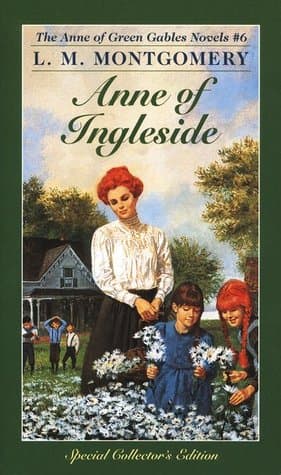
Synopsis
Covers the whole plot, including the ending.
- Difficulty
- Easy
- Pacing
- Moderate
- Mood
- Heartwarming, Cozy, Nostalgic, Gentle Humor
- Read it if
- You enjoy cozy, domestic historical fiction focused on family life, misunderstandings, and the enduring love between a couple, with a touch of gentle humor.
- Skip it if
- You prefer fast-paced plots, high stakes, or stories without a strong focus on children and domesticity.
Anne of Ingleside Plot Summary
Covers the whole plot, including the ending.
A House Full of Children
The story begins at Ingleside, Anne and Gilbert Blythe's home, now busy with their five children: Jem, Walter, Nan, Di, and Shirley. Anne, known as Mrs. Doctor, finds joy and chaos in her daily life, managing the children's scrapes, arguments, and adventures. She is pregnant with her sixth child, which brings both excitement and tiredness. The children are shown with their distinct personalities: Jem, the oldest and responsible; Walter, the dreamer; Nan and Di, the twins with different natures; and Shirley, the youngest. Their lives are full of typical childhood escapades, from playing in the orchard to exploring the nearby woods, with Anne at the center, guiding and loving them.
Aunt Mary Maria's Arrival
A new challenge comes to Ingleside when Gilbert's Great-Aunt Mary Maria arrives. She is a strict, demanding, and hypochondriac woman, invited for a visit, much to Anne's concern. Aunt Mary Maria immediately criticizes Anne's housekeeping, her children's upbringing, and even Anne's looks. Her constant complaints about her health and her strict old-fashioned ways create a heavy atmosphere in the usually happy home. The children, especially the younger ones, find her presence confusing and annoying, and Anne tries to stay calm and keep her household peaceful despite her guest's endless negativity.
The Children's Adventures and Misadventures
Life at Ingleside continues its lively pace through the children's daily activities. Jem, the oldest, deals with his growing sense of responsibility and his first crush. Walter, the sensitive poet, struggles with the louder parts of childhood and finds comfort in his imagination. Nan and Di, the twins, manage their different personalities, with Nan being calmer and Di more adventurous. Shirley, the youngest, provides innocent fun. Their adventures include a bad picnic, a dramatic play for the family, and various meetings with friends and neighbors in Glen St. Mary. These events show the joys and difficulties of raising a large family, often bringing Anne moments of both frustration and deep love.
The Birth of Rilla
Amidst the ongoing challenges, especially Aunt Mary Maria's long visit, Anne gives birth to her sixth child. The new baby is a girl, named Marilla, or 'Rilla' for short, after Anne's beloved foster mother, Marilla Cuthbert. Rilla's arrival brings great joy and a sense of completeness to the Blythe family. Even Aunt Mary Maria softens briefly at the sight of the new baby, though her critical nature soon returns. Rilla's birth emphasizes the theme of family and new beginnings, giving Anne a moment of rest and happiness, as she deeply values her growing family.
Aunt Mary Maria's Departure
After an uncomfortably long visit, Aunt Mary Maria finally leaves Ingleside. Her departure is a clear relief for Anne, Gilbert, and especially the children. The household can finally relax, free from the heavy atmosphere of her constant complaints and criticisms. Anne, always polite, handles her aunt's departure with courtesy, but she feels a wave of peace come over her home once the demanding guest is gone. Everyone welcomes the return to their usual, happy chaos, marking the end of a difficult period and the return of Ingleside's natural warmth and joy.
Anne's Growing Insecurities
Despite things returning to normal, Anne starts to worry: she fears Gilbert no longer loves her as he once did. She notices his busy schedule, his occasional distracted look, and misinterprets his quiet moments as indifference. Her strong belief in their love begins to waver, replaced by worries about her looks, her age, and her role as a busy mother. This internal struggle becomes a major source of anxiety for Anne, who, despite her outward strength, is very sensitive to her husband's affection. She begins to actively look for signs of his love, often misinterpreting innocent actions.
Misunderstandings and Misinterpretations
Anne's worries lead her to misinterpret several of Gilbert's actions. She overhears parts of conversations, sees his interactions with other women (especially his new, charming secretary, Miss Cornelia Bryant), and reads too much into his occasional tiredness or distraction. One incident involves Gilbert getting a letter he seems to keep private, which makes Anne's suspicions worse. She imagines all sorts of scenarios, from a secret affair to a growing distance between them, despite Gilbert's consistent kindness and devotion. These misunderstandings create a subtle tension in their otherwise happy marriage, mostly in Anne's worried thoughts.
Seeking Advice
Upset by her fears, Anne seeks advice from her closest friends, Diana Barry and Philippa Gordon (now Mrs. Blake). While she does not directly say she fears Gilbert is falling out of love, she hints at her general unhappiness and concern about their marriage changing. Diana, always practical and loyal, tries to reassure Anne, reminding her of Gilbert's lasting love. Philippa, with her wit and insight, offers a different view, suggesting Anne might be overthinking things but also encouraging her to address any perceived problems directly. Their advice, though well-intentioned, does not fully ease Anne's deep-seated anxieties.
Anne's Efforts to Rekindle Romance
Determined to regain what she sees as Gilbert's fading affection, Anne tries various ways to rekindle their romance. She tries to make herself more appealing, dressing in ways she thinks Gilbert will find attractive, trying to be more playful, and even attempting to add more 'mystery' to their relationship. These attempts, often awkward or overly self-conscious, do not work as intended, as Gilbert remains unaware of Anne's distress. Her efforts, while charming, show her vulnerability and the depth of her love for her husband, as she feels she must 'earn' his affection again.
The Truth Revealed
Anne's emotional struggle reaches its peak when the truth finally comes out. Gilbert, sensing Anne's unusual mood, gently asks her to share her worries. Anne, almost in tears, admits her fear that he no longer loves her. Gilbert is completely confused and heartbroken by her confession, assuring her, with great tenderness, that his love for her has never changed. He explains that his preoccupation and the secret letter were about a professional matter — a complex medical case or a new research opportunity — and not, as Anne had feared, a sign of unfaithfulness or disinterest. He confirms his deep, lasting love for his 'irrepressible, irreplaceable redhead,' ending all of Anne's worries.
Reassurance and Renewal
With the misunderstanding resolved, Anne feels a great weight lifted. Gilbert's heartfelt reassurance brings her peace and joy, and she realizes her insecurities were foolish. They share a tender moment of reconnection, confirming their deep love and commitment. Gilbert expresses his unwavering devotion, reminding Anne of her unique charm and beauty, inside and out. This resolution strengthens their marriage, as Anne learns to trust their lasting bond and to communicate her fears more openly. The event ultimately deepens their understanding and appreciation for each other, solidifying their partnership at Ingleside.
Principal Figures
Anne Shirley Blythe
Protagonist
The imaginative, loving, and sometimes anxious mother of six and wife to Gilbert.
Anne is now in her late thirties, a devoted wife and mother to six children. She retains much of her youthful imagination and romantic spirit, but she is also a capable homemaker and community figure. Her primary drive in this novel is to nurture her family and maintain the joyful atmosphere of Ingleside. However, she also grapples with the natural insecurities that come with age and the demands of motherhood, particularly her fear that Gilbert's love for her has diminished. She is deeply sensitive, empathetic, and still prone to overthinking, but ultimately grounded by her strong sense of love and loyalty.
Relationships: Gilbert Blythe (Husband; deep, enduring love, but she fears it's fading.); Jem Blythe (Eldest son; loving, supportive mother.); Walter Blythe (Sensitive son; understanding, encouraging mother.); Nan Blythe (Daughter (twin); loving, guiding mother.); Di Blythe (Daughter (twin); loving, guiding mother.); Shirley Blythe (Youngest son; doting mother.); Marilla 'Rilla' Blythe (Infant daughter; doting mother.); Diana Barry Wright (Best friend; confidante.); Philippa Gordon Blake (Close friend; confidante.); Aunt Mary Maria Blythe (Gilbert's great-aunt; strained, exasperated host-guest relationship.)
Gilbert Blythe
Supporting
Anne's devoted husband, a busy doctor, and loving father.
Gilbert is a successful and respected doctor in Glen St. Mary. He is kind, patient, and deeply in love with Anne, though his busy professional life sometimes makes him seem preoccupied. He is a loving and attentive father, despite his demanding career. Gilbert is portrayed as steady and dependable, a foil to Anne's more imaginative and sometimes anxious nature. His primary drive is to provide for and care for his family. He is initially oblivious to Anne's insecurities, highlighting his implicit trust and unwavering affection for her.
Relationships: Anne Shirley Blythe (Wife; deep, unwavering love, though his preoccupation causes her distress.); Jem Blythe (Eldest son; proud, guiding father.); Walter Blythe (Sensitive son; understanding father.); Nan Blythe (Daughter (twin); loving father.); Di Blythe (Daughter (twin); loving father.); Shirley Blythe (Youngest son; doting father.); Marilla 'Rilla' Blythe (Infant daughter; doting father.); Aunt Mary Maria Blythe (Great-aunt; respectful but often exasperated nephew.)
Jem Blythe
Supporting
The eldest Blythe child, responsible and earnest.
James Matthew 'Jem' Blythe is the eldest of Anne and Gilbert's children. He is portrayed as a responsible, earnest, and somewhat serious boy, embodying many of Gilbert's best qualities. He takes his role as the eldest sibling seriously, often looking out for his younger brothers and sisters. Jem is beginning to experience the early pangs of adolescence, including a crush on a neighborhood girl, which provides a glimpse into his developing character. He is generally well-behaved but not immune to childhood escapades, showing a balance of maturity and youthful innocence.
Relationships: Anne Shirley Blythe (Mother; respectful, loving son.); Gilbert Blythe (Father; admires, respects father.); Walter Blythe (Brother; protective, sometimes exasperated.); Nan Blythe (Sister; protective, caring.); Di Blythe (Sister; protective, caring.); Shirley Blythe (Brother; protective, caring.)
Walter Blythe
Supporting
The sensitive and poetic second son, often lost in thought.
Walter Cuthbert Blythe is the second son, known for his sensitive nature, love of books, and poetic soul. He is more introspective and less boisterous than his siblings, often preferring solitude and imagination to rough-and-tumble play. Walter is a dreamer, frequently lost in his own thoughts and creating stories in his mind. He sometimes struggles with the realities of childhood, finding some aspects overwhelming. His character foreshadows his later development as a poet and highlights the diverse personalities within the Blythe family.
Relationships: Anne Shirley Blythe (Mother; feels deeply understood by her.); Gilbert Blythe (Father; respects, but less outwardly similar to.); Jem Blythe (Brother; often overshadowed by his practicality.); Nan Blythe (Sister; shares a quieter bond with her.); Di Blythe (Sister; often perplexed by her boisterousness.)
Nan Blythe
Supporting
One of the twins, more demure and thoughtful.
Anne Blythe, known as Nan, is one of the Blythe twins. She is generally portrayed as more demure, thoughtful, and perhaps a bit more conventionally 'feminine' than her twin sister, Di. Nan often takes after Anne in her quieter moments and her interest in domesticity. She is a sweet-natured child, but not without her own distinct personality and occasional mischievousness. Her dynamic with Di highlights the contrasts within sibling relationships.
Relationships: Anne Shirley Blythe (Mother; loving daughter.); Gilbert Blythe (Father; loving daughter.); Di Blythe (Twin sister; close, but with contrasting personalities.); Jem Blythe (Brother; loving sister.)
Di Blythe
Supporting
One of the twins, more adventurous and outgoing.
Diana Blythe, known as Di, is the other twin, named after Anne's best friend, Diana Barry. She is more outgoing, adventurous, and boisterous than Nan, often initiating games and sometimes getting into scrapes. Di has a lively spirit and a strong will, reflecting some of Anne's earlier, more impulsive traits. Her energy and enthusiasm contribute to the lively atmosphere of Ingleside. Her contrasting personality with Nan provides humor and depth to the children's interactions.
Relationships: Anne Shirley Blythe (Mother; loving daughter.); Gilbert Blythe (Father; loving daughter.); Nan Blythe (Twin sister; close, but with contrasting personalities.); Jem Blythe (Brother; loving sister.)
Shirley Blythe
Supporting
The youngest son, a sweet and innocent child.
Shirley Blythe is the youngest of Anne and Gilbert's children at the beginning of the book, before Rilla's birth. He is depicted as a sweet, innocent, and somewhat quiet child, often observing the antics of his older siblings. Shirley provides moments of innocent amusement and affection within the bustling household. His presence highlights Anne's ongoing role as a nurturing mother to her youngest children.
Relationships: Anne Shirley Blythe (Mother; doting son.); Gilbert Blythe (Father; doting son.); Jem Blythe (Brother; younger sibling.); Walter Blythe (Brother; younger sibling.); Nan Blythe (Sister; younger sibling.); Di Blythe (Sister; younger sibling.)
Aunt Mary Maria Blythe
Antagonist
Gilbert's critical and hypochondriac great-aunt who disrupts Ingleside.
Aunt Mary Maria is Gilbert's great-aunt, a stern, rigid, and perpetually complaining woman who comes to stay at Ingleside. She is a hypochondriac, constantly detailing her various ailments, and a severe critic of Anne's modern ways of raising children and managing a home. Her presence creates significant tension and discomfort within the normally joyous Blythe household. She represents an older, more conservative generation, clashing with Anne's more liberal and imaginative approach to life. Her primary drive is to impose her will and expectations on others, believing her way is the only right way.
Relationships: Anne Shirley Blythe (Host-guest; critical of Anne, Anne is exasperated but polite.); Gilbert Blythe (Great-nephew; he is respectful but often weary of her complaints.); Blythe children (Great-great-aunt; they find her strange and annoying.)
Diana Barry Wright
Supporting
Anne's lifelong best friend and confidante.
Diana Barry Wright, Anne's 'kindred spirit' from childhood, remains her closest and most trusted friend. She is practical, loyal, and a loving mother herself. Diana offers Anne a listening ear and sensible advice when Anne shares her marital anxieties. While she may not always fully grasp the nuances of Anne's more imaginative fears, her steadfast friendship and unwavering support are invaluable to Anne. She represents the enduring power of female friendship.
Relationships: Anne Shirley Blythe (Best friend; lifelong confidante.)
Philippa Gordon Blake
Supporting
Anne's witty and insightful friend from Redmond College.
Philippa Gordon Blake is Anne's vivacious and witty friend from their Redmond College days. Now married and living elsewhere, she visits Anne and offers a different perspective on Anne's marital worries. Philippa is intelligent, charming, and possesses a sharp sense of humor. Her advice to Anne is often more direct and insightful than Diana's, encouraging Anne to consider her own role in the perceived problems and to communicate openly. She represents a sophisticated, independent female voice.
Relationships: Anne Shirley Blythe (Close friend; confidante and source of different advice.)
Themes & Insights
The Enduring Nature of Love and Marriage
This theme explores the complexities and lasting strength of Anne and Gilbert's marriage, even after years and children. Anne's worries about Gilbert's love, fueled by his distraction and her own aging, show the internal struggles that can happen in long-term relationships. However, the resolution confirms that true love, built on deep understanding and respect, can overcome doubts and misunderstandings, as Gilbert clearly assures Anne of his constant devotion. The theme suggests that while the 'spark' may change, the core love grows deeper with time and shared experiences.
“Oh, Anne, my Anne, don't you know? I love you more than ever, my dear. More than I loved that red-haired girl I married years ago. You are my life, my heart, my soul.”
Motherhood and Family Life
The novel is largely a portrayal of motherhood and the busy life of a large family. Anne's life at Ingleside is centered on her six children, each with distinct personalities and needs. The daily routines, the children's adventures, their arguments, and their moments of deep affection show the joys and difficulties of raising a family. Anne's dedication to her children and her home is central, showing the sacrifices and great rewards of maternal love. Aunt Mary Maria's arrival further highlights Anne's strength in keeping her family's harmony.
“It was a house full of life, and laughter, and tears, and squabbles, and reconciliations, and the hundred and one little things that make up the chronicle of a happy home.”
Insecurity and Self-Doubt in Adulthood
Despite her past confidence and spirited nature, Anne struggles with significant self-doubt in this part of her life. Her worries about aging, her appearance, and the perceived decrease in Gilbert's affection are central to her internal struggle. This theme explores how even strong, loved individuals can experience deep insecurities, especially when faced with time passing and the demands of adulthood. Anne's journey to overcome these doubts is a relatable part of the human experience, showing that self-acceptance is an ongoing process.
“Was she losing her charm? Had she grown too old, too busy, too much a mother and too little a wife to hold his love?”
The Comfort and Challenge of Home
Ingleside itself is a central theme, representing home as both a great comfort and an occasional challenge. It is Anne's cherished sanctuary, filled with her family's warmth and beloved memories. However, it also becomes a place of temporary tension with Aunt Mary Maria's arrival, testing Anne's ability to keep its peaceful atmosphere. The children's adventures in and around Ingleside further establish its role as a lively, living entity, a place where life unfolds in all its messy, beautiful ways. The theme highlights the importance of home as a foundation for identity and happiness.
“There was no place like Ingleside, with its laughter and its loves, its sun and its shadows, its storms and its calms.”
Plot Devices & Literary Techniques
Miscommunication/Misinterpretation
Anne's internal misinterpretation of Gilbert's actions drives the central conflict.
The primary plot device is Anne's misinterpretation of Gilbert's preoccupied behavior and a 'secret' letter. Gilbert's busyness as a doctor and his discreet handling of a professional matter are misconstrued by Anne as signs of waning affection or even infidelity. This internal miscommunication fuels Anne's insecurities and propels the emotional tension of the novel, creating a conflict that exists almost entirely within Anne's mind until its eventual resolution through open dialogue. It highlights how assumptions, rather than facts, can lead to significant distress in relationships.
Foil Character (Aunt Mary Maria)
Aunt Mary Maria's critical nature highlights Anne's patience and the warmth of Ingleside.
Aunt Mary Maria serves as a foil to Anne. Her critical, rigid, and complaining personality starkly contrasts with Anne's imaginative, optimistic, and nurturing nature. Her presence at Ingleside, with her constant criticisms of Anne's parenting and housekeeping, serves to highlight Anne's patience, resilience, and the inherent warmth and joy of the Blythe household. She acts as an external antagonist, creating domestic friction that temporarily disrupts the family's peace and indirectly pushes Anne to assert her values and protect her home's atmosphere.
Symbolism (Ingleside)
Ingleside symbolizes Anne's cherished family life and personal contentment.
Ingleside, the Blythe family home, functions as a powerful symbol throughout the novel. It represents Anne's domestic happiness, the culmination of her dreams for a loving family and a beautiful home. It symbolizes security, warmth, and the vibrant, sometimes chaotic, reality of a large family. When Aunt Mary Maria's presence threatens its harmony, it underscores the importance of protecting this cherished space. The house is not merely a setting but an embodiment of Anne's identity as a wife and mother, reflecting the state of her contentment and the life she has built.
Coming-of-Age (Children)
The children's individual adventures and growth provide subplots reflecting their developing personalities.
While Anne's marital anxieties form the main plot, the various subplots involving the Blythe children function as a collective coming-of-age device. Each child, particularly Jem, Walter, Nan, and Di, experiences small, age-appropriate adventures, challenges, and personal growth. These episodes—Jem's first crush, Walter's poetic musings, the twins' contrasting personalities—show their individual development and foreshadow their future roles. This device adds depth and realism to the family dynamic, reminding the reader of the ongoing cycle of life and growth within the household, even as Anne grapples with her adult concerns.
Anne of Ingleside Quotes
“It's a good thing to be happy, but it's a better thing to make others happy.”
“The world is full of interesting people, if you only know how to look for them.”
“There's always something to be thankful for, if you look for it.”
“Imagination is a good thing, but it must be kept in its proper place.”
“It isn't what you have, but what you are, that makes you happy.”
“Home isn't a place, it's a feeling.”
“You can't expect everyone to understand you, but you can always try to understand them.”
“Life is full of little trials, but it's also full of little joys.”
“Sometimes the most ordinary things are the ones that are most important.”
“Children are not a distraction from more important work. They are the most important work.”
“A house is just a house, but a home is where your heart is.”
“It's not always easy to do the right thing, but it's always worth it in the end.”
“The best way to make a friend is to be a friend.”
“There's a great deal of comfort in knowing you're loved.”
“Every day is a new beginning, a chance to do things better.”
Quiz
10 questions on the plot and the characters. Each answer comes with a short explanation.
Question 1
How many children does Anne already have at the beginning of 'Anne of Ingleside'?
- Three
- Four
- Five
- Six
Show answer
C. Five At the start of 'Anne of Ingleside', Anne is already the mother of five children, with a sixth on the way.
Question 2
What is the name of the 'insufferable' relative who visits and overstays her welcome at Ingleside?
- Aunt Josephine Barry
- Aunt Mary Maria
- Marilla Cuthbert
- Rachel Lynde
Show answer
B. Aunt Mary Maria The synopsis explicitly mentions 'insufferable Aunt Mary Maria visiting—and wearing out her welcome'.
Question 3
What is Anne's primary worry about Gilbert during the course of the book?
- That he is working too hard at the hospital.
- That he no longer loves her.
- That he is spending too much time with their children.
- That he disapproves of her new baby.
Show answer
B. That he no longer loves her. The synopsis states, 'Until the day she begins to worry that her adored Gilbert doesn't love her anymore.' This is a central conflict for Anne.
Question 4
By what affectionate title is Anne often referred to in the community due to Gilbert's profession?
- Mrs. Blythe
- Mrs. Doctor
- Lady of Ingleside
- The Redhead Matron
Show answer
B. Mrs. Doctor The text refers to Anne as 'Mrs. Doctor', indicating her status as the wife of Dr. Gilbert Blythe.
Question 5
What is the primary setting of Anne's family life in this novel?
- Green Gables
- Four Winds
- Ingleside
- Rainbow Valley
Show answer
C. Ingleside The title of the book is 'Anne of Ingleside' and the synopsis mentions 'her own beloved Ingleside' multiple times.
Question 6
Which of the following describes Anne's personality, even as an adult mother of many, according to the synopsis?
- Reserved and quiet
- Irrepressible and irreplaceable
- Melancholy and reflective
- Practical and unromantic
Show answer
B. Irrepressible and irreplaceable The synopsis describes Anne as 'still the same irrepressible, irreplaceable redhead'.
Question 7
What significant life event, besides the ongoing family chaos, is Anne anticipating at Ingleside?
- One of her children getting married.
- A major move to a new town.
- The arrival of a new baby.
- Gilbert's promotion to chief of staff.
Show answer
C. The arrival of a new baby. The synopsis states, 'And now, with a new baby on the way... Anne's life is full to bursting.'
Question 8
The central theme of Anne's personal struggle in 'Anne of Ingleside' revolves around which aspect of her life?
- Her career as a writer.
- Her relationship with her children.
- Her perceived attractiveness and love in her marriage.
- Her social standing in the community.
Show answer
C. Her perceived attractiveness and love in her marriage. Anne's main internal conflict is her worry that Gilbert doesn't love her anymore, prompting her desire to make him 'fall in love with her all over again'.
Question 9
What is the significance of the phrase 'the wonderful Anne of Green Gables, all grown up' in the context of this novel?
- It implies she has lost all traces of her youthful spirit.
- It highlights her enduring, recognizable core identity despite aging and new responsibilities.
- It suggests she regrets her past and wishes to return to Green Gables.
- It is a direct quote from Aunt Mary Maria, criticizing Anne's maturity.
Show answer
B. It highlights her enduring, recognizable core identity despite aging and new responsibilities. The phrase emphasizes that while Anne has aged and taken on adult roles, her fundamental 'irrepressible, irreplaceable redhead' self, beloved from her Green Gables days, remains.
Question 10
How does Anne plan to address her concern about Gilbert's affections?
- By confronting him directly with her fears.
- By seeking advice from her closest friends.
- By trying to make him fall in love with her all over again.
- By focusing solely on her children and ignoring her marriage.
Show answer
C. By trying to make him fall in love with her all over again. The synopsis concludes with Anne thinking, 'She's ready to make her cherished husband fall in love with her all over again!'
Anne of Ingleside FAQ
What is the primary setting and time period of 'Anne of Ingleside'?
'Anne of Ingleside' is set primarily at Ingleside, Anne and Gilbert Blythe's home in Glen St. Mary, Prince Edward Island. The story takes place roughly a decade or two after Anne's marriage, placing it in the early 20th century, likely around the 1910s, given the historical context of the series.
Who are Anne and Gilbert's children featured in this book?
The book features Anne and Gilbert's five existing children: James Matthew 'Jem', the eldest; Walter, a sensitive and poetic boy; Anne 'Nan' and Diana 'Di', the practical and dreamy twins; and Shirley, the youngest. A new baby, Rilla, is also born during the course of the novel, completing their family of seven children.
What is the main conflict Anne faces in her personal life in 'Anne of Ingleside'?
Anne's central personal conflict revolves around her growing fear that her husband, Gilbert, no longer loves her. This insecurity is fueled by his perceived distance and preoccupation, leading her to believe she has lost her youthful charm and that their romance has faded, prompting her efforts to rekindle his affection.
Who is Aunt Mary Maria, and what role does she play in the story?
Aunt Mary Maria Blythe is Gilbert's elderly, hypochondriac, and often critical aunt who comes to stay at Ingleside. Her extended visit, constant complaints, and demanding nature create significant domestic strain and exasperation for Anne, testing her patience and adding to her already full plate.
What significant family event occurs towards the end of the book?
Towards the end of the book, Anne gives birth to her seventh and final child, a daughter named Marilla 'Rilla' Blythe. This event brings joy and completeness to the Blythe family and helps to resolve some of Anne's anxieties about her place and purpose.
How do the character traits of Anne's children reflect or contrast with Anne and Gilbert's personalities?
Jem embodies Gilbert's practicality and leadership; Walter inherits Anne's poetic and sensitive nature; Nan is practical like Gilbert, while Di is a dreamer like Anne; Shirley is quiet and observant. Rilla, the youngest, is too young to show distinct traits, but the varied personalities create a dynamic family mirroring aspects of both parents.
Are there any subtle allusions to Anne's past in Green Gables or Avonlea in this book?
Yes, Anne frequently reflects on her youth, recalling her 'kindred spirit' days and her initial complex relationship with Gilbert. Her deep attachment to home and family, and her imaginative nature, are consistent echoes of her earlier self, though now tempered by maturity and motherhood.
How does Owen Ford's presence subtly influence Anne's introspection about her marriage?
Owen Ford, a charming poet, visits Ingleside and expresses admiration for Anne's spirit and beauty. His appreciative words, contrasting with Gilbert's perceived distance, inadvertently heighten Anne's insecurities about her husband's love, making her question her own attractiveness and Gilbert's feelings more intensely.
What is the significance of the 'Blue Chest' incident for Anne's emotional state?
The 'Blue Chest' incident, where Anne misinterprets Gilbert's search for a will as a sign of his growing detachment, is a catalyst for her fears. It symbolizes her anxieties about their shared future and her place in his life, revealing her vulnerability and need for reassurance despite their long marriage.
How does Anne's struggle with self-worth in 'Anne of Ingleside' differ from her earlier insecurities?
In her youth, Anne's insecurities revolved around her appearance (red hair, freckles) and fitting in. In 'Ingleside', her struggle is more internal and existential, questioning her value as a wife and partner to Gilbert, fearing the loss of their romantic connection as she ages and takes on more maternal responsibilities.
What psychological impact does Aunt Mary Maria's presence have on Anne?
Aunt Mary Maria's constant complaining, self-pity, and judgmental attitude create significant psychological strain for Anne. She feels trapped and overwhelmed by the emotional drain, which exacerbates her existing anxieties and contributes to her feeling unappreciated and worn out.
How does Gilbert's preoccupation with his work psychologically affect Anne's perception of him?
Gilbert's deep immersion in his medical practice and his occasional absentmindedness, though understandable, leads Anne to misinterpret his focus. She perceives his distance as a lack of affection for her, triggering her fears of being taken for granted and losing his romantic interest, rather than simply understanding his professional dedication.
What does Anne's desire to 'make her cherished husband fall in love with her all over again' reveal about her emotional needs?
This desire reveals Anne's fundamental need for affirmation, romance, and the reassurance that she is still deeply cherished and desired by Gilbert. It highlights her longing to maintain the passionate connection they once shared, even amidst the demands of family life, and her fear of their love becoming merely comfortable or routine.
Is Anne's fear of Gilbert's waning love a realistic portrayal of marital anxieties, or an overreaction?
It can be interpreted as a realistic portrayal of common marital anxieties, especially for women in long-term relationships facing aging and increased domestic burdens. While Gilbert's love is never truly gone, Anne's internal struggle reflects the very real fear of losing connection and desirability, making it relatable to many readers.
How does the book challenge or reinforce traditional gender roles of the early 20th century?
The book reinforces traditional gender roles by showing Anne primarily as a homemaker and mother, deeply invested in her family. However, it also challenges them by portraying Anne's complex inner life, her intellectual capacity, and her active pursuit of rekindling her marital romance, suggesting a woman with agency beyond domestic duties.
What message does the resolution of Anne's fears about Gilbert convey about long-term love?
The resolution conveys that long-term love requires communication, reassurance, and an understanding that expressions of affection may evolve. It emphasizes that while the intensity of early romance may shift, a deep, abiding love and commitment can endure and be reaffirmed, often through simple, heartfelt gestures and open dialogue.
How does 'Anne of Ingleside' contribute to the overarching themes of the 'Anne of Green Gables' series?
'Anne of Ingleside' extends the series' themes of the enduring power of imagination, the importance of home and family, and the journey of self-discovery through different life stages. It shows Anne grappling with mature challenges, demonstrating that even beloved characters face growth, doubt, and the need for renewed connection.
Could Anne's 'irrepressible, irreplaceable redhead' identity be seen as a burden or a source of strength in this stage of her life?
It's both. It's a source of strength, reminding her and Gilbert of her unique spirit and vitality. However, it can also be a burden as she feels pressure to maintain that youthful, vibrant image, contributing to her insecurities when she perceives herself as aging or less captivating to Gilbert.
About the author
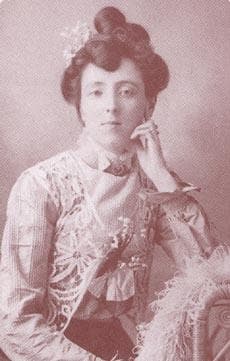
L.M. Montgomery was a Canadian author known for her works of fiction, particularly the "Anne of Green Gables" series. This series includes titles such as "Anne of Avonlea," "Anne of the Island," "Anne of Windy Poplars," "Anne of Ingleside," and "The Complete Anne of Green Gables Boxed Set," as well as the standalone novel "The Blue Castle." Her writing often explores themes of imagination, nature, and the complexities of growing up.
Similar books
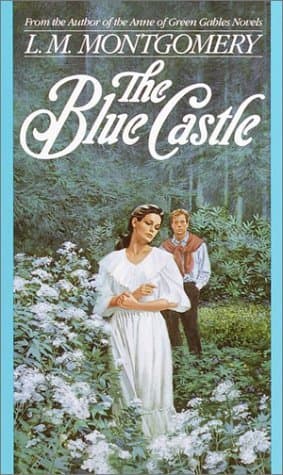
- The Blue Castle
L.M. Montgomery
4.3 (30k) average on GoodreadsHistorical FictionFeatures Montgomery's signature style, focusing on romance and personal growth within a charming, character-driven narrative.
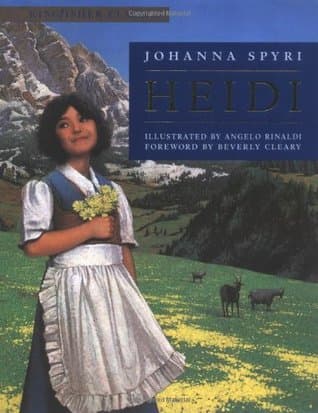
- Heidi
Johanna Spyri
4.0 (173k) average on GoodreadsChildren'sOffers a heartwarming, gentle story with a focus on simple pleasures and character development, appealing to similar age groups.
- Harry Potter and the Sorcerer's Stone
J.K. Rowling
4.5 (7M) average on GoodreadsFantasyRescued from a miserable life under the stairs, an orphaned boy discovers he's a wizard destined for a magical school, where he uncovers a dangerous secret tied to the dark wizard who murdered his parents.
- The Hobbit, or There and Back Again
J.R.R. Tolkien
4.3 (2.9M) average on GoodreadsFantasyA comfort-loving hobbit named Bilbo Baggins is whisked away by a mischievous wizard and a band of dwarves on an unexpected journey to reclaim stolen treasure from a fearsome dragon, discovering courage and a magical ring along the way.
- Harry Potter and the Goblet of Fire
J.K. Rowling
4.6 (2.6M) average on GoodreadsFantasyA bewildered Harry Potter, underage and thrust into a deadly Triwizard Tournament, must brave dragons, mermaids, and a resurgent dark magic to survive a year that will forever alter the wizarding world.
- Harry Potter and the Order of the Phoenix
J.K. Rowling
4.5 (2.5M) average on GoodreadsFantasyIn a year of oppressive secrets and the threat of Voldemort, Harry Potter and Dumbledore's Army secretly train for war, shown through Jim Kay and Neil Packer's dark illustrations.




Enjoyed the summary?
A summary gives you the shape of the book. The book itself has the detail, the examples and the voice.
Find Anne of Ingleside on AmazonAs an Amazon Associate, BookBrief earns from qualifying purchases. How we're funded