
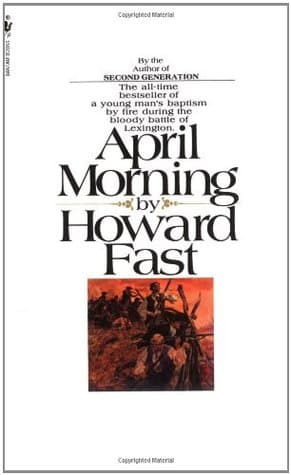
Synopsis
Covers the whole plot, including the ending.
- Difficulty
- Medium
- Pacing
- Moderate
- Mood
- Gritty, Intense, Reflective, Coming-of-age, Historical
- Read it if
- You want a gritty, ground-level perspective of the Battle of Lexington from a young protagonist's viewpoint, focusing on the human cost of the American Revolution.
- Skip it if
- You prefer sweeping historical narratives over intimate, character-driven war stories or are sensitive to detailed depictions of violence and death.
April Morning Plot Summary
Covers the whole plot, including the ending.
A Morning of Chores and Discontent
The novel opens on April 19, 1775, in Lexington, Massachusetts. Fifteen-year-old Adam Cooper wakes to a typical morning of chores. He feels the usual friction with his stern, deeply religious father, Joseph Cooper, who often finds fault with Adam and his elder brother, Levi. Adam is sent to clean the stable, a task he dislikes, and later to chop wood. His grandmother, Sarah, tries to ease the tension, but Joseph's strict Puritanical beliefs rule the household. Adam's thoughts move between his resentment of his father's authority and his growing interest in Ruth Simmons, a girl from a neighboring farm. The quiet routine of the farm has a subtle backdrop of growing political unrest in the colony, though Adam is more concerned with his personal struggles.
The Town Meeting and Growing Unease
Later that day, Adam goes with his father and other men to the town meeting at the meetinghouse. The discussion centers on rumors of British Regulars marching from Boston. Solomon Chandler, a respected town elder and militia leader, urges caution and readiness, emphasizing the need to defend their rights and way of life. Joseph Cooper, despite his strictness, is an important figure in the community and speaks passionately about liberty. Adam, though not fully understanding the political details, feels the clear tension and fear mixed with a strong resolve among the townsfolk. He watches the men, including his father, making plans for the militia to gather. A sense of impending crisis begins to dawn on him, replacing his earlier youthful concerns.
The Alarm and Gathering of Militia
As night falls, the Coopers are awakened by the ringing of the bell and the sound of drums. The alarm has been raised: the British are indeed marching towards Lexington. Joseph Cooper, along with Levi, quickly prepares to join the militia. Adam, despite his youth, insists on going with them, pleading with his father who reluctantly agrees, telling him to bring his musket. Adam gets his grandfather's old, heavy musket, feeling a mix of fear and excitement. The townspeople, men and boys, gather on Lexington Green, forming an uneven line. Joseph, as one of the leading men, stands with determination, and Adam takes his place beside him, his heart pounding, the cold metal of the musket feeling strange in his hands.
The Arrival of the Redcoats
In the pre-dawn light, the British Regulars, a disciplined and imposing force, march onto Lexington Green. Major Pitcairn, their commander, orders the militia to disperse. There is a moment of deep tension and silence as the two groups face each other. Joseph Cooper stands firm, resolute in his belief in their rights, a stark contrast to Adam's trembling fear. Captain Parker, the militia leader, gives the order to disperse but also tells them to stand their ground if fired upon. The air is thick with anticipation, and Adam can barely breathe, his eyes fixed on the approaching red-coated soldiers, who seem like an unstoppable force against their small, disorganized group.
The First Shot and Joseph's Death
Suddenly, a shot rings out – no one knows from where. This single shot breaks the fragile peace, and the British open fire on the militia. Chaos erupts. Adam, disoriented and terrified, sees men falling around him. He fumbles with his musket, unable to grasp the speed and brutality of the attack. Amidst the smoke and confusion, he sees his father, Joseph, shot down. Adam watches, horrified, as his father collapses, blood staining his white shirt. The sight of his father's death, coupled with the overwhelming noise and violence, puts Adam into a state of shock and disbelief. He is frozen, unable to move or react, as the British continue their relentless assault.
Flight and Survival
Driven by instinct and terror, Adam flees Lexington Green, dropping his musket in the process. He runs into the woods, seeking shelter and escape from the terrifying scene. He hides, trembling, listening to the sounds of battle and the screams of the wounded. The reality of what he has just seen – his father's death, the chaos, the brutality of war – begins to sink in. He is no longer just a boy with chores and family arguments; he is a survivor of a massacre. The weight of his father's death, though he had often resented Joseph, now crushes him with guilt and sorrow. He is utterly alone, lost, and dealing with an experience far beyond his years.
Meeting Solomon Chandler and Finding Purpose
After some time, still in shock, Adam meets Solomon Chandler, who has also escaped the initial skirmish. Chandler, a calm and wise figure, takes Adam under his wing. He helps Adam retrieve a musket and some powder, encouraging him to find his footing amidst the chaos. Chandler speaks to Adam not as a child, but as a fellow man, helping him understand the meaning of their fight. He explains that this is not just about a single battle but about defending their rights and way of life. Chandler's steady presence and words of encouragement provide Adam with a much-needed anchor, beginning to shift his focus from personal grief and fear to a sense of shared purpose and duty.
The Road to Concord and First Shots
Adam, now with Solomon Chandler and a growing number of other militia members, moves towards Concord, where more fighting is expected. The groups of minutemen are more organized now, using guerrilla tactics, hiding behind trees and stone walls. This time, Adam is not frozen by fear. He aims his musket, remembering his father's lessons on marksmanship, and fires at the British columns. He sees a British soldier fall, and for the first time, he feels a strange mix of exhilaration and grim satisfaction. This is a turning point; he is no longer just a victim but an active participant, defending his home and his people. He feels a connection to the other fighting men, a sense of belonging in this new, brutal reality.
The Retreat of the Redcoats
As the day progresses, the militia's constant attacks begin to affect the British Regulars. The redcoats, exhausted and demoralized, are forced to retreat from Concord back towards Boston, a long and hard march under constant fire. Adam, alongside other militiamen, participates in this relentless pursuit, firing from cover, seeing the British column break formation and suffer heavy casualties. The initial terror has been replaced by a grim determination and a growing sense of effectiveness. He sees the vulnerability of the seemingly invincible British army and the power of their collective, decentralized resistance. The sound of musket fire and shouts fills the air, a symphony of growing rebellion.
Return to Lexington and Aftermath
Towards evening, Adam returns to Lexington, a changed boy. The town is devastated; homes are damaged, and the dead are being gathered. He finds his mother, Sarah, and his grandmother, who are grieving Joseph and Levi, who also died in the fighting. The reunion is somber, marked by shared loss and unspoken trauma. Adam, despite his youth, is now seen as the man of the house, a role thrust upon him by the day's events. He helps with the difficult task of burying the dead, including his father and brother. The day has stripped away his innocence, replacing it with an understanding of sacrifice, duty, and the brutal cost of freedom. He is no longer the boy who resented his father, but a young man carrying the weight of his family's future and the memory of the first battle of the revolution.
April Morning Characters
Adam Cooper
Protagonist
A fifteen-year-old boy who transforms from a resentful youth to a seasoned militiaman.
Adam is initially depicted as a typical adolescent, struggling with the strictures of his Puritan upbringing and the demanding nature of his father, Joseph. He is somewhat naive, more concerned with chores and his crush on Ruth Simmons than the looming political conflict. However, he possesses an inherent sense of justice and a deep, if sometimes unacknowledged, love for his family and community. His experiences on April 19th force him to mature rapidly, confronting death, fear, and the responsibility of fighting for freedom. He is observant and reflective, internalizing the profound changes happening around and within him.
Relationships: Joseph Cooper (Son-father; initially strained by Joseph's strictness, evolving to a deep, posthumous respect and understanding.); Sarah Cooper (Mother) (Son-mother; a source of comfort and quiet support, later a shared bond of grief and new family responsibility.); Grandmother Cooper (Grandson-grandmother; a source of gentle wisdom and understanding.); Levi Cooper (Brother-brother; typical sibling rivalry, evolving into shared sacrifice.); Ruth Simmons (Budding romantic interest; a symbol of normal life and future possibilities.); Solomon Chandler (Mentee-mentor; Chandler guides Adam through the immediate aftermath of battle, offering wisdom and purpose.)
Joseph Cooper
Supporting
Adam's strict, deeply religious father and a leader in the Lexington community.
Joseph is a stern and principled man, deeply rooted in his Puritan faith and the traditions of his community. He is a man of few words, often perceived by Adam as harsh and unyielding, but his actions reveal a profound commitment to liberty and justice. He is a respected figure in Lexington, unafraid to speak his mind at town meetings and steadfast in his resolve to defend his home. His strictness with Adam is a reflection of his own high standards and a desire to instill discipline and responsibility. His death on Lexington Green serves as a powerful catalyst for Adam's transformation, embodying the ultimate sacrifice for freedom.
Relationships: Adam Cooper (Father-son; a complex relationship marked by tension and misunderstanding, but ultimately deep love and respect.); Sarah Cooper (Wife) (Husband-wife; a traditional, supportive marriage.); Levi Cooper (Father-son; similar dynamic to Adam, but Levi is older and perhaps more aligned with his father's expectations.)
Solomon Chandler
Supporting
A wise and experienced militiaman who mentors Adam after the battle.
Solomon Chandler is a calm, pragmatic, and deeply experienced figure in the Lexington community. He serves as a voice of reason and strength amidst the chaos. Unlike Joseph Cooper, he is less overtly religious but possesses a quiet wisdom derived from years of living and observing. He understands the gravity of the situation and the importance of perseverance. After Adam's father is killed, Chandler becomes a crucial mentor, offering practical advice, emotional support, and a broader perspective on the fight for liberty. He helps Adam channel his grief and fear into purposeful action, guiding him towards understanding his role in the emerging conflict.
Relationships: Adam Cooper (Mentor-mentee; Chandler provides crucial guidance and comfort to Adam after his father's death.)
Sarah Cooper (Mother)
Supporting
Adam's gentle and supportive mother.
Sarah Cooper is a kind and nurturing presence in the Cooper household, often serving as a buffer between Adam and his strict father. She embodies the quiet strength and resilience of the colonial women. While she doesn't participate in the fighting, her concern for her family and her grief over the losses sustained are deeply felt. She represents the home front, the people for whom the men are fighting, and the enduring spirit of the community. Her reaction to the tragedy underscores the profound personal cost of the revolution, and her quiet strength helps to hold the family together in the aftermath.
Relationships: Adam Cooper (Mother-son; a loving and supportive bond.); Joseph Cooper (Wife-husband; a traditional, supportive marriage.); Grandmother Cooper (Daughter-in-law/daughter-mother-in-law/mother; a supportive family relationship.)
Grandmother Cooper
Supporting
Adam's wise and empathetic grandmother.
Grandmother Cooper is an elderly but sharp-witted woman who offers a unique perspective on life and family. She is often the most understanding figure in Adam's life, providing a foil to Joseph's sternness. She possesses a deep well of folk wisdom and a pragmatic outlook, having seen much in her lifetime. Her gentle teasing and quiet observations provide moments of levity and insight, and she often encourages Adam to see beyond his immediate frustrations. She represents the continuity of generations and the enduring spirit of the family, offering comfort and a link to the past amidst the revolutionary upheaval.
Relationships: Adam Cooper (Grandmother-grandson; a warm and understanding bond.); Joseph Cooper (Mother-son; a typical mother-son relationship, though she sometimes gently challenges his rigidity.)
Levi Cooper
Supporting
Adam's older brother, who also fights and dies at Lexington.
Levi is Adam's older brother, and while not as prominently featured, he represents the slightly older youth of Lexington who are also drawn into the conflict. He is implied to be more aligned with his father's expectations than Adam, but his presence helps to ground Adam's experiences within a family context. His death alongside his father underscores the devastating impact of the battle on individual families, doubling the Cooper family's loss and further emphasizing the profound sacrifices made on that day. His role highlights the collective nature of the tragedy and the shared burden of the community.
Relationships: Adam Cooper (Brother-brother; typical sibling dynamic.); Joseph Cooper (Son-father; obedient and respectful.)
Major John Pitcairn
Antagonist
The British commander who orders the Lexington militia to disperse.
Major Pitcairn is the historical figure commanding the British troops at Lexington. In the novel, he represents the imposing, disciplined force of the British Empire. He is depicted as confident and authoritative, embodying the power and perceived superiority of the Regulars. His command for the militia to disperse and his subsequent order (or perceived order) to fire initiates the bloody conflict. While not given extensive character development, he serves as the face of the opposing force, a symbol of the authority the colonists are rebelling against, and the direct cause of the violence on Lexington Green.
Captain Parker
Supporting
The leader of the Lexington militia.
Captain John Parker is the historical leader of the Lexington militia. In the novel, he is depicted as a pragmatic and determined leader. He understands the overwhelming odds they face against the British Regulars but is resolute in his duty to defend his town and the colonists' rights. His famous command, 'Stand your ground. Don't fire unless fired upon, but if they mean to have a war, let it begin here,' encapsulates the spirit of the Lexington militia. He provides a steady, albeit grim, leadership to the assembled townsmen, embodying their collective resolve.
Ruth Simmons
Mentioned
A girl from a neighboring farm, Adam's crush.
Ruth Simmons is a minor character, primarily serving as a symbol of Adam's pre-war innocence and his youthful desires. She represents the normal life and burgeoning romantic interests that are abruptly interrupted by the onset of the revolution. Her brief mentions highlight Adam's internal world before the battle and provide a stark contrast to the grim reality he faces afterward. She is a reminder of what Adam stands to lose, and what he is fighting to preserve for a future that now seems uncertain.
Relationships: Adam Cooper (Budding romantic interest.)
April Morning Themes
Loss of Innocence and Coming of Age
The main theme is Adam Cooper's forced change from boyhood to manhood over a single day. Initially, Adam is concerned with adolescent issues—chores, his father's strictness, and a crush on Ruth Simmons. The Battle of Lexington shatters this innocence, confronting him with the brutal realities of war and death, especially the loss of his father and brother. His journey from a terrified, musket-dropping boy to a young man firing effectively at the retreating British shows this rapid maturation. The novel clearly shows how extraordinary circumstances can speed up personal growth, forcing individuals to face their deepest fears and take on adult responsibilities.
“He was no longer a boy, but a man, for he had seen his father die and had killed a man himself.”
The Nature of Freedom and Sacrifice
The novel explores the idea of freedom, not as an abstract ideal, but as something fiercely defended through personal sacrifice. Joseph Cooper's strong commitment to liberty, even unto death, is a powerful example. The town meeting discussions highlight the colonists' deep belief in their rights, which they are willing to fight and die for. Adam's change shows that freedom is not free; it demands courage, unity, and ultimately, the willingness to die. The collective action of the militia, from the initial stand on the Green to the relentless pursuit of the British, embodies this theme of a community united in sacrifice for a greater cause.
“If a man does not fight for what he believes in, then he is less than a man.”
The Brutality and Reality of War
Howard Fast directly shows the raw and chaotic reality of war, removing any romanticized ideas. The opening volley at Lexington Green is sudden, confusing, and terrifying, leading to indiscriminate slaughter. Adam's initial experience is one of shock, paralysis, and flight, emphasizing the psychological toll of combat. The novel highlights the disorganized nature of the early militia alongside the disciplined, yet equally brutal, force of the British. The descriptions of fallen men, the sound of musket fire, and the pervasive fear create a clear picture of the violence and destruction in armed conflict, showing war's immediate and devastating impact on individuals and communities.
“He had never known that death could be so quick, so ugly, so final.”
Family and Community Bonds
Despite the conflict between Adam and his father, the novel emphasizes the deep, underlying bonds within the Cooper family and the broader Lexington community. The family's shared grief and resilience after the battle highlight their lasting connection. The town meeting and the gathering of the militia show the strong communal ties, where neighbors stand together to face a common threat. The mutual support among the militiamen, especially the mentorship Solomon Chandler offers Adam, illustrates how these bonds strengthen individuals during times of crisis. The story shows that the fight for independence was not just a political struggle, but a deeply personal one rooted in the defense of home, family, and community.
“We are a family, Adam. And a town. And we will stand together.”
Plot Devices & Literary Techniques
Foreshadowing
Hints of impending conflict and violence.
The novel subtly builds tension through foreshadowing. Early discussions at the town meeting about the British Regulars' movements, combined with Joseph Cooper's stern resolve and the gathering of the militia, all point towards the inevitable confrontation. Adam's initial disinterest in the political discussions contrasts with the growing unease among the adults, signaling that the peaceful routine of his life is about to be shattered. This device creates a sense of dread and anticipation, preparing the reader for the violent events that ultimately unfold on Lexington Green.
Symbolism (Musket)
The musket represents responsibility, manhood, and the burden of war.
Adam's musket serves as a powerful symbol throughout the story. Initially, it is his grandfather's old, heavy weapon, representing a responsibility he is ill-equipped for. He drops it in terror during the first volley, symbolizing his initial failure and loss of innocence. When Solomon Chandler helps him retrieve another musket, it signifies Adam's acceptance of his role in the fight and his transition into manhood. By the end, Adam's ability to effectively use the musket represents his newfound competence, courage, and the heavy burden of the fight for freedom he now carries.
Contrast
Highlighting differences between innocence and experience, peace and war.
The novel effectively uses contrast to highlight Adam's transformation and the dramatic shift in his world. The peaceful, mundane opening scenes of farm chores and family friction are starkly contrasted with the sudden, brutal violence of the battle. Adam's youthful concerns about Ruth Simmons and his father's disapproval are juxtaposed with the life-or-death stakes of the war. The disciplined, red-coated British Regulars are contrasted with the loosely organized, civilian militia. These contrasts emphasize the profound and irreversible changes that occur within Adam and his community, making the impact of the revolution more vivid and immediate.
Internal Monologue
Revealing Adam's thoughts, fears, and developing understanding.
Much of Adam's journey is conveyed through his internal monologue, allowing the reader direct access to his thoughts, fears, and evolving perceptions. This device is crucial for illustrating his loss of innocence, his complex feelings towards his father, his terror during the battle, and his gradual understanding of the larger cause. It allows the reader to experience the events through his eyes, making his transformation deeply personal and relatable. His internal reflections provide insight into the psychological impact of war and the process of coming to terms with profound trauma and responsibility.
April Morning Quotes
“It was a day to be remembered. It was a day to be spoken of in whispers. It was a day to be proud of.”
“A man must stand up for what he believes, even if he stands alone.”
“There's a time for talkin', and a time for shootin'. Today is the time for shootin'.”
“Freedom ain't free. It costs. It costs blood and sweat and tears.”
“And it came to pass that the morning of April the nineteenth, in the year of our Lord seventeen hundred and seventy-five, was a morning of blood.”
“You learn more from a bad day than a good one, if you're smart enough to remember it.”
“When you're fighting for your home, you don't run. You stand.”
“The world ain't going to be the same after this, boy. Not for a long, long time.”
“A man's got to face what he's got to face, and if he doesn't, he ain't much of a man.”
“Fear is a cold thing, Adam, but it can be warmed by anger, and anger can be turned into courage.”
“It was a morning when boys became men, and men became legends.”
“The sound of a musket shot, once heard, is never forgotten.”
“Sometimes, the smallest spark can set a whole forest ablaze.”
Quiz
10 questions on the plot and the characters. Each answer comes with a short explanation.
Question 1
What is Adam Cooper's primary internal conflict at the beginning of 'April Morning'?
- His desire to leave Lexington for Boston.
- His struggle with his father's strict discipline and his own emerging manhood.
- His fear of the impending war with the British.
- His romantic feelings for Ruth Simmons.
Show answer
B. His struggle with his father's strict discipline and his own emerging manhood. Adam frequently chafes under his father's rules and feels misunderstood, illustrating his internal struggle to assert his independence and be recognized as an adult.
Question 2
What specific event causes the first shots to be fired on Lexington Green?
- A colonial militiaman accidentally discharges his musket.
- A British officer gives a direct order to fire on the militia.
- The source of the first shot is unknown, a point of historical ambiguity.
- The colonial militia charges the British regulars.
Show answer
C. The source of the first shot is unknown, a point of historical ambiguity. The novel, like historical accounts, emphasizes the confusion and uncertainty surrounding who fired the 'shot heard 'round the world,' with no clear order or instigator identified.
Question 3
Who is Solomon Chandler and what role does he play after the initial skirmish?
- He is a British spy who infiltrates the colonial ranks.
- He is a seasoned veteran who helps Adam understand the realities of war and survival.
- He is Adam's uncle who urges him to flee to safety.
- He is the local blacksmith who provides Adam with a new musket.
Show answer
B. He is a seasoned veteran who helps Adam understand the realities of war and survival. Solomon Chandler is a crucial mentor figure for Adam, offering practical advice on fighting, reloading, and the psychological aspects of combat after the initial chaos on the Green.
Question 4
What happens to Adam Cooper's father, Moses Cooper, during the Battle of Lexington?
- He is captured by the British.
- He is wounded but survives.
- He is killed on Lexington Green.
- He flees the battle and returns later.
Show answer
C. He is killed on Lexington Green. Moses Cooper is among the first casualties on Lexington Green, a pivotal moment that forces Adam to confront the brutal reality of war and grow up quickly.
Question 5
What does the character of Granny Cooper symbolize in the novel?
- The fading traditions of the old world.
- The enduring strength and resilience of the community and family.
- The pacifist viewpoint against the war.
- The fear and despair caused by the British invasion.
Show answer
B. The enduring strength and resilience of the community and family. Granny Cooper, despite her age and the chaos, maintains a steady presence, continuing daily tasks and offering comfort, symbolizing the deep-rooted resilience of the community in the face of upheaval.
Question 6
How does Adam's perception of his father change after Moses Cooper's death?
- He feels resentment for his father's strictness.
- He begins to understand and appreciate his father's values and strength.
- He becomes indifferent to his father's memory.
- He blames his father for the war.
Show answer
B. He begins to understand and appreciate his father's values and strength. After his father's death, Adam reflects on his father's character, realizing the quiet strength and principles Moses held, which he had previously dismissed as mere strictness.
Question 7
What key detail about the colonial militia's fighting strategy is highlighted during the British retreat?
- They fight in disciplined, organized lines like the British.
- They use guerrilla tactics, firing from behind cover and harassing the British flanks.
- They primarily rely on cavalry charges.
- They surrender to avoid further bloodshed.
Show answer
B. They use guerrilla tactics, firing from behind cover and harassing the British flanks. The novel vividly depicts the colonial militia's effective use of irregular warfare, ambushing the British from behind trees, stone walls, and houses during their retreat from Concord back to Boston.
Question 8
The novel 'April Morning' is fundamentally about Adam Cooper's transformation from a boy to a man. What is the most significant catalyst for this transformation?
- His first romantic experience with Ruth Simmons.
- His participation in the battle and the death of his father.
- His decision to leave home and seek his own fortune.
- His learning to read and write.
Show answer
B. His participation in the battle and the death of his father. Adam's direct experience of combat and the profound loss of his father force him to confront mortality, responsibility, and his own identity, accelerating his journey into manhood.
Question 9
During the British retreat, Adam encounters a British soldier in a specific, personal way. What is this encounter?
- He is captured by a British soldier but escapes.
- He has a brief conversation with a wounded British soldier.
- He kills a British soldier at close range, seeing his face clearly.
- He exchanges musket fire with a British officer from a distance.
Show answer
C. He kills a British soldier at close range, seeing his face clearly. Adam's killing of a British soldier face-to-face is a deeply disturbing and formative experience for him, highlighting the personal cost of war and the loss of innocence.
Question 10
What is the primary thematic message conveyed by the novel's depiction of the Battle of Lexington and Concord?
- War is a glorious and heroic endeavor.
- The birth of freedom is often brutal, chaotic, and deeply personal, not just grand speeches.
- The British military was inherently superior to the colonial militia.
- Individual actions have no impact on historical events.
Show answer
B. The birth of freedom is often brutal, chaotic, and deeply personal, not just grand speeches. The novel emphasizes the gritty, unromanticized reality of the first battle, showing it through the eyes of an ordinary young man who experiences fear, loss, and the sudden, brutal shift from peace to war, underscoring the personal sacrifices behind the ideals of freedom.
April Morning FAQ
What is the central conflict young Adam Cooper faces on April 19, 1775?
Adam's central conflict is the abrupt transition from boyhood to manhood, forced by the outbreak of the Revolutionary War. He grapples with his father's strict discipline and his own perceived inadequacy, only to be thrust into the brutal reality of combat at Lexington and Concord, where he must overcome fear and learn to kill.
Who is Moses Cooper, and what role does he play in Adam's early development?
Moses Cooper is Adam's stern and deeply principled father, a respected elder in the community. He initially represents an oppressive authority to Adam, constantly criticizing his son's perceived shortcomings, but his unwavering commitment to liberty and his eventual sacrifice profoundly shape Adam's understanding of duty and courage.
How does the Battle of Lexington unfold from Adam's perspective?
Adam experiences the Battle of Lexington as a terrifying, chaotic blur. He witnesses the initial volley from the British, the death of his father and cousin, and the subsequent retreat of the militia, all while struggling to load his inherited musket and comprehend the sudden, brutal reality of war.
What is the significance of Adam inheriting his father's musket?
Inheriting Moses's musket symbolizes Adam's forced assumption of his father's role and responsibilities, and the mantle of manhood. It represents not just a weapon, but the legacy of his father's principles and the immediate, heavy burden of defending his home and community.
Who is Granny, and how does she provide comfort and wisdom to Adam?
Granny is Adam's wise, resilient, and deeply understanding grandmother. She offers Adam practical comfort, emotional solace, and a grounded perspective amidst the chaos, sharing homespun wisdom and helping him process the trauma of his father's death and the day's events.
What is the symbolic meaning of the 'April morning' in the title?
The 'April morning' symbolizes the dawn of a new era for both Adam and the American colonies. It represents a sudden, violent awakening from innocence and peace into the harsh realities of war and the birth of a nation, marking a point of no return for all involved.
How does Solomon Chandler's character contrast with Moses Cooper's, and what does this reveal?
Solomon Chandler, a more pragmatic and less overtly religious man than Moses Cooper, represents a different facet of colonial leadership and courage. He embodies a calmer, more experienced military presence, offering Adam practical guidance and a sense of camaraderie that Moses, with his sternness, could not, highlighting the diverse motivations for fighting.
What internal conflict does Adam experience regarding his ability to kill?
Adam struggles profoundly with the moral and psychological burden of taking a human life. He is initially paralyzed by fear and revulsion at the thought of killing, a conflict that intensifies after witnessing the deaths of others and realizing the necessity of fighting to survive and defend his community.
How does Adam's relationship with his mother evolve throughout the day?
Adam's relationship with his mother deepens significantly through shared grief and mutual support. Initially, she is a figure of domestic stability, but after Moses's death, they become partners in sorrow and resilience, drawing strength from each other as they face an uncertain future.
What role do the women of the community play in the aftermath of the battles?
The women of the community play a crucial role in providing support, tending to the wounded, preparing food, and maintaining a semblance of order and hope amidst the chaos. They embody resilience and the essential, often overlooked, domestic front of the war, keeping the community together.
How does the novel portray the British soldiers, moving beyond simple antagonists?
The novel subtly humanizes the British soldiers by depicting them not just as faceless enemies, but as disciplined, professional fighting men who are also subject to fear, fatigue, and the brutal consequences of war. While antagonists, they are shown as part of a larger, tragic conflict.
What psychological impact does witnessing his father's death have on Adam?
Witnessing his father's death shatters Adam's remaining innocence and forces him to confront mortality and the harsh reality of war head-on. It accelerates his maturation, imbuing him with a profound sense of loss, responsibility, and a new, fierce determination to fight for the cause his father died for.
How does Adam's perception of heroism change from the beginning to the end of the novel?
Initially, Adam's concept of heroism might be naive or romanticized. By the end, he understands heroism not as grand, glorious acts, but as the grim, often terrifying, determination to face fear, perform one's duty, and endure immense suffering for a greater cause, even when it means killing.
Discuss the significance of the communal gathering and debate before the battle.
The communal gathering and debate before the battle highlight the democratic spirit and the profound, often agonizing, decision-making process involved in defying British authority. It underscores that the fight was not just spontaneous, but rooted in deeply held beliefs and collective deliberation, showcasing the colonists' commitment to self-governance.
What does the description of the British 'redcoats marching in a solid column' evoke for the reader?
This description evokes a sense of overwhelming, disciplined, and impersonal power, contrasting sharply with the independent, less organized militia. It highlights the formidable challenge the colonists faced and the stark difference in military training and tactics between the two sides, emphasizing the courage required to confront such an imposing force.
How does the novel use sensory details to immerse the reader in the battle experience?
The novel extensively uses sensory details like the smell of gunpowder, the deafening roar of muskets, the sight of blood, the aching of a musket's kick, and the feeling of sweat and shaking hands to create an immediate, visceral, and terrifyingly realistic battle experience. This immersion helps the reader understand Adam's fear and the brutality of combat.
What lessons about freedom and sacrifice does Adam learn by the end of the day?
Adam learns that freedom is not a given but a dearly bought right, demanding immense sacrifice, including the willingness to die and to kill. He understands that the fight for liberty is brutal, personal, and requires profound courage and resilience, transforming him into a true participant in the birth of a nation.
How does the novel address the theme of generational conflict between Adam and his father?
The novel explores generational conflict through Adam's initial resentment of Moses's strictness and his desire for independence. This conflict is tragically resolved through Moses's death, which forces Adam to mature rapidly and ultimately embrace his father's values and legacy, understanding the weight of his father's expectations.
About the author

Howard Fast was an American author known for his historical fiction and novels that often explore themes of social justice. One of his notable works is "April Morning," which depicts the events of the American Revolution through the eyes of a young man. Fast's writing reflects his commitment to social issues and his experiences as a political activist.
Similar books
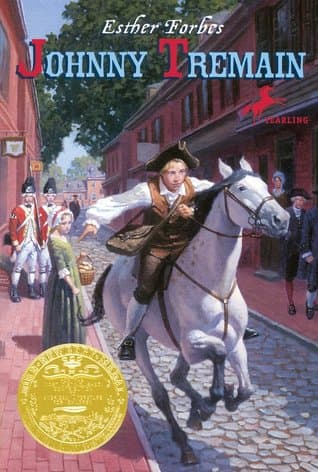
- Johnny Tremain
Esther Forbes
3.6 (41k) average on GoodreadsChildren'sA coming-of-age story set in Revolutionary Boston, dealing with themes of patriotism, sacrifice, and personal growth amidst historical events.
- To Kill a Mockingbird
Harper Lee
4.3 (4.5M) average on GoodreadsHistorical FictionIn the 1930s Jim Crow South, Harper Lee writes about racial injustice, moral growth, and the quiet courage of a lawyer father, Atticus Finch, as seen through his young daughter's eyes.
- The Great Gatsby
F. Scott Fitzgerald
3.9 (3.8M) average on GoodreadsHistorical FictionIn the opulent Roaring Twenties, a mysterious millionaire's lavish parties hide his desperate, tragic pursuit of a lost love, exposing the emptiness within the American Dream.
- Pride and Prejudice
Jane Austen
4.3 (3M) average on GoodreadsHistorical FictionIn a society focused on status and money, Elizabeth Bennet navigates love and pride, challenging Mr. Darcy and social expectations to find true affection.
- Angels & Demons
Dan Brown
3.9 (2.7M) average on GoodreadsThrillerA Harvard symbologist races through Rome's ancient sites, deciphering cryptic clues to unmask the Illuminati and stop a vengeful plot to destroy the Vatican with a stolen antimatter weapon.
- The Kite Runner
Khaled Hosseini
4.3 (2.4M) average on GoodreadsHistorical FictionIn pre-Taliban Afghanistan, a wealthy boy's betrayal of his servant's son during a kite-running tournament starts a lifelong journey for amends as his country collapses.





Enjoyed the summary?
A summary gives you the shape of the book. The book itself has the detail, the examples and the voice.
Find April Morning on AmazonAs an Amazon Associate, BookBrief earns from qualifying purchases. How we're funded