

Synopsis
Covers the whole plot, including the ending.
- Difficulty
- Medium
- Pacing
- Moderate
- Mood
- Philosophical, Reflective, Magical Realism, Introspective
- Read it if
- You enjoy philosophical retellings of classic tales with a focus on human nature and justice, or appreciate the intricate narrative style of Naguib Mahfouz.
- Skip it if
- You are looking for a direct, action-packed fantasy adventure without much introspection, or prefer traditional, unembellished versions of the Arabian Nights stories.
Arabian Nights and Days Plot Summary
Covers the whole plot, including the ending.
The Sultan's Dilemma and Shahrazad's Plea
Sultan Shahrayar, after discovering his first wife's betrayal, has started a custom: he marries a new virgin each night and executes her at dawn. This terror has decimated the women of his kingdom, leaving families distraught and the city in despair. Vizier Dandan, burdened by his duty to provide new brides, is horrified when his daughter, Shahrazad, volunteers to marry the Sultan. Despite her father's desperate pleas and warnings, Shahrazad is determined, believing she can end the Sultan's madness through storytelling. She prepares herself, gathering tales and strengthening her spirit for the dangerous task ahead.
Shahrazad's First Night and the Power of Storytelling
On her first night with Sultan Shahrayar, Shahrazad, after their initial intimacy, asks to tell a story to her younger sister, Dunyazad, who is in the chamber. She begins a captivating tale, carefully choosing narratives that interest the Sultan but always ending them on a cliffhanger as dawn approaches. Shahrayar, intrigued, finds his curiosity overriding his bloodlust. He postpones her execution, eager to hear the story's conclusion the following night. This pattern continues, with Shahrazad telling tales that subtly influence the Sultan's hardened heart, revealing human nature, justice, and fate, and slowly chipping away at his vengeful resolve.
The City's Unrest and the Sultan's Shifting Mood
While Shahrazad's storytelling keeps Shahrayar captive, preventing further executions, Baghdad is not entirely at peace. The initial relief gives way to new forms of unrest and moral ambiguity. Characters from Shahrazad's tales begin to appear in the real world, or their types inspire the actions of the city's inhabitants. The Sultan, no longer executing daily, becomes more thoughtful, his judgments occasionally softened or complicated by the moral questions in Shahrazad's narratives. His viziers and advisors, initially relieved, now face new challenges in governing a kingdom where the Sultan's moods are influenced by nightly fables, and society seems to reflect the stories being told.
The Tale of Ma'ruf and the Struggle for Justice
Shahrazad tells the tale of Ma'ruf, a kind but unlucky cobbler, whose life is a series of misfortunes often stemming from the injustice and greed of others. Ma'ruf's struggles for honesty and survival in a corrupt world highlight the plight of common people. This story deeply affects the city's inhabitants, especially those who feel oppressed. The narrative subtly critiques existing power structures and the arbitrary nature of fate, prompting discussions and even small acts of defiance among citizens. Shahrayar, listening, confronts the realities of his subjects' lives and the impact of leadership on their well-being, as Ma'ruf's quest for justice mirrors the unspoken desires of many in his kingdom.
Nur al-Din and Dunyazad's Love Story
As Shahrazad continues her nightly tales, her younger sister, Dunyazad, who always listens, begins to experience her own romantic awakening. She falls deeply in love with Nur al-Din, a young man of noble spirit but modest means, who is captivated by Dunyazad's beauty and kindness. Their growing relationship brings youthful hope and tenderness into the palace, which has long been dominated by fear and despair. However, their love faces obstacles, as societal expectations, the lingering shadow of the Sultan's past cruelty, and the schemes of others threaten to separate them, adding personal drama to the kingdom's overarching narrative.
The Genie's Intervention and the City's Transformation
As Shahrazad's stories unfold, the line between fiction and reality blurs. Genies, djinns, and other supernatural beings, previously confined to tales, begin to appear in Baghdad, often in unexpected forms and with unpredictable consequences. These magical interventions range from benevolent assistance to mischievous meddling, affecting the lives of ordinary citizens, merchants, and even the ruling elite. Flying carpets become more than a metaphor, and wishes, both granted and twisted, create new dilemmas and opportunities. This infusion of magic reflects the deep psychological impact of Shahrazad's narratives, suggesting that collective imagination, once stirred, can reshape the world, challenging the established order and forcing everyone to confront the fantastical possibilities of existence.
The Caliph's Return and the Question of Succession
The long-absent Caliph, Harun al-Rashid, a figure of legendary wisdom and justice, makes an unexpected return to Baghdad. His presence immediately brings new political intrigue and challenges Shahrayar's authority. While Shahrayar has been captivated by Shahrazad's tales, the Caliph's reappearance brings the focus back to governance, succession, and the nature of leadership. The city's inhabitants, weary of Shahrayar's past tyranny and the recent magical disruptions, look to the Caliph for stability and a return to just rule. This creates a subtle power struggle, forcing Shahrayar to consider his legacy and the responsibilities of his position beyond his personal vendetta, as the kingdom's fate hangs between two powerful rulers.
Betrayal and Conspiracy within the Palace
Even as Shahrazad's stories inspire hope and reflection, darker aspects of human nature, often depicted in her cautionary tales, begin to appear within the palace. Viziers, courtiers, and even members of Shahrayar's own family engage in schemes, betrayals, and conspiracies, vying for power and influence. These machinations reflect the greed, jealousy, and revenge that Shahrazad skillfully weaves into her narratives, showing that human vice is a constant threat regardless of external circumstances. Shahrayar, though softened by the stories, is still a ruler in a court full of ambition, forcing him to navigate a treacherous political landscape where trust is rare and misjudgment can have dire consequences.
The Sultan's Transformation and Shahrazad's Future
After a thousand and one nights, Shahrazad reveals that she has borne Shahrayar three sons. This revelation, combined with the cumulative effect of her stories, finally breaks through Shahrayar's hardened exterior. He recognizes the love and wisdom Shahrazad has shown him, understanding that true power lies not in vengeance but in justice, compassion, and the preservation of life. He renounces his cruel custom, declaring his genuine love for Shahrazad and acknowledging her as his true queen. This transformation marks a turning point not just for the royal couple, but for the entire kingdom, as a new era of enlightened rule, guided by the lessons in Shahrazad's narratives, begins.
The Resolution of Conflicts and a New Era for Baghdad
With Sultan Shahrayar's transformation, the various personal and political conflicts that arose throughout the narrative find resolution. Nur al-Din and Dunyazad's love story is blessed, leading to their marriage and a symbol of renewed hope. Caliph Harun al-Rashid, satisfied with Shahrayar's changed heart and commitment to justice, legitimizes his reign and offers his support. The magical entities that had infused Baghdad either retreat or integrate, leaving behind a city that has been shaped by both the fantastical and the real. The kingdom enters a new era, one where stories are valued as much as laws, and where the wisdom gained from Shahrazad's tales promises a future of greater understanding, peace, and prosperity for all its inhabitants.
Arabian Nights and Days Characters
Sultan Shahrayar
Protagonist/Antagonist
The vengeful Sultan of Baghdad whose heart is healed by stories.
Initially a brutal and tormented ruler, Shahrayar is consumed by rage and paranoia after discovering his first wife's infidelity. He institutes a custom of marrying and executing a new virgin each night, plunging his kingdom into despair. His character is defined by his deep-seated trauma and a desperate need for control, masking profound vulnerability. He is a man of immense power, yet utterly powerless against his own inner demons until Shahrazad's intervention. His transformation is central to the narrative, moving from a symbol of tyrannical injustice to one of enlightened compassion.
Relationships: Shahrazad (Wife, storyteller, savior, and eventually true love.); Dunyazad (Sister-in-law, audience to Shahrazad's tales.)
Shahrazad
Protagonist
The courageous Vizier's daughter who saves her city with storytelling.
Shahrazad is a woman of extraordinary intelligence, courage, and resourcefulness. Daughter of Vizier Dandan, she volunteers to marry Sultan Shahrayar, knowing it means almost certain death. Her brilliance lies in her mastery of storytelling, using intricate narratives to captivate the Sultan, delay her execution, and subtly teach him about justice, humanity, and love. She is driven by a deep sense of duty to her people and an unwavering belief in the power of words to heal and transform. Her resilience and wisdom are the catalysts for the entire kingdom's salvation.
Relationships: Sultan Shahrayar (Husband, her challenge and ultimate pupil.); Dunyazad (Beloved younger sister and confidante.); Vizier Dandan (Loving father, initially opposes her plan.)
Dunyazad
Supporting
Shahrazad's younger sister and devoted listener.
Dunyazad is Shahrazad's beloved younger sister and a crucial part of Shahrazad's storytelling strategy, as she is always present during the nightly narratives. She serves as an initial audience, prompting Shahrazad to begin her tales and offering interjections that draw Shahrayar further into the stories. She is a symbol of innocence and hope, and her own budding romance with Nur al-Din mirrors the themes of love and connection that Shahrazad champions. Dunyazad represents the younger generation, looking towards a future free from the Sultan's tyranny.
Relationships: Shahrazad (Elder sister and mentor.); Nur al-Din (Love interest and future husband.)
Nur al-Din
Supporting
A virtuous young man who falls in love with Dunyazad.
Nur al-Din is a young man of noble character and modest means who captures Dunyazad's heart. He represents the aspirations and simple virtues of the common people, embodying honesty, kindness, and steadfast love. His story often parallels the themes of justice and perseverance found in Shahrazad's tales. His love for Dunyazad provides a romantic subplot that contrasts with the darker elements of the Sultan's court, offering a glimpse of the innocent joy that can flourish even amidst turmoil. He symbolizes the possibility of personal happiness and a brighter future for the kingdom.
Relationships: Dunyazad (Love interest and future wife.)
Vizier Dandan
Supporting
Shahrazad's father, burdened by his duty and fear for his daughter.
Vizier Dandan is Shahrazad's father and a loyal, though tormented, servant to Sultan Shahrayar. He is responsible for bringing the daily brides to the Sultan, a duty that fills him with immense grief and moral conflict. He desperately tries to dissuade Shahrazad from her plan, fearing for her life, but ultimately respects her conviction. He represents the older generation grappling with the Sultan's tyranny and the hope that Shahrazad embodies. His character highlights the moral burden of serving an unjust ruler.
Relationships: Shahrazad (Daughter, whom he deeply loves and fears for.); Sultan Shahrayar (His sovereign, whose cruelty he endures.)
Ma'ruf
Mentioned
A character from Shahrazad's tales, symbolizing the common man's struggle for justice.
Ma'ruf is a recurring character in Shahrazad's stories, a humble cobbler whose life is a series of misfortunes often caused by the injustice or greed of others. He embodies the struggles of the common person against fate and corrupt systems. His tales highlight themes of perseverance, honesty, and the search for fairness in a world that often seems stacked against the virtuous. While not a physical character in Baghdad, his story has a profound impact on the Sultan and the city's inhabitants, representing the collective voice of the oppressed.
Relationships: Sultan Shahrayar (His plight influences the Sultan's understanding of justice.)
Harun al-Rashid
Supporting
The legendary former Caliph, whose return brings political weight.
Harun al-Rashid is the wise and just former Caliph, a legendary figure whose unexpected return to Baghdad brings a new dynamic to the political landscape. His presence challenges Shahrayar's authority and serves as a reminder of an ideal, just ruler. He is a symbol of legitimate power and enlightened governance, contrasting sharply with Shahrayar's initial tyranny. His role is to observe, assess, and ultimately validate Shahrayar's transformation, ensuring the kingdom's stability and a return to principled leadership. He embodies tradition and wisdom.
Relationships: Sultan Shahrayar (His successor, whom he observes and ultimately approves.)
The Genie (various)
Supporting
Supernatural beings who manifest from the stories, influencing reality.
Throughout the narrative, various genies and supernatural entities emerge from Shahrazad's tales and begin to influence the real world of Baghdad. These genies are not a single character but a collective force of magic and fate. They can be benevolent, mischievous, or even menacing, granting wishes, causing chaos, or offering cryptic guidance. Their presence blurs the line between fiction and reality, emphasizing the transformative power of imagination and the unpredictable nature of the universe. They serve as a constant reminder that the world is more complex and magical than it often appears.
Relationships: Sultan Shahrayar (Their actions often complicate or comment on his rule.); Citizens of Baghdad (They interact with and affect the lives of many.)
Arabian Nights and Days Themes
The Power of Storytelling
This is the central theme. Shahrazad's ability to tell captivating narratives not only saves her life but also transforms Sultan Shahrayar's brutal heart and ultimately saves the entire kingdom. The stories serve as a way for moral education, emotional healing, and political commentary. They show how words can build empathy, challenge preconceptions, and inspire change, demonstrating that imagination and narrative are powerful forces capable of reshaping reality. For instance, the tale of Ma'ruf directly influences the Sultan's understanding of common people's struggles, while other tales subtly introduce concepts of justice, mercy, and human nature, gradually eroding his desire for vengeance.
“Stories are not just for entertainment, my lord. They are mirrors of the soul, and guides for the heart.”
Justice vs. Vengeance
The novel explores the contrast between vengeance and true justice. Sultan Shahrayar begins as a ruler consumed by vengeance, inflicting arbitrary cruelty upon his kingdom due to personal betrayal. Shahrazad's tales, however, gradually introduce him to different forms of justice – divine, human, and poetic – and the devastating consequences of unchecked rage. The stories highlight the importance of mercy, forgiveness, and understanding the root causes of human behavior. The Sultan's transformation from a vengeful tyrant to a just and compassionate ruler is the ultimate example of this theme, proving that true justice seeks restoration and balance rather than retribution.
“Vengeance is a bitter drink that poisons the one who pours it as much as the one who drinks it.”
The Blurring of Reality and Fiction
Mahfouz blurs the lines between the stories Shahrazad tells and the reality of Baghdad. As Shahrazad's narratives unfold, characters and events from her tales begin to appear in the real world, or their types inspire actual occurrences. Genies appear, wishes are granted (and often twisted), and the city itself seems to become a living reflection of the ongoing narrative. This theme suggests that collective imagination and the power of narrative can profoundly influence and even reshape the physical and social fabric of a society. It questions the nature of reality, implying that our stories are not just reflections of life, but active forces that create it.
“The city itself became a story, each street a paragraph, each person a character, all woven by the loom of her words.”
Love and Compassion as Redemptive Forces
At its heart, the novel champions love and compassion as forces for redemption and healing. Shahrazad's love for her people and her compassion for Shahrayar, despite his initial cruelty, drive her to risk her life. Her actions are motivated by a desire to heal a broken ruler and a suffering kingdom. The growing love between Dunyazad and Nur al-Din further emphasizes this theme, representing hope and the possibility of happiness in a world previously dominated by fear. Ultimately, Shahrazad's enduring love, shown through her storytelling, breaks Shahrayar's cycle of violence and transforms him, proving that love can conquer even the deepest hatred and trauma.
“In the end, it was not the sword that conquered, but the heart that understood.”
Fate vs. Free Will
The novel plays with the tension between predetermined fate and the choices characters make. Many events, especially those involving genies or unexpected turns of fortune, suggest destiny. However, Shahrazad's conscious decision to sacrifice herself and her strategic use of storytelling demonstrate immense free will and agency. Characters within her tales also grapple with their lot, sometimes overcoming it, sometimes succumbing. This theme explores whether individuals are merely puppets of a larger cosmic plan or if their courage, wisdom, and love can alter their paths, suggesting a complex interplay where human choice can influence, if not entirely dictate, destiny.
“Is man but a puppet of the heavens, or does he carve his own path, even in the shadow of giants?”
Plot Devices & Literary Techniques
Frame Story
The overarching narrative of Shahrazad telling stories to Sultan Shahrayar.
The entire novel is structured as a frame story, where the primary narrative of Shahrazad's nightly storytelling to Sultan Shahrayar encloses numerous other embedded tales. This device is directly inherited from the original 'One Thousand and One Nights' and is crucial for Mahfouz's reimagining. It allows for the introduction of diverse characters and moral dilemmas, while simultaneously serving as the mechanism for Shahrazad's survival and the Sultan's gradual transformation. The frame story provides both continuity and variety, enabling Mahfouz to explore a multitude of themes and perspectives within a unified narrative structure.
Magic Realism
The integration of fantastical elements into a realistic setting.
Mahfouz employs magic realism by seamlessly blending the supernatural and the mundane. As Shahrazad's stories unfold, the fantastical elements she describes – genies, flying carpets, magical creatures – begin to appear in the 'real' world of Baghdad. This blurring of lines between the magical and the ordinary is not presented as jarring or unbelievable but as an organic extension of the narrative's power. It highlights the psychological and cultural impact of storytelling, suggesting that imagination can literally alter reality, creating a world where the extraordinary coexists with the everyday, and the boundaries of possibility are constantly shifting.
Intertextuality
References and allusions to the original 'One Thousand and One Nights' and other Arabic folklore.
Mahfouz's novel is deeply intertextual, consciously referencing and reinterpreting characters and scenarios from the classic 'One Thousand and One Nights.' Familiar figures like Aladdin, Sinbad, and Ali Baba (or their archetypes) appear, but their stories are often twisted, given new moral dimensions, or used to comment on contemporary issues. This device allows Mahfouz to engage in a dialogue with the original source material, offering a modern, philosophical, and often darker perspective on these beloved tales. It enriches the narrative by drawing upon readers' existing knowledge of the Arabian Nights while simultaneously subverting expectations and creating something entirely new.
Didacticism (Subtle)
The use of stories to subtly teach moral lessons and guide character development.
While not overtly preachy, the novel uses Shahrazad's tales as a subtle didactic tool. Each story she tells is not merely for entertainment; it carries a moral lesson, a reflection on human nature, or a commentary on justice, power, and fate. These lessons are carefully chosen to influence Sultan Shahrayar's hardened heart and guide him towards empathy and wisdom. The didacticism is effective because it is embedded within captivating narratives, allowing the Sultan (and the reader) to discover truths organically rather than being directly lectured. It's a method of teaching through parable and example, leading to a profound internal transformation.
Arabian Nights and Days Quotes
“The city of a thousand and one nights is now the city of a thousand and one crimes.”
“Justice is a dream in a land of nightmares.”
“Love is a prison with invisible bars, and we are its willing captives.”
“Every man has his own jinni, some good, some evil, residing within his soul.”
“To forget is to die a little, to remember is to live forever.”
“Power corrupts, and absolute power corrupts absolutely, even the jinn.”
“The past is a phantom that haunts the present and dictates the future.”
“There are more mysteries in a human heart than in all the enchanted caves of the world.”
“Even the most beautiful tale can hide the ugliest truth.”
“Fear is the greatest sorcerer, capable of transforming reality into illusion.”
“A lie travels faster than the truth, and often arrives first.”
“Happiness is a fleeting guest, but sorrow is a resident of long standing.”
“Every secret desires to be told, just as every cage desires to be opened.”
“The greatest magic is not in conjuring spirits, but in understanding humanity.”
Quiz
10 questions on the plot and the characters. Each answer comes with a short explanation.
Question 1
Which character, often associated with a lamp, appears in 'Arabian Nights and Days' but has a significantly different, more complex fate than in the traditional tales?
- Sinbad
- Ali Baba
- Aladdin
- Ma'ruf
Show answer
C. Aladdin Aladdin is a prominent character in Mahfouz's reimagining, grappling with existential questions and a more nuanced relationship with power and the genie.
Question 2
What is the primary narrative device that frames the entire collection of stories in 'Arabian Nights and Days', echoing the original 'One Thousand and One Nights'?
- A group of merchants sharing tales in a caravanserai
- Scheherazade's nightly storytelling to King Shahryar
- A wise old man recounting histories to his apprentices
- Inscriptions found on ancient scrolls
Show answer
B. Scheherazade's nightly storytelling to King Shahryar Like the original, Mahfouz's novel is framed by Scheherazade's storytelling to King Shahryar, though her tales often lead to new, interconnected events.
Question 3
What common theme does Mahfouz explore through the various characters' interactions with genies and magical powers?
- The fleeting nature of human love
- The corrupting influence and moral dilemmas of absolute power
- The importance of economic prosperity
- The triumph of good over evil in all circumstances
Show answer
B. The corrupting influence and moral dilemmas of absolute power Mahfouz frequently uses genies and their granted wishes to highlight how easily power can corrupt and lead to moral compromises, a recurring theme.
Question 4
Which of the following describes the general tone and philosophical depth Mahfouz brings to these classic tales?
- Lighthearted and purely escapist fantasy
- A satirical critique of ancient societal norms
- More introspective, philosophical, and often melancholic
- Primarily focused on historical accuracy and detail
Show answer
C. More introspective, philosophical, and often melancholic Mahfouz imbues the stories with deeper philosophical questions, often exploring existentialism, fate, and human nature, giving them a more introspective and sometimes melancholic tone.
Question 5
How does Mahfouz typically portray the city of Baghdad in 'Arabian Nights and Days'?
- As a utopian paradise untouched by human flaws
- As a vibrant, complex city filled with both beauty and corruption, where fate and human choices intertwine
- As a desolate wasteland, reflecting political turmoil
- As a backdrop for purely individual adventures, with little social commentary
Show answer
B. As a vibrant, complex city filled with both beauty and corruption, where fate and human choices intertwine Baghdad is depicted as a living entity, a crucible where diverse human experiences, moral dilemmas, and the consequences of magic and power play out.
Question 6
In Mahfouz's version, what often happens to characters who achieve great wealth or power through magical means?
- They live happily ever after with no further complications.
- They become hermits, renouncing their worldly possessions.
- They face unforeseen consequences, moral decay, or existential crises.
- They immediately share their wealth with the poor and become revered saints.
Show answer
C. They face unforeseen consequences, moral decay, or existential crises. A key aspect of Mahfouz's reimagining is to explore the darker side of sudden fortune, showing how it often leads to moral corruption, paranoia, or profound unhappiness.
Question 7
Which traditional figure, known for his voyages, experiences a more philosophical and less action-oriented journey in Mahfouz's narrative, often reflecting on the nature of existence?
- Abu al-Hassan
- Sinbad
- Harun al-Rashid
Show answer
B. Sinbad Sinbad, while still a traveler, becomes a more contemplative figure in Mahfouz's work, seeking deeper meaning beyond mere adventure and wealth.
Question 8
Mahfouz frequently introduces characters who question the nature of reality, fate, and divine will. Which philosophical school of thought is most evident in these explorations?
- Stoicism
- Nihilism
- Existentialism
- Utilitarianism
Show answer
C. Existentialism The questioning of individual choice, the meaning of life in a seemingly predetermined world, and the burden of freedom are strong existentialist themes woven throughout the narrative.
Question 9
How does Mahfouz subvert the traditional 'happily ever after' ending for many of his characters, even those who achieve their desires?
- By having them immediately die after achieving their goal.
- By revealing their happiness is superficial, fleeting, or comes at a great moral cost.
- By having them wake up to realize it was all a dream.
- By introducing a deus ex machina that undoes all their achievements.
Show answer
B. By revealing their happiness is superficial, fleeting, or comes at a great moral cost. Mahfouz often shows that achieving one's desires, especially through magic, frequently leads to new problems, moral compromises, or a profound sense of dissatisfaction, undermining the simple 'happily ever after' trope.
Question 10
Beyond the fantastic elements, what socio-political commentary does Mahfouz subtly weave into the fabric of 'Arabian Nights and Days' regarding leadership and governance?
- That monarchy is the most stable form of government.
- A critique of authoritarian rule, corruption, and the abuse of power by those in authority.
- The inherent goodness of all rulers, regardless of their actions.
- The irrelevance of political systems to individual lives.
Show answer
B. A critique of authoritarian rule, corruption, and the abuse of power by those in authority. Mahfouz, a keen observer of Egyptian society and politics, often uses the tales to critique corruption, injustice, and the unchecked power of rulers, reflecting broader concerns about governance.
Arabian Nights and Days FAQ
What is the overarching premise of Naguib Mahfouz's 'Arabian Nights and Days'?
Mahfouz reimagines the world of the original 'One Thousand and One Nights' after Scheherazade has finished her storytelling. The novel explores the lives of the characters, both familiar and new, as they grapple with the consequences of their actions, the capriciousness of fate, and the ever-present influence of the supernatural in a Baghdad still reeling from the tales.
How does Mahfouz's approach differ from the traditional 'One Thousand and One Nights'?
Instead of focusing on Scheherazade's nightly tales to King Shahryar, Mahfouz delves into the aftermath, exploring the moral and societal implications of the events and characters introduced in the original stories. He provides a more philosophical and psychological examination of justice, power, and human nature within that fantastical setting, often questioning the very nature of truth and storytelling.
Which familiar characters from the original 'Nights' make significant appearances?
Many beloved characters return, including Aladdin, Sinbad the Sailor, Ali Baba, and Maruf the Cobbler. However, their stories are often continued or recontextualized, revealing new challenges, moral dilemmas, and unexpected fates that extend beyond their classic narratives.
What role do genies and magic play in Mahfouz's reimagining?
Genies and magic remain potent forces, often serving as catalysts for plot developments or as reflections of human desires and corruptions. Unlike the more straightforward magical interventions in the original tales, Mahfouz often portrays genies as morally ambiguous beings whose gifts or curses lead to complex and unforeseen consequences for the characters, highlighting themes of free will versus destiny.
What is the significance of the recurring theme of justice and injustice in the novel?
Justice is a central preoccupation, with many characters seeking or being denied it, often at the hands of corrupt officials or through the manipulation of supernatural forces. Mahfouz uses these narratives to critique earthly power structures and to explore the complexities of moral responsibility in a world where divine intervention and human fallibility constantly intertwine.
How does the character of Shahryar evolve after Scheherazade's tales conclude?
Shahryar is depicted as a changed man, no longer the vengeful king, but one burdened by his past and searching for true wisdom and justice. He grapples with the legacy of his cruelty and seeks to rule with a newfound understanding, often reflecting on the lessons imparted by Scheherazade, though he remains susceptible to the machinations of his court.
What is the hidden connection between the various seemingly disparate character narratives?
While the stories often appear episodic, they are subtly interconnected through shared themes, recurring locations like the city of Baghdad, and the overarching moral and philosophical questions they pose about human nature, fate, and the search for meaning. Characters often encounter the consequences of others' actions or find their fates intertwined through the city's complex social fabric.
Are there any subtle critiques of contemporary society embedded within the fantastical setting?
Yes, Mahfouz, a master of allegorical writing, uses the historical and fantastical setting to subtly critique issues such as political corruption, social inequality, the abuse of power, and the complexities of human morality that resonate beyond the specific historical period. The struggles of the common people and the injustices they face often mirror broader societal concerns.
How does Mahfouz use the concept of storytelling itself as a hidden theme?
The novel constantly reflects on the power and limitations of storytelling. Characters' lives are shaped by tales, rumors, and prophecies, and the narrative frequently questions the nature of truth, memory, and how stories are constructed and interpreted. Scheherazade's legacy of storytelling continues to influence the world even after her tales are told.
How does Mahfouz explore the psychological impact of power and wealth on characters like Aladdin or Ali Baba?
Mahfouz delves into how sudden wealth and power, often acquired through magical means, can corrupt or transform individuals. Aladdin, for instance, grapples with the responsibilities and temptations of his position, while Ali Baba confronts the moral ambiguities of his newfound riches and the dangers it attracts, revealing the psychological toll of their extraordinary circumstances.
What psychological complexities are revealed in the characters' encounters with supernatural beings?
Encounters with genies often force characters to confront their deepest desires, fears, and moral compass. The psychological tension arises from the choices they make when granted immense power or faced with insurmountable obstacles, revealing their true character and often leading to profound internal conflicts and existential crises.
How do characters cope with the capriciousness of fate and divine intervention?
Many characters struggle with the feeling of being pawns in a larger cosmic game, grappling with predestination versus free will. Their psychological responses range from resignation and despair to defiant attempts to alter their destiny, often leading to deep introspection about their place in the universe and the meaning of their suffering.
What is the psychological journey of characters who seek redemption or enlightenment?
Characters like Shahryar embark on significant psychological journeys, moving from past transgressions towards a quest for wisdom, forgiveness, and a deeper understanding of justice. This often involves confronting their past actions, enduring trials, and evolving their moral perspectives, reflecting a profound internal transformation.
Is the novel ultimately optimistic or pessimistic about human nature?
The novel presents a nuanced view. While it exposes human venality, corruption, and the capacity for cruelty, it also celebrates resilience, the pursuit of justice, and the enduring power of love and redemption. It suggests that while evil exists, there is always hope for moral growth and the triumph of good, even if hard-won.
How does Mahfouz's use of allegory contribute to the book's deeper meaning?
Mahfouz masterfully employs allegory to imbue the fantastical tales with profound social, political, and philosophical commentary. The struggles of individuals, the corruption of power, and the search for truth in Baghdad can be interpreted as reflections of broader human conditions and societal challenges, making the narrative timeless and universally resonant.
What is the significance of the recurring motif of dreams and illusions in the narrative?
Dreams and illusions blur the lines between reality and fantasy, often serving as omens, psychological manifestations, or even direct interventions from the supernatural realm. This motif highlights the subjective nature of perception and challenges characters, and readers, to question what is truly real and what is merely a construct of the mind or a magical deception.
How does the ending of 'Arabian Nights and Days' provide a sense of closure while also leaving room for contemplation?
The ending often brings certain character arcs to a resolution, offering a sense of justice or fate fulfilled. However, it typically refrains from offering simplistic answers, instead inviting readers to ponder the cyclical nature of good and evil, the ongoing human struggle, and the enduring power of the stories themselves, leaving a lasting philosophical resonance.
About the author

Naguib Mahfouz Abdelaziz Ibrahim Ahmed Al-Basha was an Egyptian writer who won the 1988 Nobel Prize in Literature. Mahfouz is regarded as one of the first contemporary writers in Arabic literature, along with Taha Hussein, to explore themes of existentialism. He is the only Egyptian to win the Nobel Prize in Literature. He published 35 novels, over 350 short stories, 26 screenplays, hundreds of op-ed columns for Egyptian newspapers, and seven plays over a 70-year career, from the 1930s until 2004. All of his novels take place in Egypt, and always mentions the lane, which equals the world. His most famous works include The Cairo Trilogy and Children of Gebelawi. Many of Mahfouz's works have been made into Egyptian and foreign films; no Arab writer exceeds Mahfouz in number of works that have been adapted for cinema and television. While Mahfouz's literature is classified as realist literature, existential themes appear in it.
Similar books
- One Hundred Years of Solitude
Gabriel García Márquez
4.1 (753k) average on GoodreadsLiterary FictionShares a magical realism style and explores the cyclical nature of history and human experience through generations.
- Palace Walk
Naguib Mahfouz
4.2 (15k) average on GoodreadsHistorical FictionShowcases Mahfouz's signature narrative style, exploration of Egyptian society, and deep character development within a historical setting.
- A Thousand Splendid Suns
Khaled Hosseini
4.4 (1.2M) average on GoodreadsHistorical FictionWhile both novels explore societal injustices and human resilience, Hosseini uses a direct historical fiction narrative to depict the struggles of women in Afghanistan. Mahfouz, by contrast, employs a metafictional and allegorical approach, using the framework of ancient tales to comment on broader political and moral issues, offering a less literal but equally potent critique.
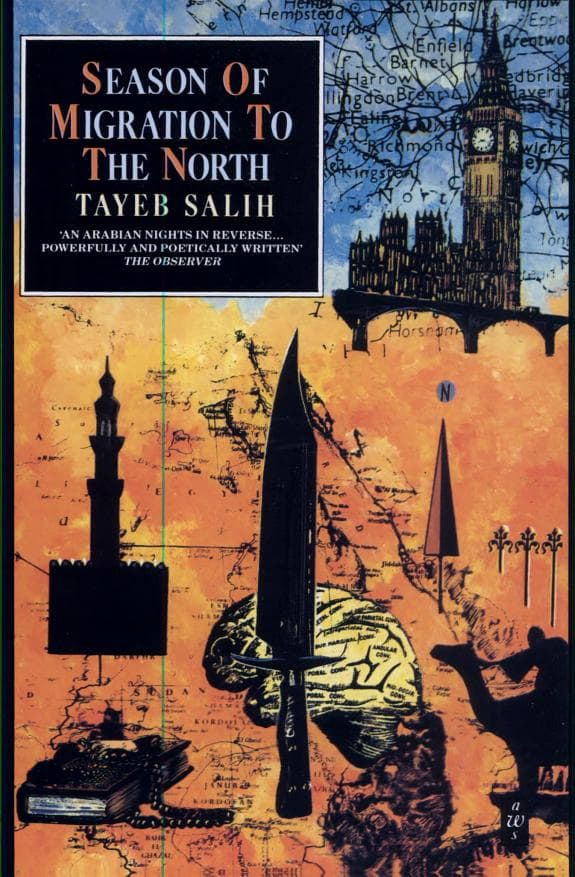
- Season of Migration to the North
Tayeb Salih
3.7 (20k) average on GoodreadsHistorical FictionBoth Mahfouz and Salih are seminal Arab authors who critique societal structures. However, Salih's work primarily explores themes of postcolonial identity, the clash between East and West, and the complexities of modernization through a more psychologically intense and character-driven narrative. Mahfouz, in Arabian Nights and Days, focuses more on the internal dynamics of power, justice, and morality within a largely allegorical, pre-modern setting.
- Harry Potter and the Sorcerer's Stone
J.K. Rowling
4.5 (7M) average on GoodreadsFantasyRescued from a miserable life under the stairs, an orphaned boy discovers he's a wizard destined for a magical school, where he uncovers a dangerous secret tied to the dark wizard who murdered his parents.
- The Hunger Games
Suzanne Collins
4.3 (6.4M) average on GoodreadsFantasyIn a future where children fight to the death on live television, Katniss Everdeen volunteers for the arena, turning a death sentence into a fight for survival and a spark of rebellion.




Enjoyed the summary?
A summary gives you the shape of the book. The book itself has the detail, the examples and the voice.
Find Arabian Nights and Days on AmazonAs an Amazon Associate, BookBrief earns from qualifying purchases. How we're funded