

Synopsis
Covers the whole plot, including the ending.
- Difficulty
- Medium
- Pacing
- Slow
- Mood
- Atmospheric, Melancholy, Reflective, Domestic, Oppressive
- Read it if
- You enjoy immersive historical fiction that provides a deep dive into family dynamics and societal changes in a non-Western setting, with rich character development and a strong sense of place.
- Skip it if
- You prefer fast-paced plots, lighthearted stories, or narratives with a strong, singular protagonist. The patriarchal themes and detailed domesticity might feel slow to some.
Palace Walk Plot Summary
Covers the whole plot, including the ending.
The Strict Patriarch and His Subservient Family
The novel opens by introducing Ahmed Abd al-Jawad's conservative and patriarchal household in Cairo. His wife, Amina, and their five children (Yasin, Fahmy, Kamal, Khadija, and Aisha) live under his absolute authority, never questioning his commands. Amina is pious and submissive, rarely leaving the house, and the children lead restricted lives, especially the girls. Ahmed, however, leads a double life. While at home he demands strict adherence to Islamic tradition and respect, outside he seeks pleasure, frequenting musical gatherings, drinking, and pursuing women with his friends. The family knows his power and their dependence on his financial support and social standing, which makes them fearful of his unpredictable temper.
The Children's Budding Desires and Rebellions
The children's individual struggles against their father's strict rule begin to show. Yasin, the eldest from Ahmed's first marriage, mirrors his father's behavior, secretly drinking and visiting prostitutes. Fahmy, the second son, is more studious and politically aware, drawn to nationalist movements against British occupation, a path his father would not approve of. Kamal, the youngest, is still a boy, but intelligent and observant, deeply attached to his mother and showing an interest in philosophy and women. The two daughters, Khadija and Aisha, are largely confined. Their lives revolve around household duties and the prospect of arranged marriages, though they have distinct personalities: Khadija sharp-tongued and practical, Aisha beautiful and more romantic.
Amina's Rare Outing and Its Harsh Consequences
Amina, having lived a confined life, wants to visit the mosque of Imam Husayn. One morning, without her husband's explicit permission, she quietly leaves the house. While crossing the street, she trips and breaks her collarbone. When Ahmed Abd al-Jawad discovers her unauthorized excursion and injury, he is furious. In a fit of rage, he banishes her from their marital bed and forbids her from speaking to him. This isolates her within her own home. This incident shows the power imbalance in their marriage and the severe repercussions for even small transgressions against Ahmed's absolute authority, leaving Amina heartbroken and shamed.
Yasin's Scandalous Marriage and Divorce
Ahmed, wanting to control Yasin's behavior, arranges his marriage to Zaynab, the daughter of a friend. Initially, Yasin tries to settle down, but his behavior soon resurfaces. He begins to flirt with the family's maid, and eventually, Zaynab catches him with her. The scandal is immense, leading to a swift and humiliating divorce. This event shames the family and further solidifies Ahmed's disappointment in his eldest son, showing that even marriage cannot curb Yasin's inclinations towards pleasure-seeking and disregard for social propriety.
Khadija and Aisha's Marriages
Ahmed arranges marriages for his two daughters. Khadija, known for her sharp tongue and plain appearance, marries Ibrahim Shawkat, a somewhat coarse but wealthy merchant. Their marriage has frequent quarrels, but also an affection. Aisha, beautiful and graceful, marries Khalil Shawkat, Ibrahim's brother. Aisha's marriage is initially happier, as Khalil is charming and they share a more romantic connection. These marriages give the sisters some independence from their father's immediate control, allowing them to establish their own households, though they remain tied to the larger family unit and its expectations. Khadija soon becomes pregnant, bringing new life and challenges to the family.
Kamal's Intellectual Awakening and First Love
Kamal, now a young man, is a brilliant student, excelling in his studies and developing an interest in literature and philosophy. He falls deeply in love with Aida, a beautiful and sophisticated girl from a wealthier, more modern family. His love for her becomes an obsession, filling his thoughts and informing his poetry. However, Aida is largely unaware of his feelings, treating him as a friend. This unrequited love becomes a source of anguish and intellectual development for Kamal, as he grapples with the complexities of emotion, beauty, and the ideal versus reality, often confiding in his friend Husayn Shaddad.
Fahmy's Growing Political Involvement
Fahmy, passionate about Egyptian nationalism, dedicates himself to the cause of independence from British occupation. He attends secret meetings, participates in demonstrations, and discusses politics with his friends. This often clashes with Kamal's philosophical and detached perspective. His political activities challenge his father's cautious and apolitical stance, creating an unspoken tension within the household. Fahmy sees the struggle for national liberation as a moral need, driven by a strong sense of justice and patriotism, willing to risk his own safety for Egypt's future.
The 1919 Revolution Erupts
The political tensions in Egypt lead to the outbreak of the 1919 Revolution, a widespread uprising against British rule. Demonstrations, strikes, and clashes with British forces become common in Cairo. Fahmy, unable to stand by, throws himself into the movement. He participates in student protests and marches, his idealism and fervor pushing him to the forefront of the nationalist cause. The family watches with a mixture of pride, fear, and apprehension as Fahmy becomes exposed to the dangers of political activism, a contrast to their father's insulated world.
Tragedy Strikes: Fahmy's Death
During a violent demonstration, Fahmy is shot and killed by British soldiers. His death shatters the Abd al-Jawad household. The family is in deep mourning, grappling with the sudden loss of their idealistic son. Amina is inconsolable, and even Ahmed Abd al-Jawad, though initially stoic, is affected. His authority momentarily falters in the face of such a personal catastrophe. Fahmy's death reminds them of the harsh realities of political struggle and the personal cost of the nationalist movement, leaving a permanent scar on the family.
The Aftermath and Lingering Shadows
After Fahmy's death, the Abd al-Jawad family struggles to find a new balance. The revolution eventually subsides, but its impact, and Fahmy's sacrifice, leaves a mark. Ahmed Abd al-Jawad, though resuming his routine, is subtly changed, perhaps a little more subdued. Amina remains pious, finding solace in her faith. Kamal, affected by his brother's death, continues his intellectual pursuits, now with a deeper sense of life's fragility and the weight of existence. The novel concludes with the family attempting to navigate their altered reality, carrying the burden of their loss and the quiet understanding that their world has shifted irrevocably.
Palace Walk Characters
Ahmed Abd al-Jawad
Patriarch/Protagonist
The strict, authoritative patriarch of the Abd al-Jawad family, leading a secret double life.
Ahmed Abd al-Jawad is the undisputed head of his household, a merchant who commands absolute obedience from his wife and children. He embodies traditional Egyptian patriarchal values: demanding respect, enforcing strict religious and social codes at home, and providing for his family. However, he leads a starkly contrasting secret life, indulging in drinking, music, and extramarital affairs with his male friends. His unpredictable temper and stern demeanor inspire fear and subservience in his family, yet he also possesses a charismatic charm in his public life. He is a complex character, representing both the stability and hypocrisy of his era's social structures.
Relationships: Amina (Submissive wife); Yasin (Son, whose debauchery mirrors his own); Fahmy (Son, whose idealism he disapproves of); Kamal (Youngest son, whom he finds amusing); Khadija (Daughter, whom he finds less attractive); Aisha (Daughter, whom he favors for her beauty)
Amina
Matriarch/Supporting
The pious, submissive wife of Ahmed Abd al-Jawad, confined to her home.
Amina is the devoted and deeply religious wife of Ahmed Abd al-Jawad. Her life revolves around her home, her children, and her faith. She is the epitome of the submissive wife, rarely leaving the house and never questioning her husband's authority, even when he punishes her for a minor transgression. Her quiet strength lies in her unwavering piety and her boundless love for her children, especially Kamal. She finds solace in prayer and traditional values, embodying the constrained lives of many women in that era, yet her inner world is rich with maternal affection and spiritual devotion.
Relationships: Ahmed Abd al-Jawad (Dominant husband); Kamal (Favorite son, with whom she shares a deep bond); All children (Loving and protective mother)
Yasin
Son/Supporting
The eldest son, inheriting his father's penchant for pleasure but lacking his control.
Yasin is Ahmed Abd al-Jawad's eldest son from a previous marriage. He largely inherits his father's love for carnal pleasures, indulging in drinking and women, but lacks his father's discretion and ability to maintain a respectable facade. He is impulsive, often getting into trouble, and his first marriage ends in scandal due to his infidelity. Despite his flaws, he craves his father's approval and struggles to find his place within the family and society. He represents the less disciplined side of the patriarchal legacy.
Relationships: Ahmed Abd al-Jawad (Feared and admired father); Zaynab (First wife, divorced); Kamal (Younger brother, whom he teases)
Fahmy
Son/Supporting
The idealistic, nationalist son who becomes deeply involved in the Egyptian revolution.
Fahmy is the second son, a university student who is serious, studious, and deeply committed to the cause of Egyptian nationalism. Unlike his father and older brother, he is driven by political ideals and a strong sense of justice, openly defying British occupation. He represents the rising tide of anti-colonial sentiment among educated youth in Egypt. His idealism, courage, and willingness to sacrifice for his country make him a tragic hero, embodying the hopes and dangers of the nascent independence movement. His death is a pivotal moment, symbolizing the heavy cost of political struggle.
Relationships: Ahmed Abd al-Jawad (Feared father, whose political views he opposes); Kamal (Younger brother, with whom he debates politics); Nationalist friends (Comrades in the revolution)
Kamal
Son/Protagonist
The youngest son, an intelligent and sensitive boy who grows into a philosophical young man.
Kamal is the youngest son, initially a beloved child, deeply attached to his mother. As he grows, he develops into a highly intelligent, sensitive, and philosophical young man. He is an avid reader, a keen observer of human nature, and grapples with existential questions. His unrequited love for Aida becomes a defining experience, shaping his understanding of beauty, desire, and suffering. He is often the family's internal commentator, reflecting on the dynamics around him. Kamal represents the intellectual and emotional awakening of a new generation, seeking meaning beyond traditional confines.
Relationships: Amina (Beloved mother); Ahmed Abd al-Jawad (Feared and admired father); Fahmy (Brother, whose death profoundly impacts him); Aida (Object of his unrequited love); Husayn Shaddad (Close friend and confidant)
Khadija
Daughter/Supporting
The sharp-tongued and practical elder daughter, who marries Ibrahim Shawkat.
Khadija is the elder daughter, known for her plain appearance, sharp wit, and practical nature. She is outspoken and often critical, contrasting with her more demure sister. She marries Ibrahim Shawkat, a merchant, and their relationship is characterized by frequent bickering and a robust, if sometimes contentious, affection. Khadija represents the more grounded and resilient aspects of the women in the family, capable of asserting herself within the bounds of her societal role, even if her beauty is not her defining trait.
Relationships: Aisha (Sister, whom she often teases); Ibrahim Shawkat (Husband)
Aisha
Daughter/Supporting
The beautiful and romantic younger daughter, who marries Khalil Shawkat.
Aisha is the younger daughter, renowned for her striking beauty and gentle, somewhat romantic nature. She is more outwardly charming and less assertive than Khadija. She marries Khalil Shawkat, Ibrahim's brother, and their early marriage is generally harmonious. Aisha embodies the idealized vision of feminine beauty and grace within the family, though her life, like her sister's, is largely dictated by societal expectations and family arrangements. Her beauty is a source of pride for the family, especially her father.
Relationships: Khadija (Sister, with whom she has a typical sibling dynamic); Khalil Shawkat (Husband)
Ibrahim Shawkat
Supporting
Khadija's husband, a wealthy and somewhat coarse merchant.
Ibrahim Shawkat is a wealthy merchant who marries Khadija. He is often depicted as somewhat coarse and boisterous, though generally good-hearted. His relationship with Khadija is marked by frequent arguments and playful banter, reflecting a dynamic of strong personalities. He represents a segment of the Cairene merchant class, focused on business and family, and serves as a foil to the more refined or intellectual characters.
Relationships: Khadija (Wife); Khalil Shawkat (Brother)
Khalil Shawkat
Supporting
Aisha's husband, a charming and pleasant man.
Khalil Shawkat is Ibrahim's younger brother and Aisha's husband. He is presented as more charming and pleasant than his brother, and his marriage to Aisha is initially a happy one. He represents a more amiable and somewhat romantic male figure compared to the dominant patriarchs or the more troubled sons. His presence contributes to Aisha's contentment and offers a contrast to the more fraught relationships within the Abd al-Jawad household.
Relationships: Aisha (Wife); Ibrahim Shawkat (Brother)
Aida
Mentioned
The beautiful, sophisticated girl who is the object of Kamal's unrequited love.
Aida is a beautiful and sophisticated girl from a wealthier, more modern Cairene family. She is largely unaware of the depth of Kamal's feelings for her, treating him as a friend. She embodies an ideal of beauty and grace for Kamal, becoming the catalyst for his intense emotional and intellectual development. Her presence, though often indirect, is crucial to Kamal's character arc, representing unattainable desire and the painful lessons of first love.
Relationships: Kamal (Object of his unrequited love)
Palace Walk Themes
Patriarchy and Authority
The novel shows patriarchy, with Ahmed Abd al-Jawad's absolute rule over his family. His word is law, and any transgression, like Amina's unapproved mosque visit, results in severe punishment. This theme explores the power dynamics within the household, where women and children are subservient, their lives and choices dictated by the male head. It also critiques the hypocrisy in such a system, as the patriarch's public morality contrasts sharply with his private life, highlighting the double standards imposed on men versus women.
“Her husband was her paradise and her hell, her master and her tormentor, her life and her death.”
Hypocrisy and Double Standards
A central theme is hypocrisy, particularly in Ahmed Abd al-Jawad. He demands strict adherence to religious and moral codes from his family, especially his wife and daughters, while secretly indulging in drinking, music, and extramarital affairs. This double standard is also reflected in Yasin, who inherits his father's vices but lacks his discretion, leading to scandal. The theme highlights the societal pressures of maintaining appearances and the hidden lives people lead behind closed doors, exposing the moral complexities of the era.
“He was a man who lived two lives: one of strict piety and authority at home, and another of unrestrained pleasure outside.”
Tradition vs. Modernity
The Abd al-Jawad family is a microcosm of Egypt dealing with the tension between traditions and modernity. Amina embodies tradition, confined to her home and piety, while Fahmy represents modernity through his nationalist politics and desire for a new Egypt. Kamal's intellectual curiosity and unrequited love for Aida, a more modern woman, also reflect this clash. The novel explores how individual lives are shaped by these conflicting forces, from social customs and gender roles to political aspirations and intellectual freedom, particularly against the backdrop of British occupation.
“The world outside the house was a great, terrifying mystery that only men dared to venture into.”
Love, Desire, and Suffering
This theme explores love and desire, often intertwined with suffering. Kamal's unrequited love for Aida is a central example, causing him emotional pain but also intellectual growth. Yasin's uncontrolled desires lead to his marital downfall. Ahmed Abd al-Jawad's desires are physical, detached from emotional intimacy. Amina's suffering, caused by her husband's harshness and the loss of Fahmy, shows the emotional toll of constricted lives. The novel portrays love as a complex, often painful, human experience, shaped by societal constraints and personal choices.
“Love, like a fever, had consumed him, leaving him both weak and intensely alive.”
Nationalism and Political Awakening
The backdrop of British occupation and the Egyptian nationalist movement is a theme, primarily shown by Fahmy. His commitment to political activism and his sacrifice highlight the desire for independence and the dangers involved. The family's differing reactions to the political unrest (Ahmed's caution, Fahmy's passion, Kamal's intellectual observation) reflect the diverse responses within Egyptian society. This theme connects the personal struggles of the family to the larger historical forces shaping their nation, showing how political events directly impact individual lives and family dynamics.
“Egypt was a woman, and her sons were bound to protect her honor.”
Plot Devices & Literary Techniques
The Abd al-Jawad House
A symbol of patriarchal control, tradition, and the family's internal world.
The physical house in Palace Walk serves as more than just a setting; it is a powerful symbol. It represents the fortress of tradition and patriarchal authority, where Amina and the girls are largely confined, and Ahmed's rules are absolute. The interior of the house is a space of strict order and hidden emotions, contrasting sharply with the chaotic and liberal world Ahmed inhabits outside. Its walls contain the family's secrets, joys, and sorrows, making it a central metaphor for their constrained lives and the societal structures they live within. The house itself feels like a character, observing and containing the family's story.
Ahmed's Double Life
A narrative technique revealing the hypocrisy and complexity of the patriarchal system.
Ahmed Abd al-Jawad's starkly contrasting public and private lives serve as a significant plot device to highlight the theme of hypocrisy. His strict, pious persona at home and his debauched, pleasure-seeking life outside create dramatic irony and expose the moral compromises inherent in the patriarchal society. This duality not only defines his character but also impacts his children, particularly Yasin who emulates his vices, and Fahmy who rebels against such contradictions. It allows Mahfouz to explore the societal pressures of maintaining appearances versus individual desires, driving much of the internal and external conflict.
Kamal's Inner Monologues and Observations
A narrative lens providing philosophical insights and emotional depth.
Kamal, as the youngest and most intellectual son, functions as a key narrative lens. His extensive inner monologues, philosophical musings, and keen observations provide deep insight into the family dynamics, the social environment, and the broader themes of the novel. His reflections on love, beauty, existence, and the contradictions he observes around him elevate the narrative beyond mere plot summary, offering a more profound exploration of the human condition. He often articulates the unspoken tensions and complexities that other characters may only feel, making him a crucial emotional and intellectual guide for the reader.
The 1919 Revolution
A historical backdrop serving as a catalyst for political awakening and tragedy.
The historical event of the 1919 Egyptian Revolution is not merely a backdrop but a crucial plot device. It acts as a catalyst, propelling Fahmy into active political engagement and ultimately leading to his tragic death. This external historical force directly impacts the private lives of the Abd al-Jawad family, shattering their insular world and forcing them to confront the larger political realities of their nation. It introduces a sense of urgency, danger, and national identity into the narrative, contrasting the family's domestic concerns with the monumental struggle for national liberation.
Palace Walk Quotes
“The house had a single rule: utter obedience.”
“He was a man who believed that a woman's beauty was a trust from God, to be guarded jealously.”
“The world outside was a vast ocean, and he was but a drop of water in it.”
“Revolution is not just about changing rulers; it's about changing souls.”
“A home without secrets is like a garden without flowers.”
“He drank to forget the man he was by day.”
“In the silence of submission, there is a roar of rebellion.”
“The streets of Cairo are a book, and every corner tells a story.”
“Love is a bird that cannot be caged, even by the strongest walls.”
“To be a man is to bear the weight of expectation without complaint.”
“The past is a shadow that follows us into every room.”
“In her eyes, he saw the whole world he had tried to shut out.”
“A nation sleeps, but its dreams are of awakening.”
“The greatest tyranny is the one we impose on ourselves.”
Quiz
10 questions on the plot and the characters. Each answer comes with a short explanation.
Question 1
What is the name of the patriarch of the family in 'Palace Walk'?
- Kamal
- Yasin
- Ahmad Abd al-Jawad
- Fahmy
Show answer
C. Ahmad Abd al-Jawad Ahmad Abd al-Jawad is the strict, authoritarian father who rules his household with an iron fist while leading a secret life of indulgence outside the home, embodying the central tension between public piety and private desires in the novel.
Question 2
What historical event serves as the backdrop for the events in 'Palace Walk'?
- The Egyptian Revolution of 1919
- World War I
- The Suez Crisis
- The Ottoman Empire's collapse
Show answer
A. The Egyptian Revolution of 1919 The Egyptian Revolution of 1919 against British occupation is a pivotal historical context in the novel, particularly affecting the younger characters like Fahmy who become involved in nationalist activities.
Question 3
What is the name of the street where the family's home is located?
- Palace Walk
- Khan al-Khalili
- Al-Azhar Street
- Midan Opera
Show answer
A. Palace Walk The novel is named after the street 'Palace Walk' (also translated as 'Bayn al-Qasrayn'), which is in Cairo and where the family's home is situated, symbolizing their traditional, insular world.
Question 4
Which character secretly marries a British soldier, causing a major family scandal?
- Aisha
- Khadija
- Amina
- Maryam
Show answer
D. Maryam Maryam, a neighbor and friend of the family, secretly marries a British soldier, which shocks the community and highlights the tensions between traditional values and colonial influence.
Question 5
What is the primary reason Ahmad Abd al-Jawad forbids his wife Amina from leaving the house?
- To protect her from political unrest
- To maintain strict control over her and uphold family honor
- Because she is ill and needs rest
- To save money on household expenses
Show answer
B. To maintain strict control over her and uphold family honor Ahmad's restriction on Amina reflects his patriarchal authority and the societal norms of the time, where women's seclusion was seen as essential for family honor and moral purity.
Question 6
How does Fahmy die in the novel?
- In a British air raid
- From a sudden illness
- Shot by British soldiers during a protest
- In a family dispute
Show answer
C. Shot by British soldiers during a protest Fahmy, the idealistic son, is killed by British soldiers while participating in a nationalist demonstration, symbolizing the personal costs of political resistance and the clash between generations.
Question 7
What symbolizes the conflict between tradition and modernity in the novel?
- The family's clothing styles
- The contrast between Ahmad's public and private lives
- The type of food they eat
- The architecture of their home
Show answer
B. The contrast between Ahmad's public and private lives Ahmad's strict, religious demeanor at home versus his hedonistic, liberal lifestyle outside represents the broader societal struggle between adhering to traditional Islamic values and embracing modern, Western influences.
Question 8
What secret does Yasin discover about his father that shatters his idealised image?
- That his father is involved in illegal gambling
- That his father has a mistress and frequents nightclubs
- That his father is secretly a British informant
- That his father has hidden wealth from the family
Show answer
B. That his father has a mistress and frequents nightclubs Yasin accidentally encounters his father at a nightclub with a mistress, revealing Ahmad's hypocrisy and challenging Yasin's respect for him, which fuels Yasin's own rebellious tendencies.
Question 9
How does Amina's brief excursion outside the house end?
- She is celebrated by the family for her bravery
- She is injured in an accident and Ahmad banishes her temporarily
- She decides to leave the family permanently
- She is arrested by British authorities
Show answer
B. She is injured in an accident and Ahmad banishes her temporarily Amina disobeys Ahmad by visiting a mosque, but on her return, she is hit by a car. Ahmad, enraged by her defiance, sends her back to her mother's house temporarily, illustrating the severe consequences of challenging patriarchal authority.
Question 10
What role does Kamal play in setting up the sequel to 'Palace Walk'?
- He becomes a political leader, continuing Fahmy's legacy
- He represents the younger generation's quest for identity amid changing times
- He takes over the family business after Ahmad's death
- He marries a foreigner, bridging cultural divides
Show answer
B. He represents the younger generation's quest for identity amid changing times As the youngest son, Kamal's curiosity, education, and internal conflicts about tradition versus modernity position him as a central figure in the subsequent volumes of the Cairo Trilogy, exploring Egypt's evolving social landscape.
Palace Walk FAQ
What is 'Palace Walk' about?
'Palace Walk' follows the daily life of the al-Jawad family in Cairo during the early 20th century under British occupation. It centers on the patriarch Ahmad Abd al-Jawad, a strict, pious man in public who indulges in wine and women in private, and his wife Amina, who rarely leaves their home. The novel explores their children's coming-of-age struggles against the backdrop of Egypt's nationalist movement.
Why should I read 'Palace Walk'?
You should read 'Palace Walk' for its rich portrayal of Egyptian society during a pivotal historical period, blending intimate family drama with broader political tensions. Mahfouz's masterful character development, especially of Ahmad and Amina, offers profound insights into hypocrisy, tradition, and change. It's the foundational volume of the acclaimed Cairo Trilogy, essential for understanding modern Arabic literature.
What is the background/setting of 'Palace Walk'?
The novel is set in Cairo, Egypt, in the early 1900s during the British occupation, a time of growing nationalist sentiment. The al-Jawad family lives in a traditional home on Palace Walk, with the bustling city streets symbolizing public life and the home's interior representing private, often repressed, domestic spheres. Historical events like World War I and the 1919 Egyptian Revolution subtly influence the plot.
What are the most memorable quotes?
Memorable quotes include Ahmad's hypocritical declaration, 'A man's home is his castle,' reflecting his control over family life, and Amina's resigned thought, 'The world outside is full of danger,' highlighting her seclusion. Another is Yasin's realization about his father: 'He was two men in one body,' capturing the theme of duality that permeates the novel.
What writing style does the author use?
Naguib Mahfouz employs a realistic, detailed narrative style with omniscient third-person perspective, delving deeply into characters' inner thoughts and emotions. His prose is rich with symbolism, such as the contrast between the home's confinement and the city's freedom, and he blends everyday domestic scenes with historical context, creating a slow-paced but immersive saga.
What minor details add significant meaning?
Minor details like Amina's rare outings to the mosque, which symbolize her limited freedom, and Ahmad's meticulous grooming rituals, which mask his secret vices, add layers to character psychology. The recurring mention of the family's balcony, where characters observe the outside world, underscores themes of isolation and curiosity about societal changes.
What are some subtle foreshadowing moments?
Foreshadowing includes early hints of Yasin's rebellious nature through his admiration for his father's hidden life, suggesting his future conflicts. Amina's anxiety about her sons' increasing independence foreshadows the family's eventual fragmentation. Ahmad's harsh punishments for minor infractions subtly predict the tensions that erupt as the children challenge his authority.
What unexpected character connections exist?
Unexpected connections include Yasin discovering that his father frequents the same nightlife venues he does, revealing their shared hypocrisy. Also, the bond between Amina and her daughter Khadija, who both navigate patriarchal constraints in different ways, highlights generational similarities. Minor characters like the nationalist friend of Fahmy subtly link the family to broader political movements.
What are unspoken character motivations?
Ahmad's unspoken motivation is a deep fear of losing control and respect, driving his dual life. Amina is motivated by a silent desire for autonomy and connection beyond the home, though she suppresses it due to tradition. Fahmy's nationalist fervor is fueled by an unspoken rebellion against his father's authoritarianism, seeking a cause to define himself.
What psychological complexities do characters exhibit?
Ahmad exhibits complexity through his Jekyll-and-Hyde persona: devout and stern at home, but hedonistic and charming in secret. Amina shows repressed resilience, balancing submission with subtle resistance, such as in her careful management of household tensions. Yasin grapples with identity, torn between emulating his father's hypocrisy and seeking genuine self-expression.
What are the major emotional turning points?
Major emotional turning points include Amina's accident while venturing outside, which shatters her sense of safety and intensifies family conflicts. Fahmy's involvement in nationalist activities creates a rift with his father, symbolizing the clash between old and new values. Yasin's discovery of his father's secret life leads to a crisis of admiration and disillusionment.
How do relationship dynamics evolve?
Relationship dynamics evolve from rigid hierarchy to increasing tension: Ahmad's authority is challenged as his children, especially Fahmy and Yasin, seek independence. Amina's relationship with her sons deepens as they confide in her, subtly shifting power within the home. Sibling rivalries, like between Yasin and Kamal, reflect broader struggles with identity and tradition.
Which parts remain ambiguous or open-ended?
Ambiguities include whether Ahmad's hypocrisy is a conscious choice or a product of societal pressures, and if Amina will ever achieve true freedom. The novel ends without resolving the children's futures, particularly Fahmy's political fate and Yasin's moral conflicts, leaving their paths open for the trilogy's sequels to explore.
What are controversial scenes or decisions?
Controversial scenes include Ahmad's physical and emotional abuse of his family, which sparks debate about traditional patriarchy. Amina's forced seclusion and acceptance of her role are often critiqued for depicting gender oppression. Yasin's impulsive marriage and infidelities raise questions about morality and the cycle of hypocrisy within the family.
'Palace Walk' ending explained: how it ends & what it means
The novel ends with the family in a state of uneasy stability after Amina's accident and Fahmy's nationalist activities, but underlying tensions persist. It signifies the inevitable erosion of traditional authority in the face of personal and political change, setting the stage for the trilogy's continuation. The ending highlights themes of duality and transition, mirroring Egypt's own struggle during the occupation.
About the author

Naguib Mahfouz Abdelaziz Ibrahim Ahmed Al-Basha was an Egyptian writer who won the 1988 Nobel Prize in Literature. Mahfouz is regarded as one of the first contemporary writers in Arabic literature, along with Taha Hussein, to explore themes of existentialism. He is the only Egyptian to win the Nobel Prize in Literature. He published 35 novels, over 350 short stories, 26 screenplays, hundreds of op-ed columns for Egyptian newspapers, and seven plays over a 70-year career, from the 1930s until 2004. All of his novels take place in Egypt, and always mentions the lane, which equals the world. His most famous works include The Cairo Trilogy and Children of Gebelawi. Many of Mahfouz's works have been made into Egyptian and foreign films; no Arab writer exceeds Mahfouz in number of works that have been adapted for cinema and television. While Mahfouz's literature is classified as realist literature, existential themes appear in it.
Similar books
- The House of the Spirits
Isabel Allende
4.2 (190k) average on GoodreadsFantasyMulti-generational family saga set against a backdrop of political turmoil.
- One Hundred Years of Solitude
Gabriel García Márquez
4.1 (753k) average on GoodreadsLiterary FictionEpic family saga exploring a specific culture and history over generations.
- The Good Earth
Pearl S. Buck
4.0 (223k) average on GoodreadsHistorical FictionDetailed portrayal of family life and struggles in a specific historical and cultural context.
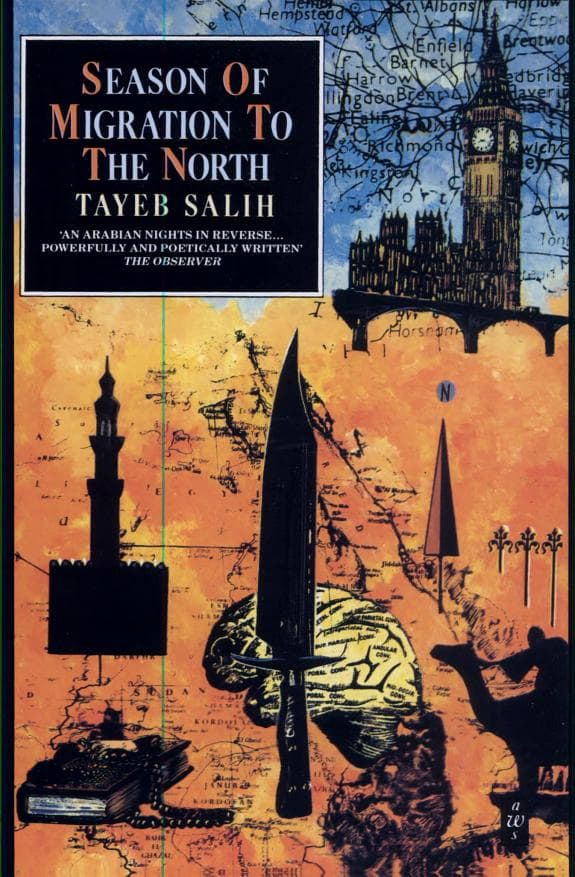
- Season of Migration to the North
Tayeb Salih
3.7 (20k) average on GoodreadsHistorical FictionWhile both are seminal works in Arabic literature, Salih's novel employs a more modernist, fragmented narrative to explore post-colonial identity, cultural clash, and the psychological impact of colonialism. Mahfouz's Palace Walk is more traditionally realist, focusing on internal social dynamics and the evolution of the Egyptian family unit within a specific historical period, rather than the direct aftermath of colonialism's psychological scars.
- To Kill a Mockingbird
Harper Lee
4.3 (4.5M) average on GoodreadsHistorical FictionIn the 1930s Jim Crow South, Harper Lee writes about racial injustice, moral growth, and the quiet courage of a lawyer father, Atticus Finch, as seen through his young daughter's eyes.
- The Great Gatsby
F. Scott Fitzgerald
3.9 (3.8M) average on GoodreadsHistorical FictionIn the opulent Roaring Twenties, a mysterious millionaire's lavish parties hide his desperate, tragic pursuit of a lost love, exposing the emptiness within the American Dream.





Enjoyed the summary?
A summary gives you the shape of the book. The book itself has the detail, the examples and the voice.
Find Palace Walk on AmazonAs an Amazon Associate, BookBrief earns from qualifying purchases. How we're funded