
Synopsis
Covers the whole plot, including the ending.
- Difficulty
- Easy
- Pacing
- Moderate
- Mood
- Whimsical, Heartwarming, Adventurous, Sweet
- Read it if
- You enjoy lighthearted retellings of Greek myths with a focus on friendship, self-discovery, and gentle romance.
- Skip it if
- You prefer complex plots, dark fantasy, or mature themes, as this is a children's book.
Artemis the Brave Plot Summary
Covers the whole plot, including the ending.
A Challenge Accepted
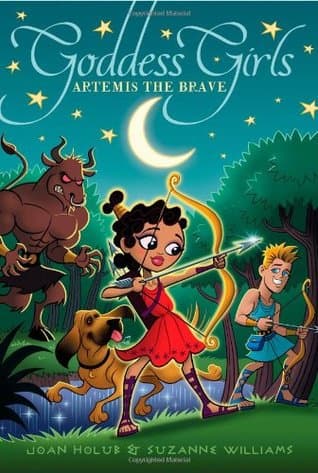
Artemis, known for her bravery and archery, is at Mount Olympus Academy with her friends Athena, Persephone, and Aphrodite. During a talk about courage, Athena dares Artemis to spend a night alone in the Forbidden Forest, a place said to be haunted. Artemis appears fearless, but she secretly worries about the forest, especially after a childhood event with a bear. Despite her fear, her pride and reputation as the 'bravest' goddessgirl make her accept the dare for the next full moon. She tries to prepare, but thinking about the forest's dangers makes her uneasy.
Orion's Arrival
Orion, a new exchange student from Earth, arrives at Mount Olympus Academy. He is tall, handsome, and a good hunter, immediately catching Artemis's eye. She feels flustered and shy around him, unlike her usual confident self. Orion quickly makes friends, impressing many with his hunting stories and skills. Artemis, usually focused on her own tasks, finds herself drawn to him, feeling new nerves and wanting to impress him. His presence adds another layer to her life, making her more self-conscious about her upcoming dare in the Forbidden Forest.
Archery Practice and Growing Feelings
Artemis and Orion spend time together during archery practice. They discover a shared love for hunting and the outdoors. Orion is impressed by Artemis's skill, and she likes his easygoing manner and hunting ability. During their time together, Artemis starts to open up to Orion in ways she doesn't with others. She develops a crush on him, which further complicates her feelings about the Forbidden Forest dare. She worries about looking weak or scared in front of him, adding pressure to keep up her brave image, even as her fear about the dare grows.
The Night of the Dare
The night of the full moon comes, and Artemis, despite her strong fear, gets ready to enter the Forbidden Forest. Her friends wish her luck, not knowing how she truly feels. As she walks into the dark, eerie woods, every sound and shadow makes her more afraid. She tries to remember her bravery and skills, but the unknown creatures and noises of the forest start to overwhelm her. She struggles to find a good spot to spend the night, constantly on edge and jumping at every sound. This experience challenges her idea of herself as fearless, forcing her to face her deepest insecurities.
A Frightening Encounter
As Artemis tries to settle down, she hears a sound and sees a shadowy figure moving through the trees. Her heart races, and for a moment, pure terror paralyzes her. She reaches for her bow, but her hands shake. The figure looks large and threatening in the dim light. She tries to calm herself, recalling her training and her identity as the goddess of the hunt. This encounter is a major test of her courage, forcing her to push past her initial fear to understand the situation.
Orion's Unexpected Presence
To Artemis's surprise and relief, the shadowy figure is Orion. He explains that he worried about her going into the Forbidden Forest alone and decided to follow her to make sure she was safe. Artemis is first annoyed that he spied on her, but then relief washes over her, mixed with embarrassment that he saw her moment of fear. She also blushes as she realizes he cares for her. His presence, though unexpected, gives her comfort and lessens the immediate terror of being alone in the forest.
Shared Vulnerability and a New Understanding
With Orion beside her, Artemis feels safe. They talk about their fears and challenges. Artemis admits her secret anxieties, especially about the Forbidden Forest and her need to always seem brave. Orion, in turn, shares some of his own vulnerabilities and the pressures he feels as a hunter. This honest moment strengthens their bond greatly. They realize that true bravery is not the absence of fear, but facing it despite apprehension. They decide to spend the rest of the night in the forest together, finding comfort in each other's presence.
Morning Aftermath and Confession
As dawn breaks, Artemis and Orion leave the Forbidden Forest, much to the relief of her waiting friends. Artemis, feeling stronger from her experience and Orion's support, decides to be honest with Athena, Persephone, and Aphrodite. She confesses that she was very scared and often feels pressure to live up to her brave image. Her friends are understanding and supportive, revealing that they, too, have their own fears. This open talk strengthens their friendships, showing Artemis that true connections are built on honesty, not just perceived strength.
A New Definition of Bravery
Artemis realizes that true bravery is not about never being afraid, but about facing fear and moving forward. Her experience in the Forbidden Forest, along with Orion's support and her friends' understanding, helps her redefine bravery. She no longer feels the pressure to keep up a facade of invincibility. She understands that vulnerability can be a strength, and that relying on others and being honest about her feelings does not lessen her. This new self-awareness lets her be more confident and real in her actions and relationships.
Future Adventures and Friendship
With her new understanding of bravery and stronger relationships, Artemis feels ready for future challenges. She continues to enjoy her time with Orion, their bond growing. Her friendships with Athena, Persephone, and Aphrodite are deeper and more honest. Artemis is no longer defined only by her hunting skills or perceived fearlessness, but by her whole self—her strengths, her vulnerabilities, and her ability for real connection. She looks forward to her future at Mount Olympus Academy, confident in who she is becoming.
Artemis the Brave Characters
Artemis
Protagonist
Goddess of the hunt, known for her bravery but secretly insecure.
Artemis is one of the main goddessgirls at Mount Olympus Academy, famous for her exceptional archery skills and her reputation as the bravest among her friends. She is fiercely independent, adventurous, and deeply connected to nature and hunting. However, beneath her confident exterior, Artemis harbors secret fears and anxieties, particularly a lingering childhood trauma involving a bear. She feels immense pressure to live up to her 'brave' image, often suppressing her true feelings to maintain her facade of fearlessness, especially in front of her friends and, later, Orion.
Relationships: Athena (Best friend and intellectual rival); Persephone (Best friend, gentle and supportive); Aphrodite (Best friend, focused on beauty and popularity); Orion (Love interest and fellow hunter)
Orion
Supporting/Love Interest
A handsome and skilled hunter exchange student from Earth.
Orion is a foreign exchange student from Earth who arrives at Mount Olympus Academy. He is tall, charismatic, and an excellent hunter, quickly drawing the attention of many, especially Artemis. He is observant and kind, showing genuine concern for Artemis's well-being. Despite his own hunting prowess, he is not boastful and possesses a quiet strength. He is also capable of vulnerability, sharing his own pressures and fears with Artemis, which allows for a deeper connection between them. His presence helps Artemis confront her insecurities and redefine her understanding of bravery.
Relationships: Artemis (Love interest and hunting companion)
Athena
Supporting
Goddess of wisdom and strategy, Artemis's best friend.
Athena is one of Artemis's closest friends, known for her intelligence, strategic thinking, and calm demeanor. She is often the voice of reason among the goddessgirls and is highly respected for her wisdom. While she challenges Artemis to the Forbidden Forest dare, it comes from a place of encouraging growth, not malice. Athena is supportive and understanding when Artemis finally reveals her true fears, demonstrating the depth of their friendship. She represents the intellectual and thoughtful aspect of their group.
Relationships: Artemis (Best friend and confidante); Persephone (Friend); Aphrodite (Friend)
Persephone
Supporting
Goddess of spring, kind and gentle, Artemis's best friend.
Persephone is another of Artemis's best friends, characterized by her gentle, nurturing, and empathetic nature. She is often more sensitive than the other goddessgirls and provides emotional support to her friends. While she doesn't actively participate in the dare, she expresses concern for Artemis's safety. Her understanding and acceptance of Artemis's vulnerability when she confesses her fears highlight the importance of compassion within their friendship. Persephone embodies kindness and the quieter strength found in empathy.
Relationships: Artemis (Best friend); Athena (Friend); Aphrodite (Friend)
Aphrodite
Supporting
Goddess of love and beauty, Artemis's best friend.
Aphrodite is part of Artemis's close circle of friends, known for her focus on beauty, popularity, and all things romantic. She often provides a lighter, more fashion-conscious perspective to their group discussions. While she might seem superficial at times, she genuinely cares for her friends. She is excited by the prospect of romance and is keen to see Artemis and Orion together. Her reaction to Artemis's confession of fear is one of understanding, showing that her friendships run deeper than just shared interests in fashion or gossip.
Relationships: Artemis (Best friend); Athena (Friend); Persephone (Friend)
Artemis the Brave Themes
The True Meaning of Bravery
The main theme shows that bravery is not the absence of fear, but the willingness to face it despite apprehension. Artemis first thinks bravery means being fearless and always shows this image. Her time in the Forbidden Forest, where she is truly terrified, makes her confront this idea. Her honesty with Orion and her friends about her fears, as seen when she says, 'I was so scared,' shows a deeper, more real form of courage—the courage to be vulnerable and true to oneself. The book redefines bravery as an inner strength rather than an outward show of fearlessness.
“Maybe being brave isn't about not being scared. Maybe it's about being scared and doing it anyway.”
Vulnerability and Authenticity
This theme highlights the importance of being open and honest about one's feelings, even weaknesses. Artemis initially hides her fears, believing it will make her seem weak. Her struggle to keep this facade creates inner conflict and isolates her emotionally. Only when she allows herself to be vulnerable with Orion in the Forbidden Forest, and later with her best friends, does she find true connection and strength. Her confession, 'I wasn't brave at all,' lets her friends offer real support and empathy, deepening their bonds and showing her that honesty builds stronger relationships.
“It was a relief to finally admit how scared I'd been, how much pressure I felt.”
Friendship and Support
The novel emphasizes how supportive friendships help with personal challenges. Artemis's friends—Athena, Persephone, and Aphrodite—are initially unaware of her secret fears, but their constant presence and eventual understanding are key to her growth. When Artemis finally confides in them, their acceptance and shared vulnerabilities confirm her experience. Orion's decision to follow Artemis into the Forbidden Forest out of concern further shows the importance of looking out for each other. These relationships provide a safe place for Artemis to drop her brave facade and be her true self, proving that real friends offer unconditional support.
“They didn't laugh or judge. They just listened, and for the first time, I felt truly understood.”
Self-Perception vs. Reality
This theme explores the difference between how we see ourselves and how others see us, and the pressure to live up to a certain image. Artemis is known as the 'bravest' goddessgirl, and she tries to embody this idea, even when it conflicts with her inner feelings. Her secret fears create a split between her outward persona and her inner reality. Her journey helps her bring these two sides together, realizing that her true self, complete with fears, is more valuable than any made-up image. She learns to accept herself fully, moving past the need to constantly prove her bravery to others.
“Everyone thinks I'm fearless, but sometimes I'm not as courageous as I look.”
Plot Devices & Literary Techniques
The Forbidden Forest
A symbolic setting representing fear and the unknown.
The Forbidden Forest serves as a crucial setting and a symbolic representation of Artemis's deepest fears and the unknown. It is rumored to be haunted and dangerous, making it the perfect physical manifestation of the internal anxieties Artemis struggles to confront. Her dare to spend a night there forces her into a direct confrontation with her fears, acting as a crucible for her character development. The forest's eerie atmosphere and the perceived threats within it amplify her internal conflict, leading to her eventual self-discovery and redefinition of bravery.
The Dare
A catalyst for Artemis's self-discovery and confrontation of her fears.
The dare proposed by Athena—to spend a night in the Forbidden Forest—acts as the primary inciting incident and a powerful plot device. It directly challenges Artemis's public persona as the 'bravest' goddessgirl, forcing her to either uphold her image or admit her fears. This challenge creates the central conflict of the story and propels Artemis on her journey of self-discovery. Without the dare, Artemis might never have been pushed to confront her secret anxieties, highlighting its role as a catalyst for her character arc and the exploration of the book's central themes.
Orion's Arrival
A romantic interest who also serves as a mirror and a source of support.
Orion's arrival at Mount Olympus Academy functions as a dual plot device. Firstly, he introduces a romantic element, adding another layer of pressure and motivation for Artemis to maintain her brave facade, as she wants to impress him. Secondly, and more importantly, he becomes a catalyst for her to reveal her vulnerability. His concern for her and his own shared insecurities provide a safe space for Artemis to be honest, serving as a mirror for her own struggles and a crucial source of emotional support during her most challenging moments in the Forbidden Forest. Their shared experience deepens her understanding of bravery and connection.
Artemis the Brave Quotes
“Being a goddess is a lot of work. Seriously, people expect you to be perfect all the time.”
“Sometimes the bravest thing you can do is admit you're scared.”
“A true hunter knows when to aim and when to simply observe.”
“Even the moon has its phases of darkness, but it always returns.”
“Friendship isn't about always agreeing, it's about always caring.”
“You don't need a golden arrow to make a difference; sometimes a kind word is all it takes.”
“The forest whispers secrets to those who listen.”
“Love can be just as wild and untamed as any beast in the woods.”
“My bow is strong, but my heart is stronger.”
“Being independent doesn't mean you have to be alone.”
“Sometimes the most dangerous traps are the ones you set for yourself.”
“The stars don't always align, but you can still make your own path.”
“Even a goddess can learn new tricks.”
Quiz
10 questions on the plot and the characters. Each answer comes with a short explanation.
Question 1
What is Artemis's primary reputation among her classmates at Mount Olympus Academy?
- The most studious goddessgirl
- The bravest goddessgirl
- The most fashionable goddessgirl
- The most artistic goddessgirl
Show answer
B. The bravest goddessgirl Artemis is always perceived as the bravest goddessgirl at Mount Olympus Academy, despite her internal anxieties.
Question 2
From where does Orion, the new exchange student, originate?
- Another Olympian city
- The Underworld
- Earth
- The realm of the Titans
Show answer
C. Earth Orion is described as a foreign exchange student from Earth, which adds to Artemis's nervousness.
Question 3
What is Artemis's main internal conflict in the story?
- She struggles with her academic performance.
- She secretly fears she isn't as brave as she appears.
- She wants to leave Mount Olympus Academy.
- She is jealous of her friends' abilities.
Show answer
B. She secretly fears she isn't as brave as she appears. The book states that 'What her classmates and best friends don’t realize is that sometimes she isn’t as courageous as she looks,' highlighting her internal struggle with bravery.
Question 4
Which specific mythological role is Artemis known for as a goddess?
- Goddess of wisdom
- Goddess of the hunt
- Goddess of love
- Goddess of the harvest
Show answer
B. Goddess of the hunt The description explicitly states Artemis is the 'goddess of the hunt,' which is central to her character.
Question 5
How does Orion's arrival specifically affect Artemis?
- She feels more confident and outgoing.
- She becomes even more nervous than usual.
- She feels a strong sense of rivalry.
- She finds a new hunting partner.
Show answer
B. She becomes even more nervous than usual. The text states that 'when Orion—a foreign exchange student from Earth—enters the picture, she is even more nervous than usual!'
Question 6
What is a key theme explored in 'Artemis the Brave,' common to the Goddess Girls series?
- The importance of wealth and status
- The challenges of maintaining friendships and relationships
- The pursuit of absolute power
- The dangers of magic
Show answer
B. The challenges of maintaining friendships and relationships The series description highlights that each volume addresses 'contemporary issues, like friendships and relationships.'
Question 7
What is the ultimate goal Artemis seeks to achieve by the end of the story?
- To win a major competition at the academy.
- To become the leader of her friend group.
- To prove her courage to herself and her friends.
- To find a new home away from Mount Olympus.
Show answer
C. To prove her courage to herself and her friends. The story asks, 'Can Artemis prove to her friends, and herself, that she can live up to her goddess name?' indicating her goal is self-validation of her bravery.
Question 8
How does the 'Goddess Girls' series generally approach the original Greek myths?
- It completely reinterprets them with modern settings.
- It stays true to the original myths while addressing contemporary issues.
- It uses only character names from myths but creates entirely new plots.
- It focuses solely on the darker, more tragic aspects of the myths.
Show answer
B. It stays true to the original myths while addressing contemporary issues. The series is described as 'Well-researched and true to the original myths,' while also addressing 'contemporary issues.'
Question 9
What specific characteristic of Artemis's personality is challenged by her internal fears?
- Her independence
- Her reputation for bravery
- Her leadership skills
- Her loyalty to friends
Show answer
B. Her reputation for bravery Artemis is 'always perceived as the bravest goddessgirl,' but internally, she 'isn’t as courageous as she looks,' directly challenging her perceived bravery.
Question 10
What is the primary setting for the 'Goddess Girls' series, including 'Artemis the Brave'?
- Ancient Greece
- A modern high school on Earth
- Mount Olympus Academy
- The depths of the sea
Show answer
C. Mount Olympus Academy The description clearly states the setting is 'Mount Olympus Academy,' where the goddessgirls attend school.
Artemis the Brave FAQ
What is the central conflict Artemis faces in 'Artemis the Brave'?
Artemis, despite her reputation as the bravest goddessgirl, secretly struggles with moments of fear and self-doubt. Her central conflict is proving to herself and her friends that she can live up to her 'brave' image, especially when new challenges and emotions arise with Orion's arrival.
Who is Orion and what role does he play in Artemis's story?
Orion is a foreign exchange student from Earth who arrives at Mount Olympus Academy. His presence significantly impacts Artemis, making her more nervous than usual and stirring new feelings, which challenges her established sense of self and bravery.
What kind of contemporary issues does 'Artemis the Brave' address through its mythical setting?
'Artemis the Brave' explores themes of self-perception versus reality, overcoming personal fears, and navigating new romantic feelings within the context of existing friendships. It uses Artemis's journey to discuss the pressures of living up to expectations and the vulnerability of opening up to others.
How does Artemis's role as goddess of the hunt influence her character's internal struggle?
As the goddess of the hunt, Artemis is expected to be fearless, decisive, and strong, which intensifies her internal struggle when she experiences fear or uncertainty. Her divine role creates a high standard that she feels compelled to maintain, making her moments of vulnerability feel like a personal failure.
Who are Artemis's best friends mentioned in the book, and how do they perceive her?
The book mentions Artemis's best friends, who consistently perceive her as the bravest goddessgirl at Mount Olympus Academy. Their unwavering belief in her courage ironically adds to her pressure, as she fears disappointing them by revealing her true feelings of nervousness.
Are there any subtle nods to the original myth of Artemis and Orion within the book's narrative?
While the book is a children's adaptation, the introduction of Orion as a love interest for Artemis is a direct nod to their complicated relationship in Greek mythology. The story's focus on their initial interactions and Artemis's trepidation subtly sets the stage for a connection that, in myth, often ends tragically, though the book likely offers a more positive resolution.
How does the setting of Mount Olympus Academy contribute to the story's themes?
Mount Olympus Academy, as a school for young gods and goddesses, provides a unique backdrop where characters grapple with both divine powers and relatable human emotions. It emphasizes the 'coming-of-age' aspect, showing even powerful beings facing adolescent challenges, and highlights the pressure to embody their mythical roles.
Does the book hint at any future conflicts or character developments for Artemis beyond this volume?
The resolution of Artemis's internal struggle with bravery and her budding relationship with Orion suggests she's grown in self-acceptance. However, the nature of their mythical connection implies potential future challenges, perhaps in balancing her independence with her feelings, or navigating the complexities of their unique partnership in subsequent stories.
What specific 'brave' actions does Artemis undertake to prove herself?
Artemis likely undertakes several challenges, both physical and emotional, to demonstrate her bravery. These might include participating in a difficult hunting competition, confronting a personal fear directly, or, most importantly, showing vulnerability and expressing her true feelings to Orion or her friends, which is a significant act of courage for her.
How does Artemis's initial reluctance around Orion contrast with her typical 'goddess of the hunt' persona?
Artemis's typical persona is one of confident assertiveness and independence, characteristic of a hunter. Her nervousness and hesitant behavior around Orion directly contrast this, revealing a softer, more uncertain side that she usually keeps hidden, especially when faced with unfamiliar romantic emotions.
What message does the book convey about the definition of bravery?
The book redefines bravery not just as the absence of fear, but as the willingness to act despite it, and the courage to be vulnerable and authentic. It suggests that true bravery comes from within, through self-acceptance and honesty, rather than just living up to external expectations.
How does Artemis's journey reflect common adolescent anxieties about identity?
Artemis's struggle to reconcile her public image with her private feelings mirrors common adolescent anxieties about identity and fitting in. She grapples with the pressure to meet expectations, fearing that revealing her true self might lead to rejection or a loss of respect from her peers.
Is there a specific moment where Artemis realizes her friends' perception of her isn't the whole truth?
The narrative implies a growing awareness in Artemis that her friends' perception, while well-intentioned, doesn't capture her full emotional landscape. This realization likely culminates in a moment where she either confides in someone or takes an action that genuinely reflects her internal bravery, despite her fears.
How does the book balance its 'well-researched and true to original myths' claim with its contemporary issues focus?
The book balances these by grounding character identities and some plot points in mythical accuracy (e.g., Artemis as goddess of the hunt, Orion's introduction) while using these foundations to explore modern, relatable challenges like self-doubt, social pressures, and budding romance. It extracts the essence of the myths and reinterprets them through a contemporary lens.
What role do Artemis's internal monologues play in developing her character?
Artemis's internal monologues are crucial for revealing her hidden fears, insecurities, and true feelings that she doesn't express outwardly. They allow readers to understand the depth of her struggle, her desire to be brave, and the conflict between her public persona and private self, making her a more relatable and complex character.
Does 'Artemis the Brave' offer a definitive resolution to Artemis's feelings for Orion, or is it left open-ended?
Given it's part of a series, 'Artemis the Brave' likely establishes the foundation of their connection and Artemis's acceptance of her feelings. It may resolve her initial nervousness and fear of romance, but the broader romantic arc with Orion could be left open-ended, suggesting further developments in subsequent books as their relationship grows.
How does the book use the 'goddessgirl' concept to explore female empowerment?
The 'goddessgirl' concept empowers female characters by giving them divine abilities and strong personalities from the outset. However, the book then explores the nuances of empowerment, showing that true strength also involves confronting vulnerabilities, embracing emotions, and defining bravery on one's own terms, rather than just relying on innate power.
Are there any symbolic elements in the story related to Artemis's bow and arrow, or her connection to the moon?
While not explicitly detailed, the story likely uses Artemis's iconic bow and arrow symbolically. Her ability to wield them confidently could represent her outward bravery, while any struggles with them might mirror her internal doubts. The moon, often associated with Artemis, could symbolize her hidden, reflective side or the waxing and waning of her confidence.
About the author

Joan Holub is an author known for her contributions to children's literature, particularly in the realm of fiction. Her notable works include "Artemis the Brave" and "Cassandra the Lucky," which feature engaging narratives aimed at young readers. Holub's storytelling often incorporates themes from mythology and history, making her books both entertaining and educational.
Similar books
- Ella Enchanted
Gail Carson Levine
4.0 (387k) average on GoodreadsFantasyLevine's novel, while a fairytale retelling, provides a more profound psychological exploration of its protagonist's agency, emotional struggles, and moral dilemmas. "Ella Enchanted" delves into themes of free will and self-worth with greater depth and nuance, whereas "Artemis the Brave" offers a more direct and less complex emotional journey, particularly regarding Artemis's internal conflicts and growth.
- Harry Potter and the Sorcerer's Stone
J.K. Rowling
4.5 (7M) average on GoodreadsFantasyRescued from a miserable life under the stairs, an orphaned boy discovers he's a wizard destined for a magical school, where he uncovers a dangerous secret tied to the dark wizard who murdered his parents.
- The Hunger Games
Suzanne Collins
4.3 (6.4M) average on GoodreadsFantasyIn a future where children fight to the death on live television, Katniss Everdeen volunteers for the arena, turning a death sentence into a fight for survival and a spark of rebellion.
- 1984
George Orwell
4.2 (3.1M) average on GoodreadsPoliticsIn a future where surveillance and thought control are absolute, a man's search for truth clashes with the Party, showing that hope can be a form of rebellion.
- Divergent
Veronica Roth
4.2 (2.9M) average on GoodreadsFantasyIn a society divided by virtues, a sixteen-year-old's difference from the norm starts a rebellion that threatens her world.
- The Hobbit, or There and Back Again
J.R.R. Tolkien
4.3 (2.9M) average on GoodreadsFantasyA comfort-loving hobbit named Bilbo Baggins is whisked away by a mischievous wizard and a band of dwarves on an unexpected journey to reclaim stolen treasure from a fearsome dragon, discovering courage and a magical ring along the way.






Enjoyed the summary?
A summary gives you the shape of the book. The book itself has the detail, the examples and the voice.
Find Artemis the Brave on AmazonAs an Amazon Associate, BookBrief earns from qualifying purchases. How we're funded