
Synopsis
Covers the whole plot, including the ending.
- Difficulty
- Medium
- Pacing
- Moderate
- Mood
- Atmospheric, Suspenseful, Witty, Mysterious
- Read it if
- You enjoy clever young detectives, boarding school mysteries, and a touch of gothic atmosphere with a historical fiction backdrop.
- Skip it if
- You prefer fast-paced thrillers or are put off by a child protagonist's morbid fascination with chemistry and death.
As Chimney Sweepers Come to Dust Plot Summary
Covers the whole plot, including the ending.
A Gruesome Welcome to Miss Bodycote's
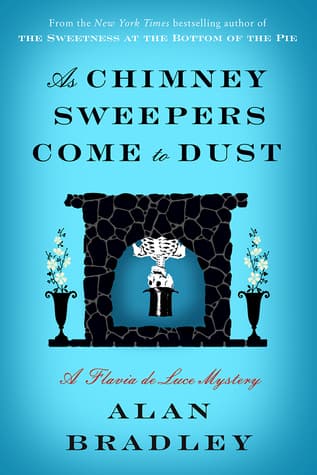
Twelve-year-old Flavia de Luce is sent by her father and Aunt Felicity to Miss Bodycote's Female Academy in Canada, her deceased mother Harriet's old boarding school. Upon arrival, Flavia gets a room with a broken fireplace. Early on her first morning, a charred, mummified body falls down the chimney into her room. Instead of fear, Flavia's scientific curiosity takes over. She immediately starts examining the remains, noting details about its condition and possible identity, even before police arrive. This grim discovery changes her reluctant stay at the school into a complex mystery.
Initial Investigation and School Dynamics
Flavia quickly learns Miss Bodycote's strict rules and social structure. Headmistress Miss Bodycote is stern, and the faculty includes unusual people, notably Miss Mountjoy, a history teacher rumored to be an acquitted murderess. Flavia makes friends, like the shy Poppy, and clashes with others, like the dominant Cordelia. While in classes, Flavia secretly continues her investigation into the body, which she deduces is a young woman based on its size and clothing fragments. She collects samples, makes observations, and tries to identify the victim and how she died, all while trying to avoid being caught by the staff.
Rumors of Ghosts and Disappearances
As Flavia investigates, she uncovers unsettling rumors among students and staff. The school is said to be haunted by a former student's ghost, and there are whispers of several girls disappearing from Miss Bodycote's over the years. These stories make Flavia suspect the mummified body is not an isolated event but linked to a darker history within the school. She starts connecting the victim to past disappearances, seeing a pattern rather than coincidence, and questions the official stories from the headmistress and teachers.
The Identity of the Chimney Sweep
Through careful investigation, including looking at old school records, yearbooks, and talking to older staff, Flavia identifies the mummified body as Ursula Monkton, a former student who disappeared decades ago. Ursula was known for being rebellious and for her interest in a secret society at the school. This identification gives Flavia a clearer timeline and a starting point for exploring Ursula's life and her connection to Miss Bodycote's. The discovery of Ursula's identity deepens the mystery, suggesting a long-held secret the school has tried to hide.
The Secret Society and School History
Flavia learns about the 'Order of the Golden Lily,' a secret society formed by students, including her mother, Harriet, and Ursula, which met in hidden passages and rooms within the school. She also uncovers the tragic history of a devastating fire at the school years ago, killing several students and a teacher. The fire and the secret society seem connected, with the fire possibly covering up something worse. Flavia realizes the school's history is more complex and dangerous than anyone lets on, and the secrets are still present.
A Second Body and Heightened Danger
Just as Flavia feels she is making progress, another body is found, this time in the school's chapel. This second victim is a current student, increasing the danger and confirming Flavia's fears that the killer is still active. The discovery causes panic at the school and forces local police, led by Inspector Twigg, to take the investigation more seriously. Flavia finds the official investigation too slow, pushing her to intensify her own secret efforts, believing she is closer to the truth than the adults.
Unraveling the Truth of the Fire
Flavia carefully investigates the historical fire, examining old blueprints, interviewing former staff, and conducting small chemical experiments. She discovers the fire was not an accident but deliberately set to cover up a worse crime: the murder of a pregnant student and the theft of her baby. The fire, then, was a calculated act to eliminate witnesses and evidence. This revelation turns the cold case into a chilling story of betrayal and infanticide, with broad implications for the current murders.
The Identity of the Perpetrator
Through chemical analysis, deduction, and piecing together fragmented testimonies and historical records, Flavia identifies the killer as Miss Mountjoy, the history teacher. Miss Mountjoy, driven by a twisted loyalty and a need to protect a secret, had been involved in the original cover-up of the pregnant student's murder and the baby's disappearance. She also murdered Ursula to silence her and later killed the current student who had found the truth.
Confrontation and Resolution
Flavia confronts Miss Mountjoy, presenting her with the evidence she has gathered. In a tense meeting, Miss Mountjoy confesses, revealing the full extent of the conspiracy, including the pregnant student's identity, the child's father, and how the baby was given away. The truth behind the fire, Ursula's murder, and the recent killing is finally revealed. Inspector Twigg and the authorities arrive, arresting Miss Mountjoy and closing the case that has haunted Miss Bodycote's for decades. Flavia, though relieved, carries the weight of the grim truths she has uncovered.
Reflections and Return Home
With the mystery solved, Flavia reflects on her mother Harriet's time at Miss Bodycote's and the secrets she kept. She understands her mother better, beyond the idealized image she held. The experience at the boarding school, initially a punishment, sharpens Flavia's detective skills and confirms her identity as a budding forensic chemist. Her banishment ends, and she prepares to return home, changed by the grim discoveries and insights into human nature she gained in Canada.
As Chimney Sweepers Come to Dust Characters
Flavia de Luce
Protagonist
A precocious twelve-year-old amateur detective with a passion for chemistry and poisons.
Flavia is an exceptionally intelligent and curious young girl, with a scientific mind that gravitates towards chemical analysis, particularly of poisons. Despite her tender age, she possesses a keen eye for detail, a sharp deductive intellect, and an unwavering determination to uncover the truth, often putting herself in danger. She can be socially awkward but is fiercely independent and resourceful. Her banishment to Miss Bodycote's, a school her deceased mother attended, provides her with a personal connection to the mystery.
Relationships: Harriet de Luce (Deceased mother, whose past at Miss Bodycote's is central to the mystery.); Colonel de Luce (Father, who sends her to boarding school.); Aunt Felicity (Aunt, who also participates in sending Flavia away.); Poppy (A timid fellow student who becomes a reluctant ally.); Cordelia (A dominant and antagonistic fellow student.)
Miss Bodycote
Supporting
The stern and formidable headmistress of Miss Bodycote's Female Academy.
Miss Bodycote is a strict and traditional headmistress, deeply committed to maintaining the school's reputation and order. She runs the academy with an iron fist, valuing discipline and decorum above all else. While initially appearing to be merely rigid, her character gradually reveals a layer of protectiveness and a desire to preserve the school's legacy, even if it means burying uncomfortable truths. She is a figure of authority whom Flavia often finds herself circumventing in her pursuit of the truth.
Relationships: Flavia de Luce (Headmistress to Flavia, often at odds due to Flavia's rule-breaking investigations.); Miss Mountjoy (Colleague and subordinate, whose secrets are intertwined with the school's history.)
Miss Mountjoy
Antagonist
A history teacher at Miss Bodycote's with a mysterious past and a dark secret.
Miss Mountjoy is a seemingly ordinary history teacher, but she carries a heavy secret. Rumored to be an acquitted murderess, her past is shrouded in ambiguity, making her a person of interest for Flavia. She is a complex character driven by a profound loyalty to a particular version of the school's history and a desperate need to protect certain individuals and their reputations, even if it means committing further crimes. Her actions are rooted in a long-standing conspiracy.
Relationships: Flavia de Luce (Initially a teacher figure, revealed to be the killer and antagonist.); Ursula Monkton (Murdered Ursula to maintain a secret.)
Ursula Monkton
Supporting/Victim
A rebellious former student, whose mummified body is found in Flavia's chimney.
Ursula Monkton was a spirited and rebellious student at Miss Bodycote's decades prior to Flavia's arrival. She was a member of the 'Order of the Golden Lily' and possessed a keen sense of curiosity, much like Flavia. Her disappearance was attributed to running away, but her mummified remains tell a different story. Ursula's determination to uncover the truth about a dark secret within the school led to her untimely death, making her a pivotal figure in the overarching mystery, even in death.
Relationships: Flavia de Luce (The victim whose murder Flavia investigates.); Harriet de Luce (Fellow student and member of the 'Order of the Golden Lily'.); Miss Mountjoy (Her murderer, to silence her.)
Harriet de Luce
Mentioned
Flavia's deceased mother, whose past at Miss Bodycote's holds many secrets.
Harriet de Luce is Flavia's late mother, whose attendance at Miss Bodycote's is the reason for Flavia's own banishment there. Though deceased, her presence is strongly felt through the memories of staff and her own school records. She was a member of the 'Order of the Golden Lily' and appears to have been privy to some of the school's darker secrets. Flavia's journey at Miss Bodycote's is as much about solving the murders as it is about understanding her mother's mysterious past and the person she was before her marriage.
Relationships: Flavia de Luce (Daughter, who seeks to understand her mother's past.); Ursula Monkton (Fellow student and friend.)
Inspector Twigg
Supporting
The local police inspector assigned to the murder cases at Miss Bodycote's.
Inspector Twigg is the official law enforcement figure, initially somewhat dismissive of Flavia's theories due to her age. He is a diligent but conventional detective, relying on standard police procedures. He struggles to grasp the deeper, more convoluted history of the school and the long-buried secrets that Flavia uncovers. While he eventually recognizes the gravity of the situation, he often lags behind Flavia's intuitive and scientifically driven deductions, serving as a foil to her extraordinary abilities.
Relationships: Flavia de Luce (The official investigator, often inadvertently assisted and outmaneuvered by Flavia.)
Poppy
Supporting
A timid student at Miss Bodycote's who becomes Flavia's cautious friend and informant.
Poppy is a nervous and somewhat sheltered student, easily intimidated by the school's strict atmosphere and the more dominant girls. Despite her timidity, she possesses a kind heart and a willingness to help Flavia, albeit with considerable trepidation. She becomes a valuable source of school gossip, rumors, and observations from the student perspective, helping Flavia piece together the social dynamics and hidden narratives within the academy. Her fear often highlights the underlying tension and secrets within the school.
Relationships: Flavia de Luce (Friend and reluctant accomplice in investigation.)
As Chimney Sweepers Come to Dust Themes
The Weight of the Past
The novel explores how past events, especially those hidden, affect the present. The old fire, the disappearances, and the school's hidden secrets directly lead to the current murders. Flavia's investigation constantly uncovers history, showing that truth, no matter how buried, will eventually emerge. The mummified body in the chimney literally shows the past refusing to stay hidden, demanding justice.
“The past is never dead. It’s not even past.”
Secrets and Deception
Miss Bodycote's Academy is full of secrets, both personal and institutional. From the headmistress trying to protect the school's reputation by hiding tragedies, to individual staff members keeping dark truths, deception is common. The secret society, the 'Order of the Golden Lily,' relies on hidden knowledge. Flavia's role is to uncover these layers of deceit, revealing the web of lies that protected a killer for decades. The entire plot comes from unraveling these closely guarded secrets.
“A secret, like a poison, will always find a way to make itself known.”
The Nature of Justice
Justice is a main theme, particularly the difference between official justice and an amateur's pursuit of truth. Inspector Twigg represents the formal, often slow legal system, while Flavia represents a personal, relentless search for moral justice. The novel questions if true justice can happen when institutions hide the truth, and it supports the idea that finding the full story, over time, is a form of justice. Flavia's determination comes from a strong belief that the dead deserve their stories told.
“Justice, I thought, was not merely about punishment, but about the telling of a full and honest tale.”
Coming of Age and Identity
Beyond the mystery, the novel explores Flavia's personal growth and her changing understanding of herself and her family. Being sent to her mother's old school makes Flavia confront Harriet's past, giving her insights into her mother's character beyond the idealized image she had. This journey of discovery helps Flavia understand her own developing identity as a chemist and detective. The challenges she faces at the boarding school, both social and investigative, contribute to her maturity and confirm her unique place in the world.
“Perhaps, I thought, I was not merely solving a murder, but also piecing together the ghost of my own mother.”
Plot Devices & Literary Techniques
Red Herring
Misleading clues or suspects that divert the reader's attention from the true perpetrator.
The novel employs several red herrings to deepen the mystery. The rumors surrounding Miss Mountjoy's past as an 'acquitted murderess' initially point to her as a prime suspect for the current crimes, drawing focus away from the deeper, historical conspiracy she is truly involved in. Similarly, the general air of secrecy and the strict, almost oppressive, atmosphere of Miss Bodycote's lead to suspicions about various staff members and students who ultimately prove innocent of the main crimes, keeping the reader guessing about the true villain.
Foreshadowing
Hints or clues about future events or developments in the plot.
Foreshadowing is used throughout the narrative to build suspense and hint at the dark history of the school. The initial discovery of the mummified body itself foreshadows the deep-seated secrets and past crimes that Flavia will uncover. Whispers among the students about ghosts and disappearances, and the unsettling atmosphere of certain parts of the school, all subtly hint at the tragic events and the long-held conspiracy that forms the core of the mystery. Flavia's initial discomfort with her room also subtly foreshadows the grim discovery awaiting her.
Closed Circle Mystery
A mystery where the suspects are limited to a small, isolated group of people.
Miss Bodycote's Female Academy serves as a classic closed circle setting. Once Flavia arrives, the entire cast of potential suspects—students, teachers, and staff—is contained within the isolated boarding school grounds. This confinement creates a heightened sense of tension and suspicion, as the killer must be one of the seemingly ordinary individuals Flavia interacts with daily. The limited pool of suspects allows for a more focused character study and deepens the psychological aspect of the investigation, as everyone is under scrutiny.
Anachronism (Deliberate Character Trait)
Flavia's unusually advanced scientific knowledge and forensic skills for her age and era.
While not a traditional plot device in terms of narrative structure, Flavia's character itself acts as a deliberate anachronism that drives the plot. Her sophisticated understanding of chemistry, poisons, and forensic science is far beyond what would be expected of a twelve-year-old in the 1950s. This extraordinary intellect and skill set allow her to perform deductions and experiments that would be impossible for other characters, effectively serving as the primary engine for solving the complex scientific aspects of the murders and uncovering clues that adults overlook.
As Chimney Sweepers Come to Dust Quotes
“There is a certain freedom in being a nobody. A freedom to observe, to learn, to grow, without the burden of expectation.”
“Grown-ups are always telling you to be careful, but they're the ones who are always tripping over themselves.”
“The world is full of interesting things, if only you bother to look for them.”
“Science, after all, is just a fancy word for curiosity.”
“Even the most ordinary things can be extraordinary if you look at them with the right eyes.”
“A good chemist always leaves a clean lab. A good detective always leaves a clean crime scene.”
“Sometimes the most dangerous things are the ones that appear the most harmless.”
“Books are like friends. You don't have to talk to them, but you know they're there, and they're full of secrets.”
“It's amazing what you can learn about people by what they leave behind.”
“Fear is a funny thing. It can make you do the most stupid things, or the most brilliant.”
“The truth, like a good chemical reaction, often takes time to reveal itself.”
“There's nothing quite so satisfying as proving a grown-up wrong.”
“A good mystery is like a puzzle, and I, Flavia de Luce, am rather good at puzzles.”
“Even in the darkest of places, there's always a little light to be found, if you know where to look.”
Quiz
10 questions on the plot and the characters. Each answer comes with a short explanation.
Question 1
Why is twelve-year-old Flavia de Luce sent to Miss Bodycote’s Female Academy?
- She was expelled from her previous school.
- Her father and Aunt Felicity banished her there.
- She begged her family to send her to Canada.
- She won a scholarship to the prestigious academy.
Show answer
B. Her father and Aunt Felicity banished her there. The synopsis states that Flavia 'laments her predicament, when her father and Aunt Felicity ship her off to Miss Bodycote’s Female Academy.'
Question 2
What unusual 'gift' does Flavia discover on her first morning at Miss Bodycote's Female Academy?
- A rare chemistry set.
- A secret diary detailing the school's history.
- A charred and mummified body from a chimney.
- A cryptic note from a fellow student.
Show answer
C. A charred and mummified body from a chimney. The summary clearly states, 'The sun has not yet risen on Flavia’s first day in captivity when a gift lands at her feet. Flavia being Flavia, a budding chemist and sleuth, that gift is a charred and mummified body, which tumbles out of a bedroom chimney.'
Question 3
What is Flavia de Luce's primary hobby or skill, as described in the provided text?
- Competitive horseback riding.
- Writing poetry and short stories.
- Chemistry and sleuthing.
- Playing classical piano.
Show answer
C. Chemistry and sleuthing. The text explicitly describes Flavia as 'a budding chemist and sleuth' and mentions 'Pippi Longstocking with a Ph.D. in chemistry (speciality: poisons)'.
Question 4
Where is Miss Bodycote’s Female Academy located?
- Across the sea in Canada.
- In rural England, near Flavia's home.
- In a bustling city in the United States.
- Somewhere in continental Europe.
Show answer
A. Across the sea in Canada. The synopsis states Flavia's family 'ship her off to Miss Bodycote’s Female Academy, the boarding school that her mother, Harriet, once attended across the sea in Canada.'
Question 5
What is a prominent rumor circulating about Miss Bodycote’s Female Academy?
- It is about to close due to financial difficulties.
- It is haunted, and several girls have disappeared.
- It secretly trains students for espionage.
- It holds an annual chemistry competition.
Show answer
B. It is haunted, and several girls have disappeared. The summary mentions, 'Rumors swirl that Miss Bodycote’s is haunted, and that several girls have disappeared without a trace.'
Question 6
What is notable about one of the faculty members at Miss Bodycote's, according to the description?
- She is a celebrated author.
- She is Flavia's long-lost relative.
- She is an acquitted murderess.
- She is a former Olympic athlete.
Show answer
C. She is an acquitted murderess. The synopsis states Flavia assesses the faculty, 'one of whom is an acquitted murderess'.
Question 7
What connection does Flavia's mother, Harriet, have to Miss Bodycote’s Female Academy?
- She was a teacher there.
- She attended the school herself.
- She is the current headmistress.
- She founded the academy.
Show answer
B. She attended the school herself. The text states Flavia is sent to 'the boarding school that her mother, Harriet, once attended across the sea in Canada.'
Question 8
What specific details does Flavia investigate regarding the body found in the chimney?
- The victim's favorite color and last meal.
- The victim's identity, time of death, suspects, motives, and means.
- The type of chimney and the material it's made from.
- The history of the school's heating system.
Show answer
B. The victim's identity, time of death, suspects, motives, and means. The synopsis explicitly lists Flavia's investigative goals: 'Flavia is on the hunt for the victim’s identity and time of death, as well as suspects, motives, and means.'
Question 9
The description compares Flavia de Luce to which two literary characters?
- Nancy Drew and Hercule Poirot.
- Pippi Longstocking and Sherlock Holmes.
- Harriet the Spy and Violet Baudelaire.
- Anne of Green Gables and Miss Marple.
Show answer
C. Harriet the Spy and Violet Baudelaire. The New York Times Book Review is quoted describing Flavia as 'part Harriet the Spy, part Violet Baudelaire from Lemony Snicket’s A Series of Unfortunate Events'.
Question 10
What is suggested about Flavia's future beyond solving the current mysteries at the academy?
- She will return home to England permanently.
- She will become the new headmistress of Miss Bodycote's.
- Her true destiny has yet to be revealed.
- She will abandon chemistry for a career in art.
Show answer
C. Her true destiny has yet to be revealed. The final sentence of the synopsis states, 'When it comes to solving multiple mysteries, Flavia is up to the task—but her true destiny has yet to be revealed.'
As Chimney Sweepers Come to Dust FAQ
Why is Flavia de Luce sent to Miss Bodycote's Female Academy?
Flavia is "banished" to Miss Bodycote's by her father and Aunt Felicity, ostensibly to attend the same Canadian boarding school her late mother, Harriet, once attended. This move separates her from her familiar home at Buckshaw and her chemical laboratory, placing her in an entirely new and challenging environment.
What is the initial mystery Flavia encounters at Miss Bodycote's?
On her very first morning at the academy, before sunrise, a charred and mummified body tumbles down a chimney into her bedroom. This shocking discovery immediately sets Flavia on a new investigation, trying to identify the victim and understand the circumstances of their unusual death.
Who is the headmistress of Miss Bodycote's, and what is her general demeanor?
The headmistress is Miss Bodycote herself, a stern and formidable figure who oversees the academy with strict discipline. Flavia quickly finds her to be an imposing presence, and the atmosphere of the school reflects Miss Bodycote's rigid control and traditional values.
What kind of skills does Flavia de Luce bring to her investigations at the boarding school?
Flavia, a budding chemist and astute observer, utilizes her scientific knowledge, particularly in chemistry and poisons, to analyze clues. She also employs her sharp intellect, deductive reasoning, and an unwavering curiosity to connect seemingly disparate pieces of information, much like a seasoned detective.
Are there any rumors or pre-existing mysteries at Miss Bodycote's before Flavia's arrival?
Yes, rumors swirl among the students and staff that Miss Bodycote's is haunted, and that several girls have mysteriously disappeared without a trace over time. These unsettling tales create an eerie backdrop for Flavia's investigation into the chimney body, suggesting deeper secrets within the academy.
What is the significance of the fact that Flavia's mother, Harriet, also attended Miss Bodycote's?
Harriet's past attendance at the academy is a crucial hidden detail. It suggests that Flavia's banishment might be connected to her mother's history or unresolved issues from that time, potentially revealing secrets about Harriet that Flavia is unknowingly drawn into discovering.
How does the identity of the acquitted murderess among the faculty impact Flavia's perception of the school?
The presence of an acquitted murderess among the faculty immediately raises Flavia's suspicions and deepens her sense of unease. It suggests a darker undercurrent to the seemingly proper boarding school, making her question everyone's true motives and pasts, and adding another layer of potential danger.
Are the disappearances of other girls directly related to the body in the chimney, or are they separate mysteries?
While initially appearing as separate rumors, Flavia's investigation often reveals that seemingly unrelated incidents in her cases are deeply intertwined. The disappearances of other girls likely connect to the chimney body, forming a larger, more complex web of secrets and crimes within the academy's history.
How does Flavia's isolation at a new school affect her sleuthing approach?
Flavia's isolation forces her to rely more on her own observations and internal deductions, as she lacks her usual support system (like Dogger or Inspector Hewett). It also compels her to navigate new social dynamics, making friends and enemies, which can both aid and complicate her investigations.
What psychological impact does the discovery of a mummified body have on a twelve-year-old like Flavia?
While many children would be traumatized, Flavia's unique morbid curiosity and scientific detachment allow her to view the body as a puzzle to be solved rather than a source of horror. This reaction highlights her unusual psychological makeup, driven by an insatiable need for answers and a fascination with death's mechanics.
How does Flavia's experience at Miss Bodycote's contribute to her personal growth or understanding of herself?
Being away from home and immersed in a new environment, especially one with hidden dangers, forces Flavia to adapt and mature. She learns to navigate complex social structures, rely on her own ingenuity in unfamiliar territory, and confront deeper truths about her family's past, all of which shape her identity beyond just being a chemist-sleuth.
How does the book explore themes of belonging and estrangement through Flavia's eyes?
Flavia's banishment to Miss Bodycote's immediately establishes a sense of estrangement from her familiar life. As she navigates the unfamiliar social hierarchies and secrets of the boarding school, she grapples with finding her place, highlighting the universal experience of seeking belonging while often feeling like an outsider.
What is the 'true destiny' mentioned in the synopsis, and how might it relate to her mother's past?
The 'true destiny' likely refers to a significant revelation about Flavia's lineage or a larger role she is meant to play, possibly connected to the secrets surrounding her mother Harriet's time at Miss Bodycote's. It hints at a deeper narrative arc beyond individual mysteries, tying her personal journey to a grander purpose.
How does the setting of a Canadian boarding school, rather than her usual English village, influence the overall tone and mystery?
The Canadian boarding school setting introduces a fresh, slightly more gothic and isolated atmosphere compared to the familiar charm of Buckshaw. It allows for a contained environment with its own unique history and rules, creating a sense of claustrophobia and heightening the stakes as Flavia is far from her usual resources.
Is the phrase 'As Chimney Sweepers Come to Dust' a literal reference, a metaphor, or both, within the context of the story?
The title is likely both. It literally refers to the discovery of the mummified body in the chimney, a 'chimney sweeper' (or someone found in a chimney) who has 'come to dust.' Metaphorically, it could represent the decay of secrets, the uncovering of forgotten pasts, or the demise of innocence within the academy, hinting at the dark truths that Flavia unearths.
How does Flavia's relationship with her family (father, Aunt Felicity) evolve through her experience at Miss Bodycote's?
Being sent away by her father and aunt suggests a strain in their relationship, possibly a lack of understanding or communication. Her experiences and discoveries at Miss Bodycote's, especially those related to her mother, could lead to a deeper, albeit potentially complicated, understanding between Flavia and her remaining family members upon her return, or a further divergence.
What role do the 'friends and enemies' Flavia makes at Miss Bodycote's play in her investigation?
Her new acquaintances provide both challenges and opportunities. Friends might offer crucial information or assistance, while enemies could actively obstruct her progress or become suspects. These relationships force Flavia to develop social intelligence and manipulate situations, adding a layer of complexity to her usual solitary sleuthing methods.
About the author

Alan Bradley is the award-winning author of the beloved Flavia de Luce mystery series, which includes "The Sweetness at the Bottom of the Pie" and "Speaking from Among the Bones." His novels are celebrated for their witty protagonist, intricate plotting, and charming evocation of 1950s England. Bradley's work has garnered critical acclaim and a devoted international readership.
Similar books
- The Sweetness at the Bottom of the Pie
Alan Bradley
3.8 (145k) average on GoodreadsHistorical FictionFirst book in the Flavia de Luce series, featuring the same charming young detective and her chemical investigations.
- Harriet the Spy
Louise Fitzhugh
4.0 (95k) average on GoodreadsChildren'sFocuses on a curious and observant young girl who takes detailed notes and investigates her surroundings.
- To Kill a Mockingbird
Harper Lee
4.3 (4.5M) average on GoodreadsHistorical FictionIn the 1930s Jim Crow South, Harper Lee writes about racial injustice, moral growth, and the quiet courage of a lawyer father, Atticus Finch, as seen through his young daughter's eyes.
- The Great Gatsby
F. Scott Fitzgerald
3.9 (3.8M) average on GoodreadsHistorical FictionIn the opulent Roaring Twenties, a mysterious millionaire's lavish parties hide his desperate, tragic pursuit of a lost love, exposing the emptiness within the American Dream.
- Pride and Prejudice
Jane Austen
4.3 (3M) average on GoodreadsHistorical FictionIn a society focused on status and money, Elizabeth Bennet navigates love and pride, challenging Mr. Darcy and social expectations to find true affection.
- Angels & Demons
Dan Brown
3.9 (2.7M) average on GoodreadsThrillerA Harvard symbologist races through Rome's ancient sites, deciphering cryptic clues to unmask the Illuminati and stop a vengeful plot to destroy the Vatican with a stolen antimatter weapon.




Enjoyed the summary?
A summary gives you the shape of the book. The book itself has the detail, the examples and the voice.
Find As Chimney Sweepers Come to Dust on AmazonAs an Amazon Associate, BookBrief earns from qualifying purchases. How we're funded