
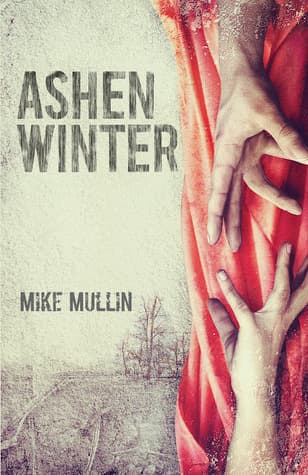
Synopsis
Covers the whole plot, including the ending.
- Difficulty
- Medium
- Pacing
- Fast
- Mood
- Gritty, Desperate, Resilient, Heartbreaking, Hopeful
- Read it if
- You enjoy post-apocalyptic survival stories with a strong focus on character determination, romance, and the harsh realities of a world rebuilding.
- Skip it if
- You prefer lighthearted reads or are not comfortable with descriptions of extreme hardship, violence, and significant character loss.
Ashen Winter Plot Summary
Covers the whole plot, including the ending.
The Decision to Depart
Six months after the Yellowstone supervolcano eruption, Alex and Darla live with Alex's Uncle Bob and Aunt Jill in Illinois, enduring the harsh 'Ashen Winter.' Food is scarce, and the community struggles with cold and lack of resources. Darla, still recovering from her injuries and the trauma of their journey, grows restless, as does Alex, who constantly worries about his parents, last seen in Iowa. Despite the dangers of the ash-choked, lawless roads, they decide they can no longer wait. They plan their return journey to Iowa, hoping to find Alex's parents and bring them back to Illinois, a decision that fills their relatives with apprehension.
The Perilous Journey West
Alex and Darla begin their arduous journey west, navigating through deep snowdrifts and the volcanic ash that blankets the landscape. They quickly realize the world is more brutal than during their initial escape from Iowa. They encounter desperate, starving survivors, some hostile. They learn to avoid larger settlements, which gangs or opportunistic leaders often control. Their supplies are rationed, and every day is a struggle against the elements, hunger, and the threat of violence. Darla's past injuries sometimes flare up, making travel difficult, but her determination matches Alex's.
Encounter with the Scavengers
While traveling through a desolate, snow-covered forest, Alex and Darla are ambushed by scavengers. These desperate individuals are ruthless, seeking to steal their limited supplies. Alex, relying on his survival skills and rifle, defends Darla. A tense skirmish ensues, with Alex using his wits and weapon to fight off their attackers. They escape, but Darla sustains a minor injury, and the encounter leaves them both shaken, reinforcing the danger of their quest and the moral decay of the post-apocalyptic world.
The Desperate Settlement
Seeking shelter from a blizzard, Alex and Darla stumble upon a small, struggling settlement. The inhabitants are barely surviving, rationing meager food supplies and battling illness. Alex and Darla offer their help, sharing some of their skills in exchange for temporary refuge. They witness the brutal decisions leaders make to keep their people alive, including expelling those who cannot contribute. The experience is a reminder of widespread suffering and the fragility of human society, solidifying their resolve to find Alex's parents and bring them to a safer place.
Arrival in Alex's Hometown
After weeks of grueling travel, Alex and Darla reach their old hometown in Iowa. The sight is heartbreaking: houses are buried under ash, structures are damaged, and there are no signs of life. The town is a ghost of its former self. They search their old house, filled with a mix of hope and dread, but find it ransacked and empty. There are no clues about his parents' whereabouts, only a lingering sense of loss. The devastation confirms their worst fears about the challenges his parents must have faced.
The Journal Discovery
In a hidden compartment in their old house, Alex uncovers his father's journal. Reading it provides a painful but vital link to his parents. The journal entries detail their initial struggles after the eruption, their attempts to find Alex and Darla, and their eventual decision to head east, hoping to reach family in Illinois. It reveals the difficulties they faced, including illness, starvation, and encounters with desperate people. The journal provides a direction for Alex and Darla to follow, reigniting their hope but also deepening their understanding of his parents' suffering.
The Unthinkable Happens
Following the journal's clues, Alex and Darla continue their journey east. While navigating a treacherous, icy stretch of road near a collapsed bridge, tragedy strikes. The ground gives way beneath Darla, and she falls, sustaining a severe head injury. Despite Alex's desperate attempts to help her, her condition rapidly deteriorates. In a heartbreaking moment, Darla succumbs to her injuries. Alex is devastated, alone in the brutal winter landscape, his purpose shattered by the loss of the person he loves most. This event marks a turning point in his journey.
Alex's Despair and Resolve
The loss of Darla plunges Alex into despair. He considers giving up, feeling the weight of his solitude and the futility of his quest. He buries Darla, a somber act of remembrance, and for a time, simply exists, consumed by grief. However, a flicker of his survival instinct, coupled with the lingering hope of finding his parents and honoring Darla's memory, slowly rekindles his resolve. He realizes he must continue, not just for his parents, but also to carry on Darla's spirit and the shared dream of a better future. He hardens himself, determined to face the remaining challenges alone.
The Lone Survivor's Journey
Now alone, Alex presses on, retracing his parents' presumed path eastward. His journey is more solitary and dangerous without Darla. He becomes more cautious, relying solely on his instincts and honed survival skills. He learns to trust no one, avoiding all but the most necessary interactions. The landscape remains hostile, and the cold and hunger are constant companions. He fights off scavengers, navigates perilous terrain, and endures physical and emotional hardship, driven by a grim determination to find his family and honor Darla's memory by surviving.
The Reunion
After weeks of solitary travel and enduring hardships, Alex finally catches up with his parents. He finds them in a small, struggling community, also heading eastward, following a similar route back towards Illinois. The reunion is emotional and overwhelming, filled with relief, joy, and the shared pain of their experiences. His parents are shocked and heartbroken to learn of Darla's death, sharing Alex's grief. Together, they now face the final leg of their journey, a family reunited but forever changed by the 'Ashen Winter' and the losses they have endured.
The Journey Home
With his parents, Alex continues the journey back to Illinois. The dynamics of their travel change, as they now care for his parents, who are weaker from their own ordeal. Alex takes on a protective role, guiding them through the dangers he has already faced. They encounter more desperate survivors, but now, as a family unit, they possess a collective strength. The journey is still fraught with peril, but the shared hope of reaching Uncle Bob and Aunt Jill's farm gives them the motivation to push through the remaining challenges of the ash-covered, lawless landscape.
Arrival at Uncle Bob's Farm
After months of separation and an epic journey across a devastated continent, Alex, his parents, and a small group of other survivors they've gathered along the way, finally reach Uncle Bob and Aunt Jill's farm in Illinois. The reunion is bittersweet; joy at seeing family again is tempered by the immense losses and hardships everyone has endured. The farm is a fragile sanctuary, a place where they can begin to heal and rebuild. While the immediate threat of the journey is over, the challenges of surviving the long-term 'Ashen Winter' and establishing a new way of life are only just beginning.
Ashen Winter Characters
Alex Halverson
Protagonist
A determined and resourceful teenager searching for his parents amidst a post-apocalyptic winter.
Alex is the resilient and deeply caring protagonist, now older and more hardened by the 'Ashen Winter.' He is driven by an unwavering love for his parents and Darla, which fuels his perilous journey. He possesses strong survival instincts, excellent shooting skills, and a growing understanding of the brutal new world. Despite his youth, he displays remarkable leadership and an internal moral compass, often struggling with the harsh choices forced upon him. His journey transforms him from a survivor into a protector and ultimately, a lone, grief-stricken figure who finds renewed purpose.
Relationships: Darla (Girlfriend, companion, and emotional anchor; deep romantic love.); Mom (Dr. Halverson) (Mother, source of motivation; Alex is desperate to find her.); Dad (Mr. Halverson) (Father, source of motivation; Alex is desperate to find him.); Uncle Bob (Uncle, temporary guardian, source of stability and advice.); Aunt Jill (Aunt, temporary guardian, source of comfort.)
Darla
Supporting
Alex's girlfriend and steadfast companion, facing the apocalypse with courage and resilience.
Darla is Alex's girlfriend and an equally resilient survivor. Despite sustaining severe injuries in the previous book, she displays immense courage and determination, refusing to be a burden and actively participating in the search for Alex's parents. She is intelligent, pragmatic, and provides Alex with emotional support and a sense of normalcy amidst the chaos. Her love for Alex is a powerful force, and she often offers a more empathetic perspective to Alex's sometimes rigid survival logic. Her tragic death profoundly impacts Alex and the narrative.
Relationships: Alex Halverson (Boyfriend, companion, and deep romantic love.)
Mom (Dr. Halverson)
Supporting
Alex's mother, a doctor, struggling to survive and reunite with her son.
Alex's mother is a physician, a detail that hints at her resourcefulness and compassion, even in a world without modern medicine. She is a driving force behind Alex's quest, though her direct presence is only felt through his memories and her husband's journal entries for much of the book. When finally reunited with Alex, she embodies the struggle of maintaining humanity and hope in the face of unimaginable loss and hardship. Her medical knowledge is invaluable to their small group.
Relationships: Alex Halverson (Son, primary motivation for his journey.); Dad (Mr. Halverson) (Husband, companion in survival.)
Dad (Mr. Halverson)
Supporting
Alex's father, whose journal provides crucial clues and insights into his family's struggles.
Alex's father is a practical and protective man. His detailed journal entries become a lifeline for Alex, chronicling his family's desperate journey and providing insight into the brutal realities they faced. He is a survivor who, despite immense hardship, maintains a sense of responsibility for his family. When reunited with Alex, he is a figure of quiet strength and resilience, deeply affected by the loss and suffering but determined to ensure his family's survival.
Relationships: Alex Halverson (Son, primary motivation for his journey.); Mom (Dr. Halverson) (Wife, companion in survival.)
Uncle Bob
Supporting
Alex's uncle, who provides a temporary safe haven and practical advice.
Uncle Bob is Alex's paternal uncle, a pragmatic and resourceful farmer who offers Alex and Darla refuge at his farm in Illinois. He represents a semblance of stability and traditional values in the chaotic post-volcano world. He is cautious and realistic about the dangers outside his farm but also deeply caring towards his family. His advice, though sometimes stern, is rooted in a desire for their safety. He plays a vital role in providing a home base and a destination for Alex's arduous quest.
Relationships: Alex Halverson (Nephew, provides shelter and guidance.); Aunt Jill (Wife, shares the responsibility of the farm.)
Aunt Jill
Supporting
Alex's aunt, offering comfort and emotional support at the farm.
Aunt Jill is Alex's paternal aunt and Uncle Bob's wife. She is more emotionally expressive than her husband, providing comfort and a softer presence at the farm. She worries deeply about Alex and Darla's safety but supports their decision to search for his parents, understanding their desperate need for family. She represents the nurturing and familial warmth that Alex and Darla briefly experience before their dangerous journey and long for throughout their quest.
Relationships: Alex Halverson (Nephew, provides comfort and care.); Uncle Bob (Husband, shares the responsibility of the farm.)
The Scavengers
Antagonist
Desperate and dangerous groups of survivors who prey on others for resources.
The scavengers are not a single character but a recurring threat in the post-apocalyptic landscape. They represent the dark side of human nature when pushed to extremes by starvation and lawlessness. These groups are opportunistic, violent, and ruthless, willing to kill for supplies or territory. They are driven by sheer survival, often devoid of empathy or moral restraint. Their encounters with Alex and Darla highlight the constant peril of the journey and the complete breakdown of societal order.
The Winter (Ashen Winter)
Antagonist
The extreme environmental conditions caused by the supervolcano, a relentless and deadly force.
The 'Ashen Winter' itself acts as a primary antagonist in the novel. The extreme cold, persistent volcanic ash, deep snow, and lack of sunlight create an incredibly harsh and unforgiving environment. It causes widespread famine, illness, and makes travel nearly impossible, directly contributing to the desperation and violence among survivors. This omnipresent environmental threat is relentless, testing the characters' physical and mental limits at every turn, and is ultimately responsible for many of the story's tragic events.
Ashen Winter Themes
The Enduring Power of Family and Love
Despite the devastation and loss, Alex and Darla's journey is motivated by the hope of reuniting with Alex's parents. Their love for each other, and Alex's love for his parents, drives them through hardships. Darla's sacrifice and Alex's subsequent grief show the bonds that persist even when society has crumbled. The eventual reunion, though bittersweet, reinforces that family is a fundamental anchor in a world stripped of everything else. This theme is clear when Alex finds his father's journal, which details his parents' own desperate attempts to find Alex, showing the reciprocal nature of this familial drive.
“He knew that if his parents were alive, they would be trying to find him, just as he was trying to find them. That thought alone was enough to keep him moving.”
Loss and Grief in a Post-Apocalyptic World
The novel explores loss and grief, not just on a societal scale but intensely personal. The loss of Darla is the most significant event, plunging Alex into despair and altering his journey. Her death is a reminder that even the most resilient individuals are vulnerable in this brutal new world. Alex's struggle to process this grief while surviving highlights how personal tragedy intersects with global catastrophe, making survival a constant battle against external threats and internal sorrow. The widespread famine and the absence of loved ones for many secondary characters also echo this theme.
“The world had taken so much from him, but nothing could compare to this. Darla was gone, and with her, a piece of his own soul.”
The Breakdown of Society and Human Morality
The 'Ashen Winter' portrays the collapse of societal structures and the erosion of human morality. The constant threat of starvation and cold pushes people to extreme acts of violence and desperation, as seen with the ruthless scavengers and the harsh decisions made in struggling settlements. Law and order are non-existent, replaced by a 'might makes right' mentality. Alex and Darla constantly navigate this moral wasteland, sometimes forced to make difficult choices themselves. This theme shows how quickly civility can unravel when basic needs are unmet, challenging the characters' humanity.
“In this world, there was no law but hunger, and no justice but the gun.”
Resilience and the Will to Survive
Despite challenges—extreme weather, starvation, violence, and personal loss—the characters, particularly Alex, show an extraordinary will to survive. Alex's journey, especially after Darla's death, is a testament to the human spirit's capacity to endure. His ability to adapt, learn new skills, and push through physical and emotional pain demonstrates resilience. Even in moments of despair, a flicker of hope or a sense of purpose (finding his family, honoring Darla) drives him forward, emphasizing the powerful instinct to live against all odds.
“He was a survivor. He had to be. For Darla. For his parents. For himself.”
The Harsh Reality of a Primitive Existence
The novel depicts the reality of living without modern conveniences in a world plunged back into a primitive state. Simple acts like finding clean water, securing food, or staying warm become monumental tasks. The scarcity of resources drives conflict and forces characters to rely on basic skills and ingenuity. The constant struggle against the elements, illness, and the lack of infrastructure highlights how dependent modern society is on technology and organized systems, and how quickly humanity can revert to a more brutal, fundamental existence. This is visible in every scene, from the snow-buried roads to the desperate food searches.
“Every day was a battle. A battle against the cold, against hunger, against the ash that choked the land and the air.”
Plot Devices & Literary Techniques
The Journey/Quest
The central narrative structure, driving the characters across a dangerous landscape.
The entire novel is structured as a quest narrative, with Alex and Darla embarking on a perilous journey from Illinois back to Iowa and then eastward again, searching for Alex's parents. This device provides a clear goal and propels the plot forward, allowing for encounters with various dangers, other survivors, and the exploration of the devastated landscape. It also serves as a framework for the characters' internal and external struggles, forcing them to confront their limits and develop new skills.
The Journal
A critical piece of exposition that reveals past events and guides future actions.
Alex's father's journal serves as a crucial plot device, providing vital information about his parents' movements and experiences after the eruption. It acts as a narrative bridge, filling in gaps about the past six months and offering a tangible clue for Alex to follow. The journal not only advances the plot by giving Alex a direction but also deepens his understanding of his parents' struggles, adding emotional weight and urgency to his quest. It's a symbol of hope and a link to their shared past.
Tragic Loss (Darla's Death)
A major turning point that profoundly impacts the protagonist and the narrative's tone.
Darla's sudden and tragic death is a pivotal plot device. It serves as a major turning point, shifting the narrative from a journey of shared hope to a solitary quest marked by profound grief and grim determination. This event escalates the emotional stakes for Alex, forcing him to confront ultimate loss and find new reserves of strength. It strips away his emotional anchor, making his subsequent survival even more challenging and highlighting the brutal, unforgiving nature of the post-apocalyptic world.
Environmental Antagonist (Ashen Winter)
The physical environment itself acts as a relentless and deadly force against the characters.
The 'Ashen Winter,' a direct result of the Yellowstone supervolcano eruption, functions as a powerful environmental antagonist. The constant cold, deep ash, and scarcity of resources are not merely background but active forces that impede the characters' progress, cause suffering, and lead to direct conflict. This device creates a pervasive sense of dread and urgency, constantly reminding the reader of the immense challenges faced by the survivors and influencing every decision they make.
Ashen Winter Quotes
“I'm not going to let you die. Not yet. Not ever, if I can help it.”
“The world didn't end with a bang, but with a whimper of ash and ice.”
“Sometimes, the only way to survive is to become something you never thought you could be.”
“Hope is a dangerous thing in a world like this. But it’s also the only thing that keeps you going.”
“Every breath was a victory. Every step, a testament to stubborn will.”
“The cold wasn't just outside; it was in their bones, in their memories, in the very fabric of their lives.”
“Love, even in the ruins, found a way to bloom, fragile but fiercely persistent.”
“We’re not just fighting for ourselves anymore. We’re fighting for what’s left of humanity.”
“The silence was as oppressive as the ash, a constant reminder of what had been lost.”
“Trust was a luxury they couldn't always afford, but a necessity they couldn't live without.”
“Sometimes, the greatest monsters weren't the ones in the stories, but the ones who used to be human.”
“Every flicker of fire, every shared meal, was a defiance against the encroaching darkness.”
“The future wasn't promised, but the present was a battle they had to win, every single day.”
Quiz
10 questions on the plot and the characters. Each answer comes with a short explanation.
Question 1
Where have Alex and Darla been staying for the past six months since the Yellowstone eruption?
- In a government-run refugee camp in Nebraska
- With Alex’s relatives in Illinois
- In a converted school building in Iowa
- At Darla's family farm in Missouri
Show answer
B. With Alex’s relatives in Illinois The book states that Alex and Darla have been staying with Alex’s relatives, trying to cope with the new reality of the primitive world in Illinois.
Question 2
What is the primary reason Alex and Darla decide to leave their current location?
- They are forced out by hostile survivors
- They are searching for a rumored safe haven in the mountains
- They want to find Alex's parents in Iowa
- They are running low on supplies and need to scavenge elsewhere
Show answer
C. They want to find Alex's parents in Iowa Alex and Darla decide they can wait no longer and must retrace their journey into Iowa to find and bring back Alex's parents.
Question 3
Which natural disaster initiated the 'ashen winter' and primitive world depicted in the book?
- A massive earthquake in California
- The eruption of the Yellowstone supervolcano
- A global ice age triggered by climate change
- A series of devastating tsunamis
Show answer
B. The eruption of the Yellowstone supervolcano The book explicitly states it's been over six months since the eruption of the Yellowstone supervolcano, which is the event that plunged the world into the depicted state.
Question 4
How is the landscape described during Alex and Darla's journey back to Iowa, compared to their previous trip?
- More fertile and less ash-covered due to recent rains
- Even more perilous, with increased conflict between communities
- Largely abandoned, with fewer signs of human life
- Significantly safer due to organized patrols and new settlements
Show answer
B. Even more perilous, with increased conflict between communities The description states, 'But the landscape they cross is even more perilous than before, with life-and-death battles for food and power between the remaining communities.'
Question 5
What is the primary motivation driving the conflicts between communities in the post-volcano world?
- Religious differences and ideological clashes
- Territorial disputes over pre-disaster land ownership
- Battles for food and power
- Revenge for past grievances and betrayals
Show answer
C. Battles for food and power The synopsis explicitly mentions 'life-and-death battles for food and power between the remaining communities,' highlighting the scarcity of resources as a driving force.
Question 6
What does Alex have to find 'new reserves of strength and determination' to do?
- To lead a rebellion against a tyrannical warlord
- To survive after 'the unthinkable happens'
- To master new survival skills like hunting and trapping
- To convince Darla to stay with his relatives
Show answer
B. To survive after 'the unthinkable happens' The text states, 'When the unthinkable happens, Alex must find new reserves of strength and determination to survive,' indicating a major crisis he must overcome.
Question 7
What is the implied emotional state of Alex and Darla at the beginning of the book regarding their wait for Alex's parents?
- Optimistic and hopeful for their parents' imminent return
- Resigned to the fact that their parents are likely gone
- Impatient and desperate, leading them to act
- Fearful of what they might find if they search for them
Show answer
C. Impatient and desperate, leading them to act The phrase 'Alex and Darla decide they can wait no longer' strongly implies impatience and a desperate need for action after six months of waiting.
Question 8
What does the phrase 'the unthinkable happens' most likely foreshadow for Alex and Darla?
- They find a hidden, untouched city with abundant resources
- They encounter a previously unknown, advanced civilization
- A traumatic event, potentially involving loss or extreme danger, that drastically alters their journey
- They discover a cure for the ash-related illnesses plaguing survivors
Show answer
C. A traumatic event, potentially involving loss or extreme danger, that drastically alters their journey Given the post-apocalyptic context, 'the unthinkable happens' followed by Alex needing 'new reserves of strength and determination to survive' strongly suggests a significant negative and traumatic event, likely a major challenge or loss.
Question 9
What is the significance of the six-month timeframe mentioned at the beginning of the book?
- It marks the time until the next predicted volcanic eruption
- It represents the duration of Alex and Darla's static existence before they decide to take action
- It is the period during which the ashfall is expected to completely clear
- It's the maximum time survivors can live without external aid
Show answer
B. It represents the duration of Alex and Darla's static existence before they decide to take action The six-month mark is crucial because it's the point where Alex and Darla's patience runs out, leading them to leave their 'tenuous safety' and embark on their perilous journey.
Question 10
Considering the themes of 'life-and-death battles for food and power,' what central conflict does the book explore beyond the natural disaster itself?
- The conflict between scientific progress and superstitious beliefs
- The struggle for humanity to maintain civilization and morality in a world of scarcity
- The internal conflict within Alex about his romantic feelings for Darla
- The battle against the lingering effects of the volcanic ash on the environment
Show answer
B. The struggle for humanity to maintain civilization and morality in a world of scarcity The emphasis on 'life-and-death battles for food and power' points to a core theme of how human society degrades and struggles to maintain order and ethical behavior when basic survival is at stake.
Ashen Winter FAQ
What is the primary goal Alex and Darla embark on at the beginning of 'Ashen Winter'?
At the start of 'Ashen Winter,' Alex and Darla decide to leave the relative safety of Illinois and retrace their perilous journey back into Iowa. Their main objective is to find Alex's parents, who have been missing since the Yellowstone supervolcano eruption, and bring them back to Illinois.
How has the post-eruption world changed since the events of 'Ashfall'?
The world in 'Ashen Winter' has become even more brutal and primitive than in 'Ashfall.' Communities are now openly warring for scarce resources like food and power, and organized banditry is a significant threat. The initial shock has worn off, replaced by a desperate, ongoing struggle for survival.
Where are Alex and Darla staying before they begin their new journey?
Before embarking on their quest to find Alex's parents, Alex and Darla have been staying with Alex's relatives in Illinois. They've been there for over six months, trying to adapt to the harsh new reality of a world plunged into an 'ashen winter' following the Yellowstone eruption.
What is the 'unthinkable' event mentioned in the synopsis, and how does it impact Alex?
The 'unthinkable' event refers to Darla's death during their journey. This tragic loss profoundly impacts Alex, forcing him to confront immense grief and loneliness. It pushes him to find new reserves of strength and determination to continue his quest and survive in the increasingly hostile world.
What kind of challenges do Alex and Darla face on their journey back to Iowa?
Their journey is fraught with extreme danger, including encounters with hostile survivor communities, desperate bandits, and the harsh, unforgiving environment of the 'ashen winter.' They constantly battle starvation, exposure, and the ever-present threat of violence as they travel through a collapsed society.
How does the 'ashen winter' specifically manifest in the environment they traverse?
The 'ashen winter' refers to the prolonged global winter caused by the volcanic ash blocking the sun. This manifests as extremely cold temperatures, perpetual gloom, and widespread crop failures, making food incredibly scarce. The landscape is often covered in ash or snow, making travel difficult and dangerous.
Are there any specific characters or groups from 'Ashfall' that reappear or are referenced in 'Ashen Winter'?
While the focus is on Alex's new journey, the memory and impact of characters encountered in 'Ashfall' subtly influence Alex's decisions and worldview. The continued absence of his parents, a core motivation from the first book, is the central driving force for his new quest.
What are some of the key resources that communities are fighting over in this book?
The primary resources being fought over are food, clean water, and shelter. With crops failing and supply chains non-existent, any stored provisions become incredibly valuable. Control over fertile land, if any exists, or defensible locations also becomes a major point of contention between groups.
Does Alex acquire any new skills or adapt his previous ones to the intensified dangers?
Alex significantly hones his survival skills, becoming more proficient in scavenging, tracking, and self-defense. The constant threats force him to be more cunning and resourceful, adapting his previous knowledge from 'Ashfall' to a world where violence and desperation are far more prevalent.
How does Alex's grief over Darla's death change his decision-making process?
Darla's death profoundly impacts Alex, initially leading to despair but eventually hardening his resolve. His decisions become more driven by a fierce determination to honor her memory and complete their shared mission. He becomes more pragmatic and less prone to hesitation, albeit with a heavy heart.
What psychological toll does the constant threat of violence and starvation take on Alex?
The constant threat of violence and starvation pushes Alex to the brink of his psychological endurance. He experiences profound trauma, loneliness, and moments of despair. However, it also forges an incredible resilience within him, forcing him to confront his deepest fears and find inner strength.
How does Alex's relationship with his missing parents evolve psychologically during this journey?
Initially, his parents represent hope and a return to normalcy. As the journey progresses and he faces greater hardships, his quest becomes less about a simple reunion and more about fulfilling a promise, a personal mission. The psychological weight of their absence and the dangers he faces deepen his understanding of sacrifice and family.
In what ways does 'Ashen Winter' explore the dark side of human nature in a post-apocalyptic setting?
'Ashen Winter' vividly portrays the collapse of societal norms, showcasing how desperation can drive people to extreme acts of cruelty and selfishness. It explores themes of power struggles, banditry, and the brutal 'survival of the fittest,' highlighting the fragility of civilization when basic needs are threatened.
How does the author use the setting of the 'ashen winter' to reflect Alex's internal state?
The bleak, desolate, and perpetually cold 'ashen winter' serves as a powerful metaphor for Alex's internal state. The physical darkness and cold reflect his grief, loneliness, and the harsh realities he faces, while glimmers of warmth or hope in the environment often parallel moments of renewed determination or connection.
Is 'Ashen Winter' ultimately a story of hope or despair?
While filled with immense tragedy and despair, 'Ashen Winter' ultimately leans towards a message of enduring hope. Alex's continued perseverance despite profound loss, his determination to honor Darla, and his unwavering quest for his parents illustrate the resilience of the human spirit even in the bleakest circumstances.
How does the romance element from 'Ashfall' evolve or change in 'Ashen Winter'?
The romance between Alex and Darla, a central element in 'Ashfall,' deepens into a profound bond of love and partnership in 'Ashen Winter.' However, its tragic conclusion transforms it into a powerful source of motivation and grief for Alex, shaping his future actions and making their shared past a vital part of his identity.
What philosophical questions about survival and humanity does the book raise?
The book prompts reflection on what truly defines humanity when societal structures crumble. It questions the limits of morality in desperate times, the nature of leadership, and the enduring power of love and family in the face of overwhelming adversity. It explores whether humanity can rebuild or is doomed to repeat its darkest impulses.
How does the pacing and tone of 'Ashen Winter' compare to 'Ashfall'?
'Ashen Winter' maintains the fast-paced, high-stakes survival narrative of 'Ashfall' but with a significantly darker and more somber tone. The initial shock and frantic escape of the first book are replaced by a grinding, desperate struggle for existence, reflecting a world that has settled into its new, brutal normal.
Similar books
- The Road
Cormac McCarthy
4.0 (716k) average on GoodreadsScience FictionBleak post-apocalyptic survival journey with a strong parent-child bond (though this is a different relationship dynamic).
- Life As We Knew It
Susan Beth Pfeffer
3.9 (113k) average on GoodreadsFantasyFocus on natural disaster aftermath and the struggle for survival in a changed world, from a YA perspective.
- The Hunger Games
Suzanne Collins
4.3 (6.4M) average on GoodreadsFantasyWhile The Hunger Games also features a young protagonist in a dystopian world, Ashen Winter focuses more on the immediate aftermath of a natural disaster and survival against environmental collapse, rather than a government-controlled oppressive society and televised deadly games.
- 1984
George Orwell
4.2 (3.1M) average on GoodreadsPoliticsIn a future where surveillance and thought control are absolute, a man's search for truth clashes with the Party, showing that hope can be a form of rebellion.
- Divergent
Veronica Roth
4.2 (2.9M) average on GoodreadsFantasyIn a society divided by virtues, a sixteen-year-old's difference from the norm starts a rebellion that threatens her world.
- Animal Farm
George Orwell
4.0 (2.7M) average on GoodreadsPoliticsA farm animals' rebellion against humans turns into a pig-led dictatorship, showing how power corrupts and revolutionary ideals are betrayed.






Enjoyed the summary?
A summary gives you the shape of the book. The book itself has the detail, the examples and the voice.
Find Ashen Winter on AmazonAs an Amazon Associate, BookBrief earns from qualifying purchases. How we're funded