
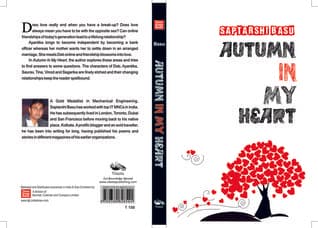
Core Idea
- Difficulty
- Medium
- Read it if
- You are interested in a philosophical exploration of modern love, online relationships, identity fluidity, and the spiritual dimensions of connection.
- Skip it if
- You prefer a straightforward romance narrative without deep psychological or unconventional thematic explorations.
Key Takeaways from Autumn in My Heart
Love's Unconventional Evolution
Redefining love beyond traditional heterosexual and cohabiting norms.
The book questions society's narrow definition of love, asking readers to think about its many forms. It suggests love is not limited to traditional relationships or even physical presence. This idea is especially relevant today, as online connections can create deep emotional bonds, raising questions about how real these relationships are. The story seems to support a broader, more open understanding of love, one that accepts different orientations, distances, and expressions, ultimately challenging strict romantic ideals. It implies that true love goes beyond societal expectations and finds its own way, often in unexpected places.
“Does love always mean you have to be with the opposite sex?”
In the book: The blossoming online friendship between Ayantika and Deb, evolving into love, despite potential geographical distances or societal pressures.
Try this: Reflect on your own preconceived notions of love. Consider how digital connections might offer genuine emotional fulfillment and be open to diverse expressions of affection beyond traditional romantic pairings.
Related ideas: digital-romance, non-traditional-relationships, love-redefinition
The Weight of Societal Expectations
Navigating personal desires against familial and cultural pressures.
The story clearly shows the conflict between what individuals want and the strong influence of societal and family expectations, especially regarding marriage and careers. Ayantika's struggle to be independent as a bank officer while her mother pushes for an arranged marriage highlights a common tension. This conflict often causes inner turmoil and outer friction, showing how cultural norms, even with good intentions, can limit personal growth and happiness. The book suggests that finding your true self often means taking a difficult stand against established customs, a challenge many people face in various cultures.
“I don’t want to marry now mom, I have told you a million times...Please Dad, make mom understand.”
In the book: Ayantika's mother's insistence on an arranged marriage versus Ayantika's dream of becoming a bank officer and achieving independence.
Try this: Identify areas in your life where societal or familial expectations conflict with your personal goals. Develop strategies to communicate your needs assertively while respecting others' perspectives.
Related ideas: arranged-marriage, personal-independence, familial-pressure
The Perilous Landscape of Breakups
Exploring the profound emotional aftermath and potential for despair.
The book honestly shows the terrible impact of romantic breakups, going beyond sadness to despair and self-harm. Deb's suicide attempt is a harsh reminder of the intense emotional pain that can come with the end of a significant relationship. This highlights how vulnerable people are when heartbroken and the important need for emotional support. It shows that breakups are not just minor inconveniences but can be very unsettling events, requiring empathy and understanding from society. The story emphasizes the raw, deep pain and potential for self-destruction when love seems to disappear.
“A puddle of blood formed on the white carpet as Deb lay there, his soul still fighting to unite with his creator- An attempted suicide.”
In the book: Deb's attempted suicide after his breakup, illustrating the extreme emotional toll of lost love.
Try this: Acknowledge the seriousness of emotional pain from breakups. Seek professional help or confide in trusted individuals during periods of severe heartbreak. Offer support to friends experiencing similar distress.
Related ideas: heartbreak, emotional-trauma, suicide-awareness
Consciousness Beyond the Body
A spiritual lens on identity and existence in the face of impermanence.
The philosophical idea from Guru Lama adds a deep spiritual layer to the story, suggesting that identity and consciousness are not just tied to the physical body. This concept, from old wisdom, offers a strong contrast to the temporary nature of human relationships and physical life. It implies that true freedom comes from understanding this eternal part of oneself, providing a way to cope with loss, change, and even the fear of death. This spiritual view offers comfort and a deeper meaning beyond life's passing experiences, including the pains of love and separation, suggesting a lasting essence that remains untouched.
“Na Hanyate Hanyamane Sarire-Consciousness is eternal it is not vanquished with the destruction of the temporary body. My son, you need to seek the truth within yourself, and that will set you free.”
In the book: Guru Lama's teaching about eternal consciousness, providing a spiritual anchor amidst life's turmoil.
Try this: Explore spiritual or philosophical texts that discuss the nature of consciousness and existence. Practice mindfulness or meditation to connect with your inner self, independent of external circumstances.
Related ideas: spiritual-awakening, eternal-consciousness, inner-truth
The Fluidity of Identity and Desire
Questioning fixed notions of sexuality and personal boundaries.
The book explores the complexities of identity, especially around sexuality and desire, suggesting these are not always clear or fixed. Vinod's 'confused soul' and the vivid, slightly unclear description of a physical encounter challenge common ideas of sexual orientation. This moment highlights the inner questioning and potential fluidity of desire that people can experience, often leading to confusion and self-discovery. It supports an open-minded approach to understanding one's own and others' sexual identities, moving past strict labels and recognizing the range of human experience. The story suggests that self-discovery can be a messy, non-linear process.
“All I could feel was the prickling of the moustache and my lips locked – A confused Soul.”
In the book: Vinod's introspective account of a 'confused' moment of physical intimacy, hinting at a broader spectrum of desire.
Try this: Approach your own and others' identities with curiosity and empathy. Avoid premature labeling and allow space for personal exploration and evolution of self-understanding.
Related ideas: sexual-fluidity, identity-exploration, self-discovery
The Enduring Nature of Love
Love's resilience and capacity for transformation even after hardship.
Despite the difficulties, heartbreaks, and near-tragedies, the book ultimately offers a message of hope: that love, in its purest form, lasts and transforms. The protagonist's quiet gratitude for Ayantika, even during heavy rain, shows a love that goes beyond immediate situations and personal suffering. This is not necessarily a romantic reunion, but a deeper understanding of love's constant presence and its power to reshape people. It suggests that even when relationships end, the lessons learned and the ability to love remain, leading to a 'transformed soul.' Love may change form, but its core continues to influence and guide.
“Love never dies- A transformed Soul.”
In the book: The protagonist's realization, 'Love never dies,' and his silent thanks for Ayantika, even after their separation, indicating a deeper, spiritual understanding of love.
Try this: After experiencing loss, focus on the growth and transformation gained from past relationships. Cultivate an understanding of love that is not dependent on a specific person or outcome, but rather on an internal capacity.
Related ideas: love-resilience, personal-transformation, unconditional-love
The Power of Online Connections
Exploring the potential for deep relationships in the digital age.
The story highlights the modern trend of online relationships and how they can become deep, lasting connections. In a world increasingly shaped by technology, the story validates the authenticity that can come from virtual interactions. It challenges the doubt often linked to online friendships, showing how shared interests and emotional openness can bridge physical distances and create real closeness. This part of the book is particularly relevant for today's readers, as it reflects the changing nature of human connection and the new ways love can be found and nurtured.
“She meets Deb online and friendship blossoms into love.”
In the book: The central plot point of Ayantika and Deb's relationship beginning online and developing into love.
Try this: Be open to forming meaningful connections through online platforms, while also exercising caution and discernment. Understand that genuine emotional bonds can transcend physical presence.
Related ideas: online-dating, digital-intimacy, virtual-relationships
The Journey of Self-Discovery
Breakups and spiritual insights as catalysts for personal growth.
Beyond the romantic relationships, the book presents breakups and spiritual guidance as drivers for self-discovery and freedom. The characters' journeys, marked by emotional trouble and philosophical thought, show that true freedom comes from understanding oneself, rather than only from external relationships or societal approval. The 'transformed soul' at the end suggests that life's challenges, especially those of the heart, can lead to deep personal growth and a stronger connection to one's inner truth. This emphasizes that personal change often comes from dealing with hardship.
“My son, you need to seek the truth within yourself, and that will set you free.”
In the book: Deb's transformation after his suicide attempt and the influence of Guru Lama's spiritual teachings on characters seeking inner truth.
Try this: View difficult life experiences, including breakups, as opportunities for introspection and personal growth. Actively seek knowledge or practices that help you understand your inner self and values.
Related ideas: personal-growth, spiritual-journey, self-liberation
The Nuances of Desire and Attraction
Exploring the complexities of attraction beyond simple gender binaries.
The book subtly hints at the many sides of human desire and attraction, suggesting it is rarely as simple as cultural stories often show. While the main focus is heterosexual romance, moments like Vinod's 'confused soul' or the sheer intensity of 'how much he was mad about her' before a tragic event, indicate that attraction can be overwhelming, unpredictable, and sometimes lead to unexpected outcomes or inner conflicts. It is a reminder that desire is not always rational or controllable, and its expression can be complex, going beyond simple gender categories and societal expectations. The intense emotions described highlight the raw power of attraction.
“How much he was mad about her! And then it was all over. The razor shined the last unforgiving minute.”
In the book: The passionate yet ultimately destructive nature of some relationships, coupled with ambiguous moments of desire like Vinod's, points to a complex interplay of attraction.
Try this: Recognize that attraction can be diverse and multifaceted. Avoid judgment of self or others regarding the objects of their desire, and instead cultivate understanding for the nuances of human connection.
Related ideas: human-desire, attraction-complexity, emotional-intensity
Autumn in My Heart Quotes
“The wind carried the scent of wet earth and dying leaves, a perfume of endings and new beginnings.”
“Some memories are like fallen leaves; beautiful to behold, but crumble to dust if you hold them too tightly.”
“He found solace not in forgetting, but in learning to live with the echoes.”
“The river, unchanging yet always flowing, mirrored the paradox of his own life.”
“It wasn't the grand gestures that defined their bond, but the quiet understanding in shared silences.”
“Autumn teaches us that letting go can be beautiful, even when it hurts.”
“The past wasn't a burden to be discarded, but a foundation upon which to build.”
“Sometimes, the most profound answers are found not in seeking, but in simply observing.”
“Hope, like a lone daffodil pushing through frosty ground, is most potent when least expected.”
“The world outside might rage, but within him, a quiet forest of peace began to grow.”
“Every ending carries the seed of a new beginning, often unseen until the old has fully withered.”
“He learned that true strength wasn't in never falling, but in always finding a way to stand again.”
“The silence between their words spoke volumes, a language only two hearts truly understood.”
Quiz
10 questions on the main ideas. Each answer comes with a short explanation.
Question 1
What is Ayantika's primary ambition at the beginning of the story, which conflicts with her mother's desires?
- To become a successful fashion designer.
- To travel the world as a freelance writer.
- To achieve independence by becoming a bank officer.
- To pursue higher education abroad.
Show answer
C. To achieve independence by becoming a bank officer. The book description explicitly states, 'Ayantika longs to become independent by becoming a bank officer whereas her mother wants her to settle down in an arranged marriage.'
Question 2
Which specific event is mentioned in the synopsis that highlights Deb's emotional turmoil?
- He gets into a major argument with his parents.
- He attempts suicide with a razor, resulting in a puddle of blood.
- He decides to leave his job and travel extensively.
- He runs away from home after a breakup.
Show answer
B. He attempts suicide with a razor, resulting in a puddle of blood. The synopsis states, 'The razor shined the last unforgiving minute. A puddle of blood formed on the white carpet as Deb lay there, his soul still fighting to unite with his creator- An attempted suicide.'
Question 3
What is one of the central themes the author explores regarding modern relationships and connections?
- The challenges of long-distance marriages.
- The potential for online friendships to lead to lifelong relationships.
- The decline of traditional courtship rituals.
- The impact of social media on self-esteem.
Show answer
B. The potential for online friendships to lead to lifelong relationships. The description asks, 'Can online friendships of today's generation lead to a lifelong relationship?' indicating this is a key area of exploration.
Question 4
The quote 'Na Hanyate Hanyamane Sarire-Consciousness is eternal it is not vanquished with the destruction of the temporary body' is attributed to whom?
- Ayantika's father
- Deb's therapist
- Guru Lama
- Vinod's grandfather
Show answer
C. Guru Lama The synopsis directly states, 'Na Hanyate Hanyamane Sarire... My son, you need to seek the truth within yourself, and that will set you free– Guru Lama’s word.'
Question 5
Which character is described with the internal thought, 'Oh God! Pooja, not now!-A big flirt'?
- Saurav
- Vinod
- Deb
- Sagarika
Show answer
C. Deb The synopsis includes a direct quote: 'Oh God! Pooja, not now!-A big flirt' and places it within Deb's narrative section, indicating it refers to him.
Question 6
What is the primary conflict Ayantika faces concerning her personal life, as highlighted in the synopsis?
- Her struggle to maintain a long-distance relationship with Deb.
- Her mother's insistence on an arranged marriage versus her desire for independence.
- Her difficulty in choosing between a career in banking and one in arts.
- Her disagreement with her friends about the nature of love.
Show answer
B. Her mother's insistence on an arranged marriage versus her desire for independence. The synopsis states, 'Ayantika longs to become independent by becoming a bank officer whereas her mother wants her to settle down in an arranged marriage.' This clearly outlines her core conflict.
Question 7
The book explores the question: 'Does love always mean you have to be with the opposite sex?' Which character's narrative snippet specifically hints at exploring non-heteronormative experiences?
- Ayantika's arranged marriage blues.
- Deb's flirtatious comment about Pooja.
- Vinod's 'confused Soul' experience with Ashwini Uncle's moustache and locked lips.
- The transformed soul's realization that 'Love never dies'.
Show answer
C. Vinod's 'confused Soul' experience with Ashwini Uncle's moustache and locked lips. The synopsis includes Vinod's line: 'All I could feel was the prickling of the moustache and my lips locked – A confused Soul', which, coupled with the question 'Does love always mean you have to be with the opposite sex?', strongly suggests an exploration of same-sex attraction.
Question 8
What is the ultimate message or transformation indicated by the final snippet in the synopsis, 'Love never dies- A transformed Soul'?
- That all breakups are temporary and lead to reconciliation.
- That physical presence is essential for love to endure.
- That love transcends physical forms and persists beyond conventional understanding.
- That one must always fight for their love, no matter the obstacles.
Show answer
C. That love transcends physical forms and persists beyond conventional understanding. The phrase 'Love never dies' following various complex relationship issues and even an attempted suicide, suggests a deeper, more enduring concept of love that goes beyond specific relationships or physical presence, hinting at its eternal nature as also reinforced by Guru Lama's words about consciousness.
Question 9
The title 'Autumn in My Heart' metaphorically suggests what kind of journey for the characters?
- A period of vibrant growth and new beginnings.
- A time of decline, introspection, and eventual transformation or renewal.
- A season of abundant harvest and joyous celebrations.
- A short, fleeting period of intense passion.
Show answer
B. A time of decline, introspection, and eventual transformation or renewal. Autumn is often associated with the end of summer's vibrancy, a period of shedding (like leaves), introspection, and preparation for winter, but also holding the promise of spring. In the context of 'Breakups, Lust and then…Blossoms,' it implies a journey through difficult phases towards eventual growth or renewal.
Question 10
The synopsis mentions 'changing relationships' among Deb, Ayantika, Saurav, Tina, Vinod, and Sagarika. What does this suggest about the narrative structure?
- The story primarily focuses on one central couple's linear journey.
- It will likely feature a complex, interwoven plot with multiple perspectives and evolving connections.
- The characters will each have entirely separate and unrelated storylines.
- The narrative will be a series of short, unconnected vignettes.
Show answer
B. It will likely feature a complex, interwoven plot with multiple perspectives and evolving connections. Mentioning 'finely etched' characters and their 'changing relationships' among a list of several names strongly implies a multi-faceted narrative where these characters' lives intersect and evolve, rather than a singular, linear plot.
Autumn in My Heart FAQ
What is 'Autumn in My Heart' about?
'Autumn in My Heart' explores themes of love, breakups, online relationships, and self-discovery through the intertwined lives of several characters. It delves into modern relationships and societal expectations, questioning traditional notions of love and commitment.
Does 'Autumn in My Heart' explore different forms of love?
Yes, the book explicitly questions whether love is limited to heterosexual relationships and examines various forms of connection, including those blossoming from online friendships. It portrays a spectrum of romantic and emotional bonds.
Does love really end after a breakup, according to the book?
The book delves into the aftermath of breakups, suggesting that while relationships may end, the essence of love or its impact might linger or transform. It explores the journey of healing and rediscovery post-separation.
Can online friendships lead to lifelong relationships, as depicted in the book?
Absolutely. A central storyline in 'Autumn in My Heart' features Ayantika and Deb, whose online friendship evolves into a deep romantic relationship, highlighting the potential for lasting connections formed digitally in today's generation.
How does the book address the conflict between personal independence and arranged marriage?
The character Ayantika faces a significant conflict between her desire for independence as a bank officer and her mother's wish for an arranged marriage. The narrative explores the tension and societal pressures surrounding these choices.
What role does spirituality play in 'Autumn in My Heart'?
Spirituality, hinted at by Guru Lama's words about consciousness being eternal, appears to guide characters like Vinod towards self-discovery and inner truth. It offers a philosophical dimension to their emotional journeys and transformations.
Is 'Autumn in My Heart' a romance novel?
While it contains strong romantic elements and explores various relationships, 'Autumn in My Heart' also delves into broader themes of self-discovery, societal pressures, and the complexities of human connection, making it more than a straightforward romance.
How does 'Autumn in My Heart' differ from typical romantic dramas?
Unlike many typical romantic dramas, 'Autumn in My Heart' incorporates darker themes such as attempted suicide, explores non-traditional relationships, and integrates philosophical and spiritual insights, offering a more complex and nuanced portrayal of love and life.
Similar books
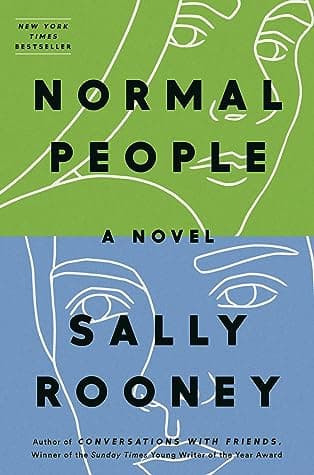
- Normal People
Sally Rooney
3.9 (405k) average on GoodreadsLiterary FictionExplores the complex, evolving relationship between two individuals across different life stages and societal pressures.
- Eleanor Oliphant Is Completely Fine
Gail Honeyman
4.3 (708k) average on GoodreadsLiterary FictionHoneyman's book offers a more straightforward, character-driven arc focusing on individual self-discovery through overcoming social anxieties and past trauma. Basu's novel, while also exploring self-discovery, intertwines it with unconventional relational dynamics and altered states of consciousness, presenting a more diffuse narrative that engages with broader philosophical questions about existence and connection.
- The Diary of a Young Girl
Anne Frank
4.2 (2.7M) average on GoodreadsBiographyDuring the Nazi occupation, a teenage girl's diary, written from a secret annex, shares observations on humanity, hope, and the wait for freedom.
- Twisted 1. Twisted love
Ana Huang
3.7 (1.7M) average on GoodreadsA quiet billionaire with a difficult past finds his guarded heart opening to the woman he must protect, but their growing passion uncovers dangerous secrets and a shared, traumatic history.
- Eat, Pray, Love
Elizabeth Gilbert
3.6 (1.5M) average on GoodreadsLifestyleA heartbroken writer leaves her conventional life for a year-long global search for pleasure in Italy, spiritual devotion in India, and unexpected love and balance in Bali.
- Night
Elie Wiesel
4.3 (970k) average on GoodreadsBiographyIn the darkness of Auschwitz and Buchenwald, a teenage Elie Wiesel faces the extermination of his family, the loss of his faith, and the lasting scars of humanity's deepest cruelty.





Enjoyed the summary?
A summary gives you the shape of the book. The book itself has the detail, the examples and the voice.
Find Autumn in My Heart on AmazonAs an Amazon Associate, BookBrief earns from qualifying purchases. How we're funded