

Synopsis
Covers the whole plot, including the ending.
- Difficulty
- Medium
- Pacing
- Moderate
- Mood
- Introspective, Melancholy, Intellectual, Atmospheric
- Read it if
- You enjoy intricate family dramas, literary fiction exploring spirituality and intellectualism, or stories about finding one's place within a complex family.
- Skip it if
- You prefer fast-paced plots, lighthearted stories, or clear-cut resolutions.
Bee Season Plot Summary
Covers the whole plot, including the ending.
A Family of Minds
The Naumann family lives in a quiet suburban home, each member focused on their own interests. Saul Naumann, the father, is a cantor and a scholar of Jewish mysticism, especially Kabbalah, which he teaches to his son, Aaron. Aaron, a gifted and sensitive boy, is Saul's main focus for spiritual guidance. Miriam, the mother, is a brilliant corporate lawyer, often distant and preoccupied. Eliza, the youngest, feels overlooked and unremarkable, struggling to find her place in this intellectual and spiritual household. She watches her family from the outside, feeling separate from their shared world, often escaping into her own quiet activities.
Eliza's Unexpected Talent
During a routine fifth-grade spelling bee, Eliza Naumann, who always thought of herself as ordinary, surprises everyone, including herself, by easily spelling difficult words. She wins her classroom bee and then the school-wide competition. This unexpected success gets the attention of her father, Saul, who had previously paid little attention to her academic achievements. Saul, a man deeply interested in the mystical, sees Eliza's spelling ability not just as a skill, but as a sign of a deeper, spiritual connection, similar to the Lurianic Kabbalah he studies. This dramatically shifts his focus from Aaron to Eliza.
Saul's New Project
Saul Naumann believes Eliza's spelling ability shows divine order and a path to 'tikkun olam' (repairing the world). He begins to train her rigorously for the district spelling bee. His methods are unusual, combining Kabbalistic ideas of word origins, permutations, and the power of letters into her study. He teaches her to visualize words, break them down, and understand their etymological journeys, all while giving the process spiritual meaning. This intense, almost ritualistic training changes Eliza's view of words and her own emerging identity, putting immense pressure on her.
Aaron's Spiritual Quest
With Saul's attention now almost entirely on Eliza's spelling, Aaron feels neglected and displaced. His father's former spiritual mentorship, once a central part of his life, is suddenly gone. In response, Aaron starts his own solitary spiritual search, looking for meaning and connection outside his father's Kabbalistic framework. He explores other religions and spiritual practices, eventually finding comfort and belonging in a local Hare Krishna community. This path gives him a new identity and purpose, different from what his father had imagined for him, but also separates him further from his family.
Miriam's Secret Life
Throughout the family's changing dynamics, Miriam Naumann's behavior becomes more erratic and withdrawn. Her brilliance as a lawyer hides deep internal turmoil. It is gradually revealed that Miriam suffers from kleptomania, a compulsion to steal objects, especially from hardware stores. She meticulously arranges and hoards these stolen items, often small and seemingly useless, in a hidden space in their basement. This secret life is how she copes with feelings of inadequacy and a desperate attempt to create order and control in her chaotic internal world, stemming from unacknowledged childhood trauma and her perception of her family's intellectual superiority.
The District Bee
Eliza, under Saul's intense and mystical guidance, prepares for and wins the district spelling bee. Her success publicly confirms her father's belief in her, further establishing her role as the family's new prodigy. The pressure on Eliza grows, as does her unique connection with words, which she now perceives with a deep, almost spiritual understanding, seeing their intricate structures and histories. Her victories bring her a new sense of self-worth and recognition within the family, but also isolate her from her peers and normal childhood, pushing her deeper into Saul's world of esoteric meaning.
Miriam's Unraveling
As the family focuses on Eliza's spelling journey and Aaron's spiritual exploration, Miriam's internal world continues to worsen. Her kleptomania intensifies, and her carefully constructed secret life in the basement becomes more elaborate and desperate. She feels increasingly disconnected from her family, who are too absorbed in their own pursuits to notice her distress. The constant threat of exposure hangs over her, adding to her psychological burden. Her acts of stealing become more reckless, signaling a breaking point as her internal chaos threatens to spill into the family's fragile reality.
The National Bee
Eliza travels with Saul to Washington D.C. for the National Spelling Bee. The experience is overwhelming, with bright lights, cameras, and intense competition. Eliza, though nervous, performs well, using her father's unique training and her own developing intuition for words. She finds herself in a state of heightened awareness, almost a trance, where words appear to her with vivid clarity. This is the peak of her journey, a moment of triumph and immense pressure, where her personal identity and her family's expectations meet on the national stage, pushing her to her physical and mental limits.
The Exposure
While Eliza is at the National Bee, Miriam's secret kleptomania is finally exposed. Saul discovers her hidden room in the basement, filled with stolen objects. This revelation shatters the family's already fragile facade. The confrontation is devastating, forcing the Naumanns to face the deep-seated issues and unspoken pain that have grown beneath their intellectual and spiritual pursuits. Miriam's carefully guarded internal world is revealed, and the family must deal with her psychological suffering, which they had all, in their own ways, overlooked or ignored, throwing the family into disarray.
The Aftermath
After Miriam's exposure, the Naumann family is reeling. Saul struggles to reconcile his intellectual understanding of order and meaning with the chaos of his wife's secret life. Aaron, having found his own spiritual path, watches the family's unraveling with a new detachment, but also quiet concern. Eliza, having returned from the bee, is deeply affected by the family's distress. The revelation forces each member to confront their own roles in the family's dysfunction and how their individual pursuits created isolation rather than connection. The family is broken, and a path to healing seems uncertain.
Eliza's Healing Power
In the chaos after Miriam's breakdown, Eliza, with her unique understanding of words and their power, becomes an unexpected force for healing. She recognizes the brokenness in her mother and in the family as a whole. Drawing on her intuitive grasp of language and her father's mystical teachings, Eliza begins to articulate the unspoken truths and connections within her family. She uses words not just for spelling, but for understanding, empathy, and ultimately, for mending. Her ability to see the inherent structure and meaning in words allows her to perceive the underlying order that can restore her family's fractured state, offering a glimmer of hope for their future.
Reconstruction and Hope
The Naumann family begins a difficult journey of reconstruction. Miriam starts therapy for her kleptomania and underlying trauma, slowly opening up to her family. Saul, humbled by the crisis, shifts his focus from esoteric study to the immediate needs of his family, acknowledging his past neglect. Aaron continues his spiritual path but stays connected with his family, offering a different perspective. Eliza, no longer just a speller, has become a way for understanding and healing. The ending suggests not a complete resolution, but a fragile, hopeful start, where the family begins to communicate and connect more authentically, working towards a new, more integrated existence, where each member is seen and valued.
Principal Figures
Eliza Naumann
Protagonist
A seemingly ordinary girl who discovers an extraordinary talent for spelling and a deeper connection to language.
Eliza begins as a quiet, overlooked nine-year-old, feeling unremarkable compared to her intellectual family. Her unexpected success in spelling bees propels her into the spotlight, making her the focus of her father's intense spiritual and academic attention. She possesses an innate sensitivity and a unique, almost mystical, intuition for words, seeing them as more than mere letters. Her journey forces her to grapple with immense pressure, a shifting family dynamic, and ultimately, her own nascent power to understand and heal.
Relationships: Saul Naumann (Student-mentor, initially neglected daughter, then intense focus of his spiritual ambition.); Miriam Naumann (Daughter, often distant and misunderstood, later a source of empathy and healing.); Aaron Naumann (Younger sister, initially overlooked by her brother, later a parallel spiritual seeker.)
Saul Naumann
Supporting Character / Catalyst
A cantor and scholar of Jewish mysticism who projects his spiritual ambitions onto his children.
Saul is a brilliant but often self-absorbed man, deeply engrossed in the study of Kabbalah and the pursuit of 'tikkun olam' (repairing the world). He initially focuses his spiritual mentorship on Aaron, but shifts his intense attention to Eliza when her spelling talent emerges, viewing it as a divine sign. His intellectual and spiritual pursuits often blind him to the emotional needs of his family, leading to neglect and misunderstanding. He is driven by a desire for order and meaning, which is profoundly challenged by his wife's secret life.
Relationships: Eliza Naumann (Intense mentor, father, initially neglectful.); Miriam Naumann (Husband, initially unaware of her inner turmoil, later confronted with her secret.); Aaron Naumann (Father and former spiritual mentee, later displaces him for Eliza.)
Miriam Naumann
Supporting Character / Catalyst
A brilliant corporate lawyer secretly suffering from kleptomania, harboring deep-seated emotional pain.
Miriam is a highly intelligent and successful lawyer, but beneath her composed exterior lies a profound inner turmoil. She struggles with feelings of inadequacy and a compulsion to steal, particularly from hardware stores, hoarding the items in a hidden basement room. This kleptomania is a coping mechanism for unaddressed childhood trauma and a desperate attempt to create order and control in her chaotic internal world. She often appears distant and withdrawn, unable to connect emotionally with her family, who are largely oblivious to her suffering.
Relationships: Saul Naumann (Wife, keeps a profound secret from him.); Eliza Naumann (Mother, distant, later finds empathy and healing through her daughter.); Aaron Naumann (Mother, often detached.)
Aaron Naumann
Supporting Character
Eliza's older brother, initially his father's spiritual protégé, who finds his own path after displacement.
Aaron is a sensitive and intelligent boy, initially his father's chosen vessel for Kabbalistic studies. When Saul shifts his attention to Eliza, Aaron feels displaced and neglected. This prompts him to embark on his own spiritual quest, exploring different religions and eventually finding a sense of belonging and purpose within a Hare Krishna community. He represents a different form of spiritual seeking, one that prioritizes communal experience and emotional connection over his father's more intellectual and solitary pursuit of mysticism. He observes his family's unraveling with a quiet, almost detached, understanding.
Relationships: Saul Naumann (Son, former spiritual protégé, then displaced.); Eliza Naumann (Older brother, initially overlooks her, later a parallel seeker of meaning.); Miriam Naumann (Son, often distant.)
The Spelling Bee Judges
Mentioned
The figures of authority who preside over Eliza's competitions.
These characters are largely anonymous, representing the external validation and formal structure of the spelling competitions. They are the arbiters of rules and correct spelling, embodying the external pressure and scrutiny Eliza faces. While they have no personal connection to the Naumanns, their presence is crucial to Eliza's journey, as they are the ones who pronounce the words and ultimately decide her fate in the bees. They symbolize the public performance aspect of Eliza's talent.
The Hare Krishna Community
Mentioned
The spiritual group that provides Aaron with a sense of belonging.
This community, though not individually characterized, plays a significant role in Aaron's arc. It represents an alternative spiritual path to his father's Kabbalah, offering a communal, emotionally expressive, and less intellectually rigorous form of worship. For Aaron, it provides a haven and a new identity when he feels lost and displaced by his family's shifting dynamics. The community offers him a sense of belonging and purpose that he no longer finds at home.
Relationships: Aaron Naumann (Spiritual community, source of belonging and new identity.)
Themes & Insights
The Search for Meaning and Order
Each Naumann family member searches for meaning and order, though their methods differ greatly. Saul seeks it in Kabbalah and the divine order he sees in words. Eliza finds it in the structure and origin of words, seeing them as small parts of a larger, coherent universe. Miriam, through her kleptomania, tries to impose a distorted sense of order on her internal chaos by meticulously arranging stolen objects. Aaron searches for meaning in alternative spiritual paths, seeking communal and emotional connection. The novel explores how these individual searches can lead to both deep insight and deep isolation, highlighting the human need to make sense of the world.
“For Saul, words were not merely symbols; they were vessels, each containing a spark of divine light, a fragment of the primordial language that had brought the world into being.”
Family Dysfunction and Communication Breakdown
The Naumann family, despite their intellectual brilliance, struggles deeply with emotional communication. Saul's focus on mysticism, Miriam's secret life, and Aaron's displacement create deep divisions and unspoken pain. Each character lives in their own internal world, failing to truly see or understand the others' needs and struggles. Eliza's rise in spelling exposes these cracks, as the family's shifting focus further isolates its members. The novel shows how a lack of genuine communication and emotional neglect can lead to secret lives, resentment, and ultimately, a breakdown of family bonds, ending in Miriam's crisis.
“They were a family of minds, not of hearts, and the distance between them grew with every unasked question, every unshared thought.”
Identity and Self-Discovery
The novel is a coming-of-age story for Eliza, who discovers her identity through her unexpected spelling talent. Initially feeling unremarkable, her success forces her to confront who she is and what her unique abilities mean. Aaron also begins a journey of self-discovery, forging his own spiritual path when his father's chosen identity for him is withdrawn. Miriam's secret life, though destructive, is also an attempt to define herself outside her family's expectations. The characters deal with internal and external pressures to conform or rebel, ultimately seeking to understand and embrace their true selves amidst family expectations and personal desires.
“Eliza realized that words, like people, had histories, journeys, and transformations that shaped their very being.”
The Power of Language
Language is a central theme, explored not just as a communication tool, but as a mystical force, a source of order, and a way to heal. Saul views words through a Kabbalistic lens, believing they hold divine power and can 'repair the world.' Eliza experiences words with an almost sensory and intuitive understanding, seeing their internal structures and origins. For her, spelling becomes a form of meditation and a way to connect with a deeper reality. Ultimately, Eliza uses her deep understanding of words to articulate unspoken truths and begin the process of mending her family's brokenness, showing language's ability to both reveal and reconstruct.
“A word was a living thing, a breath, a vibration, capable of creating and destroying.”
Plot Devices & Literary Techniques
The Spelling Bee
A literal and metaphorical stage for Eliza's transformation and family dynamics.
The spelling bee serves as the central plot device that propels Eliza's journey and reshapes the Naumann family dynamics. On a literal level, it is the competition that Eliza must win, showcasing her talent. Metaphorically, it acts as a stage where the family's internal conflicts and individual quests for meaning are played out. The words themselves become symbols of order, divine connection, and the intricate structures of life. The pressure of the bee highlights the family's dysfunction and Saul's projection of his spiritual ambitions onto Eliza.
Kabbalah and Mysticism
A framework for understanding the world and a source of Saul's spiritual ambition.
Kabbalah, particularly Lurianic Kabbalah, is a significant plot device, providing the philosophical and spiritual lens through which Saul interprets Eliza's spelling abilities. It informs his teaching methods, his belief in the inherent power of letters, and his search for 'tikkun olam' (repairing the world). This mystical framework elevates Eliza's spelling from a mere academic skill to a divinely ordained mission, placing immense pressure on her and influencing the family's perception of her talent. It also contrasts with Aaron's search for spiritual meaning outside this intellectual tradition.
Miriam's Hidden Room
A physical manifestation of Miriam's secret life and inner chaos.
Miriam's hidden room in the basement, where she hoards and meticulously arranges stolen objects, is a powerful plot device. It is a physical manifestation of her secret kleptomania, her unaddressed trauma, and her desperate attempt to create order and control in her chaotic internal world. The discovery of this room serves as the climax of the family's internal drama, exposing Miriam's psychological suffering and shattering the family's facade. It forces the Naumanns to confront the deep-seated dysfunctions and unspoken pain that have festered beneath their intellectual pursuits.
Etymology and Word Origins
A method of understanding language that reveals deeper connections and meaning.
Saul's method of teaching Eliza spelling by delving into etymology and word origins is a crucial plot device. It transforms the act of spelling from rote memorization into a profound exploration of language's history, interconnectedness, and inherent meaning. For Eliza, understanding the roots and transformations of words allows her to intuit correct spellings and develops her unique connection to language. This device underscores the theme of the power of language and provides a framework for Eliza's unique perception of the world, ultimately enabling her to 'spell out' her family's problems and begin their healing process.
Bee Season Quotes
“Words were not things that could be held; they were not things that could be seen. They were not even things that could be heard in the silence of the mind. They were merely the husks of meaning, and their power lay not in themselves but in what they represented.”
“There were two kinds of people in the world, she'd decided. Those who looked for God and those who were God.”
“The world was full of patterns, and if you could just find the right one, everything would make sense.”
“Every word was a world, and every world was a door.”
“He understood that love, true love, was not a thing that could be earned or deserved, but a thing that was given, freely and without expectation.”
“The silence in their house was not empty; it was full of unsaid things, of things that had been said and could not be unsaid.”
“To spell was to create, to bring forth from nothingness, to give form to the formless.”
“She learned that the most profound truths were often found in the most ordinary places, hidden in plain sight.”
“What was faith, after all, but a willingness to believe in what could not be seen, to trust in what could not be proved?”
“The greatest mysteries were not out in the world, but inside themselves.”
“Sometimes the only way to find your way back was to get lost completely.”
“Every word held a universe within it, a history, a lineage, a potential.”
“The silence was not empty, but resonant with the hum of unspoken desires, of unfulfilled longings.”
Quiz
10 questions on the plot and the characters. Each answer comes with a short explanation.
Question 1
What is Eliza Naumann's initial perception of herself within her family?
- She believes she is the most gifted member.
- She expects never to fit in due to her perceived lack of giftedness.
- She sees herself as the emotional anchor of the family.
- She feels she is the most overlooked but secretly brilliant.
Show answer
B. She expects never to fit in due to her perceived lack of giftedness. The description states Eliza 'expects never to fit into her gifted family' because she is 'a seemingly unremarkable nine-year-old'.
Question 2
What event causes Saul to begin lavishing attention on Eliza?
- Eliza excels in her school musical.
- Eliza discovers a hidden talent for painting.
- Eliza wins her school and district spelling bees.
- Eliza begins studying Jewish mysticism independently.
Show answer
C. Eliza wins her school and district spelling bees. The text explicitly states, 'But when Eliza sweeps her school and district spelling bees in quick succession, Saul takes it as a sign that she is destined for greatness.'
Question 3
What is Saul Naumann's primary intellectual pursuit?
- Classical literature
- Quantum physics
- Jewish mysticism
- Ancient Greek philosophy
Show answer
C. Jewish mysticism Saul is described as an 'autodidact father, Saul, absorbed in his study of Jewish mysticism'.
Question 4
How does Aaron react to Eliza receiving increased attention from their father, Saul?
- He becomes Eliza's dedicated coach for the spelling bees.
- He expresses jealousy directly to his father and sister.
- He embarks upon a lone quest for spiritual fulfillment.
- He dedicates himself to surpassing Eliza academically.
Show answer
C. He embarks upon a lone quest for spiritual fulfillment. The summary states that Aaron, 'in his displacement embarks upon a lone quest for spiritual fulfillment' after Saul's attention shifts to Eliza.
Question 5
What role does Miriam, Eliza's mother, play in the family dynamic before her secret is revealed?
- She is the primary spiritual guide for the children.
- She is described as a brilliant but distant lawyer-mom.
- She is a homemaker dedicated to Eliza's education.
- She actively mediates conflicts between Saul and Aaron.
Show answer
B. She is described as a brilliant but distant lawyer-mom. Miriam is characterized as Eliza's 'brilliant but distant lawyer-mom'.
Question 6
What is the primary catalyst for the 'familial explosion' mentioned in the summary?
- Eliza's failure at the National Bee.
- Aaron's complete abandonment of his family.
- Miriam's secret life being revealed.
- Saul's increasing obsession with Eliza's spelling.
Show answer
C. Miriam's secret life being revealed. The text explicitly states, 'When Miriam's secret life triggers a familial explosion, it is Eliza who must order the chaos.'
Question 7
Beyond being a coming-of-age story, what deeper thematic element does the novel primarily explore?
- The rise and fall of competitive sports.
- The unraveling fabric of one family.
- The historical impact of Jewish mysticism.
- The challenges of public education.
Show answer
B. The unraveling fabric of one family. The description notes, 'Not merely a coming-of-age story, Goldberg's first novel delicately examines the unraveling fabric of one family.'
Question 8
How does Saul interpret Eliza's spelling bee success in relation to his own studies?
- He sees it as a distraction from his spiritual work.
- He views it as a sign that Eliza is destined for greatness within his spiritual ambitions.
- He believes it confirms the need for Aaron to continue his spiritual quest alone.
- He considers it a frivolous pursuit unrelated to true enlightenment.
Show answer
B. He views it as a sign that Eliza is destined for greatness within his spiritual ambitions. The summary states, 'Saul takes it as a sign that she is destined for greatness. In this altered reality, Saul inducts her into his hallowed study and lavishes upon her the attention previously reserved for Aaron, who in his displacement embarks upon a lone quest for spiritual fulfillment.' This links Eliza's success to Saul's spiritual ambitions.
Question 9
What distinguishes Myla Goldberg's prose, according to the provided text?
- Its simplicity and directness.
- Its heavy reliance on dialogue to drive the plot.
- Its sharp metaphors and mature, lyrical quality.
- Its objective and detached narrative voice.
Show answer
C. Its sharp metaphors and mature, lyrical quality. The text describes her prose as 'startling and unconventional as her prose, which wields its metaphors sharply and rings with maturity. The work of a lyrical and gifted storyteller'.
Question 10
Given the family's internal dynamics and the external pressure of the National Bee, what is Eliza's ultimate responsibility after Miriam's secret is revealed?
- To win the National Bee at all costs to restore family honor.
- To confront her father and brother about their self-absorption.
- To order the chaos that ensues from the familial explosion.
- To escape the family and forge her own independent path.
Show answer
C. To order the chaos that ensues from the familial explosion. The summary states, 'When Miriam's secret life triggers a familial explosion, it is Eliza who must order the chaos.' This highlights her pivotal role in resolving the family's disarray.
Bee Season FAQ
What is the central premise of 'Bee Season'?
The novel centers on the Naumann family, particularly nine-year-old Eliza, who unexpectedly excels at spelling bees. Her sudden talent draws the intense focus of her father, Saul, a scholar of Jewish mysticism, who believes her abilities signify a deeper spiritual calling, disrupting the family's existing dynamics and ultimately exposing their hidden vulnerabilities.
How does Eliza's newfound spelling ability impact her relationship with her father, Saul?
Eliza's spelling success transforms her relationship with Saul, as he shifts his spiritual focus from her brother, Aaron, to her. He begins to teach her the meditative techniques of tikkun olam and kabbalah, believing her ability to spell difficult words is a manifestation of divine sparks, leading to an intense, almost obsessive bond.
What role does Jewish mysticism, particularly Kabbalah and tikkun olam, play in the story?
Jewish mysticism, especially the concept of tikkun olam (repairing the world) and Kabbalah, is central to Saul's character and his interpretation of Eliza's gift. He believes that by spelling words correctly, Eliza is helping to reorder the fragmented divine sparks, seeing her as a vessel for spiritual restoration and a means to achieve his own spiritual ambitions.
What is Miriam Naumann's secret life, and how does it affect the family?
Miriam Naumann harbors a secret compulsion to steal small, insignificant items, a habit stemming from her own childhood trauma and a desire for control. This kleptomania escalates throughout the novel, eventually leading to her arrest and a profound emotional breakdown, which shatters the family's fragile stability and forces them to confront their dysfunctions.
How does Aaron, Eliza's brother, react to his father's shift in attention?
Aaron, initially the focus of Saul's spiritual aspirations, feels displaced and abandoned when his father turns his attention to Eliza. In response, Aaron embarks on his own independent spiritual quest, exploring other religions and eventually joining a Hare Krishna community, seeking a sense of belonging and meaning outside his family's framework.
What is the significance of the 'divine sparks' concept in relation to Eliza's spelling?
Saul interprets Eliza's ability to spell as a literal act of tikkun olam, believing that each letter and word, when correctly ordered, helps to gather and reassemble the scattered 'divine sparks' that were dispersed during creation. Her perfect spelling is seen as a way to mend the brokenness of the world, mirroring his own spiritual quest.
Are there any subtle foreshadowing elements regarding Miriam's kleptomania?
Yes, early in the novel, there are subtle hints, such as Miriam's discomfort in certain situations, her evasiveness, and her general detachment, which, in retrospect, point to her hidden struggles. The narrative gradually reveals the depth of her compulsion, building towards its eventual explosion.
How do the individual family members' quests for 'order' or 'meaning' intertwine?
Each Naumann family member seeks order or meaning: Saul through Kabbalah and Eliza's spelling, Eliza through mastering words and seeking her father's approval, Aaron through exploring alternative spiritual paths, and Miriam through her compulsive stealing. These individual quests, while seemingly disparate, are all attempts to cope with a pervasive sense of fragmentation and dissatisfaction within their lives and relationships.
What is the implied connection between Miriam's past and her kleptomania?
Miriam's kleptomania is revealed to stem from a childhood trauma where she felt powerless and unseen. Her stealing became a way to exert control and possess something, however small, to fill an internal void. The act of taking, rather than the item itself, provided a fleeting sense of agency and comfort.
How does Eliza's internal experience of spelling evolve throughout the novel?
Initially, Eliza experiences spelling as a simple skill, but under Saul's influence, it transforms into a profound, almost mystical practice. She begins to visualize the letters and words as physical entities, experiencing a meditative state where the words 'speak' to her, connecting her to her father's spiritual world, yet also isolating her.
Analyze Saul's psychological motivations for his intense focus on Eliza's spelling.
Saul's intense focus on Eliza's spelling stems from a deep-seated need for spiritual validation and a desire to impose order on his world. His intellectual pursuits and spiritual beliefs become an escape from the emotional complexities of his family, and Eliza's talent offers him a tangible manifestation of his abstract spiritual theories, making her a vessel for his own unfulfilled ambitions.
How does Miriam's kleptomania function as a psychological coping mechanism?
Miriam's kleptomania is a complex coping mechanism for her feelings of powerlessness, invisibility, and unresolved childhood trauma. The act of stealing provides a momentary sense of control and rebellion against the constraints of her life, a private ritual that gives her a fleeting sense of agency in a world where she often feels overlooked and unfulfilled.
Discuss the psychological impact of Saul's shifting attention on Aaron.
Aaron experiences significant psychological distress from his father's sudden withdrawal of attention, leading to feelings of abandonment, confusion, and a loss of identity. This displacement fuels his search for belonging and meaning outside the family, as he seeks to define himself independently, ultimately leading him to the Hare Krishnas.
In what ways does Eliza attempt to 'order the chaos' of her family?
Eliza attempts to order the chaos of her family primarily through her spelling, believing that by perfectly arranging letters, she can somehow fix the brokenness around her. Her internal journey involves trying to make sense of her parents' secrets and her brother's departure, using her unique perspective to process and compartmentalize the familial breakdown.
Is Eliza's final decision at the National Bee an act of rebellion or self-preservation?
Eliza's final decision to misspell a word at the National Bee can be interpreted as both rebellion and self-preservation. It is a rebellion against the immense pressure and expectations placed upon her by Saul, and an act of self-preservation to reclaim her individuality and escape the suffocating weight of her father's spiritual projections, choosing her own path over his.
How does the novel challenge traditional notions of 'giftedness' or 'success'?
The novel challenges traditional notions of giftedness by showing how Eliza's extraordinary spelling ability, initially seen as a gift, becomes a burden and a source of family dysfunction. It suggests that true success might lie not in outward achievement, but in self-discovery and emotional well-being, highlighting the destructive potential of external expectations.
What is the ultimate fate or resolution for each Naumann family member?
The resolution is unconventional: Eliza intentionally loses the bee, asserting her agency; Miriam is institutionalized but begins a path to recovery; Aaron finds a new community with the Hare Krishnas; and Saul is left to confront his own spiritual isolation. The family doesn't 'reunite' in a conventional sense, but each member finds a distinct, albeit fragmented, form of peace or new beginning.
To what extent is 'Bee Season' a critique of intellectualism or religious fanaticism?
'Bee Season' can be seen as a subtle critique of unchecked intellectualism and the potential for religious devotion to become obsessive or fanatical, particularly through Saul's character. His absorption in Kabbalah, while intellectually rich, blinds him to the emotional needs of his family, demonstrating how abstract pursuits can lead to a neglect of human connection.
What does the ending suggest about the nature of family bonds?
The ending suggests that family bonds, while powerful, can be complex, often fractured, and may not always lead to conventional happy resolutions. It implies that sometimes, individual members must break away or find their own paths to healing, even if it means redefining what 'family' means or accepting a degree of lasting fragmentation.
About the author

Myla Goldberg is an American author known for her fiction. Her notable work, "Bee Season," explores themes of family and spirituality through the lens of a young girl's journey in a spelling bee competition. Goldberg's writing often delves into complex relationships and personal growth.
Similar books
- The Corrections
Jonathan Franzen
3.8 (156k) average on GoodreadsLiterary FictionExplores the complex dynamics and dysfunctions of an intellectual American family.
- A Tree Grows in Brooklyn
Betty Smith
4.3 (388k) average on GoodreadsHistorical FictionA coming-of-age story of a young girl in a challenging family environment, with a focus on her internal world.
- Everything is Illuminated
Jonathan Safran Foer
3.9 (164k) average on GoodreadsLiterary FictionFeatures unique narrative voices, explores Jewish heritage, and deals with family secrets and identity.
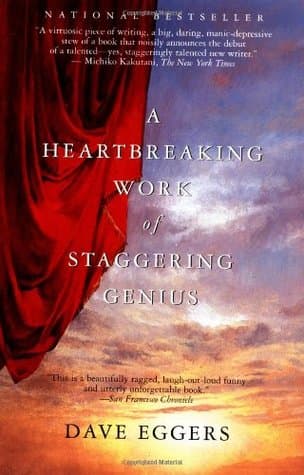
- A Heartbreaking Work of Staggering Genius
Dave Eggers
3.7 (171k) average on GoodreadsLiterary FictionBoth novels feature young protagonists navigating profound family upheaval and personal growth, but their approaches differ significantly. Goldberg's "Bee Season" uses a more traditional narrative structure, albeit with internal shifts in perspective, to delve into the family's intellectual and spiritual crises. Eggers's work, while also deeply personal, is characterized by its experimental structure, meta-commentary, and a more direct, often humorous, engagement with the reader. While both explore the search for meaning in the face of loss, Goldberg's tone is generally more somber and reflective, while Eggers balances profound grief with self-aware irony and an almost journalistic immediacy.
- The Old Man and the Sea
Ernest Hemingway
3.8 (831k) average on GoodreadsLiterary FictionA Cuban fisherman's long struggle with a giant marlin becomes a story of endurance and dignity, now retold for young adults with illustrations, phonetic guides, and writing prompts in Traditional Chinese.
- One Hundred Years of Solitude
Gabriel García Márquez
4.1 (753k) average on GoodreadsLiterary FictionThrough the multi-generational story of the Buendía family, a mythical town deals with the repeating patterns of time, love, and solitude, as the extraordinary mixes with the ordinary.





Enjoyed the summary?
A summary gives you the shape of the book. The book itself has the detail, the examples and the voice.
Find Bee Season on AmazonAs an Amazon Associate, BookBrief earns from qualifying purchases. How we're funded