

Synopsis
Covers the whole plot, including the ending.
- Difficulty
- Medium
- Pacing
- Variable
- Mood
- Atmospheric, Suspenseful, Dark, Resilient, Hopeful
- Read it if
- You love immersive historical fiction with strong female characters facing extreme challenges and a compelling survival story.
- Skip it if
- You prefer light-hearted reads or are sensitive to themes of domestic abuse and trauma.
The Great Alone Plot Summary
Covers the whole plot, including the ending.
A New Beginning in Alaska
In 1974, Ernt Allbright, a Vietnam War POW with PTSD, suddenly moves his wife, Cora, and thirteen-year-old daughter, Leni, from Seattle to a remote homestead in Kaneq, Alaska. Ernt, unstable and prone to violence, sees Alaska as a place to live off the grid and escape his past failures. Leni wants stability and to belong, hoping this move will bring peace to her family. Cora, deeply in love with Ernt despite his unpredictability, follows him. They arrive in the long, sunlit summer days, unprepared for frontier life, but the small, resilient community of Kaneq welcomes them, especially Large Marge and Tom Walker, who help them settle into a run-down cabin.
Learning the Ropes
The Allbrights quickly realize how challenging their new life is. Their cabin lacks basic amenities, and they have no experience with hunting, fishing, or gardening. Large Marge, a strong and generous local, teaches Cora and Leni essential survival skills like canning, hunting, and identifying edible plants. Tom Walker, a quiet but kind neighbor, helps Ernt with repairs and offers advice, though Ernt's pride often conflicts with it. Leni finds a mentor in Large Marge and a sense of belonging among the other children, especially Matthew Walker, Tom's son, with whom she becomes close. Despite the physical difficulties, the summer months bring a fragile sense of hope and community.
Winter's Descent and Ernt's Decline
As the brutal Alaskan winter brings darkness and isolation, Ernt's mental state worsens. His PTSD symptoms increase, leading to more frequent and violent outbursts toward Cora and Leni. He becomes paranoid, convinced that outsiders are threats and that his family is betraying him. The long hours of darkness and extreme cold make him more unstable, turning the once hopeful homestead into a prison of fear. Cora tries desperately to calm him, often enduring his rage, while Leni learns to anticipate and avoid his moods. She finds comfort in her growing connection with Matthew, who offers a brief break from her terrifying home life.
A Life of Abuse and Secrecy
The cabin becomes a place of conflict, with Ernt's abuse escalating physically and emotionally. Cora, caught in the abuse cycle and her misguided love for Ernt, makes excuses for his behavior and tries to protect Leni, often without success. Leni experiences the violence firsthand, learning to be cautious and keep her family's dark secret. She finds small moments of escape and normalcy with Matthew, but these are shadowed by the constant fear of Ernt's discovery and anger. The harsh environment outside mirrors the brutal reality within their home. Leni realizes they are truly alone, with no one to help.
Matthew and Leni's Budding Romance
Despite the constant fear and abuse at home, Leni's friendship with Matthew Walker grows into a deep, tender first love. Matthew, understanding and compassionate, becomes her confidant and her escape. Their shared experiences in the Alaskan wilderness and their youthful innocence create a strong bond. He is her first taste of unconditional love and acceptance, a sharp contrast to the volatile love she sees between her parents. Their relationship, however, is a dangerous secret. Ernt's possessiveness and paranoia would never allow Leni to form such a strong connection outside the family. Their stolen moments together give Leni strength and hope, but also put Matthew in increasing danger.
The Breaking Point
Ernt's mental state continues to decline, fueled by alcohol and paranoia. He becomes more convinced that Cora is having an affair with Tom Walker and that Leni is defying him by seeing Matthew. The tension in the cabin becomes unbearable. One particularly brutal night, Ernt attacks Cora. Leni, seeing the assault, intervenes to protect her mother. In the struggle, a shotgun fires, and Ernt dies. The immediate aftermath is a blur of shock and terror for Leni and Cora, who must cover up the death and deal with the consequences in their isolated world.
The Cover-Up and Flight
After Ernt's death, Cora and Leni are consumed by fear of legal trouble and community judgment. Cora, desperate to protect Leni, takes responsibility for the shooting. They bury Ernt's body in the wilderness and try to flee Alaska, hoping to leave their traumatic past behind. They face immense challenges navigating the harsh landscape and avoiding detection. Their escape shows their resilience and bond, but it is also filled with guilt, fear, and the lingering trauma of their experiences. They leave everything they knew, including Matthew, with whom Leni shares a heartbreaking goodbye.
Life on the Run
Cora and Leni try to build a new life in Seattle, always looking over their shoulders. Cora struggles with her past, turning to alcohol and becoming withdrawn, while Leni tries to find normalcy, attending school and working. Despite their efforts, the trauma of Alaska and the secret of Ernt's death haunt them. Leni grows into a strong, independent young woman, but she carries the scars of her childhood. Years pass, and just as they begin to find a fragile sense of peace, the truth about Ernt's death resurfaces when his remains are discovered. This forces Cora to face the consequences she tried so desperately to outrun. Leni is faced with the agonizing possibility of losing her mother.
The Trial and Reconciliation
Cora is arrested and tried for Ernt's murder. The trial is a harrowing experience for Leni, who must relive her traumatic childhood and testify about the abuse they endured. The community of Kaneq, including Large Marge and Tom Walker, support Cora, testifying to Ernt's violent nature and the impossible conditions the women lived under. Matthew Walker, now an adult, also provides important testimony, confirming Leni's account of the abuse. Through the trial, the truth of their suffering is finally revealed, and Leni can publicly acknowledge the horrors her mother faced. Cora is acquitted, showing the community's understanding and Leni's courageous testimony.
Returning Home
After the trial, Leni, now a photographer, realizes that Alaska is her true home. She returns to Kaneq, drawn by the memories and the resilience of the land and its people. She reconnects with Matthew Walker, and their enduring love rekindles. Leni embraces the wilderness, not as a place of fear, but as a place of strength and belonging. She finds peace in the solitude and beauty of the Alaskan landscape, finally coming to terms with her past and honoring her mother's strength. She builds a life for herself rooted in the values of self-sufficiency and community that she learned as a child, finding her own version of the great alone.
Principal Figures
Leni Allbright
Protagonist
A young girl growing up in the Alaskan wilderness, shaped by her parents' volatile relationship.
Leni is a sensitive, observant, and resilient young girl who navigates a tumultuous childhood marked by her father's PTSD and abuse. Initially naive and hopeful, she yearns for stability and a place to belong. She is fiercely loyal to her mother, Cora, and learns to be self-sufficient and resourceful in the harsh Alaskan environment. Leni develops a deep love for the wilderness and finds solace in nature and her relationship with Matthew Walker. She carries the emotional scars of her past but ultimately emerges as a strong, independent woman.
Relationships: Cora Allbright (Daughter, protector, later her mother's advocate); Ernt Allbright (Daughter, victim of his abuse); Matthew Walker (First love, enduring partner, confidant)
Cora Allbright
Supporting
Leni's mother, deeply devoted to her unstable husband, Ernt, and a victim of his abuse.
Cora is a beautiful, passionate, and tragically devoted woman. Her love for Ernt is a defining characteristic, leading her to endure years of physical and emotional abuse and follow him to the Alaskan wilderness. She is often paralyzed by fear and a misguided sense of loyalty, making excuses for Ernt's behavior. However, she possesses immense inner strength when it comes to protecting Leni, ultimately making the ultimate sacrifice to save her daughter from Ernt's violence. Her journey is one of immense suffering and eventual, hard-won freedom.
Relationships: Leni Allbright (Mother, protector); Ernt Allbright (Wife, victim of his abuse, later his killer)
Ernt Allbright
Antagonist
A Vietnam War POW suffering from severe PTSD, whose volatile nature terrorizes his family.
Ernt is a former Vietnam War POW whose experiences have left him deeply traumatized and unstable. He is charismatic and charming when well, but prone to extreme paranoia, violent outbursts, and unpredictable rage, especially under stress and isolation. He sees Alaska as a fresh start, but the harsh environment only exacerbates his mental illness. His possessiveness and abusive tendencies make him a terrifying figure, trapping Cora and Leni in a cycle of fear and violence. He represents the destructive power of untreated trauma.
Relationships: Cora Allbright (Husband, abuser); Leni Allbright (Father, abuser); Tom Walker (Neighbor, perceived rival)
Matthew Walker
Supporting
Leni's first love and a steadfast source of comfort and support in Alaska.
Matthew is the son of Tom Walker, a kind and resourceful Alaskan native. He is Leni's first friend and love, offering her a beacon of normalcy and tenderness amidst her family's chaos. Matthew is patient, understanding, and deeply caring, providing Leni with emotional support and a sense of belonging. He is skilled in wilderness survival and embodies the resilience and quiet strength of the Alaskan community. His unwavering love and loyalty to Leni play a crucial role in her ability to survive and ultimately heal.
Relationships: Leni Allbright (First love, later partner); Tom Walker (Son); Ernt Allbright (Neighbor, rival for Leni's attention)
Large Marge
Supporting
A formidable and generous matriarch of the Kaneq community.
Large Marge is a strong, independent, and compassionate woman who becomes a surrogate mother figure to Leni and a mentor to Cora. She is a pillar of the Kaneq community, embodying the self-sufficiency and resilience required to survive in Alaska. Marge teaches Leni and Cora essential survival skills, offers practical advice, and provides emotional support, often without direct interference, respecting the independence of others. She is observant and wise, quietly understanding the struggles of the Allbright family.
Relationships: Leni Allbright (Mentor, surrogate mother); Cora Allbright (Mentor, friend)
Tom Walker
Supporting
Matthew's father, a quiet and helpful neighbor to the Allbrights.
Tom Walker is a respected and reclusive member of the Kaneq community. He is quiet, observant, and deeply connected to the land. He offers practical help and advice to Ernt, despite Ernt's often prickly demeanor, and shows quiet kindness to Cora and Leni. He is a loving father to Matthew and represents the stoic, self-reliant nature of true Alaskans. Ernt's paranoia often targets Tom, leading to dangerous misunderstandings. Tom's calm presence and unwavering support, particularly during Cora's trial, are vital.
Relationships: Matthew Walker (Father); Ernt Allbright (Neighbor, perceived rival); Cora Allbright (Neighbor, friend)
Earl
Supporting
A pragmatic and loyal friend to Ernt, who later helps Leni.
Earl is one of Ernt's closest friends from the Vietnam War and is also suffering from PTSD. He is initially loyal to Ernt, accompanying him to Alaska and sharing some of his paranoia. However, Earl is less volatile than Ernt and possesses a more grounded sense of right and wrong. He eventually realizes the danger Ernt poses to his family and, despite his loyalty, offers Leni a lifeline when she needs it most. He represents the complex bonds of brotherhood forged in war and the difficult choices faced when those bonds are tested by abuse.
Relationships: Ernt Allbright (War friend, comrade); Leni Allbright (Helper, protector)
Jeb
Mentioned
A former acquaintance of Ernt's from the war.
Jeb is a fellow veteran and friend of Ernt's from the Vietnam War. He is mentioned early in the book as someone Ernt tries to reconnect with, highlighting Ernt's struggle to adapt to civilian life and his limited social circle outside of Cora and Leni. Jeb's presence emphasizes Ernt's isolation and the lingering impact of his wartime experiences on his relationships.
Relationships: Ernt Allbright (War friend)
Themes & Insights
Survival and Resilience
The novel explores survival against the brutal Alaskan wilderness and against the internal threat of domestic abuse. Leni and Cora must learn practical skills to withstand the elements – hunting, fishing, canning, building – and also develop emotional resilience to endure Ernt's escalating violence. The community of Kaneq shows how self-sufficiency and mutual aid are essential for survival in such a harsh environment. Leni's journey highlights the human ability to adapt, overcome trauma, and find strength in the face of great difficulty, as seen when she returns to Alaska to reclaim her past.
“There was no one to save them but themselves.”
The Nature of Love
Kristin Hannah examines different kinds of love: the destructive, obsessive love between Cora and Ernt, the pure and healing first love between Leni and Matthew, and the protective, sacrificial love between a mother and daughter. Cora's love for Ernt, though initially passionate, becomes a trap, blinding her to his abuse and keeping her captive. In contrast, Leni and Matthew's love gives strength and hope, representing freedom and genuine connection. The fierce, unwavering love between Leni and Cora ultimately drives them to extreme measures, showing its power to both sustain and destroy, and eventually, to heal.
“Love was a choice, a decision. Not a feeling.”
Trauma and Its Aftermath
The lasting impact of trauma, especially PTSD from war, is central to the story through Ernt Allbright's character. His untreated mental illness makes him abusive and paranoid, showing how unaddressed trauma can devastate an individual and their family. Leni and Cora also experience significant trauma from Ernt's abuse, leading to long-term psychological effects. The novel explores how trauma can appear as fear, secrecy, and difficulty forming healthy relationships, but also how acknowledging and confronting it, as Leni does, can lead to healing and freedom.
“Some scars never healed. They just went dormant.”
Freedom vs. Captivity
Alaska is presented as a land of ultimate freedom, where one can live off the grid and escape societal rules. However, for Leni and Cora, it becomes a prison, as Ernt's abuse and the isolation of the wilderness trap them. The theme explores the paradox that true freedom is not just about physical location but also about emotional and psychological freedom. Leni's eventual return to Alaska, no longer fearing it but embracing its challenges, signifies her personal freedom from her past trauma and her choice to make the wilderness her true home, on her own terms.
“The wildness in him was a cage she was trapped in.”
The Power of Place
The Alaskan wilderness is not just a setting but a character, deeply influencing the Allbright family's destiny. Its beauty, harshness, and isolation amplify both hope and despair within the family. The 'Great Alone' challenges its inhabitants, forcing them to confront their inner demons and discover their deepest strengths. For Leni, Alaska becomes a place of both terror and deep connection, ultimately representing home and self-discovery. The extreme environment acts as a test, building resilience and shaping identities.
“Alaska was a place that would make you or break you.”
Plot Devices & Literary Techniques
Foreshadowing
Hints and clues about future events, particularly Ernt's escalating violence.
The novel employs subtle and overt foreshadowing from the beginning. Ernt's unpredictable moods, his history of losing jobs, and Cora's constant attempts to soothe him all hint at the domestic violence that will consume their lives. Descriptions of the Alaskan winter's isolating darkness often parallel the psychological darkness descending upon the family. For example, early descriptions of Ernt's 'wildness' and his intense stares foreshadow his later paranoid outbursts and the danger he poses. This device builds tension and a sense of impending doom for the reader.
Symbolism of the Wilderness
The Alaskan landscape as a reflection of human nature and emotional states.
The Alaskan wilderness serves as a powerful symbol throughout the novel. It represents both freedom and captivity, beauty and danger, resilience and fragility. The long, sunlit summer days symbolize hope and new beginnings, while the brutal, dark winters mirror Ernt's psychological decline and the family's isolation and fear. The untamed nature of Alaska reflects the untamed, volatile nature within Ernt, and conversely, the resilience of the land inspires the resilience found in Leni and Cora. The wild animals, particularly bears, also symbolize raw power and unpredictable danger.
First-Person Limited Perspective (Leni)
The story is primarily told through Leni's eyes, filtering events through her experience.
The narrative is primarily delivered through Leni Allbright's perspective, allowing readers to intimately experience her fear, hope, and eventual strength. This limited viewpoint intensifies the emotional impact of Ernt's abuse, as readers witness it through the eyes of a child trying to make sense of a terrifying world. It also highlights Leni's personal growth and understanding of her parents' complex relationship. By focusing on Leni's internal world, the author emphasizes the psychological toll of trauma and her journey of self-discovery and healing.
The Great Alone (Title Significance)
The title refers to the immense solitude and self-reliance demanded by the Alaskan wilderness.
The title 'The Great Alone' functions as a significant plot device, encapsulating the central themes of the novel. It refers to the physical isolation of the Alaskan wilderness, which forces self-sufficiency but also amplifies the family's internal struggles. More profoundly, it speaks to the emotional isolation experienced by Leni and Cora in their abusive home, where they are 'alone' in their suffering. Ultimately, for Leni, it transforms into a symbol of her hard-won independence and her ability to thrive in solitude, finding strength and belonging in the vastness of Alaska on her own terms.
The Great Alone Quotes
“Living in Alaska, you were always waiting for something to go wrong. And so often, it did.”
“Love was not a thing, it was a a feeling, and it didn't come with a guarantee.”
“The wilderness was a place of beauty and danger, of solace and fear. It was everything.”
“There was no such thing as a bad kid, just a kid who needed someone to believe in them.”
“Maybe that was what love was: knowing someone completely and still wanting them.”
“In Alaska, you don't just survive. You live.”
“Home wasn't a place, it was a feeling. It was people.”
“You couldn't outrun your past, not really. It always found a way to catch up.”
“Sometimes, the only way to save yourself was to walk away from the people you loved.”
“The quiet of the woods was a balm, a place where she could breathe.”
“Fear was a powerful thing, capable of making people do terrible things, and sometimes, wonderful ones.”
“Hope was a dangerous thing, but sometimes it was the only thing you had.”
“There were some wounds that never truly healed, only scarred over.”
“The world was a beautiful, terrible place, and it didn't care if you lived or died.”
Quiz
10 questions on the plot and the characters. Each answer comes with a short explanation.
Question 1
What year do Ernt Allbright and his family move to Alaska?
- 1969
- 1974
- 1978
- 1982
Show answer
B. 1974 The book explicitly states the setting as Alaska, 1974, when the family moves.
Question 2
What is Ernt Allbright's background that contributes to his volatile mental state?
- He was a commercial fisherman who lost his boat.
- He was a former POW from the Vietnam War.
- He suffered a traumatic brain injury in a logging accident.
- He was a disgraced politician who lost everything.
Show answer
B. He was a former POW from the Vietnam War. The synopsis clearly states Ernt is a 'former POW' from the Vietnam War, which is a key factor in his struggles.
Question 3
What is the primary motivation for Leni to hope for a better future in Alaska?
- She wants to become a professional musher.
- She is desperate for a place to belong and stability.
- She dreams of discovering gold in the Alaskan wilderness.
- She wants to escape her school bullies.
Show answer
B. She is desperate for a place to belong and stability. The text states Leni 'is desperate for a place to belong,' indicating her desire for stability and acceptance.
Question 4
How does the community in Alaska initially react to the Allbrights' arrival?
- They are hostile and unwelcoming to outsiders.
- They offer generosity and support, despite the Allbrights' lack of preparation.
- They ignore the family, leaving them to fend for themselves.
- They immediately try to convince them to leave Alaska.
Show answer
B. They offer generosity and support, despite the Allbrights' lack of preparation. The synopsis mentions 'the generosity of the locals make up for the Allbrights’ lack of preparation and dwindling resources,' showing initial support.
Question 5
What specific environmental factor contributes to Ernt's deteriorating mental state as winter approaches?
- Extreme blizzards that isolate them completely.
- The long, sunlit days causing insomnia.
- The darkness and eighteen hours of night.
- Severe food shortages due to harsh weather.
Show answer
C. The darkness and eighteen hours of night. The text states, 'as winter approaches and darkness descends on Alaska, Ernt’s fragile mental state deteriorates... blanketed in eighteen hours of night.'
Question 6
What does Cora's character reveal about her priorities?
- Her primary goal is to establish a successful business in Alaska.
- She will do anything and go anywhere for the man she loves.
- She prioritizes her daughter Leni's education above all else.
- Her main focus is on preserving her own independence.
Show answer
B. She will do anything and go anywhere for the man she loves. The synopsis explicitly states, 'Her mother, Cora, will do anything and go anywhere for the man she loves,' highlighting her devotion to Ernt.
Question 7
The description 'Unpredictable. Unforgiving. Untamed.' at the beginning of the summary primarily describes what aspect of the story?
- The personality of Ernt Allbright.
- The nature of the Alaskan frontier.
- The Allbright family's dysfunctional dynamic.
- The challenges of homesteading in general.
Show answer
B. The nature of the Alaskan frontier. These adjectives are used to set the tone for Alaska, described as 'America’s last true frontier,' emphasizing its wild and challenging nature.
Question 8
What is the 'terrible truth' Leni and her mother learn as winter progresses and Ernt's mental state worsens?
- That the cabin is not structurally sound for the winter.
- That they are on their own and must save themselves from the threats within.
- That they have run out of all their food supplies.
- That a dangerous wild animal is stalking their cabin.
Show answer
B. That they are on their own and must save themselves from the threats within. The summary states, 'Leni and her mother learn the terrible truth: they are on their own. In the wild, there is no one to save them but themselves,' referring to the internal threats from Ernt.
Question 9
The phrase 'Soon the perils outside pale in comparison to threats from within' refers specifically to what contrast in the story?
- The difference between human-made dangers and natural disasters.
- The challenges of the Alaskan wilderness versus the danger posed by Ernt's deteriorating mental state and abusive behavior.
- The initial kindness of the locals compared to later betrayals.
- The dangers of isolation versus the risks of community interaction.
Show answer
B. The challenges of the Alaskan wilderness versus the danger posed by Ernt's deteriorating mental state and abusive behavior. This phrase directly contrasts the external dangers of Alaska with the internal danger posed by Ernt's increasingly violent and unpredictable behavior within the family.
Question 10
What overarching theme does Kristin Hannah aim to explore through the Allbright family's experience in Alaska?
- The importance of government regulation in frontier lands.
- The ease of living off the grid with proper preparation.
- Human frailty and resilience, the fight for survival, and the wildness in both man and nature.
- The inevitable failure of utopian communities in harsh environments.
Show answer
C. Human frailty and resilience, the fight for survival, and the wildness in both man and nature. The final paragraph explicitly states the book is 'an unforgettable portrait of human frailty and resilience... about love and loss, the fight for survival, and the wildness that lives in both man and nature.'
The Great Alone FAQ
What prompts the Allbright family's move to Alaska in 1974?
Ernt Allbright, a volatile Vietnam War POW veteran, impulsively decides to move his family off the grid to Alaska after losing yet another job. He believes this frontier life will offer a fresh start and a way to escape his internal demons, despite his family's lack of preparation.
Who are the main characters in 'The Great Alone' and what are their primary roles?
The main characters are Leni Allbright, a thirteen-year-old girl coming of age and narrating the story; her mother, Cora, who is fiercely devoted to Ernt; and her father, Ernt, a troubled veteran whose mental state deteriorates. The story primarily follows Leni's perspective as she navigates her parents' tumultuous relationship and the harsh Alaskan environment.
How does the Alaskan environment initially impact the Allbright family?
Initially, the long, sunlit days and the generosity of the local community in Kaneq offer a sense of hope and belonging, making up for the Allbrights' unpreparedness. However, as winter approaches with its extreme darkness and isolation, the harsh environment exacerbates Ernt's mental instability and isolates the family further.
What challenges do Leni and Cora face as Ernt's behavior deteriorates?
As Ernt's paranoia and violence escalate with the onset of winter, Leni and Cora become increasingly isolated and endangered within their own cabin. They are forced to rely solely on each other for survival against both Ernt's abuse and the unforgiving Alaskan wilderness, realizing they are truly on their own.
What is the significance of the 'Great Alone' title?
The title refers to the vast, untamed wilderness of Alaska, symbolizing both its breathtaking beauty and its inherent dangers and isolation. It also reflects the emotional and physical solitude Leni and Cora experience as they face Ernt's escalating abuse, highlighting their struggle for survival without external help.
How does Matthew Walker become involved with Leni and her family?
Matthew Walker is a local Alaskan boy Leni befriends and falls in love with. He represents a beacon of hope and a connection to a different, safer life for Leni, often providing her with comfort and support amidst her tumultuous home life and Ernt's violence.
What role do the secondary characters, like the residents of Kaneq, play in the story?
The residents of Kaneq, such as Large Marge and Tom Walker, initially offer the Allbrights essential help and a sense of community, teaching them survival skills and demonstrating Alaskan resilience. However, their limitations in intervening in domestic abuse also highlight the isolation Leni and Cora face.
Are there any recurring symbols or motifs related to nature in the book?
The bear is a prominent motif, symbolizing both the untamed danger of Alaska and a primal force. The changing seasons, particularly the contrast between the brief, light-filled summers and the long, dark winters, mirror the family's fluctuating hope and despair, and Ernt's deteriorating mental state.
How does Ernt Allbright's experience as a POW manifest in his behavior?
Ernt's POW experience is central to his psychological decline, leading to severe PTSD, paranoia, and violent outbursts. He struggles with flashbacks, a need for control, and an inability to reintegrate into civilian life, which he projects onto his family and the world around him.
Analyze Cora's psychological motivations for staying with Ernt despite the abuse.
Cora's decision to stay with Ernt is rooted in a deep, almost obsessive love and a desire to 'fix' him, stemming from her own past and insecurity. She often rationalizes his behavior, believing she is the only one who truly understands him, a classic psychological response in abusive relationships.
How does Leni's coming-of-age experience in Alaska shape her identity?
Leni's upbringing in Alaska, marked by extreme hardship and her parents' volatile relationship, forces her to mature rapidly and develop immense resilience. She learns self-reliance, survival skills, and a deep appreciation for the beauty and harshness of nature, which ultimately defines her strength and independence.
What psychological impact does the isolation of off-grid living have on the family?
The extreme isolation of off-grid living in Alaska significantly exacerbates the family's pre-existing issues. For Ernt, it fuels his paranoia and makes his mental health worse; for Cora and Leni, it removes any potential escape routes or external support, trapping them in a cycle of abuse.
Is 'The Great Alone' ultimately a story of hope or despair?
While filled with immense despair and hardship, the story ultimately leans towards hope through Leni's resilience, her ability to love, and her eventual escape to build a life for herself. It emphasizes the enduring human spirit and the possibility of finding strength even after profound trauma.
To what extent is Ernt Allbright a villain, and to what extent is he a victim of his circumstances?
Ernt is a complex character; while his actions are undeniably villainous and abusive, the narrative also portrays him as a victim of untreated PTSD from his POW experience. This doesn't excuse his behavior but offers a tragic context, prompting readers to consider the devastating impact of war on individuals and families.
What commentary does the book make on the 'American frontier' ideal?
The book challenges the romanticized ideal of the American frontier, showing its harsh realities, the struggles of off-grid living, and how it can amplify personal demons rather than solve them. It suggests that while the frontier offers freedom, it also demands immense resilience and can expose profound vulnerabilities.
How does the novel explore the theme of domestic violence?
The novel deeply explores domestic violence through Cora's unwavering loyalty to Ernt, Leni's desperate attempts to protect her mother, and the lack of external intervention in isolated communities. It vividly portrays the cycle of abuse, the psychological toll on victims, and the immense difficulty of escape.
What is the significance of Leni's eventual return to Alaska?
Leni's return to Alaska, after finding success and peace elsewhere, signifies her coming to terms with her past and reclaiming her connection to the land on her own terms. It represents healing and the idea that while her childhood was traumatic, Alaska also shaped her strength and identity in profound ways.
About the author

Kristin Hannah is an American author known for her fiction that often explores themes of love, loss, and resilience. Her notable works include The Nightingale, which tells the story of two sisters in World War II France, and The Great Alone, set in the Alaskan wilderness. Other significant titles in her catalog include Firefly Lane, Winter Garden, Night Road, and Home Front.
Similar books
- Where the Crawdads Sing
Delia Owens
4.5 (975k) average on GoodreadsHistorical FictionFeatures a strong female protagonist surviving in a wild, isolated environment and dealing with a murder mystery.
- Educated
Tara Westover
4.5 (796k) average on GoodreadsBiographyExplores themes of survival, family dysfunction, and a young woman's journey to self-discovery against a harsh backdrop.
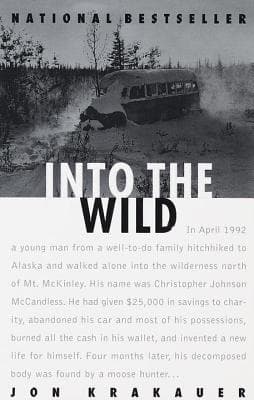
- Into the Wild
Jon Krakauer
3.7 (2k) average on GoodreadsFantasyFocuses on the allure and dangers of living off the grid in the Alaskan wilderness.
- To Kill a Mockingbird
Harper Lee
4.3 (4.5M) average on GoodreadsHistorical FictionIn the 1930s Jim Crow South, Harper Lee writes about racial injustice, moral growth, and the quiet courage of a lawyer father, Atticus Finch, as seen through his young daughter's eyes.
- The Great Gatsby
F. Scott Fitzgerald
3.9 (3.8M) average on GoodreadsHistorical FictionIn the opulent Roaring Twenties, a mysterious millionaire's lavish parties hide his desperate, tragic pursuit of a lost love, exposing the emptiness within the American Dream.
- Pride and Prejudice
Jane Austen
4.3 (3M) average on GoodreadsHistorical FictionIn a society focused on status and money, Elizabeth Bennet navigates love and pride, challenging Mr. Darcy and social expectations to find true affection.





Enjoyed the summary?
A summary gives you the shape of the book. The book itself has the detail, the examples and the voice.
Find The Great Alone on AmazonAs an Amazon Associate, BookBrief earns from qualifying purchases. How we're funded