
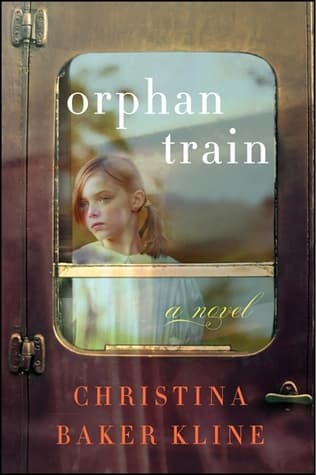
Synopsis
Covers the whole plot, including the ending.
- Difficulty
- Easy
- Pacing
- Moderate
- Mood
- Poignant, Reflective, Hopeful, Heartwarming
- Read it if
- You enjoy poignant historical fiction about resilience, intergenerational friendship, and the search for identity.
- Skip it if
- You prefer fast-paced thrillers or stories without elements of childhood hardship and loss.
Orphan Train Plot Summary
Covers the whole plot, including the ending.
A Troubled Beginning
Seventeen-year-old Molly Ayer lives with her foster parents, Ralph and Dina, on Mount Desert Island, Maine. She is close to leaving the foster care system and has a history of shoplifting. After being caught stealing a copy of 'Jane Eyre,' Molly gets a choice: juvenile detention or community service. Her social worker, Jack, arranges for her to help ninety-one-year-old Vivian Daly clean her cluttered attic. Molly initially dislikes the task, feeling it is a punishment that keeps her from her boyfriend, Gino. She sees Vivian as just another 'old lady' and struggles with her own feelings of being abandoned and an outsider.
The Attic's Secrets Unfold
Molly begins working in Vivian's dusty attic, filled with trunks and boxes of memories. Vivian, a sharp but quiet woman, at first gives little information about the items. Molly finds old photographs, children's clothing, and a small, carved wooden bird. As Molly sorts through the belongings, she becomes more curious about Vivian's life, sensing a significant story behind the ordinary objects. This early sorting creates a connection between the two women, as Molly's own feeling of not belonging matches the quiet history she finds in Vivian's home.
Vivian's Early Life: Niamh Power
Vivian starts telling her past, revealing her original name was Niamh Power. She was born in Ballyshannon, Ireland, and moved to New York City with her family in 1929 to escape poverty. They lived in a crowded apartment on the Lower East Side. Niamh describes the difficulties of immigrant life, the close community, and how the Great Depression affected them. She especially loved her younger siblings, Maisie and James, and her parents. This first sharing is hard for Vivian, as it forces her to face long-hidden memories of happiness and later loss.
The Tragic Fire and Orphanage
Tragedy strikes Niamh's family when a tenement fire kills her parents and younger siblings, Maisie and James. Niamh is the only survivor, left alone and traumatized. She is then placed in the New York Foundling Hospital, an orphanage. The experience is harsh and impersonal; they take her identity, cut her hair, and give her a new name, Dorothy. This time marks a deep loss of self and safety, leaving her scarred and afraid to form attachments. Molly listens closely, recognizing the pain of separation and loss that reminds her of her own experiences.
The Orphan Train Journey
In 1930, at age ten, Niamh (now Dorothy) is put on an 'orphan train' going west from New York City. She is one of hundreds of children sent to new homes in the Midwest. The journey is long and confusing, filled with fear. The children are shown on stages in various towns, picked by families like livestock. Dorothy holds onto a small, carved wooden bird, a gift from her father, as her only link to her past. This journey shows the impersonal nature of the orphan train system and the children's vulnerability.
A Series of Unfortunate Homes
Dorothy's experiences with foster families are mostly bad. Her first placement is with the Groves, a farming family in Minnesota who use her for labor and treat her poorly. Mrs. Groves is especially harsh, and Dorothy is forced to work hard in terrible conditions. She eventually runs away and is then placed with the Byrnes, a wealthier but equally uncaring family who treat her as a servant. The constant mistreatment and lack of true affection make her believe she is unlovable and unwanted. This leads her to hide her true self and adapt to survive.
The Nielsen Family and a Glimmer of Hope
Dorothy's situation gets a little better when she is placed with the Nielsen family in Minnesota. Mrs. Nielsen, a kind woman, gives Dorothy some stability and teaches her to sew. Dorothy connects with the family's young daughter, Jeanne. She also meets Hans, a young man who shows her real affection. For the first time, Dorothy experiences a sense of belonging and love. However, her past trauma and fear of being abandoned make it hard for her to fully accept this happiness. She struggles with her identity, still using the name 'Dorothy' while wanting to be 'Niamh.'
Loss and a New Identity: Vivian Daly
A series of events leads Dorothy to leave the Nielsens. She becomes pregnant by Hans, but he dies in a logging accident. Devastated and alone, she gives birth to a daughter, May. Unable to care for her, Dorothy makes the heartbreaking choice to place May in an orphanage. This decision reflects her own abandonment and causes her deep guilt. She then moves to Maine, looking for a fresh start and a complete break from her past. At this point, she legally changes her name to Vivian Daly, hoping to let go of the painful memories of Niamh and Dorothy and create a new, unburdened identity.
Molly's Growing Empathy and Search for Answers
As Vivian shares her story, Molly's early doubt turns into deep understanding. She sees the similarities between Vivian's experiences and her own feelings of being an outsider and facing an uncertain future. Molly's art project, a quilt made from Vivian's old clothes, becomes a visible sign of their connected lives. Inspired by Vivian's strength, Molly decides to help Vivian search for information about her daughter, May, and her siblings, Maisie and James. This search gives Molly purpose and a connection beyond her own immediate problems.
Reunion and Reconciliation
Through Molly's research, they find that May was adopted and now lives in California as Sarah. Vivian and Sarah are happily reunited, a touching moment of peace for Vivian. They also learn that Vivian's sister, Maisie, survived the fire and lived a full life, adding another layer of emotional healing. Molly's relationship with her foster parents, Ralph and Dina, also gets much better. She decides to stay with them, finding a stable home and a sense of family she had long wanted. She continues her education, following her passion for art.
A New Chapter for Both
Vivian, having faced and accepted her past, finds peace and a new sense of purpose through her reunited family. She continues her relationship with Sarah and her grandchildren. Molly, no longer defined by her difficult past, thrives in her new home with Ralph and Dina. She applies to college to study art. Her experiences with Vivian have shaped her views and given her a deeper understanding of strength and the importance of history. Their unexpected friendship changes both women, showing how sharing stories can heal old hurts and create new paths.
Principal Figures
Vivian Daly (Niamh Power/Dorothy)
Protagonist
A resilient Irish immigrant and former orphan train rider who carries the weight of her past.
Vivian is a ninety-one-year-old woman living a quiet life in Maine, but her attic holds the painful memories of her childhood as Niamh Power, an Irish immigrant orphaned in New York City, and later, Dorothy, an orphan train rider. She is initially reserved and carries deep emotional scars from abandonment, loss, and hardship. Despite her advanced age, she possesses a sharp mind and a profound capacity for resilience. Her journey involves slowly opening up about her traumatic past, a process that ultimately leads to healing and reconciliation.
Relationships: Molly Ayer (mentor-mentee, then deep friendship, surrogate grandmother); Maisie Power (younger sister, lost in childhood); James Power (younger brother, lost in childhood); Hans (first love, father of her daughter); May/Sarah (daughter, given up for adoption)
Molly Ayer
Protagonist
A Penobscot Indian foster teenager struggling with her identity and future.
Molly is a seventeen-year-old Penobscot Indian caught in the foster care system, feeling like an outsider and grappling with a history of minor legal troubles. She is intelligent and artistic but guarded, using sarcasm and defensiveness as coping mechanisms for her feelings of abandonment and uncertainty about her future. Her community service assignment with Vivian Daly initially feels like a punishment, but it becomes a catalyst for her own growth and understanding. She is driven by a desire for belonging and a stable future, and her journey with Vivian helps her find both.
Relationships: Vivian Daly (mentee, then deep friendship, surrogate granddaughter); Ralph (foster father); Dina (foster mother); Gino (boyfriend); Jack (social worker)
Ralph
Supporting
Molly's foster father, a kind and stable presence.
Ralph is Molly's foster father, a quiet and patient man who works as a lobsterman. He provides a stable and loving home for Molly, despite her initial resistance. He is less expressive than his wife, Dina, but his actions consistently demonstrate his care and commitment to Molly. He represents a sense of groundedness and unwavering support, offering Molly the security she desperately needs.
Relationships: Molly Ayer (foster father); Dina (husband)
Dina
Supporting
Molly's foster mother, who initially struggles to connect with Molly.
Dina is Molly's foster mother, a well-meaning but sometimes exasperated woman who struggles to understand and connect with Molly's rebellious nature. She is concerned about Molly's future and tries to guide her, but their relationship is often strained by Molly's defensiveness. Over time, as Molly's attitude softens through her work with Vivian, Dina's efforts to connect become more successful, and she grows into a truly supportive maternal figure.
Relationships: Molly Ayer (foster mother); Ralph (wife)
Hans
Supporting
Vivian's first love and the father of her daughter, May.
Hans is a kind and gentle young man of Norwegian descent whom Dorothy (Vivian) meets while living with the Nielsen family. He is her first love and provides her with a brief but profound experience of genuine affection and connection. Their relationship is a beacon of hope and happiness in Dorothy's otherwise difficult youth, representing a chance for a normal life and family. His tragic death leaves a lasting impact on Vivian, contributing to her decision to give up May and change her identity.
Relationships: Vivian Daly (love interest, father of her child)
May/Sarah
Supporting
Vivian's daughter, given up for adoption, who is later reunited with her.
May is Vivian's daughter, born out of her relationship with Hans. Vivian makes the heartbreaking decision to give her up for adoption due to her own difficult circumstances. She is later discovered by Molly and Vivian living under the name Sarah in California. Sarah is a compassionate and understanding woman who, despite her own history of abandonment, is open to reconnecting with her birth mother. Her reunion with Vivian brings closure and healing to both women.
Relationships: Vivian Daly (daughter)
Jack
Supporting
Molly's social worker, who offers her support and guidance.
Jack is Molly's social worker, a patient and understanding figure who genuinely cares about Molly's well-being and future. He is the one who arranges Molly's community service with Vivian, seeing it as an opportunity for her, rather than just a punishment. He acts as a steady hand, guiding Molly through the system and advocating for her, demonstrating a belief in her potential when others might have given up.
Relationships: Molly Ayer (social worker)
Mrs. Nielsen
Supporting
A kind foster mother who offers Dorothy a brief period of stability.
Mrs. Nielsen is one of Dorothy's (Vivian's) foster mothers in Minnesota. She is a gentle, compassionate woman who teaches Dorothy to sew and provides her with a sense of maternal care and stability that she had lacked in previous placements. Her home represents a brief respite from hardship and a glimpse of what a loving family could be. Her kindness leaves a lasting positive impression on Vivian, even after she leaves their home.
Relationships: Vivian Daly (foster mother)
Themes & Insights
Identity and Belonging
The novel deeply explores how people create their identity, especially when they are displaced or orphaned. Both Vivian (Niamh/Dorothy) and Molly struggle with who they are and where they belong. Vivian, stripped of her name and family, constantly adapts to new identities to survive, losing touch with her true self. Molly, a Penobscot Indian in a mostly white foster system, feels like an outsider. Their journey together helps them reclaim their heritage and find a sense of belonging, whether it is Vivian reconnecting with her Irish roots and lost family or Molly finding a stable home and purpose with Ralph and Dina, and her Penobscot heritage.
“How do you know who you are when you've been so many different people?”
Resilience and Survival
Both Vivian and Molly show great strength when facing hardship. Vivian goes through extreme poverty, losing her entire family, the dehumanizing orphan train, and multiple abusive foster homes. Despite these traumas, she finds ways to survive, adapt, and eventually build a quiet life. Molly, too, has faced the instability of the foster care system and her own inner problems. Their stories highlight how people can endure deep suffering, adapt to change, and find strength to overcome past traumas, often through unexpected connections and the power of sharing one's story.
“I was a survivor. It was a badge I wore with honor.”
The Power of Storytelling and Memory
Vivian telling her life story to Molly is key to the healing process for both characters. Vivian's memories, at first locked away and painful, become a source of freedom as she shares them. Molly's role as listener and recorder helps Vivian process her past and gives Molly a new view on her own problems. The objects in Vivian's attic, like the wooden bird and old photographs, prompt these memories, showing how physical items can hold powerful stories. This theme emphasizes how sharing personal histories can connect generations, build understanding, and lead to deep self-discovery.
“Stories are what make us human. It's how we understand ourselves and others.”
Loss and Grief
Loss is a common theme, experienced by both main characters in different ways. Vivian suffers the terrible loss of her birth family, her name, her cultural identity, and later, her first love and her daughter. Molly experiences the ongoing loss of a stable family, a consistent home, and a clear sense of her heritage within the foster system. The novel explores the long-term effects of these losses, including lasting grief, guilt, and fear of abandonment. The healing process involves acknowledging these losses, grieving them, and finding ways to include them in one's life story without being consumed by them, eventually leading to acceptance and peace.
“Sometimes you have to give up to get. Sometimes you have to give up what you want most to get what you need most.”
Plot Devices & Literary Techniques
Dual Narrative Structure
Alternating chapters between Vivian's past and Molly's present.
The novel employs a dual narrative structure, alternating between Vivian Daly's historical account of her life as an orphan train rider in the 1930s and Molly Ayer's contemporary story as a foster teenager in Maine. This allows for a direct comparison of their experiences, highlighting parallels in themes like abandonment, identity, and resilience across different eras. The past narrative enriches the present, providing context and emotional depth to Vivian's character, while Molly's present-day journey drives the plot forward and eventually helps uncover Vivian's lost history.
Symbolism of the Wooden Bird
A carved wooden bird representing connection to the past and hope.
The small, intricately carved wooden bird, a gift from Niamh's (Vivian's) father, serves as a powerful symbol throughout the novel. It is her only tangible link to her birth family and her Irish heritage after the fire. It represents memory, connection to one's roots, and a glimmer of hope amidst despair. Vivian holds onto it through all her hardships, and it becomes a testament to her enduring spirit and the importance of holding onto fragments of one's past, even when everything else is lost. Molly also finds meaning in this object, recognizing its significance to Vivian.
The Attic
A physical space filled with objects that unlock memories and secrets.
Vivian's attic functions as more than just a storage space; it is a repository of her past, a physical manifestation of her suppressed memories and hidden identity. As Molly helps Vivian sort through the trunks and boxes, each object – photographs, clothing, letters – acts as a trigger for Vivian's storytelling. The attic thus becomes a symbolic space for excavation, discovery, and ultimately, healing. It represents the journey into the subconscious and the process of confronting and making peace with one's history.
The Quilt
A collaborative art project symbolizing the weaving together of two lives and their shared history.
Molly's community service project involves creating a quilt from Vivian's old clothes and fabric scraps. This quilt becomes a powerful symbol of the merging of their two lives and their shared experiences of displacement and resilience. Each piece of fabric holds a story from Vivian's past, and as Molly stitches them together, she is not only creating a physical object but also metaphorically weaving together their narratives, finding connections between their seemingly disparate lives. The quilt represents healing, connection, and the creation of something beautiful and meaningful from fragmented pieces.
Orphan Train Quotes
“The thing about history is that it’s not a straight line. It’s a messy, winding road, and sometimes you have to go back to understand where you’re going.”
“Home wasn’t a place, it was a feeling. A feeling of belonging, of being loved.”
“We are all made of stories. Some of them are true, some of them are not, but they are all part of who we are.”
“Sometimes the best way to find yourself is to get lost.”
“The past is never really gone. It’s always there, lurking in the shadows, waiting to be remembered.”
“You can’t choose your family, but you can choose how you let them affect you.”
“Even the most broken things can be mended, sometimes even made stronger than before.”
“It’s funny how the things we try to forget are often the ones that define us the most.”
“Kindness, like a ripple, spreads outwards, touching lives in ways we can never fully comprehend.”
“The world is full of people who will tell you what you can’t do. But you are the only one who gets to decide what you will do.”
“Sometimes the greatest strength is found in vulnerability.”
“Every person has a story worth telling, if only someone is willing to listen.”
“It’s not about where you come from, but where you’re going, and who you become along the way.”
Quiz
10 questions on the plot and the characters. Each answer comes with a short explanation.
Question 1
What is Molly Ayer's community service position that keeps her out of juvie?
- Working at a local library
- Helping an elderly woman clean out her home
- Volunteering at an animal shelter
- Assisting at a soup kitchen
Show answer
B. Helping an elderly woman clean out her home Molly's community service involves helping Vivian Daly clean out her attic, which is a crucial plot point for their friendship to develop.
Question 2
What is Vivian Daly's age at the beginning of the novel when Molly starts helping her?
- 75 years old
- 82 years old
- 91 years old
- 100 years old
Show answer
C. 91 years old The synopsis explicitly states Vivian is a '91-year-old woman with a hidden past as an orphan-train rider.'
Question 3
What is Vivian Daly's origin before she became an orphan-train rider?
- She was an English immigrant orphaned in Boston.
- She was a German immigrant orphaned in Chicago.
- She was an Irish immigrant orphaned in New York City.
- She was an Italian immigrant orphaned in Philadelphia.
Show answer
C. She was an Irish immigrant orphaned in New York City. The synopsis states that Vivian was 'A young Irish immigrant orphaned in New York City' before being put on an orphan train.
Question 4
What specific Native American tribe does Molly Ayer belong to?
- Cherokee
- Navajo
- Penobscot
- Sioux
Show answer
C. Penobscot The text clearly identifies Molly as 'A Penobscot Indian,' highlighting her background as an outsider.
Question 5
What is the primary reason Molly is facing 'aging out' of the child welfare system and potential expulsion from her foster home?
- She committed a serious crime.
- She is nearly eighteen and close to the system's age limit.
- Her foster parents no longer want to care for her.
- She refused to attend school.
Show answer
B. She is nearly eighteen and close to the system's age limit. The synopsis mentions, 'Just months from 'aging out' of the child welfare system, and close to being kicked out of her foster home,' indicating her age is the primary factor.
Question 6
What is the significant parallel Molly discovers between her own life and Vivian's?
- Both were raised in wealthy families.
- Both were talented artists from a young age.
- Both are outsiders raised by strangers with unanswered questions about their past.
- Both lived on the coast of Maine for most of their lives.
Show answer
C. Both are outsiders raised by strangers with unanswered questions about their past. The text states, 'A Penobscot Indian, she, too, is an outsider being raised by strangers, and she, too, has unanswered questions about the past,' directly drawing this parallel.
Question 7
What does Vivian keep hidden in trunks in her attic, which Molly helps her sort through?
- Old financial documents
- Vestiges of her turbulent past
- A collection of antique dolls
- Unsent letters to her family
Show answer
B. Vestiges of her turbulent past The synopsis states, 'in her attic, hidden in trunks, are vestiges of a turbulent past,' which are the memories and items Molly helps her uncover.
Question 8
What is the ultimate outcome of Molly helping Vivian find answers to the mysteries of her past?
- Vivian becomes wealthy from rediscovered heirlooms.
- They both move away from Maine.
- It ultimately frees both Vivian and Molly.
- Molly gets adopted by Vivian.
Show answer
C. It ultimately frees both Vivian and Molly. The synopsis concludes: 'answers that will ultimately free them both,' highlighting the reciprocal healing and resolution found through their shared journey.
Question 9
Which of the following is NOT explicitly mentioned as a key theme in 'Orphan Train' according to the provided text?
- Upheaval and resilience
- The pursuit of romantic love
- Second chances
- Unexpected friendship
Show answer
B. The pursuit of romantic love The text lists 'upheaval and resilience, of second chances, of unexpected friendship, and of the secrets we carry' as themes, but does not mention romantic love.
Question 10
What concept determined the destinies of the hundreds of children, including Vivian, who were put on the orphan trains to the Midwest?
- Their academic achievements
- Their physical strength
- Luck and chance
- Pre-arranged adoptions
Show answer
C. Luck and chance The synopsis states Vivian 'was put on a train to the Midwest with hundreds of other children whose destinies would be determined by luck and chance.'
Orphan Train FAQ
What is the central premise of 'Orphan Train'?
The novel centers on the unlikely friendship between Molly Ayer, a troubled Penobscot teenager aging out of the foster care system, and Vivian Daly, a 91-year-old woman with a hidden past as an Irish immigrant orphan train rider. Their shared experiences of displacement and searching for identity forge a deep bond as Molly helps Vivian sort through her attic and memories.
Who is Molly Ayer and what are her struggles?
Molly Ayer is a nearly eighteen-year-old Penobscot Indian girl on the verge of aging out of the foster care system. She faces expulsion from her current foster home and potential juvenile detention due to shoplifting, leading her to a community service assignment helping Vivian Daly. Molly struggles with feeling like an outsider, a lack of belonging, and unresolved questions about her own heritage and family.
Who is Vivian Daly and what is her background?
Vivian Daly, born Niamh Power in Ireland, is a 91-year-old woman living a quiet life in Maine. Her past is marked by tragedy: she immigrated to New York City, was orphaned after her family died in a tenement fire, and was subsequently put on an orphan train to the Midwest, experiencing multiple foster homes and hardship before finding stability.
What is the significance of the 'orphan train' in the story?
The orphan train is the pivotal historical event that shapes Vivian's entire life. It represents the forced displacement, separation from siblings, and uncertain futures faced by thousands of children from the East Coast sent to the Midwest between 1854 and 1929. For Vivian, it symbolizes loss, resilience, and the search for identity and belonging.
How does the relationship between Molly and Vivian develop?
Their relationship begins as a reluctant community service assignment for Molly but quickly evolves into a deep, intergenerational friendship. As Molly helps Vivian sort through her possessions, Vivian shares her life story, and Molly finds parallels to her own experiences of being an outsider and searching for a home. They become confidantes, offering each other comfort and understanding.
What is the true significance of the 'box of buttons' Vivian keeps?
Vivian's box of buttons is a powerful symbol of her fragmented past and resilience. Each button represents a person or significant event in her life, collected from clothing worn by those she knew, or from places she lived. It's her personal timeline, a tangible connection to lost memories and people, and a way she keeps her past alive.
What happened to Vivian's siblings, especially Maisie?
Vivian, then Niamh, was separated from her younger sister, Maisie, when they were placed on the orphan train. Maisie was adopted by a family in Minnesota, but Vivian never saw her again, a loss that haunted her for decades. One of Molly's crucial contributions is helping Vivian finally locate Maisie and other family members through research.
Are there any subtle connections between Molly's Penobscot heritage and Vivian's Irish background?
Yes, both Molly and Vivian come from cultures with strong oral traditions and a deep connection to their ancestry, even when displaced. Molly's Penobscot heritage, like Vivian's Irish roots, highlights a history of forced assimilation and loss of identity. Their shared experience of being 'outsiders' and 'orphaned' from their original cultures creates a powerful, unspoken bond.
What role does Jack, Molly's boyfriend, play in her journey?
Jack serves as a steady, supportive presence in Molly's often tumultuous life. He is understanding of her struggles and encourages her to open up and connect with Vivian. His unwavering loyalty and love provide Molly with a sense of stability and belonging that she often lacks in her foster care environment, helping her to heal and trust.
How does Vivian's experience with the orphan train affect her adult relationships and sense of trust?
Vivian's early trauma on the orphan train, experiencing multiple rejections and betrayals by foster families, deeply impacts her ability to trust and form lasting attachments. She often keeps people at a distance, fearing abandonment, and struggles to reveal her true past, even to those closest to her, until Molly helps her confront these buried memories.
What psychological impact does the 'aging out' process have on Molly?
The 'aging out' process creates immense anxiety and a sense of urgency for Molly. Knowing she will soon be without the official support of the child welfare system intensifies her feelings of instability and fear for her future. This pressure drives her initial resistance and subsequent desire to find answers and a secure place for herself.
How does the act of 'telling her story' contribute to Vivian's healing?
The act of recounting her life story to Molly, often for the first time in detail, is profoundly therapeutic for Vivian. It allows her to process decades of suppressed trauma, grief, and guilt. By sharing her memories, she validates her experiences, acknowledges her past, and begins to integrate her younger self (Niamh) with her present self (Vivian), leading to a sense of peace and closure.
What is the psychological significance of Molly's initial shoplifting?
Molly's shoplifting, specifically of a book, can be interpreted as a cry for help and a manifestation of her feelings of powerlessness and desire for something she feels she lacks – knowledge, connection, or a sense of control. It's a defiant act against a system that has often failed her, and a symbol of her internal turmoil and search for identity.
Is 'Orphan Train' primarily a story about finding family, or about finding oneself?
While the book features both Vivian and Molly finding lost family members, it is primarily a story about finding oneself. Both protagonists embark on journeys of self-discovery, learning to reconcile their past traumas with their present identities. The discovery of family members is a catalyst and a consequence of their internal healing and self-acceptance.
How does the novel challenge traditional notions of 'family'?
The novel profoundly challenges traditional notions of family by showing that blood ties are not the only, or even primary, determinant of belonging and love. Both Molly and Vivian experience multiple foster families, some kind, some cruel, and ultimately find 'family' in unexpected places, through chosen bonds like their friendship, and with Jack's family, emphasizing the importance of connection and care over biology.
What is the author's message about resilience in the face of adversity?
Christina Baker Kline emphasizes the extraordinary resilience of the human spirit, particularly in children. Vivian's survival through immense hardship, from the tenement fire to multiple difficult foster homes, and Molly's perseverance through the foster care system, demonstrate an innate capacity to adapt, endure, and ultimately heal, even after profound trauma and loss.
How does the novel explore themes of identity and belonging?
Identity and belonging are central themes explored through both protagonists. Vivian struggles to reconcile her Irish past (Niamh) with her American present (Vivian) and the various identities forced upon her. Molly grapples with her Penobscot heritage and her place in a system that often strips her of her cultural identity. Both find a sense of belonging through their shared story and by accepting their true selves.
Could the ending be considered too neat or idealistic given the harsh realities depicted?
Some readers might find the resolution, particularly the successful tracing of Vivian's family and Molly's stable future, somewhat idealistic given the harsh realities of the orphan train and foster care systems. However, the author balances this with the preceding decades of struggle and the deep emotional work both characters undertake, suggesting that while healing is possible, it is hard-won and not without lasting scars.
About the author

Christina Baker Kline is a critically acclaimed author known for her historical fiction. Her novel "Orphan Train" was a runaway bestseller, spending over 100 weeks on The New York Times Best Seller list and selling millions of copies worldwide. Kline's work often explores themes of belonging, family, and the past, as seen in her other notable novels like "A Piece of the World."
Similar books
- The Alice Network
Kate Quinn
4.3 (245k) average on GoodreadsHistorical FictionFeatures strong female protagonists, historical settings, and themes of resilience and uncovering hidden pasts.
- The Giver of Stars
Jojo Moyes
4.3 (183k) average on GoodreadsHistorical FictionExplores themes of female friendship, overcoming adversity, and historical settings with strong emotional depth.
- Before We Were Yours
Lisa Wingate
4.4 (376k) average on GoodreadsHistorical FictionDeals with the difficult history of stolen children and their journeys, similar to the 'Orphan Train' theme.
- No Great Mischief
Alistair MacLeod
4.0 (10k) average on GoodreadsLiterary FictionWhile both novels explore the Irish immigrant experience and the weight of history, Orphan Train is arguably more direct and less elliptical in its narrative structure, making it more accessible for younger readers or those new to historical fiction. MacLeod's work is often more literary and dense.
- To Kill a Mockingbird
Harper Lee
4.3 (4.5M) average on GoodreadsHistorical FictionIn the 1930s Jim Crow South, Harper Lee writes about racial injustice, moral growth, and the quiet courage of a lawyer father, Atticus Finch, as seen through his young daughter's eyes.
- The Great Gatsby
F. Scott Fitzgerald
3.9 (3.8M) average on GoodreadsHistorical FictionIn the opulent Roaring Twenties, a mysterious millionaire's lavish parties hide his desperate, tragic pursuit of a lost love, exposing the emptiness within the American Dream.


Enjoyed the summary?
A summary gives you the shape of the book. The book itself has the detail, the examples and the voice.
Find Orphan Train on AmazonAs an Amazon Associate, BookBrief earns from qualifying purchases. How we're funded