

Synopsis
Covers the whole plot, including the ending.
- Difficulty
- Medium
- Pacing
- Moderate
- Mood
- Reflective, Romantic, Dramatic, Evocative
Bella Poldark Plot Summary
Covers the whole plot, including the ending.
A New Generation at Nampara
The novel opens in 1818. Ross and Demelza Poldark live peacefully at Nampara, though they are older and have faced many past struggles. Their adult children are finding their own ways. Jeremy, still recovering from injuries and engineering setbacks, finds new purpose. Clowance is happily married to Stephen Carrington and busy with her family. Bella, the youngest, is a passionate young woman focused on music. Her talent is clear, and her goals go beyond Cornwall. The family feels both comfort and tension as they watch their children make choices that will shape their futures, especially Bella's artistic ambitions.
Bella's Musical Ambitions Take Flight
Bella Poldark's musical talent, particularly her singing and piano playing, grows stronger. Her local performances draw much attention, convincing her and her parents that she should train and perform professionally in London. Ross, at first hesitant due to concerns about the theater's morally unclear world, supports his daughter's passion. Demelza fully supports Bella. In London, Bella quickly joins a lively, yet difficult, artistic community. She begins formal training, meeting both supportive teachers and critical rivals, all while learning to navigate city life and a growing career.
Encounters in the Capital
In London, Bella's social circle expands greatly. She makes friends with other aspiring artists and musicians, but also meets less trustworthy people. A key figure in her life is Christopher Havergal, a charming and influential theater manager. Havergal is immediately taken by Bella's talent and beauty, offering her chances that could advance her career. However, he has a mysterious and worldly air that worries Ross and Demelza. Bella, excited by her new life and the promise of success, is drawn to Havergal's charm and the access he provides to the top levels of the music world, despite her parents' quiet warnings.
Jeremy's Engineering Endeavors
While Bella pursues her artistic dreams, Jeremy Poldark works on his own career. Still affected by past engineering failures and their physical toll, he tries to find a new project where he can contribute meaningfully. He gets involved in a new mining venture, using his knowledge to improve efficiency and safety. This work gives him purpose and a chance to prove himself, to himself and his family. His journey is one of quiet determination, facing practical work challenges and slowly rebuilding his confidence, a stark contrast to Bella's more public career.
The Warleggan Shadow Lingers
Despite time passing and the focus on the younger generation, the old feud between the Poldarks and Sir George Warleggan continues. Sir George, now older and somewhat weaker, still holds grudges and looks for ways to hurt the Poldarks. His son, Valentine, plays a more active role in the family's business, often showing his father's cold ambition. Direct conflicts are fewer, but the Warleggans' financial and social power in Cornwall remains a constant, if background, threat. Their presence reminds everyone of past hostilities and the lasting class divide in the Poldark story, sometimes intersecting with the Poldark children's lives.
Bella's European Tour
Bella's talent gains international recognition, leading to a European tour arranged by Christopher Havergal. She performs in famous venues across France, Italy, and Germany, charming audiences and critics. This time marks a high point in Bella's career, but also exposes her to the sophisticated, often morally complex, world of European high society and theater. She experiences the excitement of fame and artistic success, but also the loneliness of constant travel and performance pressure. Her relationship with Havergal deepens, becoming more complicated as she deals with her feelings for him amidst the glamour and temptations of her new life, far from Nampara's stability.
The Price of Fame
As Bella's fame grows, so do the difficulties. She faces jealousy from other performers, manipulative managers, and the constant demands of a public career. The pressure takes a toll, and she begins to question the true cost of her ambition. Her relationship with Christopher Havergal, at first exciting, becomes more and more complex. She notices aspects of his character that concern her – his practicality, his occasional ruthlessness, and his evasiveness. Bella realizes that the theater world, while offering great artistic satisfaction, also demands personal sacrifices and can be a place of superficiality. She longs for realness amidst the artificiality.
Jeremy's Personal Life
Away from Bella's dramatic life, Jeremy Poldark experiences a quieter, but equally important, personal change. He meets and falls in love with a gentle and intelligent woman, whose stability and understanding provide a needed anchor in his life. This relationship gives him a sense of peace and contentment he lacked in his earlier, more troubled years. It is a time of emotional healing and growth for Jeremy, showing that happiness can be found in quieter ways than his sister's grand artistic successes. His love story highlights the strength of quiet companionship and mutual respect.
Ross and Demelza Reflect
Back in Cornwall, Ross and Demelza watch their children's lives with a mix of pride, concern, and quiet thought. They discuss Bella's career, Jeremy's new love, and the Poldark family's ongoing story. Their talks are full of the wisdom of their years, remembering their own struggles and successes. They consider the changing world, the fading of old ways, and the new challenges for the next generation. Their lasting love and partnership are the family's foundation, providing constant strength and guidance. They accept that their children must make their own way, even if those paths lead far from Nampara.
A Choice for Bella
Bella reaches a turning point in her life and career. The demands of her professional life, the complexities of her relationship with Christopher Havergal, and a growing desire for a simpler, more authentic life all come together. She must decide whether to continue on the path of international stardom, with all its compromises, or to seek a different kind of fulfillment. This decision involves not only her artistic future but also her personal happiness and the life she truly wants. It is a moment of deep self-reflection and a choice that will shape the rest of her life, either bringing her back to her origins or pushing her further into the world.
The Enduring Legacy
The novel ends with the Poldark family finding a new balance. Bella makes a choice that combines her artistic passion with her desire for personal happiness, showing maturity and a deeper understanding of herself. Jeremy settles into a fulfilling life, both professionally and personally. Ross and Demelza, recognizing time's passage and the changes it brings, find contentment in their lasting love and the lives their children have built. The story concludes the Poldark saga, showing that while individual lives and ambitions may take them far, the bonds of family, love, and Cornwall's rugged beauty remain constant, shaping their destinies and ensuring their legacy.
Bella Poldark Characters
Bella Poldark
Protagonist
Ross and Demelza's talented, ambitious youngest daughter.
Bella is a vibrant, headstrong young woman with an extraordinary gift for music, particularly singing and playing the piano. She possesses a passionate artistic temperament, a strong will, and a thirst for experience that drives her to pursue a career on the stage. Intelligent and sensitive, she is also capable of great resilience and independent thought. She navigates the complex world of London and European theatre with a blend of naiveté and burgeoning worldly wisdom, learning to discern true value from superficial glamour.
Relationships: Ross Poldark (Father-daughter, initially protective, then supportive); Demelza Poldark (Mother-daughter, encouraging and understanding); Christopher Havergal (Romantic interest, professional mentor, complex and challenging); Jeremy Poldark (Brother-sister, affectionate and supportive)
Ross Poldark
Supporting
The stalwart, principled patriarch of Nampara.
Ross is an aging but still formidable squire, known for his integrity, independence, and deep love for his family and Cornwall. He carries the weight of past experiences and the responsibilities of his estate, but his primary concern now is the well-being and future of his children. While initially cautious about Bella's theatrical ambitions, his love and respect for her talent ultimately lead him to support her. He provides a steady, moral compass for the family, often reflecting on the changing times and the legacy they will leave behind.
Relationships: Demelza Poldark (Husband-wife, enduring love and partnership); Bella Poldark (Father-daughter, protective and eventually supportive); Jeremy Poldark (Father-son, guiding and understanding); Sir George Warleggan (Lifelong rival and antagonist)
Demelza Poldark
Supporting
The warm, spirited matriarch of Nampara.
Demelza remains the heart of the Poldark family, known for her warmth, compassion, and indomitable spirit. She is a keen observer of human nature and possesses an innate understanding of her children's individual personalities and aspirations. More open-minded than Ross, she wholeheartedly encourages Bella's musical talents and provides emotional support to all her children. Her practical wisdom and unwavering optimism help guide the family through both triumphs and challenges, making her a beloved and central figure in their lives.
Relationships: Ross Poldark (Wife-husband, enduring love and partnership); Bella Poldark (Mother-daughter, encouraging and understanding); Jeremy Poldark (Mother-son, supportive and loving)
Jeremy Poldark
Supporting
Ross and Demelza's son, finding his path in engineering and love.
Jeremy is a thoughtful and somewhat reserved young man, still recovering from past professional setbacks and injuries. He is intelligent and dedicated, with a keen interest in engineering and mining. His journey in the novel is one of quiet perseverance and self-discovery, as he works to rebuild his confidence and find a meaningful purpose. Unlike Bella's more flamboyant path, Jeremy's story is grounded in practical endeavors and the search for personal contentment, culminating in finding love and stability.
Relationships: Ross Poldark (Son-father, respectful and seeking guidance); Demelza Poldark (Son-mother, loving and appreciative); Bella Poldark (Brother-sister, affectionate and supportive)
Christopher Havergal
Supporting
A charismatic and influential theatre impresario.
Christopher Havergal is a sophisticated and worldly figure in the London and European theatre scene. He is charming, intelligent, and possesses a keen eye for talent, immediately recognizing Bella's potential. He becomes her mentor and the orchestrator of her success, but also a complex romantic interest. Havergal is pragmatic, occasionally ruthless, and adept at navigating the intricate world of show business. There's an enigmatic quality to him, and while he genuinely supports Bella's career, his personal motivations and affections are not always entirely transparent.
Relationships: Bella Poldark (Professional mentor, romantic interest, complex and challenging)
Sir George Warleggan
Antagonist
The Poldarks' long-standing, bitter rival.
Sir George Warleggan, though older and his direct influence somewhat diminished, remains the Poldarks' enduring antagonist. He is a proud, humorless, and ambitious man driven by a deep-seated resentment towards Ross Poldark and everything he represents. His primary motivation is to maintain and expand his family's wealth and social standing, often at the expense of others. Though his active machinations are fewer, his presence and the actions of his son, Valentine, ensure that the Warleggan shadow continues to loom over the Poldark family.
Relationships: Ross Poldark (Lifelong rival and antagonist); Valentine Warleggan (Father-son, transmitting ambition and rivalry)
Valentine Warleggan
Supporting
Sir George's ambitious and often ruthless son.
Valentine Warleggan is the inheritor of his father's ambition and many of his less desirable traits. He is intelligent, driven, and possesses a cold pragmatism that mirrors Sir George's. He actively manages the Warleggan family's interests and financial dealings, often seeking to expand their influence. While not as directly confrontational as his father once was with Ross, Valentine represents the continued threat and opposition to the Poldarks in the changing social and economic landscape of Cornwall.
Relationships: Sir George Warleggan (Son-father, inheriting ambition and rivalry); Poldark Family (Rival, competitor)
Clowance Poldark Carrington
Supporting
Ross and Demelza's eldest daughter, happily settled.
Clowance is Ross and Demelza's eldest daughter, now happily married to Stephen Carrington and busy with her own family. While not central to the main plot, she represents the stable, settled aspect of the Poldark family, providing a contrast to Bella's more adventurous path. She embodies the domestic contentment and familial continuity that is also a core part of the Poldark saga, showcasing a different kind of fulfillment than her younger sister seeks.
Relationships: Stephen Carrington (Wife-husband, happily married); Ross Poldark (Daughter-father, loving); Demelza Poldark (Daughter-mother, loving); Bella Poldark (Sister-sister, affectionate)
Bella Poldark Themes
The Price of Ambition and Fame
The novel explores the appeal and downsides of a grand artistic career. Bella's journey shows the sacrifices needed for success, including personal compromises, loneliness, and exposure to manipulation. It questions if the excitement of fame is worth losing privacy, authenticity, and risking exploitation. The theme highlights the conflict between artistic achievement and personal happiness, making characters weigh public praise against the quiet joys of a more grounded life.
“The applause was intoxicating, a drug more potent than any elixir, yet in the quiet hours after, a hollowness often remained, a whisper of what might be lost.”
Family Legacy and Generational Change
This theme examines how the Poldark family's values, struggles, and hopes are passed down and changed by the next generation. Ross and Demelza reflect on their past, while their children create new paths that both honor and differ from their parents' experiences. The novel contrasts Bella's modern, global ambitions with Jeremy's more traditional, yet equally difficult, efforts. It explores how family bonds continue amidst changing social times and individual desires, showing how the Poldark name carries both history and a future, adapting to the early 19th century.
“They were Poldarks, for good or ill, and though the world shifted beneath their feet, something of Nampara's granite heart would always beat within them.”
Art vs. Authenticity
Bella's story deeply explores the conflict between the polished, often artificial world of performance and the search for genuine self-expression and personal truth. The theater demands a certain role, a mask, which can hide one's true self. Bella struggles to maintain her authenticity while meeting career demands and audience expectations. This theme questions if true art can thrive without personal integrity and explores how difficult it is to remain true to oneself where image and illusion often outweigh genuine feeling and connection.
“To sing with all one's soul was one thing; to sell that soul, piece by piece, to an admiring public, quite another.”
Love, Choice, and Compromise
The novel explores different forms of love—family, romantic, and self-love—and the difficult choices people must make in these relationships. Bella's romantic relationships, especially with Christopher Havergal, show the complexities of love when mixed with ambition and career. Jeremy's quieter love story, in contrast, emphasizes stability and shared values. The theme looks into the compromises in any deep relationship, the sacrifices made for love, and the ultimate need to choose a path that matches one's deepest desires, even if it means giving up certain opportunities or expectations.
“Love, like a Cornish mine, could yield great riches, but it also demanded labor, and sometimes, a willingness to leave certain veins unworked.”
Plot Devices & Literary Techniques
Bildungsroman (Coming-of-Age)
Bella's journey of self-discovery.
The novel largely functions as a Bildungsroman, focusing on Bella Poldark's psychological and moral growth from a talented but somewhat naive young woman to a mature artist and individual. Her experiences in London and Europe, her encounters with various characters, and her professional triumphs and challenges all contribute to her development. She learns about the complexities of the world, the nature of fame, and ultimately, what truly constitutes happiness and fulfillment for herself, leading to a significant personal choice at the story's climax.
Foil Characters
Contrasting lives for thematic depth.
The novel uses foil characters to highlight thematic elements and character traits. Jeremy Poldark's quiet pursuit of engineering and stable personal life serves as a foil to Bella's flamboyant, public artistic career, emphasizing different paths to fulfillment. Similarly, the enduring, grounded love of Ross and Demelza acts as a foil to the more complex, potentially transactional relationship between Bella and Christopher Havergal, underscoring the varying forms and challenges of love and partnership across generations and social spheres.
Setting as Character
Cornwall's enduring influence.
Cornwall, with its rugged landscapes, mining heritage, and strong community, acts as more than just a backdrop; it is a fundamental character in the Poldark saga. For Bella, it represents home, roots, and a source of authenticity that she often longs for amidst the artificiality of the theatre world. For Jeremy, it's the ground for his practical endeavors. The contrast between the wild, natural beauty of Cornwall and the sophisticated, sometimes corrupt, urban centers of London and Europe highlights the Poldark family's enduring connection to their heritage and the values it instills.
Quiz
10 questions on the plot and the characters. Each answer comes with a short explanation.
Question 1
Who is the author of the "Bella Poldark" book?
- Jane Austen
- Winston Graham
- Charles Dickens
- George Eliot
Show answer
B. Winston Graham The author's name is explicitly stated as Winston Graham.
Question 2
In what region of England is the Poldark family primarily located?
- Yorkshire
- Devon
- Cornwall
- Cumbria
Show answer
C. Cornwall The text mentions 'Nampara on the rugged Cornish coast'.
Question 3
Which member of the Poldark family takes center stage in this novel?
- Ross
- Demelza
- Jeremy
- Bella
Show answer
D. Bella The description states 'with Bella taking center stage'.
Question 4
What is the primary genre of the "Bella Poldark" book?
- Science Fiction
- Mystery
- Historical Fiction
- Fantasy
Show answer
C. Historical Fiction The genre is listed as 'Historical Fiction'.
Question 5
What other significant part of Bella's life is mentioned in the novel's description?
- Her involvement in politics
- Her career as a painter
- Her work in the theater
- Her travels as a diplomat
Show answer
C. Her work in the theater The text mentions 'the wildly exciting world of the theater in London and Europe'.
Question 6
Who is the long-standing antagonist of the Poldark family mentioned in the description?
- Lord Byron
- Sir George Warleggan
- Captain Bligh
- Mr. Darcy
Show answer
B. Sir George Warleggan The description explicitly names 'humorless landowner Sir George Warleggan' as their feud-feuding antagonist.
Question 7
What decade saw the Poldark novels adapted into a highly popular TV series?
- 1960s
- 1970s
- 1980s
- 1990s
Show answer
B. 1970s The text states 'in the 1970s were made into the most widely watched TV series of the decade'.
Question 8
What does the description imply about the time period of the novel 'Bella Poldark'?
- The late 18th century
- The mid-19th century
- The early 19th century
- The late 19th century
Show answer
C. The early 19th century The text specifies the setting as 'at the beginning of the 19th century' and the years '1818-1820'.
Question 9
The Poldark family feud is described as being with whom?
- A rival mining family
- The local church hierarchy
- A humorless landowner
- A group of rebellious farmers
Show answer
C. A humorless landowner The text states 'their long-standing feud with humorless landowner Sir George Warleggan'.
Question 10
What does the phrase 'Nampara on the rugged Cornish coast' suggest about Bella's home?
- It is a bustling port city
- It is an isolated and scenic location
- It is a luxurious estate inland
- It is a barren and desolate region
Show answer
B. It is an isolated and scenic location 'Rugged Cornish coast' implies a wild, natural, and potentially isolated setting, contrasting with the 'wildly exciting world of the theater'.
Bella Poldark FAQ
What is Bella Poldark about?
Bella Poldark is the twelfth and final novel in Winston Graham's Poldark saga. It focuses on Bella Poldark, the daughter of Ross and Demelza, as she navigates her life between the rugged Cornish coast and the exciting world of theater in London and Europe during the early 19th century.
Who is Bella Poldark?
Bella Poldark is the talented and headstrong daughter of Ross and Demelza Poldark. In this final novel, she takes center stage, exploring her own ambitions and experiences.
What time period does Bella Poldark cover?
The novel is set between 1818 and 1820, during the Regency era in Cornwall and London, at the beginning of the 19th century.
Is Bella Poldark the last book in the Poldark series?
Yes, Bella Poldark is the twelfth and final novel in Winston Graham's original Poldark saga, bringing the family's story to a close.
Where does Bella Poldark take place?
The story unfolds in two main settings: Nampara, the Poldark family home on the rugged Cornish coast, and the vibrant, exciting world of the theater in London and Europe.
What are the main themes in Bella Poldark?
The novel explores themes of independence, ambition, the arts (specifically theater), family relationships, and the contrasts between provincial life in Cornwall and the cosmopolitan world of Europe.
How does Bella Poldark compare to the earlier Poldark books?
While continuing the Poldark family saga, Bella Poldark shifts the focus to Bella herself and her individual journey, contrasting with earlier books that might have centered more on Ross and Demelza's early lives and struggles.
Is this book suitable for new readers of the Poldark series?
As the final book, it's best enjoyed after reading the preceding eleven novels to fully appreciate the character development and the conclusion of the overarching family story. However, Bella's story is also a significant part of the saga.
What is the role of the theater in Bella Poldark?
The theater represents a world of excitement, opportunity, and perhaps a different kind of social sphere for Bella. It serves as a backdrop for her personal growth and exploration beyond her Cornish roots.
Does Bella Poldark tie up all loose ends from the series?
As the final novel, Bella Poldark aims to provide a sense of closure for the Poldark family's long-running saga, concluding their stories and bringing the narrative arc to a satisfying end.
About the author

Winston Graham was a British author known for his historical fiction, particularly the Poldark series. His notable works include "Ross Poldark," "The Angry Tide," "The Stranger from the Sea," and "Bella Poldark," which explore themes of love, conflict, and social change in 18th-century Cornwall. The Poldark series has gained significant popularity and has been adapted into television dramas.
Similar books
- Outlander
Diana Gabaldon
4.2 (824k) average on GoodreadsFantasy"Bella Poldark" shares with "Outlander" a strong sense of historical immersion and a focus on character-driven narrative. Both series excel at creating vivid settings and exploring the complexities of love and family across generations. However, "Outlander" incorporates fantasy elements (time travel) that are absent in "Bella Poldark," which remains firmly grounded in realistic historical fiction. Gabaldon's heroines, like Claire Fraser, often exhibit a more overt modern sensibility, whereas Bella's struggles are more subtly reflective of her specific historical constraints.
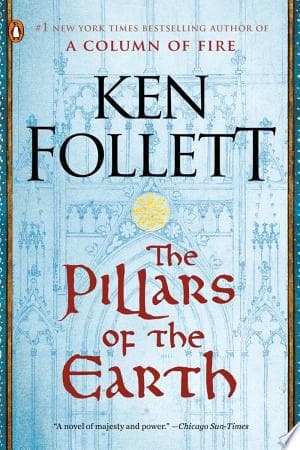
- The Pillars of the Earth
Ken Follett
4.3 (649k) average on GoodreadsFantasyWhile both "Bella Poldark" and "The Pillars of the Earth" are epic historical novels, their scope and focus differ significantly. Follett's work is a sprawling saga centered around the construction of a cathedral, covering vast social, political, and economic landscapes, with characters serving somewhat as conduits for these larger historical forces. "Bella Poldark," in contrast, is more intimately focused on the personal journey and emotional development of a single character and her immediate family, set against a detailed but less encompassing historical backdrop. Graham prioritizes psychological depth and interpersonal relationships over grand historical events.
- To Kill a Mockingbird
Harper Lee
4.3 (4.5M) average on GoodreadsHistorical FictionIn the 1930s Jim Crow South, Harper Lee writes about racial injustice, moral growth, and the quiet courage of a lawyer father, Atticus Finch, as seen through his young daughter's eyes.
- The Great Gatsby
F. Scott Fitzgerald
3.9 (3.8M) average on GoodreadsHistorical FictionIn the opulent Roaring Twenties, a mysterious millionaire's lavish parties hide his desperate, tragic pursuit of a lost love, exposing the emptiness within the American Dream.
- Pride and Prejudice
Jane Austen
4.3 (3M) average on GoodreadsHistorical FictionIn a society focused on status and money, Elizabeth Bennet navigates love and pride, challenging Mr. Darcy and social expectations to find true affection.
- Angels & Demons
Dan Brown
3.9 (2.7M) average on GoodreadsThrillerA Harvard symbologist races through Rome's ancient sites, deciphering cryptic clues to unmask the Illuminati and stop a vengeful plot to destroy the Vatican with a stolen antimatter weapon.





Enjoyed the summary?
A summary gives you the shape of the book. The book itself has the detail, the examples and the voice.
Find Bella Poldark on AmazonAs an Amazon Associate, BookBrief earns from qualifying purchases. How we're funded