
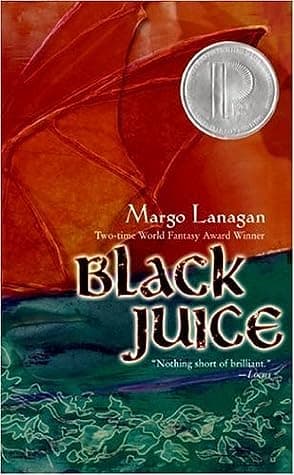
Synopsis
Covers the whole plot, including the ending.
- Difficulty
- Medium
- Pacing
- Moderate
- Mood
- Dark, unsettling, thought-provoking, atmospheric, melancholic
Black Juice Plot Summary
Covers the whole plot, including the ending.
Singing My Sister Down
In a stark, unnamed community, Leah is condemned to death by drowning for an unknown offense. Her family, including her younger sister, must take part in the ritual. They sing to Leah as she is slowly lowered into a pit of black, tar-like liquid, a 'black juice' believed to cleanse her. The sister describes the painful process, the community's quiet acceptance, and her own mixed feelings of grief, fear, and duty. The public act is central to their culture, showing the harsh justice and shared involvement in their society.
Sweet Pippit
Pippit lives in a village terrorized by a monster that demands children as sacrifices. She is one of the 'chosen' children, marked for eventual sacrifice, and lives in constant dread. The story explores how this looming fate affects the children and the adults raising them, caught between love and the brutal necessity of tradition. Pippit's interactions with other children and her family show their desperate attempts to find joy and normal life in a world overshadowed by a horrific, unavoidable ritual.
Red Nose Day
This story follows a group of children, including the main character, as they hunt mythical 'gremlins' in a post-apocalyptic or decaying city. The gremlins are grotesque but also strangely appealing. The hunt ends in a grim festival, 'Red Nose Day,' where the children show their kills and participate in other unsettling customs. The story looks at the children's desensitization to violence and their unique, often disturbing, understanding of a world where innocence is twisted by harsh realities.
Wooden Bride
In a village surrounded by a vast, aware forest, a young man must create a 'wooden bride' – a life-sized, jointed doll made from forest wood – as an offering to calm the forest spirit. The forest is a powerful, dangerous entity that demands tribute and can both support and destroy the villagers. Building the bride is a difficult and mystical process, blurring creation and sacrifice. The story examines human weakness against nature's power, the weight of tradition, and the strange, close relationship between the villagers and their formidable environment.
Earthly Uses
Two sisters have a unique, almost magical ability to change organic matter, specifically animal flesh. One sister, more practical and perhaps ruthless, uses this power for 'earthly uses,' making strange, functional, and sometimes disturbing living objects. The other sister is more hesitant and conflicted about their gift. The story explores the ethical questions of their power, the limits of creation, and the sisters' different views on their place in the world. It shows the unsettling beauty and horror of their abilities and the moral choices they face.
House of the Many
A young woman is chosen to join the 'House of the Many,' a mysterious home where people live in a shared connection with a collective consciousness or entity. She loses her individual identity as she merges with the 'Many,' becoming part of a larger, shared mind. The story explores individuality versus collective identity, the nature of consciousness, and the strange appeal and terror of losing oneself in a greater whole. Her journey is one of gradual absorption, revealing the deep and unsettling results of such a union.
My Lord's Man
A young man serves a powerful, unpredictable lord who keeps a terrifying, possibly supernatural, creature as a pet. The servant lives in constant fear and precarious survival, as he must cater to the lord's whims and avoid the anger of both master and beast. The story depicts a feudal society filled with cruelty and power imbalances. The servant's inner struggle, his observations of the lord's tyranny, and his desperate attempts to remain human in a dehumanizing environment are central to the story.
Perpetual Light
A community lives in constant daylight, lit by an unceasing, mysterious light source that deeply affects their environment and bodies. The light prevents true darkness, distorts time, and may even change their biology. The story explores the psychological and physical effects of living without night, the community's adaptation to this unique condition, and their attempts to understand or control the 'perpetual light.' It looks at themes of natural order disrupted, isolation, and the human ability to adapt to extreme situations.
Rite of Spring
In a world where some children are born with wings, a brutal ritual takes place during a 'Rite of Spring' where these wings are harvested. The story focuses on a young winged girl and her family as they prepare for this inevitable and painful event. The story highlights the contrast between the beauty and wonder of the wings and the harsh reality of their removal, which is ingrained in their culture. It explores sacrifice, the loss of innocence, and the complex emotions surrounding a tradition that is both sacred and horrific.
Yowlinin
A young boy is part of a family or community that ritually hunts 'Yowlinin,' a creature described as both animalistic and spiritual, deeply connected to their land and traditions. The boy struggles with the morality and necessity of this hunt, feeling a growing empathy for the creature while also bound by his family's expectations and ancient customs. The story explores the conflict between tradition and individual conscience, the relationship between humans and the natural world, and the spiritual weight of their actions in a harsh, unforgiving environment.
Black Juice Characters
Leah's Sister
Protagonist
Observer and participant in her sister's ritual drowning.
The unnamed younger sister from 'Singing My Sister Down' is the primary narrator and emotional core of the story. She is a reluctant participant in her community's brutal justice, forced to sing as her sister Leah is submerged. Her internal monologue reveals a complex mix of grief, fear, loyalty, and a chilling acceptance of her culture's harsh ways. She is a child caught between innate compassion and the overwhelming pressure of tradition, making her a poignant figure of innocent complicity.
Relationships: Leah (Sister, victim); Community (Forced participant, cultural member)
Pippit
Protagonist
A 'chosen' child awaiting sacrifice to a village monster.
Pippit, from 'Sweet Pippit,' is a young girl living under the shadow of an inevitable sacrifice to a monstrous entity. Despite this terrifying fate, she maintains a degree of childhood innocence and curiosity, seeking small joys and connections in her grim world. Her character embodies the resilience of the human spirit even in the face of absolute despair, and her internal thoughts reveal the psychological toll of her impending doom, tempered by a strange, almost resigned acceptance.
Relationships: Parents (Loving but resigned); Other 'chosen' children (Fellow victims, friends)
Gremlin Hunter (Red Nose Day)
Protagonist
A child participating in a ritualistic hunt for mythical creatures.
This unnamed child protagonist from 'Red Nose Day' is a member of a group of children who hunt 'gremlins' for a macabre festival. The character is portrayed as desensitized to violence and death, reflecting the harsh realities of their world. They display a blend of childlike enthusiasm for the hunt and a disturbing normalcy regarding the grotesque, highlighting how environment shapes morality and perception. Their perspective offers a chilling glimpse into a lost innocence.
Relationships: Other children (Hunting companions, peers)
Wooden Bride Maker
Protagonist
A young man tasked with crafting an offering for a sentient forest.
The protagonist of 'Wooden Bride' is a young man charged with the sacred and perilous task of creating the 'wooden bride.' He is a craftsman, deeply connected to his village's traditions and the powerful, demanding forest. His character embodies the burden of responsibility and the intricate relationship between humanity and nature, demonstrating both fear and reverence for the wild. He is a conduit for his community's appeasement of the forest, representing their desperate need for survival.
Relationships: Forest (Demanding entity, source of life and threat); Village elders (Superiors, instructors)
The Lord's Man
Protagonist
A servant navigating the dangerous court of a cruel lord.
The unnamed servant in 'My Lord's Man' is a young man living in constant fear under the tyranny of his lord and the lord's monstrous pet. He is a survivor, observant and cautious, trying to maintain his dignity and life in a brutal environment. His character highlights themes of power, subjugation, and the small acts of resistance or self-preservation that can occur even in oppressive systems. He represents the common person caught in the whims of the powerful.
Relationships: The Lord (Master, oppressor); The Beast (Threat, manifestation of the Lord's power)
The Winged Girl
Protagonist
A child facing the ritualistic removal of her wings.
The unnamed winged girl from 'Rite of Spring' is a poignant figure of innocence marked for sacrifice. Her character represents the beauty and vulnerability of childhood in a world that demands painful rituals. Her impending 'harvest' of wings is a central point of emotional tension, highlighting the conflict between natural wonder and cultural brutality. She embodies the tragic loss of potential and the enduring strength of the human spirit facing an unavoidable, painful fate.
Relationships: Family (Loving, but bound by tradition)
Yowlinin Hunter Boy
Protagonist
A young boy conflicted by his family's traditional hunting ritual.
This unnamed boy from 'Yowlinin' is a young protagonist grappling with the moral implications of his family's ancestral hunt. He feels a growing empathy for the spiritual creatures they pursue, questioning the necessity of the tradition while also being deeply ingrained in its practice. His internal conflict reflects the tension between individual conscience and communal duty, and his character explores the complexities of environmental ethics and spiritual connection to the land.
Relationships: Family (Instructors, enforcers of tradition); Yowlinin (Prey, spiritual entity)
The Perpetual Light Community
Supporting
A collective adapting to an eternal light source.
While not a single character, the community in 'Perpetual Light' acts as a collective character. They represent humanity's capacity to adapt to extreme and unnatural conditions, developing unique customs, beliefs, and even physical adaptations to their world without darkness. They are both victims and beneficiaries of the light, their lives shaped entirely by its presence. Their collective experience highlights themes of isolation, the disruption of natural cycles, and the psychological impact of constant illumination.
Relationships: The Perpetual Light (Environmental force, primary influencer)
Black Juice Themes
The Brutality of Tradition and Ritual
Many stories in 'Black Juice' show how traditions, often violent or cruel, control the lives of individuals. These rituals are not random acts, but core parts of community identity and survival, even when they involve horrifying sacrifices or dehumanizing acts. Characters are often trapped by these old customs, showing both their involvement and their inner fight against them. This theme explores the psychological effects of inherited brutality.
“We sang her down. It was the only way.”
Loss of Innocence and Childhood Trauma
Several stories feature children forced to face harsh realities, take part in violent rituals, or endure terrifying fates. Their innocence is not just lost but often actively taken away or distorted by their surroundings. This theme explores how childhood is shaped by extreme circumstances, leading to a lack of feeling, deep fear, or a unique, often disturbing, view of the world. The children are victims of their societies, yet also active participants in their own brutalization.
“The gremlins were fat and soft, and we loved to rip them.”
Humanity's Relationship with Nature and the Supernatural
Nature in 'Black Juice' is often a powerful, aware, and sometimes harmful force that humans must calm or deal with. From demanding forests to spiritual creatures and mysterious environmental events, the natural world is rarely kind. This theme explores the delicate and often violent balance between human survival and nature's overwhelming power, blurring the lines between the ordinary and the supernatural, and showing humanity's weakness and respect for forces beyond their control.
“The forest was not a thing to be ignored. It had teeth, and it had a memory.”
Identity and Conformity vs. Individuality
Many characters struggle with their individual desires, ethics, or unique traits against strong pressure to fit in with societal norms, traditions, or a collective mind. Whether it's losing oneself in 'House of the Many' or the inner conflict of a child questioning a brutal hunt, this theme examines the tension between personal identity and group demands. It explores what happens when individuality is suppressed, sacrificed, or changed by outside forces.
“I was part of the Many now, and the Many were me.”
The Grotesque and the Beautiful
Lanagan often puts beauty and horror side by side, creating a sense of the grotesque. Beautiful wings are brutally harvested; monsters are both terrifying and strangely appealing; and violent acts are often mixed with ritual grace or a strange, dark aesthetic. This theme explores the unsettling mix of attraction and repulsion, challenging usual ideas of beauty and ugliness, and suggesting that deep meaning or even a twisted wonder can be found in the most disturbing situations.
“Her wings were a marvel, even as we prepared to take them from her.”
Plot Devices & Literary Techniques
Unexplained World-Building
Immersing the reader in fantastical worlds without explicit exposition.
Lanagan frequently drops the reader directly into fully formed, often bizarre, worlds without extensive explanation of their origins or rules. We learn about the 'black juice,' the 'gremlins,' or the 'perpetual light' through the characters' experiences and reactions, rather than through exposition. This device creates a sense of immediate immersion and mystery, forcing the reader to piece together the logic of each unique reality, mirroring the characters' own lived experience within these strange settings.
First-Person Perspective (Child Narrators)
Using young narrators to filter unsettling events through a unique lens.
Many stories are told from the first-person perspective of a child or young adolescent. This device offers a unique and often chilling filter for the dark events unfolding. The child narrators often possess a blend of naive innocence, keen observation, and disturbing acceptance of their world's brutalities. Their limited understanding or desensitization can make the horrors more potent, highlighting the profound impact of environment on moral development and perception.
Ambiguous Morality
Presenting characters and actions that defy easy moral categorization.
The stories often feature characters and communities whose actions, while horrifying, are presented with a complex, ambiguous morality. Villains are rarely purely evil, and protagonists often participate in or are complicit in unsettling acts. This device challenges the reader to grapple with the motivations behind these choices, exploring the pressures of survival, tradition, and cultural norms that can lead otherwise ordinary people to commit or accept atrocities. It reflects the 'black juice' – the darker, complex aspects of human nature.
Symbolic Creatures and Phenomena
Utilizing fantastical elements to represent deeper human or societal issues.
The fantastical creatures and phenomena in 'Black Juice' often serve as powerful symbols. The 'black juice' itself, the 'gremlins,' the sentient forest, or the 'perpetual light' are not just elements of fantasy but represent deeper themes: societal decay, the shadow side of humanity, the overwhelming power of nature, or the disruption of natural order. These symbols enrich the stories, allowing them to explore complex ideas without explicit didacticism.
Quiz
10 questions on the plot and the characters. Each answer comes with a short explanation.
Question 1
What is the title of the short story collection?
- Perpetual Light
- Black Juice
- Wooden Bride
- Singing My Sister Down
Show answer
B. Black Juice The title of the collection is clearly stated as 'Black Juice'.
Question 2
Who is the author of 'Black Juice'?
- Margo Lanagan
- Neil Gaiman
- Ursula K. Le Guin
- Octavia Butler
Show answer
A. Margo Lanagan Margo Lanagan is identified as the author of 'Black Juice'.
Question 3
Which of the following genres is NOT listed for 'Black Juice'?
- Fantasy
- Science Fiction
- Horror
- Young Adult
Show answer
C. Horror The provided genres are Fantasy, Science Fiction, and Young Adult. Horror is not explicitly mentioned.
Question 4
What is a central theme explored in the short stories of 'Black Juice'?
- The triumph of technology over nature
- The resilience of the human spirit against dark forces
- The exploration of outer space and alien civilizations
- The complexities of romantic relationships
Show answer
B. The resilience of the human spirit against dark forces The description mentions 'human frailty is put to the test by the relentless forces of dark and light', aligning with the resilience of the human spirit.
Question 5
According to the description, what do the tales of 'Black Juice' push the boundaries of?
- Scientific understanding
- Political systems
- The spirit
- Artistic expression
Show answer
C. The spirit The text states, 'Each tale offers glimpses into familiar, shadowy worlds that push the boundaries of the spirit'.
Question 6
What does the phrase 'black juice runs through us all' suggest about humanity?
- Everyone possesses a hidden capacity for darkness or struggle.
- All humans share a common biological substance.
- Humanity is inherently evil and beyond redemption.
- Everyone has a secret talent or gift.
Show answer
A. Everyone possesses a hidden capacity for darkness or struggle. The phrase is metaphorical, suggesting a shared internal struggle or darker aspect within all people.
Question 7
Which of the following is a story title from the collection?
- The Darkest Hour
- My Lord's Man
- Shadows of the Past
- Whispers in the Dark
Show answer
B. My Lord's Man 'My Lord's Man' is listed as one of the stories in the collection.
Question 8
What year were most of the stories in the collection originally published, according to the provided list?
- 2000
- 2004
- 2008
- 2012
Show answer
B. 2004 The year '2004' is listed next to each story title, indicating their original publication year.
Question 9
The description mentions 'familiar, shadowy worlds'. What does this juxtaposition imply about the settings of the stories?
- The worlds are entirely alien and unrecognizable.
- The worlds are mundane and lack any fantastical elements.
- The worlds blend elements of the known with the unsettling or unknown.
- The worlds are exclusively set in the distant past.
Show answer
C. The worlds blend elements of the known with the unsettling or unknown. The phrase 'familiar, shadowy' suggests a combination of recognizable elements (familiar) with mysterious or dark aspects (shadowy), creating an unsettling atmosphere.
Question 10
Considering the themes of 'dark and light' and 'man and beast', what kind of conflicts are likely central to the narratives in 'Black Juice'?
- Interpersonal conflicts solely focused on social etiquette.
- Conflicts that explore primal instincts, morality, and the struggle between good and evil.
- Conflicts driven by economic disparity and class struggle.
- Conflicts related to technological advancements and their societal impact.
Show answer
B. Conflicts that explore primal instincts, morality, and the struggle between good and evil. The mention of 'dark and light' and 'man and beast' strongly implies conflicts that deal with fundamental aspects of nature, morality, and instinctual drives.
Black Juice FAQ
What is the genre of "Black Juice" by Margo Lanagan?
"Black Juice" is a collection of short stories that blends elements of fantasy and science fiction, often with a young adult appeal. The stories explore dark themes and push the boundaries of the human spirit.
What are the main themes explored in "Black Juice"?
The collection delves into themes of human frailty, the interplay of dark and light forces, and the primal nature that resides within us all. Many stories examine the complexities of relationships and the supernatural.
Is "Black Juice" a novel or a short story collection?
"Black Juice" is a collection of nine short stories written by Margo Lanagan. Each story offers a unique narrative within the overarching dark and fantastical tone of the book.
What kind of "black juice" is referred to in the title and stories?
The "black juice" is a metaphor for the darker, primal, or perhaps even supernatural elements that exist within people and the world. It suggests an inherent darkness or a potent, life-giving, yet potentially dangerous essence.
Are the stories in "Black Juice" connected?
While each story is a standalone narrative, they share a common tone, thematic concerns, and often feature fantastical or unsettling elements. They create a cohesive, albeit dark, reading experience.
What can readers expect from Margo Lanagan's writing style in "Black Juice"?
Lanagan is known for her evocative and often unsettling prose. Her writing style is rich, atmospheric, and unflinching in its exploration of the darker aspects of human nature and the fantastical.
Who would enjoy reading "Black Juice"?
Readers who enjoy dark fantasy, speculative fiction, and thought-provoking short stories would likely appreciate "Black Juice." Fans of authors with a strong, atmospheric writing style and those interested in exploring complex themes will find it engaging.
How does "Black Juice" compare to other Margo Lanagan works?
"Black Juice" showcases Lanagan's signature style of dark, imaginative storytelling, which is also evident in her novels like "Tender Morsels" and "The Best of Margo Lanagan." This collection offers a concentrated dose of her unique world-building and thematic depth.
Are there any particular stories in "Black Juice" that are highly acclaimed?
Many stories within the collection have received acclaim. "Singing My Sister Down" is a particularly notable story that has been widely recognized for its powerful narrative and emotional impact.
What kind of world-building can be found in "Black Juice"?
The world-building in "Black Juice" is often subtle but deeply effective. Lanagan creates shadowy, sometimes familiar, sometimes alien landscapes that serve as a backdrop for the intense human and supernatural dramas within each story.
About the author
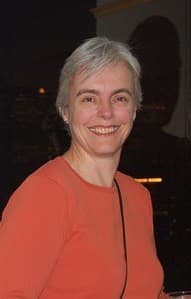
Margo Lanagan is an Australian author known for her work in speculative fiction. Her notable books include "Tender Morsels," a dark reimagining of fairy tales, and "Black Juice," a collection of short stories that explore themes of identity and transformation. Lanagan's writing often delves into complex emotional landscapes and has garnered critical attention.
Similar books
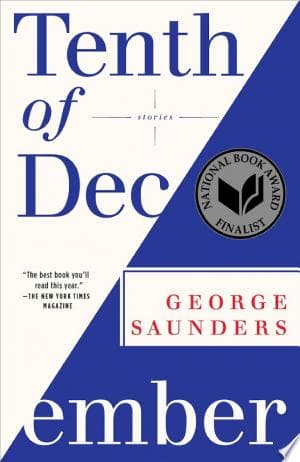
- Tenth of December
George Saunders
4.0 (62k) average on GoodreadsLiterary FictionWhile both "Black Juice" and "Tenth of December" are celebrated short story collections, their approaches diverge significantly. Saunders often grounds his fantastical or absurd elements in a more recognizable, contemporary American reality, using them to highlight socio-economic issues and the absurdities of everyday life. His language, though often inventive, is generally more direct and satirical. Lanagan, by contrast, fully immerses her readers in worlds that are fundamentally alien and ancient, where the 'fantasy' elements are integral to the fabric of existence, not just a lens for commentary. Her prose is far more lyrical and less concerned with social realism, aiming for a deeper, more primal sense of wonder and horror. Both authors excel at character voice, but Lanagan's voices are often more detached and mythical, while Saunders' are deeply embedded in their mundane struggles.
- Harry Potter and the Sorcerer's Stone
J.K. Rowling
4.5 (7M) average on GoodreadsFantasyRescued from a miserable life under the stairs, an orphaned boy discovers he's a wizard destined for a magical school, where he uncovers a dangerous secret tied to the dark wizard who murdered his parents.
- The Hunger Games
Suzanne Collins
4.3 (6.4M) average on GoodreadsFantasyIn a future where children fight to the death on live television, Katniss Everdeen volunteers for the arena, turning a death sentence into a fight for survival and a spark of rebellion.
- 1984
George Orwell
4.2 (3.1M) average on GoodreadsPoliticsIn a future where surveillance and thought control are absolute, a man's search for truth clashes with the Party, showing that hope can be a form of rebellion.
- Divergent
Veronica Roth
4.2 (2.9M) average on GoodreadsFantasyIn a society divided by virtues, a sixteen-year-old's difference from the norm starts a rebellion that threatens her world.
- The Hobbit, or There and Back Again
J.R.R. Tolkien
4.3 (2.9M) average on GoodreadsFantasyA comfort-loving hobbit named Bilbo Baggins is whisked away by a mischievous wizard and a band of dwarves on an unexpected journey to reclaim stolen treasure from a fearsome dragon, discovering courage and a magical ring along the way.
Enjoyed the summary?
A summary gives you the shape of the book. The book itself has the detail, the examples and the voice.
Find Black Juice on AmazonAs an Amazon Associate, BookBrief earns from qualifying purchases. How we're funded