
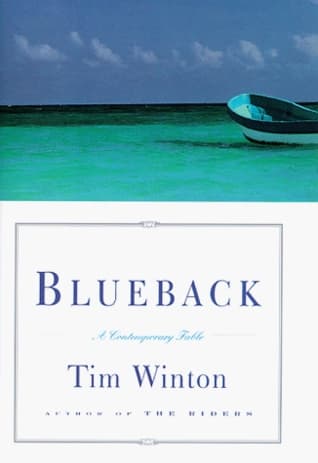
Synopsis
Covers the whole plot, including the ending.
- Difficulty
- Easy
- Pacing
- Slow
- Mood
- Atmospheric, Reflective, Heartwarming, Melancholy
- Read it if
- You love gentle, evocative stories about the bond between humans and nature, environmental conservation, and the quiet power of a mother's love.
- Skip it if
- You prefer fast-paced plots, complex character arcs, or stories with significant conflict and resolution beyond environmental themes.
Blueback Plot Summary
Covers the whole plot, including the ending.
Abel's Childhood by the Sea
Abel Jackson grows up in Longboat Bay, a small, isolated cove full of marine life. His mother, Dora, a strong woman, raises him alone after his father died young. They live simply, fishing for food and respecting the ocean. Dora teaches Abel about the marine ecosystem, giving him a love and understanding of the sea. Abel spends hours exploring underwater, connecting with its creatures, especially a large groper he names Blueback.
Meeting Blueback
Blueback, an enormous, old blue groper, is one of Abel's main companions in the bay. Abel first sees Blueback as a young boy, thinking its shadow is a shark. Over time, Blueback becomes a friendly presence during Abel's dives. The groper is curious and gentle, letting Abel swim with it and touch its skin. This unique relationship makes Abel's connection to nature stronger and supports his mother's lessons about respecting all creatures. Blueback represents the wild beauty of Longboat Bay and the ocean's old wisdom.
The Threat of Overfishing
As Abel grows, Longboat Bay's clean environment faces more threats. Commercial fishermen, drawn by the rich waters, start coming to the cove. They use nets and lines that catch many fish, including smaller species important to the ecosystem. Dora, who protects her home fiercely, confronts these fishermen. She argues for fishing methods that do not harm the environment and for keeping the bay safe. She teaches Abel about conservation and how human greed affects nature for a long time. Abel sees the damage from overfishing, which makes him more determined to protect the bay.
Dora's Activism and the Marine Park
Dora speaks out for Longboat Bay's protection. She writes letters, talks to officials, and teaches anyone who will listen about keeping the marine environment safe. Her passion and persistence pay off when, after years of work, Longboat Bay becomes a marine sanctuary. This means no commercial fishing and protection for the diverse marine life, including Blueback. This success shows Dora's strong commitment and love for the ocean, ensuring Abel's childhood home stays safe for future generations.
Abel Leaves for Education
Even though he loves Longboat Bay and his mother, Abel eventually leaves the cove for higher education. He studies marine biology, inspired by his childhood and his bond with the ocean. This decision is hard because it means leaving Dora alone at the bay, but both know it is needed for Abel to get the scientific knowledge to protect marine environments further. He spends his time away learning about marine science, preparing for a future in ocean conservation.
Returning Home and Dora's Decline
Abel returns to Longboat Bay when he can, finding comfort in the waters and Blueback. Each visit, he sees his mother, Dora, getting older. Despite her health decline, her spirit and commitment to the bay remain strong. Abel also sees new threats to the marine park, like more tourists and climate change effects, reminding him that conservation work is ongoing. These visits strengthen his love for home and his decision to continue his mother's work.
The Poacher Incident
During one visit home, Abel finds a poacher illegally fishing with a net in the marine sanctuary. This shows that constant watch is needed to protect the bay. Using lessons from his mother, Abel confronts the poacher, stating the marine park rules and defending the waters. This moment shows Abel becoming a protector of the bay himself, showing the same dedication and courage Dora always had.
Blueback's Endurance
Blueback stays a constant presence in Longboat Bay throughout Abel's life. The giant groper, now bigger and older, represents nature's timelessness and strength. Abel still sees Blueback during his dives, finding comfort and a deep connection in their shared past. Blueback's continued life in the protected waters shows Dora's successful work and offers hope for future conservation, reminding Abel of the ocean's old wisdom and lasting beauty.
Dora's Final Days and Legacy
As Dora's health worsens, Abel returns to Longboat Bay to care for her. In her last days, she shares her wishes and wisdom with Abel, stressing the importance of protecting the ocean and living in harmony with nature. After she dies peacefully, Abel feels the weight of her work and the responsibility to continue it. Dora's life is remembered as one of dedication to the sea, and her spirit continues to guide Abel in his conservation efforts. The bay, now a thriving marine park, is her lasting memory.
Abel's Continued Devotion
After Dora's death, Abel dedicates his life to marine conservation. He becomes a marine biologist, using his knowledge and connection to the ocean to advocate for its protection on a larger scale. He continues to return to Longboat Bay, finding comfort and inspiration in the waters and Blueback. Abel's life shows his mother's teachings, ensuring that Longboat Bay's story and Blueback's spirit continue to inspire efforts to preserve the ocean's wild beauty for future generations.
Blueback Characters
Abel Jackson
Protagonist
A boy who grows into a marine biologist, dedicated to ocean conservation.
Abel is a sensitive and observant boy who grows up in complete harmony with the ocean at Longboat Bay. Raised by his independent mother, Dora, he learns early lessons of respect, sustainability, and the interconnectedness of all life. His deep connection with Blueback, the giant groper, profoundly shapes his understanding of the marine world. As an adult, he leaves the bay to pursue formal education in marine biology, driven by a desire to protect the environment he loves. He embodies the continuation of his mother's legacy, becoming a passionate advocate for ocean conservation.
Relationships: Dora Jackson (mother, teacher, mentor); Blueback (childhood companion, symbol of the ocean's wisdom)
Dora Jackson
Supporting
Abel's fiercely independent and environmentally conscious mother.
Dora is a strong, wise, and independent woman who raises Abel by herself in Longboat Bay. She is a true guardian of the sea, possessing an innate understanding and respect for nature. Dora teaches Abel everything he knows about the ocean, instilling in him values of conservation and sustainability. She is a tireless activist, fighting against commercial fishing and successfully campaigning for Longboat Bay to become a marine sanctuary. Her unwavering commitment to protecting the environment is the driving force behind the story and a profound influence on Abel.
Relationships: Abel Jackson (son, student, successor); Blueback (fellow inhabitant of the bay, symbol of her protective efforts)
Blueback
Supporting
A giant, ancient blue groper, symbolizing the wild beauty and resilience of the ocean.
Blueback is an enormous, ancient blue groper that becomes Abel's underwater companion and a central figure in his life. Initially a source of wonder and slight fear, Blueback evolves into a symbol of the ocean's mystery, wisdom, and enduring power. Its presence in Longboat Bay is a constant throughout Abel's life, representing the natural world that Dora and Abel fight to protect. Blueback's survival and continued growth within the marine sanctuary underscore the success of their conservation efforts and the inherent value of wild places.
Relationships: Abel Jackson (childhood companion, subject of fascination); Dora Jackson (inhabitant of the bay she protects)
The Commercial Fishermen
Antagonist
Fishermen who threaten the bay's ecosystem with their unsustainable practices.
The commercial fishermen represent the destructive forces of human greed and short-sightedness. They come to Longboat Bay to exploit its rich fishing grounds, using methods that deplete fish stocks and harm the delicate marine ecosystem. Their actions directly conflict with Dora's and Abel's values of conservation and respect for nature. They serve as the primary external threat to the bay's pristine environment, prompting Dora's activism and highlighting the need for marine sanctuaries.
Relationships: Dora Jackson (adversaries in the fight for the bay); Abel Jackson (early instigators of his conservation efforts)
The Poacher
Mentioned
An individual who illegally fishes in the protected marine park.
The poacher is a minor character who appears later in the story, illegally fishing within the established marine sanctuary. This character represents the ongoing challenges to conservation efforts, even after protected areas are established. The encounter with the poacher serves as a moment for Abel to step into his mother's shoes, actively defending the bay and demonstrating his commitment to her legacy. The poacher reminds readers that environmental protection requires constant vigilance.
Relationships: Abel Jackson (brief adversary)
Blueback Themes
Environmental Conservation and Stewardship
A main theme of 'Blueback' is the need for environmental conservation and human responsibility for nature. Dora's fight to protect Longboat Bay from overfishing and her success in making it a marine sanctuary show this. Abel continues this work, studying marine biology and speaking for the ocean. The bay's healthy ecosystem, especially Blueback, shows the good effects of conservation and living respectfully with nature.
“'But the ocean was a living thing, she said. It had its own life, its own will, and if you didn't respect that, it would take you. Or worse, you'd destroy it.”
The Interconnectedness of Nature
The book shows the connections in the marine ecosystem and between humans and nature. Abel's childhood in the bay helps him understand how all parts of the environment are linked. His relationship with Blueback shows a non-verbal connection and respect. The harm from overfishing, as shown by commercial fishermen, highlights how disturbing one part of the ecosystem can harm the whole.
“He knew the fish, the currents, the rocks, the crabs, the birds, the wind and the light. He knew them like he knew his own breathing.”
Legacy and Passing on Knowledge
The theme of legacy is important, as Dora teaches Abel her values and love for the ocean. Her life's work results in the marine sanctuary, a legacy for Abel and future generations. Abel's choice to study marine biology and his continued protection of the bay show he honors his mother's legacy. The story suggests that conservation comes from passing on knowledge, respect, and responsibility from one generation to the next, keeping the planet healthy.
“It was her gift to him, a way of seeing the world, a way of being in it.”
Simplicity and Self-Sufficiency
Abel and Dora live simply and self-sufficiently at Longboat Bay, different from the consumerism and exploitation of the commercial fishermen. They live off the land and sea, taking only what they need and respecting natural cycles. This way of life helps them appreciate nature and reduces their impact. The book suggests that a simpler life can lead to a deeper connection with the environment and a greater sense of purpose, showing the value of living with nature rather than against it.
“They lived on what the sea gave them, and what the small garden gave them, and what Dora could earn from her paintings.”
Plot Devices & Literary Techniques
Symbolism of Blueback
Blueback represents the wildness, ancient wisdom, and resilience of the ocean.
Blueback, the giant groper, is more than just a character; it is a powerful symbol. It embodies the untamed beauty and mystery of the ocean, the ancient wisdom contained within its depths, and the resilience of nature when protected. Blueback's growth and continued presence in the bay symbolize the success of Dora's conservation efforts and the enduring hope for marine life. For Abel, Blueback is a tangible connection to his childhood, his mother's teachings, and the profound, almost spiritual, bond he shares with the sea.
Fable-like Narrative
The story employs a fable structure to convey a moral lesson about environmentalism.
The narrative style of 'Blueback' is reminiscent of a fable. It features simple, clear prose, a strong moral message (environmental conservation), and characters who embody specific values (Dora as the protector, fishermen as exploiters). The story focuses on a clear conflict between human greed and natural preservation, leading to a resolution that emphasizes the importance of stewardship. This fable-like quality makes the ecological message accessible and impactful, particularly for younger readers, while still resonating with adults.
Coming-of-Age Story
Abel's journey from childhood to adulthood is framed by his relationship with the ocean.
The book follows Abel's growth from a young boy into a mature marine biologist. His coming-of-age is inextricably linked to his environment and his mother's teachings. Key milestones in his development—learning to dive, encountering Blueback, witnessing environmental threats, leaving for education, and returning to protect the bay—all shape his identity and purpose. This device allows readers to witness the long-term impact of early environmental education and the development of a lifelong commitment to conservation.
Setting as Character
Longboat Bay is a vibrant, living entity that influences all aspects of the story.
Longboat Bay is not merely a backdrop but acts as a character in itself. Its pristine beauty, abundant marine life, and eventual designation as a marine sanctuary are central to the plot. The bay shapes Abel's identity, inspires Dora's activism, and provides a home for Blueback. Its health and preservation are the core conflict of the story. The detailed descriptions of the underwater world make the bay a tangible, vital presence, emphasizing its inherent value and the urgent need for its protection.
Blueback Quotes
“The sea was in his blood.”
“He felt the fish's life force, its wildness, its ancientness.”
“You don't own the sea. You borrow it.”
“The world was full of things that didn't need fixing, just understanding.”
“A place can hold you tight or let you go.”
“Some things are too big to be afraid of.”
“Every living thing has its place, and every place has its living things.”
“Memories are like anchors; they hold you to what matters.”
“The sea doesn't care about your plans.”
“We're all just passing through, but some leave deeper marks.”
“Fear is a fence; curiosity is a gate.”
“The oldest stories are written in water and stone.”
“You can't save everything, but you can save what's in front of you.”
“Home isn't just a place; it's a feeling in your blood.”
Quiz
10 questions on the plot and the characters. Each answer comes with a short explanation.
Question 1
What is the name of the main character in 'Blueback'?
- Abel Jackson
- Tim Winton
- Blueback Jackson
- Macka
Show answer
A. Abel Jackson The protagonist is Abel Jackson, a boy who grows up in a remote coastal area of Western Australia and forms a bond with a large blue groper fish.
Question 2
What type of marine creature is Blueback?
- A dolphin
- A blue whale
- A blue groper fish
- A sea turtle
Show answer
C. A blue groper fish Blueback is a large, wild blue groper fish that Abel encounters while diving, and their friendship becomes central to the story's ecological themes.
Question 3
Where is the setting of 'Blueback' primarily located?
- The Great Barrier Reef in Queensland
- A remote coastal area in Western Australia
- A fishing village in Tasmania
- The Sydney Harbour
Show answer
B. A remote coastal area in Western Australia The story is set in a secluded coastal region of Western Australia, emphasizing the natural environment and Abel's connection to the sea.
Question 4
Why does Abel's mother, Dora, teach him to dive and respect the ocean?
- To prepare him for a career as a marine biologist
- To help him catch fish for their livelihood
- To instill a deep understanding and stewardship of nature
- To compete in underwater diving competitions
Show answer
C. To instill a deep understanding and stewardship of nature Dora emphasizes the importance of living in harmony with the ocean, teaching Abel to value knowledge and conservation over mere exploitation.
Question 5
What threat does Abel face from the fisherman named Macka?
- Macka tries to steal Abel's diving equipment
- Macka plans to capture Blueback for an aquarium
- Macka uses illegal fishing methods that endanger marine life
- Macka competes with Abel in a fishing contest
Show answer
C. Macka uses illegal fishing methods that endanger marine life Macka represents destructive human practices, using methods like dynamite fishing that threaten the ecosystem and Blueback's safety.
Question 6
How does Abel's relationship with Blueback evolve as he grows older?
- He forgets about Blueback after moving to the city
- He becomes a scientist studying blue gropers
- He continues to protect Blueback and the marine environment from threats
- He captures Blueback to keep as a pet
Show answer
C. He continues to protect Blueback and the marine environment from threats As Abel matures, he remains committed to safeguarding Blueback and the ocean, reflecting the book's themes of lifelong environmental stewardship.
Question 7
What is a key theme explored in 'Blueback' regarding human interaction with nature?
- The economic benefits of fishing industries
- The conflict between urban and rural lifestyles
- The importance of conservation and sustainable living
- The dangers of underwater exploration
Show answer
C. The importance of conservation and sustainable living The book highlights ecological awareness, urging readers to value and protect natural environments rather than exploit them.
Question 8
In what way does the book contrast 'acquisition of information' with 'quest for knowledge,' as mentioned in its description?
- By comparing school learning to hands-on experience in nature
- By detailing Abel's academic achievements in marine science
- By showing how technology improves fishing efficiency
- By emphasizing the importance of reading books about the ocean
Show answer
A. By comparing school learning to hands-on experience in nature Abel learns through direct immersion in the ocean with his mother, gaining deep, experiential knowledge that goes beyond mere facts, central to the fable's message.
Question 9
What role do the illustrations in the book play, based on its description as a 'gem-like ecological fable'?
- They provide scientific diagrams of marine species
- They enhance the magical and visual appeal of the story
- They serve as maps of the Western Australian coast
- They are used for educational quizzes at the end
Show answer
B. They enhance the magical and visual appeal of the story The illustrations complement the fable's enchanting tone, helping to vividly portray the marine setting and emotional depth, making it accessible to all ages.
Question 10
How does the resolution of 'Blueback' reflect its status as a fable?
- It ends with Abel becoming a wealthy fisherman
- It concludes with a moral lesson about environmental responsibility
- It reveals that Blueback was a mythical creature
- It shows the ocean being completely destroyed by pollution
Show answer
B. It concludes with a moral lesson about environmental responsibility Like traditional fables, the story imparts a clear moral—in this case, the importance of protecting nature and living sustainably—through Abel's journey and actions.
Blueback FAQ
What is 'Blueback' about?
'Blueback' follows Abel Jackson, a boy growing up in a remote coastal Australian community, who befriends a massive, ancient blue groper fish he names Blueback. The story spans decades as Abel learns about marine conservation from his mother, Dora, and faces threats from developers and poachers, ultimately exploring his lifelong connection to the ocean and its creatures.
Why should I read 'Blueback'?
You should read 'Blueback' for its poignant, accessible ecological message about humanity's relationship with nature, wrapped in a heartfelt coming-of-age story. Tim Winton's lyrical prose and the book's fable-like quality make it a quick but impactful read that appeals to both children and adults, emphasizing themes of stewardship, knowledge, and simplicity.
What is the background/setting of 'Blueback'?
The setting is a remote, pristine coastal area in Western Australia, where Abel and his mother live in a simple shack by the sea. This isolated environment, rich with marine life like coral reefs and kelp forests, serves as both a sanctuary and a battleground against external threats like commercial fishing and development.
What are the most memorable quotes?
Memorable quotes include: 'The sea was in his blood,' reflecting Abel's deep connection to the ocean, and 'You don't own the place, it owns you,' spoken by Dora to emphasize respect for nature. Another is 'Blueback was more than a fish; he was a memory, a witness,' highlighting the symbolic role of the groper.
What writing style does the author use?
Tim Winton uses a lyrical, descriptive, and fable-like writing style with simple yet evocative prose. The narrative is concise and atmospheric, blending ecological themes with emotional depth, making it accessible for young readers while retaining literary richness for adults.
What minor details add significant meaning?
Minor details like Abel's handmade wooden boat and Dora's collection of seashells symbolize their sustainable, hands-on lifestyle. The recurring image of Blueback's 'wise old eye' watching over the bay adds a mystical element, representing nature's enduring presence and wisdom.
What are some subtle foreshadowing moments?
Early scenes of Abel learning to dive and identify marine species foreshadow his future as a marine biologist. Dora's warnings about poachers and her stories of the ocean's fragility subtly hint at the later conflicts with developers, building tension around the bay's vulnerability.
What unexpected character connections exist?
An unexpected connection is between Abel and the poacher Costello, who represents the greed Abel must resist. Blueback himself serves as a silent connector between generations, linking Abel's childhood with his adult conservation efforts and symbolizing the continuity of natural wisdom.
What are unspoken character motivations?
Dora's unspoken motivation is her fear of losing the bay to modernization, driving her to instill ecological values in Abel. Abel's deeper motivation is not just to protect Blueback but to honor his mother's legacy and find purpose in a world increasingly disconnected from nature.
What psychological complexities do characters exhibit?
Abel exhibits complexity through his internal conflict between his isolated upbringing and the lure of the outside world, grappling with loneliness and responsibility. Dora shows resilience mixed with quiet desperation, as she balances nurturing Abel with defending their way of life against inevitable change.
What are the major emotional turning points?
Major emotional turning points include Abel's first encounter with Blueback as a child, which sparks his lifelong passion; Dora's illness, which forces Abel to confront mortality and legacy; and the climax where Abel confronts poachers, solidifying his commitment to conservation.
How do relationship dynamics evolve?
Abel's relationship with Dora evolves from childlike dependence to a partnership in conservation, then to him caring for her in old age. His bond with Blueback shifts from awe and friendship to a symbolic guardianship, reflecting his growing understanding of ecological interconnectedness.
Which parts remain ambiguous or open-ended?
The fate of Blueback is left ambiguous—it's unclear if he survives all threats or becomes a legend. The book also leaves open how Abel balances his marine biology career with his remote roots, inviting readers to ponder the trade-offs between modern life and environmental stewardship.
What are controversial scenes or decisions?
Controversial scenes include Abel's non-violent confrontation with poachers, which some may see as passive, and Dora's decision to raise Abel in isolation, which could be debated as protective or limiting. The lack of harsh punishment for antagonists sparks discussion on justice in ecological narratives.
'Blueback' ending explained: how it ends & what it means
The ending shows Abel as an adult, reflecting on his life and the enduring presence of Blueback in the bay. It means that true knowledge and stewardship come from lifelong connection to nature, not just information, and that personal legacy is intertwined with environmental preservation.
About the author

Tim Winton is an Australian author known for his fiction that often explores themes of nature and human connection. His notable works include "Cloudstreet," a multi-generational saga, "Breath," which delves into the world of surfing and personal growth, "Dirt Music," a story of love and loss in the Australian landscape, and "Blueback," a tale of a boy and his bond with the sea.
Similar books
- The Old Man and the Sea
Ernest Hemingway
3.8 (831k) average on GoodreadsLiterary FictionExplores a deep, almost spiritual connection between a fisherman and the ocean, with themes of endurance and respect for nature.
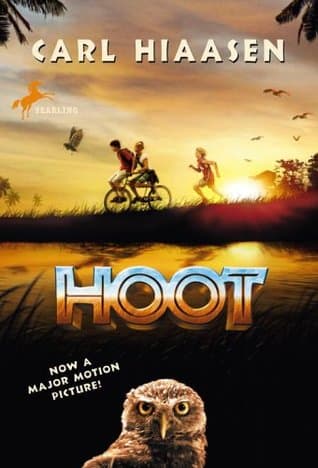
- Hoot
Carl Hiaasen
3.8 (97k) average on GoodreadsChildren'sA children's novel with a strong environmental message about protecting wildlife and natural habitats from human development.
- Harry Potter and the Sorcerer's Stone
J.K. Rowling
4.5 (7M) average on GoodreadsFantasyRescued from a miserable life under the stairs, an orphaned boy discovers he's a wizard destined for a magical school, where he uncovers a dangerous secret tied to the dark wizard who murdered his parents.
- The Hobbit, or There and Back Again
J.R.R. Tolkien
4.3 (2.9M) average on GoodreadsFantasyA comfort-loving hobbit named Bilbo Baggins is whisked away by a mischievous wizard and a band of dwarves on an unexpected journey to reclaim stolen treasure from a fearsome dragon, discovering courage and a magical ring along the way.
- Harry Potter and the Goblet of Fire
J.K. Rowling
4.6 (2.6M) average on GoodreadsFantasyA bewildered Harry Potter, underage and thrust into a deadly Triwizard Tournament, must brave dragons, mermaids, and a resurgent dark magic to survive a year that will forever alter the wizarding world.
- Harry Potter and the Order of the Phoenix
J.K. Rowling
4.5 (2.5M) average on GoodreadsFantasyIn a year of oppressive secrets and the threat of Voldemort, Harry Potter and Dumbledore's Army secretly train for war, shown through Jim Kay and Neil Packer's dark illustrations.





Enjoyed the summary?
A summary gives you the shape of the book. The book itself has the detail, the examples and the voice.
Find Blueback on AmazonAs an Amazon Associate, BookBrief earns from qualifying purchases. How we're funded