

Synopsis
Covers the whole plot, including the ending.
- Difficulty
- Medium
- Pacing
- Moderate
- Mood
- Dark, Suspenseful, Introspective, Disturbing
- Read it if
- You enjoy thought-provoking literary fiction that explores themes of trauma, political instability, and the human capacity for cruelty and compassion, with a strong, introspective female protagonist.
- Skip it if
- You prefer light, fast-paced thrillers or stories with clear-cut resolutions and explicit plot-driven mysteries.
Bodily Harm Plot Summary
Covers the whole plot, including the ending.
Rennie's Disillusionment and the Stalker
Rennie Wilford, a young Toronto journalist who writes about 'lifestyles' and 'soft news,' finds her life falling apart. Her long relationship with Jake, a surgeon, has ended, leaving her feeling lost. She feels growing doubt about her work, especially after writing a piece about 'kink' that she now dislikes. Her apartment is broken into, but nothing is stolen; instead, things are rearranged in a disturbing, personal way. This incident, along with silent, threatening phone calls, suggests she has a stalker. The police are unhelpful, dismissing her fears. To escape this unsettling situation and recover from recent breast cancer surgery, Rennie decides to vacation on the small Caribbean island of St. Antoine, hoping for rest and to be anonymous.
Arrival in St. Antoine and Initial Encounters
When Rennie arrives in St. Antoine, she immediately notices how different the island is from her Canadian life. The heat, the poverty, and a general feeling of decay are clear. She checks into a run-down hotel and soon meets various unusual expats and locals. Lora, a bold American woman who sells local crafts, becomes an unwilling companion. Paul, a charming but mysterious man who seems involved in shady dealings, also gets her attention. These first meetings, combined with the island's underlying tension and the constant presence of stray dogs, add to Rennie's growing confusion. She tries to stay detached, observing the island as a journalist, but finds herself increasingly drawn into its strange rhythms.
The Looming Political Instability
As Rennie settles into St. Antoine, she starts to see the clear signs of political instability. Talk of an upcoming election, rival groups, and a history of overthrows and violence fills the air. She learns about Prince, the current leader, and his opponent, the more radical Caine. Paul, with his secret connections, seems involved in the political plotting, hinting at his role as an arms dealer or fixer. The local police, often carrying guns, add to the feeling of growing tension. Rennie, at first determined to stay a detached observer, finds it harder to ignore the political currents that threaten to become open conflict, feeling a growing worry about her safety.
The Murder and Rennie's Entanglement
The fragile peace of St. Antoine ends with the brutal killing of a local woman, a vendor Rennie had met. The body is found near Rennie's hotel, and the incident shocks the small community. Rennie is deeply troubled by the violence, which brings the island's underlying brutality to the surface. The police start an investigation, but their methods are rough and frightening. Rennie, having seen some suspicious activity around the time of the murder, finds herself unwillingly involved or at least a person of interest. This event is a turning point, as her journalistic detachment becomes impossible to keep, forcing her to face the island's grim realities.
Arrest and Interrogation
After the murder, the political situation on St. Antoine quickly worsens. In a sudden, violent crackdown, Rennie and Lora are arrested by the local police and military. They are accused of various unclear crimes, including conspiracy, likely because they are foreigners and seem connected to the opposition. Jailed in a dirty, crowded cell, Rennie experiences the full horror of the island's justice system. She undergoes repeated, frightening interrogations, where authorities try to get confessions or information about the political unrest. Her past, medical history, and Canadian life are twisted and used against her, eroding her sense of self and reality.
Life in Prison and Bonds of Desperation
Life in the St. Antoine prison is a brutal experience. Rennie and Lora are packed into a tiny, unclean cell with several local women, enduring terrible food, no privacy, and constant fear. The heat is overwhelming, and the conditions are dehumanizing. Rennie's attempts to keep her intellectual distance and journalistic objectivity break down under her suffering. She sees the casual cruelty of the guards and the despair of her fellow prisoners. Despite their initial disagreements, Rennie and Lora form a bond of shared weakness and desperation. Lora, with her street smarts and strength, becomes both a source of frustration and comfort for Rennie as they navigate their terrifying new reality, holding onto bits of hope.
Flashbacks to Toronto and the Stalker's Identity
During her imprisonment, Rennie often thinks back to her life in Toronto, often mixing past and present. These memories reveal more about her relationship with Jake, her work frustrations, and her stalker's unsettling presence. It is slowly shown that the stalker was not a random stranger but a former lover, Jake, who, after their breakup, started tormenting her with silent calls and rearranged objects in her apartment as a twisted way of control and lingering attachment. This realization adds another layer of pain to Rennie's already broken mind, showing the hidden nature of power and control in her personal life, mirroring the political power struggles on the island.
The Political Coup and Heightened Danger
The political tensions on St. Antoine finally erupt into a violent overthrow. Gunfire and explosions shake the island, and the prison becomes a chaotic, dangerous place. The guards are replaced by new, more brutal forces, and the prisoners' fate becomes even more uncertain. Rennie and Lora witness the increasing violence and the casual disregard for human life. The overthrow, led by Caine's group, means a complete breakdown of order. In this chaos, Rennie's fear grows, and her hold on reality becomes weak. She sees a rat in her cell, a repeated image that represents the decay and terror around her, and she feels completely helpless.
The Rat and the Act of Compassion
During the height of the overthrow and the growing chaos in the prison, Lora, who has a severe leg infection, becomes sicker and delirious. Her pain is extreme, and she begs Rennie to help her. In a moment of deep despair and empathy, Rennie performs a desperate act of compassion. She squeezes the pus from Lora's infected leg, a gruesome and personal act that goes beyond their earlier dislike and creates a deep, raw connection between them. This act, born of shared suffering and the basic need for human connection, shows Rennie's change from a detached observer to someone capable of deep human care, even in the most inhumane conditions.
Uncertain Rescue and Lingering Trauma
Eventually, after an unknown time, Rennie is released or 'rescued' from the prison, though the details are unclear. She is put on a plane, likely back to Canada, but the experience has changed her forever. The ending is not a clear solution; Rennie is physically free but mentally and emotionally broken. She carries the pain of her imprisonment, the brutality she saw, and her deep connection with Lora. The world she returns to feels strange, and her past life seems distant and unimportant. The novel ends with Rennie's future uncertain, leaving the reader to think about the lasting effects of bodily harm, both physical and psychological, and the hard-to-find nature of true freedom and healing.
Principal Figures
Rennie Wilford
Protagonist
A Canadian journalist seeking escape and self-discovery, who becomes a victim of political violence.
Rennie is a young, somewhat detached Toronto journalist specializing in 'soft news' and lifestyle pieces. Initially, she is cynical, intellectual, and prides herself on her objectivity, using her journalistic lens to distance herself from personal pain and the messiness of life. She has recently undergone surgery for breast cancer and is recovering from a breakup with her boyfriend, Jake, who is also her stalker. Her journey to St. Antoine is an attempt to escape her personal traumas and find a clean slate. Throughout the novel, she struggles with her sense of identity, her capacity for empathy, and the meaning of 'bodily harm' both physical and psychological.
Relationships: Jake (Former lover and stalker); Lora (Fellow prisoner and reluctant friend); Paul (Mysterious island figure, potential love interest/manipulator)
Lora
Supporting
A brash, resilient American woman imprisoned with Rennie, who becomes her desperate confidante.
Lora is a loud, uninhibited American woman living on St. Antoine, selling local crafts to tourists. She is practical, outspoken, and possesses a raw resilience that contrasts sharply with Rennie's more cerebral nature. Her past is murky, hinting at a life of hardship and survival. Imprisoned with Rennie, Lora initially irritates her, but as their shared suffering intensifies, they form a deep, if complicated, bond. Lora's physical decline due to an infected leg becomes a focal point for Rennie's burgeoning compassion, symbolizing the profound human connection that can emerge in the face of extreme adversity.
Relationships: Rennie Wilford (Fellow prisoner and desperate friend)
Paul
Supporting
A charming and enigmatic man on St. Antoine, with potential ties to the island's political underworld.
Paul is a mysterious, charming, and somewhat shady character Rennie encounters on St. Antoine. He is attractive and worldly, hinting at a past in intelligence or illicit dealings, possibly as an arms dealer. He flirts with Rennie and seems to offer her protection or at least a sense of intrigue. His ambiguous role in the island's political landscape makes him both alluring and dangerous. Paul represents the seductive yet perilous nature of power and the blurred lines between good and evil in a corrupt environment. His ultimate loyalties and intentions remain unclear, adding to the novel's suspense.
Relationships: Rennie Wilford (Fleeting romantic interest and source of intrigue)
Jake
Supporting
Rennie's former lover and surgeon, who becomes her stalker after their breakup.
Jake is Rennie's ex-boyfriend, a surgeon in Toronto. He is intelligent and initially appears to be a stable partner. However, after their relationship ends, he becomes Rennie's stalker, making silent phone calls and rearranging objects in her apartment in a disturbing, intimate manner. His actions are a manifestation of his inability to let go and his desire for control, highlighting the darker side of intimacy and the insidious nature of psychological abuse. His presence, though mostly in Rennie's flashbacks, underscores the theme of 'bodily harm' extending beyond physical violence to mental and emotional torment.
Relationships: Rennie Wilford (Former lover, stalker)
Prince
Mentioned
The current, corrupt leader of St. Antoine, whose regime is overthrown during the novel.
Prince is the ostensibly legitimate, though corrupt, leader of St. Antoine at the beginning of Rennie's stay. He represents the established, yet fragile, political order that is eventually challenged and overthrown by Caine's faction. His regime is characterized by inefficiency, a reliance on foreign aid, and an underlying brutality that becomes more apparent as political tensions rise. Prince symbolizes the post-colonial struggles of small nations and the cyclical nature of power and corruption.
Caine
Mentioned
The radical opposition leader who orchestrates the coup in St. Antoine.
Caine is the charismatic, more radical opposition leader on St. Antoine, who eventually leads the coup that overthrows Prince's government. He represents a different, potentially more brutal, form of power, promising change but delivering chaos and violence. His rise to power signifies the complete breakdown of order and the descent into civil unrest that directly impacts Rennie's imprisonment. Caine embodies the revolutionary figure, whose promises of liberation often lead to further oppression, illustrating the complex and often tragic dynamics of political upheaval.
The Prostitute/Vendor
Mentioned
A local woman whose brutal murder highlights the island's inherent violence.
This unnamed local woman is a minor character Rennie encounters briefly as a vendor before her brutal murder. Her death serves as a pivotal plot point, shattering Rennie's journalistic detachment and forcing her to confront the raw, terrifying reality of St. Antoine's violence. She symbolizes the vulnerable and exploited population of the island, whose lives are easily discarded amidst political power struggles. Her murder is the catalyst that leads to Rennie's arrest and imprisonment, drawing her irrevocably into the island's dark underbelly.
The St. Antoine Police/Military
Antagonist
The corrupt and brutal enforcers of order and instruments of political oppression.
The police and military forces on St. Antoine represent the oppressive arm of the government, initially Prince's regime and later Caine's. They are depicted as arbitrary, corrupt, and brutal, operating with little regard for justice or human rights. Their interrogations are intimidating, their arrests violent, and their prison conditions inhumane. They embody the abuse of power and the systemic violence that pervades the island, acting as direct antagonists to Rennie and Lora during their imprisonment. Their presence instills fear and highlights the vulnerability of individuals under authoritarian rule.
Relationships: Rennie Wilford (Jailers and interrogators); Lora (Jailers and interrogators)
Themes & Insights
Identity and Self-Discovery
Rennie's journey is one of self-discovery, forced by extreme events. Without her journalist identity and personal comforts, she deals with who she really is. Her physical and emotional 'bodily harm' makes her face her past pains, including her relationship with Jake and her cancer. In the dehumanizing prison, her intellectual detachment breaks down, showing a core of empathy and strength she didn't know she had. The island's chaos removes her previous ideas, forcing her to redefine her values and her ability for human connection.
“She was a person who wrote about lifestyles. It was a long way from the truth. The truth was not a lifestyle.”
Power and Control
The desire for power and control shows up on many levels in the novel. Politically, it is clear in the fight between Prince and Caine on St. Antoine, leading to a violent overthrow and oppression of the people. Personally, it is seen in Jake's stalking of Rennie, a desperate attempt to keep control over her after their breakup. In the prison, the guards have absolute power over the inmates, showing how unchecked authority dehumanizes people. Rennie's initial journalistic detachment is itself a form of control, an attempt to distance herself from life's messy realities, which ultimately fails.
“Power was a question of who could do what to whom and get away with it.”
Bodily Harm and Trauma
The title theme runs through the story. Rennie's breast cancer surgery is the first 'bodily harm,' leading to physical and psychological weakness. This is made worse by Jake's psychological stalking, which causes emotional harm. On St. Antoine, the physical violence of the murder, the prison's brutal conditions, and Lora's infected leg all represent literal bodily harm. Beyond the physical, the novel explores the pain of seeing violence, the dehumanization of imprisonment, and the lasting psychological scars that fundamentally change Rennie's view of herself and the world.
“She had thought that harm was a word you used for things that happened in the dark, that was wrong. Harm was a word for things that happened in the light.”
Detachment vs. Empathy
Rennie starts the novel as a detached observer, both in her journalism and personal life. She uses her intelligence and cynical humor to create a barrier between herself and suffering. Her trip to St. Antoine is an attempt to keep this distance. However, the growing violence, her own imprisonment, and especially Lora's suffering force her to drop this detachment. Her act of compassion towards Lora, squeezing the pus from her leg, is a key moment where she fully embraces empathy, going beyond her previous emotional barriers and connecting with another person on a basic level.
“She had always prided herself on being able to see both sides, to understand everything. But understanding was a luxury.”
Post-Colonialism and Western Gaze
The novel criticizes the Western view of post-colonial nations. Rennie, a Canadian journalist, at first sees St. Antoine with a sense of exoticism and journalistic curiosity, looking for a 'story' or an escape. However, the island's political instability, poverty, and violence reveal the harsh realities behind the pretty facade, challenging her naive ideas. The interactions with locals and expats show the power differences between the developed world and developing nations, and the often unintended results of Western involvement or indifference. This forces Rennie to face her own involvement and limited understanding.
“She had come here to get away from everything, to find a place where nothing was happening. But everything was happening, always, everywhere.”
Plot Devices & Literary Techniques
Flashbacks and Stream of Consciousness
Interspersed memories and thoughts that blur past and present, revealing Rennie's inner turmoil.
Atwood employs frequent flashbacks to Rennie's life in Toronto, particularly her relationship with Jake, her cancer diagnosis, and the stalker incidents. These are often presented in a stream-of-consciousness style, blurring the lines between her present reality in St. Antoine and her past traumas. This device allows the reader to understand Rennie's psychological state, her coping mechanisms, and the origins of her 'bodily harm' as she navigates her imprisonment. It highlights how past experiences shape present perceptions and how trauma can manifest in fragmented memories.
The Rat Motif
A recurring symbol of decay, fear, and the dehumanizing conditions of imprisonment.
The image of the rat, particularly in Rennie's prison cell, serves as a powerful and recurring motif. It symbolizes the pervasive decay, the unsanitary conditions, and the utter dehumanization of her environment. The rat embodies her fear, her loss of control, and the primal terror of being reduced to an animalistic existence. Its presence underscores the psychological torment of imprisonment and the stripping away of human dignity. Rennie's visceral reaction to the rat highlights her struggle to maintain her humanity amidst the squalor.
Journalistic Detachment
Rennie's initial coping mechanism, which evolves into a critique of objective observation.
Rennie's profession as a journalist initially serves as a plot device for her character's worldview. She attempts to observe the world, including her own suffering, with a detached, analytical eye. This detachment allows her to avoid emotional engagement. However, the events on St. Antoine, particularly her imprisonment, systematically dismantle this coping mechanism. The novel uses her journalistic background to critique the limitations and potential moral failings of pure objectivity in the face of profound human suffering, ultimately forcing her to engage emotionally and empathetically.
The 'Soft News' Contrast
The ironic juxtaposition of Rennie's past work with the harsh realities she faces.
Rennie's past work as a 'lifestyle' journalist, writing about 'kink' and other superficial topics, serves as a stark contrast to the brutal realities she encounters on St. Antoine. This ironic juxtaposition highlights the vast chasm between her privileged, comfortable Western life and the violence and poverty of the developing world. It underscores her initial naivety and provides a measure of her transformation, as her 'soft news' perspective is utterly inadequate for comprehending the 'hard news' of political oppression and bodily harm she experiences.
Bodily Harm Quotes
“She is learning to live without a future.”
“The past is a foreign country; they do things differently there.”
“Fear is a kind of hunger.”
“She has become a tourist in her own life.”
“Violence is not an abstraction. It is as real as hunger.”
“The body remembers what the mind tries to forget.”
“She is looking for a story that will explain her life to her.”
“In the end, we are all alone with our bodies.”
“The truth is not always what you want to hear.”
“She has learned that survival is not the same as living.”
“Every wound tells a story.”
“The world is full of invisible lines that separate us.”
“She is trying to remember who she was before the damage.”
“Sometimes the only way out is through.”
“We are all prisoners of our own perceptions.”
Quiz
10 questions on the plot and the characters. Each answer comes with a short explanation.
Question 1
What is the primary reason Rennie Wilford travels to the Caribbean island of St. Antoine?
- To investigate a political story for her journalism career
- To recover from a mastectomy and personal trauma
- To visit family members living abroad
- To escape financial troubles in Canada
Show answer
B. To recover from a mastectomy and personal trauma Rennie travels to St. Antoine to recuperate after undergoing a mastectomy for breast cancer and experiencing emotional breakdowns in her personal life, including a failed relationship.
Question 2
What object does Rennie discover in her hotel room that initially seems innocuous but becomes significant?
- A hidden camera
- A coil of rope
- A mysterious letter
- A bag of drugs
Show answer
B. A coil of rope Rennie finds a coil of rope in her room, which later connects to themes of violence and control on the island, symbolizing the lurking dangers she encounters.
Question 3
Which character is a local doctor on St. Antoine who becomes involved with Rennie and represents a complex moral figure?
- Paul
- Lora
- Jake
- Minister
Show answer
A. Paul Paul is the doctor Rennie meets on the island; their relationship explores themes of power, vulnerability, and the blurred lines between care and control in the oppressive setting.
Question 4
How does Rennie's profession as a journalist influence her experience on St. Antoine?
- It helps her quickly uncover and report on the island's political corruption
- It makes her a target for local authorities who distrust outsiders
- It provides her with financial stability to enjoy her vacation
- It allows her to write a bestselling travel memoir about the trip
Show answer
B. It makes her a target for local authorities who distrust outsiders Rennie's identity as a journalist draws suspicion from the island's corrupt officials, leading to increased surveillance and danger, as they fear exposure of their activities.
Question 5
What major event disrupts the relative calm of St. Antoine and heightens the political tension?
- A hurricane that devastates the island
- The assassination of a local political figure
- A tourist's disappearance that attracts media attention
- An economic crisis leading to protests
Show answer
B. The assassination of a local political figure The assassination of a key political figure on the island triggers unrest and a crackdown by authorities, pulling Rennie deeper into the volatile situation and mirroring the novel's themes of power and violence.
Question 6
Which theme is most closely explored through Rennie's interactions with the character Lora?
- The innocence of childhood in oppressive societies
- Female solidarity and exploitation in a patriarchal world
- The benefits of tourism for local economies
- The importance of traditional healing practices
Show answer
B. Female solidarity and exploitation in a patriarchal world Lora, a local woman, represents the struggles and resilience of women under political and sexual oppression, highlighting themes of gender and power that Rennie grapples with throughout the novel.
Question 7
What does the 'bodily harm' in the title primarily refer to in the context of the novel?
- Only the physical violence Rennie witnesses on the island
- A combination of physical, emotional, and psychological injuries experienced by characters
- The legal charges faced by the island's corrupt leaders
- The environmental damage caused by tourism
Show answer
B. A combination of physical, emotional, and psychological injuries experienced by characters The title encompasses Rennie's mastectomy, the violence on St. Antoine, and the emotional scars from relationships, reflecting Atwood's exploration of how harm manifests in multiple forms.
Question 8
How does the setting of St. Antoine contrast with Rennie's life in Canada?
- It offers a simpler, more peaceful lifestyle that heals her immediately
- It mirrors her Canadian life, providing familiar comforts and safety
- It presents a chaotic, oppressive environment that challenges her assumptions and survival strategies
- It is technologically advanced, helping her reconnect with her journalism work
Show answer
C. It presents a chaotic, oppressive environment that challenges her assumptions and survival strategies St. Antoine's political instability and violence force Rennie to confront vulnerabilities and power dynamics she avoided in her controlled Canadian life, driving the novel's tension and her character development.
Question 9
What role does the concept of 'tourist' play in Rennie's identity and experiences on the island?
- It grants her immunity from local laws and customs
- It allows her to observe events passively without getting involved
- It creates a barrier that initially protects her but ultimately fails as she becomes entangled in local crises
- It defines her solely as an economic benefactor to the island
Show answer
C. It creates a barrier that initially protects her but ultimately fails as she becomes entangled in local crises Rennie's tourist status gives her a superficial sense of safety and detachment, but as political violence escalates, she realizes her outsider position cannot shield her from the island's dangers, highlighting themes of complicity and engagement.
Question 10
In what way does Rennie's past relationship with Jake influence her actions and perceptions on St. Antoine?
- It motivates her to seek revenge by exposing corruption on the island
- It serves as a positive model for her interactions with Paul and others
- It leaves her with trust issues and a sense of vulnerability that affect how she navigates new relationships and dangers
- It provides her with journalistic contacts that help her investigate local events
Show answer
C. It leaves her with trust issues and a sense of vulnerability that affect how she navigates new relationships and dangers Rennie's traumatic breakup with Jake, involving infidelity and emotional harm, contributes to her fragile state and influences her cautious, often paranoid, responses to people and situations on the island, tying personal history to broader themes of bodily and emotional harm.
Bodily Harm FAQ
What is 'Bodily Harm' about?
The novel follows Rennie Wilford, a Canadian journalist recovering from a mastectomy and a failed relationship, who travels to the Caribbean island of St. Antoine for a travel writing assignment. There, she becomes entangled in the island's political turmoil, witnessing corruption, violence, and sexual exploitation, which forces her to confront her own vulnerabilities and complicity in systems of power.
Why should I read 'Bodily Harm'?
You should read it for Atwood's sharp exploration of power dynamics—both political and sexual—through the lens of a disillusioned protagonist. The novel blends mystery, satire, and psychological depth, offering a gripping narrative that critiques colonialism, media sensationalism, and personal detachment in the face of systemic violence.
What is the background/setting of 'Bodily Harm'?
The story alternates between Rennie's past in Toronto, where she deals with her cancer diagnosis and a manipulative boyfriend, and the present on the fictional Caribbean island of St. Antoine. The island setting, with its tropical facade masking political unrest and poverty, serves as a microcosm for broader themes of exploitation and survival.
What are the most memorable quotes?
Notable quotes include: 'Survival is not the same as living,' reflecting Rennie's existential crisis, and 'Power is not a toy; it's a weapon,' highlighting the novel's critique of political and sexual dominance. Another is 'You can't be a tourist and a participant at the same time,' underscoring Rennie's conflicted role as an observer in St. Antoine's turmoil.
What writing style does the author use?
Atwood employs a fragmented, non-linear narrative with sharp, satirical prose, blending dark humor with tense realism. The style shifts between Rennie's introspective flashbacks and the chaotic present on St. Antoine, using irony and vivid imagery to critique societal norms and personal alienation.
What minor details add significant meaning?
Rennie's camera and notebook symbolize her detached, journalistic perspective, which gradually fails as she becomes more involved in the island's crises. The recurring image of her mastectomy scar represents both physical and emotional vulnerability, mirroring the 'bodily harm' inflicted by larger systems of power.
What are some subtle foreshadowing moments?
Early mentions of Rennie's cancer and her boyfriend's controlling behavior foreshadow her later powerlessness on St. Antoine. The island's initial portrayal as a paradise subtly hints at underlying violence through descriptions of decaying buildings and wary locals, prefiguring the political upheaval she witnesses.
What unexpected character connections exist?
Rennie's connection to Lora, a local woman involved in political activism, reveals parallels in their struggles against patriarchal control, despite their different backgrounds. The corrupt politician, Paul, mirrors Rennie's ex-boyfriend in his manipulative use of power, linking personal and political exploitation.
What are unspoken character motivations?
Rennie's trip to St. Antoine is driven by an unspoken desire to escape her trauma and reclaim agency, but she also seeks validation through her writing. Lora's activism stems from a deep, unspoken resentment toward colonial and gender oppression, which Rennie gradually comes to understand through their interactions.
What psychological complexities do characters exhibit?
Rennie exhibits denial and detachment as coping mechanisms for her cancer and failed relationships, which clash with the raw reality of St. Antoine. Lora shows a mix of resilience and desperation, using political engagement to combat personal powerlessness, highlighting the psychological toll of systemic violence.
What are the major emotional turning points?
Key moments include Rennie's realization of her complicity in sensationalizing the island's issues for her article, her confrontation with the violence during a political riot, and her decision to help Lora, which marks a shift from observer to participant. These events force her to grapple with empathy and responsibility.
How do relationship dynamics evolve?
Rennie's relationship with Lora evolves from superficial journalist-subject to one of mutual dependence, as Rennie sheds her detachment. Her interactions with local men, like Paul, expose power imbalances, while reflections on her past boyfriend reveal how personal and political dynamics of control are intertwined.
Which parts remain ambiguous or open-ended?
The novel's ending is ambiguous: Rennie's fate after deciding to stay and help Lora is left unclear, leaving readers to ponder whether she finds redemption or further harm. The true extent of the island's political corruption and the outcomes of the uprising are also left unresolved, emphasizing the ongoing nature of such conflicts.
What are controversial scenes or decisions?
Controversial scenes include the graphic depiction of violence during the riot, which some readers find unsettling, and Rennie's initial passivity in the face of exploitation, which sparks debate about privilege and complicity. Her decision to potentially risk her life for Lora's cause is also divisive, seen as either heroic or foolish.
'Bodily Harm' ending explained: how it ends & what it means
The novel ends with Rennie choosing to stay on St. Antoine to support Lora, abandoning her planned escape. This symbolizes her rejection of detached observation for active compassion, suggesting that true survival requires engagement with others' suffering. The open-ended conclusion implies that the struggle against power and for empathy is continuous and unresolved.
About the author
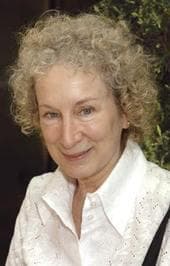
Margaret Eleanor Atwood is a Canadian poet, novelist, literary critic, essayist, teacher, environmental activist, and inventor. Since 1961, she has published eighteen books of poetry, eighteen novels, eleven books of non-fiction, nine collections of short fiction, eight children's books, two graphic novels, and a number of small press editions of both poetry and fiction. Atwood has won numerous awards and honors for her writing, including two Booker Prizes, the Arthur C. Clarke Award, the Governor General's Award, the Franz Kafka Prize, Princess of Asturias Awards, and the National Book Critics and PEN Center USA Lifetime Achievement Awards. A number of her works have been adapted for film and television.
Similar books
- The Handmaid's Tale
Margaret Atwood
4.1 (1.5M) average on GoodreadsFantasyExplores oppressive regimes, female subjugation, and psychological resilience through a distinctive literary voice.
- Alias Grace
Margaret Atwood
4.0 (111k) average on GoodreadsLiterary FictionFeatures a complex female protagonist in a confined, oppressive setting, grappling with memory and identity.
- A Dry White Season
Andre Brink
4.1 (4k) average on GoodreadsFictionDeals with political repression and an individual's entanglement in a dangerous, unjust system.
- The Quiet American
Graham Greene
4.0 (50k) average on GoodreadsLiterary FictionBoth Bodily Harm and Graham Greene's The Quiet American (1955) delve into the complexities of foreign correspondents caught amidst political instability in a developing nation. Greene's novel, set during the First Indochina War, examines themes of innocence, ideological intervention, and moral ambiguity through its male journalist protagonist, Thomas Fowler. While Greene focuses on the broader geopolitical machinations and the clash of Western ideals, Atwood's Bodily Harm centers more on the personal, visceral impact of violence on an individual, particularly a female body. Both critiques the role of outsiders in local conflicts, but Atwood's approach is more internal and psychological, whereas Greene's is more outwardly political and cynical about international involvement, as discussed by critics like Anthony Burgess in 'The End of the Affair: Graham Greene's Search for God'.
- The Old Man and the Sea
Ernest Hemingway
3.8 (831k) average on GoodreadsLiterary FictionA Cuban fisherman's long struggle with a giant marlin becomes a story of endurance and dignity, now retold for young adults with illustrations, phonetic guides, and writing prompts in Traditional Chinese.
- One Hundred Years of Solitude
Gabriel García Márquez
4.1 (753k) average on GoodreadsLiterary FictionThrough the multi-generational story of the Buendía family, a mythical town deals with the repeating patterns of time, love, and solitude, as the extraordinary mixes with the ordinary.





Enjoyed the summary?
A summary gives you the shape of the book. The book itself has the detail, the examples and the voice.
Find Bodily Harm on AmazonAs an Amazon Associate, BookBrief earns from qualifying purchases. How we're funded