
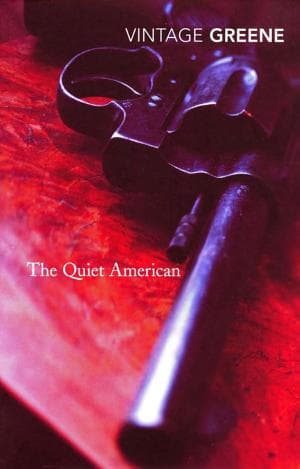
Synopsis
Covers the whole plot, including the ending.
- Difficulty
- Medium
- Pacing
- Moderate
- Mood
- Atmospheric, Melancholic, Reflective, Suspenseful, Morally Complex
- Read it if
- You enjoy thought-provoking literary fiction that delves into themes of colonialism, political intervention, moral ambiguity, and the clash between idealism and cynicism, set against a rich historical backdrop.
- Skip it if
- You prefer fast-paced thrillers, clear-cut heroes and villains, or stories with a definitively happy or optimistic resolution.
The Quiet American Plot Summary
Covers the whole plot, including the ending.
Pyle's Death and Fowler's Indifference
The novel begins with Thomas Fowler, a British journalist in Saigon, learning from Inspector Vigot of the Vietnamese police that Alden Pyle's body was found in a canal. Pyle, a young American aid worker, was murdered. Fowler pretends not to care, saying Pyle was just a colleague, even though his mistress, Phuong, recently left him for Pyle. Vigot suspects Fowler knows more. This immediately sets up a mystery about Pyle's death and Fowler's complicated relationship with both Pyle and Phuong. Fowler's first thoughts are of relief that Pyle is gone, hoping to get Phuong back, which shows his self-interest and emotional distance.
Pyle's Arrival and Fowler's Complacency
The story goes back to when Pyle arrived in Saigon and met Fowler at the '300' bar. Pyle is a young, earnest man, full of American ideals and theories about a 'Third Force' in Vietnam, separate from both the French colonizers and the communist Viet Minh. Fowler, an experienced journalist who prides himself on being uninvolved, at first tolerates Pyle and even finds his innocence amusing. Fowler's life with Phuong, his young Vietnamese mistress, is a comfortable routine, and he thinks he is safe from the political and emotional problems around him. Pyle, however, soon challenges Fowler's world, both politically and personally, by showing interest in Phuong.
Pyle's Pursuit of Phuong
Pyle, with his direct American way, openly starts to pursue Phuong. He learns Vietnamese, takes her dancing, and offers her a stable future that Fowler, who is still married to a wife in England, cannot. Fowler, despite saying he is detached, feels very possessive of Phuong and is annoyed by Pyle. He dismisses Pyle's intentions as naive, believing Pyle cannot truly understand Phuong or Vietnamese culture. Fowler's attempts to discourage Pyle do not work, as Pyle's sincere belief in his love for Phuong, along with his offer of marriage and security, begins to convince Phuong and her sister, Miss Hei, who looks out for Phuong's interests.
The Love Triangle Intensifies
The love triangle grows as Phuong, influenced by her sister, eventually chooses Pyle. Miss Hei sees Pyle as a better match because of his youth, wealth, and the promise of a legal marriage. Fowler's inability to divorce his wife, Helen, because of her religion, is a big problem. Fowler's efforts to get a divorce are difficult and fail, leaving him unable to compete with Pyle's offer of legitimacy. Phuong moves in with Pyle, leaving Fowler upset and more bitter. This personal loss starts to break down Fowler's journalistic distance, pulling him further into the emotional and political situation he once only watched.
Fowler's Encounter in Phat Diem
Fowler, looking for a story, travels to Phat Diem, a Catholic area under attack, and gets caught in a dangerous French military operation. He barely escapes death when a tower he is hiding in is shelled. Pyle, who went there to deliver aid, finds Fowler and, using his American skills and medical training, helps save Fowler's life after he is hurt and suffering from opium withdrawal. This event creates a complex situation between the two men; Fowler has to admit he owes Pyle, despite his dislike. Pyle, true to his nature, acts out of real concern and duty, further showing his idealism against Fowler's cynicism.
Pyle's Connection to General The
During their time together, Fowler starts to understand Pyle's deeper involvement in Vietnamese politics. He learns that Pyle is not just an aid worker but is secretly giving weapons and money to General The, a Vietnamese general Pyle believes represents his 'Third Force' — a nationalist choice separate from the French and the communists. Pyle acts out of a naive belief that he can help shape Vietnam's future through this 'Third Force,' unaware of the destructive results. Fowler, at first doubtful, becomes more worried by Pyle's dangerous idealism and the potential harm caused by his interference, which is very different from Fowler's policy of not getting involved.
The Bicycle Bombs and Civilian Casualties
The story reaches a turning point with a series of bombings in Saigon, especially a large explosion in the public square, which kills many civilians, including women and children. Fowler realizes these bombs, delivered by bicycles, are linked to General The and, through him, to Pyle's secret work. The horror of innocent lives lost makes Fowler abandon his journalistic distance. He confronts Pyle, who, despite the evidence, still naively believes the deaths are a necessary evil for his 'Third Force' idea. This event confirms Fowler's belief that Pyle's idealism is dangerously wrong and directly causes real suffering.
Fowler's Moral Dilemma and Decision
Seeing the terrible aftermath of the bombings, Fowler has to face his own part in things through his inaction. His long-held belief in not getting involved breaks down as he realizes Pyle's 'innocence' is more dangerous than any clear evil. He decides to act, believing Pyle must be stopped. He contacts Mr. Heng, a communist agent, and subtly gives information that connects Pyle to the bombings, knowing this will lead to Pyle's death. This decision is a big change for Fowler; he consciously gives up his journalistic distance and actively takes part in the political schemes he once scorned. His reasons are a mix of moral anger, personal revenge, and a desire to protect Vietnam from Pyle's destructive ideals.
Pyle's Murder and Fowler's Guilt
Pyle is led to a meeting, supposedly with General The, but is instead ambushed and killed. The first scene of Pyle's body in the canal comes back here. Inspector Vigot continues his investigation, subtly questioning Fowler, who keeps up his pretense of not knowing. Fowler knows he is responsible for Pyle's death, having given the information that led to the ambush. Despite his initial relief that Pyle is gone, Fowler is not entirely free of guilt. He thinks about the irony of Pyle's 'innocence' causing such destruction and his own cynical role in a murder. The story suggests that Fowler's actions, while perhaps right in his eyes, have marked him, blurring the lines between observer and participant.
Phuong's Return and Fowler's Empty Victory
After Pyle's death, Phuong, practical and seeking security, returns to Fowler. Miss Hei, seeing Pyle's death as a clear sign he was unsuitable, encourages Phuong to get back with Fowler, especially after Fowler's wife, Helen, finally grants him a divorce. Fowler gets what he wanted: Phuong back and the freedom to marry her. However, this 'win' feels empty. He is burdened by his part in Pyle's death and the realization that his distance is broken forever. He has become involved, both personally and politically, and his cynicism now carries the weight of direct action. The novel ends with Fowler thinking about the emptiness of his triumph; his quiet American is gone, but the complex reality of Vietnam and his own soul remain.
Principal Figures
Thomas Fowler
Protagonist
A jaded British journalist who values detachment and non-involvement.
Thomas Fowler is a cynical, middle-aged British foreign correspondent for the London Times in Saigon, covering the French Indochina War. He prides himself on his detachment, claiming to be a mere observer who reports facts without taking sides. He is intelligent, experienced, and deeply set in his routines, particularly his relationship with his young Vietnamese mistress, Phuong. Fowler initially views Pyle's idealism with a mixture of amusement and disdain, but Pyle's intrusion into his personal and political life forces Fowler to confront his own principles. His journey is one from professed non-involvement to active, though morally ambiguous, participation.
Relationships: Alden Pyle (rival in love, ideological opponent, later victim); Phuong (mistress, love interest, symbol of his desire for stability); Inspector Vigot (interrogator, intellectual sparring partner); Helen Fowler (estranged wife)
Alden Pyle
Antagonist/Catalyst
A naive and idealistic American aid worker whose good intentions lead to destruction.
Alden Pyle is a young, earnest American working for an economic aid mission in Vietnam. He is educated, well-meaning, and deeply committed to his theories about creating a 'Third Force' in Vietnam, independent of both French colonialism and communism. Pyle's idealism, however, is coupled with a dangerous naiveté about the complexities of Vietnamese politics and culture. He genuinely believes he can do good, but his actions, particularly his covert support of General The, lead to tragic consequences, including the deaths of innocent civilians. He is a 'quiet American' whose destructive impact stems from his misguided innocence rather than malice.
Relationships: Thomas Fowler (rival in love, ideological opponent, later murderer); Phuong (love interest, fiancée); General The (Vietnamese nationalist leader, recipient of Pyle's aid)
Phuong
Supporting
Fowler's beautiful Vietnamese mistress, who seeks security and stability.
Phuong is a beautiful, young Vietnamese woman who is Thomas Fowler's mistress. She is largely passive and enigmatic, often described through Fowler's gaze. Her primary motivation is security and stability, which she believes can be best achieved through marriage. She is not deeply political or intellectual, but she is pragmatic and influenced by her older sister, Miss Hei, who acts as her chaperone and advisor. Phuong is the object of affection for both Fowler and Pyle, symbolizing the prize in their personal and ideological struggle. Her choices reflect a desire for a conventional, secure future, which Pyle, with his offer of marriage, initially seems to provide more readily than Fowler.
Relationships: Thomas Fowler (lover, later husband); Alden Pyle (lover, fiancée); Miss Hei (sister, advisor)
Inspector Vigot
Supporting
A pragmatic French detective investigating Pyle's murder.
Inspector Vigot is a French police detective in Saigon, tasked with investigating Alden Pyle's murder. He is intelligent, shrewd, and persistent, with a keen understanding of human nature and the political complexities of Vietnam. Vigot suspects Fowler's involvement in Pyle's death from the outset but lacks definitive proof. He represents the pragmatic, often weary, face of colonial authority, contrasting with Pyle's naive idealism and Fowler's cynical detachment. Vigot's conversations with Fowler serve as a framing device for the narrative, pushing Fowler to reflect on his actions and motivations. He is also a man of quiet faith, providing a moral counterpoint to Fowler's secularism.
Relationships: Thomas Fowler (interrogator, intellectual sparring partner); Alden Pyle (victim of his investigation)
Miss Hei
Supporting
Phuong's older sister, who advocates for Phuong's financial and social security.
Miss Hei is Phuong's older sister and acts as her chaperone and primary advisor. She is practical, sharp, and keenly focused on Phuong's social and financial well-being. Miss Hei sees marriage as the ultimate goal for Phuong and is instrumental in encouraging her to choose Pyle over Fowler, primarily because Pyle can offer a legal marriage and a more secure future in America. She represents a traditional Vietnamese perspective on family and marriage, often clashing with Fowler's more casual, Western approach to relationships. Her influence is significant in the love triangle, as Phuong typically defers to her sister's judgment.
Relationships: Phuong (sister, advisor); Thomas Fowler (disapproving sister-in-law figure); Alden Pyle (approved suitor)
General The
Mentioned
A renegade Vietnamese general, secretly supported by Pyle.
General The is a nationalist Vietnamese general, a historical figure, who leads his own faction separate from both the French and the Viet Minh. In the novel, he is the 'Third Force' figure whom Alden Pyle naively believes can save Vietnam. Pyle covertly supplies The with weapons and funds, believing The is a true nationalist. General The's actions, particularly the use of bicycle bombs in Saigon, directly lead to civilian casualties and are the catalyst for Fowler's decision to act against Pyle. He represents the dangerous, unpredictable element of local power that Pyle's idealism fails to comprehend.
Relationships: Alden Pyle (benefactor/partner in covert operations)
Mr. Heng
Supporting
A communist agent whom Fowler uses to eliminate Pyle.
Mr. Heng is a Vietnamese communist agent whom Fowler encounters and eventually uses to orchestrate Pyle's downfall. He is shrewd, observant, and politically astute, representing the organized opposition to both the French and the 'Third Force' movements. Fowler approaches Heng with information that implicates Pyle in the bombings, knowing that Heng's faction will act decisively to remove Pyle as a destabilizing force. Heng is a pragmatic operative who sees Pyle as a threat to his own political agenda, making him a willing, if unwitting, accomplice in Fowler's plan.
Relationships: Thomas Fowler (informant/collaborator in Pyle's murder); Alden Pyle (target of his organization)
Helen Fowler
Mentioned
Thomas Fowler's estranged, devoutly Catholic wife in England.
Helen Fowler is Thomas Fowler's estranged wife, who remains in England. She is a devout Catholic, which prevents her from agreeing to a divorce, significantly complicating Fowler's relationship with Phuong. Her refusal to divorce Fowler is a major obstacle to his ability to offer Phuong the security of marriage, making him vulnerable to Pyle's advances. Though she never appears directly in the narrative, her presence is constantly felt through Fowler's attempts to secure a divorce and his reflections on their past. She represents the ties to Fowler's past and the constraints on his future.
Relationships: Thomas Fowler (estranged wife)
Themes & Insights
Innocence and Experience
The novel contrasts Alden Pyle's 'innocence' with Thomas Fowler's 'experience.' Pyle's innocence is shown as a dangerous blindness, leading him to believe in abstract ideas ('Third Force') without understanding the real problems and human cost of his actions. His idealism causes civilian deaths. Fowler, on the other hand, shows cynical experience, at first believing in not getting involved. But even his experience turns out to be a kind of self-deception, as he has to get 'involved' to stop Pyle's destructive innocence. The theme looks at how both extremes can lead to moral compromises and destructive results in a complex world.
“I never knew a man who had better motives for all the trouble he caused.”
Colonialism and Intervention
The novel is set during the French Indochina War and explores Western involvement in Eastern countries. Fowler, representing old British colonialism, believes in watching without acting, while Pyle shows a new, American way of intervening, driven by a mistaken sense of mission to 'save' Vietnam. The book criticizes both approaches: the French's failing control and the Americans' naive attempts to force Western ideas, which cause unexpected and violent problems. It shows the arrogance of foreign powers trying to understand and control a culture they do not truly grasp, leading to chaos and suffering for the local people.
“God save us always from the innocent and the good.”
Love, Obsession, and Possession
The love triangle between Fowler, Pyle, and Phuong reflects the larger political themes. Fowler's love for Phuong is possessive and based on habit, while Pyle's love is idealistic and earnest, offering her a future with Western ideas of marriage and stability. Phuong herself is mostly passive, an object desired by both men, symbolizing Vietnam — a country fought over and defined by outside forces. The men's struggle for Phuong reflects their struggle for control and influence, blurring the lines between personal desire and political ambition, showing how love can be spoiled by self-interest and a desire to own.
“I was in love with Phuong, and I wanted to keep her.”
Detachment vs. Involvement
Fowler's main belief is journalistic distance, thinking a reporter should observe without getting involved. He initially scorns Pyle's active intervention. However, the novel slowly dismantles this belief, first through Pyle's personal intrusion into Fowler's life, and then through the terrible results of Pyle's political actions (the bombings). Fowler eventually realizes that true distance is not possible, and that doing nothing can be a form of complicity. He has to give up his neutrality and actively get 'involved' in Pyle's downfall, showing that moral responsibility often requires action, even if it leads to morally unclear results.
“I had been around too long to believe in that kind of innocent evil.”
The Nature of Truth and Narrative
As a first-person story from Fowler's view, the novel questions truth and the reliability of a single story. Fowler, a journalist, claims to deal in facts, yet his account is colored by his personal biases, jealousy, and self-justifications. Inspector Vigot's skeptical questions challenge Fowler's version of events, making him face uncomfortable truths. The change of historical events, as Greene notes in his dedication, further emphasizes that the story is a created narrative, not a factual history. The novel suggests that 'truth' is often subjective, influenced by personal interests and the desire to control one's own story, especially during war and political upheaval.
“What does it matter, a few more dead, a few less, when you're making history?”
Plot Devices & Literary Techniques
First-Person Narrator (Unreliable)
The story is told exclusively from the perspective of Thomas Fowler, whose biases color the narrative.
The novel is narrated entirely by Thomas Fowler, a jaded British journalist. This first-person perspective allows for deep insight into Fowler's cynical worldview, his personal struggles, and his evolving moral compass. However, Fowler is an unreliable narrator; his jealousy of Pyle, his possessiveness over Phuong, and his initial attempts to justify his detachment all influence his portrayal of events and characters. The reader is encouraged to question Fowler's interpretations, especially regarding Pyle's character and Fowler's own role in the political and personal dramas, making the reader an active participant in discerning the 'truth' behind his account.
Flashback Structure
The narrative begins with Pyle's death and then recounts the events leading up to it.
The novel employs a non-linear, flashback structure. It opens with the discovery of Alden Pyle's body and Inspector Vigot's initial interrogation of Fowler. The bulk of the story then unfolds as Fowler recounts the events that led to Pyle's murder, detailing Pyle's arrival, the love triangle with Phuong, and Pyle's political activities. This structure immediately establishes a sense of mystery and suspense, allowing the reader to understand the 'what' of Pyle's death before gradually revealing the 'how' and 'why' from Fowler's perspective. It also highlights Fowler's complicity from the outset, framing the entire narrative as his confession and justification.
Symbolism of Phuong
Phuong represents Vietnam itself, desired and fought over by external powers.
Phuong, Fowler's beautiful Vietnamese mistress, serves as a powerful symbol throughout the novel. She is largely passive and enigmatic, often described as an object of desire rather than an active agent. Her beauty and quiet nature make her desirable to both Fowler and Pyle, and their competition for her love mirrors the larger political struggle for control over Vietnam. Just as Vietnam is a land caught between French colonialism and American intervention, Phuong is caught between the two Western men, each with their own vision for her future. Her ultimate choice, guided by pragmatism and a desire for security, reflects the difficult choices faced by the Vietnamese people.
The 'Quiet American' Archetype
Pyle embodies the archetype of the well-meaning but destructive foreign idealist.
Alden Pyle represents the titular 'Quiet American' archetype. He is not overtly malicious but dangerously naive, believing firmly in his abstract theories and 'good intentions' for Vietnam. This archetype critiques a specific brand of American idealism that, in its ignorance of local complexities and history, can cause more harm than overt hostility. Pyle's quiet, earnest demeanor masks a profound capacity for destruction, making him more insidious than a clear enemy. The device highlights how 'innocence' can be a greater threat than cynicism when coupled with unchecked power and a lack of understanding.
The Opium Pipe
A symbol of Fowler's detachment, escapism, and the allure of the East.
Fowler's regular use of an opium pipe is a recurring motif and a significant symbol. It represents his desire for detachment, his escape from the harsh realities of war and his personal anxieties. The ritual of preparing and smoking opium reinforces his perceived role as a passive observer, removed from the active engagement of Pyle. It also symbolizes a certain exotic allure of the East, a comfort he finds in Saigon that he cannot find in his Western life. The pipe, however, also signifies his dependency and his emotional numbness, a barrier to true connection and responsibility. His withdrawal from opium during his time in Phat Diem marks a turning point towards his eventual 'involvement.'
The Quiet American Quotes
“Innocence is a kind of insanity.”
“I never knew a man who had better motives for all the trouble he caused.”
“They killed him because he was too innocent to live.”
“I was to see many times that look of pain and disappointment on his face when the evidence of his senses conflicted with his faith.”
“One has to take sides. If one is to remain human.”
“I'm not involved. Not involved, I repeat. I'm a reporter. I'm not engagé.”
“God save us always from the innocent and the good.”
“The human condition being what it is, let them fight, let them love, let them murder, I would not be involved.”
“You can't blame the innocent, they are always guiltless. All you can do is control them or eliminate them.”
“Sooner or later, one has to take sides if one is to remain human.”
“I was determined to report what I saw, not what I was expected to see.”
“They want enough rice. They don't want to be shot at. They want one day to be much the same as another.”
“Death is the only absolute value in the world. Kill a man and you are responsible for his death.”
“I hate the whole damned business, but I'm in it now.”
Quiz
10 questions on the plot and the characters. Each answer comes with a short explanation.
Question 1
What is the primary setting of 'The Quiet American'?
- Hanoi during the French colonial period
- Saigon during the First Indochina War
- Paris in the aftermath of World War II
- London during the Vietnam War
Show answer
B. Saigon during the First Indochina War The novel is set primarily in Saigon (now Ho Chi Minh City) during the First Indochina War, as mentioned in the dedication referencing 'hagpy evenings... in Saigon over the last five years.'
Question 2
Which character's name did Graham Greene borrow from a real person for convenience, as stated in the dedication?
- Pyle
- Fowler
- Phuong
- Vigot
Show answer
C. Phuong Greene explicitly states he borrowed the name 'Phuong' because it is 'simple, beautiful and easy to pronounce,' though he clarifies he borrowed little else from real people.
Question 3
According to the dedication, what does Greene admit to rearranging for the sake of the story?
- The personalities of the main characters
- The historical events and their sequence
- The geographical locations of key scenes
- The political affiliations of the Vietnamese
Show answer
B. The historical events and their sequence Greene notes that 'the historical events have been rearranged,' giving the example that 'the big bomb near the Continental preceded and did not follow the bicycle bombs.'
Question 4
What does Greene emphasize about the characters Pyle, Granger, Fowler, Vigot, and Joe in the dedication?
- They are based on his close friends in Vietnam
- They have no originals in real life in Saigon or Hanoi
- They represent different political factions in the war
- They are all journalists covering the conflict
Show answer
B. They have no originals in real life in Saigon or Hanoi Greene states that these characters 'have had no originals in the life of Saigon or Hanoi,' reinforcing that the story is fictional despite its historical setting.
Question 5
Why does Greene mention General The in the dedication?
- To criticize his military strategies
- To highlight his role as a key historical figure in the novel
- To note that he is dead and thus not a source for character inspiration
- To dedicate the book in his memory
Show answer
C. To note that he is dead and thus not a source for character inspiration Greene mentions General The is 'dead: shot in the back, so they say,' implying he cannot be a living inspiration for characters, further distancing the fiction from real individuals.
Question 6
What does Greene borrow from the dedicatee's flat, as mentioned in the dedication?
- The furniture and decor for descriptive details
- The location to house one of his characters
- The political discussions held there
- The view of Saigon for scene settings
Show answer
B. The location to house one of his characters Greene writes that he has 'borrowed the location of your flat to house one of my characters,' showing how real places might be used fictitiously in the novel.
Question 7
How does Greene justify the changes he made to historical events in the book?
- He claims they are necessary for historical accuracy
- He argues that they improve the political message
- He states it is a story, not a piece of history, so he has no scruples about such changes
- He says they were requested by the dedicatees
Show answer
C. He states it is a story, not a piece of history, so he has no scruples about such changes Greene explains, 'I have no scruples about such small changes. This is a story and not a piece of history,' emphasizing the fictional nature of the narrative.
Question 8
What is the primary reason Greene gives for dedicating the book to the recipients?
- To thank them for providing financial support for the publication
- In memory of happy evenings spent with them in Saigon and for borrowing elements like a name and location
- To honor their contributions to the Vietnamese independence movement
- To apologize for misrepresenting their characters in the story
Show answer
B. In memory of happy evenings spent with them in Saigon and for borrowing elements like a name and location Greene dedicates the book 'in memory of the hagpy evenings I have spent with you in Saigon over the last five years' and because he borrowed the name Phuong and a flat location.
Question 9
Which of the following best reflects Greene's attitude toward the relationship between fiction and history as expressed in the dedication?
- Fiction must strictly adhere to historical facts to be credible
- Fiction can rearrange historical events to serve narrative purposes without ethical concern
- Fiction should avoid historical settings altogether to prevent confusion
- Fiction is primarily a tool for documenting real events accurately
Show answer
B. Fiction can rearrange historical events to serve narrative purposes without ethical concern Greene's statement that 'this is a story and not a piece of history' and his lack of scruples about changing events show he prioritizes narrative over strict historical fidelity.
Question 10
What does Greene hope the story will do for the dedicatees, according to the final sentence of the dedication?
- Educate them about the true history of the Indochina War
- Serve as entertainment one hot Saigon evening
- Inspire them to write their own stories about Vietnam
- Convince them of the moral complexities of war
Show answer
B. Serve as entertainment one hot Saigon evening Greene concludes by hoping 'that as a story about a few imaginary characters it will pass for both of you one hot Saigon evening,' emphasizing its role as a leisurely read rather than a historical account.
The Quiet American FAQ
What is 'The Quiet American' about?
The novel follows Thomas Fowler, a cynical British journalist in 1950s Vietnam, who becomes entangled in a love triangle with his Vietnamese mistress Phuong and Alden Pyle, an idealistic young American aid worker. As Pyle's naive interventions in Vietnamese politics lead to violence, Fowler must confront his own moral compromises and complicity in the unfolding tragedy.
Why should I read 'The Quiet American'?
It offers a prescient critique of American interventionism through compelling character drama, exploring themes of love, betrayal, and moral ambiguity against the backdrop of the First Indochina War. Greene's masterful prose creates a tense, atmospheric portrait of a country on the brink of catastrophe.
What is the background/setting of 'The Quiet American'?
Set primarily in Saigon during the early 1950s, the novel depicts French colonial Vietnam during the First Indochina War, with the looming presence of American influence. Key locations include the Continental Hotel, Fowler's apartment, and various cafés and streets where political tensions simmer beneath the surface.
What are the most memorable quotes?
"I never knew a man who had better motives for all the trouble he caused" (Fowler on Pyle), "Innocence is a kind of insanity" (Fowler's reflection), and "They killed him because he was too innocent to live" (Fowler's final judgment of Pyle). These lines capture the novel's central tension between idealism and cynical realism.
What writing style does the author use?
Greene employs a first-person narrative through Fowler's jaded perspective, blending journalistic observation with psychological introspection. The prose is spare yet evocative, moving between tense dialogue scenes and reflective passages that explore moral ambiguity with understated precision.
What minor details add significant meaning?
Pyle's plastic dog-tag, which Fowler discovers after his death, symbolizes American impersonal intervention. Phuong's constant cigarette rolling represents her precarious existence between men. The recurring image of the 'quiet' American contrasts with the violent consequences of Pyle's actions.
What are some subtle foreshadowing moments?
Early references to Pyle's 'clean hands' foreshadow his bloody interventions. Fowler's initial description of Pyle as 'dangerously innocent' hints at the coming tragedy. The bicycle bomb that opens the novel mirrors the larger explosion Pyle orchestrates later.
What unexpected character connections exist?
Inspector Vigot's philosophical conversations with Fowler reveal they share more moral complexity than their official roles suggest. General Thé, though a minor character, connects the personal drama to larger political forces through his manipulation of both Pyle and Fowler.
What are unspoken character motivations?
Fowler's professed neutrality masks his fear of emotional commitment and his secret desire for Phuong's stability. Pyle's humanitarian rhetoric conceals a messianic need to reshape Vietnam according to abstract theories. Phuong's apparent passivity hides her pragmatic survival strategy in a patriarchal colonial society.
What psychological complexities do characters exhibit?
Fowler embodies the conflict between detached observation and moral engagement, using cynicism to avoid responsibility. Pyle demonstrates how idealism can become fanaticism when divorced from cultural understanding. Phuong maintains agency through subtle manipulation despite her seemingly subordinate position.
What are the major emotional turning points?
Fowler's discovery of Pyle's involvement in the square bombing shatters his illusion of neutrality. The love triangle's resolution when Phuong chooses material security over affection. Fowler's final confession to Vigot, where he acknowledges his complicity in Pyle's death.
How do relationship dynamics evolve?
Fowler and Pyle's friendship deteriorates from mentor-protégé to bitter rivalry as political differences expose moral chasms. Fowler's relationship with Phuong shifts from possessive comfort to tragic recognition of her autonomy. The colonial power dynamics subtly invert as Vietnamese characters navigate foreign manipulations.
Which parts remain ambiguous or open-ended?
Whether Fowler truly loves Phuong or merely depends on her. The exact nature of Pyle's death - accident or murder. Whether Fowler's final actions constitute moral growth or deeper corruption. Phuong's ultimate fate and inner thoughts remain largely unexplored.
What are controversial scenes or decisions?
Fowler's passive witnessing of Pyle's murder raises questions about moral responsibility. Pyle's terrorist bombing in the name of democracy challenges humanitarian intervention logic. The novel's critique of American policy provoked accusations of anti-Americanism upon publication.
'The Quiet American' ending explained: how it ends & what it means
Fowler returns to Phuong after Pyle's death, but their relationship feels hollow. His confession to Vigot goes unpunished, suggesting moral consequences matter more than legal ones. The ending implies that both idealism and cynicism fail in the face of Vietnam's complex reality, leaving only compromised survival.
What historical liberties does Greene take?
As noted in the dedication, Greene rearranged events like placing the Continental bomb before bicycle bombs for narrative impact. Characters like General Thé are composites rather than historical figures. These changes serve the novel's thematic exploration rather than strict historical accuracy.
About the author
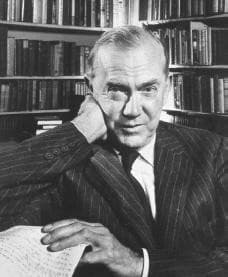
Henry Graham Greene was an English writer and journalist regarded by many as one of the leading English novelists of the 20th century.
Similar books
- A Farewell to Arms
Ernest Hemingway
3.8 (263k) average on GoodreadsHistorical FictionExplores love and war through a cynical lens, with a focus on a journalist protagonist.
- Disgrace
J. M. Coetzee
3.8 (87k) average on GoodreadsLiterary FictionExamines moral compromise and the impact of political upheaval on personal lives.
- The End of the Affair
Graham Greene
3.9 (52k) average on GoodreadsLiterary FictionShares Greene's signature themes of love, betrayal, and moral struggle in a complex relationship.
- A Bend in the River
V. S. Naipaul
3.8 (15k) average on GoodreadsLiterary FictionWhile both novels explore post-colonial disillusionment and the complexities of Westerners in non-Western lands, The Quiet American focuses on the direct, often destructive, impact of Western intervention and ideology. A Bend in the River (1979) offers a more internal, character-driven examination of the struggles of a newly independent African nation through the eyes of an Indian merchant, Salim. Naipaul's work delves deeper into the psychological landscape of post-colonial identity and the challenges of forging a new society, whereas Greene's is more overtly a political critique of external forces. Greene's narrative is more focused on the clash of ideologies, while Naipaul explores the decay and corruption within the newly formed states themselves.
- Dispatches
Michael Herr
4.2 (16k) average on GoodreadsBiographyThe Quiet American and Dispatches (1977) both engage with the Vietnam War, but their approaches differ significantly. Greene's novel, written before the full scale of American involvement, is a fictionalized, almost prophetic, warning about the dangers of naive intervention, told through a more traditional narrative structure. Herr's Dispatches, on the other hand, is a non-fiction, highly impressionistic, and visceral account of the American experience of the war itself, written from the perspective of a combat journalist. Herr's style is fragmented and hallucinatory, aiming to capture the chaotic reality of war, while Greene's prose is more measured and analytical, focusing on the underlying political and moral principles at play. Greene examines the why of intervention, Herr the what and how of its lived experience.
- The Old Man and the Sea
Ernest Hemingway
3.8 (831k) average on GoodreadsLiterary FictionA Cuban fisherman's long struggle with a giant marlin becomes a story of endurance and dignity, now retold for young adults with illustrations, phonetic guides, and writing prompts in Traditional Chinese.





Enjoyed the summary?
A summary gives you the shape of the book. The book itself has the detail, the examples and the voice.
Find The Quiet American on AmazonAs an Amazon Associate, BookBrief earns from qualifying purchases. How we're funded