
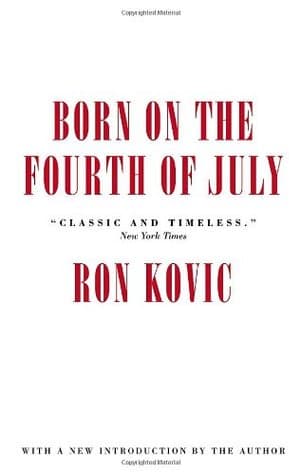
Core Idea
- Difficulty
- Medium
- Read it if
- You want a raw, visceral, and deeply personal account of the physical and psychological toll of war, the disillusionment of patriotic idealism, and the struggles of veterans upon returning home. It's essential for understanding the Vietnam War's impact from a soldier's perspective and the genesis of the anti-war movement among veterans.
- Skip it if
- You are looking for a detached historical analysis of the Vietnam War, prefer to avoid graphic descriptions of combat and injury, or are uncomfortable with intense themes of suffering, betrayal, and social injustice.
Key Takeaways from Born on the Fourth of July
The Allure of Patriotic Idealism
Unquestioning patriotism can lead to devastating disillusionment.
Kovic's early life shows how deeply nationalistic feelings can be, especially in small-town America during the Cold War. Raised on John Wayne movies and Fourth of July parades, he took on a heroic view of military service, seeing it as the ultimate sign of masculinity and patriotism. This idealism, supported by family, community, and popular culture, created a strong pull towards the Vietnam War. Kovic truly believed he was fighting for freedom and democracy, a belief that made his later experiences even more shocking and his change so great. His story is a warning about the dangers of accepting national stories without question, especially when they lead young people into conflict without a full grasp of its complexities or results.
“I was born on the Fourth of July, 1946, and I remember when I was a little boy my mother told me that I was a special child, a special American, and that God had a plan for me.”
In the book: Kovic details his childhood in Massapequa, Long Island, where parades, Boy Scouts, and the perceived threat of communism shaped his worldview. He describes his eagerness to enlist in the Marines, viewing it as a rite of passage and a sacred duty.
Try this: Question the dominant narratives presented by media and government, especially concerning military intervention. Seek out diverse perspectives and historical context before forming opinions on conflict and national duty. Encourage critical thinking in younger generations about patriotism and service.
Related ideas: patriotism, idealism, military-service, disillusionment
The Brutality of War's Reality
War shatters innocence and exposes the horrific gap between propaganda and experience.
Kovic's clear descriptions of combat in Vietnam are a sharp contrast to his childhood fantasies. He tells of the chaotic, terrifying, and morally unclear nature of guerrilla warfare, where the enemy is often unseen and the lines between soldier and civilian are blurred. The psychological cost of constant fear, the awful injuries, and the pointless violence fundamentally change his view of heroism and purpose. This part of the memoir is important for understanding the immediate impact of war, moving beyond abstract political talks to the actual experience of soldiers. It shows how quickly the romanticized image of battle disappears when faced with death, suffering, and the dehumanizing conditions of conflict. Kovic's personal trauma becomes a universal symbol for the terrible human cost of war.
“There was no glory in this, only screams and the smell of blood and guts.”
In the book: Kovic recounts specific incidents, such as witnessing the deaths of fellow soldiers, the fear during ambushes, and the tragic friendly-fire incident where he accidentally killed a member of his own platoon, a moment that haunted him deeply.
Try this: Seek out first-hand accounts and histories of war to gain a more accurate understanding of its true nature. Support initiatives that prioritize peace and diplomatic solutions over military intervention. Advocate for robust mental health support for veterans.
Related ideas: war-trauma, combat-experience, disillusionment, violence
The Invisible Wounds of Survival
Physical injury is only one facet of war's lasting damage; psychological scars run deeper.
Kovic's severe spinal cord injury, which leaves him paralyzed, is a life-changing event. However, the book strongly shows that his physical wounds are closely tied to deep psychological and emotional trauma. His return to an indifferent and often hostile America, combined with the loss of his physical abilities, causes strong feelings of anger, shame, and despair. The struggle to connect his pre-war identity with his post-war reality, along with the guilt over his actions in Vietnam, highlights the complex and often hidden burdens veterans carry. Kovic's journey through rehabilitation, both physical and mental, shows the great need for full support systems that address the complete well-being of those who have served.
“I had given my legs to my country, but I had lost my soul.”
In the book: Kovic details his experiences in overcrowded and understaffed VA hospitals, the indignities of his physical condition, and his struggles with impotence, alcoholism, and suicidal thoughts upon returning home.
Try this: Recognize that veterans' needs extend far beyond physical rehabilitation. Advocate for improved funding and resources for mental health services, counseling, and peer support programs for veterans. Practice empathy and understanding towards those who have experienced trauma.
Related ideas: PTSD, veterans-affairs, disability, mental-health
The Betrayal of the Homefront
Returning veterans often face indifference or hostility, deepening their sense of alienation.
One of the most painful parts of Kovic's story is the sharp difference between the hero's welcome he expected and the reality of his return. Instead of thanks, he finds a society deeply divided by the war, often putting its anger and frustration onto returning soldiers. This rejection, combined with poor medical care and a lack of understanding, adds to his trauma. The gap between his sacrifice and the public's view of the war fuels his rage and feeling of betrayal. This experience is not unique to Kovic but reflects the wider challenges many Vietnam veterans faced, showing a deep societal failure to support and help those who served, regardless of political opinions on the conflict itself.
“I had come home, but it wasn't home anymore. I was a stranger in my own country.”
In the book: Kovic describes being spat on, called 'baby killer,' and facing general apathy or discomfort from civilians. He also details the poor conditions and lack of respect he encountered in VA hospitals.
Try this: Separate the war from the warrior. Regardless of political views on a conflict, support and respect those who serve. Advocate for better social and economic reintegration programs for all veterans, ensuring they receive the care and respect they deserve.
Related ideas: veterans-rights, social-reintegration, public-perception, alienation
Transformation Through Protest
Personal suffering can be a powerful catalyst for political awakening and activism.
Kovic's journey from a strong patriot to an outspoken anti-war activist is the main part of his change. His personal suffering, along with his growing awareness of the war's pointlessness and unfairness, makes him put his anger into a larger cause. His disability, at first a source of shame, becomes a strong symbol of the war's cost, giving his voice unique moral authority. This shift shows how deep personal experience can lead to a complete re-evaluation of one's beliefs and a commitment to social change. Kovic's activism was not just a political stance; it was a deeply personal act of taking back his story and finding purpose amid his pain, turning his individual tragedy into a collective call for peace.
“I had gone from being a good American boy to a radical, and I was proud of it.”
In the book: Kovic recounts his involvement with Vietnam Veterans Against the War (VVAW), his participation in protests, and his dramatic confrontations with political figures, including his famous protest at the Republican National Convention in 1972.
Try this: Recognize the power of personal narrative in social movements. If passionate about an issue, find ways to make your voice heard, whether through advocacy, protest, or community organizing. Support organizations that empower marginalized voices to speak truth to power.
Related ideas: anti-war-movement, activism, political-awakening, social-justice
The Moral Cost of Conflict
War forces individuals to commit acts that deeply scar their conscience.
Beyond the physical injuries, Kovic deals with deep moral injuries, especially the guilt over the friendly-fire incident. This event, where he accidentally killed a fellow Marine, haunts him constantly, showing the chaotic and morally unclear nature of combat. The book highlights how war can make people do things that go against their strong values, leaving a lasting mark on their conscience. This moral burden often goes unaddressed in post-war support, yet it is a key part of veterans' long-term psychological struggles. Kovic's struggle for redemption and self-forgiveness is a strong look at the hidden costs of conflict, far beyond body counts and strategic goals.
“I had killed a man, a fellow American, by mistake. And no one would ever forgive me, especially myself.”
In the book: Kovic repeatedly returns to the memory of the friendly-fire incident, describing the psychological torment and nightmares it caused him, and his desperate attempts to confess and seek absolution.
Try this: Understand that the 'fog of war' can lead to tragic mistakes, and these actions carry immense psychological weight for those involved. Advocate for mental health services that specifically address moral injury and guilt in veterans. Promote restorative justice and reconciliation processes.
Related ideas: moral-injury, guilt, conscience, redemption
Resilience in the Face of Adversity
The human spirit can find strength and purpose even in the deepest despair.
Despite the huge physical and psychological challenges Kovic faces, his story is one of remarkable resilience. His journey from suicidal despair to becoming a leading voice for peace shows an extraordinary ability for human endurance and change. His will to survive, to make sense of his suffering, and to turn it into meaningful action shows the power of the human spirit. This resilience is not presented as a simple win but as a hard-fought battle, full of setbacks and moments of deep struggle. Kovic's ability to find purpose in his pain, to advocate for a better future, offers a strong message of hope amid tragedy.
“I was broken, but I was not defeated. I would live, and I would fight.”
In the book: Kovic's persistence in physical therapy, his determination to escape the confines of his hospital bed, and his unwavering commitment to the anti-war movement despite facing arrest and public hostility.
Try this: Cultivate resilience by finding purpose in challenging experiences. Seek support networks and therapeutic interventions when facing trauma. Remember that healing is a process, and finding meaning can be a powerful motivator for recovery.
Related ideas: resilience, healing, purpose, hope
The Enduring Legacy of War
The consequences of conflict reverberate for generations, shaping national identity.
Kovic's memoir is not just a personal story but a key historical document that shows the lasting impact of the Vietnam War on American society. His experiences, and the public's reaction to them, reflect the deep divisions, moral reckoning, and changing national awareness that defined the era. The book argues that the 'Vietnam Syndrome' – a national hesitation to get involved in foreign military actions – was a direct result of the human cost and moral ambiguities the war exposed. Kovic's continued advocacy ensures that the lessons of Vietnam are not forgotten, serving as a constant reminder that the consequences of war go far beyond the battlefield, shaping political discussion, social values, and the collective memory of a nation for decades.
“The war was over, but it would never be over for me, or for America.”
In the book: The book's reception and continued relevance, as highlighted by contemporary endorsements, underscore its enduring impact on understanding the Vietnam War's legacy and its parallels to modern conflicts.
Try this: Study history to understand the long-term consequences of military actions. Support initiatives for historical preservation and education about past conflicts. Engage in informed civic discourse about foreign policy and military intervention.
Related ideas: historical-memory, national-identity, war-legacy, vietnam-syndrome
Finding Voice Through Vulnerability
Sharing personal pain can empower others and foster collective healing.
Kovic's choice to write 'Born on the Fourth of July' is an act of great vulnerability and courage. By openly sharing his most painful experiences – his physical wounds, psychological trauma, and moral struggles – he not only takes back his own story but also gives voice to countless other veterans who suffered in silence. The memoir is a strong example of the healing power of storytelling, turning personal agony into a public message that connects deeply with others. Kovic's willingness to expose his raw truth broke down barriers, creating empathy and understanding, and significantly adding to the national conversation about the true costs of war and the needs of its veterans.
“I had to tell my story, for all the men who couldn't, for all the ones who were still suffering in silence.”
In the book: The very existence of the book, its detailed and unflinching descriptions of his experiences, and its impact on public discourse and other veterans.
Try this: Recognize the power of sharing personal stories for healing and advocacy. Create safe spaces for individuals to share their experiences, especially those related to trauma. Support authors and artists who use their platforms to bring difficult truths to light.
Related ideas: storytelling, vulnerability, collective-healing, empathy
Born on the Fourth of July Quotes
“I was born on the Fourth of July, 1946, and growing up I used to love to stand with my dad and salute the flag.”
“It was the war, it was the war that did it to him. It turned him into an animal.”
“I was an all-American kid, and I believed in my country, and I believed in the war.”
“I killed people. I killed people for this country.”
“I was paralyzed from the chest down. I would never walk again.”
“They promised us glory, but they gave us wheelchairs.”
“I had given my youth to my country, and now I was being treated like a cripple, an outcast.”
“I was a veteran, a paraplegic, and I was going to change things.”
“We were fighting a war in Vietnam, and another war right here at home.”
“The war was not over for me. It was just beginning.”
“I knew what I had to do. I had to speak out.”
“I had been born on the Fourth of July, and I felt I had a right to speak my mind.”
“I was a marine, and I had served my country. And now I was a man who hated war.”
“We came home, and nobody cared. Nobody really gave a damn.”
Quiz
10 questions on the main ideas. Each answer comes with a short explanation.
Question 1
What significant event occurred on the same day Ron Kovic was born, which later became the title of his memoir?
- The end of World War II
- The signing of the Declaration of Independence
- The beginning of the Korean War
- The attack on Pearl Harbor
Show answer
B. The signing of the Declaration of Independence Ron Kovic was born on July 4th, the day the Declaration of Independence was signed, which is directly referenced in the book's title, 'Born on the Fourth of July.'
Question 2
What was Ron Kovic's initial motivation for enlisting in the Marine Corps and going to Vietnam?
- To escape a difficult home life
- A strong sense of patriotism and duty to his country
- To avoid being drafted into the Army
- To seek adventure and travel the world
Show answer
B. A strong sense of patriotism and duty to his country The memoir highlights Kovic's strong patriotic upbringing and his belief in fighting for his country, a common sentiment in his generation, especially prior to his injury and disillusionment.
Question 3
What specific injury did Ron Kovic sustain in Vietnam that left him paralyzed?
- A head injury from shrapnel
- Multiple gunshot wounds to his legs
- A spinal cord injury from a gunshot wound
- Severe burns over a large portion of his body
Show answer
C. A spinal cord injury from a gunshot wound Kovic was shot in the spine during combat, leading to his paralysis from the chest down, which is a central turning point in his life and the book.
Question 4
Upon returning home, what was one of the most significant challenges Kovic faced in the Veterans Administration (VA) hospitals?
- A lack of physical therapy equipment
- Overcrowding and inadequate, often dehumanizing, care
- Difficulty finding doctors specializing in spinal injuries
- Prohibitive costs for his medical treatments
Show answer
B. Overcrowding and inadequate, often dehumanizing, care The book vividly details the horrific conditions, neglect, and lack of dignified care Kovic and other veterans experienced in the underfunded and overcrowded VA hospitals.
Question 5
How did Kovic's perspective on the Vietnam War evolve after his injury and return to the United States?
- He became even more convinced of the war's necessity.
- He remained neutral, focusing solely on his recovery.
- He transformed into an outspoken anti-war activist.
- He blamed only the soldiers for the war's failures.
Show answer
C. He transformed into an outspoken anti-war activist. Kovic's personal suffering and the treatment of veterans led him to a profound disillusionment with the war and government policy, becoming one of the most prominent anti-war voices.
Question 6
What role did Ron Kovic play in the anti-war movement, as described in the memoir?
- He primarily focused on writing letters to politicians.
- He organized fundraising events for injured veterans.
- He participated in protests, speeches, and civil disobedience.
- He served as a silent observer at anti-war rallies.
Show answer
C. He participated in protests, speeches, and civil disobedience. Kovic became a very active and visible figure in the anti-war movement, often speaking publicly from his wheelchair and participating in direct actions and protests to voice his opposition.
Question 7
The book explores the concept of 'the American Dream' and how it was perceived by Kovic both before and after his injury. How did his injury specifically challenge his initial understanding of this dream?
- It showed him that the American Dream was only attainable through military service.
- It revealed the hollowness of unquestioning patriotism and the cost of war on individuals.
- It led him to believe the American Dream was exclusively for the wealthy.
- It made him appreciate the American Dream more, despite his sacrifices.
Show answer
B. It revealed the hollowness of unquestioning patriotism and the cost of war on individuals. Kovic's injury and subsequent experiences exposed the darker side of a dream built on aggressive nationalism, showing him the personal devastation and governmental neglect that contradicted the idealized version of America he grew up with.
Question 8
Which significant political event did Ron Kovic famously disrupt, using his platform to protest the war?
- The 1968 Democratic National Convention
- A speech by President Richard Nixon at the 1972 Republican National Convention
- A congressional hearing on military funding
- A veterans' parade in Washington D.C.
Show answer
B. A speech by President Richard Nixon at the 1972 Republican National Convention Kovic, along with other veterans, famously confronted President Nixon during his acceptance speech at the 1972 Republican National Convention, an act of defiance that became a powerful symbol of veteran disillusionment.
Question 9
The memoir concludes with Kovic's continued commitment to peace and justice. What is the overarching message Kovic aims to convey through sharing his personal story?
- That military service is inherently flawed and should be avoided at all costs.
- The importance of individual resilience in overcoming physical disabilities.
- The devastating human cost of war and the imperative for peace.
- A call for increased funding for veterans' healthcare services.
Show answer
C. The devastating human cost of war and the imperative for peace. While individual resilience and veterans' care are part of his story, the primary and most powerful message Kovic delivers is the profound and devastating impact of war on human lives and his passionate plea for peace.
Question 10
Oliver Stone, who directed the film adaptation, is quoted as saying the book is 'as relevant as ever.' What contemporary issue might this relevance most strongly allude to, based on the book's themes?
- The ongoing debate about celebrity influence in politics.
- The challenges of space exploration and technological advancement.
- The continued engagement in foreign conflicts and the treatment of returning veterans.
- The economic impact of global trade agreements.
Show answer
C. The continued engagement in foreign conflicts and the treatment of returning veterans. The book's themes of the human cost of war, the disillusionment of soldiers, and the struggles of veterans remain highly pertinent in an era where the United States continues to be involved in military conflicts and faces ongoing challenges in supporting its returning service members.
Born on the Fourth of July FAQ
What is 'Born on the Fourth of July' about?
'Born on the Fourth of July' is Ron Kovic's memoir detailing his transformation from a patriotic young man who volunteered for service in Vietnam to a severely wounded veteran who became a prominent anti-war activist. It covers his battlefield injury, his experiences in veterans' hospitals, and his subsequent political awakening.
Does 'Born on the Fourth of July' accurately portray the Vietnam War?
Yes, the book offers a very personal and raw account of the Vietnam War from a soldier's perspective, including the intensity of combat and the devastating consequences of injury. It is widely regarded as a powerful and authentic portrayal of the war and its aftermath.
What is the significance of the title 'Born on the Fourth of July'?
The title refers to Ron Kovic's birthdate, July 4th, which symbolizes his deep-seated patriotism and initial belief in American ideals. This contrasts sharply with his later disillusionment and activism against the war, highlighting the dramatic shift in his life and perspective.
How is 'Born on the Fourth of July' different from other Vietnam War memoirs?
While many memoirs focus on combat, Kovic's book uniquely emphasizes the profound physical and psychological toll of war, particularly the struggles of disabled veterans and the journey into anti-war activism. It stands out for its unflinching honesty about post-war challenges and political engagement.
Does the book cover Ron Kovic's life after the Vietnam War?
Yes, a significant portion of the book details Kovic's life after his injury, including his difficult recovery in veterans' hospitals, his growing political consciousness, and his eventual emergence as a leading voice in the anti-Vietnam War movement, advocating for peace and veterans' rights.
What impact did 'Born on the Fourth of July' have on public perception of the Vietnam War?
The book, along with its film adaptation, played a crucial role in shaping public understanding of the human cost of the Vietnam War, particularly for those who served. It helped humanize the struggles of veterans and fueled the anti-war sentiment, prompting greater reflection on the conflict's legacy.
Is 'Born on the Fourth of July' a true story?
Yes, 'Born on the Fourth of July' is a non-fiction memoir based entirely on Ron Kovic's personal experiences. It is his autobiography, detailing his life from childhood through his service in Vietnam, his injury, and his subsequent activism.
How does the book's message remain relevant today?
The book's themes of patriotism, the cost of war, the challenges faced by veterans, and the importance of speaking truth to power remain highly relevant. It serves as a powerful reminder of the human impact of conflict and the ongoing need for peace and support for those who serve.
About the author

Ron Kovic is an American author and anti-war activist known for his memoir "Born on the Fourth of July," which recounts his experiences as a Vietnam War veteran and the impact of war on his life. His work has contributed to discussions on veterans' issues and the anti-war movement. Kovic's writings often reflect his personal journey and advocacy for peace.
Similar books
- Johnny Got His Gun
Dalton Trumbo
4.2 (34k) average on GoodreadsPoliticsA powerful anti-war novel depicting the extreme physical and mental suffering of a severely wounded soldier.
- Dispatches
Michael Herr
4.2 (16k) average on GoodreadsBiographyOffers a gritty, immersive, and hallucinatory journalistic account of the Vietnam War from the ground.
- The Diary of a Young Girl
Anne Frank
4.2 (2.7M) average on GoodreadsBiographyDuring the Nazi occupation, a teenage girl's diary, written from a secret annex, shares observations on humanity, hope, and the wait for freedom.
- Eat, Pray, Love
Elizabeth Gilbert
3.6 (1.5M) average on GoodreadsLifestyleA heartbroken writer leaves her conventional life for a year-long global search for pleasure in Italy, spiritual devotion in India, and unexpected love and balance in Bali.
- Night
Elie Wiesel
4.3 (970k) average on GoodreadsBiographyIn the darkness of Auschwitz and Buchenwald, a teenage Elie Wiesel faces the extermination of his family, the loss of his faith, and the lasting scars of humanity's deepest cruelty.
- Steve Jobs
Walter Isaacson
4.1 (957k) average on GoodreadsBusinessSteve Jobs was a visionary who fused creativity and technology to revolutionize six industries and shape our digital world.




Enjoyed the summary?
A summary gives you the shape of the book. The book itself has the detail, the examples and the voice.
Find Born on the Fourth of July on AmazonAs an Amazon Associate, BookBrief earns from qualifying purchases. How we're funded