
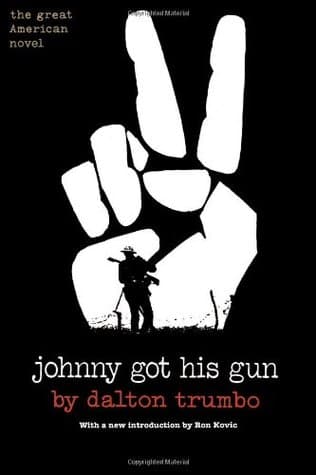
Synopsis
Covers the whole plot, including the ending.
- Difficulty
- Hard
- Pacing
- Slow
- Mood
- Dark, Despairing, Reflective, Horrific, Uncompromising
- Read it if
- You want a powerful, visceral anti-war statement that explores the psychological torment of extreme injury and isolation, and are prepared for a deeply unsettling and thought-provoking read.
- Skip it if
- You are sensitive to graphic descriptions of war injuries, find existential despair overwhelming, or prefer narratives with a clear sense of hope or resolution.
Johnny Got His Gun Plot Summary
Covers the whole plot, including the ending.
The Awakening in Darkness
Joe Bonham, a young American soldier, slowly wakes in a hospital bed, but finds himself in complete darkness and silence. He cannot move or feel his limbs. Initially, he thinks he is dreaming, remembering parts of his pre-war life and the moments before his injury. He recalls being hit by an artillery shell on the Western Front during World War I. As he tries to understand his surroundings, a realization comes: he cannot see, hear, speak, or move. He is a torso with a brain, a living prisoner in his own body, cut off from all senses except touch on his back and the bed's vibrations.
A Life Recalled
Trapped in his body, Joe's mind becomes his only escape. He begins to recall his past life, reliving childhood memories in Shale City, Colorado. He remembers his family: his kind father, his loving mother, and his girlfriend, Kareen. He recalls ordinary but precious details: fishing trips, his job at the bakery, school days, and moments with Kareen. These memories are clear, providing a sharp contrast to his current, horrifying existence. He holds onto these parts of his former self, as they are the only proof he has of a life beyond the darkness and silence that now surrounds him.
The Discovery of His Mutilation
Through deduction and the faint sensations he can perceive, Joe gradually understands the full extent of his injuries. He realizes his arms and legs have been amputated, his face destroyed, leaving him without eyes, nose, or mouth. His ears are gone, too, explaining the silence. He is a mere trunk, a brain in a body kept alive by medical technology. This realization is a shock, leading to despair and terror. He struggles to understand how he can continue to exist in such a state, stripped of all human abilities and connections.
The Nurse's Touch
After a long period of isolation, Joe discovers he can feel subtle vibrations from people touching his bed. He learns to tell the difference between the heavy steps of doctors and the lighter touch of a nurse. Through willpower and repeated tries, he finds a way to communicate. He begins to tap his head against the pillow in Morse code. His first message is 'MERRY CHRISTMAS,' a desperate attempt to show he is conscious and intelligent. To his relief, a kind nurse eventually understands his tapping, signaling back with her finger. This breakthrough offers a glimmer of hope and a connection to the outside world.
The Struggle for Communication
With the nurse's help, Joe tries to communicate his most urgent desire: to be taken out of the hospital and shown to the world as a living example of war's horrors. He wants to be a warning, to prevent future generations from suffering the same fate. He spells out messages like 'PUT ME ON EXHIBITION' and 'SHOW THE PEOPLE WHAT WAR DOES.' The nurse, at first sympathetic, becomes distressed and confused by his demands. She understands his words but struggles with their implications and the potential consequences of fulfilling such a request.
The Doctors' Dilemma
The doctors learn of Joe's communication attempts. They are fascinated and disturbed by his awareness, having previously thought him a vegetable. A medical board meets to discuss his case. Some doctors see him as a medical miracle, while others question the ethics of keeping him alive in such a state. They debate the meaning of his messages and the implications of his request to be publicly displayed. The military, represented by a general, is hesitant to allow such a display, fearing it would harm morale and become an anti-war symbol, going against their propaganda efforts.
The General's Refusal
Despite Joe's desperate pleas, conveyed through the nurse, the military general refuses his request. The general argues that Joe, as a symbol of war's devastation, would hurt the war effort and public perception. He insists that Joe's existence must remain a secret, a hidden tragedy. The military's decision highlights the conflict between individual suffering and the perceived needs of the state. Joe learns of the refusal through the nurse's taps, a crushing blow that ends his last hope of making his suffering meaningful.
Despair and Rebellion
Crushed by the refusal, Joe falls into despair. He realizes he is condemned to a perpetual, silent existence in his dark room. He tries to commit suicide by holding his breath, but his body's automatic reflexes force him to breathe. In his desperation, he tries to bang his head against the bed frame, hoping to end his life, but he is too weak to cause fatal damage. This period marks his lowest point, yet it also sparks a new resolve. If he cannot die, he will find another way to fight, even if it means disrupting the hospital's peace.
The Last Message
Joe, with a renewed sense of purpose, begins to tap out a new message, more urgent and defiant than before. He taps 'S.O.S.' repeatedly, hoping to alert anyone beyond his immediate caretakers. He then tries to convey a message of warning and protest against war, trying to reach a wider audience. He wants to tell the world that 'THERE ARE THOUSANDS LIKE ME' and 'WAR IS A LIE.' He keeps tapping, even when ignored, a relentless rhythm of protest against his imprisonment and the forces that put him there.
The Silence Returns
As Joe continues to tap his defiant messages, the hospital staff, under military orders, takes steps to silence him. The nurse who understood him is removed, and new staff is brought in who do not engage with his tapping. Eventually, a new form of restraint or medication is given, which seems to prevent him from communicating effectively. The vibrations stop, the subtle touches cease to convey meaning, and Joe is again plunged into the profound, unyielding darkness and silence that defined his initial awakening. He is left alone, his mental protests unheard, forever a prisoner in his own mind, a forgotten casualty of a war he barely understood.
Johnny Got His Gun Characters
Joe Bonham
Protagonist
A young American soldier, catastrophically wounded in World War I.
Joe Bonham is a working-class young man from Shale City, Colorado, who volunteers for service in World War I. Before his injuries, he is portrayed as typical and good-natured, enjoying simple pleasures like fishing, working at the bakery, and spending time with his girlfriend, Kareen. He represents the common soldier, unburdened by grand ideologies, thrust into a brutal conflict. After his injuries, he becomes a symbol of the ultimate cost of war, stripped of all senses and physical autonomy, yet retaining his intellect and spirit. His internal monologue is the primary narrative vehicle, revealing his memories, fears, and profound philosophical questions.
Relationships: Kareen (His loving girlfriend, a source of comfort and longing.); His Mother (A figure of warmth and domestic stability in his memories.); His Father (A guiding, moral presence in his childhood recollections.); The Nurse (His initial, empathetic link to the outside world and primary communicator.)
Kareen
Supporting
Joe's girlfriend, a symbol of his lost past and normal life.
Kareen is Joe Bonham's girlfriend, a central figure in his pre-war memories. She represents the love, companionship, and normalcy that Joe has lost due to his injuries. Her image and their shared moments are frequently recalled by Joe, serving as a powerful contrast to his current, horrific existence. She embodies the simple, profound joys of life that war has irrevocably stolen from him. Her presence in his thoughts provides both comfort and an agonizing reminder of what he can never reclaim.
Relationships: Joe Bonham (His romantic partner, a deep and loving connection.)
The Nurse
Supporting
A compassionate hospital worker who discovers Joe's ability to communicate.
The nurse is a pivotal character, serving as Joe's sole link to the outside world for a significant period. She is portrayed as kind, empathetic, and patient, eventually understanding Joe's Morse code tapping. Her initial willingness to communicate with him brings Joe immense relief and hope. However, she is also bound by the hospital's rules and the military's directives, leading to her eventual inability to fully support Joe's radical requests. She represents the compassionate individual caught within the machinery of war and bureaucracy.
Relationships: Joe Bonham (His primary caregiver and initial, secret communicator.)
The Doctors
Supporting
The medical professionals responsible for Joe's care and ethical dilemma.
The doctors are a collective entity representing the medical establishment that keeps Joe alive. They are initially unaware of his consciousness, treating him as a vegetative case. Once his communication is discovered, they are presented with a profound ethical and medical dilemma: whether to keep him alive, how to interpret his wishes, and the implications of his unique condition. Some are depicted as scientifically curious, others as more concerned with the practicalities and military directives. They ultimately serve as agents of the system that maintains Joe's existence but also restricts his agency.
Relationships: Joe Bonham (His medical caretakers, responsible for his physical survival.)
The General
Antagonist
A military official who represents the war machine and its priorities.
The General is the embodiment of the military-industrial complex and the forces of propaganda. He is the ultimate authority who denies Joe's request to be put on public display. His primary concern is the war effort, morale, and controlling public perception, rather than the individual suffering of a soldier. He views Joe not as a human being, but as a potential anti-war symbol that must be suppressed. His decision seals Joe's fate, condemning him to perpetual isolation and rendering his suffering meaningless in the eyes of the state.
Relationships: Joe Bonham (The authority figure who denies Joe's freedom and silences his message.)
Joe's Father
Mentioned
A figure of wisdom and moral guidance in Joe's memories.
Joe's father appears frequently in Joe's memories, often dispensing simple, practical wisdom or expressing philosophical observations about life and work. He represents a grounded, ethical perspective from Joe's past, contrasting sharply with the amoral chaos of war. His advice and presence contribute to Joe's internal moral compass, even in his current, desperate state. He embodies the pre-war innocence and values that Joe lost.
Relationships: Joe Bonham (His loving and influential father.)
Joe's Mother
Mentioned
A figure of comfort and domesticity in Joe's memories.
Joe's mother, like his father, is a recurring presence in his vivid recollections of his childhood. She represents warmth, comfort, and the domestic stability of his pre-war life. Her image evokes feelings of safety and nurturing, providing a stark contrast to the cold, sterile, and terrifying reality of his hospital bed. Her memory serves as a reminder of the foundational love and security that war has brutally stripped away from him.
Relationships: Joe Bonham (His loving mother, a source of comfort.)
Johnny Got His Gun Themes
The Horrors and Futility of War
The main theme of 'Johnny Got His Gun' is the devastating and dehumanizing impact of war. Joe Bonham's extreme injuries—blind, deaf, mute, and limbless—are a metaphor for how war strips individuals of their humanity and control. The novel challenges glorified stories of patriotism and sacrifice, instead showing war as a senseless slaughter that leaves behind broken bodies and shattered lives. Joe's internal monologue questions the purpose of such suffering, especially when his government refuses to let him become a living warning against future conflicts, effectively silencing his message. This theme is explored through Joe's sensory deprivation and his desperate attempts to communicate the truth of his condition.
“What the hell are they fighting for? Did they know? Did any of them know? Or did they just think they knew?”
The Value of Life and Human Connection
Through Joe's isolation and loss of sensory input, the novel shows the immense value of basic human abilities and connections. His clear memories of sight, sound, taste, and touch, especially with Kareen and his family, highlight how precious these ordinary experiences are. His struggle to communicate, first through Morse code and then through desperate tapping, emphasizes the basic human need for connection and interaction. The moments he successfully communicates with the nurse are filled with emotional weight, showing that even a flicker of connection can bring hope in the darkest times. Conversely, the forced silence at the end reinforces the cruelty of severing these vital ties.
“He knew that if he could only touch somebody and somebody could only touch him then he would be all right.”
Individual vs. State
The conflict between Joe's individual suffering and the state's political agenda is a key theme. Joe, as an individual, wants to use his horrific condition to warn the world about war's true cost. However, the military, through the General, denies his request, fearing his public display would harm morale and the war effort. This shows how the state prioritizes its own interests—propaganda, recruitment, and maintaining public support for war—over the rights, wishes, and humanity of its soldiers. Joe's ultimate silencing is a grim comment on how individuals can be sacrificed and their suffering exploited or hidden for political reasons.
“He was a thing and they were treating him like a thing. He was a piece of meat and they were going to keep him like a piece of meat.”
Memory and Identity
Without external stimuli and physical self, Joe's identity depends almost entirely on his memories. His constant recollection of his past life—his family, Kareen, his job, childhood events—is not just a way to pass time, but an act of self-preservation. These memories allow him to keep a sense of who he was, contrasting sharply with his present, unrecognizable state. They are the only proof he has of a life lived, a person he once was. The fragility of this identity, battling against the overwhelming reality of his present, shows how deeply our experiences and connections shape who we are.
“He knew who he was because he remembered who he was. He was Joe Bonham and he came from Shale City, Colorado.”
Plot Devices & Literary Techniques
First-Person Interior Monologue
The entire narrative is conveyed through Joe Bonham's thoughts.
This device immerses the reader entirely within Joe's mind, making his sensory deprivation and internal struggles intensely personal and claustrophobic. Since Joe cannot see, hear, or speak, his thoughts, memories, and deductions become the sole source of information and narrative progression. This forces the reader to experience his isolation directly, amplifying the horror and pathos of his condition. The monologue shifts between past memories and present realizations, creating a powerful contrast between Joe's vibrant past and his grim reality.
Sensory Deprivation
Joe's complete loss of sight, hearing, smell, and taste.
The device of sensory deprivation is central to the novel's impact. By stripping Joe of all his senses except a vague sense of touch and proprioception, Trumbo forces both Joe and the reader to confront the essence of human existence. It highlights how much we rely on our senses to perceive reality, connect with others, and define ourselves. The absence of these senses creates a profound, terrifying isolation, making Joe's internal world the only accessible reality and underscoring the dehumanizing effects of his injuries.
Morse Code Communication
Joe's method of tapping his head to communicate.
The use of Morse code is a crucial plot device that provides Joe with a means of agency and hope. It is his only way to break through his profound isolation and connect with the outside world. This device creates immense tension and relief, first when he realizes he can communicate, and later when the nurse understands him. It represents a desperate human need for expression and connection, even under the most extreme circumstances. Its eventual silencing by the authorities underscores the novel's theme of the individual being crushed by the state.
Flashbacks/Memory Sequences
Joe's recurring recollections of his life before the war.
These sequences are vital for establishing Joe's character, providing context for his past, and creating a stark contrast with his present condition. The vivid, often nostalgic memories of his family, girlfriend, and everyday life in Shale City allow the reader to understand what Joe has lost. They also serve as a mental escape for Joe, a way to maintain his sanity and identity in the face of his horrific reality. These flashbacks make his current suffering all the more poignant by showing the vibrant life that was destroyed.
Johnny Got His Gun Quotes
“The thing to remember about democracy, he said, is that it is a tool. Like a hammer. And like a hammer it can be used to build a house or to smash a skull.”
“It was a good war even if it was a bad war. It was a good war because it was the last war. It was a good war because it was a war to end all wars.”
“How can you die when you're already dead?”
“And the people who own the factories and the banks and the land and the ships and the mines and the oil wells are the same people who own the newspapers and the radio stations and the moving picture studios and the schools and the churches.”
“He was a boy who had lost his arms and his legs and his eyes and his ears and his mouth and his nose. He was a boy who had lost everything but his brain.”
“If they give you a gun they want you to use it and if you use it they want you to use it on somebody they dont like and if you use it on somebody they dont like you are a hero.”
“The greatest thing in the world is to be alive and the next greatest thing is to be dead and the worst thing is to be neither one nor the other.”
“Freedom is a big word. It's a word that means a lot of things. It's a word that means different things to different people.”
“He wondered what it would be like to be a bird and fly away to some other place where there were no wars and no people who wanted to kill each other.”
“They say that war is hell. But hell is a place where you can die. This is not hell. This is worse than hell.”
“The only way to make sure that there wouldn't be any more wars was to make sure that there wouldn't be any more soldiers.”
“He tried to remember what it was like to walk and to run and to jump and to dance and to feel the sun on his face and the wind in his hair.”
“He wanted to tell them that he was still alive and that he wanted to be seen and heard and understood.”
“There was no such thing as a good war or a bad war. There was only war.”
Quiz
10 questions on the plot and the characters. Each answer comes with a short explanation.
Question 1
What is Joe Bonham's primary physical state after the artillery shell explosion?
- He is paralyzed but otherwise unharmed.
- He has lost all his limbs, his face, and most of his senses.
- He is blind and deaf but can still speak and move.
- He has a severe head injury but is expected to make a full recovery.
Show answer
B. He has lost all his limbs, his face, and most of his senses. Joe Bonham is described as having lost his arms, legs, eyes, ears, nose, and mouth, leaving him a torso and a brain.
Question 2
Through what primary sense does Joe Bonham re-establish communication with the outside world?
- Taste, by sensing food textures.
- Smell, by identifying different nurses.
- Touch, by tapping his head on the pillow in Morse code.
- Proprioception, by willing his body to move.
Show answer
C. Touch, by tapping his head on the pillow in Morse code. Joe discovers he can communicate by tapping his head against the pillow, eventually forming words in Morse code.
Question 3
Before the war, what was Joe Bonham's occupation?
- A factory worker.
- A farmer.
- A baker.
- A journalist.
Show answer
C. A baker. Joe often reminisces about his life before the war, including his job as a baker.
Question 4
What is Joe's initial internal conflict regarding his survival?
- Whether he should try to escape the hospital.
- Whether he should seek revenge on those who caused his injuries.
- Whether it would have been better to die than to live in his current state.
- Whether he will ever be able to return to his old job.
Show answer
C. Whether it would have been better to die than to live in his current state. Much of Joe's early internal monologue focuses on the horror of his existence and the wish for death.
Question 5
What specific sound does Joe associate with his past and a sense of normalcy?
- The sound of a train whistle.
- The ringing of a church bell.
- The whirring of a fan.
- The click of a billiard ball.
Show answer
D. The click of a billiard ball. Joe frequently recalls the sound of billiard balls clicking, a detail from his pre-war life.
Question 6
What does Joe eventually request from his caretakers after establishing communication?
- To be given a pen and paper to write his story.
- To be shown to the public as a living example of the horrors of war.
- To be given access to books and music.
- To be allowed to speak with his family.
Show answer
B. To be shown to the public as a living example of the horrors of war. After much internal debate, Joe decides he wants to be put on display to show the true cost of war, tapping out 'S O S' and then 'M E S S A G E'.
Question 7
What is the primary message Joe wants to convey to the world?
- That soldiers should be better equipped for battle.
- That war is a lie and should be stopped.
- That he is a hero and should be honored.
- That medical science needs to advance to prevent such injuries.
Show answer
B. That war is a lie and should be stopped. Joe's ultimate goal is to expose the false glory of war and warn people against it, wanting to communicate 'DONT FIGHT'.
Question 8
What philosophical concept does Joe frequently ponder concerning the nature of life and death in his state?
- Existentialism, focusing on the meaninglessness of his existence.
- Nihilism, believing all values are baseless.
- Utilitarianism, weighing the greatest good for the greatest number.
- Stoicism, enduring his suffering without complaint.
Show answer
A. Existentialism, focusing on the meaninglessness of his existence. Joe's extensive internal monologues often delve into the meaning of his existence, his identity without his body, and the arbitrary nature of his suffering, aligning closely with existential themes.
Question 9
How do the military officials ultimately react to Joe's desire to be a public spectacle against war?
- They agree, seeing it as a powerful educational tool.
- They refuse, fearing it would undermine morale and recruitment.
- They consider it but decide he is too unstable.
- They offer him a private pension instead.
Show answer
B. They refuse, fearing it would undermine morale and recruitment. The military officials explicitly reject Joe's request, fearing that his appearance would be detrimental to the war effort and public perception.
Question 10
What is the significance of the Christmas scene where Joe is visited by a nurse and hears carols?
- It symbolizes a moment of religious conversion for Joe.
- It highlights his profound isolation and the contrast between his suffering and the outside world's celebration.
- It represents a temporary reprieve from his pain.
- It is the moment he first understands spoken language again.
Show answer
B. It highlights his profound isolation and the contrast between his suffering and the outside world's celebration. The Christmas scene underscores Joe's extreme isolation and the tragic irony of a world celebrating peace and goodwill while he suffers the ultimate consequence of war, unable to participate.
Johnny Got His Gun FAQ
What is the central premise of 'Johnny Got His Gun'?
The novel tells the story of Joe Bonham, an American soldier in World War I who is hit by an artillery shell and loses his arms, legs, eyes, ears, nose, and mouth. He remains conscious and fully aware, trapped within his own body, experiencing a horrifying existence as a 'living dead man' in a hospital bed.
Who is Joe Bonham before the war, and what are his aspirations?
Before the war, Joe Bonham is a young man from a working-class background in a small town. He works at a bakery, has a girlfriend named Kareen, and dreams of a simple life filled with love, work, and the ordinary pleasures of existence, rather than grand ambitions.
How does Joe communicate his consciousness to the outside world after his injuries?
Initially, Joe has no way to communicate. However, after a long period of isolation and despair, he realizes he can tap his head against the pillow in Morse code. He uses this method to signal his consciousness to a new nurse, leading to a profound, albeit limited, interaction.
What is the ultimate request Joe tries to convey once he can communicate?
Joe requests to be taken out of the hospital and put on public display, or to be allowed to speak to the public. He wants to serve as a living testament to the horrors of war, believing his mutilated body can be a powerful anti-war message to prevent future conflicts.
What is the military's response to Joe's request for public display?
The military vehemently rejects Joe's request. They fear that his appearance and message would demoralize the public and serve as potent anti-war propaganda, undermining their efforts to justify and continue the war. They prefer to keep him hidden away, a secret casualty.
How does Trumbo use Joe's internal monologue to explore themes beyond his immediate suffering?
Joe's internal monologue is a rich tapestry of memories, philosophical reflections, and political critiques. He remembers his childhood, his family, and his love for Kareen, contrasting these with the brutal reality of war and questioning the rhetoric of patriotism and democracy that led him to his fate.
Are there any specific symbolic elements in the novel related to Joe's physical state?
Joe's loss of senses and limbs can be seen as symbolic of humanity's collective sacrifice and dehumanization in war. His inability to speak or be heard, despite his profound message, symbolizes the silencing of individual voices and truths by powerful institutions during wartime.
What is the significance of the 'Jesus Christ' figure Joe imagines in his thoughts?
Joe imagines a conversation with Jesus Christ, who appears as a fellow soldier. This figure serves as an alter ego or a projection of Joe's own moral and spiritual questioning, allowing him to debate the justifications for war and the nature of sacrifice from a perspective of ultimate suffering.
How does the novel utilize sensory deprivation to enhance its psychological impact?
The novel plunges the reader into Joe's world of complete sensory deprivation. By stripping away sight, sound, smell, and taste, Trumbo forces the reader to rely solely on Joe's internal thoughts, amplifying the horror, isolation, and psychological torment of his existence.
What psychological coping mechanisms does Joe develop to survive his ordeal?
Joe relies heavily on memory and imagination as coping mechanisms. He revisits cherished moments with his family and Kareen, creates elaborate fantasies, and engages in internal debates to maintain his sanity and sense of self in the face of his unimaginable physical confinement.
How does Joe's perception of time change throughout his confinement?
Without external stimuli, Joe's perception of time becomes fluid and distorted. Days and nights blend, and he struggles to differentiate between dreams and reality, past and present. This temporal disorientation further emphasizes his profound isolation and mental anguish.
What is the psychological effect of the nurse who first understands Joe's Morse code?
The nurse's understanding brings Joe immense relief and a resurgence of hope, pulling him back from the brink of complete despair and madness. Her empathy and recognition of his consciousness reaffirm his humanity, providing a vital psychological lifeline after years of being treated as an inanimate object.
Is 'Johnny Got His Gun' primarily a political statement or a character study?
While deeply political in its anti-war message, the novel is also a profound character study. It meticulously explores the inner life, psychological resilience, and existential despair of Joe Bonham, using his unique situation to dissect the human condition under extreme duress.
How does the ending of the novel contribute to its overall message?
The ending, where Joe is denied his final request and effectively sealed off from the world, reinforces the novel's bleak critique of war and the forces that perpetuate it. It suggests that the truth of war's horror is often suppressed to maintain public support for conflict, leaving its victims silenced and forgotten.
What makes 'Johnny Got His Gun' a timeless anti-war novel?
Its timelessness stems from its focus on the universal human cost of war, rather than specific political conflicts. By portraying the ultimate dehumanization and suffering of an individual, it transcends historical context to deliver a powerful, visceral argument against all forms of armed conflict and the deceptive rhetoric that fuels them.
How does the novel challenge traditional notions of heroism in wartime?
The novel subverts traditional heroism by presenting Joe Bonham not as a glorious martyr, but as a victim whose sacrifice is meaningless and horrifying. It argues that true courage might lie in exposing the brutal reality of war, rather than perpetuating the myth of noble death for a cause.
What is the significance of Joe's recurring memory of the trout fishing trip with his father?
The trout fishing memory represents a quintessential moment of peace, connection, and simple joy from Joe's past. It serves as a powerful contrast to his present torment, highlighting the profound loss of innocence and the destruction of ordinary life that war inflicts.
How does Trumbo use the stream-of-consciousness narrative style in the novel?
The stream-of-consciousness style immerses the reader directly into Joe's unfiltered thoughts, memories, and sensory deprivation. This technique allows for a raw, immediate experience of his psychological state, blurring the lines between past and present, dream and reality, and intensifying the emotional impact of his suffering.
About the author
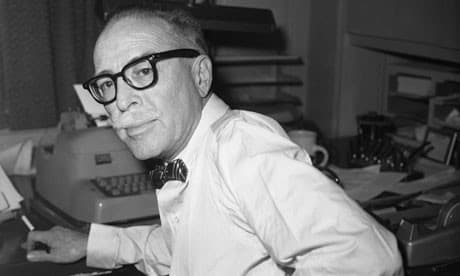
Dalton Trumbo was a celebrated novelist, screenwriter, and a member of the Hollywood Ten. His novel *Johnny Got His Gun* is a powerful anti-war statement, later adapted into a film he also directed. Trumbo's prolific career included Oscar-winning screenplays, often written under pseudonyms during the Hollywood blacklist era.
Similar books
- All Quiet on the Western Front
Erich Maria Remarque
4.0 (355k) average on GoodreadsHistorical FictionBoth offer a stark, human-centered critique of the horrors of World War I.
- One Flew Over the Cuckoo's Nest
Ken Kesey
4.2 (631k) average on GoodreadsPsychologyFeatures an individual's struggle against an oppressive, dehumanizing institution.
- 1984
George Orwell
4.2 (3.1M) average on GoodreadsPoliticsIn a future where surveillance and thought control are absolute, a man's search for truth clashes with the Party, showing that hope can be a form of rebellion.
- Animal Farm
George Orwell
4.0 (2.7M) average on GoodreadsPoliticsA farm animals' rebellion against humans turns into a pig-led dictatorship, showing how power corrupts and revolutionary ideals are betrayed.
- Freakonomics: A Rogue Economist Explores the Hidden Side of Everything
Steven D. Levitt
4.0 (709k) average on GoodreadsBusinessThis book uses economic principles to reveal the surprising incentives behind everything from drug dealing and real estate to cheating teachers and the decline of crime.
- I Am Malala: The Story of the Girl Who Stood Up for Education and Was Shot by the Taliban
Malala Yousafzai
4.1 (419k) average on GoodreadsPoliticsA teenage girl from a Taliban-controlled valley refuses to give up her books, becoming a global voice for education even after an assassination attempt.






Enjoyed the summary?
A summary gives you the shape of the book. The book itself has the detail, the examples and the voice.
Find Johnny Got His Gun on AmazonAs an Amazon Associate, BookBrief earns from qualifying purchases. How we're funded