
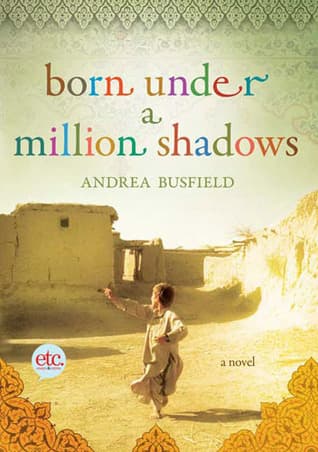
Synopsis
Covers the whole plot, including the ending.
- Difficulty
- Medium
- Pacing
- Moderate
- Mood
- Somber, hopeful, reflective, poignant
Born Under a Million Shadows Plot Summary
Covers the whole plot, including the ending.
A Life of Scarcity in Post-Taliban Kabul
Eleven-year-old Fawad lives in post-Taliban Kabul with his mother, Mariya. They live with deep grief and poverty. Fawad's father and older brother were killed by the Taliban, and his younger sister, Latifa, was abducted. They rely on the small charity of relatives, constantly moving between homes. Fawad, a bright and observant boy, often helps his mother with odd jobs, but their existence is unstable. The war's scars are visible everywhere, from bombed buildings to the psychological damage affecting people. Mariya, once a lively woman, is now withdrawn and burdened by sorrow, focused on Fawad's survival and hoping for a better future.
The Arrival of Georgie
Hope appears when Mariya gets a job as a housekeeper for Georgie, an Englishwoman working for an NGO in Kabul. Georgie lives in a comfortable house, a contrast to Fawad and Mariya's poor life. Fawad first sees Georgie with a mix of curiosity and worry; she represents a world different from his own. Georgie is kind and unusual, often wearing bright clothes and speaking her mind, which fascinates Fawad. This new job gives Mariya and Fawad a stable income and security they haven't had in years, allowing them to eat regularly and afford small necessities.
Fawad's Growing Affection for Georgie
As Fawad spends more time at Georgie's house, he grows fond of her, seeing her almost as an older sister or aunt. Georgie treats him with respect and warmth, often talking with him and sharing stories. She encourages his curiosity and provides a sense of stability and normalcy that has been missing from his life. Fawad, despite his young age and the difficulties he's endured, starts to feel hope for the future. He begins to imagine a life where he and his mother are not constantly struggling, and Georgie's presence becomes a comfort in his difficult world.
The Secret Love Affair of Georgie
Fawad soon notices a man often visiting Georgie's house, usually late at night. He watches their interactions and overhears bits of conversation, learning the truth: Georgie is having a secret, dangerous love affair with Haji Khan, a powerful and feared Afghan warlord. Haji Khan is a known figure, famous for his influence and ruthlessness in Kabul. Fawad is at first upset and resentful of Haji Khan's presence, fearing for Georgie's safety and unsure of the warlord's intentions. The secret nature of their relationship adds tension and worry to Fawad's already complex life; he struggles to understand the kind Georgie with her formidable lover.
Haji Khan's Unexpected Generosity
Despite his initial worry, Fawad sees a generous act from Haji Khan that changes how he sees the warlord. Haji Khan, learning of Fawad and Mariya's hard life, arranges for them to have their own small house, a dream they had given up on. This act of kindness, from a man Fawad had feared, shows a surprising depth of character and compassion. It challenges Fawad's ideas about power and good intentions, making him realize that people, even warlords, can be moved by love and empathy. This gesture cements Haji Khan's place in Fawad's life, moving him from a figure of fear to one of complex admiration.
The Search for Latifa
Inspired by Haji Khan's kindness and Georgie's support, Fawad tells Georgie about his abducted sister, Latifa. Georgie, moved by Fawad's story, asks Haji Khan for help. Using his network and influence, Haji Khan starts a search for Latifa, using his resources to investigate her disappearance. This act further solidifies Fawad's trust and respect for Haji Khan, showing that the warlord's power can be used for good. The hope of finding Latifa, long dormant, is reignited, bringing a fragile sense of anticipation to Fawad and Mariya's lives, even amid Kabul's dangers.
The Threat of Retribution
Haji Khan's powerful position draws enemies, and his secret relationship with Georgie makes her a target. As political tensions rise and rival groups compete for control, threats against Haji Khan and those close to him grow. Georgie, despite her brave front, becomes aware of the danger. Fawad, observant as ever, notices the growing unease and the increased security around Georgie's house. The carefree atmosphere that once existed begins to fade, replaced by a clear sense of fear and dread, reminding everyone that even in post-Taliban Kabul, violence and revenge are always near.
A Tragic Loss and Devastation
Tragedy strikes when Georgie is killed in an attack, likely by Haji Khan's enemies. Fawad is devastated. The loss of Georgie, who had brought so much light and hope into his life, shatters Fawad's fragile security. Her death is a brutal reminder of the widespread violence and the cost of living in such a volatile place. Mariya is also deeply affected, grieving for the woman who had given them a chance at a better life. The incident leaves Fawad questioning everything, including the possibility of happiness and his country's future.
Haji Khan's Grief and Retreat
Haji Khan is deeply affected by Georgie's death. The powerful warlord, usually calm and in control, is consumed by grief and guilt. He withdraws from public life, his usual confidence replaced by visible sorrow. His influence lessens as he struggles with the personal loss, showing that even strong figures are vulnerable to human emotion. Fawad observes Haji Khan's change, understanding the depth of the warlord's love for Georgie. This shared grief, though unspoken, creates a unique bond between the boy and the warlord, showing the universal nature of loss despite their different positions in society.
Fawad's Struggle with His Country
Georgie's death, along with the ongoing violence and the unfulfilled hope of finding Latifa, pushes Fawad to a breaking point. The devastating loss threatens to destroy the one thing he thought he could never lose: his love and hope for Afghanistan. He struggles to reconcile his homeland's beauty and resilience with the endless cycle of tragedy and suffering. He deals with anger, despair, and disappointment. This internal conflict marks a significant emotional turning point for Fawad; he must decide whether to give in to bitterness or find a way to hold onto hope amid the ruins of his personal world and his nation.
A Glimmer of Hope for Latifa
Amid the deep grief and disappointment, a new lead appears regarding Latifa's whereabouts. Though the search started by Haji Khan had seemed to stop, new information surfaces, offering a fragile glimmer of hope. This development, while not immediately solving the situation, gives Fawad and Mariya a renewed sense of purpose. It suggests that despite the overwhelming odds and constant threats, the possibility of reunification is not entirely lost. This renewed hope, however tentative, becomes a key element in Fawad's journey, offering a reason to continue fighting despair and to believe in the eventual triumph of family and love.
The Enduring Spirit of Afghanistan
Despite the tragedies, Fawad starts to find strength in his people's and country's enduring spirit. He observes the resilience of ordinary Afghans, their ability to rebuild and find joy amid hardship. He understands that while individuals may fall, Afghanistan's spirit persists. This realization, along with the renewed hope for Latifa, helps Fawad slowly mend his broken heart and reconcile his love for his country with its painful realities. He learns that true love for one's homeland means embracing both its beauty and its scars, and finding the courage to move forward, even when hope seems distant.
Born Under a Million Shadows Characters
Fawad
Protagonist
An observant and resilient eleven-year-old boy navigating loss in Kabul.
Fawad is an intelligent, sensitive, and deeply observant eleven-year-old boy who has endured immense loss and hardship in post-Taliban Kabul. He is the novel's primary narrator, offering a child's perspective on the complexities of war, love, and survival. Despite his young age, he possesses a maturity beyond his years, constantly analyzing the world around him and the people he encounters. He is fiercely loyal to his mother, Mariya, and develops a strong bond with Georgie. His internal struggles revolve around processing grief, maintaining hope, and reconciling his love for his country with its brutal realities.
Relationships: Mariya (son); Georgie (admirer/surrogate brother); Haji Khan (initially fearful, then admiring/respectful); Latifa (brother, deeply misses)
Mariya
Supporting
Fawad's grief-stricken but resilient mother.
Mariya is Fawad's mother, a woman burdened by immense grief after losing her husband, eldest son, and daughter to the Taliban. She is withdrawn and often quiet, her spirit dulled by sorrow, but her love for Fawad is her driving force. She works tirelessly to provide for him, taking on the demanding role of housekeeper for Georgie. Mariya represents the enduring strength and suffering of Afghan women, quietly navigating personal tragedy while striving for survival and a semblance of normalcy for her remaining child. Her hope for a better future is fragile but persistent, especially when Georgie and Haji Khan offer support.
Relationships: Fawad (mother); Georgie (employer/friend); Haji Khan (benefactor (through Georgie))
Georgie
Supporting
A charismatic English aid worker in a dangerous love affair.
Georgie is a vibrant, compassionate, and unconventional Englishwoman working for an NGO in Kabul. She is kind and generous, quickly forming a bond with Fawad and Mariya. Her presence brings a much-needed sense of light and hope into their lives. Despite her humanitarian work, Georgie is entangled in a dangerous and forbidden love affair with the powerful warlord Haji Khan. Her courage and independent spirit are evident, but her personal choices place her in significant peril within the volatile Afghan landscape. She is a symbol of Western presence and influence, both positive and negative, in the post-Taliban era.
Relationships: Fawad (friend/surrogate sister); Mariya (employer/friend); Haji Khan (lover)
Haji Khan
Supporting
A powerful and feared Afghan warlord with a surprising compassionate side.
Haji Khan is a legendary and formidable Afghan warlord, known for his immense power, influence, and often ruthless reputation in Kabul. He is initially presented as a figure of fear and suspicion, especially to Fawad. However, his character is complex; he demonstrates surprising acts of generosity and compassion, particularly in his deep love for Georgie. He uses his resources to help Fawad and Mariya, and later to search for Latifa. Haji Khan embodies the moral ambiguities of post-Taliban Afghanistan, where figures of power can be both dangerous and capable of great kindness, often driven by personal loyalties and affections.
Relationships: Georgie (lover); Fawad (benefactor/figure of respect); Mariya (benefactor)
Latifa
Supporting
Fawad's abducted younger sister, a symbol of lost innocence.
Latifa is Fawad's younger sister, abducted by the Taliban, whose absence casts a long shadow over Fawad and Mariya's lives. She is not physically present for most of the narrative but serves as a powerful symbol of the innocent victims of war and the enduring hope for family reunification. Her abduction fuels Fawad's quiet despair and Mariya's deep-seated grief. The search for Latifa represents the family's desperate yearning for closure and the possibility of healing, making her a crucial, though largely unseen, character in the emotional landscape of the novel.
Uncle Wahid
Supporting
Fawad's extended family member who offers intermittent support.
Uncle Wahid is one of Mariya's relatives who occasionally provides shelter and charity to Fawad and Mariya. While he offers some support, it is often begrudging or limited, reflecting the economic hardships faced by many Afghans. He represents the traditional family support structures in Afghanistan, which, while vital, can also be strained by widespread poverty and conflict. His character highlights the precariousness of Fawad and Mariya's existence before Mariya finds employment with Georgie, showcasing the reliance on extended family in a society lacking robust social safety nets.
Relationships: Fawad (uncle); Mariya (relative (likely brother-in-law or cousin))
Born Under a Million Shadows Themes
The Enduring Impact of War and Loss
The novel clearly shows war's lasting effects on individuals and families, even after the fighting ends. Fawad's family is shattered by the Taliban's violence, with his father, brother, and sister all lost. This pervasive grief and trauma define their daily lives, influencing Mariya's withdrawn manner and Fawad's mature understanding of suffering. Kabul's physical landscape, still scarred by bombs, reflects the internal wounds of its people. This shows how war's impact continues to shape lives long after the fighting stops, making peace fragile and often hard to achieve.
“The long shadows of their brutal regime remain.”
Hope and Resilience Amidst Adversity
Despite great hardships, the characters in 'Born Under a Million Shadows' show resilience and persistent hope. Fawad's ability to find joy in small moments, Mariya's dedication to her son, and Georgie's efforts to make a difference all show the human capacity to endure. Georgie's arrival and Haji Khan's unexpected generosity provide moments of hope, suggesting that even in the darkest times, kindness and the possibility of a better future can appear. This theme highlights the strength of the human spirit to rebuild and find meaning amid constant struggle.
“He dared to hope for an end to their struggle.”
The Complexities of Love and Loyalty
The novel explores different forms of love and loyalty, showing their power to both uplift and endanger. Fawad's deep love for his mother and his growing affection for Georgie drive much of his emotional journey. The forbidden love between Georgie and Haji Khan shows that love can cross cultural divides and societal expectations, but also carries great risks in a politically charged environment. Haji Khan's surprising acts of generosity, motivated by his love for Georgie, reveal love's transformative power, showing how love can make even hardened individuals act with compassion and protect those they care about, sometimes with tragic results.
“He learns that love can move a man to act in surprising ways.”
Cultural Clash and Understanding
The interaction between Georgie, a Western woman, and the Afghan characters, especially Haji Khan and Fawad, shows the complexities of cultural exchange and understanding. Georgie's presence introduces different customs and perspectives, sometimes clashing with traditional Afghan ways but also building new connections. Fawad's observations of Georgie and Haji Khan reveal how people from very different backgrounds can form deep bonds, yet also face challenges and misunderstandings. The novel explores the difficulties and rewards of bridging cultural divides in a post-conflict society, where outside influences meet deeply ingrained traditions.
“At first resentful of Haji Khan's presence, Fawad learns that love can move a man to act in surprising ways...”
Plot Devices & Literary Techniques
First-Person Child Narrator
Provides an innocent yet insightful perspective.
The story is told through the eyes of eleven-year-old Fawad. This device allows for a unique blend of innocence and acute observation, as Fawad interprets the complex adult world of war, politics, and forbidden love through his limited but deeply felt understanding. His perspective humanizes the geopolitical conflicts, making the large-scale tragedies relatable on a personal level. It also allows for moments of wonder and hope amidst despair, reflecting a child's natural resilience, while also conveying the profound impact of trauma on a young mind. This narrative choice makes the reader connect intimately with the emotional core of the story.
Symbolism of Shadows
Represents lingering threats and hidden dangers.
The 'shadows' in the title and throughout the narrative symbolize the lingering presence of the Taliban's brutality, the hidden dangers of the warlord-controlled landscape, and the unseen threats that constantly loom over the characters' lives. They represent the past's persistent grip on the present, the moral ambiguities of the characters, and the ever-present potential for tragedy. The shadows also extend to the emotional toll of loss and grief, which cast a long, dark pall over Fawad and Mariya's existence, even in moments of fleeting hope. This device reinforces the pervasive sense of precariousness and the difficulty of truly escaping the past.
The Missing Sister (Latifa)
A constant reminder of loss and a driving force for hope.
Latifa, Fawad's abducted younger sister, serves as a powerful symbol of the innocent lives lost or disrupted by conflict. Her absence is a constant source of grief for Mariya and Fawad, acting as a profound emotional wound that never fully heals. The hope of finding her, ignited by Haji Khan's involvement, becomes a crucial driving force for the characters, representing the possibility of family reunification and healing. This device keeps the devastating human cost of war at the forefront of the narrative and provides a tangible, personal goal for the characters amidst the larger political struggles.
The Charismatic Westerner (Georgie)
Embodies external influence and personal risk.
Georgie represents the complex role of Western aid and influence in post-conflict regions. She brings resources, compassion, and a different worldview, offering a lifeline to Fawad and Mariya. However, her involvement also highlights the personal risks associated with navigating such environments, especially when entangled in local power dynamics through her affair with Haji Khan. Her character serves as a bridge between cultures, but also as a tragic illustration of how even well-intentioned individuals can become casualties of the volatile political landscape, emphasizing the fragility of life and the limits of external intervention in deeply entrenched conflicts.
Quiz
10 questions on the plot and the characters. Each answer comes with a short explanation.
Question 1
What is the title of the book?
- Born Under a Thousand Shadows
- Born Under a Million Shadows
- Born Under Many Shadows
- Born Under a Shadow
Show answer
B. Born Under a Million Shadows The book title is explicitly stated as 'Born Under a Million Shadows'.
Question 2
Who is the author of 'Born Under a Million Shadows'?
- Khaled Hosseini
- Yasmin Khadra
- Andrea Busfield
- The book does not mention the author.
Show answer
C. Andrea Busfield The author's name, Andrea Busfield, is provided at the beginning of the book description.
Question 3
What genre is this book categorized as?
- Science Fiction
- Mystery
- Historical Fiction
- Fantasy
Show answer
C. Historical Fiction The book description clearly states the genre as 'Historical Fiction'.
Question 4
What is the name of the young protagonist?
- Haji Khan
- Mariya
- Georgie
- Fawad
Show answer
D. Fawad The text introduces Fawad as the eleven-year-old protagonist.
Question 5
What happened to Fawad's father and brother?
- They were abducted by the Taliban.
- They were killed.
- They left Kabul to find work.
- They were imprisoned by Haji Khan.
Show answer
B. They were killed. The description states that Fawad's father and brother have been killed.
Question 6
Who is Georgie?
- Fawad's sister
- A warlord's daughter
- A charismatic western woman who employs Fawad's mother
- A teacher at Fawad's school
Show answer
C. A charismatic western woman who employs Fawad's mother Georgie is described as a 'charismatic western woman' who hires Fawad's mother as her housekeeper.
Question 7
Who is Haji Khan?
- Fawad's uncle
- The leader of the Taliban remnants
- A powerful Afghan warlord involved with Georgie
- The owner of the house where Mariya works
Show answer
C. A powerful Afghan warlord involved with Georgie Haji Khan is identified as a 'powerful Afghan warlord' and Georgie's lover.
Question 8
Initially, how does Fawad feel about Haji Khan?
- He is welcoming and sees him as a protector.
- He is resentful.
- He is indifferent.
- He is afraid of him.
Show answer
B. He is resentful. The text states, 'At first resentful of Haji Khan's presence, Fawad learns that love can move a man to act in surprising ways.'
Question 9
What event threatens to destroy Fawad's love for his country?
- The return of the Taliban.
- The death of Haji Khan.
- A tragedy so devastating that it threatens to destroy his love for his country.
- Georgie's departure from Kabul.
Show answer
C. A tragedy so devastating that it threatens to destroy his love for his country. The description explicitly mentions 'a tragedy so devastating that it threatens to destroy the one thing Fawad thought he could never lose: his love for his country.' The specific nature of the tragedy is not detailed, but its effect is clear.
Question 10
What ultimately persuades Fawad of Haji Khan's good intentions?
- Haji Khan's protection of his family.
- Haji Khan's apology.
- An overwhelming act of generosity.
- Fawad overhears Haji Khan speaking kindly of him.
Show answer
C. An overwhelming act of generosity. The text states that 'an overwhelming act of generosity persuades him of the warlord's good intentions.'
Born Under a Million Shadows FAQ
What is "Born Under a Million Shadows" about?
"Born Under a Million Shadows" is a historical fiction novel set in Kabul, Afghanistan, after the fall of the Taliban. It tells the story of Fawad, an eleven-year-old boy, and his mother Mariya, who find hope when Mariya becomes a housekeeper for an Englishwoman named Georgie. Their lives become complicated when Georgie becomes involved with a powerful warlord, Haji Khan.
Who are the main characters in "Born Under a Million Shadows"?
The main characters are Fawad, a young Afghan boy navigating a difficult life; his mother, Mariya; Georgie, an Englishwoman living in Kabul; and Haji Khan, a charismatic and powerful Afghan warlord.
What historical period does "Born Under a Million Shadows" cover?
The novel is set in Kabul, Afghanistan, in the period immediately following the collapse of the Taliban regime. It explores the lingering impact of their rule and the challenges of rebuilding society.
What themes are explored in "Born Under a Million Shadows"?
The book explores themes of forbidden love, loss, resilience, the complexities of war and its aftermath, hope in the face of adversity, and the deep connection one can have to their homeland.
Is "Born Under a Million Shadows" a romance novel?
While forbidden love is a significant element of the story, particularly between Georgie and Haji Khan, the novel is primarily a historical fiction and coming-of-age story focusing on Fawad's experiences and his evolving understanding of love and loyalty.
What kind of challenges do the characters face in the book?
The characters face immense challenges, including poverty, the lingering effects of Taliban rule, political instability, personal loss and grief, and navigating dangerous relationships in a volatile environment.
What is the significance of the title "Born Under a Million Shadows"?
The title likely refers to the pervasive sense of darkness, hardship, and the lingering influence of past traumas and oppressive regimes that shadow the lives of the characters, particularly Fawad, in post-Taliban Kabul.
Who would enjoy reading "Born Under a Million Shadows"?
Readers who enjoy historical fiction, young adult novels, stories set in Afghanistan, and tales of resilience and complex relationships, especially fans of "The Kite Runner" and Yasmin Khadra's novels, would likely appreciate this book.
How does "Born Under a Million Shadows" compare to "The Kite Runner"?
Both books are set in Afghanistan and deal with themes of loss, friendship, and the impact of political turmoil on individual lives. "Born Under a Million Shadows" focuses on a younger protagonist and a forbidden love affair amidst the post-Taliban era.
What is the role of Haji Khan in the story?
Haji Khan is a powerful and charismatic warlord in Kabul who becomes romantically involved with Georgie. Initially, Fawad resents him, but he later witnesses Haji Khan's generosity and good intentions, which challenges Fawad's perceptions.
Similar books
- The Kite Runner
Khaled Hosseini
4.3 (2.4M) average on GoodreadsHistorical FictionBoth 'Born Under a Million Shadows' and 'The Kite Runner' explore Afghanistan's tumultuous history and the lives of its people, but from different perspectives and for different audiences. Hosseini's novel delves into themes of guilt, redemption, and complex male friendships, often with a more adult and emotionally intricate narrative. Busfield's book, while still powerful, is tailored for a younger audience, focusing more directly on the immediate impact of the Taliban on daily life and the resilience of a young girl and her family. 'The Kite Runner' has a broader scope, spanning decades and continents, whereas Busfield's narrative is more concentrated on a specific period and location.
- A Thousand Splendid Suns
Khaled Hosseini
4.4 (1.2M) average on GoodreadsHistorical FictionSimilar to 'Born Under a Million Shadows,' 'A Thousand Splendid Suns' focuses on the lives of women in Afghanistan, particularly under the Taliban. However, Hosseini's novel provides a multi-generational saga, exploring the intertwined lives of two women, Mariam and Laila, and the intense bonds of female solidarity in the face of extreme adversity. While both books depict the harrowing realities faced by women, 'A Thousand Splendid Suns' delves into more brutal domestic abuse and the long-term psychological scars of war and oppression with greater explicit detail and a more mature narrative. Busfield's book, while not shying away from hardship, maintains a slightly more accessible tone for its younger target demographic, focusing on the immediate survival and small acts of resistance of a mother and daughter.
- To Kill a Mockingbird
Harper Lee
4.3 (4.5M) average on GoodreadsHistorical FictionIn the 1930s Jim Crow South, Harper Lee writes about racial injustice, moral growth, and the quiet courage of a lawyer father, Atticus Finch, as seen through his young daughter's eyes.
- The Great Gatsby
F. Scott Fitzgerald
3.9 (3.8M) average on GoodreadsHistorical FictionIn the opulent Roaring Twenties, a mysterious millionaire's lavish parties hide his desperate, tragic pursuit of a lost love, exposing the emptiness within the American Dream.
- Pride and Prejudice
Jane Austen
4.3 (3M) average on GoodreadsHistorical FictionIn a society focused on status and money, Elizabeth Bennet navigates love and pride, challenging Mr. Darcy and social expectations to find true affection.
- Angels & Demons
Dan Brown
3.9 (2.7M) average on GoodreadsThrillerA Harvard symbologist races through Rome's ancient sites, deciphering cryptic clues to unmask the Illuminati and stop a vengeful plot to destroy the Vatican with a stolen antimatter weapon.






Enjoyed the summary?
A summary gives you the shape of the book. The book itself has the detail, the examples and the voice.
Find Born Under a Million Shadows on AmazonAs an Amazon Associate, BookBrief earns from qualifying purchases. How we're funded