
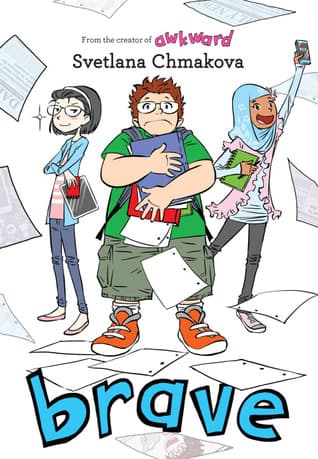
Synopsis
Covers the whole plot, including the ending.
- Difficulty
- Easy
- Pacing
- Moderate
- Mood
- Heartwarming, Relatable, Gentle, Humorous
- Read it if
- You enjoy heartwarming middle-grade stories about social anxiety, finding your place, and the everyday struggles of school life, with a focus on character growth.
- Skip it if
- You prefer high-stakes fantasy adventures or stories without a strong emphasis on social-emotional learning.
Brave Plot Summary
Covers the whole plot, including the ending.
Jensen's Daydreams and Real-Life Struggles
Jensen, a quiet and anxious middle schooler, often daydreams he is a powerful hero saving his friends and the world. In reality, he struggles with math, feels overlooked, and finds social interactions hard. He often feels like an outsider, especially when it comes to group projects, where he's usually the last to be chosen. His friends, including Akilah and Jenny, are more outgoing, making him feel more inadequate. This conflict between his heroic fantasy self and his hesitant real self sets the stage for his journey through Berrybrook Middle School, as he tries to find his place and handle daily challenges.
The School Newspaper and the 'Friendship Experiment'
Jenny and Akilah, who run the Berrybrook Middle School newspaper, 'The Grapevine', decide to feature Jensen in an article. They see his quiet nature and his tendency to be left out. They create a 'friendship experiment' to help him connect with more people. They encourage him to join school clubs and activities, believing more social interaction will boost his confidence and help him make friends. Jensen, at first hesitant, agrees, seeing it as a way to fit in and overcome his social anxieties, though he is nervous about trying new things.
Joining Clubs and Facing Social Awkwardness
Following Jenny and Akilah's advice, Jensen tries to join several school clubs. He tries the photography club but feels intimidated by the more experienced members. He also briefly considers the drama club and the debate club, but his shyness and fear of public speaking stop him. During these attempts, he often feels awkward and out of place, which makes him think he is not good at social interactions. Despite these early problems, he keeps trying, hoping to make real connections and complete the 'friendship experiment' for the school newspaper.
The Math Project Dilemma
A big challenge comes when a math project is assigned, requiring students to work in pairs. Jensen, already having trouble with math, gets more anxious about finding a partner. He watches his classmates quickly form teams. As time runs out, he fears being picked last, or worse, being left alone. This situation increases his feelings of isolation and not being good enough, making him question his social standing and academic skills. The project's pressure weighs on him, a stark contrast to his daydreams where he easily solves problems and is always a valued team member.
Connecting with Felipe and the Computer Club
Despite his early struggles, Jensen finds a possible connection with Felipe, a quiet and often overlooked classmate. They both like computers and video games, which leads them to consider joining the computer club. Though still a bit awkward, their shared interest gives them a comfortable common ground. This interaction is a small but important step for Jensen. He starts to realize that real connections can form over shared interests, even if they are not the grand heroic gestures of his daydreams. This new friendship offers hope for both the math project and his social life.
The Pressure of the Newspaper Article
As Jenny and Akilah continue to gather material for their 'friendship experiment' article about Jensen, the upcoming publication adds pressure. Jensen feels the weight of expectation, worried that if the experiment fails, he will be publicly shown as a social failure. He tries to act brave, but inside, the thought of the article's release makes him more self-conscious. This external pressure forces him to face his anxieties more directly. He realizes his actions and perceived social success are being watched by his friends and the whole school.
Encountering Bullies and Standing Up (Sort Of)
Jensen meets a group of bullies, led by Ian, who often pick on other kids. One time, Ian and his friends make fun of Jensen and Felipe. Jensen, despite his heroic daydreams, at first freezes and struggles to respond well. While he does not physically confront them, he does manage to make a small, internal stand by not letting their words completely hurt him. This moment shows the difference between his imagined bravery and his real-world hesitation. It pushes him to think about what true courage means outside of his fantasy scenarios, and how to use it in tough social situations.
Realizing the Value of Small Victories
Through his experiences, Jensen slowly begins to understand that 'bravery' is not just about saving the world or doing big, heroic acts. It is also about showing up, trying new things, asking for help, and being kind. He starts to value the small victories: starting conversations, working with Felipe on the project, and simply dealing with social awkwardness. This realization shifts his view from his unrealistic daydreams to the practical courage needed for daily life. He sees that even small acts of courage, like speaking up or trying to connect, are important and help him grow.
The Math Project Presentation and Its Aftermath
Jensen and Felipe, having worked hard together, successfully present their math project. Despite Jensen's lasting anxiety, their teamwork works well, and they get a good grade. This shared success boosts Jensen's confidence, showing him the value of teamwork and persistence. It also strengthens his friendship with Felipe as they celebrate. This experience is a turning point, showing that he can succeed in the real world through effort and collaboration, rather than relying only on his fantasy self. The project's completion shows he can handle challenges better.
The Newspaper Article's Impact and Jensen's Growth
The 'Grapevine' article about Jensen and the 'friendship experiment' is finally published. It shows his journey and struggles, but it also celebrates his efforts and the small steps he has taken. Jensen reads it with a mix of embarrassment and pride. He realizes that his experiences, though sometimes hard, have helped him grow. He has not become his daydream hero overnight, but he has learned to be more resilient, to seek connections, and to find his own way of being brave in the real world. The article is a public acknowledgment of his journey, reinforcing his progress and new self-acceptance.
Embracing Real-Life Bravery
By the end of the school year, Jensen is still Jensen — quiet and prone to daydreams — but he is also more confident and able. He continues his friendship with Felipe and is more willing to talk with his other friends, Akilah and Jenny. He understands that bravery is not about being fearless, but about facing fears and trying anyway. He learns to appreciate his unique qualities and finds strength in his quiet determination. He is now better able to handle the ups and downs of middle school, having found his own, real way of being brave, based on real-life interactions and personal growth rather than just fantasy.
Brave Characters
Jensen
Protagonist
A quiet middle schooler who finds solace in heroic daydreams while navigating real-life social anxieties.
Jensen is the central character, an introspective and somewhat shy middle school boy. He possesses a rich inner world filled with vivid daydreams where he is a powerful hero, saving the day and his friends. In reality, he struggles with self-confidence, math, and social interactions, often feeling awkward and overlooked. He fears being picked last for projects and finds it hard to make new friends. His journey is about reconciling his heroic inner self with his hesitant outer self, learning to find bravery in everyday acts, and understanding that true courage isn't always about grand gestures.
Relationships: Akilah (Friend, school newspaper co-editor); Jenny (Friend, school newspaper co-editor, instigator of the 'friendship experiment'); Felipe (Friend, math project partner, fellow computer club enthusiast); Ian (Bully)
Jenny
Supporting
Outgoing and perceptive co-editor of the school newspaper, keen on social dynamics.
Jenny is one of Jensen's friends and the co-editor of 'The Grapevine', Berrybrook Middle School's newspaper. She is highly observant and socially astute, often taking the lead in their journalistic endeavors. She notices Jensen's quiet struggles and, with Akilah, devises the 'friendship experiment' to help him connect with more peers. Jenny is proactive, enthusiastic, and genuinely wants to help Jensen, though her approach sometimes adds pressure. She represents the more outgoing and socially confident aspect of middle school life.
Relationships: Jensen (Friend, subject of her newspaper article); Akilah (Best friend, co-editor)
Akilah
Supporting
Jenny's best friend and co-editor, practical and encouraging.
Akilah is Jenny's best friend and the other co-editor of 'The Grapevine'. She is often the more grounded and practical of the duo, balancing Jenny's more impulsive ideas. Akilah is also supportive of Jensen and helps implement the 'friendship experiment', offering encouragement and insights. She is a loyal friend and a keen observer of human behavior, contributing to the newspaper's coverage of school life. Her presence provides a steadying influence and a reliable source of support for Jensen.
Relationships: Jensen (Friend, subject of her newspaper article); Jenny (Best friend, co-editor)
Felipe
Supporting
A quiet classmate who shares Jensen's interests in computers and video games.
Felipe is a quiet classmate of Jensen's who, like Jensen, often feels overlooked. He shares a passion for computers and video games, which becomes a crucial common ground for him and Jensen. They partner for the math project and consider joining the computer club together. Felipe's presence shows Jensen that he is not alone in his shyness and that genuine connections can be formed over shared interests, even if they are not the most boisterous or popular. He becomes Jensen's first true partner in navigating a school challenge.
Relationships: Jensen (Friend, math project partner)
Ian
Antagonist
A school bully who targets Jensen and other students.
Ian is one of the school bullies who occasionally targets Jensen and other quieter students. He represents the external social pressures and negative interactions that Jensen fears and struggles to confront. While not a major antagonist in terms of plot, Ian's presence creates moments where Jensen has to decide whether to retreat or to find a small way to stand up for himself. His interactions highlight Jensen's internal conflict between his heroic daydreams and his real-life hesitation.
Relationships: Jensen (Victim of bullying); Felipe (Victim of bullying)
Mr. Garcia
Supporting
Jensen's supportive math teacher.
Mr. Garcia is Jensen's math teacher. He is fair and encouraging, providing the structure for the math project that ultimately pushes Jensen to seek a partner and collaborate. While he doesn't play a direct role in Jensen's social experiment, his classroom provides a setting for some of Jensen's key struggles and breakthroughs, particularly regarding his academic confidence and his ability to work with others.
Relationships: Jensen (Teacher-student relationship)
Ms. G.
Supporting
The supportive advisor for 'The Grapevine' school newspaper.
Ms. G. is the advisor for 'The Grapevine' school newspaper. She oversees Jenny and Akilah's work, including their plans for the 'friendship experiment' article featuring Jensen. She provides guidance and a safe space for the students to explore their journalistic interests. Her role is primarily supervisory, ensuring the newspaper runs smoothly and that the students learn valuable skills.
Relationships: Jenny (Advisor-student relationship); Akilah (Advisor-student relationship)
The Narrator
Mentioned
The omniscient voice that provides insight into Jensen's thoughts and daydreams.
While not a character in the traditional sense, the narrator's voice is crucial to understanding Jensen. The story is told through an omniscient third-person perspective, with frequent dives into Jensen's internal monologues and elaborate daydreams. This narrative choice allows the reader deep insight into Jensen's anxieties, hopes, and the stark contrast between his inner world and his outer reality. The narrator often uses visual cues, like thought bubbles and shifting art styles, to convey Jensen's mental state.
Brave Themes
Identity and Self-Acceptance
Jensen's journey is about understanding and accepting who he is, both his daydreaming, heroic self and his quiet, anxious real self. He deals with the difference between his internal fantasies and his external reality. The 'friendship experiment' and his struggles to fit in make him face his insecurities. By the end, he realizes that he does not have to become someone else to be brave; he can find strength in his own qualities and quiet determination. He learns to value his real self rather than trying to fit a heroic ideal.
“He wasn't a hero, not really. But maybe... maybe brave came in more than one shape.”
The Nature of Bravery
The book explores different types of bravery. Jensen at first thinks bravery is grand, heroic acts, like those in his daydreams. However, his real-life experiences, such as trying out for clubs, finding a math partner, and dealing with social awkwardness, teach him that bravery often shows up in small, everyday actions. It is about trying new things, asking for help, being vulnerable, and continuing despite fear. The story redefines bravery not as having no fear, but as being willing to act despite it, in both social and academic situations.
“Maybe brave wasn't about saving the world, or even saving his friends. Maybe it was just... showing up.”
Friendship and Connection
A main theme is the importance of real connection and the challenges of making friends in middle school. Jensen's fear of being picked last and his struggles to interact show the anxieties many young people face. The 'friendship experiment' started by Jenny and Akilah aims to help him, but it is his natural connection with Felipe over shared interests that truly helps him understand the value of real bonds. The book shows that true friendship is not forced but grows from shared experiences, empathy, and mutual support, helping people feel less alone.
“It was a strange thing, friendship. Sometimes it just... happened. Like a good game, you just found your co-op partner.”
Social Anxiety and Self-Consciousness
The story looks at Jensen's struggles with social anxiety and self-consciousness, common experiences for middle schoolers. His internal thoughts show his constant overthinking, fear of judgment, and the overwhelming nature of social situations. The contrast between his confident daydreams and his hesitant real-world interactions clearly shows his internal battle. The book normalizes these feelings, showing how Jensen slowly learns to manage them by taking small steps, finding supportive friends, and realizing that many of his peers share similar insecurities, making his journey relatable to readers.
“Every conversation felt like a boss battle he wasn't leveled up for.”
Plot Devices & Literary Techniques
Daydream Sequences
Visual and narrative interludes depicting Jensen's heroic fantasies.
Throughout the book, Jensen's internal world of elaborate superhero daydreams is visually depicted, often in a distinct art style. These sequences serve as a stark contrast to his real-life struggles, highlighting his anxieties and his desire for agency and recognition. They function as an escape mechanism for Jensen, but also as a visual representation of the gap between his ideal self and his actual self. This device allows the reader to deeply understand Jensen's inner turmoil and the aspirations he harbors, making his eventual small acts of real bravery more impactful.
'The Grapevine' Newspaper Articles
A meta-narrative device that frames Jensen's social experiment.
The school newspaper, 'The Grapevine', run by Jenny and Akilah, serves as a meta-narrative device. The 'friendship experiment' article about Jensen provides a framework for much of the plot, pushing Jensen to engage in social activities he might otherwise avoid. The impending publication of the article adds external pressure and a sense of urgency to Jensen's social development. It also allows for the inclusion of other characters' perspectives and observations on Jensen's journey, making his personal growth visible to the wider school community.
Internal Monologue and Thought Bubbles
Direct access to Jensen's anxieties, hopes, and overthinking.
The graphic novel format effectively uses internal monologues and thought bubbles to provide direct access to Jensen's inner thoughts, anxieties, and self-doubt. These visual elements often overlay the panels, showing his overthinking, his fears of social faux pas, and his constant self-critique. This device is crucial for character development, allowing readers to deeply empathize with Jensen's struggles and understand the contrast between his quiet exterior and his busy, often anxious, interior world, making his small acts of bravery feel significant.
Visual Metaphors and Symbolism
Illustrative representations of Jensen's emotional state.
Svetlana Chmakova frequently uses visual metaphors to convey Jensen's emotional state. For example, when Jensen feels overwhelmed, the panels might become cluttered or dark, or he might appear physically small and insignificant. Conversely, in his daydreams, he is drawn with exaggerated strength and confidence. These visual cues, such as the 'difficulty setting' dial cranked up in his mind, effectively communicate complex emotions and internal experiences without relying solely on dialogue, enhancing the reader's understanding of Jensen's inner world and struggles.
Brave Quotes
“Being brave doesn't mean you're not scared. It means you do it anyway.”
“Sometimes the bravest thing you can do is ask for help.”
“It's okay to be different. That's what makes you, you.”
“Standing up for someone else is just as important as standing up for yourself.”
“Friends are the family you choose.”
“You don't have to be loud to be heard.”
“Mistakes are just lessons in disguise.”
“Kindness costs nothing, but it means everything.”
“The world needs all kinds of minds.”
“Courage is contagious.”
“Your feelings are valid, no matter what anyone says.”
“Sometimes the hardest battles are the ones inside your own head.”
“True strength is knowing when to walk away.”
Quiz
10 questions on the plot and the characters. Each answer comes with a short explanation.
Question 1
What is Jensen's main struggle in his middle school reality?
- He is bullied by classmates
- He has trouble with math and social interactions
- He dislikes participating in school clubs
- He wants to quit the school newspaper
Show answer
B. He has trouble with math and social interactions In the book, Jensen's daydreams contrast with his real-life difficulties, where math is hard and getting along with friends is challenging, as described in the summary.
Question 2
Who draws Jensen into the whirlwind of school news and social experiments?
- The math teacher
- Jenny and Akilah
- His best friend from daydreams
- The school principal
Show answer
B. Jenny and Akilah Jenny and Akilah are described as the 'dynamic duo' from the school newspaper who involve Jensen in various school activities, increasing the pressure on him.
Question 3
What setting does the story primarily take place in?
- Berrybrook Middle School
- A fantasy world from Jensen's daydreams
- Jensen's home
- A summer camp
Show answer
A. Berrybrook Middle School The summary specifies that the charming world of Berrybrook Middle School is the main setting, as it is part of Svetlana Chmakova's series.
Question 4
Why does Jensen often get picked last for class projects?
- He is new to the school
- He prefers to work alone
- He struggles with social interactions and is perceived as less capable
- He is always late to class
Show answer
C. He struggles with social interactions and is perceived as less capable The summary highlights Jensen's difficulties in social situations and academic challenges, which likely lead to him being overlooked or last-picked in group activities.
Question 5
What is a key theme explored in 'Brave'?
- The importance of academic excellence
- Navigating real-life problems versus escapist daydreams
- The benefits of avoiding school clubs
- How to become a popular student
Show answer
B. Navigating real-life problems versus escapist daydreams The book contrasts Jensen's heroic daydreams with his middle school reality, focusing on whether he will rely on fantasies or find real solutions, as indicated in the summary.
Question 6
How does the involvement with the school newspaper affect Jensen?
- It makes him more confident immediately
- It increases the pressure and complexity of his school life
- It helps him improve his math skills
- It allows him to avoid class projects
Show answer
B. It increases the pressure and complexity of his school life The summary states that Jenny and Akilah draw Jensen into school news and drama, which 'cranked up the difficulty setting' of his middle school experience.
Question 7
What is the relationship between 'Brave' and Svetlana Chmakova's previous work?
- It is a prequel to 'Awkward'
- It is a standalone story unrelated to other books
- It is a follow-up to 'Awkward' set in the same middle school
- It is a sequel focusing on Jenny and Akilah's story
Show answer
C. It is a follow-up to 'Awkward' set in the same middle school The summary describes 'Brave' as a 'highly anticipated follow up' to 'Awkward', expanding the world of Berrybrook Middle School.
Question 8
In Jensen's daydreams, what role does he typically play?
- A sidekick helping others
- A villain causing trouble
- The biggest hero saving the world and his friends
- A student excelling in math
Show answer
C. The biggest hero saving the world and his friends The summary explicitly states that in his daydreams, Jensen is 'the biggest hero that ever was, saving the world and his friends on a daily basis.'
Question 9
What does the summary imply about Jensen's approach to middle school before the events of the book?
- He actively sought leadership roles
- He played the middle school game one level at a time
- He avoided all extracurricular activities
- He relied solely on his daydreams to cope
Show answer
B. He played the middle school game one level at a time The summary notes that 'Jensen's always played the middle school game one level at a time,' suggesting a gradual, cautious approach to navigating school life.
Question 10
Based on the summary, what central question does 'Brave' pose about Jensen's journey?
- Will he transfer to a new school?
- Will his daydreams help him or will he need real-life solutions?
- Will he become the editor of the school newspaper?
- Will he give up on his friends?
Show answer
B. Will his daydreams help him or will he need real-life solutions? The summary ends with the question: 'Will those daring daydreams of his finally work in his favor, or will he have to find real solutions to his real life problems?' This captures the core conflict of the story.
Brave FAQ
What is 'Brave' by Svetlana Chmakova about?
'Brave' follows Jensen, a middle schooler who escapes his daily struggles through heroic daydreams but faces real challenges like math difficulties, social isolation, and being picked last for class projects. His life changes when he gets involved with the school newspaper run by Jenny and Akilah, plunging him into school news, social experiments, and club drama that force him to confront his problems head-on.
Why should I read 'Brave'?
This graphic novel offers a heartfelt, relatable portrayal of middle school anxiety and self-discovery through Jensen's journey. With Chmakova's expressive art and authentic dialogue, it tackles themes of courage, friendship, and finding one's voice in a way that resonates with both children and young adults, especially fans of her previous book 'Awkward'.
What is the background/setting of 'Brave'?
The story is set at Berrybrook Middle School, a familiar environment from Chmakova's 'Awkward', where Jensen navigates classrooms, the school newspaper office, and social spaces. The setting emphasizes the pressures of academic performance, group projects, and extracurricular clubs that define middle school life.
What are the most memorable quotes from 'Brave'?
Key quotes include Jensen's internal reflections like 'In my daydreams, I'm the biggest hero that ever was' and Jenny's encouragement, 'Sometimes being brave means asking for help.' These lines highlight the contrast between fantasy and reality, central to Jensen's growth throughout the story.
What writing style does Svetlana Chmakova use in 'Brave'?
Chmakova employs a graphic novel format with dynamic panel layouts, expressive character designs, and a blend of humorous and poignant dialogue. Her style balances visual storytelling with text to depict Jensen's vivid daydreams alongside the more subdued reality of middle school challenges.
What minor details add significant meaning to 'Brave'?
Small details like Jensen consistently being picked last for projects or his struggle with math equations subtly reinforce his feelings of inadequacy. The newspaper club's social experiments, such as tracking group dynamics, mirror Jensen's own journey of self-reflection and social awareness.
What are some subtle foreshadowing moments in 'Brave'?
Early scenes where Jensen daydreams about saving friends foreshadow his eventual real-life actions, like standing up for others in club dramas. Jenny and Akilah's initial interest in Jensen for the newspaper hints at his hidden potential to contribute meaningfully to school life beyond his perceived limitations.
What unexpected character connections exist in 'Brave'?
Jensen's involvement with the newspaper duo, Jenny and Akilah, connects him to various school clubs and social circles he previously avoided. This network reveals hidden alliances, such as how club members from different groups intersect during the school's social experiments, broadening Jensen's understanding of his peers.
What are Jensen's unspoken character motivations?
Beneath his daydreams, Jensen is motivated by a deep desire for acceptance and validation from his peers. He secretly hopes to prove himself capable and brave in real life, not just in fantasies, which drives his reluctant participation in the newspaper's projects and his efforts to improve his social standing.
What psychological complexities do characters exhibit in 'Brave'?
Jensen exhibits anxiety and low self-esteem masked by heroic fantasies, while Jenny and Akilah show a mix of confidence and pressure as student journalists navigating school politics. Secondary characters in clubs display insecurities about popularity and belonging, reflecting the complex social hierarchies of middle school.
What are the major emotional turning points in 'Brave'?
Key emotional moments include when Jensen first admits his struggles to Jenny and Akilah, when he uses his daydream creativity to solve a real newspaper problem, and when he finally stands up for himself during a club conflict. These scenes mark his shift from passive daydreaming to active bravery.
How do relationship dynamics evolve in 'Brave'?
Jensen's relationships transform from isolated and transactional (e.g., being picked last) to collaborative and supportive through his work with the newspaper. His interactions with Jenny and Akilah grow from awkward acquaintances to trusted friendships, and he gains respect from peers by contributing to school projects.
Which parts of 'Brave' remain ambiguous or open-ended?
The story leaves some aspects open, such as the long-term impact of Jensen's newfound confidence on his academic performance or whether all club dramas are fully resolved. It also subtly questions if daydreaming is entirely negative or can be harnessed positively, without providing a definitive answer.
What are controversial scenes or decisions in 'Brave'?
Some readers might debate the ethics of the newspaper's social experiments, which involve observing and reporting on peers without full transparency. Jensen's decision to initially hide his struggles rather than seek help could be seen as problematic, though it aligns with his character's growth arc.
'Brave' ending explained: how it ends & what it means
The story concludes with Jensen gaining confidence through his newspaper involvement, using his daydream creativity to contribute meaningfully and earning peer respect. It suggests that bravery isn't about grand heroics but facing real-life challenges, with Jensen learning to balance imagination with action for personal growth.
About the author

Svetlana Chmakova is a graphic novelist known for her work in the young adult genre. Her notable books include "Brave," which explores themes of friendship and self-acceptance, and "Awkward," a story about navigating middle school challenges. Chmakova's storytelling often resonates with young readers, addressing relatable experiences in a thoughtful manner.
Similar books
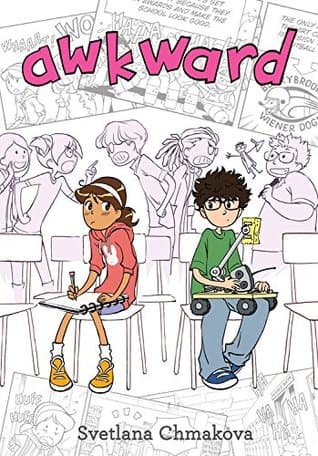
- Awkward
Svetlana Chmakova
3.9 (5k) average on GoodreadsYoung AdultPart of the same Berrybrook Middle School series, focusing on similar themes of middle school social dynamics.
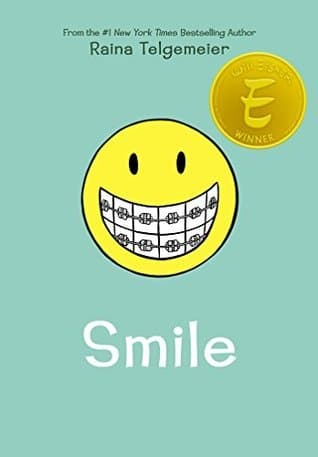
- Smile
Raina Telgemeier
4.3 (183k) average on GoodreadsChildren'sA graphic novel about navigating middle school challenges, friendship, and self-discovery.
- Harry Potter and the Sorcerer's Stone
J.K. Rowling
4.5 (7M) average on GoodreadsFantasyRescued from a miserable life under the stairs, an orphaned boy discovers he's a wizard destined for a magical school, where he uncovers a dangerous secret tied to the dark wizard who murdered his parents.
- The Hobbit, or There and Back Again
J.R.R. Tolkien
4.3 (2.9M) average on GoodreadsFantasyA comfort-loving hobbit named Bilbo Baggins is whisked away by a mischievous wizard and a band of dwarves on an unexpected journey to reclaim stolen treasure from a fearsome dragon, discovering courage and a magical ring along the way.
- Harry Potter and the Goblet of Fire
J.K. Rowling
4.6 (2.6M) average on GoodreadsFantasyA bewildered Harry Potter, underage and thrust into a deadly Triwizard Tournament, must brave dragons, mermaids, and a resurgent dark magic to survive a year that will forever alter the wizarding world.
- Harry Potter and the Order of the Phoenix
J.K. Rowling
4.5 (2.5M) average on GoodreadsFantasyIn a year of oppressive secrets and the threat of Voldemort, Harry Potter and Dumbledore's Army secretly train for war, shown through Jim Kay and Neil Packer's dark illustrations.




Enjoyed the summary?
A summary gives you the shape of the book. The book itself has the detail, the examples and the voice.
Find Brave on AmazonAs an Amazon Associate, BookBrief earns from qualifying purchases. How we're funded