

Synopsis
Covers the whole plot, including the ending.
- Difficulty
- Medium
- Pacing
- Moderate
- Mood
- Atmospheric, Suspenseful, Dark, Mysterious
- Read it if
- You enjoy intricate historical mysteries with a supernatural veneer, blending science, history, and a touch of horror.
- Skip it if
- You prefer straightforward thrillers without complex historical or pseudo-scientific elements, or are put off by graphic descriptions of death.
Brimstone Plot Summary
Covers the whole plot, including the ending.
The Death of Jeremy Grove
The novel opens with the discovery of art critic Jeremy Grove's body in his Long Island mansion. Grove is in a locked study, his face showing terror, and his body temperature is very high, as if burned from inside. The room smells of sulfur, and a distinct, three-pronged claw mark is burned into the wall. Lieutenant Vincent D'Agosta of the NYPD is called to the scene, confused by the impossible death — the room was sealed from inside, with no apparent way for an attacker to enter or exit. Local police, especially Chief John O'Malley, quickly dismiss the supernatural, but D'Agosta is bothered by the unexplainable details and the terror on Grove's face.
Pendergast's Arrival and Initial Investigation
Special Agent Aloysius Pendergast, a mysterious and brilliant FBI agent, arrives from New Orleans to help D'Agosta. Pendergast immediately dismisses the simple explanations local police are pursuing and focuses on the strange details: the sulfur smell, the claw mark, and the impossible nature of Grove's death. He and D'Agosta begin to carefully examine Grove's life and connections, especially his recent purchase of a rare violin. Pendergast's unusual methods and deep intellect challenge D'Agosta's traditional police thinking, but D'Agosta quickly respects the agent's insights as they look deeper into the seemingly supernatural parts of the case.
The Second Victim: Donny Chauncey
A second victim, Donny Chauncey, a rich businessman and collector, is found dead in his penthouse apartment, exactly like Grove. The apartment is locked from inside, smells strongly of sulfur, and Chauncey's body is also superheated, his face frozen in terror. A similar claw mark is burned into the wall. This second death confirms Pendergast's belief that they are dealing with something beyond normal crime. The media begins to sensationalize the events, calling the killer 'The Devil' and increasing public fear. Pendergast and D'Agosta increase their investigation, looking for any link between Grove and Chauncey beyond their unusual deaths.
Connecting the Victims and the 'Devil's Violin'
Pendergast and D'Agosta find a key link: both Jeremy Grove and Donny Chauncey were involved in the illegal trade of a legendary, very rare 18th-century violin known as the 'Stradivarius of the Devil' or 'Il Cannone di Satana.' This violin is rumored to be cursed, said to drive its owners mad or worse. Their investigation leads them to a network of collectors and dealers. They learn that Grove had recently bought the violin from Chauncey, and both men were known for aggressively seeking rare items, often through illegal means. Pendergast starts to suspect that the violin is not just a common thread but is central to the strange deaths, perhaps even holding a malevolent power.
The Third Victim: Dr. Enoch Leng
Pendergast and D'Agosta trace the violin's history to a reclusive and brilliant, though eccentric, scientist named Dr. Enoch Leng, who lives in a heavily secured, run-down mansion in the Bronx. Leng is a former student of Grove's and an expert on ancient artifacts and obscure sciences. When they arrive at Leng's mansion, it is quiet. Breaking in, they find Leng's body, again, in the same impossible, superheated, sulfur-smelling condition as the previous victims, with the claw mark on the wall. The violin, however, is missing. This latest death deepens the mystery, suggesting a connection beyond simple ownership of the violin and pointing to Leng's own secret research.
The Leng Family History and the Alchemist's Secret
Looking into Dr. Leng's past, Pendergast uncovers a dark family history going back centuries. He finds that the Leng family, especially Enoch's ancestor, an 18th-century alchemist named Antoine Leng, was deeply involved in esoteric research, trying to create a substance that could extend life or grant immortality. This research was linked with black magic and demonic pacts, according to old family journals and legends. Pendergast realizes the violin might be more than an instrument; it could be a key, a conduit, or a part of a larger, sinister alchemical experiment passed down through Leng family generations, possibly involving the essence of life and death.
The Demonologist and the True Nature of the Violin
To understand the supernatural, Pendergast talks to a reclusive demonologist. The demonologist explains that the 'Stradivarius of the Devil' is not just cursed but is a vessel for a powerful, evil entity, possibly a demon, trapped within its construction. This entity is responsible for the strange deaths, collecting the souls or life force of those who touch or own it. The sulfur smell and extreme heat are signs of this entity's presence. This revelation shifts the investigation's focus from a human killer to a supernatural one, forcing D'Agosta to face beliefs he once dismissed as superstition.
Proctor's Betrayal and the Alchemical Process
In a surprising turn, Pendergast discovers that Proctor, his seemingly loyal and efficient valet, has been secretly involved. Proctor, wanting immortality and eternal youth, has been manipulating events and seeking to get the violin for himself. He believes that by understanding and copying the Leng family's alchemical process, he can achieve his goal. Proctor reveals that he has been moving the violin between victims, watching the effects, and is now close to finishing the ancient ritual that would grant him eternal life, using the violin as a key part. This betrayal puts Pendergast and D'Agosta in danger.
The Pursuit to Leng's Secret Laboratory
Pendergast and D'Agosta pursue Proctor to a hidden, underground laboratory beneath Dr. Enoch Leng's mansion, a place filled with ancient alchemical equipment, strange chemicals, and disturbing texts. This is where Antoine Leng conducted his original experiments, and where Enoch Leng continued his ancestor's work. The laboratory is a maze of traps and hidden passages, meant to protect its dark secrets. Proctor, knowing Pendergast's methods and the Leng estate well, has set a series of complex obstacles. The agents realize the full scope of the Leng family's centuries-long desire for immortality and the terrifying lengths they went to achieve it, involving sacrifices and dark rituals.
The Confrontation and the Alchemical Ritual
Pendergast and D'Agosta finally confront Proctor in the heart of Leng's laboratory. Proctor is trying to complete the ancient alchemical ritual, using the 'Stradivarius of the Devil' to harness the life force of the deceased victims and gain immortality. He explains the complex, horrific process, revealing the true purpose of the violin and the nature of the entity within it. A desperate fight begins as Pendergast tries to stop Proctor from unleashing an unimaginable evil and condemning himself to a fate worse than death. The laboratory, filled with unstable chemicals and old mechanisms, becomes a dangerous battleground as the ritual reaches its climax.
The Demise of Proctor and the Violin's Destruction
In a final confrontation, Proctor, despite his cleverness, is consumed by the power he tried to control. The entity within the 'Stradivarius of the Devil,' unleashed during the ritual, turns on him, burning him in the same way as its previous victims, his face frozen in ultimate terror. Pendergast, seeing the great danger the violin poses, manages to destroy the instrument, breaking its hold and cutting its link to the evil entity. The violin's destruction ends the strange deaths and the immediate threat, but the experience leaves both Pendergast and D'Agosta shaken by their encounter with such an ancient and terrifying evil.
Aftermath and Lingering Questions
With Proctor dead and the violin destroyed, the immediate threat is gone. The official explanation for the deaths is a complex story of a crazy alchemist and an accidental chemical fire, a story Pendergast carefully created to prevent public panic and disbelief. D'Agosta, though deeply disturbed by the supernatural truths he saw, agrees to keep the cover story. The experience greatly affects him, making him rethink his view of the world. Pendergast, ever mysterious, leaves as quickly as he arrived, leaving D'Agosta to deal with the remaining questions and the chilling realization that some forces in the world defy all scientific explanation, forever changing his perception of reality.
Principal Figures
Special Agent Aloysius Pendergast
Protagonist
An eccentric, brilliant, and enigmatic FBI agent with unconventional methods.
Pendergast is a tall, pale, Southern gentleman, always impeccably dressed in custom-made suits. He possesses an extraordinary intellect, an eidetic memory, and an encyclopedic knowledge of obscure subjects, from ancient history to esoteric sciences. He is a master of disguise, deduction, and psychological manipulation. Driven by a profound sense of justice and a deep understanding of the darker aspects of human nature, Pendergast often operates outside conventional law enforcement procedures, much to the bewilderment of his colleagues. He is reserved, speaks in a precise, almost archaic manner, and rarely shows emotion, making him a mysterious and compelling figure.
Relationships: Vincent D'Agosta (Colleague and reluctant partner, developing mutual respect and trust.); Proctor (Trusted valet and assistant, later revealed as a betrayer and antagonist.)
Lieutenant Vincent D'Agosta
Protagonist/Supporting
A pragmatic NYPD detective forced to confront the supernatural.
D'Agosta is a seasoned, no-nonsense NYPD homicide detective, grounded in logic and conventional police work. He is initially skeptical of anything beyond the explainable, but his encounters with Pendergast and the bizarre nature of the cases force him to broaden his worldview. He is a loyal, courageous, and somewhat cynical man, often exasperated by Pendergast's eccentricities but ultimately recognizing his brilliance. He serves as the reader's entry point into the increasingly unbelievable events, reacting with a mixture of disbelief, fear, and reluctant acceptance as the supernatural elements unfold.
Relationships: Aloysius Pendergast (Colleague and reluctant partner, developing mutual respect and trust.); Chief John O'Malley (Superior, who often clashes with D'Agosta's pursuit of Pendergast's theories.)
Proctor
Antagonist
Pendergast's seemingly loyal valet, secretly obsessed with immortality.
Proctor is Pendergast's meticulous, efficient, and outwardly devoted valet. He is seemingly indispensable, managing Pendergast's affairs with quiet competence. However, beneath this facade lies a dark ambition: an obsession with achieving immortality and eternal youth. He is highly intelligent, resourceful, and cunning, having meticulously studied the Leng family's alchemical research for his own selfish gain. His betrayal is a shock, revealing a deeply manipulative and ruthless individual willing to sacrifice others to achieve his ultimate, forbidden goal.
Relationships: Aloysius Pendergast (Employer, whom he betrays in pursuit of his own agenda.)
Jeremy Grove
Victim/Mentioned
The first victim, a ruthless art critic involved in illicit dealings.
Jeremy Grove is a renowned, though unscrupulous, art critic and collector. He is portrayed as arrogant, selfish, and driven by greed, often acquiring rare artifacts through illicit means. His death, the catalyst for the entire investigation, is gruesome and inexplicable, setting the tone for the supernatural mystery. Though dead early in the story, his character and past actions are crucial to Pendergast's investigation, as his dealings with the 'Stradivarius of the Devil' directly lead to his demise and connect him to the other victims.
Relationships: Donny Chauncey (Business associate in illicit artifact trade.); Dr. Enoch Leng (Former mentor/protégé relationship.)
Donny Chauncey
Victim/Mentioned
A wealthy businessman and collector, the second victim of the violin's curse.
Donny Chauncey is another victim, a wealthy and influential businessman with a penchant for collecting rare and often illegally obtained artifacts. Like Grove, he is depicted as a man of dubious morals, primarily driven by his desires for acquisition and power. His death mirrors Grove's exactly, confirming the supernatural pattern and escalating the terror of the case. His connection to the 'Stradivarius of the Devil' through its previous ownership is a vital clue in Pendergast's investigation, solidifying the violin's role as the central artifact of the mystery.
Relationships: Jeremy Grove (Business associate in illicit artifact trade.)
Dr. Enoch Leng
Victim/Mentioned
A reclusive, brilliant, and eccentric scientist, the third victim.
Dr. Enoch Leng is a reclusive and brilliant scientist, a former protégé of Jeremy Grove. He lives in a decaying mansion filled with esoteric research materials. Leng is a descendant of the notorious alchemist Antoine Leng, and he continued his ancestor's dark work, delving into forbidden sciences and the pursuit of immortality. His death is the third in the series, and his hidden laboratory and family history become central to understanding the true nature of the 'Stradivarius of the Devil' and the alchemical plot. He is a pivotal character in revealing the historical depth of the conspiracy.
Relationships: Jeremy Grove (Former mentor/protégé relationship.); Antoine Leng (Ancestor whose work he continued.)
Antoine Leng
Mentioned
An 18th-century alchemist and ancestor of Enoch Leng, the originator of the alchemical plot.
Antoine Leng is the historical figure whose dark alchemical experiments and obsession with immortality laid the groundwork for the entire plot. An 18th-century alchemist, he is believed to have created or bound the malevolent entity within the 'Stradivarius of the Devil' through dark pacts and rituals. His journals and research, discovered by Pendergast, reveal the terrifying scope of his ambition and the centuries-long legacy of his forbidden science. Though long dead, his influence permeates the entire narrative, serving as the ultimate source of the evil unleashed.
Relationships: Dr. Enoch Leng (Descendant who continued his research.)
Chief John O'Malley
Supporting
The skeptical local police chief of Long Island.
Chief O'Malley is the head of the local police department on Long Island, representing conventional law enforcement. He is initially dismissive of Pendergast's eccentricities and D'Agosta's growing belief in the supernatural, preferring to stick to mundane explanations for the bizarre deaths. He is often frustrated by the FBI's involvement and struggles to comprehend the escalating strangeness of the case. O'Malley serves as a foil to Pendergast's unconventional methods, highlighting the clash between scientific pragmatism and the inexplicable forces at play.
Relationships: Vincent D'Agosta (Subordinate, whom he often disagrees with regarding the case.)
Themes & Insights
The Nature of Evil
The novel explores evil in both human and supernatural forms. Human evil is seen in characters like Grove and Chauncey, driven by greed, and most clearly in Proctor's ruthless pursuit of immortality. This contrasts with the ancient, evil force of the entity within the 'Stradivarius of the Devil,' which acts as a demonic power. The story blurs these lines, suggesting that human ambition and forbidden knowledge can open doors to supernatural horrors, as seen in Antoine Leng's alchemical pacts. The terror comes from the idea that some evils are beyond human understanding and control, needing more than conventional police work to fight, as D'Agosta learns.
“There are more things in heaven and earth, Horatio, than are dreamt of in your philosophy.”
The Allure and Danger of Forbidden Knowledge
A central theme is the dangerous pursuit of knowledge beyond acceptable human limits. The Leng family, over generations, is obsessed with alchemical secrets, seeking immortality and power through forbidden means. This pursuit leads to the creation of the cursed violin and the release of an evil entity. Proctor, too, is drawn into this dangerous quest, believing he can master these ancient secrets for personal gain. The novel shows that such knowledge comes at a terrible price, leading to madness, destruction, and ultimately, a fate worse than death. It serves as a warning against pride and messing with forces beyond human understanding, similar to the Faustian bargain.
“Some secrets are best left undisturbed, for they hold the power to unravel not just minds, but souls.”
Science vs. Superstition
The conflict between rational, scientific explanation and the supernatural drives the story. D'Agosta, a practical detective, first dismisses the strange deaths as explainable by normal means, while Pendergast immediately sees something beyond the ordinary. As more evidence appears, D'Agosta is forced to confront his skepticism, witnessing events that defy all scientific laws. The novel challenges the reader's assumptions, pushing the limits of belief and suggesting that not everything can be understood through logic and reason. Ancient alchemy, a mix of early science and mysticism, further blurs this line, showing how humanity has long struggled with the inexplicable.
“Detective, there are phenomena in this world that defy your neat little categories of 'natural' and 'unnatural.'”
The Corrupting Influence of Greed and Obsession
Greed and obsession are corrupting forces in the story. Jeremy Grove and Donny Chauncey are driven by their desire for rare and valuable items, leading them to the illegal black market and ultimately to their deaths. Proctor's obsession with immortality blinds him to morality, causing him to betray Pendergast and risk great destruction. Even the Leng family's centuries-long pursuit of eternal life comes from a deep obsession that becomes a destructive, generational curse. The novel shows how these human flaws can open paths to deep evil, making individuals vulnerable to darker forces and leading them to self-destruction and harm to others.
“The desire for more, for what is forbidden, is a hunger that can consume a man whole.”
Plot Devices & Literary Techniques
The 'Stradivarius of the Devil' (Il Cannone di Satana)
A cursed, legendary violin that acts as a conduit for a malevolent entity.
This rare 18th-century violin is the central MacGuffin and plot device. It is not merely a valuable artifact but a vessel, imbued with a malevolent entity through ancient alchemical rituals and demonic pacts. Its presence is directly linked to the bizarre, superheated deaths, the sulfur smell, and the claw marks. The violin drives the plot, connecting the victims and leading Pendergast to the Leng family's dark history. Its destruction is crucial for ending the supernatural threat, making it a powerful symbol of forbidden knowledge and unleashed evil.
Locked-Room Mystery
The seemingly impossible circumstances of the victims' deaths.
The initial deaths of Jeremy Grove, Donny Chauncey, and Dr. Enoch Leng all occur in rooms locked from the inside, with no apparent means of entry or exit for an assailant. This classic locked-room mystery setup immediately establishes the supernatural nature of the crimes, defying conventional police investigation and forcing D'Agosta and Pendergast to look beyond mundane explanations. It creates a sense of profound unease and impossibility, escalating the tension and highlighting the extraordinary nature of the antagonist.
The Leng Family Alchemical Research
A centuries-old pursuit of immortality through forbidden alchemy.
The extensive, generations-spanning alchemical research of the Leng family, particularly Antoine and Enoch Leng, serves as a crucial exposition device. Through their journals and hidden laboratory, Pendergast uncovers the historical context and the sinister purpose behind the cursed violin and the entity within it. This research reveals the true nature of the 'Devil's' power and the method by which it was created or bound, providing a horrifying scientific/mystical explanation for the supernatural events and Proctor's ultimate goal.
The Claw Mark and Sulfur Smell
Recurring, distinct physical manifestations of the supernatural entity.
The consistent presence of a three-pronged claw mark burned into the wall and the pervasive smell of sulfur at each crime scene serve as powerful recurring motifs and forensic clues. These elements are concrete evidence of the supernatural entity's presence, defying rational explanation and forcing the characters (and the reader) to accept the impossible. They act as the 'signature' of the demonic killer, building suspense and reinforcing the escalating terror and the non-human nature of the perpetrator.
Brimstone Quotes
“The past is never dead. It's not even past.”
“There are more things in heaven and earth, Horatio, than are dreamt of in your philosophy.”
“The greatest trick the Devil ever pulled was convincing the world he didn't exist.”
“Fear is a powerful weapon, but it cuts both ways.”
“Every man has his price, and every woman her weakness.”
“Justice is a slow wheel, but it grinds exceeding fine.”
“The truth is often stranger than fiction, and far more dangerous.”
“Some secrets are best left buried, for the good of all.”
“The stench of brimstone clung to him like a shroud.”
“History does not repeat itself, but it often rhymes.”
“Faith is a comfort to some, a cage to others.”
“The darkest corners of the human heart are where true monsters reside.”
“He carried his past like a physical burden, heavy and unyielding.”
“Sometimes the only way to fight fire is with fire, even if it burns you in the process.”
Quiz
10 questions on the plot and the characters. Each answer comes with a short explanation.
Question 1
What is the primary unusual circumstance surrounding the death of art critic Jeremy Grove at the beginning of 'Brimstone'?
- He was found in a locked room with no signs of forced entry, but his body was missing.
- His face was frozen in a mask of terror, his body temperature was extremely high, and the room smelled of brimstone.
- He was discovered in a public park, having been struck by lightning, despite clear skies.
- He was found poisoned, with a cryptic note left behind mentioning a 'devil's bargain'.
Show answer
B. His face was frozen in a mask of terror, his body temperature was extremely high, and the room smelled of brimstone. Jeremy Grove's death is marked by his terrified expression, abnormally high body temperature, and the pervasive smell of brimstone, setting the stage for the supernatural mystery.
Question 2
Which recurring character from 'The Relic' teams up with Agent Pendergast to investigate the bizarre deaths in 'Brimstone'?
- Dr. Margo Green
- Sergeant Laura Hayward
- Police Officer Vincent D'Agosta
- Eugene Bosworth
Show answer
C. Police Officer Vincent D'Agosta Police Officer Vincent D'Agosta, who previously appeared in 'The Relic', returns to assist Agent Pendergast with the 'brimstone' case.
Question 3
What unusual physical evidence is found burned into the wall at the scene of Jeremy Grove's death?
- The outline of a pentagram
- A cryptic message in an unknown language
- The unmistakable imprint of a claw
- A scorch mark in the shape of a human hand
Show answer
C. The unmistakable imprint of a claw A key detail at the initial crime scene is the burned imprint of a claw on the wall, further fueling the idea of a supernatural perpetrator.
Question 4
What is the common thread connecting the victims in 'Brimstone' beyond their bizarre manner of death?
- They were all former employees of the same art gallery.
- They were all involved in a secret society dedicated to occult practices.
- They had all, at some point, made a 'deal with the devil' or a Faustian bargain.
- They were all descendants of a notorious family from colonial New England.
Show answer
C. They had all, at some point, made a 'deal with the devil' or a Faustian bargain. As the investigation progresses, Pendergast and D'Agosta discover that the victims shared a history of making Faustian bargains, believing they had traded their souls for worldly success.
Question 5
What historical figure's legend serves as a significant thematic backdrop for the events in 'Brimstone'?
- Vlad the Impaler
- Jack the Ripper
- Dr. Faust
- Count Dracula
Show answer
C. Dr. Faust The themes of making a 'deal with the devil' and selling one's soul are directly inspired by the legend of Dr. Faust, which is central to the mystery.
Question 6
What role does the historic Italian villa, the Castello degli Angeli (Castle of the Angels), play in the unfolding mystery?
- It is Pendergast's ancestral home, where he retreats to research the case.
- It is where the final victim is discovered, leading to the killer's capture.
- It is owned by a key suspect and contains crucial artifacts related to the Faustian bargains.
- It serves as a red herring, initially believed to be connected but ultimately irrelevant.
Show answer
C. It is owned by a key suspect and contains crucial artifacts related to the Faustian bargains. The Castello degli Angeli is a significant location, owned by the wealthy and eccentric Count Fosco, who is deeply intertwined with the history of the Faustian pacts and the true nature of the 'devil'.
Question 7
What is the true, non-supernatural explanation behind the 'brimstone' smell and high body temperatures of the victims?
- A rare fungal infection that mimics sulfur and causes fever.
- The victims were exposed to a highly corrosive chemical weapon designed to simulate demonic attacks.
- A specific type of engineered bacterium, combined with induced hyperthermia, to create the illusion of a demonic visitation.
- They were subjected to extreme psychological torture, causing their bodies to spontaneously combust.
Show answer
C. A specific type of engineered bacterium, combined with induced hyperthermia, to create the illusion of a demonic visitation. Pendergast eventually uncovers that the effects were caused by a sophisticated, man-made method involving a specific bacterium that produces sulfurous compounds and artificially induced hyperthermia, rather than actual demonic activity.
Question 8
Who is ultimately revealed to be the mastermind behind the 'demonic' killings?
- A vengeful cult leader seeking to punish the 'sinners'.
- Count Fosco, driven by a twisted sense of justice and a desire to fulfill the 'pacts'.
- A rival art dealer attempting to discredit the victims.
- A disgruntled former associate of Jeremy Grove.
Show answer
B. Count Fosco, driven by a twisted sense of justice and a desire to fulfill the 'pacts'. Count Fosco, the eccentric owner of Castello degli Angeli, is revealed to be the orchestrator, believing he is fulfilling the terms of the Faustian bargains made by the victims.
Question 9
What is the true nature of the 'Faustian bargains' the victims made, and how did they come about?
- They were all part of a childhood game that unexpectedly turned deadly years later.
- They were genuine magical pacts with a supernatural entity that decided to collect.
- They were elaborate pranks orchestrated by a mutual friend that spiraled into real consequences.
- They were childhood pacts made with each other, later exploited and 'enforced' by a third party.
Show answer
D. They were childhood pacts made with each other, later exploited and 'enforced' by a third party. The 'Faustian bargains' were not with a literal devil, but rather childhood pacts made by the victims with each other, later manipulated and 'collected upon' by Count Fosco.
Question 10
What is the ultimate fate of Count Fosco at the end of 'Brimstone'?
- He is arrested by D'Agosta and Pendergast and faces trial.
- He escapes justice and is never seen again, leaving his fate ambiguous.
- He dies in a dramatic confrontation, possibly by his own hand or in an accident, at his villa.
- He is revealed to have been a victim himself, framed by another character.
Show answer
C. He dies in a dramatic confrontation, possibly by his own hand or in an accident, at his villa. Count Fosco meets a dramatic end at his villa, Castello degli Angeli, often involving a self-inflicted demise or a fatal accident during the final confrontation, rather than being apprehended.
Brimstone FAQ
What is the initial mystery that Agent Pendergast and D'Agosta investigate in 'Brimstone'?
The initial mystery revolves around the death of art critic Jeremy Grove, found in a locked room with an impossibly high body temperature, a strong smell of brimstone, and a claw mark burned into the wall. His face is contorted in a mask of terror, suggesting a horrific final moment.
Who is Vincent D'Agosta and what is his role in the investigation?
Vincent D'Agosta is a New York City police lieutenant who previously worked with Agent Pendergast in 'The Relic'. In 'Brimstone', he is assigned to the bizarre Grove case and becomes Pendergast's primary partner, often providing a grounded, skeptical perspective against the increasingly supernatural theories.
What are the recurring, unusual circumstances surrounding the victims' deaths?
All victims, including Jeremy Grove, are found dead with extremely high body temperatures, their faces frozen in terror, and the pervasive smell of brimstone. Crucially, a distinct, burned claw mark is found at each scene, and the rooms are often barricaded from the inside, defying conventional entry.
What is the significance of the 'Devil' or 'supernatural logic' mentioned in the synopsis?
The supernatural elements, such as the brimstone smell, claw marks, and locked-room deaths, lead many to believe that the Devil himself is responsible for the murders. This forces Pendergast and D'Agosta to consider explanations beyond conventional criminal motives and methods, challenging their rational frameworks.
Where does the investigation primarily take place?
While the initial murders occur in New York City, the investigation quickly leads Pendergast and D'Agosta to Italy, specifically to Florence and surrounding regions. This shift is crucial as it connects the modern crimes to ancient curses and historical figures, particularly the notorious Count Fosco.
What is the connection between the victims and Count Fosco?
The victims are all descendants of individuals who wronged or betrayed Count Fosco centuries ago. Fosco, a powerful and malevolent figure, supposedly placed a curse upon their bloodlines, vowing that the Devil would collect their souls on a specific date, which coincides with the present-day murders.
What is the 'Devil's Playground' and how does it relate to the murders?
The 'Devil's Playground' refers to a specific, secluded estate in Italy associated with Count Fosco, where he conducted dark experiments and rituals. It is believed to be the source of the curse and potentially the location where the 'Devil's' power is being harnessed or unleashed, making it a key investigative site.
How does the historical context of witchcraft and curses in Italy play into the plot?
The novel delves into historical accounts of witchcraft, demonology, and ancient curses prevalent in Italy, particularly during the time of Count Fosco. These historical beliefs provide a framework for understanding Fosco's alleged abilities and the psychological impact of the curse on both the victims and the investigators.
Are there any scientific or technological explanations for the seemingly supernatural phenomena?
While the initial evidence points to the supernatural, Pendergast eventually uncovers a sophisticated, albeit horrifying, scientific explanation. The 'brimstone' smell is a chemical compound, the high body temperature is induced, and the claw marks are created by a specialized device, all orchestrated by a human perpetrator seeking revenge.
How does Agent Pendergast's character evolve or reveal new facets in 'Brimstone'?
In 'Brimstone', Pendergast is forced to confront a case that pushes the boundaries of his rational mind, even for him. We see him delving deeper into historical esotericism and even momentarily questioning his own sanity, which adds a layer of vulnerability to his usually unflappable persona. His personal connection to the Fosco lineage is also subtly hinted at.
What psychological impact does the 'Devil' theory have on the characters, especially D'Agosta?
The 'Devil' theory deeply unnerves D'Agosta, challenging his pragmatic worldview and causing him significant psychological distress. He struggles to reconcile the tangible evidence with the seemingly impossible circumstances, leading to moments of fear, doubt, and a desperate search for logical explanations.
How does the book explore the power of belief and suggestion in the face of terror?
The novel masterfully explores how the victims' belief in the curse and the Devil's coming, combined with the horrific setup, contributes to their extreme terror and demise. The psychological manipulation is a key element, suggesting that fear itself can be a potent weapon, amplified by deeply ingrained superstitions.
What is the psychological motivation of the primary antagonist?
The primary antagonist is driven by an intense desire for revenge, fueled by centuries-old familial grievances and a profound sense of injustice. They meticulously plan and execute the murders to fulfill the ancient curse, demonstrating a chilling dedication to their perceived destiny and a deep understanding of psychological warfare.
Does the book ultimately confirm or debunk the existence of the supernatural?
While the book initially presents compelling supernatural evidence, it ultimately provides a rational, albeit extremely complex and disturbing, explanation for all the phenomena. The 'Devil' is revealed to be a human agent employing advanced scientific and psychological manipulation, effectively debunking the supernatural claims in favor of human malevolence.
How does 'Brimstone' comment on the human fascination with evil and the macabre?
The novel delves into the enduring human fascination with evil by presenting a villain who meticulously orchestrates a 'supernatural' horror. It explores how ancient fears and superstitions can be weaponized in modern times, reflecting society's morbid curiosity about the limits of human cruelty and the power of dark legends.
What is the significance of the locked-room mystery aspect in 'Brimstone'?
The locked-room mystery is central to the plot, serving as the primary challenge to conventional investigation and fueling the supernatural theories. It forces Pendergast to think outside the box and ultimately reveals the antagonist's ingenuity in creating seemingly impossible crime scenes, heightening the suspense and intellectual puzzle.
How does the book blend historical fiction with modern mystery elements?
The book masterfully blends historical fiction by rooting the modern murders in a centuries-old curse and the actions of a historical figure, Count Fosco. It uses detailed historical research into Italian folklore, aristocracy, and dark arts to provide context and motivation for a contemporary, high-tech serial killer, creating a unique historical mystery.
What moral or ethical questions does the resolution of the mystery raise?
The resolution raises questions about the nature of justice, the long-term consequences of ancestral wrongs, and the ethics of extreme revenge. It also touches on the responsibility of individuals for the sins of their forefathers and whether such a meticulously planned, centuries-delayed retribution can ever be justified.
About the author

Douglas Preston is a prolific author known for his suspenseful thrillers, often co-authored with Lincoln Child. Their collaborative works, including the popular Pendergast series featuring novels like 'Relic' and 'Blue Labyrinth,' have achieved international bestseller status. Preston also co-authored the non-fiction bestseller 'The Monster of Florence,' showcasing his versatility in both fictional and true crime narratives.
Similar books
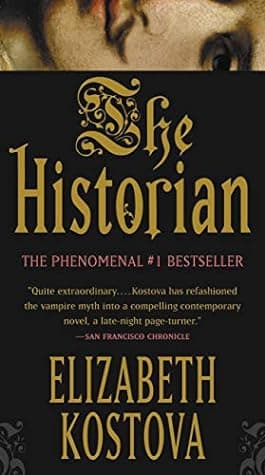
- The Historian
Elizabeth Kostova
3.8 (242k) average on GoodreadsThrillerBlends historical research, ancient mysteries, and a quest for a dark, legendary secret.
- Foucault's Pendulum
Umberto Eco
3.9 (60k) average on GoodreadsThrillerExplores secret societies, ancient conspiracies, and the dangerous pursuit of esoteric knowledge.
- To Kill a Mockingbird
Harper Lee
4.3 (4.5M) average on GoodreadsHistorical FictionIn the 1930s Jim Crow South, Harper Lee writes about racial injustice, moral growth, and the quiet courage of a lawyer father, Atticus Finch, as seen through his young daughter's eyes.
- The Great Gatsby
F. Scott Fitzgerald
3.9 (3.8M) average on GoodreadsHistorical FictionIn the opulent Roaring Twenties, a mysterious millionaire's lavish parties hide his desperate, tragic pursuit of a lost love, exposing the emptiness within the American Dream.
- Pride and Prejudice
Jane Austen
4.3 (3M) average on GoodreadsHistorical FictionIn a society focused on status and money, Elizabeth Bennet navigates love and pride, challenging Mr. Darcy and social expectations to find true affection.
- Angels & Demons
Dan Brown
3.9 (2.7M) average on GoodreadsThrillerA Harvard symbologist races through Rome's ancient sites, deciphering cryptic clues to unmask the Illuminati and stop a vengeful plot to destroy the Vatican with a stolen antimatter weapon.





Enjoyed the summary?
A summary gives you the shape of the book. The book itself has the detail, the examples and the voice.
Find Brimstone on AmazonAs an Amazon Associate, BookBrief earns from qualifying purchases. How we're funded