
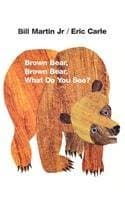
Synopsis
Covers the whole plot, including the ending.
- Difficulty
- Easy
- Pacing
- Slow
- Mood
- Playful, Educational, Simple, Engaging
- Read it if
- You are looking for a foundational picture book for toddlers and preschoolers to learn colors and animals through repetitive text and vibrant illustrations.
- Skip it if
- You prefer complex narratives, character development, or books for older children and adults.
Brown Bear, Brown Bear, What Do You See? Plot Summary
Covers the whole plot, including the ending.
The Brown Bear's Introduction
The book starts with a Brown Bear. The narrator, the Brown Bear, asks, 'Brown Bear, Brown Bear, what do you see?' This begins the repetitive call-and-response pattern that defines the story, inviting the reader to guess the next character or object.
The Red Bird Appears
The Brown Bear answers its own question: 'I see a Red Bird looking at me.' A Red Bird then appears. This establishes the visual and verbal pattern where one animal sees another, and that second animal becomes the focus for the next question, creating a chain of observations.
The Yellow Duck's Turn
The Red Bird, now the narrator, asks, 'Red Bird, Red Bird, what do you see?' The Red Bird replies, 'I see a Yellow Duck looking at me.' A Yellow Duck then appears, continuing the visual and auditory sequence of animal introductions and observations.
The Blue Horse's Entry
The Yellow Duck asks, 'Yellow Duck, Yellow Duck, what do you see?' The duck responds, 'I see a Blue Horse looking at me.' A Blue Horse then appears, adding another color and animal to the procession of characters. The pattern stays consistent, reinforcing learning.
The Green Frog's Appearance
The Blue Horse asks, 'Blue Horse, Blue Horse, what do you see?' Its reply is, 'I see a Green Frog looking at me.' A Green Frog then appears, further expanding the cast of animals and colors. Each new animal looks at the one that previously saw it.
The Purple Cat's Gaze
The Green Frog continues the chain by asking, 'Green Frog, Green Frog, what do you see?' The frog answers, 'I see a Purple Cat looking at me.' A Purple Cat then appears, adding another color combination to the animal lineup. The repetitive structure helps with memorization and prediction.
The White Dog's Observation
The Purple Cat asks, 'Purple Cat, Purple Cat, what do you see?' The cat's response is, 'I see a White Dog looking at me.' A White Dog then appears, maintaining the consistent pattern of observation and introduction. This helps with color and animal identification.
The Black Sheep's Sight
The White Dog then asks, 'White Dog, White Dog, what do you see?' The dog replies, 'I see a Black Sheep looking at me.' A Black Sheep appears, contrasting with the previous white animal and continuing the rhythmic progression of animals and colors. The story builds as it goes.
The Goldfish's View
The Black Sheep asks, 'Black Sheep, Black Sheep, what do you see?' The sheep answers, 'I see a Goldfish looking at me.' A Goldfish then appears, adding an aquatic animal and a metallic color. The sequence follows its call-and-response format.
The Teacher's Question
The Goldfish asks, 'Goldfish, Goldfish, what do you see?' The goldfish replies, 'I see a Teacher looking at me.' A Teacher then appears, the first human character in the sequence, marking a transition from animals to people. This broadens what can be observed.
The Children's Observation
The Teacher asks, 'Teacher, Teacher, what do you see?' The Teacher responds, 'I see children looking at me.' A group of Children then appears, representing the implied audience. This inclusion connects the narrative to its readers, making them part of the observational chain.
The Children's Collective View
Finally, the Children ask, 'Children, Children, what do you see?' They answer, 'We see a Brown Bear, a Red Bird, a Yellow Duck, a Blue Horse, a Green Frog, a Purple Cat, a White Dog, a Black Sheep, a Goldfish, and a Teacher looking at us. That's what we see!' All the previously introduced characters then appear together, reinforcing the entire sequence of animals and people.
Principal Figures
Brown Bear
Starting Character/Narrator
The initial observer, setting the pattern for the entire story.
The Brown Bear is the first character introduced in the book and serves as the primary initiator of the repetitive question-and-answer structure. It's depicted with a friendly, large presence, characteristic of Eric Carle's collage style. The bear sees the Red Bird, starting the chain of observations. Its role is crucial in establishing the book's rhythm and introducing the concept of sequential sight. It reappears at the end as part of the collective group seen by the children.
Relationships: Red Bird (observer/observed); Children (observed by)
Red Bird
Supporting Character
The second character, seen by the bear and seeing the duck.
The Red Bird is a vibrant, distinct character that continues the observational chain. Its bright red color is a key feature, making it easily identifiable for young readers. After being seen by the Brown Bear, it then asks the 'what do you see?' question, linking the bear to the Yellow Duck. The Red Bird helps reinforce color recognition and the repetitive structure.
Relationships: Brown Bear (observed by); Yellow Duck (observer/observed)
Yellow Duck
Supporting Character
A cheerful duck, seen by the bird and seeing the horse.
The Yellow Duck is another animal in the sequence, characterized by its bright yellow hue. It is seen by the Red Bird and subsequently observes the Blue Horse. Its inclusion adds another common animal and a primary color to the learning sequence, contributing to the book's educational value in animal and color identification through repetition.
Relationships: Red Bird (observed by); Blue Horse (observer/observed)
Blue Horse
Supporting Character
A uniquely colored horse, seen by the duck and seeing the frog.
The Blue Horse stands out due to its unusual color, making it memorable. It is introduced after being seen by the Yellow Duck and then observes the Green Frog. This character challenges conventional color associations for animals, subtly encouraging imaginative thinking while maintaining the core structure of the book.
Relationships: Yellow Duck (observed by); Green Frog (observer/observed)
Green Frog
Supporting Character
A vibrant frog, seen by the horse and seeing the cat.
The Green Frog is a classic representation of its species, depicted in a vivid green. It is introduced after the Blue Horse observes it and then proceeds to see the Purple Cat. Its presence adds another common animal and a familiar color to the expanding cast, reinforcing the learning of both.
Relationships: Blue Horse (observed by); Purple Cat (observer/observed)
Purple Cat
Supporting Character
An imaginatively colored cat, seen by the frog and seeing the dog.
The Purple Cat is another example of an animal depicted in an unexpected color, similar to the Blue Horse. It is seen by the Green Frog and then observes the White Dog. This character continues to engage young readers by presenting playful variations on animal appearances, making the learning process more engaging and less rigid.
Relationships: Green Frog (observed by); White Dog (observer/observed)
White Dog
Supporting Character
A loyal dog, seen by the cat and seeing the sheep.
The White Dog is a straightforward representation, providing a contrast to some of the more imaginatively colored animals. It is observed by the Purple Cat and then sees the Black Sheep. Its inclusion offers a common pet and a basic color, grounding the sequence while still adhering to the book's rhythmic structure.
Relationships: Purple Cat (observed by); Black Sheep (observer/observed)
Black Sheep
Supporting Character
A dark sheep, seen by the dog and seeing the goldfish.
The Black Sheep is presented in direct contrast to the White Dog, emphasizing color opposites. It is seen by the White Dog and subsequently observes the Goldfish. This character helps children learn about different shades and reinforces the concept of animal identification within the consistent narrative pattern.
Relationships: White Dog (observed by); Goldfish (observer/observed)
Goldfish
Supporting Character
An aquatic animal, seen by the sheep and seeing the teacher.
The Goldfish introduces an aquatic element to the array of animals, expanding the scope of creatures. It is observed by the Black Sheep and then sees the Teacher. Its bright, metallic color adds another distinct visual, and its role marks a transition point from purely animals to the introduction of human characters.
Relationships: Black Sheep (observed by); Teacher (observer/observed)
Teacher
Supporting Character
The first human character, seen by the goldfish and seeing the children.
The Teacher is the first human character to appear in the book, seen by the Goldfish. This character acts as a bridge between the animal world and the human world, specifically connecting to the children. The Teacher's role is to observe the children, creating a direct link to the book's audience.
Relationships: Goldfish (observed by); Children (observer/observed)
Children
Protagonists/Audience
The collective group who see all the previous characters.
The Children represent the ultimate observers and, implicitly, the readers of the book. They are seen by the Teacher and, in the culmination of the story, they collectively see all the preceding characters. Their presence brings the narrative full circle, making the audience an active part of the story and summarizing all the elements introduced.
Relationships: Teacher (observed by); All previous characters (observers of)
Themes & Insights
Repetition and Pattern Recognition
The core of 'Brown Bear, Brown Bear, What Do You See?' uses a simple, predictable pattern: 'X, X, what do you see? I see a Y looking at me.' This repetitive structure is important for the book's appeal and educational value. Each character introduces the next, creating a predictable rhythm that allows young children to anticipate what comes next, helping with memory and language. The consistent phrasing and sequential introduction of characters reinforce the pattern, making it easy for children to follow along and even 'read' portions of the book. For example, after the Brown Bear sees the Red Bird, the Red Bird then asks the same question, solidifying the pattern.
“Brown Bear, Brown Bear, what do you see? I see a Red Bird looking at me.”
Color and Animal Identification
A main theme and educational goal of the book is to teach young children about different colors and common animals. Each page introduces a new animal paired with a distinct color, sometimes in an unexpected combination (e.g., a Blue Horse or a Purple Cat). Eric Carle's bold illustrations make each animal and its color easy to tell apart. The repetitive narrative reinforces these associations, allowing children to learn and recall the names of animals and their colors. The final page, where all characters are shown together, is a review of these concepts.
“Yellow Duck, Yellow Duck, what do you see? I see a Blue Horse looking at me.”
Observation and Perspective
The entire narrative is about observation. Each character asks 'what do you see?' and then states what they observe, creating a chain of perspectives. This theme encourages children to pay attention to their surroundings and understand that different entities see different things. It is a simple introduction to the idea of individual viewpoints, even if the observations are sequential rather than simultaneous. The children's final observation, including all the previous characters, brings all these individual perspectives together into a collective whole, showing how observations build.
“Children, Children, what do you see? We see a Brown Bear, a Red Bird, a Yellow Duck, a Blue Horse, a Green Frog, a Purple Cat, a White Dog, a Black Sheep, a Goldfish, and a Teacher looking at us. That's what we see!”
Inclusivity and Community
The progression from various animals to a teacher and then to a group of diverse children introduces themes of inclusivity and community. The final page, showing all the characters together, visually represents a community of different beings, all looking at and acknowledging each other. The inclusion of 'children' at the end, representing the readers, makes them feel part of this diverse group. This reinforces the idea that everyone, regardless of their differences, is part of a larger community and can observe and be observed.
“Teacher, Teacher, what do you see? I see children looking at me.”
Plot Devices & Literary Techniques
Repetitive Call-and-Response
A predictable verbal pattern that drives the narrative and aids learning.
The book's primary plot device is its consistent call-and-response structure: 'X, X, what do you see? I see a Y looking at me.' This rhythmic, predictable dialogue creates a strong sense of anticipation and engagement for young readers. It allows them to quickly grasp the pattern and participate in 'reading' the story, enhancing language development and memory. Each new character seamlessly picks up the narrative thread from the previous one, maintaining the flow and reinforcing the learning of colors and animals.
Cumulative Structure
Building upon previous elements to create a complete whole.
The story employs a cumulative structure, where each new character is added to a growing list of observed entities. While the direct 'I see' only refers to the immediate next character, the final page explicitly lists and depicts all the characters seen throughout the book. This cumulative effect aids in memory recall and provides a satisfying conclusion where all the learned elements are brought together, demonstrating the sum of all observations made by the individual characters.
Vivid Illustrations / Collage Art
Bold, distinct artwork that enhances character and color recognition.
Eric Carle's distinctive collage artwork is a crucial 'plot device' in this picture book. The large, brightly colored, and clearly defined animals and people immediately capture a child's attention. The unique textures and bold colors make each character memorable and distinct. This visual clarity directly supports the book's educational goals of color and animal identification, allowing children to easily associate the text with the corresponding image. The artwork is integral to how the plot unfolds and is perceived.
Question and Answer Dialogue
A conversational format that encourages active participation.
The entire book is framed as a series of questions and answers. This conversational format directly addresses the reader (or listener), inviting them to engage actively with the story. The question 'what do you see?' prompts a moment of anticipation, followed by the answer that reveals the next character. This interactive element makes the reading experience dynamic and participatory, rather than passive, which is highly effective for early childhood literacy and engagement.
Brown Bear, Brown Bear, What Do You See? Quotes
“Brown Bear, Brown Bear, what do you see?”
“I see a red bird looking at me.”
“Red Bird, Red Bird, what do you see?”
“I see a yellow duck looking at me.”
“Yellow Duck, Yellow Duck, what do you see?”
“I see a blue horse looking at me.”
“Blue Horse, Blue Horse, what do you see?”
“I see a green frog looking at me.”
“Green Frog, Green Frog, what do you see?”
“I see a purple cat looking at me.”
“Purple Cat, Purple Cat, what do you see?”
“I see a white dog looking at me.”
“White Dog, White Dog, what do you see?”
“I see a black sheep looking at me.”
“I see a teacher looking at me.”
Quiz
10 questions on the plot and the characters. Each answer comes with a short explanation.
Question 1
What is the first animal that Brown Bear sees in the book?
- A red bird
- A yellow duck
- A blue horse
- A green frog
Show answer
A. A red bird The book begins with Brown Bear seeing a red bird, which then sees something else, continuing the chain of animals.
Question 2
What color is the horse in the book?
- Brown
- Blue
- Purple
- Green
Show answer
B. Blue The horse is described as 'handsome blue horse,' which is part of Eric Carle's distinctive use of bold, non-traditional colors for animals.
Question 3
Which animal is described as 'plump purple cat'?
- The cat
- The bear
- The frog
- The duck
Show answer
A. The cat The cat is specifically called a 'plump purple cat,' highlighting the book's playful and colorful descriptions of animals.
Question 4
What does the yellow duck see after it is introduced?
- A blue horse
- A green frog
- A white dog
- A black sheep
Show answer
C. A white dog In the sequence, the yellow duck sees a white dog, which continues the repetitive pattern of animals seeing each other.
Question 5
How does the book primarily engage young readers?
- Through complex moral lessons
- With singsong text and bold collages
- By using realistic animal photographs
- Through interactive pop-up elements
Show answer
B. With singsong text and bold collages The book combines Bill Martin Jr.'s rhythmic, repetitive text with Eric Carle's vibrant collage illustrations to captivate children's attention and encourage participation.
Question 6
Which animal is NOT mentioned in the provided description of the book?
- A big happy frog
- A plump purple cat
- A soft yellow duck
- A sly red fox
Show answer
D. A sly red fox The description lists a frog, cat, horse, and duck, but no red fox; this tests attention to the specific details given about the book's content.
Question 7
What is the final thing that all the children see at the end of the book?
- A teacher
- A mother
- All the animals again
- A rainbow
Show answer
C. All the animals again The book concludes with children seeing all the animals previously introduced, reinforcing the cyclical and repetitive structure that aids memory and engagement.
Question 8
Why is the repetitive structure of 'What do you see?' important in this book?
- It teaches children about animal habitats
- It helps build prediction skills and language rhythm
- It introduces complex scientific facts
- It provides a suspenseful plot twist
Show answer
B. It helps build prediction skills and language rhythm The repetitive question-and-answer format allows young readers to anticipate what comes next, enhancing their predictive abilities and enjoyment of the rhythmic text.
Question 9
In what order do the animals appear after the blue horse?
- Green frog, purple cat, yellow duck
- Yellow duck, green frog, purple cat
- Green frog, yellow duck, purple cat
- Purple cat, yellow duck, green frog
Show answer
C. Green frog, yellow duck, purple cat After the blue horse, the sequence is green frog, then yellow duck, and finally purple cat, followed by other animals like the white dog and black sheep.
Question 10
How does Eric Carle's artistic style contribute to the book's appeal?
- By using detailed, realistic sketches
- Through flat, boldly colored collages
- With abstract, monochromatic paintings
- By incorporating digital animations
Show answer
B. Through flat, boldly colored collages Eric Carle's signature collage technique, with its bright, flat colors and textured papers, creates visually striking images that are easily recognizable and engaging for children.
Brown Bear, Brown Bear, What Do You See? FAQ
What is 'Brown Bear, Brown Bear, What Do You See?' about?
The book is a rhythmic, repetitive picture book where a brown bear is asked what it sees, and it responds with another animal (like a red bird), which then becomes the next question's subject. This chain continues through a series of brightly colored animals including a yellow duck, blue horse, green frog, purple cat, white dog, black sheep, goldfish, and finally a teacher and children, creating a circular narrative that ends with the children seeing all the animals.
Why should I read 'Brown Bear, Brown Bear, What Do You See?'?
It's an excellent early childhood book for building language skills through predictable, singsong text that encourages participation, and it introduces colors and animals with Eric Carle's vibrant, textured collage illustrations. The repetitive structure helps young children anticipate what comes next, fostering confidence and engagement in reading.
What is the background/setting of 'Brown Bear, Brown Bear, What Do You See?'?
The book has no specific setting beyond a simple, neutral background that focuses attention on the animals and their bold colors. It was first published in 1967, created by author Bill Martin Jr. and illustrator Eric Carle, and is designed as an educational tool for very young readers, emphasizing visual and auditory learning.
What are the most memorable quotes from 'Brown Bear, Brown Bear, What Do You See?'?
The most memorable lines are the repetitive questions and answers, such as 'Brown Bear, Brown Bear, what do you see? I see a red bird looking at me,' which recur throughout the book. The closing line, 'Children, children, what do you see? We see a brown bear, a red bird, a yellow duck... looking at us,' ties the story together by listing all the animals.
What writing style does the author use in 'Brown Bear, Brown Bear, What Do You See?'?
Bill Martin Jr. uses a simple, rhythmic, and repetitive style with a consistent question-and-answer format that mimics a chant or song. This approach makes the text easy for children to memorize and recite, enhancing its educational value for early literacy development.
What minor details add significant meaning to 'Brown Bear, Brown Bear, What Do You See?'?
The inclusion of a 'teacher' and 'children' at the end subtly shifts the perspective from animals to humans, suggesting a classroom or learning environment. This detail reinforces the book's educational purpose, connecting the animal parade to a child's world and encouraging interaction between readers and the story.
What are some subtle foreshadowing moments in 'Brown Bear, Brown Bear, What Do You See?'?
The chain of animals seeing each other foreshadows the circular ending where the children see all the animals. For example, each animal's response sets up the next one, hinting that the sequence will loop back, which it does when the children recap the entire list, creating a satisfying closure.
What unexpected character connections exist in 'Brown Bear, Brown Bear, What Do You See?'?
The animals are not connected by plot or interaction but by the visual chain of 'seeing' each other. An unexpected connection is that the final characters—the teacher and children—are humans who observe the animals, bridging the natural world with a human educational context, which adds a layer of community and learning to the simple sequence.
What are unspoken character motivations in 'Brown Bear, Brown Bear, What Do You See?'?
The animals have no explicit motivations, but their consistent 'looking' suggests a shared curiosity or awareness of each other. This unspoken drive to observe and respond creates a sense of unity and sequence, motivating the progression from one animal to the next without need for complex narrative.
What psychological complexities do characters exhibit in 'Brown Bear, Brown Bear, What Do You See?'?
The characters are simple and lack psychological depth, designed for young audiences. However, the repetitive act of seeing and being seen can be interpreted as fostering early social skills like attention and recognition, with each animal calmly acknowledging the next, promoting a sense of order and predictability.
What are the major emotional turning points in 'Brown Bear, Brown Bear, What Do You See?'?
There are no dramatic emotional turns, but the shift from animals to humans at the end provides a gentle climax. When the children see all the animals, it creates a moment of collective recognition and joy, reinforcing the book's theme of observation and connection, which can elicit satisfaction and engagement in young readers.
How do relationship dynamics evolve in 'Brown Bear, Brown Bear, What Do You See?'?
Relationships are static and based on visual connection rather than interaction. The dynamics evolve only in the sense that the chain of observation builds from one animal to the next, culminating in the children's inclusive view, which suggests a broadening of perspective from individual to group observation.
Which parts of 'Brown Bear, Brown Bear, What Do You See?' remain ambiguous or open-ended?
The book is straightforward with little ambiguity, but the reason why the animals are looking at each other is never explained, leaving it open to interpretation as a simple game of observation or a metaphor for learning and curiosity. The neutral setting also allows readers to imagine where this parade takes place.
What are controversial scenes or decisions in 'Brown Bear, Brown Bear, What Do You See?'?
There are no controversial scenes, as the book is designed for young children with harmless content. However, some modern discussions might focus on the lack of narrative conflict or diversity in animal types, but it's generally celebrated for its educational value and artistic style without significant debate.
'Brown Bear, Brown Bear, What Do You See?' ending explained: how it ends & what it means
The book ends with the children seeing all the animals previously mentioned, recapping the list from brown bear to goldfish. This circular ending emphasizes memory, observation, and community, suggesting that learning involves recognizing and connecting different elements, and it leaves readers with a sense of completeness and shared experience.
About the author
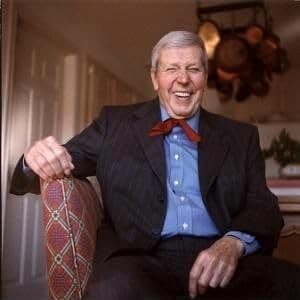
Bill Martin Jr. was a prolific American educator and author of over 300 children's books. He is best known for the beloved "Brown Bear, Brown Bear, What Do You See?" and the rhythmic "Chicka Chicka Boom Boom." His work frequently focused on themes of learning, friendship, and the joy of language, making him a significant figure in early childhood literature.
Similar books
- The Very Hungry Caterpillar
Eric Carle
4.3 (396k) average on GoodreadsChildren'sShares Eric Carle's distinctive collage art style and is a classic early childhood educational book.
- Green Eggs and Ham
Dr. Seuss
4.3 (617k) average on GoodreadsFantasy'Green Eggs and Ham' also relies heavily on repetition and simple vocabulary but presents a more complex rhyming scheme and a narrative focused on overcoming stubbornness and trying new things, offering a different kind of linguistic and thematic challenge.
- Pat the Bunny
Dorothy Kunhardt
4.1 (23k) average on GoodreadsChildren'sWhile both are foundational for infants and toddlers, 'Pat the Bunny' is a tactile book focused on sensory experiences and object identification, whereas 'Brown Bear' emphasizes verbal repetition and visual recognition of colors and animals within a narrative sequence.
- Harry Potter and the Sorcerer's Stone
J.K. Rowling
4.5 (7M) average on GoodreadsFantasyRescued from a miserable life under the stairs, an orphaned boy discovers he's a wizard destined for a magical school, where he uncovers a dangerous secret tied to the dark wizard who murdered his parents.
- The Hobbit, or There and Back Again
J.R.R. Tolkien
4.3 (2.9M) average on GoodreadsFantasyA comfort-loving hobbit named Bilbo Baggins is whisked away by a mischievous wizard and a band of dwarves on an unexpected journey to reclaim stolen treasure from a fearsome dragon, discovering courage and a magical ring along the way.
- Harry Potter and the Goblet of Fire
J.K. Rowling
4.6 (2.6M) average on GoodreadsFantasyA bewildered Harry Potter, underage and thrust into a deadly Triwizard Tournament, must brave dragons, mermaids, and a resurgent dark magic to survive a year that will forever alter the wizarding world.



Enjoyed the summary?
A summary gives you the shape of the book. The book itself has the detail, the examples and the voice.
Find Brown Bear, Brown Bear, What Do You See? on AmazonAs an Amazon Associate, BookBrief earns from qualifying purchases. How we're funded